Silicon Valley Billionaire's 30-Year Business Experience Review: All the Goals I Pursued in the Past Were Stupid

marsbitPublished on 2026-02-26Last updated on 2026-02-26

Abstract

Silicon Valley billionaire Chamath Palihapitiya reflects on 30 years of business experience, concluding that the goals he once valued—promotions, titles, wealth, and status—were ultimately "stupid." He argues that goal-oriented living creates a trap: achieving targets leads to stagnation, while process-focused living fosters continuous growth. He advises setting boundary conditions instead of goals: avoid debt (it limits freedom), practice humility (to see reality clearly), and surround yourself with younger people (to stay updated). He emphasizes maintaining "optionality"—keeping choices open—and warns against optimizing for salary or social validation. True success comes from embracing learning, taking risks, and ignoring externally defined status. Palihapitiya shares personal lessons: complete honesty in relationships is crucial, and geographic mobility (e.g., moving to industry hubs) accelerates growth. He uses the metaphor of a rat surviving 60 hours in water (vs. 4 minutes) when saved once—highlighting how hope and resilience unlock potential. Ultimately, he urges focusing on meaningful processes over arbitrary milestones.

Author: Deep Thought Circle

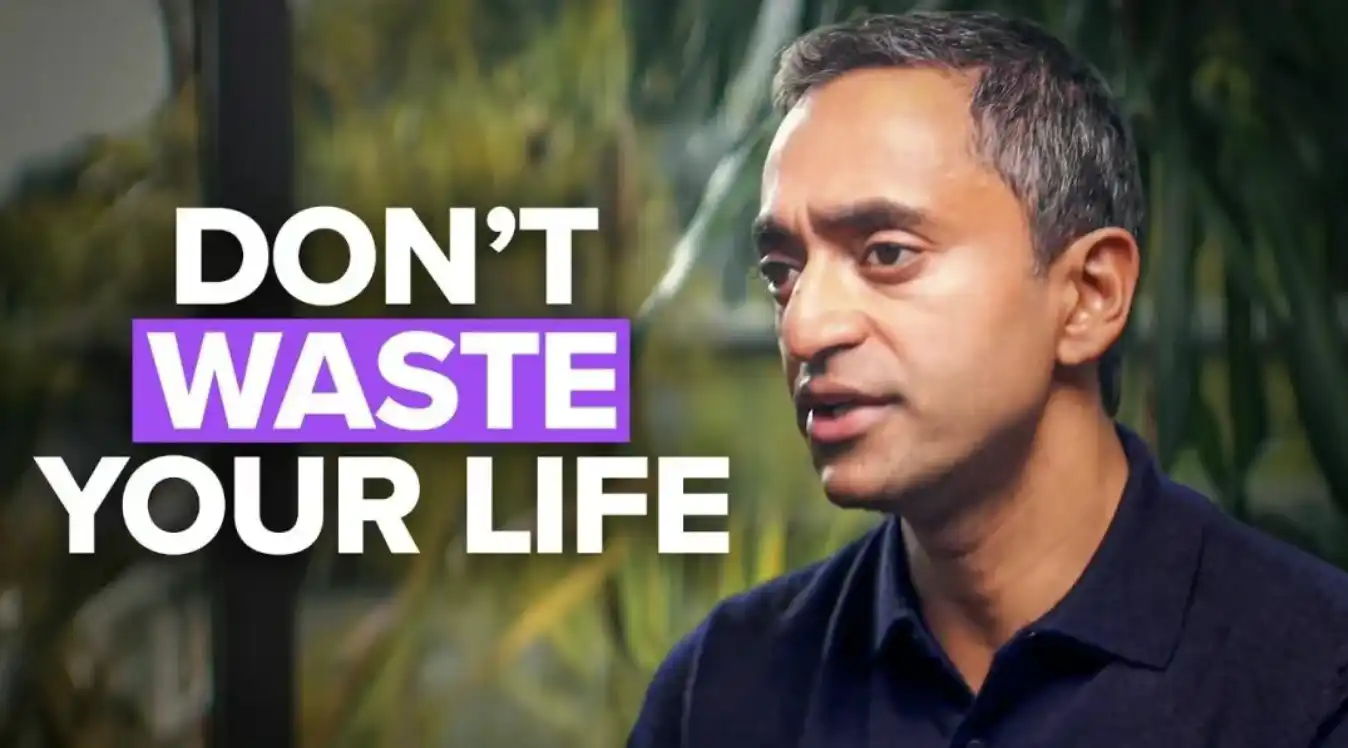
Have you ever thought that the goals you strive so hard to pursue might be the very things holding you back from success? Promotions, salary increases, titles, social status—these seemingly natural life milestones might actually be trapping you in an elaborately designed pitfall. Recently, I watched a video where Chamath Palihapitiya, an early Facebook executive and well-known investor, summarized his 30 years of business experience in 13 minutes. One sentence he said completely shocked me: "It took me 30 years to realize that all the goals I desperately pursued were stupid." This isn't some clichéd motivational talk; it's the profound reflection of a billionaire after countless successes and failures.

Chamath's resume is legendary in itself. He was a core member of Facebook's growth team and later founded the venture capital firm Social Capital, investing in countless successful tech companies. When someone like this tells you that most of what he pursued over the past 30 years was wrong, what would you think? When I first heard this viewpoint, I was resistant. Because it completely颠覆了 the success principles we've been taught since childhood. We are educated to set goals, make plans, and achieve milestones step by step. But Chamath tells us that this way of thinking is itself problematic.

Why Goals Become Your Enemy

Chamath's first core point made me think for a long time: you can never stop. This sounds strange, but he explains that most people frame life as a series of goals. The problem with goals is that when you achieve enough of them, you think, "I've made it, I can stop now." This mindset causes people to lose motivation at some point, to lose the reason to keep moving forward.

I deeply understand this feeling. At a certain stage in my career, after achieving some self-set goals, I did feel a sense of emptiness. That "what next?" confusion made me unsure of what to do next. Chamath observed that many people he once greatly respected stopped in their 50s. They were no longer active in the industry, no longer challenged themselves, no longer learned new things. In his words, "they are no longer in the arena."

Conversely, he cited the example of Buffett. Buffett is still working at 95 and only recently began to step back. And Charlie Munger essentially passed away on the job. What do these people have in common? They are not committed to achieving a series of goals, but to continuous learning, constant risk-taking, and associating with interesting people. It is this mindset that keeps them sharp and vibrant.

This viewpoint made me re-examine my career planning. I did set many specific goals in the past: reach a certain position by a certain age, earn a certain income, achieve a certain level of financial freedom. But now I realize that these goals themselves might be harmful. Because once achieved, you lose the motivation to continue. But if you focus on the process—continuous learning, constant growth, challenging yourself—you will never stop.

Chamath said if someone had told him this earlier, he would have made very different decisions. He would have optimized less for money, taken more risks, even more than when he was young. This sentence is particularly interesting because it reveals a counterintuitive truth: true success is not achieved by optimizing short-term goals, but by long-term commitment to the process.

Three Boundary Conditions: How to Live in the Process

If you want to abandon a goal-oriented life and embrace a process-oriented life, Chamath believes you need to set some very good boundary conditions. These boundary conditions are not goals, but principles, bottom lines you cannot violate under any circumstances. He proposed three specific boundary conditions, each of which resonated deeply with me.

The first boundary condition is: No debt. This sounds simple, but Chamath explains that debt is something that will make you stop. It will make you stop learning, stop taking risks, make you start pursuing short-term goals, most obviously pursuing money. All these short-term optimizations will have a huge impact on your life in the next 20, 30, 40 years.

I completely agree with this view. Debt is not just a financial burden, but also a psychological shackle. When you are in debt, your decisions become distorted. You might放弃 an interesting but lower-paying opportunity for a boring but high-paying job, just because you need to pay off debt. You might stay longer at a company you don't like because you need a stable cash flow. Debt robs you of the freedom of choice, and the freedom of choice is the most important prerequisite for living in the process.

Chamath specifically mentioned a phenomenon that is especially dangerous for the younger generation: people spend a lot of time on social media, watching people who are essentially lying to you展示 their fake lives. Too many people are deceived by this fake life, thinking it is real life, and then start pursuing the same lifestyle. All of this revolves around money. No one is praised by society for being终身 committed to the process. Perhaps Kobe Bryant was an exception, but unfortunately he is no longer with us.

This passage reminded me of the wealth-flaunting content on social media. Designer bags, luxury cars, extravagant travel—this content constantly刺激 young people's consumption desires. To live this kind of life, many people go into debt to consume,透支 the future. But in fact, many of those展示ing luxurious lives on social media are themselves burdened with huge debts, or their lives are far less glamorous than they appear. Pursuing this fake lifestyle will eventually trap you in a debt trap, preventing you from focusing on what truly matters.

The second boundary condition is: Manage your life with humility. Chamath said this was a lesson it took him a long time to learn. What does humility mean? It means you must be extremely honest about today's reality. Because only then can you truly see the essence of things, can you share the truth with others, and create genuine resonance with them.

This viewpoint touched me. Humility is not self-deprecation, but an honest assessment of your own capabilities and limitations. In entrepreneurship and work, I have seen too many cases of failure due to lack of humility. Some people are overconfident, unwilling to admit their mistakes, and end up going down a dead end. Some are afraid to expose their weaknesses, always trying to project a perfect image, and end up losing the opportunity to connect sincerely with others. True humility is admitting "I don't know," being willing to learn, daring to say "I was wrong."

The third boundary condition is: Surround yourself with people younger than you. Chamath said young people see the world completely differently. Their biases are different, their mental frameworks are different. Although often he feels he has learned enough and doesn't need to be told he's wrong, the opposite is true. The more time he spends with young people, the more he realizes that everything he knows is trapped at a certain point in time.

This is a very profound insight. Our knowledge and experience always have a shelf life. What is correct today may be obsolete tomorrow. Methods that work today may fail tomorrow. And young people are like an early warning system for the future; they can help you see how the world is changing. Chamath said that at some point, the way he thinks things should work will be completely opposite to how they actually work. This realization requires courage because it means admitting that your knowledge is becoming outdated.

I have had similar experiences. When I communicate with people ten years younger than me, I am often shocked by their views. Their understanding of technology, their use of social media, their acceptance of new business models far exceed my imagination. If I cling to my own认知 and refuse to listen to young people's opinions, I will quickly become rigid and outdated.

Those Stupid Goals

Chamath frankly listed the "stupid goals" he pursued in the past. When he was a director, he wanted to be a VP. When he was a VP, he wanted to be a SVP. When he was a SVP, he wanted to become a principal at a venture capital firm, then a general partner. At Facebook, he was part of the management team, he wanted more equity. These were all stupid goals.

This confession震撼 me. Because these goals don't seem stupid at all. They are things most professionals dream of. From director to VP, from employee to partner, from management to more equity—isn't this exactly the career path we are taught to pursue? But Chamath says these stupid goals took him away from being 100% his true self. They turned him into a caricature of himself,放大 certain small aspects of himself, making them represent a larger version of himself. Not only to himself, but to those around him as well.

I understand what he means. When you pursue these external goals, you subconsciously adjust your behavior to meet the expectations of that role. You might suppress some of your traits, amplify others, because you think it will help you achieve the goal. But in this process, you gradually lose yourself. You become a distorted version of yourself striving to achieve goals, not the most authentic, complete you.

Chamath admitted that these things can only be learned through time. Everyone in their 40s and 50s will nod in agreement when they hear what he says. But everyone in their 20s and 30s will think "this isn't for me." So you have two choices: the easy way or the hard way. The easy way is to do these few simple things. The hard way is to spend 30 years learning this lesson yourself.

This reminds me of a classic paradox: when we are young, we have time and energy but lack wisdom and experience; when we are old, we have wisdom and experience but have lost time and energy. If we could understand these principles when young, how much time and energy could we save? But the problem is, these principles often must be truly understood through personal experience. Just hearing others say it is not enough.

Optionality: Maintaining Freedom of Choice

One of the most important principles Chamath proposed is: Maintain optionality at all costs. He said he strives to maintain optionality in business, in negotiations. Finding win-win spaces is a very powerful thing that has helped him greatly.

What does optionality mean? It means keeping your options open, not trapping yourself on a single path. When you have optionality, you can flexibly adjust according to changing circumstances. When an opportunity is not suitable, you can say no. When a better opportunity arises, you can seize it immediately. And when you lose optionality, you are trapped. You must accept the option in front of you, even if it is not the best.

Chamath explained that the benefit of maintaining optionality is that it protects relationships, protects others' self-esteem, protects others' emotions. It forces him to be more restrained, to listen more and speak less. It turns out that many people self-destruct by doing stupid things. And for him, this framework has helped him avoid that situation to the greatest extent.

I deeply agree with this view. In my career, the decisions that maintained optionality always led to better results. For example, I once refused a high-paying job that required a long-term contract, opting instead for a flexible but lower-paying opportunity. A few months later, a better opportunity appeared, and because I wasn't bound by a contract, I was able to seize it immediately. Colleagues who accepted long-term contracts could only watch the opportunity slip away.

Debt is the biggest enemy that destroys optionality. When you are in debt, you must make monthly payments, which means you must have a stable income. This need limits your choices. You may have to accept a job you don't like, simply because it provides a stable income. If you have no debt, you have the freedom to explore, to take risks, to pursue opportunities that may not bring immediate income but are more valuable in the long run.

Chamath also shared a more philosophical thought. He said, if we truly live in a simulated world, one level of the game is actually to show you the existence of these secrets and give you a chance. He is almost 50 now and finds these secrets being revealed to him. He said "Wow, this is incredible. I didn't know this when I was young, even if someone tried to tell me, I ignored it." So he is just offering this advice, knowing most people will also ignore it, but eventually everyone will go through this process.

This metaphor is interesting. Life is indeed like a game, some secrets are only unlocked after you reach a certain level. But the irony is, when you truly understand these secrets, you may have missed the best time to use them. That's why listening to the advice of elders is so important, even if you can't fully understand it at the time.

Complete Honesty in Relationships

When talking about interpersonal relationships, Chamath shared the most important lesson he learned: It is crucial to marry someone who 100% supports you. And the only way to get that support is to be completely honest.

He admitted that honesty is very difficult for many people. He himself didn't know how to be completely honest. He would share most things, but not everything. This was part of the lifestyle he learned in his family. But if you don't learn this lesson, it will come back to bite you.

Chamath said that in relationships, having your co-founder, your wife by your side is really important. He went through a divorce, saying it was almost like a family member dying. What was missing in the first marriage? It was the lack of completely raw, unfiltered, pure honesty. When things were good, they could celebrate together. But when things were bad, you could point it out, name it. And they didn't do that. The second marriage is completely different; he said finding this kind of relationship is a blessing.

This passage reminded me of many problems in marital or partner relationships. Many people think that保留 some secrets, glossing over some truths is necessary in a relationship, to protect the other person or maintain peace. But Chamath's experience tells us the opposite. Lack of complete honesty plants time bombs in relationships. Small problems accumulate into big ones because they are not pointed out in time. Misunderstandings ferment into resentment because they are not clarified.

What does complete honesty mean? It means when you feel dissatisfied, you speak up. When you make a mistake, you admit it. When you are afraid, you confess. This requires great courage because honesty makes you vulnerable. But only through this vulnerability can you build truly deep connections. Only when your partner knows the real you, including your weaknesses and fears, can they truly support you.

The same is true in business relationships. The most successful partnerships are often built on complete honesty. When you can坦率地 discuss disagreements with your partners, admit mistakes, share concerns, then you can face challenges together and make the best decisions.

Career Advice for Young People

Chamath offered very specific advice for young and ambitious people. The first and most important one: You must go to Broadway (here meaning the main stage).

He explained, depending on what you want to do, if you want to go into politics, you need to go to Washington D.C. It might take one or two turns to get there, maybe you need to go to the state capital first, but start there, then go to Washington. If you want to do finance, you need to go to New York or London. If you want to do cryptocurrency, you might need to go to Abu Dhabi. If you want to do tech, simply put, you need to go to Silicon Valley. There are no shortcuts to these decisions.

This advice seems simple, but executing it requires courage. It means you might need to leave your hometown, leave your comfort zone, and start over in an unfamiliar city. But Chamath's point is, you must go where the fish are. If you want to catch big fish, you can't stay in a small pond.

I strongly agree with this view. The impact of geographical location on career development is far greater than most people imagine. In the right place, you will meet the right people,接触 the right opportunities, learn the right things. In Silicon Valley, you are surrounded by entrepreneurs and investors, and you will naturally absorb that startup culture. In New York, you will接触 elites in finance and media. And if you stay in a place unrelated to your career goals, you will miss too many opportunities.

Chamath's second piece of advice is: Don't optimize for compensation. This is why you need to live humbly. You should optimize for opportunity. When an opportunity to work with people smarter than you arises, and it feels like it might be a rocket ship, you jump on and hold tight. When you don't do this, but put all other nonsense first, you will fail, and eventually you will look back, and you will be miserable. But that's because you let all these stupid indirect factors get in the way.

This advice is completely opposite to what we are taught from childhood. We are taught to fight for the best salary, to bargain for our worth. But what Chamath is saying is that in the early stages of a career, opportunities for learning and growth are far more important than salary. A low-paying job that allows you to grow quickly is more valuable in the long run than a high-paying job that keeps you stagnant.

Chamath specifically mentioned young people talking about work-life balance. He said he doesn't even understand what that means. When you are in a vibe state and a flow state, it means you are working in a way that gives you a sense of purpose, you are living in a way that gives you a sense of purpose, you are blending them together. This is what you want. You are in a continuous process, constantly adding things that make your life better.

This view might be controversial, but I understand what he means. True work-life balance is not strictly separating work and life, working 8 hours a day and then completely disconnecting. It is finding a way of working where work itself becomes a meaningful part of your life. When you love your work, when it aligns with your values, when it gives you a sense of accomplishment, the boundary between work and life becomes blurred, but this is not a bad thing.

The Rat and Water Experiment

Chamath shared a震撼ing experiment. Scientists put rats into large jars filled with water and measured how long it took for them to drown. On average, it was about four and a half minutes. Then they repeated the experiment. They put the rat in, and about 30 seconds before the rat was about to drown, they pulled it out. They dried it off, comforted it, and then put the rat back in the water. This time the same rat could survive in the water for an average of 60 hours.

What is the difference between a rat that drowns in 4 minutes and a rat that survives 60 hours? No one knows for sure, except what we can speculate, and that is the brain. It is the brain that unlocked the resilience and survival ability within the rat. This is what everyone should find: a place that allows you to go deep into your brain and unlock levels you thought were impossible for you.

This experiment deeply moved me. What did the rat know the second time it was put in the water? It knew someone would come to save it. It had hope. And hope increased its survival ability by nearly 800 times. What does this tell us? It tells us that human potential far exceeds our imagination. When we believe it is possible, when we have hope, we can do things we thought were impossible.

Chamath said Navy Seals talk about this, athletes talk about this. But in business, the great thing is that we have no expiration date. Unlike a Navy Seal or an athlete who has a physical expiration date of 10 to 15 years, we can play this game forever. So you must find a place that allows you to be that rat struggling in the water for 60 hours, because it will profoundly change you in a way you can only understand by experiencing it. Then you will look at other people, and you just don't understand why no one gets this.

This passage reminded me of the common characteristics of truly successful people. They have all experienced some kind of test, some experience that made them break through their perceived limits. It might be an extremely challenging project, a resurgence after a failure, completing a seemingly impossible task under extreme pressure. These experiences changed them, made them realize their potential far exceeded their imagination.

And the beauty of business is that, unlike sports which have age limits, you can pursue this breakthrough indefinitely. A 60-year-old can still start a business, a 70-year-old can still learn new skills, an 80-year-old can still contribute. Buffett and Munger are the best examples. This quality of having no expiration date makes business the perfect stage for lifelong learning and growth.

Status is a Trap

Chamath's view on status is perhaps the most颠覆性 in the entire video. He said, the most important thing about status is: it is completely man-made, completely irrelevant. It is something people use to deceive others into wasting precious time. If you know this, one of the most powerful things you can do is to ignore all the ways society tries to give you status.

Why? Because what society is actually doing is putting a small hook in you to pull you back. If you start to believe in these things, these are things that are externally validated by others. Then someone is able to exercise some degree of judgment over you. Maybe small, maybe large. When you chase enough of these things, chase enough status, you become completely subject to people who don't care about your best interests.

Chamath said he learned this the hard way, because there were many things he always wanted because he thought they were important. Getting on this list, entering that club, being invited to this event. But all these things are unimportant because they are completely artificial. You扭曲 yourself, sometimes you even bend your expectations and behavior to be part of it or be recognized, and then you become less complete.

This view made me reflect a lot. Our society is filled with various status symbols. Prestigious degrees, titles at big companies,豪华 offices, expensive cars, membership in exclusive clubs. We are taught to pursue these things because they represent success. But Chamath tells us these are all traps.

Why are they traps? Because once you start caring about these status symbols, you adjust your behavior based on them. You will do things that enhance your status, even if that's not what you really want to do. You will avoid doing things that might damage your status, even if it might be the right choice. You will care about how others see you, care about your position in various rankings. This caring will bind you, make you lose freedom.

Chamath said status is a completely man-made, corrosive thing that society uses to stop you. The more you can摆脱 it, it becomes a superpower. This view might sound radical, but think about those who truly change the world, many don't care about traditional status symbols. They follow their curiosity, do what they think is important, not what society thinks is important.

I am also trying to摆脱 the attachment to status. I find that when I stop caring about how others view my choices, I feel freer. I can pursue projects that truly interest me, even if they don't bring me traditional signs of success. I can associate with anyone I find interesting, regardless of their social status. This freedom is priceless.

My Thoughts

After watching Chamath's分享, I spent a long time digesting these viewpoints. They challenged many assumptions I had taken for granted for years. I always thought setting clear goals was the key to success, but now I realize that过度 focusing on goals might make me miss what's truly important—the process of continuous growth.

I also started to re-examine my definition of success. In the past I might have measured success by position, income, social status. But now I ask myself: Am I continuously learning? Am I challenging myself? Am I doing things I find meaningful? If the answer is yes, then I am successful, no matter what my title is, no matter how much money is in my bank account.

Chamath's experience also made me think about the value of time. He said it took him 30 years to learn these lessons. I am in my 30s now; if I can understand and apply these principles now, how much time and energy could I save? But I also realize that some lessons may indeed require time and experience to truly internalize. The important thing is to keep an open mind, be willing to learn from the experience of predecessors, even if I can't fully understand it yet.

Finally, I want to say that the advice Chamath shared is not about要求 everyone to become a billionaire or build great companies. It's about how to live a more fulfilling, authentic, and meaningful life. No matter what your career goals are, these principles apply: focus on the process rather than goals, maintain a humble and learning attitude, protect your freedom of choice, be honest in relationships, ignore status symbols imposed by society.

I believe if more people could understand and practice these principles, we would see a different world. A world where people work not for external recognition but for internal growth. A world where people are not climbing someone else's defined ladder of success but walking their own unique path. This might be a harder choice, but it is definitely a more meaningful choice.


Related Questions

QAccording to Chamath Palihapitiya, why are traditional goals considered 'stupid' and potentially harmful?

ATraditional goals are considered 'stupid' because they create a mindset where people stop once they achieve them, leading to a loss of motivation and drive. They cause individuals to optimize for short-term achievements like promotions or money, which can trap them and prevent long-term growth and learning. Chamath states that focusing on a process of continuous learning and challenge is far more valuable.

QWhat are the three boundary conditions Chamath suggests for living a process-oriented life instead of a goal-oriented one?

AThe three boundary conditions are: 1) Have no debt, as it forces short-term optimization and kills optionality. 2) Manage your life with humility, which means being brutally honest about your current situation to see reality clearly. 3) Surround yourself with people younger than you, as they have different perspectives and biases that can help you see how the world is changing and prevent your knowledge from becoming outdated.

QHow does Chamath define 'optionality' and why does he consider it so crucial for success?

AChamath defines 'optionality' as maintaining the freedom to choose and not getting locked into a single path. It is crucial because it allows for flexibility to adapt to changing circumstances, say no to bad opportunities, and jump on good ones. Debt is the biggest enemy of optionality, as it forces you to make decisions based on the need for stable income rather than what is best for long-term growth.

QWhat is the significance of the 'rat in the water' experiment that Chamath references?

AThe experiment demonstrates the power of hope and mindset. A rat that was rescued once just before drowning survived for 60 hours the second time it was placed in water, compared to 4.5 minutes for a rat with no prior rescue. The difference was the knowledge that rescue was possible, which unlocked immense resilience. Chamath uses this as a metaphor for finding an environment that pushes you to unlock levels of potential you didn't know you had, profoundly changing your capabilities.

QWhy does Chamath believe that pursuing 'status' is a trap?

AChamath believes status is a trap because it is entirely man-made and irrelevant. It is a tool society uses to get people to waste their precious time and become externally validated. Chasing status symbols (like titles, club memberships, or rankings) causes you to扭曲 (distort) your behavior and expectations to fit in, making you less whole and giving others power over you. Ignoring these artificial markers of status is a superpower that grants true freedom.

Related Reads

Goldman Sachs Bows Down, Bitcoin Finally Breaks Through the Gates of Wall Street

Wall Street giants, including Goldman Sachs, Morgan Stanley, Charles Schwab, and the New York Stock Exchange, have reversed their long-standing opposition to Bitcoin and are now actively embracing it. After years of dismissing Bitcoin as a scam, a bubble, or a tool for illicit activities, these institutions are launching Bitcoin ETFs, enabling spot trading, and building dedicated crypto infrastructure. Goldman Sachs, which once called Bitcoin a "fraud tool," is now offering Bitcoin ETFs. Morgan Stanley, which internally banned the term "cryptocurrency," has launched its largest-ever ETF backed by Bitcoin. Charles Schwab has opened spot crypto trading for its retail clients, integrating Bitcoin alongside traditional assets. The NYSE is building robust infrastructure to support digital assets, signaling a long-term commitment. This dramatic shift is driven not by a change in ideology but by economic necessity. As Bitcoin repeatedly survived market crashes and grew into a multi-trillion-dollar asset class, ignoring it became too costly. Wall Street’s business model relies on capturing fees, and Bitcoin’s rise represented a massive wealth transfer occurring outside their ecosystem. The fear of missing out (FOMO) and client demand forced these institutions to capitulate. The article frames this as a historic surrender to Bitcoin’s mathematical inevitability. Unlike the trust-based traditional financial system, Bitcoin operates on decentralized, transparent, and unchangeable rules. Its scarcity and resilience make it a hedge against fiat currency devaluation and systemic risk. The narrative has flipped: not holding Bitcoin is now seen as the greater risk. The author concludes that Bitcoin has not been co-opted by Wall Street; instead, it has co-opted Wall Street, marking a fundamental shift in the global financial architecture.

marsbit1h ago

Goldman Sachs Bows Down, Bitcoin Finally Breaks Through the Gates of Wall Street

marsbit1h ago

Trading

Spot
Futures

Hot Articles

What is SONIC

Sonic: Pioneering the Future of Gaming in Web3 Introduction to Sonic In the ever-evolving landscape of Web3, the gaming industry stands out as one of the most dynamic and promising sectors. At the forefront of this revolution is Sonic, a project designed to amplify the gaming ecosystem on the Solana blockchain. Leveraging cutting-edge technology, Sonic aims to deliver an unparalleled gaming experience by efficiently processing millions of requests per second, ensuring that players enjoy seamless gameplay while maintaining low transaction costs. This article delves into the intricate details of Sonic, exploring its creators, funding sources, operational mechanics, and the timeline of significant events that have shaped its journey. What is Sonic? Sonic is an innovative layer-2 network that operates atop the Solana blockchain, specifically tailored to enhance the existing Solana gaming ecosystem. It accomplishes this through a customised, VM-agnostic game engine paired with a HyperGrid interpreter, facilitating sovereign game economies that roll up back to the Solana platform. The primary goals of Sonic include: Enhanced Gaming Experiences: Sonic is committed to offering lightning-fast on-chain gameplay, allowing players and developers to engage with games at previously unattainable speeds. Atomic Interoperability: This feature enables transactions to be executed within Sonic without the need to redeploy Solana programmes and accounts. This makes the process more efficient and directly benefits from Solana Layer1 services and liquidity. Seamless Deployment: Sonic allows developers to write for Ethereum Virtual Machine (EVM) based systems and execute them on Solana’s SVM infrastructure. This interoperability is crucial for attracting a broader range of dApps and decentralised applications to the platform. Support for Developers: By offering native composable gaming primitives and extensible data types - dining within the Entity-Component-System (ECS) framework - game creators can craft intricate business logic with ease. Overall, Sonic's unique approach not only caters to players but also provides an accessible and low-cost environment for developers to innovate and thrive. Creator of Sonic The information regarding the creator of Sonic is somewhat ambiguous. However, it is known that Sonic's SVM is owned by the company Mirror World. The absence of detailed information about the individuals behind Sonic reflects a common trend in several Web3 projects, where collective efforts and partnerships often overshadow individual contributions. Investors of Sonic Sonic has garnered considerable attention and support from various investors within the crypto and gaming sectors. Notably, the project raised an impressive $12 million during its Series A funding round. The round was led by BITKRAFT Ventures, with other notable investors including Galaxy, Okx Ventures, Interactive, Big Brain Holdings, and Mirana. This financial backing signifies the confidence that investment foundations have in Sonic’s potential to revolutionise the Web3 gaming landscape, further validating its innovative approaches and technologies. How Does Sonic Work? Sonic utilises the HyperGrid framework, a sophisticated parallel processing mechanism that enhances its scalability and customisability. Here are the core features that set Sonic apart: Lightning Speed at Low Costs: Sonic offers one of the fastest on-chain gaming experiences compared to other Layer-1 solutions, powered by the scalability of Solana’s virtual machine (SVM). Atomic Interoperability: Sonic enables transaction execution without redeployment of Solana programmes and accounts, effectively streamlining the interaction between users and the blockchain. EVM Compatibility: Developers can effortlessly migrate decentralised applications from EVM chains to the Solana environment using Sonic’s HyperGrid interpreter, increasing the accessibility and integration of various dApps. Ecosystem Support for Developers: By exposing native composable gaming primitives, Sonic facilitates a sandbox-like environment where developers can experiment and implement business logic, greatly enhancing the overall development experience. Monetisation Infrastructure: Sonic natively supports growth and monetisation efforts, providing frameworks for traffic generation, payments, and settlements, thereby ensuring that gaming projects are not only viable but also sustainable financially. Timeline of Sonic The evolution of Sonic has been marked by several key milestones. Below is a brief timeline highlighting critical events in the project's history: 2022: The Sonic cryptocurrency was officially launched, marking the beginning of its journey in the Web3 gaming arena. 2024: June: Sonic SVM successfully raised $12 million in a Series A funding round. This investment allowed Sonic to further develop its platform and expand its offerings. August: The launch of the Sonic Odyssey testnet provided users with the first opportunity to engage with the platform, offering interactive activities such as collecting rings—a nod to gaming nostalgia. October: SonicX, an innovative crypto game integrated with Solana, made its debut on TikTok, capturing the attention of over 120,000 users within a short span. This integration illustrated Sonic’s commitment to reaching a broader, global audience and showcased the potential of blockchain gaming. Key Points Sonic SVM is a revolutionary layer-2 network on Solana explicitly designed to enhance the GameFi landscape, demonstrating great potential for future development. HyperGrid Framework empowers Sonic by introducing horizontal scaling capabilities, ensuring that the network can handle the demands of Web3 gaming. Integration with Social Platforms: The successful launch of SonicX on TikTok displays Sonic’s strategy to leverage social media platforms to engage users, exponentially increasing the exposure and reach of its projects. Investment Confidence: The substantial funding from BITKRAFT Ventures, among others, emphasizes the robust backing Sonic has, paving the way for its ambitious future. In conclusion, Sonic encapsulates the essence of Web3 gaming innovation, striking a balance between cutting-edge technology, developer-centric tools, and community engagement. As the project continues to evolve, it is poised to redefine the gaming landscape, making it a notable entity for gamers and developers alike. As Sonic moves forward, it will undoubtedly attract greater interest and participation, solidifying its place within the broader narrative of blockchain gaming.

1.1k Total ViewsPublished 2024.04.04Updated 2024.12.03

What is SONIC

What is $S$

Understanding SPERO: A Comprehensive Overview Introduction to SPERO As the landscape of innovation continues to evolve, the emergence of web3 technologies and cryptocurrency projects plays a pivotal role in shaping the digital future. One project that has garnered attention in this dynamic field is SPERO, denoted as SPERO,$$s$. This article aims to gather and present detailed information about SPERO, to help enthusiasts and investors understand its foundations, objectives, and innovations within the web3 and crypto domains. What is SPERO,$$s$? SPERO,$$s$ is a unique project within the crypto space that seeks to leverage the principles of decentralisation and blockchain technology to create an ecosystem that promotes engagement, utility, and financial inclusion. The project is tailored to facilitate peer-to-peer interactions in new ways, providing users with innovative financial solutions and services. At its core, SPERO,$$s$ aims to empower individuals by providing tools and platforms that enhance user experience in the cryptocurrency space. This includes enabling more flexible transaction methods, fostering community-driven initiatives, and creating pathways for financial opportunities through decentralised applications (dApps). The underlying vision of SPERO,$$s$ revolves around inclusiveness, aiming to bridge gaps within traditional finance while harnessing the benefits of blockchain technology. Who is the Creator of SPERO,$$s$? The identity of the creator of SPERO,$$s$ remains somewhat obscure, as there are limited publicly available resources providing detailed background information on its founder(s). This lack of transparency can stem from the project's commitment to decentralisation—an ethos that many web3 projects share, prioritising collective contributions over individual recognition. By centring discussions around the community and its collective goals, SPERO,$$s$ embodies the essence of empowerment without singling out specific individuals. As such, understanding the ethos and mission of SPERO remains more important than identifying a singular creator. Who are the Investors of SPERO,$$s$? SPERO,$$s$ is supported by a diverse array of investors ranging from venture capitalists to angel investors dedicated to fostering innovation in the crypto sector. The focus of these investors generally aligns with SPERO's mission—prioritising projects that promise societal technological advancement, financial inclusivity, and decentralised governance. These investor foundations are typically interested in projects that not only offer innovative products but also contribute positively to the blockchain community and its ecosystems. The backing from these investors reinforces SPERO,$$s$ as a noteworthy contender in the rapidly evolving domain of crypto projects. How Does SPERO,$$s$ Work? SPERO,$$s$ employs a multi-faceted framework that distinguishes it from conventional cryptocurrency projects. Here are some of the key features that underline its uniqueness and innovation: Decentralised Governance: SPERO,$$s$ integrates decentralised governance models, empowering users to participate actively in decision-making processes regarding the project’s future. This approach fosters a sense of ownership and accountability among community members. Token Utility: SPERO,$$s$ utilises its own cryptocurrency token, designed to serve various functions within the ecosystem. These tokens enable transactions, rewards, and the facilitation of services offered on the platform, enhancing overall engagement and utility. Layered Architecture: The technical architecture of SPERO,$$s$ supports modularity and scalability, allowing for seamless integration of additional features and applications as the project evolves. This adaptability is paramount for sustaining relevance in the ever-changing crypto landscape. Community Engagement: The project emphasises community-driven initiatives, employing mechanisms that incentivise collaboration and feedback. By nurturing a strong community, SPERO,$$s$ can better address user needs and adapt to market trends. Focus on Inclusion: By offering low transaction fees and user-friendly interfaces, SPERO,$$s$ aims to attract a diverse user base, including individuals who may not previously have engaged in the crypto space. This commitment to inclusion aligns with its overarching mission of empowerment through accessibility. Timeline of SPERO,$$s$ Understanding a project's history provides crucial insights into its development trajectory and milestones. Below is a suggested timeline mapping significant events in the evolution of SPERO,$$s$: Conceptualisation and Ideation Phase: The initial ideas forming the basis of SPERO,$$s$ were conceived, aligning closely with the principles of decentralisation and community focus within the blockchain industry. Launch of Project Whitepaper: Following the conceptual phase, a comprehensive whitepaper detailing the vision, goals, and technological infrastructure of SPERO,$$s$ was released to garner community interest and feedback. Community Building and Early Engagements: Active outreach efforts were made to build a community of early adopters and potential investors, facilitating discussions around the project’s goals and garnering support. Token Generation Event: SPERO,$$s$ conducted a token generation event (TGE) to distribute its native tokens to early supporters and establish initial liquidity within the ecosystem. Launch of Initial dApp: The first decentralised application (dApp) associated with SPERO,$$s$ went live, allowing users to engage with the platform's core functionalities. Ongoing Development and Partnerships: Continuous updates and enhancements to the project's offerings, including strategic partnerships with other players in the blockchain space, have shaped SPERO,$$s$ into a competitive and evolving player in the crypto market. Conclusion SPERO,$$s$ stands as a testament to the potential of web3 and cryptocurrency to revolutionise financial systems and empower individuals. With a commitment to decentralised governance, community engagement, and innovatively designed functionalities, it paves the way toward a more inclusive financial landscape. As with any investment in the rapidly evolving crypto space, potential investors and users are encouraged to research thoroughly and engage thoughtfully with the ongoing developments within SPERO,$$s$. The project showcases the innovative spirit of the crypto industry, inviting further exploration into its myriad possibilities. While the journey of SPERO,$$s$ is still unfolding, its foundational principles may indeed influence the future of how we interact with technology, finance, and each other in interconnected digital ecosystems.

54 Total ViewsPublished 2024.12.17Updated 2024.12.17

What is $S$

What is AGENT S

Agent S: The Future of Autonomous Interaction in Web3 Introduction In the ever-evolving landscape of Web3 and cryptocurrency, innovations are constantly redefining how individuals interact with digital platforms. One such pioneering project, Agent S, promises to revolutionise human-computer interaction through its open agentic framework. By paving the way for autonomous interactions, Agent S aims to simplify complex tasks, offering transformative applications in artificial intelligence (AI). This detailed exploration will delve into the project's intricacies, its unique features, and the implications for the cryptocurrency domain. What is Agent S? Agent S stands as a groundbreaking open agentic framework, specifically designed to tackle three fundamental challenges in the automation of computer tasks: Acquiring Domain-Specific Knowledge: The framework intelligently learns from various external knowledge sources and internal experiences. This dual approach empowers it to build a rich repository of domain-specific knowledge, enhancing its performance in task execution. Planning Over Long Task Horizons: Agent S employs experience-augmented hierarchical planning, a strategic approach that facilitates efficient breakdown and execution of intricate tasks. This feature significantly enhances its ability to manage multiple subtasks efficiently and effectively. Handling Dynamic, Non-Uniform Interfaces: The project introduces the Agent-Computer Interface (ACI), an innovative solution that enhances the interaction between agents and users. Utilizing Multimodal Large Language Models (MLLMs), Agent S can navigate and manipulate diverse graphical user interfaces seamlessly. Through these pioneering features, Agent S provides a robust framework that addresses the complexities involved in automating human interaction with machines, setting the stage for myriad applications in AI and beyond. Who is the Creator of Agent S? While the concept of Agent S is fundamentally innovative, specific information about its creator remains elusive. The creator is currently unknown, which highlights either the nascent stage of the project or the strategic choice to keep founding members under wraps. Regardless of anonymity, the focus remains on the framework's capabilities and potential. Who are the Investors of Agent S? As Agent S is relatively new in the cryptographic ecosystem, detailed information regarding its investors and financial backers is not explicitly documented. The lack of publicly available insights into the investment foundations or organisations supporting the project raises questions about its funding structure and development roadmap. Understanding the backing is crucial for gauging the project's sustainability and potential market impact. How Does Agent S Work? At the core of Agent S lies cutting-edge technology that enables it to function effectively in diverse settings. Its operational model is built around several key features: Human-like Computer Interaction: The framework offers advanced AI planning, striving to make interactions with computers more intuitive. By mimicking human behaviour in tasks execution, it promises to elevate user experiences. Narrative Memory: Employed to leverage high-level experiences, Agent S utilises narrative memory to keep track of task histories, thereby enhancing its decision-making processes. Episodic Memory: This feature provides users with step-by-step guidance, allowing the framework to offer contextual support as tasks unfold. Support for OpenACI: With the ability to run locally, Agent S allows users to maintain control over their interactions and workflows, aligning with the decentralised ethos of Web3. Easy Integration with External APIs: Its versatility and compatibility with various AI platforms ensure that Agent S can fit seamlessly into existing technological ecosystems, making it an appealing choice for developers and organisations. These functionalities collectively contribute to Agent S's unique position within the crypto space, as it automates complex, multi-step tasks with minimal human intervention. As the project evolves, its potential applications in Web3 could redefine how digital interactions unfold. Timeline of Agent S The development and milestones of Agent S can be encapsulated in a timeline that highlights its significant events: September 27, 2024: The concept of Agent S was launched in a comprehensive research paper titled “An Open Agentic Framework that Uses Computers Like a Human,” showcasing the groundwork for the project. October 10, 2024: The research paper was made publicly available on arXiv, offering an in-depth exploration of the framework and its performance evaluation based on the OSWorld benchmark. October 12, 2024: A video presentation was released, providing a visual insight into the capabilities and features of Agent S, further engaging potential users and investors. These markers in the timeline not only illustrate the progress of Agent S but also indicate its commitment to transparency and community engagement. Key Points About Agent S As the Agent S framework continues to evolve, several key attributes stand out, underscoring its innovative nature and potential: Innovative Framework: Designed to provide an intuitive use of computers akin to human interaction, Agent S brings a novel approach to task automation. Autonomous Interaction: The ability to interact autonomously with computers through GUI signifies a leap towards more intelligent and efficient computing solutions. Complex Task Automation: With its robust methodology, it can automate complex, multi-step tasks, making processes faster and less error-prone. Continuous Improvement: The learning mechanisms enable Agent S to improve from past experiences, continually enhancing its performance and efficacy. Versatility: Its adaptability across different operating environments like OSWorld and WindowsAgentArena ensures that it can serve a broad range of applications. As Agent S positions itself in the Web3 and crypto landscape, its potential to enhance interaction capabilities and automate processes signifies a significant advancement in AI technologies. Through its innovative framework, Agent S exemplifies the future of digital interactions, promising a more seamless and efficient experience for users across various industries. Conclusion Agent S represents a bold leap forward in the marriage of AI and Web3, with the capacity to redefine how we interact with technology. While still in its early stages, the possibilities for its application are vast and compelling. Through its comprehensive framework addressing critical challenges, Agent S aims to bring autonomous interactions to the forefront of the digital experience. As we move deeper into the realms of cryptocurrency and decentralisation, projects like Agent S will undoubtedly play a crucial role in shaping the future of technology and human-computer collaboration.

551 Total ViewsPublished 2025.01.14Updated 2025.01.14

What is AGENT S

Discussions

Welcome to the HTX Community. Here, you can stay informed about the latest platform developments and gain access to professional market insights. Users' opinions on the price of S (S) are presented below.

活动图片












