Scaramucci predicts ‘exponential opportunity’ for crypto at LONGITUDE

cointelegraphPublished on 2025-12-12Last updated on 2025-12-12

Abstract

At the LONGITUDE event, Anthony Scaramucci and other industry leaders expressed strong optimism for cryptocurrency in 2026, citing institutional investment and clearer regulations as key drivers. Scaramucci emphasized the potential for blockchain to reduce the $4 trillion spent globally on transaction verification in TradFi, with protocols like Ethereum and Solana offering major efficiency gains. Kristin Smith highlighted regulatory progress in the U.S. and globally, though she noted that trading regulations remain a barrier. Eli Ben-Sasson discussed the rising demand for privacy protocols like Zcash, noting that enterprises seek tailored privacy solutions. Security was also a focus, with Phemex CEO Federico Variola and Ledger's Ian Rodgers addressing risks from social engineering attacks, exemplified by the $1.6B Bybit hack. The event underscored a collective push toward safer, more regulated, and efficient crypto adoption.

Institutional investment and clear-cut regulations are laying the foundation for a strong start to 2026 for the wider cryptocurrency industry.

Industry titans including Anthony Scaramucci, Kristin Smith, Eli Ben-Sasson, Ian Rodgers, Reeve Collins and Joseph Chalom delivered optimistic outlooks for the new year after a year of positive change, particularly in the United States.

Cointelegraph’s latest LONGITUDE event, powered by Phemex, featured alpha-rich panels focused on Solana’s growth, surging interest in privacy protocols and lessons learned from security incidents in 2025.
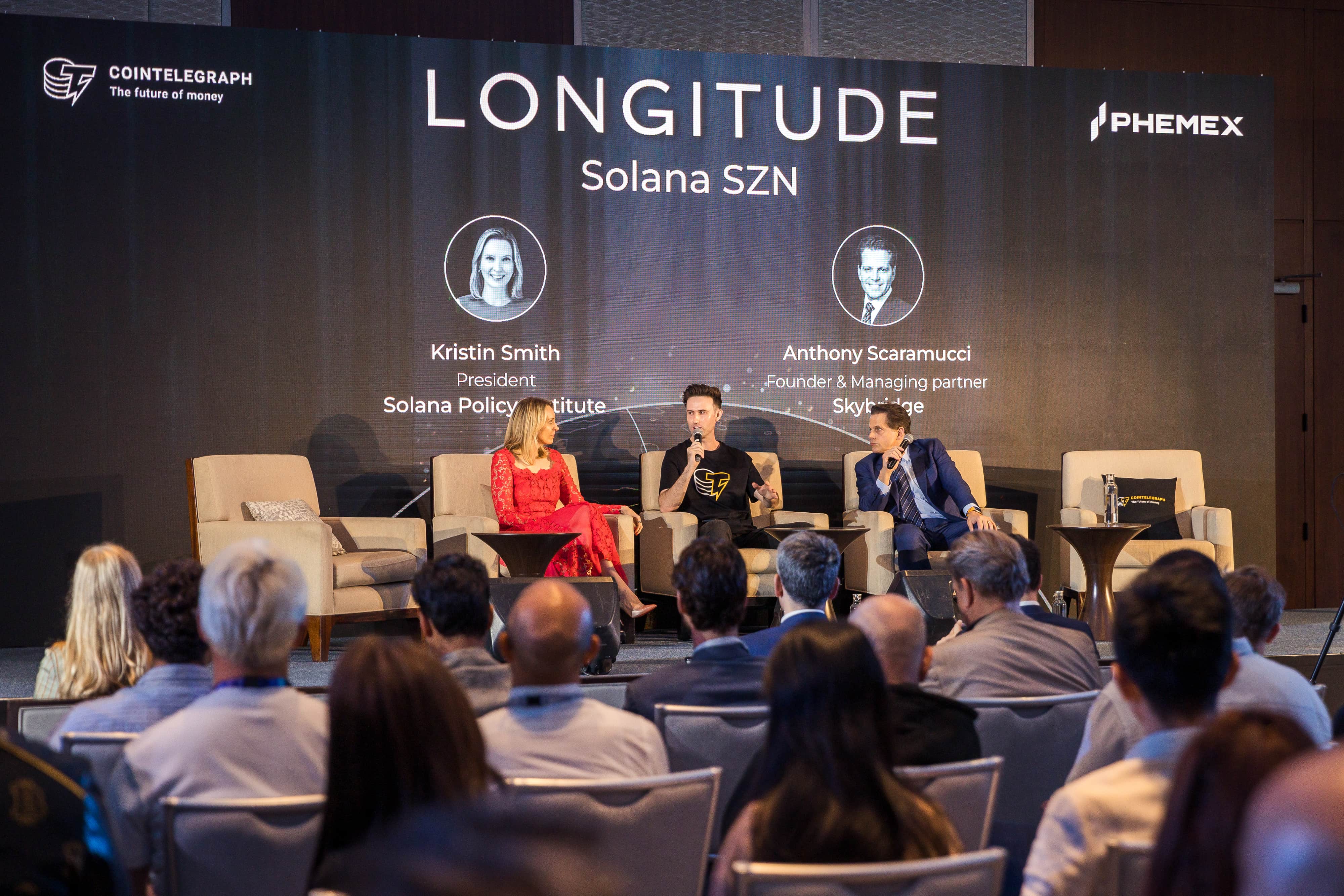
From left, Solana Policy Institute president Kristin Smith, Cointelegraph journalist Ciaran Lyons and SkyBridge founder Anthony Scaramucci.

“There’s been a tremendous amount of progress in 2025, an unprecedented amount,” Smith said. The president of the Solana Policy Institute has been intimately involved in crypto-focused discussions in Washington over the past 18 months.

“I think now that the US is catching up, you’re seeing policymakers around the globe figuring out what they need to do to stay competitive and keep crypto within their borders, which is different than trying to keep crypto outside of their borders.”

Scaramucci said educating policymakers remains a key hurdle to helping the traditional financial system adopt innovative protocols running on blockchain rails.

“Kristin has got to go into those rooms, and she’s got to explain to these people why this regulation needs to get passed so that we can retool the financial system and make the system less expensive and more seamless,” Scaramucci said.

The founder of SkyBridge Capital added that existing TradFi systems currently spend over $4 trillion on transaction verification globally. Shifting to protocols like Ethereum and Solana, which currently rank highest for RWA tokenization and onchain activity, could offer unrivalled efficiency and cost savings.

“That’s credit card fees, wire fees, a whole host of different things. If we were able to adopt Solana and use it in the process of tokenizing assets, you could save probably 75% of that, and that could be transformative for the global economy.”

Again, the major hurdle in recent years has been lagging regulations that have scuppered innovation and the ability for institutions to actively explore using blockchain protocols.

“We can do that today. It’s actually fairly easy to issue a share or a bond on a blockchain. The problem is the regulations don’t make sense when it comes to trading those assets. And so that’s a piece that we’re working on,” Smith said.

Related: Scaramucci family invested over $100M in Trump’s Bitcoin mining firm: Report

Scaramucci delivered a bullish parting message, highlighting the intent of America’s biggest financial institutions, BlackRock, Blackstone and JPMorgan, moving to tokenize assets on blockchain protocols.

“Don’t sit here myopically in 2025 and see this short-sighted opportunity. See the exponential technological opportunity that’s coming.”

Privacy in vogue

StarkWare founder Eli Ben-Sasson, who also co-founded the Zcash protocol, engaged in a thought-provoking fireside chat unpacking why privacy protocols have been in vogue in the latter half of 2025.

“I spent several decades of my life thinking about privacy, both the math and then the productization. Privacy is a spectrum.”

Ben-Sasson weighed in on the massive interest in Zcash (ZEC) in 2025. The privacy-focused cryptocurrency has been around since 2016, but saw a massive surge in value and interest off the back of support from various big names in the industry.

“At one extreme, you have the stuff we did at Zcash, which is resistance money level of privacy. If you need to jump on a plane and the government is pursuing you and you need to be fully you know, off the radar, then you have that,” Ben-Sasson said.
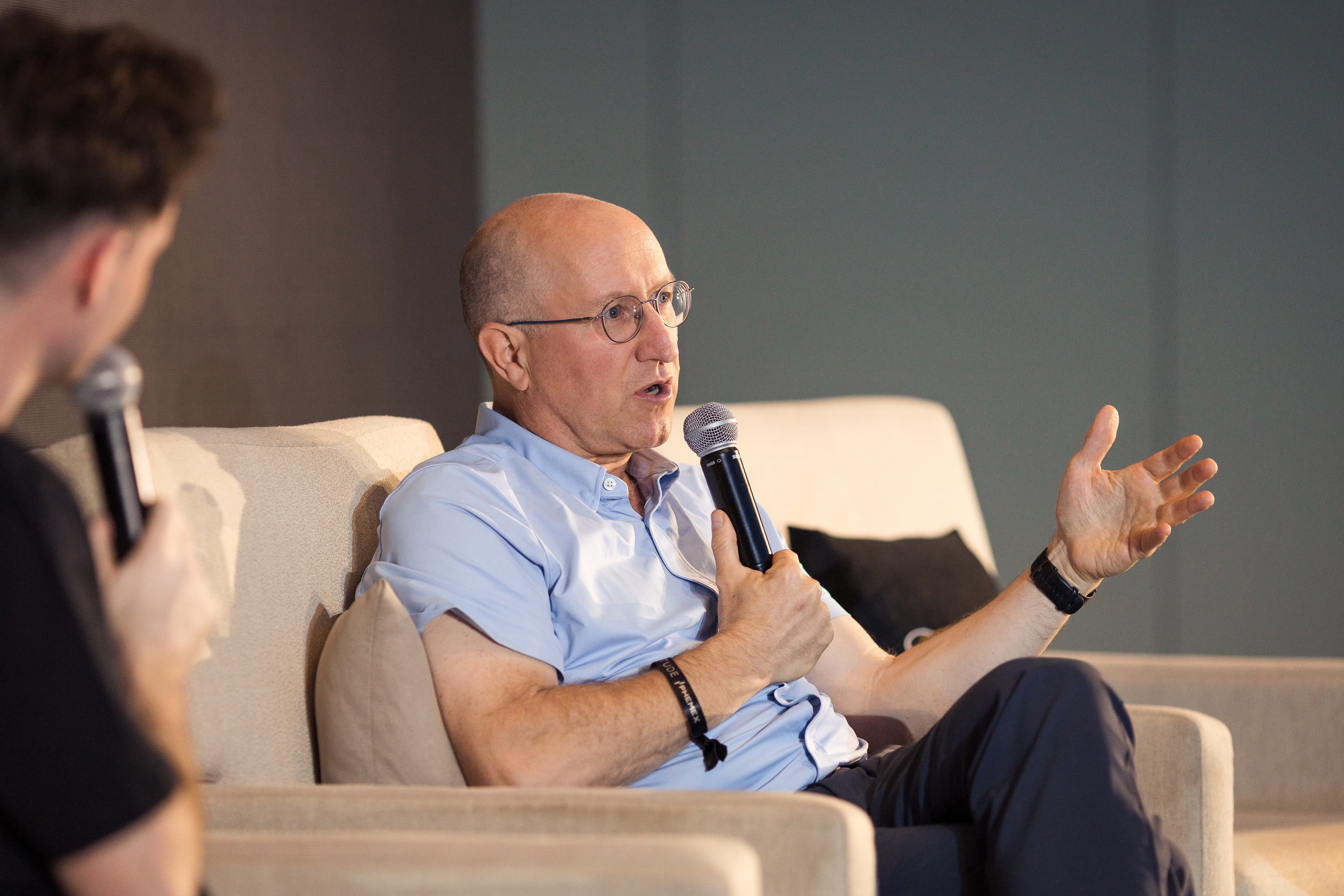
StarkWare co-founder Eli Ben-Sasson.

However, Ben-Sasson said the cost of that luxury is in the user experience. Wallets, programmability and user experience are harder to provide with that level of privacy. The less technical end of the spectrum affords a use case that is in high demand.

Related: Can Zcash’s rise revive the Bitcoin OP_CAT discussion?

“Enterprises come in, and they are going to want a different kind of privacy and also a different kind of privacy from the kind that we did on Zcash. They’re going to want privacy where they, as enterprises, and their customers are shielded away from other customers and from their competitors,” he said.

Security wake-up call

Security was another major talking point at LONGITUDE VII, given the spate of high-profile hacks and security incidents in 2025.
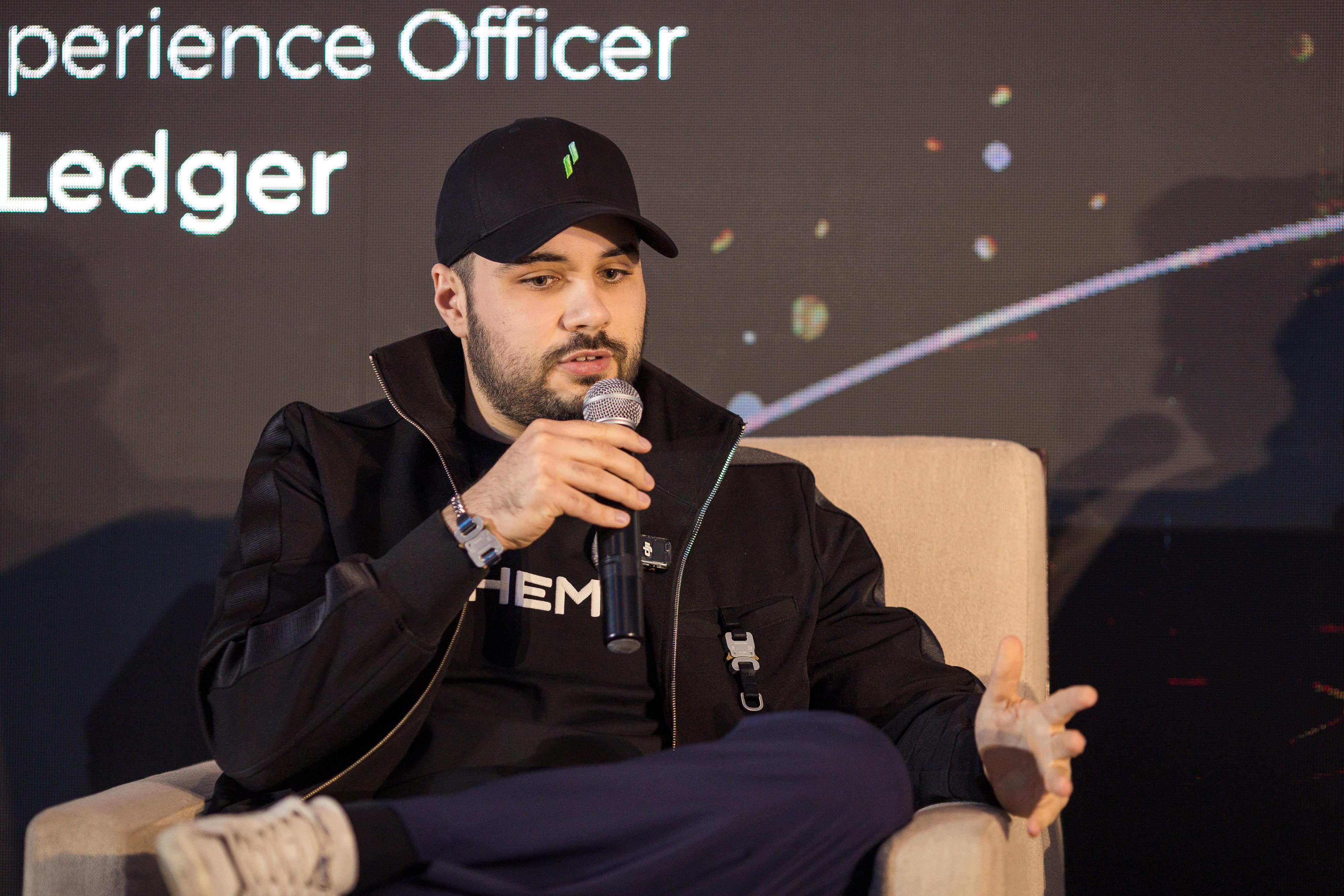
Phemex CEO Federico Variola. Source: Cointelegraph

The theft of $1.6 billion of Ether (ETH) from Bybit in March was a wake-up call for the industry. As Phemex CEO Federico Variola explained, social engineering and unverified access continue to be a major threat to everyday crypto users.

“I think combining the social layer of being a crypto participant with the financial layer, those kind of devices should be never interacting with each other.”

“It’s difficult in crypto because sometimes you need to participate in an airdrop, or like you want your Twitter account to be linked to the MegaETH ICO, for example. Nevertheless, you should be aware that you’re always exposing yourself to significant risk,” Variola said.

Related: Bybit hack: ‘Reckoning’ that led SafeWallet to rearchitect its systems

Ledger’s chief experience officer Ian Rodgers said that the onus is on service providers and infrastructure builders to think critically about the risks their platforms and users face.

“There are there is no way to make a risk go to zero. But it is the responsibility to minimize the risk as much as possible, to think about what is the worst thing that could possibly happen, what could go wrong here,” Rodgers said.

Cointelegraph’s exclusively LONGITUDE events will be back on the calendar in 2026, with editions planned for New York, Paris, Dubai, Hong Kong, Singapore, and Abu Dhabi.


Related Questions

QWhat does Anthony Scaramucci predict for the cryptocurrency industry in 2026?

AAnthony Scaramucci predicts 'exponential opportunity' for crypto, driven by institutional investment and clear regulations, with major financial institutions like BlackRock and JPMorgan moving to tokenize assets on blockchain protocols.

QAccording to Kristin Smith, what is the current regulatory challenge for trading tokenized assets?

AKristin Smith states that while it is easy to issue shares or bonds on a blockchain, the regulations don't make sense for trading those assets, which is a key area being worked on.

QWhy has there been increased interest in privacy protocols like Zcash in 2025?

AEli Ben-Sasson explains that privacy protocols are in vogue due to high demand for different levels of privacy, from resistance-money level privacy for individuals to enterprise-focused privacy shielding customers and competitors.

QWhat was the significance of the $1.6 billion Bybit hack in March 2025?

AThe $1.6 billion Ether theft from Bybit was a wake-up call for the industry, highlighting the major threats of social engineering and unverified access to crypto users.

QHow does Anthony Scaramucci suggest blockchain protocols like Solana could transform the global economy?

AScaramucci suggests that adopting Solana for tokenizing assets could save up to 75% of the over $4 trillion spent globally on transaction verification in TradFi systems, leading to transformative efficiency and cost savings.

Related Reads

The King of Blind Date Attire in Korea: How SK Hynix Made a Comeback Against Samsung?

In South Korea's dating scene, SK Hynix employees are now highly sought after, a status shift fueled by the company's astronomical profits and employee bonuses, projected to reach up to 6.1 million RMB per person by 2027. This marks a dramatic reversal for the long-time second-place player in memory semiconductors, which has now surpassed its rival Samsung in annual operating profit. The turnaround story began in 2008 when a struggling Hynix, emerging from bankruptcy restructuring, took a risky bet by agreeing to develop High Bandwidth Memory (HBM) with AMD. At the time, HBM had no clear market beyond high-end graphics cards and was a costly, complex technology. Major players like Samsung, pursuing its own HMC technology, declined. For Hynix, with only memory as its core business, it was a gamble born of necessity. The pivotal moment came in 2012 when SK Group Chairman Chey Tae-won acquired Hynix. Defying industry downturns, he invested heavily in R&D and fabrication, sustaining the HBM project through over a decade of commercial uncertainty and internal challenges. A key break occurred around 2016-2017 when Samsung faced production issues supplying HBM2 for Google's TPU, allowing SK Hynix to gain a crucial foothold in the data center market. The AI explosion post-ChatGPT in 2022 was the catalyst, turning HBM into a critical bottleneck for AI accelerators like NVIDIA's GPUs. By 2025, SK Hynix captured 62% of the global HBM market, leaving Samsung at 17%. For the first time, its annual operating profit exceeded Samsung's. Analysts point to the "innovator's dilemma" to explain Samsung's miss: its vast, successful business portfolio made it risk-averse, preventing an all-in bet on the initially niche HBM technology. In contrast, SK Hynix, as a challenger with its back against the wall, had no choice but to commit fully. The story highlights how Korea's chaebol system allows for ultra-long-term bets beyond quarterly pressures. However, SK Hynix's lead isn't guaranteed. Samsung is aggressively catching up on HBM4, and challenges like customer concentration (heavy reliance on NVIDIA) and technical hurdles in advanced packaging remain. The narrative underscores a market truth: the greatest alpha often comes from betting on uncertain, long-term directions others dismiss, much like HBM in 2008.

marsbit4m ago

The King of Blind Date Attire in Korea: How SK Hynix Made a Comeback Against Samsung?

marsbit4m ago

Understanding Hash in One Article: The "Browser Miner" on Ethereum

Hash is an Ethereum-based ERC-20 token described as a "browser-minable post-quantum token." Its key features include enabling browser-based GPU mining without specialized hardware, a fixed supply cap of 21 million tokens, immutable and permissionless smart contracts with no team allocation or pre-mining, and an emphasis on post-quantum security using Keccak256 hashing. The mining mechanism is a simplified on-chain proof-of-work where miners solve unique challenges tied to their wallet address. Key design elements prevent answer theft, with epochs resetting every 100 blocks (~20 minutes) and a per-block minting limit. Emission follows a Bitcoin-like halving schedule every 100,000 mints, starting at 100 tokens per mint. Projections suggest all tokens could be mined within approximately 294 days if a target rate of one mint per minute is sustained. Hash emphasizes "post-quantum" security by leveraging hash-based primitives like Keccak256, which are considered more resistant to quantum attacks compared to elliptic-curve cryptography. While not a fully post-quantum asset, it aligns with Ethereum's broader post-quantum research narrative. The project completed its Genesis sale at $0.03 and began trading on Uniswap, with its price reaching around $0.19. The initial circulating supply is small, with 5% sold in Genesis and 5% allocated to liquidity. The majority (47.6% of total supply) is allocated to early-stage mining, leading to a front-loaded emission schedule. This structure, combined with low initial liquidity, makes Hash a high-volatility, high-risk project dependent on sustained miner participation and market demand to absorb new supply.

marsbit17m ago

Understanding Hash in One Article: The "Browser Miner" on Ethereum

marsbit17m ago

OpenAI's Largest Internal Wealth Creation: 600 People Cash Out a Total of $6.6 Billion, 75 Take Home the Maximum $30 Million Each

A Wall Street Journal report reveals OpenAI's unprecedented pre-IPO wealth creation. In a single employee stock sale last October, over 600 current and former employees sold shares, collectively cashing out approximately $6.6 billion. Due to high investor demand, the company tripled the individual sale cap to $30 million, with about 75 employees selling the maximum amount. This event represents the largest such transaction in tech industry history for a private company. OpenAI's valuation was $500 billion for this tender offer. Employees with over two years of tenure were eligible, allowing many post-ChatGPT hires their first liquidity event. The company's stock has reportedly grown over 100-fold in seven years. Following a restructuring, employees collectively hold about 26% of OpenAI. The scale of executive wealth is also staggering. In court testimony related to Elon Musk's lawsuit, President and co-founder Greg Brockman confirmed his OpenAI stake is worth around $30 billion. Analysis indicates about 165 current and former employees hold a combined ~$164.9 billion in equity, averaging nearly $1 billion per person in paper wealth. OpenAI's per-employee stock-based compensation is estimated to be 34 times the average of major tech firms before their IPOs. OpenAI continues its rapid ascent, closing a $122 billion funding round at an $852 billion valuation in March. With monthly revenue hitting $2 billion, over 900 million weekly ChatGPT users, and plans for a potential trillion-dollar IPO in late 2026, this wealth-creation engine shows no signs of stopping.

链捕手40m ago

OpenAI's Largest Internal Wealth Creation: 600 People Cash Out a Total of $6.6 Billion, 75 Take Home the Maximum $30 Million Each

链捕手40m ago

Trading

Spot
Futures
活动图片




