Saito Blockchain Launches Mainnet, Pioneering Decentralised Web3 Infrastructure

TheNewsCryptoPublished on 2025-12-16Last updated on 2025-12-16

Abstract

Saito has successfully launched its mainnet, introducing a next-generation blockchain platform designed to deliver truly decentralized Web3 infrastructure. Unlike traditional blockchains, Saito uniquely compensates nodes for routing, storage, and compute work, enabling fully on-chain applications without reliance on centralized services. Key innovations include Automatic Transaction Rebroadcasting (ATR) to combat chain bloat, Block Staking for enhanced security, and Smart NFTs for efficient on-chain functionality. The network has proven stable, processing over 70 million blocks with no known issues. Saito’s architecture allows developers to build scalable, browser-native Web3 applications—such as social, gaming, and messaging apps—using familiar web tools, without proprietary stacks or external APIs.

Saito, a next‐generation peer‐to‐peer blockchain platform, today announced the successful launch of its mainnet, ushering in a new era of truly decentralised Web3 infrastructure built for efficient, sustainable, and scalable decentralised applications.

Unlike traditional blockchains that reward miners or stakers for block production alone, Saito uniquely compensates nodes for routing, storage, and compute work, enabling developers to build and power fully on‐chain applications without reliance on centralised cloud services, external APIs, or off‐chain backends.

Saito’s mainnet launch marks a pivotal milestone in blockchain infrastructure and real‐world Web3 adoption.

“Today represents a major moment for Web3,” said Richard Parris, Co‐Founder of Saito. “We started this project because we believed existing systems couldn’t deliver on decentralisation at scale. Now Saito is live, stable, and delivering what others can’t; a network that works for developers and users alike.

New Infrastructure Designed for Scalable, Decentralised Applications

Saito’s mainnet launch introduces several key innovations intended to address long‐standing challenges in decentralised application infrastructure:

  • Automatic Transaction Rebroadcasting (ATR): a novel mechanism that combats chain bloat and ensures long‐term data availability through incentive‐based rebroadcasting of transactions.
  • Block Staking: a low‐overhead, non‐inflationary mechanism that enhances network security even when transaction volumes are low.
  • Smart NFTs: dynamic, logic‐bearing assets that eliminate the need for complex virtual machines, enabling efficient on‐chain functionality.

These features collectively create a true peer‐to‐peer computing layer, where developers can build with familiar web‐native tools, without proprietary stacks, special languages like Solidity, or hidden backend services.

Proven Network Stability and Real‐World Testing

Saito’s network has processed more than 70 million blocks with consistent uptime and no known exploits, demonstrating robustness and reliability in real‐world conditions. All core components of Saito’s consensus mechanism have been publicly open and reviewed, with full documentation available at wiki.saito.io.

Mainnet status was declared after the network met key self‐defined benchmarks, including full decentralisation of participating nodes, successful ATR pruning cycles in production, and stability under real‐world load.

“With Saito in Mainnet, the world finally has a production blockchain without rich-get-richer economics and majoritarian attacks. I couldn’t be prouder of our community for helping us make Saito a reality, and would like to think that Satoshi would be proud too,” said David Lancashire, co-founder of Saito.

Developer‐Ready, Open For Innovation

Saito’s architecture enables developers, startups, and enterprises to build the next generation of Web3 applications – from social and messaging apps to gaming and encrypted communication – entirely on‐chain and browser‐native. No centralised APIs, backend servers, or external services are required, keeping user data and experience sovereign.

“We designed Saito so developers can ship fast, with payments built in and data ownership preserved,” added Parris. “This is decentralisation in action; practical, powerful, and open.”

About Saito

Saito is a decentralised blockchain protocol purpose‐built for peer‐to‐peer web applications and sustainable Web3 infrastructure. Built to eliminate dependencies on centralised services and unsustainable token models, Saito’s mainnet combines economic incentives with developer usability to support scalable, fully decentralised applications.

For more information about Saito’s architecture, live applications, and development tools, visit https://saito.io or explore technical documentation at wiki.saito.io.


Media Contact:

Disclaimer: TheNewsCrypto does not endorse any content on this page. The content depicted in this Press Release does not represent any investment advice. TheNewsCrypto recommends our readers to make decisions based on their own research. TheNewsCrypto is not accountable for any damage or loss related to content, products, or services stated in this Press Release.
TagsPress ReleaseSaito

Related Reads

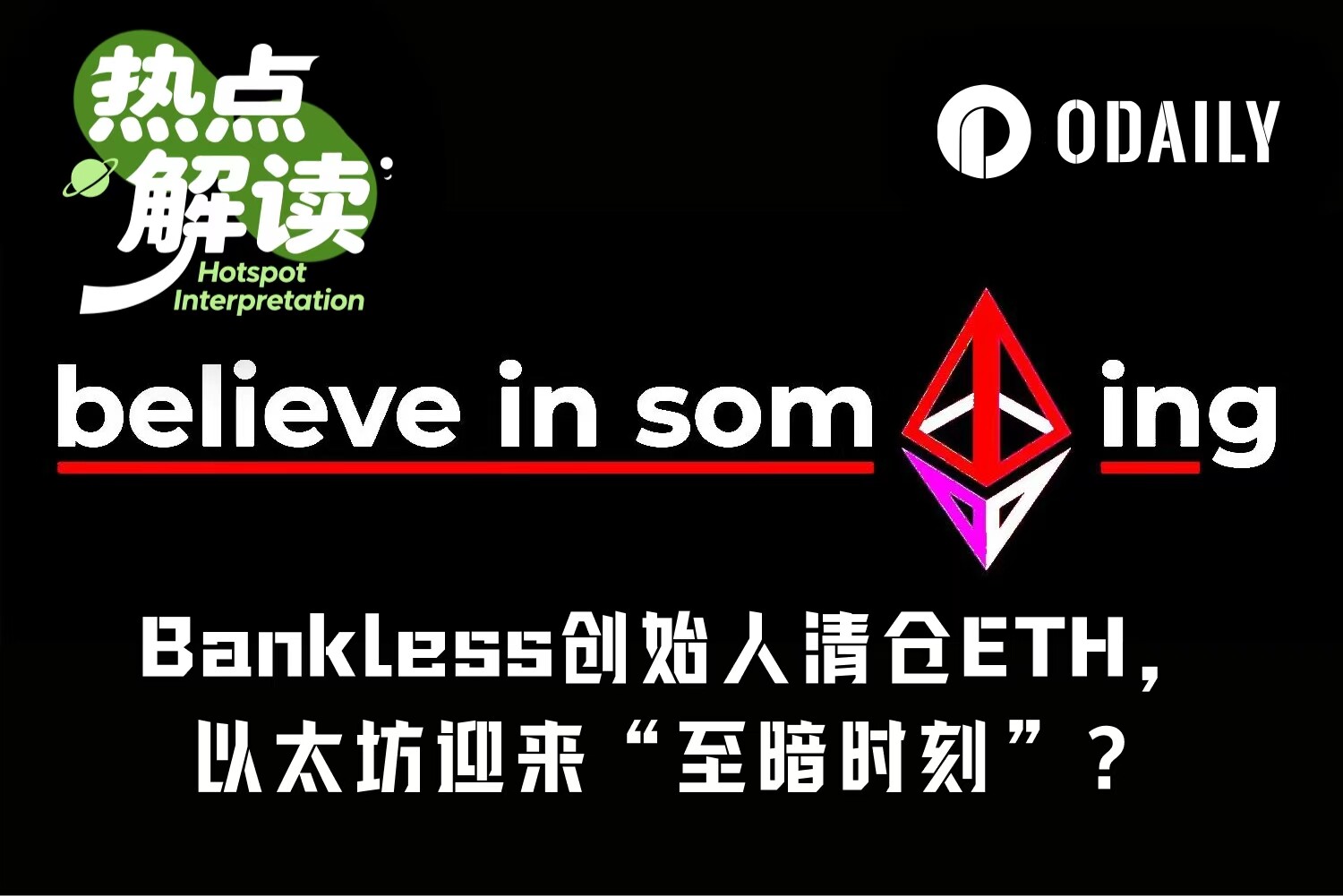
Bankless Founder Sells Off ETH, Collective Collapse of Ethereum Faith

Ethereum faces a "crisis of faith" as David Hoffman, co-founder of the prominent pro-Ethereum media outlet Bankless, announces he has sold all his ETH. This move, coupled with reports of major layoffs at Bankless, signals a potential retreat of Ethereum's staunchest supporters. Hoffman and co-founder Ryan Sean Adams confirm Bankless is entering a "second era," with Adams stepping back and Hoffman exploring new frontiers. Hoffman sharply criticizes the Ethereum Foundation, stating that ETH's poor price performance cannot be separated from its leadership. He has a history of public dissatisfaction, citing the Foundation's failure to drive market growth and its "endless manifestos." His frustration coincides with ETH/BTC hitting multi-month lows and a significant exodus of senior researchers and executives from the Ethereum Foundation, partly attributed to controversial "loyalty oaths." The article contrasts Ethereum's current predicament—with its Layer-2 narrative discredited and ecosystem stagnant—against what should have been a highlight year in 2026 amid tokenization trends. While a previous surge to near $5,000 was driven by corporate buybacks (DAT热潮), ETH has since fallen over 50%. The core question remains: with fading faith and intense competition, what is Ethereum's next solution? Hoffman's divestment symbolizes a growing disconnect between the community and the ecosystem's direction.

Odaily星球日报12m ago

Bankless Founder Sells Off ETH, Collective Collapse of Ethereum Faith

Odaily星球日报12m ago

a16z Invests Heavily with $356 Million in HYPE, Surpassing Paradigm to Become the Largest External Holder

On May 21st, HYPE surged past $59, reaching a new high since September 2025, with a market cap nearing $150 billion. Analysts attribute the rally to a short squeeze and significant ETF inflows. The launch of two U.S. spot ETFs for Hyperliquid has driven substantial capital, with their inflows at times surpassing those of Bitcoin and Ethereum ETFs. Major institutions are actively accumulating HYPE. Venture firm a16z has become the largest external holder with a $356 million position, surpassing Paradigm. Other firms like Goldman Sachs, Grayscale, and Galaxy Digital have also made large purchases, with Goldman reportedly selling portions of its XRP, ETH, and BTC holdings to buy HYPE. Bitwise CIO Matt Hougan calls HYPE one of the most "mispriced" assets, arguing its valuation should reflect Hyperliquid's broader platform beyond just a perpetual DEX token. The protocol generates substantial real revenue, using 97% of fees to buy back and burn HYPE. Its expansion into RWA commodities and prediction markets has driven user growth and transaction volume, now commanding about 70% of the on-chain perpetual DEX market. However, this rapid growth faces challenges. Traditional exchanges CME and ICE are pressuring the CFTC to regulate Hyperliquid, citing concerns over its impact on global commodity benchmarks. Concurrently, some major market makers have withdrawn significant liquidity from the platform. With HYPE up over 125% year-to-date, operational risks are rising. Large holders are reportedly hedging with sizable short positions. The regulatory outlook from the CFTC remains a key uncertainty, adding another layer to the ongoing battle over the future of on-chain finance.

链捕手13m ago

a16z Invests Heavily with $356 Million in HYPE, Surpassing Paradigm to Become the Largest External Holder

链捕手13m ago

Silicon Valley AI Landscape Shifts: Karpathy Jumps Ship, Musk Steps In, Son Left Holding the Fort

Silicon Valley's AI landscape is shifting as key talent moves and financial pressures mount. Andrej Karpathy, a prominent AI researcher and former OpenAI co-founder, has announced he is joining competitor Anthropic full-time. His departure highlights a talent drain at OpenAI, where most of the original founders have now left. Karpathy, known for his engineering work at Tesla, is expected to help Anthropic develop more efficient model training methods using its Claude AI, challenging OpenAI's current compute-intensive approach. The move coincides with diverging financial paths for the two AI giants. Anthropic is reportedly on track to post its first quarterly profit with $10.9B in sales, while OpenAI, despite a massive $852B valuation and a recent $122B funding round led by SoftBank's Masayoshi Son, faces significant compute costs and potential heavy losses as it pushes for a rapid IPO. Son has invested over $60B in OpenAI, a concentrated bet that has drawn internal criticism over its risk, reminiscent of SoftBank's past losses on WeWork. Elon Musk, an OpenAI co-founder turned rival, is also influencing the dynamic. After losing a lawsuit against OpenAI, Musk's SpaceX leased its massive "Colossus 1" computing center, equipped with over 220,000 Nvidia GPUs, to Anthropic in a deal worth $40-45B. This provides Anthropic with crucial computational resources while pressuring OpenAI. The developments signal a consolidation where only well-capitalized players can compete in foundation model training. The focus is shifting from pure research to commercial viability, cost-efficient engineering, and strategic resource allocation, with companies like Anthropic finding success by focusing on profitable enterprise applications like code generation.

marsbit18m ago

Silicon Valley AI Landscape Shifts: Karpathy Jumps Ship, Musk Steps In, Son Left Holding the Fort

marsbit18m ago

Trading

Spot
Futures
活动图片