Russia Advances Bill To Regulate Crypto Market, Eyes July 1st Implementation

bitcoinistPublished on 2026-04-23Last updated on 2026-04-23

Abstract

Russia has advanced a key crypto bill, "On Digital Currency and Digital Rights," through its first parliamentary reading, aiming to establish a regulatory framework by July 1, 2026. The legislation recognizes digital assets as property and grants the Central Bank of Russia authority to license and oversee the market, permitting only licensed entities like exchanges and brokers to operate. It prohibits using crypto for domestic payments but allows it for cross-border settlements to bypass sanctions. The bill also introduces investor protection measures, including annual purchase limits for non-qualified investors and stricter oversight of mining activities.

Russia has advanced a key crypto bill on its first reading, as part of its efforts to establish a framework and fully bring the digital assets market out of the shadows in the next few months.

Russia Moves To Regulate Crypto Market By Summer

On Tuesday, the State Duma, the lower house of Russia’s legislature, advanced a key bill to legalize cryptocurrencies and establish a framework to regulate the digital assets in the country’s market.

According to the state news agency TASS, lawmakers passed the bill “On Digital Currency and Digital Rights” on its first reading, with 327 deputies voting in favor. The Russian government first introduced the draft in December 2025, seeking to establish the regulatory framework by summer 2026.

After clearing its first review, the bill still needs to clear the second and third readings in the State Duma. Then, it would proceed to the Federation Council, the upper chamber of the Federal Assembly, for consideration before reaching the President’s desk for signature. If passed, the bill will take effect on July 1, 2026, except for provisions with different effective dates, TASS reported.

The draft will recognize digital assets as property and grant the Central Bank of Russia (CBR) the authority to license, regulate, and oversee the local crypto market. Under the proposed legislation, only licensed professional participants supervised by the Bank of Russia will be allowed into the market.

“No anonymous exchanges or ‘black’ brokers. Exchanges, brokers, and depositories will receive licenses, and the Central Bank will monitor compliance. Transactions conducted through underground platforms will automatically be at risk of being blocked and of losing funds,” Kaplan Panesh, deputy chairman of the State Duma Committee on Budget and Taxes, explained.

The bill also defines the entities authorized to facilitate the circulation of crypto assets in the country, including exchanges, brokers, trust managers, and digital depositories holding the relevant licenses from the central bank.

The proposed draft establishes rules and requirements for authorized entities, and a simplified access procedure for entities already operating under the CBR’s experimental legal regime. It also introduces a simplified procedure for banks and brokers wanting to dive into crypto.

Discussing the regulation of crypto mining activities using Russian information infrastructure facilities, the deputy highlighted that “It is now a legal activity, but with clear rules: the use of only Russian infrastructure, and the reporting of equipment and currency produced.”

Digital Assets Allowed For Cross-Border Settlements

Notably, the bill will prohibit the use of crypto for paying for goods, services, or labor within the country, the report noted. However, it will allow its use for cross-border settlements to bypass sanctions restrictions.

“We have a national currency—the ruble—and it must remain the sole legal tender,” Deputy Panesh emphasized. “But we are making an exception for foreign trade. This allows Russian companies to settle accounts with foreign counterparties using cryptocurrency, bypassing sanctions restrictions. In effect, we are creating a legal instrument for cross-border settlements.”

The legislation will also introduce a tiered system that would limit the investor’s access depending on classification, aiming to “protect ordinary people from losing all their savings in a volatile market.”

As Bitcoinist previously reported, non-qualified investors would be limited to purchasing up to 300,000 rubles annually, worth around $3,800, in the most liquid cryptocurrencies after passing a knowledge test. Meanwhile, qualified investors would be able to purchase unlimited amounts of any digital asset after passing a risk-awareness test.

Panesh noted that the digital asset market in Russia has been in a gray area for years, creating risks for both citizens and the economy, adding that the legislation marks a crucial step for the local market.

“Now we are clearly defining: digital currency is property. This means it can be defended in court, included in the bankruptcy estate, and taken into account in divorce proceedings. This is a crucial step for the legal protection of millions of people who already own such assets,” he concluded.
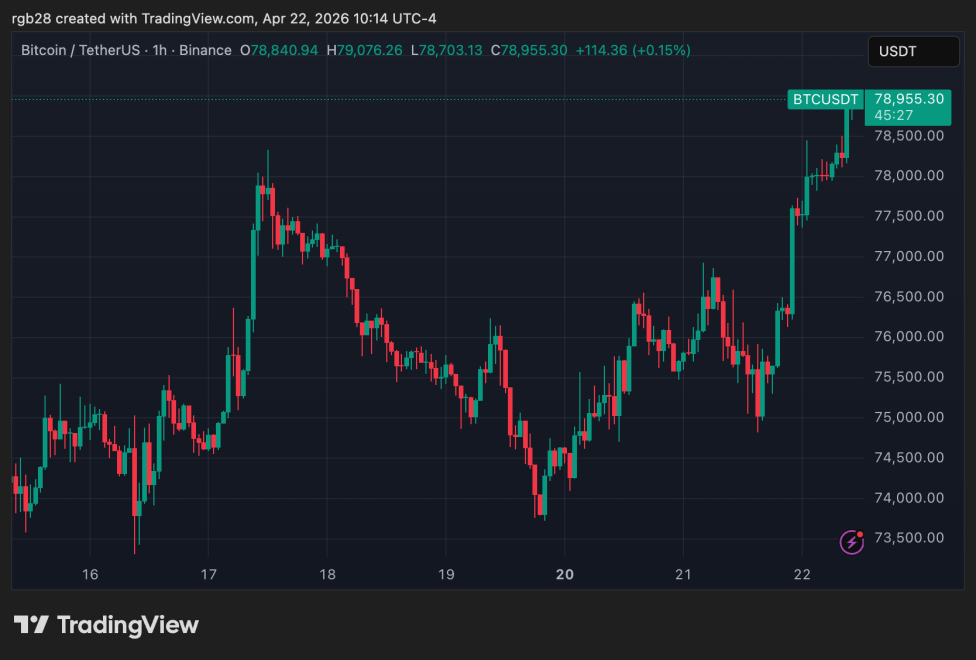
Bitcoin (BTC) trades at $78,955 in the one-week chart. Source: BTCUSDT on TradingView


Related Questions

QWhat is the main purpose of the crypto bill advanced by Russia's State Duma?

AThe main purpose of the bill is to legalize cryptocurrencies and establish a regulatory framework to bring the digital assets market out of the shadows, recognizing crypto as property and granting the Central Bank of Russia authority to license, regulate, and oversee the market.

QBy what date is the bill expected to take effect if passed, and what is one key exception to this date?

AThe bill is expected to take effect on July 1, 2026, except for provisions that have different effective dates.

QHow does the bill propose to regulate the use of cryptocurrency for payments within Russia and for international trade?

AThe bill prohibits the use of cryptocurrency for paying for goods, services, or labor within Russia, but allows its use for cross-border settlements to bypass sanctions restrictions in foreign trade.

QWhat are the investment limits for non-qualified investors under the proposed tiered system?

ANon-qualified investors would be limited to purchasing up to 300,000 rubles (approximately $3,800) annually in the most liquid cryptocurrencies after passing a knowledge test.

QWhich government body will be granted the authority to license and oversee the local crypto market according to the bill?

AThe Central Bank of Russia (CBR) will be granted the authority to license, regulate, and oversee the local crypto market.

Related Reads

STRC Breaks Below $95: Why Does It Continue to Depeg? Is There Default Risk?

"STRC Falls Below $95: Why the Persistent Depegging and Is There Default Risk?" The article discusses the recent decline in the price of STRC, a perpetual preferred stock issued by Strategy (MSTR) designed to trade around a $100 par value. As of publication, STRC traded at $94.65, raising market concerns. STRC is described as a high-yield cash flow product, offering an 11.50% annual dividend paid monthly. Its "preferred" status grants it priority over common stock for dividends and in liquidation. Key reasons cited for the price depegging include: 1. **Bitcoin's Price Drop:** MSTR's assets are heavily tied to Bitcoin (BTC), which fell over 21% from its recent high, pressuring all Strategy-related products. 2. **Competitive Pressure:** Rival Strive Asset Management's similar product, SATA, offers daily dividends and has maintained its $100 par value with a ~13% yield. In response, Strategy has proposed changing STRC's dividend frequency from monthly to bi-weekly, pending shareholder vote. 3. **Technical Selling:** A break below $100 may have triggered algorithmic selling and stop-losses, exacerbating the decline. Regarding default risk, the analysis suggests it is currently low. Strategy founder Michael Saylor confirmed the June 2026 dividend rate remains at 11.50% with no cuts or suspensions. The company's massive reserve of 843,706 BTC provides a significant backstop for its obligations. Industry opinions are mixed. Some analysts view the BTC holdings as reliable support for dividends, while critics like Peter Schiff warn of potential dividend cuts leading to price crashes and lawsuits. Others highlight inflation risk and the company's ability to reduce dividends without a formal default. In summary, STRC's drop is attributed to BTC volatility, competition, and technical factors. While immediate default risk appears contained, the product faces challenges from market conditions and competitive dynamics.

marsbit1h ago

STRC Breaks Below $95: Why Does It Continue to Depeg? Is There Default Risk?

marsbit1h ago

AI Trading Cools, South Korean Stocks Plunge 1.8%, Spot Gold Rises 1%, Bitcoin Dives

A sell-off in AI-related stocks, triggered by Broadcom's disappointing earnings forecast, sent shockwaves through global markets. South Korea's KOSPI led Asia's decline, plunging 1.8% as the risks from concentrated chip stock gains and surging leveraged investments came to the fore. The tech-heavy Nasdaq 100 futures fell 0.5% following Broadcom's 14% after-hours plunge, which signaled a slower-than-expected transition to AI clients. This pullback extended Wall Street's weakness, halting the S&P 500's nine-day rally amid hawkish Fed signals and renewed Middle East tensions. South Korean authorities convened an emergency meeting, pledging "immediate measures" against market volatility and warning of record-high stock margin debt. The adjustment rippled across assets: Bitcoin fell to around $64,000, its lowest since February, while safe-haven gold rose 1% on bargain hunting. Oil prices dipped on Middle East ceasefire news. Market analysts noted the sell-off was driven by profit-taking after massive gains, particularly in chip stocks like Samsung and SK Hynix, which now dominate the KOSPI. Wall Street banks are divided on Korea's outlook, with Goldman Sachs raising its target while Citigroup and others warn of overvaluation and a potential bubble. Bridgewater's Ray Dalio noted that great technological shifts often create bubbles. Meanwhile, Fed officials' hints at potential future rate hikes added to the cautious mood ahead of key U.S. jobs data.

华尔街日报1h ago

AI Trading Cools, South Korean Stocks Plunge 1.8%, Spot Gold Rises 1%, Bitcoin Dives

华尔街日报1h ago

Trading

Spot
Futures
活动图片




