Ripple Gains UK Regulatory Approval Ahead Of FCA’s New Crypto Licensing Regime

bitcoinistPublished on 2026-01-10Last updated on 2026-01-10

Abstract

Ripple has secured a regulatory approval from the UK’s Financial Conduct Authority (FCA) through its subsidiary Ripple Markets UK Ltd. The company obtained an Electronic Money Institution (EMI) license under the Money Laundering Regulations (MLR), allowing it to provide payment services and issue electronic money. However, the approval comes with restrictions: Ripple cannot operate crypto-fiat automated exchange machines, offer services to retail clients, or issue e-money to consumers without prior written consent from the FCA. This approval aligns with the UK’s broader effort to integrate crypto into its financial framework. The FCA will introduce a new crypto licensing regime under the Financial Services and Markets Act starting September 2026. Ripple and other crypto firms must reapply for authorization under the new rules by October 2027 to continue regulated activities.

In a significant development, Ripple has expanded its footprint in regulated markets after gaining regulatory approval from the UK’s financial authorities to provide payment services.

Ripple Obtains FCA Approval

On Friday, Ripple secured a major regulatory victory in the UK by officially obtaining its registration approval with the Financial Conduct Authority (FCA) through its subsidiary Ripple Markets UK Ltd.

According to the FCA’s official records, the company obtained an Electronic Money Institution (EMI) license under the country’s Money Laundering Regulations (MLR). Therefore, it will be able to conduct certain crypto-related activities in the UK.

The EMI registration will allow Ripple to provide payment services and issue electronic money, according to the FCA website. However, it will remain subject to key restrictions without the financial authority’s approval.

First, “Ripple Markets UK Ltd will not, without the prior written consent of the Authority, provide the following services: 1. The firm will not operate a machine which utilises any automated processes to exchange cryptoassets for money or money for cryptoassets 2. Offer or commence any services to retail clients,” the records read.

In addition, the company cannot appoint any agents or distributors, and “will not issue electronic money, or provide payment services, to a consumer, micro-enterprise or charity.”

Ripple’s regulatory approval comes amid the authorities’ efforts to develop a comprehensive financial services regulation that integrates crypto assets into the existing framework, positioning the UK as a global crypto hub.

As reported by Bitcoinist, the UK Treasury is set to extend existing laws to cover crypto firms, moving exchanges, wallet providers, and other crypto service companies from the current anti-money-laundering registration to the regulatory regime of banks and brokers.

FCA To Start New Registration Regime In September

Ahead of the new rules’ implementation, set to take effect in October 2027, the FCA recently unveiled a timeline for crypto firms to comply with the new registration regime, which could affect Ripple’s recent victory.

On January 8, the financial regulator published a notice informing that it expects to open the application period for crypto firms requesting authorization in September 2026.

Notably, firms seeking to undertake any of the new crypto asset regulated activities will need new approvals to undertake those activities authorized by the FCA under the Financial Services and Markets Act 2000 (FSMA).

Therefore, crypto companies operating in the UK must secure approval or a variation of the existing permission. The FCA emphasized that “firms that are registered with us under the MLRs should note that there will be no automatic conversion and that they will need to secure authorisation by us under FSMA prior to the commencement of the new regime.”

Based on this, Ripple’s UK subsidiary will need to reapply in September to continue conducting regulated crypto activities under the new regime. Firms that apply during the established window are expected to receive a decision before the rules take effect. Nonetheless, companies that have not received approval by October 2027 will be allowed to continue operating until a decision is made.

Meanwhile, companies that miss the application period or are not authorized before the new rules are enacted will enter a “transitional provision.” This will allow them to continue fulfilling existing contracts, but they won’t be able to conduct new regulated crypto activities in the UK until they are authorized.
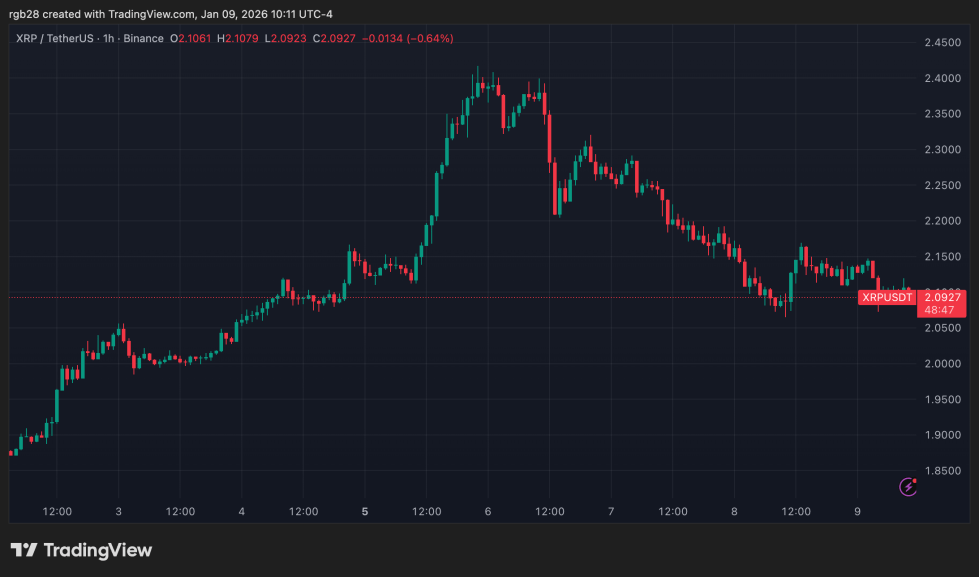
XRP trades at $2.09 in the one-week chart. Source: XRPUSDT on TradingView


Related Questions

QWhat type of regulatory approval did Ripple obtain from the UK's Financial Conduct Authority (FCA)?

ARipple obtained an Electronic Money Institution (EMI) license under the UK's Money Laundering Regulations (MLR) through its subsidiary Ripple Markets UK Ltd.

QWhat are the key restrictions placed on Ripple Markets UK Ltd despite the FCA approval?

AThe company cannot operate automated crypto-to-fiat exchange machines, offer services to retail clients, appoint agents or distributors, or issue electronic money or provide payment services to consumers, micro-enterprises, or charities without prior written consent from the FCA.

QWhen will the FCA open the application period for crypto firms seeking authorization under the new regime?

AThe FCA expects to open the application period for crypto firms requesting authorization in September 2026.

QWhat must Ripple's UK subsidiary do to continue conducting regulated crypto activities under the new regime starting October 2027?

ARipple's UK subsidiary will need to reapply for authorization under the Financial Services and Markets Act 2000 (FSMA) in September 2026, as there is no automatic conversion from the current MLR registration.

QWhat happens to crypto companies that are not authorized by the FCA before the new rules take effect in October 2027?

ACompanies not authorized by October 2027 will enter a 'transitional provision' allowing them to fulfill existing contracts but not conduct new regulated crypto activities until they receive authorization.

Related Reads

Funding Weekly Report | 14 Public Funding Events, Kalshi Completes $10B New Funding Round at $220B Valuation Led by Coatue Management

Weekly Funding Roundup: 14 Deals and $10.49B+ in Total Funding, Led by Kalshi's $1B Round Last week (5.4-5.10) saw 14 notable funding events in the global blockchain ecosystem, raising over $10.49 billion in total. Key highlights include Kalshi, a prediction market platform, securing a $1 billion round led by Coatue Management, reaching a $22 billion valuation. The platform now boasts ~2 million MAUs and $178B in annualized trading volume. In DeFi, regulated on-chain reinsurer OnRe raised $5 million in Series A funding, and Bitcoin-backed credit protocol Saturn Credit completed a $2 million seed round. For Infrastructure & Tools, OpenTrade raised $17 million to expand its stablecoin yield infrastructure, and RWA platform Balcony secured $12.7 million to deploy its property settlement service in the US. Centralized Finance saw one deal: AI-driven trading platform Stockcoin.ai completed a seed round led by Amber Group. In the prediction market sector alongside Kalshi, AI-powered platform Elastics raised $2 million. Other notable deals include SC Ventures' strategic investment in crypto market maker GSR and Centrifuge securing a "seven-figure" investment from Coinbase to become a core RWA partner for Base. On the investor side, Haun Ventures raised a new $1 billion fund targeting crypto and AI, and Multi Investment raised ~$616 million to focus on blockchain and Web3 investments.

marsbit5m ago

Funding Weekly Report | 14 Public Funding Events, Kalshi Completes $10B New Funding Round at $220B Valuation Led by Coatue Management

marsbit5m ago

This Week's Key Events Preview | U.S. to Release April CPI Data; U.S. Senate Banking Committee to Review "Digital Asset Market Structure Act of 2025"

Weekly News Preview: Key events for May 12-16 include major economic and crypto industry developments. On Tuesday, May 12, the U.S. will release its April CPI data. Additionally, the gaming blockchain Ronin will begin a 10-hour migration to an Ethereum Layer 2, built on OP Stack with EigenDA for data availability. This aims to leverage Ethereum's security and settle RON's annual inflation below 1%. Base's first independent network upgrade, "Base Azul," is scheduled for mainnet activation on Wednesday, May 13, focusing on security, performance, and developer experience enhancements. Thursday, May 14, sees the U.S. Senate Banking Committee voting on the "Digital Asset Market Structure Act of 2025." In other news, Solana DeFi protocol Carrot will shut down, setting a final withdrawal deadline due to impacts from the Drift exploit. The Moscow Exchange will launch futures trading for Solana, Ripple, and Tron indices (RUB-settled) for qualified investors. Multiple service closures are scheduled for Friday, May 15. Dmail Network will begin winding down due to unsustainable infrastructure costs and failed commercialization. Users must export data before this date. Separately, the Cosmos-based lending blockchain UX Chain will fully shut down. Finally, on Saturday, May 16, gaming infrastructure provider Lattice will wind down operations, with its Redstone Layer 2 network ceasing. Users are urged to withdraw assets, especially from contracts like Uniswap pools, before the shutdown.

链捕手1h ago

This Week's Key Events Preview | U.S. to Release April CPI Data; U.S. Senate Banking Committee to Review "Digital Asset Market Structure Act of 2025"

链捕手1h ago

Trading

Spot
Futures
活动图片




