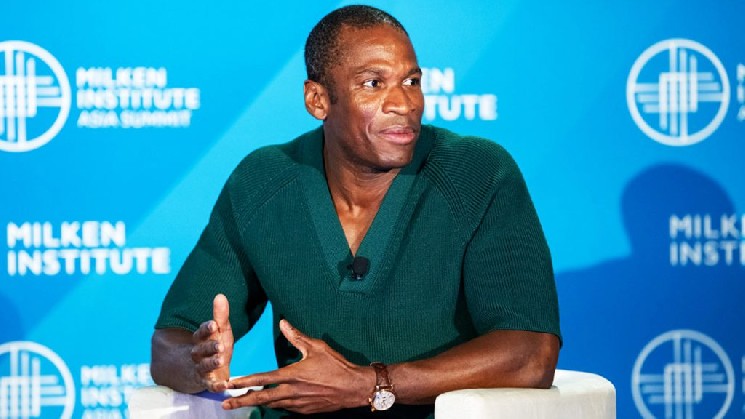
Ripple CEO Predicts 80% Chance Crypto Market Structure Bill Signed By End Of April

bitcoinistPublished on 2026-02-18Last updated on 2026-02-18

Abstract

Anticipation is building around the CLARITY Act, a key digital asset market structure bill. According to reports, the White House is considering new talks as soon as Thursday to address the contentious issue of stablecoin yields, a previous meeting having ended without agreement. Banking representatives are firmly against stablecoins offering yield or rewards. Despite this, Ripple CEO Brad Garlinghouse expressed strong confidence that differences will be resolved. He estimates an 80% chance the bill will be signed into law by the end of April, arguing that regulatory clarity, even in an imperfect bill, is better than the current chaos for the crypto sector.

As anticipation builds around the long-awaited digital asset market structure legislation known as the CLARITY Act, negotiations between the crypto industry and the banking sector appear to be resuming this week.

White House Considers New Crypto Talks

According to Crypto In America journalist Eleanor Terrett, the White House is weighing the possibility of holding another meeting as soon as Thursday to address one of the most contentious elements of the bill: stablecoin yield.

Citing two sources familiar with the discussions, Terrett reported that administration officials are considering convening representatives from both banks and crypto firms for renewed talks. However, she noted that no final decision has been made and plans have yet to be confirmed.

The potential meeting follows a previous round of discussions that ended without resolution. Terrett reported Monday that last Tuesday’s White House gathering — which included senior policy staff from major banks, crypto companies, and trade associations — concluded without an agreement.

According to her reporting, banking representatives circulated a one-page document titled “Yield and Interest Prohibition Principles.” The document argued that stablecoins should not offer yield or rewards, drawing a firm line that has become a central sticking point in the broader negotiations.

Despite the setback, Ripple Chief Executive Officer Brad Garlinghouse has publicly expressed confidence that the crypto and banking sectors will ultimately bridge their differences, clearing the way for final approval of the legislation and its signing by President Donald Trump.

Ripple CEO Says ‘Clarity Is Better Than Chaos’

In comments reported Tuesday by The Street, Garlinghouse suggested that once the remaining disputes are resolved, the CLARITY Act could move swiftly toward enactment. He even alluded to a potential timeline, signaling urgency around the process.

Garlinghouse called on the crypto community to rally behind the legislation rather than hold out for a flawless outcome. He argued that progress should not be derailed by disagreements over specific provisions.

“I think it’s so clear that clarity is better than chaos,” he said, emphasizing that regulatory certainty would benefit the entire sector. While acknowledging that the CLARITY Act is not perfect, Garlinghouse maintained that no piece of legislation ever is.

Garlinghouse went further, estimating there is an 80% probability that the anticipated crypto market structure bill will be signed into law by the end of April.

The daily chart shows the total market cap at $2.3 trillion as of Tuesday. Source: TOTAL on TradingView.com

Featured image from OpenArt, chart from TradingView.com

Related Questions

QWhat is the name of the digital asset market structure legislation discussed in the article?

AThe CLARITY Act.

QAccording to Ripple CEO Brad Garlinghouse, what is the probability that the crypto market structure bill will be signed by the end of April?

AHe estimates an 80% probability.

QWhat is the central sticking point in the negotiations between the crypto industry and the banking sector?

AThe central sticking point is the debate over whether stablecoins should be allowed to offer yield or rewards.

QWho reported that the White House is considering holding another meeting to discuss stablecoin yield?

ACrypto In America journalist Eleanor Terrett.

QWhat was the title of the one-page document circulated by banking representatives at the previous White House meeting?

A"Yield and Interest Prohibition Principles."

Related Reads

Goldman Sachs: July Smashes Through Crowded Trades, U.S. Stock Bull Market Not Broken but Harder to Navigate

Goldman Sachs: July Sees Crowded Trades Unwound, U.S. Bull Market Intact but Getting Tougher. The U.S. stock market in July did not see an index-level crash, but rather a significant unwinding of speculative positions. While the S&P 500 remained stable—trading within a narrow 3.5% range and staying within 2% of its high—underlying market dynamics were volatile. Heavily crowded trades, particularly in high-momentum tech, AI-linked stocks, and Asian strategies, faced severe pressure and forced deleveraging. Data indicates this was a meaningful cleanse, not a minor adjustment. Global tech exposure saw its largest sell-off in over five years, leverage in Korean equity ETFs plummeted, and Goldman's prime brokerage recorded the largest gross exposure reduction since late 2022. Leverage on momentum factors among fundamental long/short clients fell to the 28th percentile of its one-year range. The AI trade narrative shifted from pure potential to a focus on tangible returns. While Meta failed to show clear AI monetization, Microsoft and Amazon provided evidence that massive capital expenditure is translating into scalable revenue and product growth, preventing a blanket sell-off of the AI sector. The Federal Reserve's more opaque communication style and volatility in long-end Treasury yields have introduced new friction, particularly for rate-sensitive growth and tech stocks. The broader outlook for U.S. equities remains favorable, supported by a strong economy, robust earnings, and substantial AI capital expenditure. However, risk/reward is no longer cheap, and the market's upward elasticity has weakened. The Nasdaq 100's trajectory—up 12% year-to-date despite significant pullbacks—illustrates that the bull trend persists but the path is becoming more difficult. The key lesson from July is that the market no longer rewards crowded, highly leveraged trades, requiring more disciplined and liquid portfolio approaches.

marsbit1h ago

Goldman Sachs: July Smashes Through Crowded Trades, U.S. Stock Bull Market Not Broken but Harder to Navigate

marsbit1h ago

Interview with Robinhood Executive: Meme + Tokenized US Stocks as "Barbell" Customer Acquisition Strategy, All Business Lines Achieve Hundreds of Millions in Revenue

Interview with Robinhood executive Johann Kerbrat reveals the company's "barbell" customer acquisition strategy for its new Robinhood Chain, combining meme tokens with tokenized stocks. Three weeks after mainnet launch, the chain has seen over $3B in weekly DEX volume and 105M transactions. Kerbrat explains the logic behind the permissionless chain: meme tokens attract DeFi users, while tokenized real-world assets (RWA), currently over 90 US stocks and ETFs accessible in 120+ countries, serve global users. The goal is to bring Robinhood's 27 million funded accounts on-chain by simplifying DeFi with a user-friendly interface, exemplified by features like Robinhood Earn which offers yield without requiring wallet management. Built on Arbitrum's technology stack for its speed, low cost, and Ethereum's security, the chain focuses on financial products like Earn, spot trading, and perpetuals. Kerbrat downplays direct competition with platforms like Base, emphasizing the goal of expanding the overall market for on-chain assets. He details selective partnerships (e.g., Morpho, Lighter) based on compliance, unique UX, and differentiation. While regulatory clarity is pending for US perpetuals, the expansion continues via Bitstamp in Europe. Finally, Kerbrat positions Robinhood as a "super app" integrating stocks, options, crypto, banking, and AI trading, with all major business lines generating hundreds of millions in revenue. For the chain, current priority is driving adoption over maximizing gas fee revenue.

marsbit4h ago

Interview with Robinhood Executive: Meme + Tokenized US Stocks as "Barbell" Customer Acquisition Strategy, All Business Lines Achieve Hundreds of Millions in Revenue

marsbit4h ago

Trading

Spot
活动图片