PwC Drops Guard On Crypto After US Digital Asset Rule Changes

bitcoinistPublished on 2026-01-06Last updated on 2026-01-06

Abstract

PwC, one of the Big Four accounting firms, has reversed its cautious approach toward cryptocurrency following new U.S. regulatory developments, including the Genius Act which regulates stablecoins. The firm is now actively promoting the use of digital asset technology, particularly stablecoins, to improve payment efficiency. This shift reflects growing institutional acceptance of crypto assets, especially stablecoins, which have seen increased adoption globally—including in Hong Kong, Japan, and Europe. Despite recent market consolidation, the stablecoin market cap remains strong near its all-time high at $307 billion. Meanwhile, Bitcoin is trading around $92,900, up 6% over the past week.

Big Four accounting firm PwC has reversed its cautious stance on crypto after regulatory developments related to the space in the United States.

PwC Has Softened Its Stance On Crypto

According to a report from the Financial Times, PwC has changed its strategy around digital assets following the new laws passed by Donald Trump’s administration. PricewaterhouseCoopers, PwC in short, is a multinational professional services network headquartered in London. It provides services such as audits, tax planning, and business consulting to companies worldwide.

PwC is the second-largest firm of its kind and part of the Big Four accounting firms. Previously, the British company steered clear of crypto-related work in the US like other Big Four firms, but it seems that stance has now changed. The shift has come as the US has made advancements in its crypto regulatory framework. Among the new laws is the Genius Act, which regulates stablecoins, digital assets pegged to a fiat currency like the US Dollar (USD).

“The Genius Act and the regulatory rulemaking around stablecoin, I expect, will create more conviction around leaning into that product and that asset class,” said Paul Griggs, senior partner at PwC US, in an interview with FT.

Griggs added that PwC has been pitching companies on how they can use digital asset technology, with stablecoins as a means of improving payment systems’ efficiency, cited as one example.

PwC and other Big Four firms budging on crypto showcases the legislative momentum that the industry has had recently, with traditional finance increasingly unable to ignore the sector. Stablecoins, in particular, have been witnessing growing adoption. Beyond the American Genius Act, this class of digital assets also attracted regulatory attention in other parts of the world.

Hong Kong introduced a stablecoin issuer licensing framework last year, while Japan observed the launch of its first yen-based token. In Europe, major banks have come together to work on a euro-pegged coin, aiming to challenge the sector’s USD dominance. The positive regulation in 2025 meant that the space witnessed some sharp growth, with the market cap exploring new records, as data from DefiLlama shows.
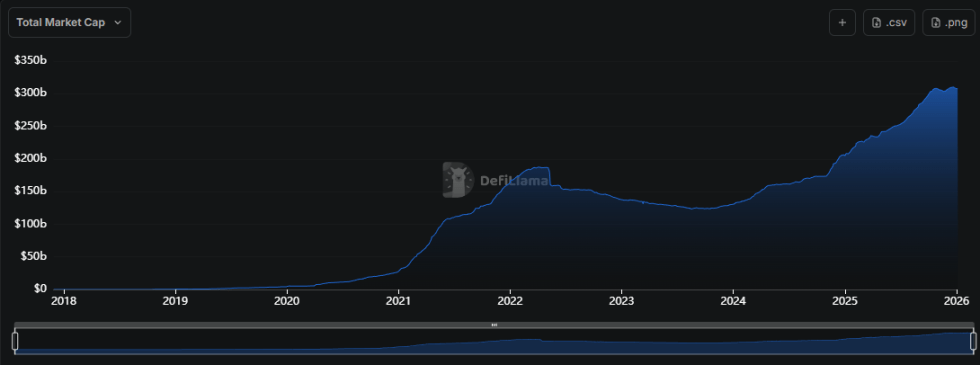
The trend in the market cap of all stablecoins over the last several years | Source: DefiLlama

The sector hasn’t been unaffected by the wider slowdown in crypto since October, however. From the above chart, it’s visible that the stablecoin market cap has seen consolidation in the last few months.

Nonetheless, while other parts of the market have shrunken, these fiat-tied tokens still have their combined market cap sitting at $307 billion today, which is very close to the all-time high (ATH).

Bitcoin Price

At the time of writing, Bitcoin is trading around $92,900, up nearly 6% over the last week.

Looks like the price of the coin has shot up over the last few days | Source: BTCUSDT on TradingView


Related Questions

QWhy has PwC reversed its cautious stance on crypto in the US?

APwC reversed its cautious stance on crypto due to new regulatory developments in the United States, including the Genius Act which regulates stablecoins, providing more clarity and conviction for the asset class.

QWhat is the Genius Act mentioned in the article?

AThe Genius Act is a new US law that regulates stablecoins, which are digital assets pegged to a fiat currency like the US Dollar.

QHow does PwC plan to help companies with digital asset technology?

APwC has been pitching companies on how they can use digital asset technology, with stablecoins cited as a means to improve payment systems' efficiency.

QWhat is the current market cap of all stablecoins according to the article?

AThe combined market cap of all stablecoins is $307 billion, which is very close to the all-time high.

QWhat was the price of Bitcoin at the time of writing the article?

AAt the time of writing, Bitcoin was trading around $92,900, up nearly 6% over the last week.

Related Reads

Bitcoin Withdrawals Continue: 8 Years of Storage in a Coldcard Cold Wallet Ended in Zero

Coldcard Hardware Wallet Hacked: Losses Mount Due to Vulnerable Seed Generation A critical vulnerability in Coldcard hardware wallets has led to a continued wave of fund thefts. According to Galaxy Research, the total stolen has reached 1,367.05 BTC (approx. $88.6 million) from 4,585 addresses, a significant increase from the initial 594.5 BTC reported on July 30, 2026. Most of the stolen funds remain on the attackers' addresses. The issue is not with the current firmware, which Coinkite has updated, but with seed phrases generated on vulnerable devices between March 2021 and the release of fixed firmware versions. Due to a programmer error, devices switched from using a hardware random number generator to the software-based Yasmarang generator, which was initialized with publicly accessible data like the chip's serial number. This made the seed phrases predictable through offline brute-force attacks, meaning wallets remain at risk until funds are moved to a new wallet generated with the patched firmware. Affected devices include Mk2/Mk3 with firmware 4.0.1–4.1.9 (and up to 5.0.3), Mk4/Mk5 up to version 5.6.0, and Q models up to 1.5.0Q. The only exceptions are seeds created with a high-entropy method like at least 50 independent dice rolls or a strong unique BIP-39 passphrase. All other owners must generate a new seed on the fixed firmware and transfer their assets. A case highlighting the human impact involves a 39-year-old long-term investor who lost 2 BTC (approx. $130,000) in minutes. He had accumulated the Bitcoin over eight years through physical labor, viewing it as a financial lifeline and a retirement plan in a country suffering from hyperinflation. His story underscores that even conservative "buy and hold in cold storage" strategies can be compromised by such underlying technical flaws. From a technical perspective, this incident echoes historical failures where weak random number generators undermined cryptographic security, challenging the assumption that offline storage is automatically foolproof.

cryptonews.ru45m ago

Bitcoin Withdrawals Continue: 8 Years of Storage in a Coldcard Cold Wallet Ended in Zero

cryptonews.ru45m ago

Trading

Spot
活动图片




