"Poor Man's Gold" Fights Back: Which Tokenized Silver Tokens Are Worth Watching?

比推Published on 2026-01-29Last updated on 2026-01-29

Abstract

"Silver, once known as 'poor man's gold,' is making a historic surge, with its price hitting a record high of over $117 per ounce and a market cap of approximately $6.18 trillion. This performance has surpassed Bitcoin and gold gains since 2017. For investors interested in tokenized silver exposure, two primary options stand out: Kinesis Silver (KAG), with a market cap of $406 million and backed by physical silver, and iShares Silver Trust (SLV) token by Ondo Finance, tracking the traditional ETF with a market cap of $39.5 million. Both offer liquidity but carry risks related to issuer credibility and regulation. Additionally, leveraged trading is available on platforms like Hyperliquid, Binance, and Bitget, offering up to 100x leverage. The rally is driven by factors including U.S. political policies, inflation hedging, silver's new 'critical mineral' status, and ongoing geopolitical tensions, suggesting further potential upside."

Author: Wenser, Odaily Planet Daily

Original Title: "Poor Man's Gold" Stages a Major Comeback, A Look at Tokenized Silver Worth Watching


Silver, this precious metal asset once dubbed "poor man's gold," is sweeping through global markets with storm-like force. The reason is none other than its terrifyingly strong rally.

Recently, the price of silver broke through $117 per ounce intraday, reaching a historic high. Consequently, since the peak of the 2017 crypto cycle, silver has officially surpassed Bitcoin's gains (approx. 500%) and gold's gains (slightly under 300%) with a cumulative increase of about 517%. Furthermore, according to data from the 8marketcap website, the current silver price is around $110, with a market capitalization reaching $6.18 trillion, ranking it as the second-largest global asset by value, just behind gold. Such an astonishing performance naturally triggers fervent market interest. Beyond purchasing silver funds or physical silver through traditional brokerages or physical stores, tokenized silver might also be an option, especially leveraged contracts on trading platforms and on-chain Perp DEXs.

Current State of Silver Tokens: Only 2 Offer Relatively Good Liquidity

According to data from the Coingecko website, the overall market capitalization of the tokenized silver sector is temporarily around $446 million, with a 24-hour increase of approximately 5.6%; specifically, the silver tokens with relatively better liquidity are the following 2 types:

Kinesis Silver (KAG): Market Cap Temporarily at $406 Million

Like the gold token KAU, the KAG silver token is issued by Kinesis, a British digital asset utility platform registered in the Cayman Islands. Its main trading platforms include Kinesis Money, BitMart, the UAE exchange Emirex, among others.

It is understood that KAG is backed by fully insured and regularly audited vaults (globally allocated storage), with each token pegged to 1 ounce of investment-grade silver; it supports global real-time payments; supports physical silver redemption; and has no storage fees.

Its potential risks are similar to those of the XAUT gold token issued by Tether company: the token is highly dependent on the asset credibility of the issuer and faces certain regulatory uncertainties. Additionally, limited by its small market cap, the market depth is relatively average, and market volatility could lead to premiums or discounts, making it somewhat reliant on exchange management for order matching.

Nevertheless, information on the Coingecko website shows that KAG's 24-hour trading volume is approximately $5.5 million, making it already the second-highest trading volume in the silver token market.

iShares Silver Trust (SLV): Market Cap Temporarily at $39.5 Million

A silver token pegged to the iShares Silver Trust, launched by Ondo Finance, which holds the corresponding physical silver through the BlackRock iShares Silver Trust (SLV) ETF.

Its advantages include tracking a regulated traditional SLV ETF, good liquidity, and support for instant minting or redemption (for users outside the US); it combines traditional finance with blockchain convenience; has institutional-level backing; and eliminates the need to handle physical silver directly.

Its potential risks lie in its primary reliance on the asset credibility of issuers like BlackRock and Ondo; it does not support physical silver ownership or direct redemption; includes certain ETF management fee costs; trading is restricted for US users; and it faces potential securities regulatory limitations.

Main trading platforms include centralized exchanges like Gate, Bitmart, Bitget, AscendEX, etc.

It is worth mentioning that SLV also supports contract trading, with leverage of up to 10x.

Coingecko website information shows that SLVON's 24-hour trading volume is approximately $21.2 million, ranking first in trading volume in the silver token market.

Besides the two major silver tokens KAG and SLVON, the silver token Silver rStock (SLVR) launched by the Solana ecosystem stock tokenization platform Remora Market, and the Gram Silver (GRAMS) token pegged to 1 gram of silver issued by Token Teknoloji A.Ş, also fall under the category of spot tokens. However, their market capitalization and liquidity are extremely low, and the price difference compared to the physical silver price is larger than that of KAG and SLVON. Trading is not recommended.

Silver Leveraged Trading Platforms: Hyperliquid, Binance, Bitget, and Others

Beyond spot silver tokens, currently many US stock tokenization platforms, on-chain Perp DEXs, CEXs, and DEXs have opened leveraged contract trading for silver, supporting leverage of up to 20-100x. The following are specific platforms for readers' reference:

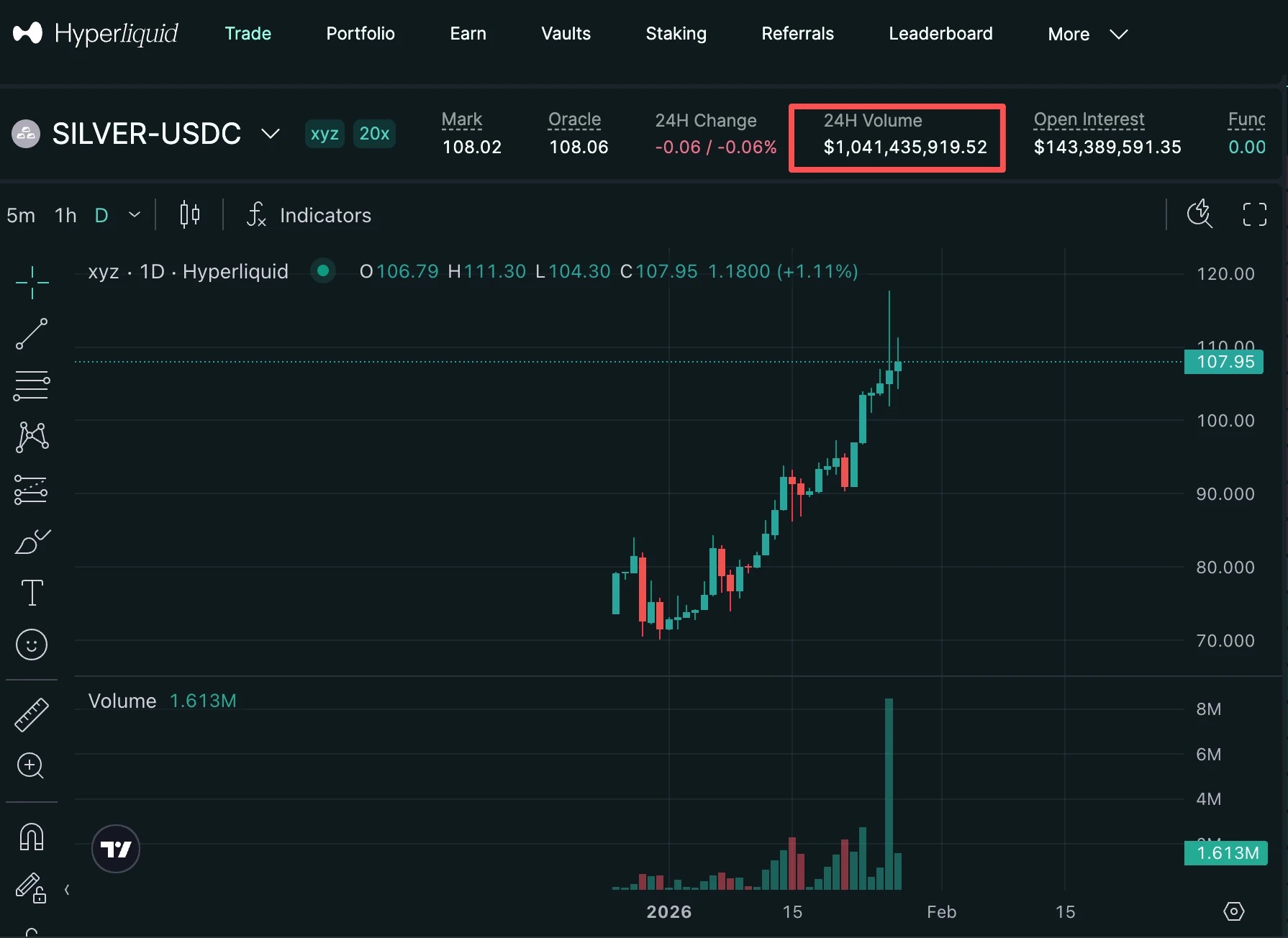
Channel One — Hyperliquid: The Silver/USDC contract trading pair has a 24-hour trading volume exceeding $1 billion;
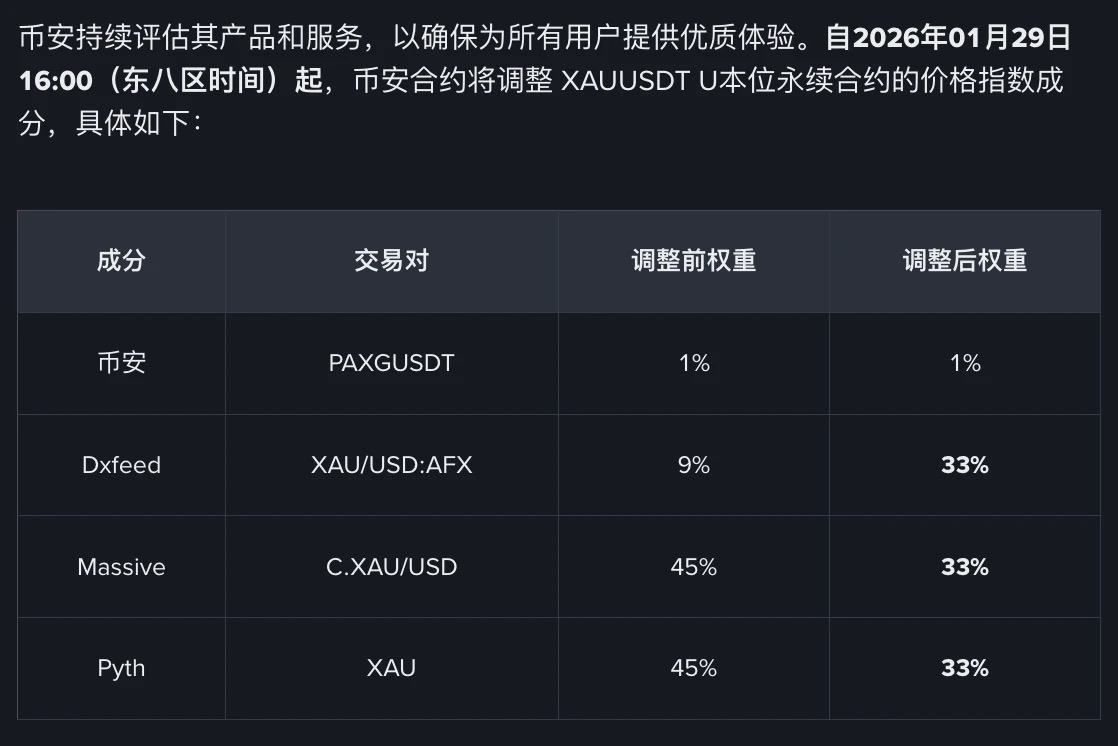
Channel Two — Binance, supports XAG/USDT leveraged trading pair, with leverage of up to 100x. Currently, the 24-hour trading volume is $1.32 billion. According to the official announcement, this trading pair was officially opened on January 7th (at that time, the official announcement indicated leverage of up to 50x); on the other hand, the latest news shows that Binance will change the price index composition of the gold token XAU/USDT contract on January 29, 2026.
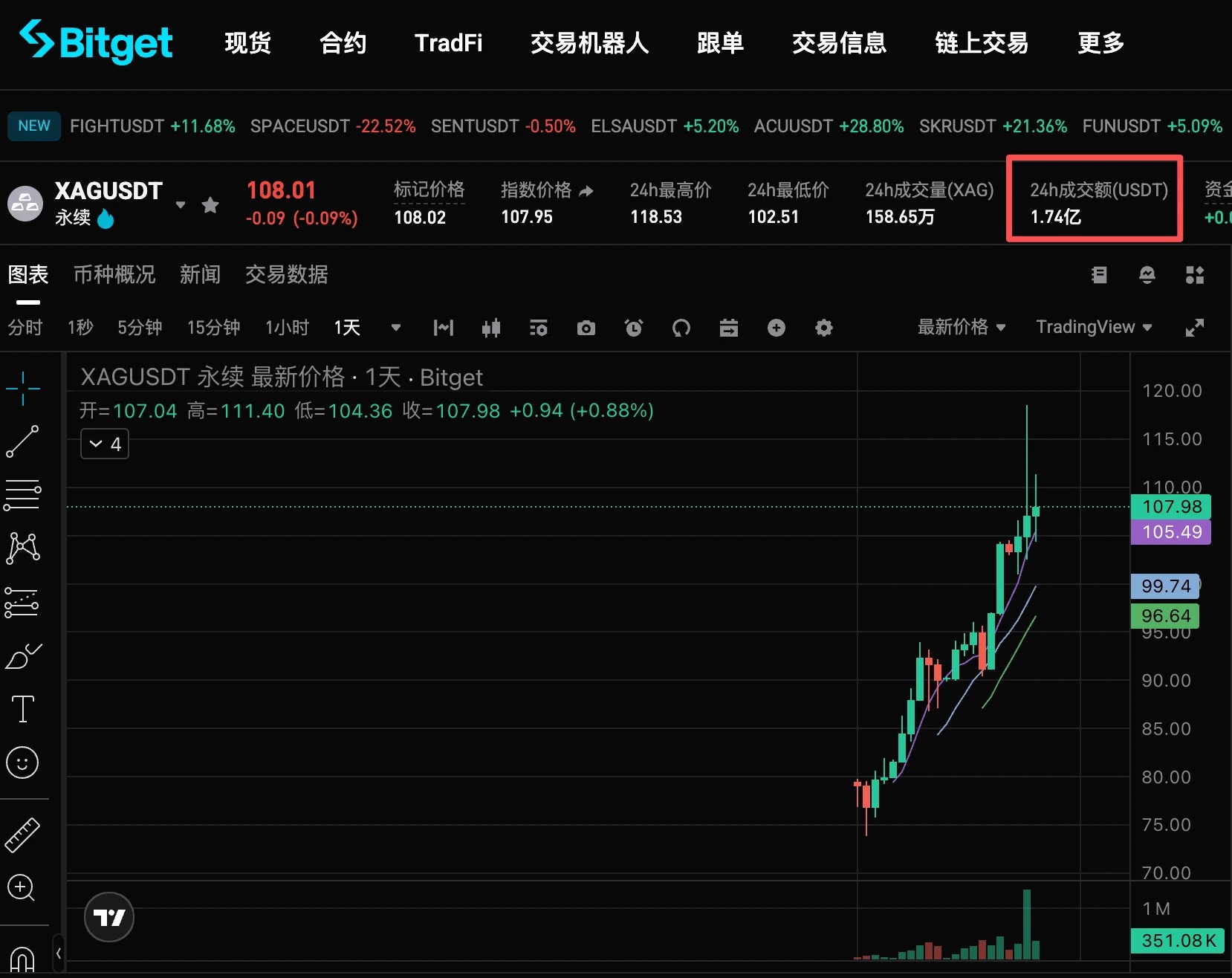
Channel Three — Bitget, supports XAG/USDT leveraged trading pair, with leverage of up to 50x. Currently, the 24-hour trading volume is $174 million.
Conclusion: Trump's Hawkish Policies and Dovish Rate Preferences Will Be the Best Catalyst for Precious Metals

Looking back, Trump's rise to power, leading to tense international political and economic situations, tariff trade wars, and his preference for Federal Reserve rate cuts, are the best catalysts for the rise in precious metal prices. Specifically for silver, beyond past reasons like supply tightness and its role as a key raw material, risk-off asset flows and the US stance are crucial.

J. Safra Sarasin strategist Claudio Wewel pointed out that the continuous surge in silver prices stems from the market's reduced expectations for US rate cuts and silver's newly acquired status as a key mineral. The US Department of the Interior listed silver as a critical mineral in November, increasing the possibility of the US imposing tariffs on this metal. He noted that this exacerbates long-term supply tightness and prompts US importers to accelerate silver purchases. Meanwhile, retail investors, finding gold prices at historical highs difficult to buy into, are turning to silver as a safe-haven asset.

In other words, silver's main price increase comes from both "scarcity" and "safe-haven appeal." Combined with the recently re-escalated tensions in the Middle East, the peak for silver prices may be far from reached.


Twitter:https://twitter.com/BitpushNewsCN

Bitpush TG Discussion Group:https://t.me/BitPushCommunity

Bitpush TG Subscription: https://t.me/bitpush

Original link:https://www.bitpush.news/articles/7606920

Related Questions

QWhat are the two tokenized silver assets with relatively good liquidity mentioned in the article?

AThe two tokenized silver assets with relatively good liquidity are Kinesis Silver (KAG) and iShares Silver Trust (SLV).

QWhich platform offers a silver/USDC perpetual contract with over $1 billion in 24-hour trading volume?

AHyperliquid offers a silver/USDC perpetual contract with a 24-hour trading volume exceeding $1 billion.

QWhat is the primary reason cited for the recent surge in silver prices according to the J. Safra Sarasin strategist?

AThe primary reasons are the diminished market expectations for U.S. interest rate cuts and silver's new status as a 'critical mineral' in the U.S., which increases the possibility of tariffs and has prompted accelerated purchasing.

QWhat is a major advantage of the Kinesis Silver (KAG) token over some other options?

AA major advantage of KAG is that it is backed by fully insured and audited vaults, with each token representing 1 ounce of investment-grade silver, and it supports global real-time payments and physical silver redemption with no storage fees.

QWhat is a significant risk associated with investing in tokenized silver like iShares Silver Trust (SLV)?

AA significant risk is its heavy reliance on the asset credibility of the issuer (e.g., BlackRock, Ondo) and potential securities restrictions; it does not support direct physical silver ownership or redemption for U.S. users and includes ETF management fees.

Related Reads

iQiyi Is Too Impatient

The article "iQiyi Is Too Impatient" discusses the controversy surrounding the Chinese streaming platform IQiyi's recent announcement of an "AI Actor Library" during its 2026 World Conference. IQiyi claimed over 100 actors, including well-known names like Zhang Ruoyun and Yu Hewei, had joined the initiative. CEO Gong Yu suggested AI could enable actors to "star in 14 dramas a year instead of 4" and that "live-action filming might become a world cultural heritage." The announcement quickly sparked backlash. Multiple actors named in the list issued urgent statements denying they had signed any AI-related authorization agreements. This forced IQiyi to clarify that inclusion in the library only indicated a willingness to *consider* AI projects, with separate negotiations required for any specific role. The incident, which trended on social media with hashtags like "IQiyi is crazy," is presented as a sign of the company's growing desperation. Facing intense competition from short-video platforms like Douyin and Kuaishou, as well as Bilibili and Xiaohongshu, IQiyi's financial performance has weakened, with revenues declining for two consecutive years. The author argues that IQiyi is "too impatient" to tell a compelling AI story to reassure the market, especially as it pursues a listing on the Hong Kong stock exchange. The piece concludes by outlining three key "AI questions" IQiyi must answer: defining its role as a tool provider versus a content creator, balancing the "coldness" of AI with the human element audiences desire, and properly managing the interests of platforms, actors, and viewers. The core dilemma is that while AI can reduce costs and increase efficiency, it risks creating homogenized, formulaic content and devaluing human performers.

marsbit48m ago

iQiyi Is Too Impatient

marsbit48m ago

Trading

Spot
Futures

Hot Articles

What is DOGE M

Doge Matrix ($doge m): The New Breed of Community-Driven Cryptocurrency Introduction In the ever-evolving landscape of cryptocurrency, new projects constantly emerge, each aiming to capture the interest of investors and enthusiasts alike. One of the latest entrants to this domain is Doge Matrix, represented by the ticker symbol $doge m. This project has attracted attention thanks to its roots in the popular meme culture surrounding Dogecoin, establishing its place within the web3 space. This article aims to provide a comprehensive analysis of Doge Matrix, covering its overview, creator, investors, functionality, timeline, and notable aspects. What is Doge Matrix ($doge m)? Doge Matrix is a community-driven cryptocurrency project that seemingly builds upon the widespread appeal of Dogecoin, a digital currency known for its Shiba Inu mascot and its meme origins. While the overarching objectives of Doge Matrix are not extensively defined, it is characterised by a commitment to harnessing community involvement and support. Unlike traditional cryptocurrencies that often emphasise utility or intrinsic value through underlying technologies, Doge Matrix positions itself within a space that embraces the cultural phenomenon of cryptocurrencies, particularly appealing to those who resonate with the ethos of meme-based assets. Drawing on the strengths of the Dogecoin community, Doge Matrix operates as part of a broader ecosystem, inviting participation and engagement from users who share an interest in cryptocurrency and the digital landscape. Who is the Creator of Doge Matrix ($doge m)? The identity of the creator of Doge Matrix remains unknown. This lack of transparency is not an uncommon occurrence in the cryptocurrency space, where some projects are launched without revealing the identities of their founders. The absence of information regarding the founding team can raise questions among potential investors about the project’s accountability and direction. Who are the Investors of Doge Matrix ($doge m)? As it stands, there is no publicly available information detailing the investors or investment foundations that back Doge Matrix. The project appears to rely primarily on community support rather than institutional investment. This model aligns with the community-driven nature of the initiative, fostering an environment where the direction of the project is shaped by its participants rather than being dictated by a select few financial backers. How Does Doge Matrix ($doge m) Work? The specifics regarding the operational mechanisms of Doge Matrix are somewhat vague, reflecting a broader trend of projects in the meme coin space where innovative functionalities are not always clearly articulated. Nonetheless, Doge Matrix seems designed to tap into the existing cryptocurrency ecosystem by encouraging user participation while tapping into the familiar cultural references associated with Dogecoin. Its potentially unique characteristics derive from community interactions rather than technological advancements, emphasising shared experiences and collaboration among token holders. While the exact innovations have not been explicitly outlined, the project appears to create a space where community members can engage, share ideas, and propel the project's potential forward. Timeline of Doge Matrix ($doge m) Reflecting on the project’s timeline reveals notable events that have defined its journey thus far: November 25, 2024: Doge Matrix reached its all-time high value, marking a significant milestone in its early history. January 1, 2025: Conversely, Doge Matrix hit its all-time low value, illustrating the volatility often associated with cryptocurrencies, especially in the early stages of a project's lifecycle. Ongoing: The project continues to be actively traded and supported by its community, although specific future milestones or objectives have yet to be disclosed. Key Points About Doge Matrix ($doge m) Community Focus At the heart of Doge Matrix is a commitment to community engagement. The project thrives on the premise of collaboration and shared objectives among its members, emphasising the importance of collective effort. Unlike centralised projects that often have a defined leadership structure, Doge Matrix at present showcases a more fluid approach to governance, where every community member's voice matters. Volatility The cryptocurrency market is notorious for its volatility, and Doge Matrix is no exception. Its price history reflects significant fluctuations between high and low values, which is typical of many new cryptocurrencies but underscores the risks associated with investment in emerging tokens. Lack of Detailed Information One of the most striking features about Doge Matrix is the scarcity of detailed information regarding its technological underpinnings and operational mechanisms. This ambiguity necessitates that potential investors conduct thorough due diligence before engaging with the project. Conclusion In summary, Doge Matrix ($doge m) illustrates a new wave of cryptocurrency projects that lean heavily on community engagement and cultural relevance. While lacking in certain specifics—such as clear leadership, defined objectives, and detailed functionality—the project has managed to generate interest within the crypto community, leveraging the established appeal of meme culture. As with any investment in the cryptocurrency space, understanding the inherent risks and conducting comprehensive research is essential for potential participants. Doge Matrix stands as a reminder of the dynamic, sometimes unpredictable nature of the crypto industry, marked by constant evolution and enthusiasm for community-driven initiatives.

363 Total ViewsPublished 2025.02.03Updated 2025.02.03

What is DOGE M

What is $M

Understanding Mantis ($M): A New Era in Cross-Chain Interoperability In the continually evolving landscape of Web3 and cryptocurrency, new projects strive to offer innovative solutions aimed at enhancing the user experience and expanding functional possibilities within the decentralised financial ecosystem. One such project garnering attention is Mantis ($M), a pioneering protocol founded on the principles of cross-chain interoperability and intent-based settlements. This article delves into the essential aspects of Mantis, including its core functionality, creators, investment backing, innovative features, and critical milestones. What is Mantis ($M)? Mantis is described as a multi-domain intent settlement protocol that simplifies cross-chain interactions, enabling users to execute complex financial transactions across various blockchain platforms seamlessly. The protocol operates through three primary layers: Intent Expression: Users can articulate their transaction goals using natural language facilitated by the DISE LLM, an advanced AI language model. For instance, a user might express a desire to swap Ethereum (ETH) for Solana (SOL) with a specific slippage tolerance of 1%. Execution: This layer employs a network of solvers that compete to fulfil user intents. Transactions are executed using mechanisms such as Coincidence of Wants (CoWs) and Order Flow Auctions (OFAs), which ensure that user demands are met optimally. Settlement: Leveraging the Inter-Blockchain Communication (IBC) protocol, Mantis enables atomic cross-chain transactions, allowing users to operate across various supported chains, including Ethereum, Solana, and Cosmos. Mantis is engineered to introduce native yield generation for idle assets, employing cryptographic proofs to maintain the integrity of transactions throughout the entire process. Creators & Development Team Mantis was conceived by the Composable Foundation, a research-driven organisation notable for its emphasis on blockchain interoperability solutions. This foundation collaborates with esteemed academic institutions, including Harvard University and the University of Lisbon, contributing to extensive research and development efforts that inform Mantis's architecture and functionality. The Composable Foundation’s commitment to fostering innovation in the blockchain space positions Mantis as a robust solution for the growing demand for interoperability among multiple blockchain networks. Investors & Backing While specific details about individual investors have not been publicly disclosed, Mantis enjoys substantial backing from various entities, including: Ecosystem grants from IBC-enabled chains, which support the protocol's growth and integration within decentralised finance ecosystems. Strategic partnerships with infrastructure providers that enhance Mantis's network capabilities and deployment strategies. Funding through the Composable Foundation's treasury, ensuring sustained financial support for ongoing development and operational costs. These collaborative efforts reflect a consensus among stakeholders about the importance of enhancing cross-chain functionality and the potential utility of Mantis's infrastructural innovations. Key Innovations Mantis sets itself apart through several pioneering innovations that enhance its functionality and utility: Chain-Agnostic Intents: Users can initiate transactions from any supported chain while settling on another. This flexibility empowers users, driving increased interaction among different platforms. AI-Powered Interface: The integration of DISE LLM allows users to conduct complex DeFi operations using natural language, thereby simplifying interactions and making blockchain technology accessible to a broader audience. Cross-Domain MEV Capture: Mantis creates an internal market for maximal extractable value (MEV) through competitions among solvers. This innovative approach allows for greater efficiency and value extraction in complex transactions. Modular Settlement Layer: The protocol supports various verification methods, including zero-knowledge proofs and optimistic rollups, providing a versatile framework that can adapt to emerging blockchain technologies. Historical Timeline Mantis's development is marked by several critical milestones that chart its trajectory and growth: | Year | Milestone | |————|————————————————————————-| | 2022 | Initial concept development within the Composable Foundation's research division. | | Q3 2024 | Launch of the testnet with bridging capabilities between Solana and Ethereum. | | Q1 2025 | Anticipated Token Generation Event (TGE) alongside the mainnet launch. | | Q2 2025 | Expected integration of DISE LLM and expansion of cross-chain capabilities. | | 2025 H2 | Planned support for over 15 chains through further IBC upgrades. | This timeline outlines Mantis's evolution, from conceptual discussions to active implementation and future growth phases. Ecosystem Growth Strategy Mantis's strategy for ecosystem growth includes several initiatives designed to encourage user participation and developer engagement: Credits System: Users can earn protocol credits by providing liquidity and engaging in referral programmes. These credits are redeemable for incentives in the future, fostering a robust user community. Modular Software Development Kit (SDK): This toolkit empowers developers to create applications based on intent-driven models utilising Mantis's infrastructure, thus promoting innovation within its ecosystem. Governance Model: As the protocol matures, $M token holders will have a voice in protocol governance, allowing them to vote on proposed upgrades and changes, thereby enhancing community engagement and decentralisation. Mantis represents a significant advancement in the realm of cross-chain architecture. By seamlessly integrating advanced AI algorithms with a robust settlement framework, Mantis seeks to tackle the problems of fragmentation within multi-chain ecosystems. Its innovative approach prioritises improved user experiences while adhering to the foundational principles of decentralisation and security, setting a new standard for the future interoperability of blockchain technologies. As Mantis continues its journey of growth and implementation, it promises to be a project to watch closely in the competitive landscape of Web3 and decentralised finance. With its focus on crossing boundaries and elevating user engagement, Mantis is poised to be an integral part of the future developments in the cryptocurrency space.

41 Total ViewsPublished 2025.03.18Updated 2025.03.18

What is $M

Discussions

Welcome to the HTX Community. Here, you can stay informed about the latest platform developments and gain access to professional market insights. Users' opinions on the price of M (M) are presented below.

活动图片













