Polymarket Just Dropped Its Toughest Insider‑Trading Rules Yet – But Can They Really Calm DC?

bitcoinistPublished on 2026-03-24Last updated on 2026-03-24

Abstract

Polymarket, the world's largest prediction market, has introduced stricter rules against insider trading and market manipulation. These updates explicitly ban trading on confidential information, illegal tips, and participation by individuals who can influence event outcomes, such as government officials or athletes. The move comes amid increased regulatory scrutiny, including a new bipartisan Senate bill targeting prediction markets. Competitor Kalshi also announced similar guardrails. Both platforms are strengthening compliance to address ethical concerns and regulatory pressures, which may lead to tighter KYC procedures and reduced tolerance for trading on non-public information.

Polymarket, the world’s largest prediction market, is rolling out new safeguards against insider trading and manipulation.

Polymarket’s Most Recent Bet

The pressure generated from the growing scrutiny that prediction markets have come under as of late seems to have done the trick. Polymarket updated its rules on Monday and shortly after, Kalshi, its main competitor, announced new guardrails that preemptively block politicians, candidates and sports insiders from trading on related markets, Bloomberg claims.

Neal Kumar, Polymarket’s chief legal officer, said in a statement that the goal of this update to the rulebook is clarifying the expectations they have for the users. “Markets thrive on clarity”, he claims:

“These rule enhancements make our expectations abundantly clear for every participant across both platforms and highlight the compliance infrastructure we have already built. As Polymarket continues to scale, we will build on our foundation with clear communication to Polymarket’s users to ensure our markets do what they do best — surface truth.”

The timing is not casual. Also on Monday, Senators Adam Schiff (D-CA) and John Curtis (R-UT) introduced a bipartisan Senate bill targeting sports‐style bets on platforms like Polymarket and Kalshi, after a string of “suspiciously well‐timed” trades. The Senate concerns go beyond the law, citing the surge of gambling culture promoted by online betting can easily lead to addiction.

What Actually Changed At Polymarket And Kalshi

Polymarket updated its Terms of Use and U.S. Rulebook with enhanced “market integrity” rules across both its DeFi platform and CFTC‐regulated U.S. exchange. The new language explicitly bans trading on stolen or confidential information when using it would violate a duty of trust or confidence (classic insider‐trading standard). It also prohibits trading on illegal tips, where a user knows or should know the person sharing the information is themselves barred from trading on it. Additionally, users who can influence the outcome of a bet, such as government officials, corporate executives, or athletes tied to the event, are barred from trading on related contracts.

The rulebook also spells out broader manipulation bans, including spoofing, wash trading, fictitious transactions, front‐running, self‐dealing and other disruptive practices. The dedicated “Market Integrity” provide tools to report suspicious activity across both platforms, highlighting a multi‐layer surveillance and enforcement framework that combines automated monitoring with human review to flag and investigate questionable trades.

Similarly, on its side, Kalshi announced expanded “guardrails” against insider trading and market manipulation, framed as a response to CFTC guidance and the latest congressional proposals. The exchange is rolling out technological screens that aim to preemptively block politicians, political candidates and campaign insiders from trading on their own races. Similar screens will bar athletes and other “relevant people”, like team staff, league insiders and other connected personnel, from trading in sports markets they are involved with.

What This Means For Traders

Prediction markets have exploded into a multi‐billion‐dollar venue for trading politics and sports, but that scale brought CFTC scrutiny, state‐level pushback and now congressional bills aimed squarely at their growth engines. Some of the critiques show valid ethic concerns. Let’s not forget that not too long ago, Argentinian authorities ordered a full national ban of Polymarket after it “predicted” inflation data back in February. On top of that, the platform faced terrible backlash recently after bettors sent death threats to Times of Israel military reporter Emanuel Fabian, following his report of an Iranian ballistic missile on March 10.

Polymarket and Kalshi are now racing to build compliance as a moat: whoever convinces regulators first may become the default institutional on‐ramp, while weaker venues risk being regulated into the ground. Traders can expect tighter KYC/surveillance and less tolerance for “edge” based on non‐public info.
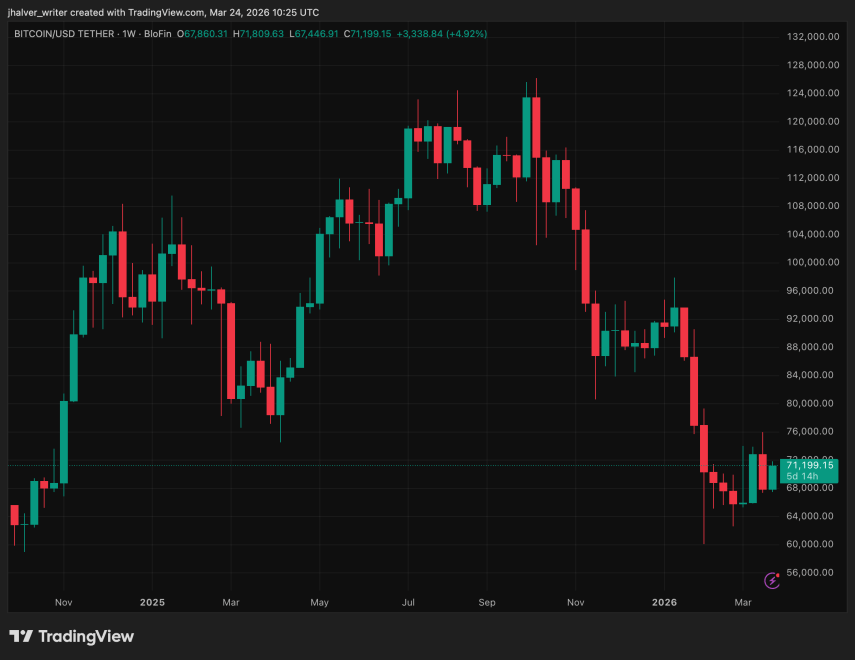
BTC’s price hangs in $71k on the daily chart. Source: BTCUSDT on Tradingview

Cover image from Perplexity, BTCUSDT chart from Tradingview

Related Questions

QWhat are the main reasons behind Polymarket's recent update to its insider-trading rules?

APolymarket updated its rules due to growing regulatory scrutiny from the CFTC, state-level pushback, and new congressional bills targeting prediction markets, alongside a series of suspiciously well-timed trades that raised concerns about market integrity.

QWhat specific activities are now explicitly banned under Polymarket's enhanced 'market integrity' rules?

APolymarket now explicitly bans trading on stolen or confidential information that violates a duty of trust, trading on illegal tips, and trading by users who can influence the outcome of a bet. It also prohibits broader manipulation practices like spoofing, wash trading, fictitious transactions, front-running, and self-dealing.

QHow did Polymarket's main competitor, Kalshi, respond to the regulatory pressure?

AKalshi announced expanded 'guardrails' against insider trading and market manipulation, including technological screens to preemptively block politicians, candidates, and sports insiders from trading on markets related to their own events, in response to CFTC guidance and congressional proposals.

QWhat broader concerns did U.S. Senators express about prediction markets beyond insider trading?

AU.S. Senators expressed concerns that the surge of gambling culture promoted by online betting platforms can easily lead to addiction, which is why they introduced a bipartisan bill targeting sports-style bets on these platforms.

QWhat are the potential long-term implications for prediction market platforms like Polymarket and Kalshi according to the article?

AThe platforms are racing to build compliance infrastructure as a competitive moat. The one that convinces regulators first may become the default institutional on-ramp, while weaker venues risk being regulated out of existence. Traders can expect tighter KYC/surveillance and less tolerance for trading on non-public information.

Related Reads

Dylan Patel: Founder of SemiAnalysis, Praised by Jensen Huang, is a 'Beekeeper' and 'Forum Enthusiast'

Dylan Patel, founder of the independent research firm SemiAnalysis, has an unconventional background. A former beekeeper from rural Georgia, he entered the semiconductor world as a self-taught "forum warrior," discussing chip technology anonymously online from a young age. He launched the SemiAnalysis blog in May 2020, which later transitioned to a paid subscription model. The firm has grown from a one-person operation to a global team of around 60, with a dedicated teardown lab. Its detailed, technically-focused analysis on semiconductor supply chains, AI infrastructure, and products has earned significant industry recognition. Notably, NVIDIA founder Jensen Huang has publicly cited their reports. In a landmark case, a critical 2024 report on AMD's MI300X GPU software stack led to a 90-minute call with AMD CEO Lisa Su, who thanked him for the constructive feedback. SemiAnalysis later acknowledged AMD's improvements. The firm's influence on markets was seen when a report on NVIDIA's Rubin memory configuration was partially shared, affecting memory stock prices. Dylan Patel emphasized the importance of context, contrasting the shared excerpt with the report's actual title. SemiAnalysis, now a multi-faceted consultancy with revenue projected to reach $100 million, is known for its deep technical insights that influence major industry players and investment decisions.

marsbit9m ago

Dylan Patel: Founder of SemiAnalysis, Praised by Jensen Huang, is a 'Beekeeper' and 'Forum Enthusiast'

marsbit9m ago

Dylan Patel: SemiAnalysis, Praised by Jensen Huang, is Founded by a 'Beekeeper and Forum Warrior'

Dylan Patel, founder of the independent research firm SemiAnalysis, has an unconventional background. Growing up in rural Georgia, he later worked as a beekeeper in Minnesota. His entry into semiconductors began as a self-taught "forum warrior," engaging anonymously in online tech communities from a young age. In May 2020, he started the SemiAnalysis blog on WordPress, later moving it to Substack as a paid subscription service. The firm has since evolved from a one-person operation into a global company with around 60 employees, featuring a dedicated chip teardown lab. Its revenue, reaching $20 million last year, is projected to surpass $100 million this year. SemiAnalysis is highly regarded in the AI and semiconductor industry for its deep technical analysis. NVIDIA founder Jensen Huang has publicly praised its reports. In a notable instance, a critical report on AMD's MI300X GPU software shortcomings prompted a 90-minute call with CEO Lisa Su, who thanked Patel for the "constructive feedback." A later report acknowledged AMD's subsequent improvements. The firm's analyses have significant market impact. For example, a June report discussing potential memory configuration changes in NVIDIA's next-generation servers was cited as a factor in pressure on memory-related stocks. Patel plans to establish a venture capital firm, having already made personal investments in about 20 startups. SemiAnalysis combines roles as a consultancy, model platform, and tech lab, focusing on the practical bottlenecks in AI infrastructure.

Odaily星球日报14m ago

Dylan Patel: SemiAnalysis, Praised by Jensen Huang, is Founded by a 'Beekeeper and Forum Warrior'

Odaily星球日报14m ago

Ethereum Q1 Report: On-chain Activity Hits Record High, Tokenized Assets Lead the Industry

Ethereum Q1 2026 Report: On-chain activity hits record high, tokenized assets lead the industry. In Q1 2026, Ethereum's network experienced a unique divergence: on-chain activity soared while USD-denominated metrics declined. Monthly active users reached 13.2 million, transactions hit 200.4 million, and TPS averaged 25.78, all setting new highs. However, total value locked (TVL) fell 11.0% to $316.2B, DEX volume dropped 24.0% to $134.5B, and ETH's fully diluted market cap fell 30.3% to $290B. A key driver was the Blob Parameter Fork (BPO#2) in January, which increased data capacity and caused a sharp 47.9% drop in layer-1 transaction fees despite higher usage. Etherean's tokenized asset market cap reached $203.4B, up 42.9% year-over-year. While stablecoins ($178.9B) saw a slight dip, tokenized funds ($19.4B, +73.1% YoY), commodities ($4.7B, +325.9% YoY), and stocks ($365.1M) grew strongly. Ethereum dominates cross-chain comparisons, holding 71% of TVL, 79.2% of active loans, 61.8% of stablecoins, and 73% of tokenized funds among top chains. The report highlights a "Jevons Paradox" scenario: network expansion reduces per-transaction costs but unleashes latent demand, driving long-term growth. Ethereum's strategy mirrors Amazon's early focus on scale over profit. Its open, neutral foundation is seen as critical for institutional adoption, as evidenced by growing activity from firms like BlackRock and JPMorgan. The roadmap targets further scalability, aiming for thousands of TPS by 2029 to solidify its role as a global financial settlement layer.

marsbit17m ago

Ethereum Q1 Report: On-chain Activity Hits Record High, Tokenized Assets Lead the Industry

marsbit17m ago

Trading

Spot
Futures
活动图片