Pentagon Pizza Index Soars 1250%: Who Will Be the Next Venezuela?

Odaily星球日报Published on 2026-01-08Last updated on 2026-01-08

Abstract

The Pentagon Pizza Index, an unconventional but historically telling indicator, has surged by 1250% in the past 48 hours, sparking global speculation about imminent U.S. military action. This surge, nearly double the 700% spike observed before the recent operation that captured Venezuelan President Maduro, tracks pizza delivery spikes near the Pentagon—often linked to extended staff hours during crises. Historical precedents include spikes before the 1990 Iraq-Kuwait conflict and 1998 Iraq operations. Current data shows increases ranging from 200% to 1250% at nearby pizzerias. The Trump administration’s “Don-roe Doctrine” suggests potential targets: Greenland (with prediction markets showing a 38% chance of U.S. control), Cuba (20% chance of U.S. strike by year-end), Colombia (15%), and Iran (54% chance of leadership change). Memes and prediction markets are already reacting, with the “Pentagon Pizza Watch” token rising 78% and significant betting activity on platforms like Polymarket. The index underscores how real-time, unconventional data can signal geopolitical shifts before official announcements.

Original | Odaily Planet Daily (@OdailyChina)

Author | jk
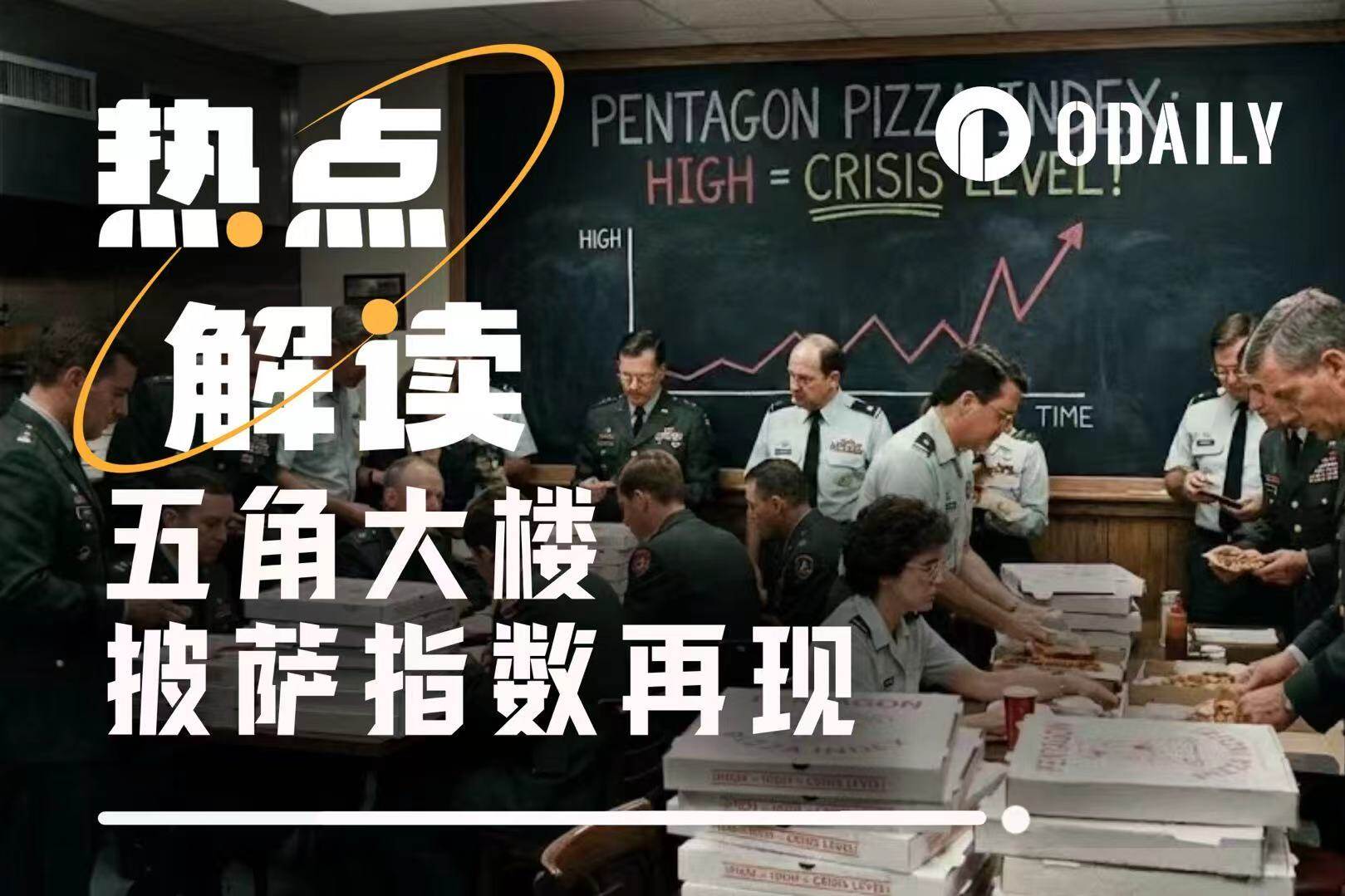
On January 7, 2026, a seemingly absurd but repeatedly effective intelligence indicator has drawn global attention. According to social media monitoring, pizza orders near the Pentagon have surged by 1250% in the past 48 hours, a figure nearly double the 700% increase seen just before the military action in Venezuela. This is the "Pentagon Pizza Index," a remarkable indicator, and its underlying implication is that the United States is brewing new military operations.

Pizza Orders and Military Intelligence?

The concept of the Pentagon Pizza Index dates back to 1990, when Frank Meeks, the owner of a Domino's Pizza in the Washington area, noticed a peculiar phenomenon: on the evening of August 1, 1990, the Central Intelligence Agency ordered a record 21 pizzas, and the next day, Iraq invaded Kuwait.

Moreover, this pattern has repeated:

  • Before the Panama operation in December 1989, orders surged from 30-35 to over 100;
  • During President Clinton's impeachment hearings and the "Desert Fox" operation in Iraq in December 1998, extra cheese pizza orders from the White House increased by 32%.

The logic behind this is very simple: during high-pressure crisis moments, Department of Defense (now the War Department, renamed by Trump) staff often need to work 16-20 hours consecutively, and pizza is cheap, filling, and easy to deliver, making it the go-to choice for overtime work.

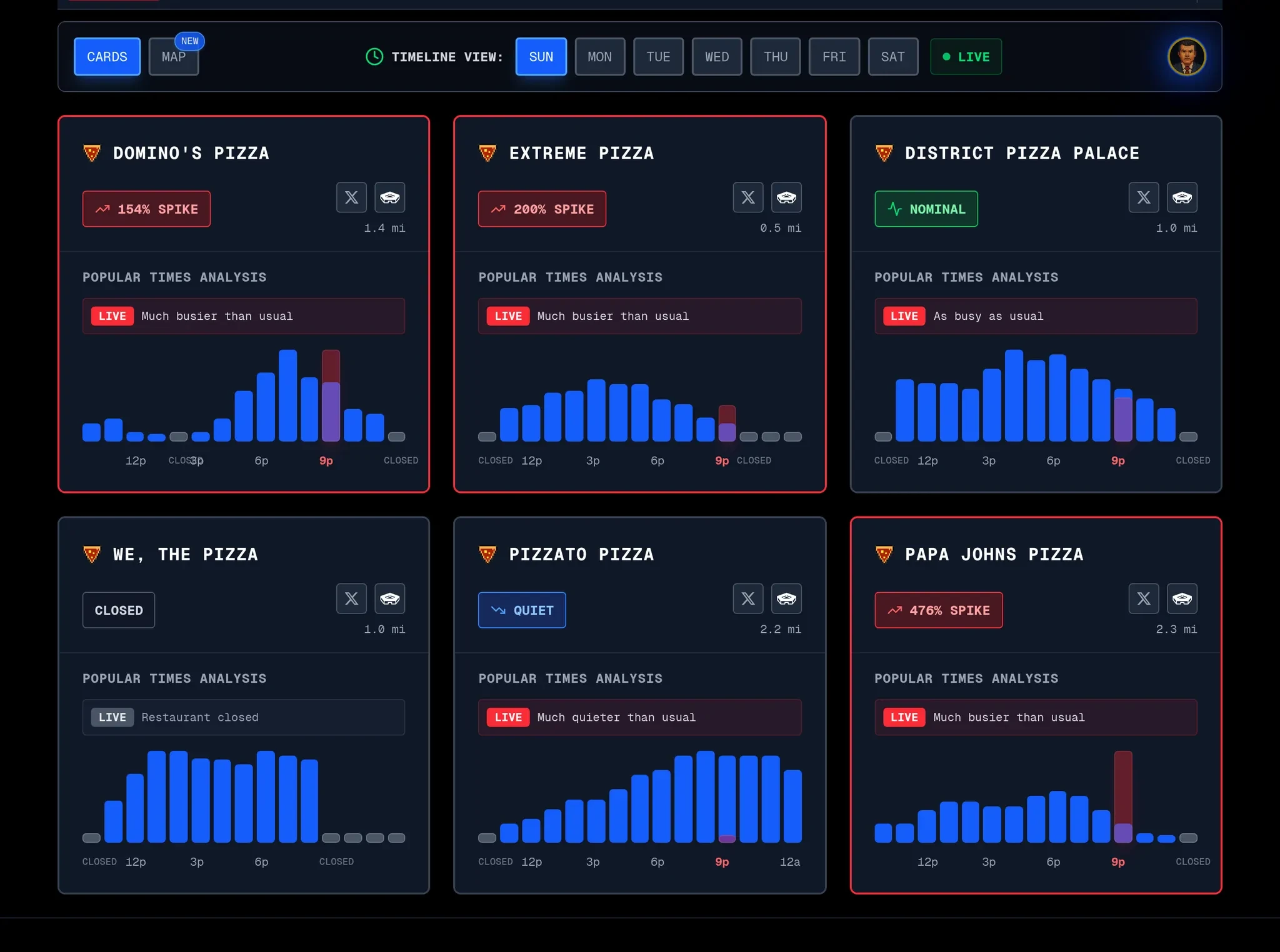
Today, there are dedicated websites monitoring six pizza shops near the Pentagon in real-time, including Papa John's and Domino's. Currently, these websites are all showing crazy multiples, ranging from 150% to 1250%.
What About Before the Venezuela Operation?

In the early hours of January 3, 2026, U.S. forces launched a raid in Caracas, the capital of Venezuela, successfully capturing President Maduro and his wife. Just hours before the operation, the Papa John's pizza shop near the Pentagon was unusually busy.

This was not a sudden military action either; the U.S. began a large-scale military buildup in the Caribbean region in August 2025: August: The USS Iwo Jima amphibious assault ship group arrived; November: The USS Ford aircraft carrier strike group arrived; Totaling about 15,000 U.S. military personnel, the largest military deployment in the region in generations. So, Pentagon staff worked overtime, causing all nearby pizza shops to work overtime as well.

A 1250% Increase: Who Is the Next Target?

Latest data from Sunday evening shows activity at the Papa John's pizza shop 2.3 miles from the Pentagon surged by 476%, while the closer Extreme Pizza saw a 200% increase. The peak increase of 1250% compared to the lowest point set a new historical record.

The Trump administration has stated this is part of its "Don-roe Doctrine." This is a metaphor for a modernized version of the 19th-century Monroe Doctrine, an advanced version of MAGA. Trump declared on Saturday: "American dominance in the Western Hemisphere will never be questioned again."

Based on the latest statements from Trump and his senior officials, the following countries and regions may be the next targets:

  • Greenland: Trump emphasized the U.S. needs Greenland to ensure national security. Prediction markets show the probability of the U.S. "controlling any part of Greenland" has risen from less than 20% last week to 38%. The Danish government is currently in "full crisis mode."
  • Cuba: Secretary of State Rubio warned that the Cuban government "is in big trouble." He pointed out that Maduro's bodyguards were Cuban, and 32 Cuban officers were killed in the Venezuela operation. Trump said: "Cuba looks like it's about to collapse."
  • Colombia: Trump directly threatened: "Colombia is also very sick, run by a sick man who likes to make cocaine and sell it to the United States, and he won't be doing that much longer." When asked if military action was considered, Trump replied: "Sounds good."
  • Iran: After Trump threatened to "hit Iran hard," prediction markets estimate a 54% probability that Iran's Supreme Leader Khamenei will step down before next year.

How Are These Countries Responding?

Colombian President Petro has shown a tough stance. He was reportedly quoted in November 2025 saying: "Brother, if you want to put me in jail, see if you can." Recently, he announced that any commander who prefers the American flag over the Colombian flag will be immediately dismissed from the army.

The Cuban government has held two days of national mourning for the 32 officers killed in the Venezuela operation, clearly remaining highly alert to Rubio's warnings.

Meme and Prediction Markets: Already One Step Ahead

When it comes to such events, meme markets and prediction markets are always the quickest to move.

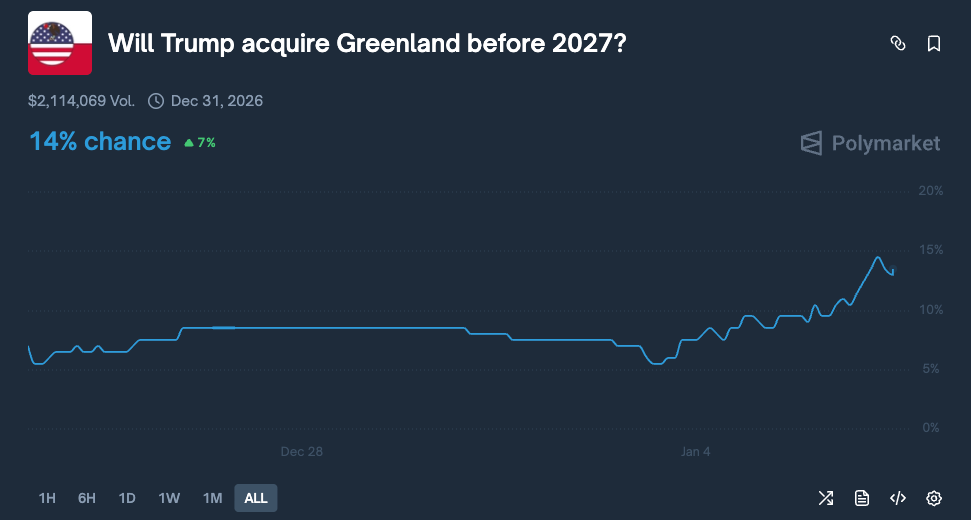
On Polymarket, the market for "Trump 'acquiring' Greenland by 2027" is highly sensitive. The probability in this market rose from about 7% on December 28 to the current 14%, a gain of 7 percentage points, with trading volume exceeding $2.1 million. This rise coincided with the timing of the Venezuela operation.

The "US strikes Cuba by xx date" market shows a阶梯式 probability distribution: only 2% by January 31, 8% by March 31, but jumps to 20% by the end of the year. The loss of 32 Cuban officers in the Venezuela operation could be the trigger for U.S. action.

The "US strikes Colombia by xx date" market shows a more aggressive probability curve: 3% by end of January, 7% by end of March, 15% by year-end.
Simultaneously, related memes have already appeared, such as Pentagon Pizza Watch (PPW); this is a logo featuring a glowing pizza hovering over a green pentagon, adorned with missile elements.
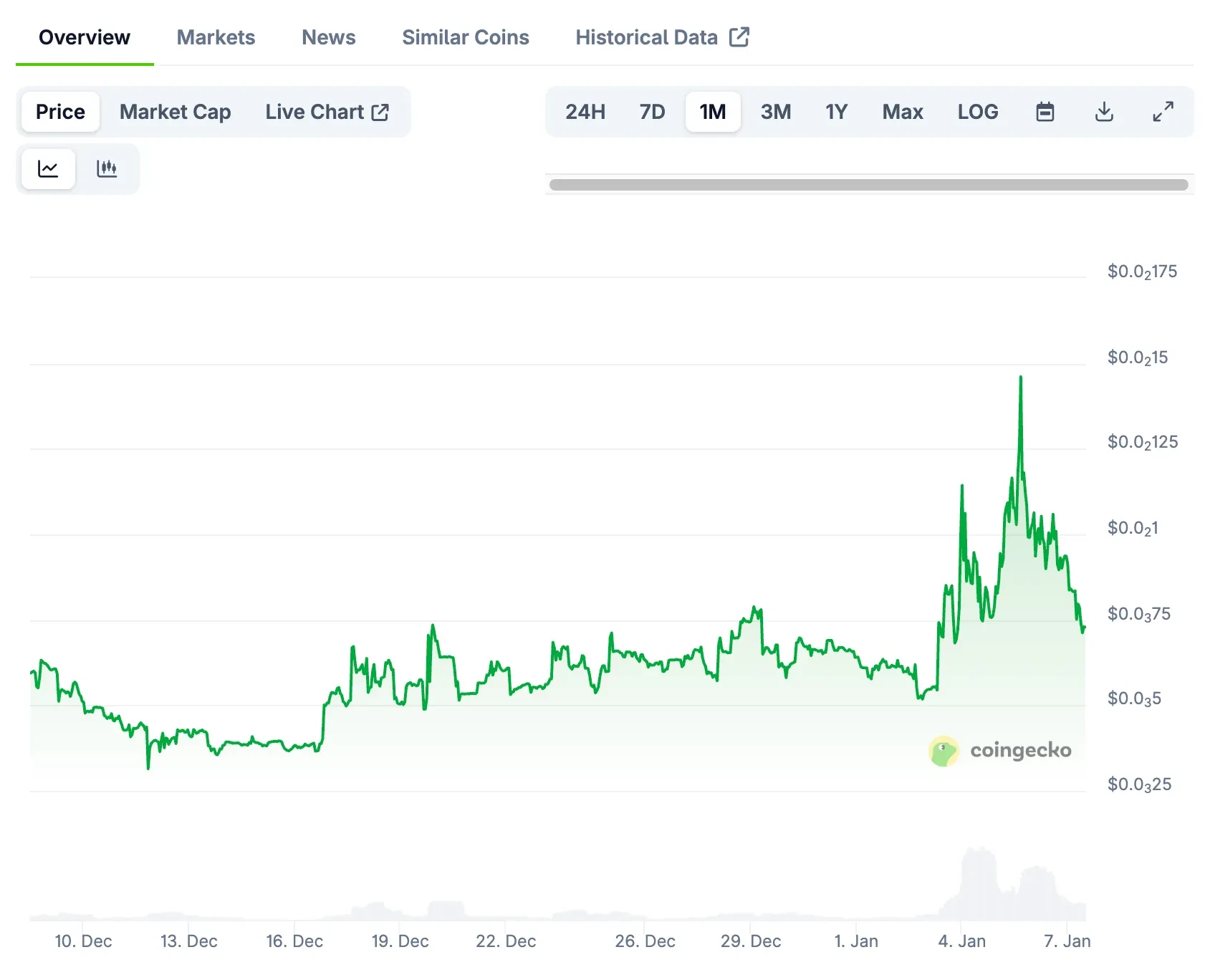
In terms of market performance, PPW saw a 78.20% gain in one week, with a 24-hour trading volume of $114,369, ranking 3689th in market capitalization.

Here, we strongly recommend reading this Odaily article: "When War is Settled Before the News: How Prediction Markets 'Priced' the Maduro Capture 6 Days Early."


Related Questions

QWhat is the Pentagon Pizza Index and what does a 1250% surge indicate?

AThe Pentagon Pizza Index is an informal intelligence indicator that tracks pizza delivery orders near the Pentagon. A 1250% surge suggests a significant increase in military staff working long hours, often preceding major U.S. military operations, similar to patterns observed before historical events like the Iraq invasion of Kuwait.

QWhich countries are potential targets according to the article based on recent U.S. government statements?

APotential targets include Greenland, Cuba, Colombia, and Iran, as indicated by statements from Trump and officials, such as threats to 'hit Iran hard' and warnings about Cuba and Colombia's governments.

QHow did prediction markets react to the increased Pentagon Pizza Index and recent military actions?

APrediction markets showed heightened activity, with probabilities for U.S. 'acquisition' of Greenland rising from 7% to 14%, and markets for strikes on Cuba and Colombia seeing increased probabilities by year-end, reflecting speculative responses to military tensions.

QWhat historical events are cited as examples where pizza order spikes preceded military actions?

AHistorical examples include the 1990 Iraq invasion of Kuwait after a spike in CIA pizza orders, the 1989 Panama action with orders jumping from 30-35 to over 100, and the 1998 'Desert Fox' operation in Iraq during Clinton impeachment hearings.

QWhat is the 'Don-roe Doctrine' mentioned in the article and how does it relate to U.S. policy?

AThe 'Don-roe Doctrine' is described as a modernized version of the Monroe Doctrine, reflecting Trump's MAGA agenda, asserting U.S. dominance in the Western Hemisphere and justifying interventions, as seen in the recent Venezuela operation.

Related Reads

IPO Imminent, OpenAI Faces Major Personnel Upheaval

OpenAI, preparing for a potential IPO, is experiencing significant leadership turmoil. In mid-August 2026, longtime "GPU geek" Scott Gray quietly left, and within three days, Chief Operating Officer Brad Lightcap (8-year veteran) and Chief Revenue Officer Denise Dresser (8-month tenure) departed. This follows a broader exodus of at least 10 senior executives in 2026, including heads of product, safety, and ethics. Analysts view this as a strategic "surgery" to transform from a research lab into a sales-driven enterprise company before going public. Revenue now tilts toward enterprise clients, surpassing consumer income sooner than expected, with annualized revenue reaching $40 billion. The new CRO, Dali Rajic, is a veteran enterprise sales leader. Concurrently, OpenAI has disbanded independent safety teams like "Preparedness," which assessed catastrophic risks, integrating their functions into core research. Critics warn this removes dedicated "brakes" on AI development. The leadership vacuum raises questions about who is the clear second-in-command after former apps CEO Fidji Simo moved to an advisory role. Co-founder Greg Brockman appears to be consolidating power. As OpenAI races against rival Anthropic ($47B annualized revenue), it faces the dual challenge of commercial execution while managing the departure of foundational technical talent and ensuring responsible AI development remains a priority.

marsbit8m ago

IPO Imminent, OpenAI Faces Major Personnel Upheaval

marsbit8m ago

AI Can 'Have Moods Too'! New Research from USTC: Confusion and Anxiety Make AI Work Better

The article discusses research from the University of Science and Technology of China and Oxford, revealing that allowing AI to recognize and act upon simulated "internal emotions" can significantly improve its performance. The study demonstrates a coherent pairing between specific emotional states in AI agents and their subsequent skill choices. For instance, an agent feeling curious and desirous will search for products, while one feeling confused and tense will rephrase queries. This mirrors human decision-making influenced by emotions. Statistical validation showed a 76.5% semantic consistency in these pairings. Crucially, the research challenges the traditional view of AI errors as flaws to be eliminated. It found that "bad" emotions like confusion, tension, or frustration serve as useful metacognitive signals, indicating a mismatch between the current strategy and the environment. By responding to these signals, AI can proactively adjust before a failure occurs. This is particularly effective in complex tasks prone to failure. For example, in tasks like "heating an item" and "picking up two items," success rates surged from 9.6% to 56.9% and 4.4% to 31.3%, respectively, when using the emotion-driven skill selection method (EMOTION2SKILL). The AI's "nervous" state about a closed microwave, for instance, prompted it to check and open it first, preventing failure. The article also mentions related work from Tianjin University, which embeds emotional prediction into world models (Large Emotional World Model, LEWM), significantly improving prediction accuracy in human-centric environments. Removing emotional data was found to degrade performance even in unrelated logical reasoning tasks. These studies build on earlier findings, like those from Anthropic, that identifiable emotional representations exist within large language models (LLMs). The focus is shifting from philosophical debate about AI emotion to practically harnessing these internal states as functional signals to enhance AI robustness and capability.

marsbit44m ago

AI Can 'Have Moods Too'! New Research from USTC: Confusion and Anxiety Make AI Work Better

marsbit44m ago

Trading

Spot
活动图片