NVIDIA and YC Invest in a Company Aiming to Build a Hotel on the Moon by 2032

marsbitPublished on 2026-01-14Last updated on 2026-01-14

Abstract

Nvidia and YC have invested in GRU Space, a startup founded by 22-year-old Berkeley graduate Skyler Chan, which aims to build a luxury hotel on the Moon by 2032. The company, with just two full-time employees, is already accepting reservations: a non-refundable $1,000 application fee, followed by deposits of $250,000 or $1 million if selected. Final room prices may exceed $10 million. The ambitious timeline includes applicant screening in 2026, a private auction in 2027, lunar landing tests in 2029, hotel module deployment in 2031, and opening in 2032. GRU positions itself as betting on U.S. space policy shifts and potential government reliance on commercial lunar infrastructure. The article draws parallels to Virgin Galactic’s long-delayed, costly suborbital tourism efforts, noting that GRU’s lunar ambition is far more complex. However, the founder openly acknowledges the high-risk, high-reward nature of the venture, framing it as a strategic gamble rather than a scam. The company’s name, GRU, and its slogan—“It’s time to steal the Moon”—reference the film *Despicable Me*, adding a layer of playful audacity to the project.

Written by: Curry, Shenchao TechFlow

In 1980, a used car salesman named Dennis Hope, who was unemployed, walked into a government office in San Francisco and claimed he wanted to "claim" ownership of the entire Moon.

The staff thought he was crazy.

But after scouring legal documents, the 1967 Outer Space Treaty only prohibited nations from claiming the Moon, not individuals. Hope exploited this loophole, sent a letter to the United Nations saying the Moon was his, and the UN didn't respond.

So Hope registered a company called "Lunar Embassy" and started selling plots of lunar land. Twenty dollars per acre, complete with a gold-embossed deed and a satellite photo.

45 years have passed, and Hope has sold 600 million acres of lunar land. His clients include famous actors like Tom Cruise and John Travolta, and reportedly even three former U.S. presidents. How much money did he make?

12 million dollars.

This business was labeled "profiteering and madness" in China and explicitly banned. But in the U.S., Hope remains at large, still selling deeds.

Now, a 22-year-old young man says:

Selling land is too low-end; I want to open a hotel on the Moon.
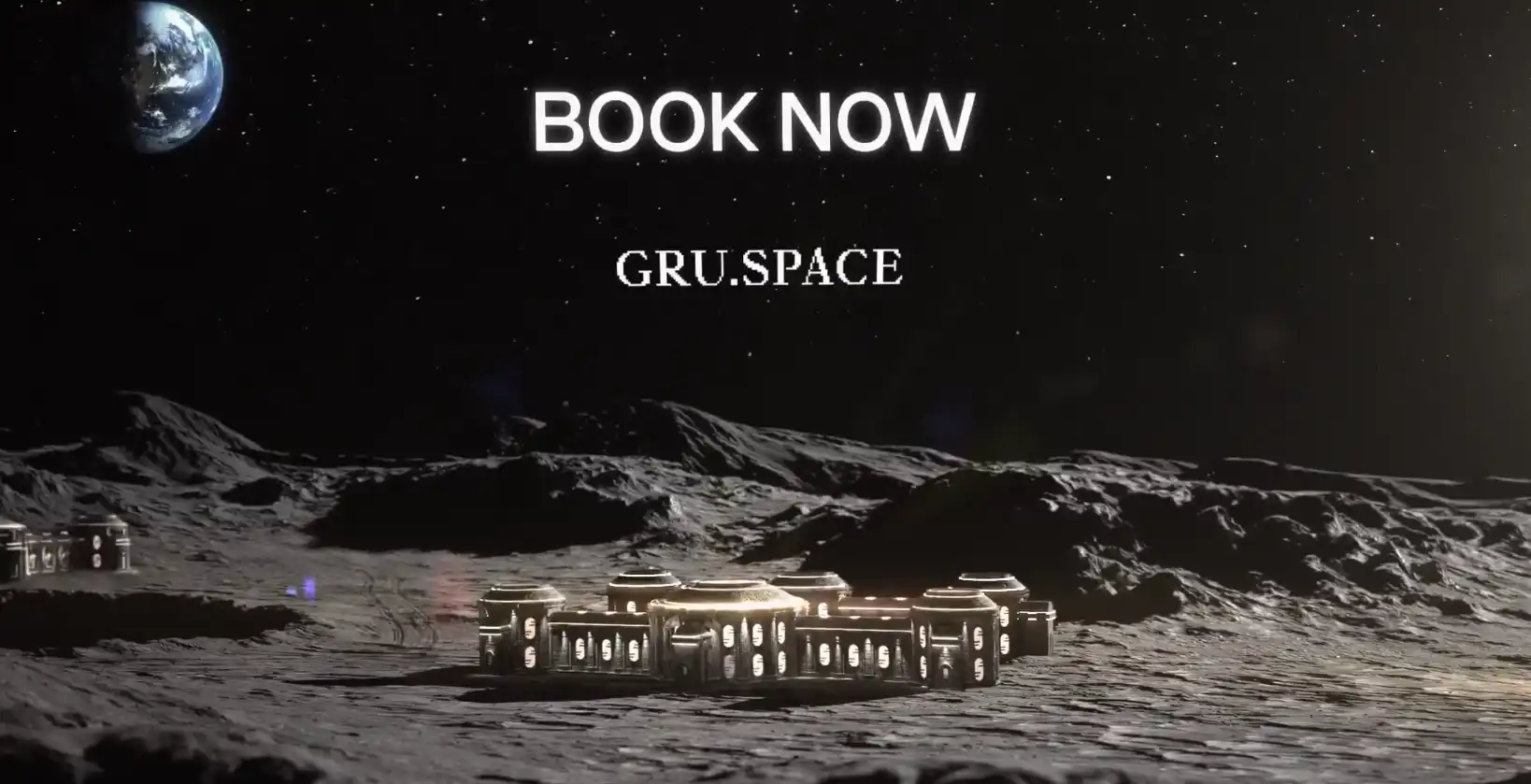
This company is called GRU Space, short for Galactic Resource Utilization. It just opened bookings for future hotel rooms last week.

The founder, Skyler Chan, holds dual degrees in Electrical Engineering and Computer Science from UC Berkeley. He graduated last May, a year ahead of the standard schedule.

We checked his resume, and it's indeed impressive: obtained a pilot's license from the Air Force at 16, wrote vehicle software at Tesla, built a NASA-funded 3D printer that was sent to space.

The company joined YC (Y Combinator), Silicon Valley's most famous startup incubator; Airbnb, Stripe, and Dropbox all came from there.

It also has backing from NVIDIA's support program and an investor who backed Musk's SpaceX and the military unicorn Anduril.

Sounds impressive, right?

The YC profile states clearly: 2 full-time employees.

2 people, aiming to get a hotel on the Moon within 6 years.

Even though I can't afford it, out of curiosity, I looked into their pricing structure.

There's a $1,000 application fee, non-refundable. If selected, you need to pay a deposit of $250,000 or $1 million. You can back out within 30 days, but after that, you can only get a refund once the hotel is built. The final room price "could exceed $10 million".

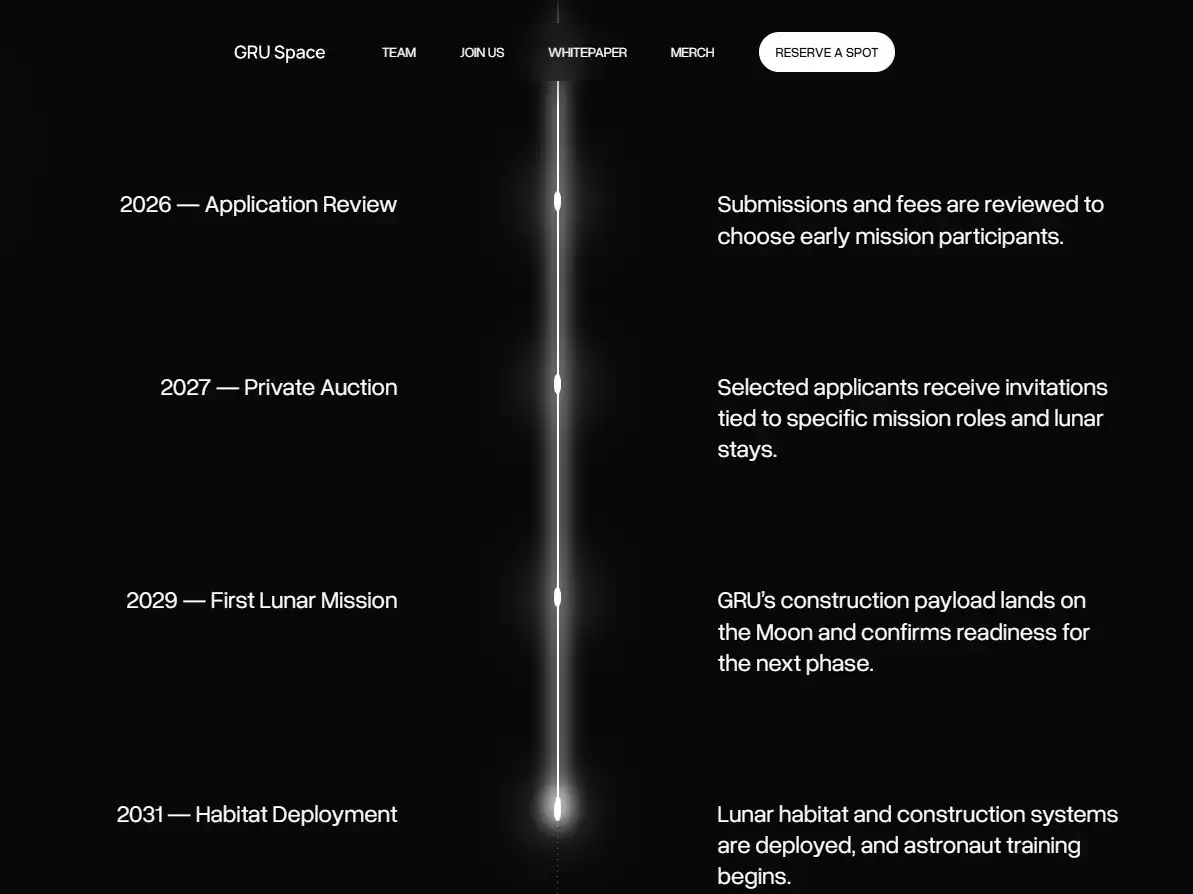
The timeline is as follows:

Application screening in 2026, a private auction in 2027, the first lunar landing test in 2029, hotel module deployment in 2031, and opening for business in 2032.
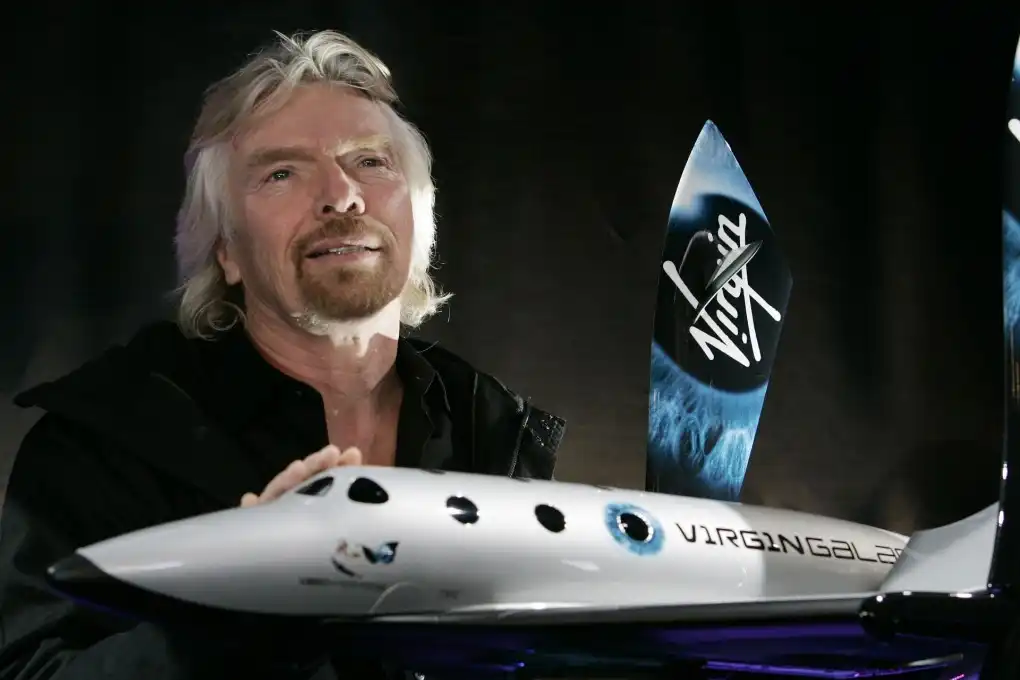
This model reminds me of Virgin Galactic. The space tourism company founded by British billionaire Richard Branson.

Branson is the owner of the Virgin Group, involved in airlines, records, cola, you name it. In 2005, he announced plans to take ordinary people to space and started collecting deposits, $200,000 per person. The first flight was initially promised for 2007.

Then it was 2008, 2009, 2010......

In 2011, a 75-year-old man named Alan Walton couldn't wait any longer and asked for a refund. He said he had already climbed Kilimanjaro, been to the North Pole, and skydived over Everest—space was the last item on his list, but he was old and really couldn't wait anymore.

In 2014, Virgin Galactic's spacecraft crashed during a test, killing one pilot. A group of customers requested and received refunds.

In 2021, Branson finally went to space himself. The customers breathed a sigh of relief, thinking their turn was finally coming.

In 2022, an 84-year-old man of Bulgarian descent, Chapadjiev, got his refund. He paid in 2007, waited 15 years, and was told "next year" every year. He said his relatives in Bulgaria kept asking him when he was going to space, and he couldn't answer.

Virgin Galactic's ticket price has now risen to $450,000, with a $150,000 deposit, $25,000 of which is non-refundable. Commercial flights have indeed started, but they only go to the edge of space for a few minutes before returning.
What GRU Space aims to do is take you to the Moon to stay for a few days. The difficulty is several orders of magnitude greater.

And Virgin Galactic spent 20 years, burned through billions of dollars, and suffered fatalities to get to where it is today. GRU Space has only 2 full-time employees and has given itself 6 years.

However, I don't think this is a scam.

The founder of GRU, that 22-year-old Berkeley graduate, states in the white paper that he knows this is a huge gamble. He doesn't hide it; he's proud of it. He says if successful, this will be the most influential event in human history.

That sounds arrogant, but the logic is consistent.

The Trump administration wanted to build a lunar base. The new NASA administrator, Jared Isaacman, is the billionaire who paid his own way to space and has stated that "initial facilities" will be built by 2030.

Chan is betting that the government won't have time to develop everything from scratch and will have to rely on commercial companies. He wants to be the one they depend on.

The project's white paper quotes a line:

"If America must build a lunar base within a decade, there is no time to invent from scratch those peculiar devices exclusive to the government."

So this $1 million deposit isn't buying a hotel room. It's buying a ticket to enter the race, a bet on the direction of U.S. space policy.

Finally, one detail.

The company is named GRU. The white paper ends with: "It's time to steal the Moon."
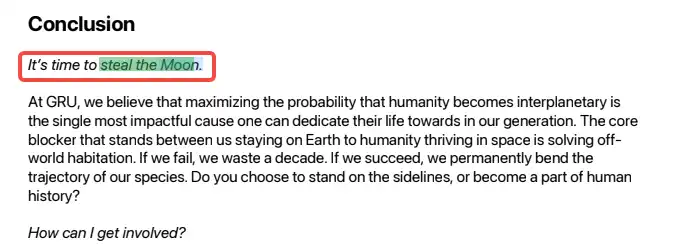
It's time to steal the moon.

Gru in Despicable Me also wanted to steal the moon. In the end, he didn't succeed but adopted three orphans and became a good father.

I wonder if Skyler Chan has seen that movie.

And I wonder, six years from now, will those who paid the deposit check into a lunar hotel, or will they, like the 84-year-old Chapadjiev, ultimately ask for a refund.

Anyway, the deposit is refundable after 30 days.

The Moon will still be there; it's not going anywhere.

Related Questions

QWhat is the name of the company that plans to build a hotel on the Moon by 2032, and which major investors are involved?

AThe company is called GRU Space (Galactic Resource Utilization). It is backed by Y Combinator (YC), NVIDIA's support program, and has investors connected to SpaceX and Anduril.

QWho is the founder of GRU Space, and what is his background?

AThe founder is Skyler Chan, a 22-year-old who graduated from UC Berkeley with dual degrees in Electrical Engineering and Computer Science. He obtained a pilot's license at 16, worked on vehicle software at Tesla, and developed a NASA-funded 3D printer sent to space.

QHow does GRU Space's business model and timeline compare to Virgin Galactic's historical challenges?

AGRU Space charges a $1,000 application fee (non-refundable) and requires deposits of $250,000 or $1 million, with a 30-day cancellation window. It aims to open the lunar hotel by 2032. Virgin Galactic, by contrast, faced decades of delays, a fatal test crash in 2014, and multiple customer refunds after repeatedly postponing its suborbital flights, which eventually began in 2021 after 16 years.

QWhat legal precedent did Dennis Hope exploit to sell lunar land, and how successful was his venture?

ADennis Hope exploited a loophole in the 1967 Outer Space Treaty, which prohibits nations from claiming the Moon but does not explicitly forbid individuals. He registered Lunar Embassy and sold lunar land at $20 per acre, generating $12 million in revenue over 45 years by selling 600 million acres, including to celebrities and former U.S. presidents.

QWhat is the strategic bet GRU Space's founder is making regarding U.S. space policy?

ASkyler Chan is betting that the U.S. government, under initiatives like the Trump administration's lunar base plans and NASA's goals, will lack the time to develop lunar infrastructure from scratch and will rely on commercial companies. GRU Space aims to position itself as that critical commercial partner, with the lunar hotel project serving as an entry ticket into this emerging market.

Related Reads

In Conversation with Ray Dalio: We Are Currently in an AI Bubble, with 1% of My Portfolio in Bitcoin

Ray Dalio, founder of Bridgewater Associates, warns in an interview that the current AI boom shows classic bubble characteristics, which could lead to significant economic downturns as seen in past cycles like 1929 or 2000. He explains that speculative enthusiasm, fueled by debt and overvaluation, often precedes a crash when rising rates or taxation force asset sales, causing widespread losses and recession. Dalio also outlines his "Big Cycle" theory, describing an approximate 80-year pattern where widening wealth gaps, massive government deficits, and shifting geopolitical power (like China's rise) create internal conflict and global instability. He emphasizes that we are in a late-cycle, transitional phase where traditional powers like the US and UK face decline. For personal wealth protection, Dalio advises diversification beyond cash into assets like stocks, bonds, real estate, and particularly gold, which he prefers over Bitcoin. While he holds about 1% of his portfolio in Bitcoin as a non-printable hard asset, he views gold as more secure from technological or governmental threats. Regarding AI's impact, Dalio believes it will disproportionately benefit capital owners, worsening inequality by replacing both physical and cognitive labor. He suggests that human intuition and emotional intelligence, combined with AI, will be key for future workers. On taxation, Dalio argues that wealth taxes are impractical and risk triggering asset sell-offs, reducing productive investment. He points to the UK as a cautionary example of debt, low productivity, and political strife. Geopolitically, Dalio foresees a more regionalized world, with the US showing weakness in prolonged conflicts like with Iran, akin to past imperial declines. The ideal outcome, he suggests, is coexisting powerful blocs (e.g., Americas, China-Asia Pacific) without major war.

marsbit1h ago

In Conversation with Ray Dalio: We Are Currently in an AI Bubble, with 1% of My Portfolio in Bitcoin

marsbit1h ago

Daily 7.2 Trillion KRW: Foreign Capital's Record Net Buying on Friday! Wall Street Says Headwinds for Korean Stock Fund Flows Have Subsided

South Korean stock market sees a dramatic shift in fund flows. On July 31, foreign investors made a record net purchase of approximately KRW 7.2 trillion in KOSPI stocks, marking a fundamental reversal from the persistent large-scale net outflows seen in previous months. This contributed to a significant narrowing of foreign net selling in July to KRW 9.8 trillion, down sharply from KRW 48.4 trillion in June and KRW 44.5 trillion in May. Simultaneously, domestic institutional pressure eased. South Korean pension funds and asset managers turned to a net buying position in July, purchasing KRW 1.0 trillion worth of KOSPI shares, contrasting with net sales in May and June. Market volatility is expected to be dampened by new financial regulations. Effective July 31, the Financial Services Commission tightened access for retail investors to single-stock leveraged ETFs by raising the minimum cash deposit requirement. Trading volumes for these products subsequently dropped to about 50% of their monthly average. Citigroup Research maintains its year-end KOSPI target of 10,000 points. The firm cites several supportive factors: the substantial easing of headwinds from capital outflows, a robust fundamental outlook for the semiconductor sector, historically low market valuations, strong economic fundamentals, and the potential for policy support from financial authorities if needed.

marsbit1h ago

Daily 7.2 Trillion KRW: Foreign Capital's Record Net Buying on Friday! Wall Street Says Headwinds for Korean Stock Fund Flows Have Subsided

marsbit1h ago

Thanks to Dice Rolls, Bitcoin Keys Are Stored Offline, But Not Everyone Will Do It

The article discusses using dice rolls to generate secure Bitcoin wallet seeds, providing entropy independent of potentially flawed hardware random number generators. It explains that each fair dice roll offers about 2.585 bits of entropy, with around 50 rolls needed for a standard 12-word seed phrase and 99+ recommended for higher security. This method gained attention after a vulnerability was revealed in some Coldcard hardware wallets, where a faulty firmware RNG (dating back to 2021) compromised generated keys. The analysis notes that while a dice-generated main seed was safe from this specific flaw, other Coldcard functions (like creating paper wallets, backup keys, or passwords) could still be vulnerable if they used the defective RNG. The piece argues that while dice-based entropy is technically robust, the manual process is error-prone, tedious, and unrealistic for most new users, who might make mistakes in recording or inputting rolls. It concludes that while manual entropy generation should remain an option for advanced users, the long-term goal is to develop reliable, user-friendly hardware and software that securely generates randomness without requiring specialized knowledge. Coldcard users are advised to check their firmware version and replace any secondary secrets (like paper wallet keys) created with vulnerable devices, while also considering multi-signature setups with devices from different manufacturers for added security.

cryptonews.ru6h ago

Thanks to Dice Rolls, Bitcoin Keys Are Stored Offline, But Not Everyone Will Do It

cryptonews.ru6h ago

Trading

Spot
活动图片





