Musk's Twitter Obsession: A 25-Year Unresolved Grudge

比推Published on 2026-01-15Last updated on 2026-01-15

Abstract

Elon Musk's 25-year obsession with his original vision for X.com, an ambitious online financial platform he founded in 1999, ultimately drove his acquisition and transformation of Twitter. After being ousted from the merged company that became PayPal, Musk never abandoned his dream of creating an all-in-one financial and social super-app. In 2022, he acquired Twitter, systematically rebranding it to X and gradually introducing features like long-form content, video, and creator monetization to condition users for a financial ecosystem. By 2026, X introduced features like Smart Cashtags, allowing users to view and potentially trade assets directly within posts. Musk's strategy mirrors the success of Chinese super-apps like WeChat, fulfilling his original X.com vision of integrating social interaction, information, and financial transactions into a single platform. This move represents not just a business expansion but a personal mission to reclaim his initial ambition and control the global flow of information and capital.

Written by: Niusike, Deep Tide TechFlow

Some dreams never die; they just wait for the right moment.

Original Title: What Musk Bought Was Not Twitter, But a 25-Year Unresolved Grudge


The Premature Birth of 1999

In March 1999, in Palo Alto, 27-year-old Elon Musk made a decision that seemed almost absurd at the time.

He invested all the $22 million he earned from selling Zip2 into a website called X.com.

At that time, Silicon Valley was still dominated by Yahoo and AOL, and the internet was synonymous with portal websites. Proposing the concept of an "online bank" at this point was like selling rockets in the era of horse-drawn carriages. But Musk envisioned X.com not just as an online bank; he wanted to create an online financial operating system: a single platform for all financial services, including transfers, investments, loans, insurance, and even daily expenses.

Silicon Valley at the time thought this young man from South Africa was crazy.

It was the era of dial-up internet, where opening a webpage sometimes took half a minute amid the screeching sound of modems. Asking users to transfer money on a 28.8K snail-paced network? It sounded like a joke.

His ambition was immense, but reality hit back harder.

A year later, X.com merged with Peter Thiel's Confinity (the predecessor of PayPal). What should have been a "genius alliance" turned into a Silicon Valley version of "Game of Thrones." Thiel and his Stanford elite crowd couldn't stand Musk's chaotic radicalism, viewing this engineer-turned-CEO as a dangerous madman.

In September 2000, the collapse came. Musk flew to Australia for his honeymoon. Just as his flight landed in Sydney, before he could even leave the airport, the board called: You're out.

Peter Thiel took over everything. A few months later, the X.com sign that Musk loved was taken down, and the company was renamed PayPal.

The foundation of the "financial empire" that Musk had spent a year building was bulldozed by a group of investment bankers in Brioni custom suits, leaving only the simplest function: payment.

In 2002, eBay acquired PayPal, and Musk received $180 million. Financially, he won, but at that moment, he was like a child whose favorite toy had been taken away. A fishbone was deeply lodged in his heart.

For the next twenty years, he built the best electric cars, sent rockets into space, and vowed to die on Mars. But whenever someone mentioned PayPal, he couldn't hide his disappointment.

X.com remained his inner demon.

Bringing the "Sink" to Wall Street

On October 27, 2022, Musk walked into Twitter headquarters carrying a sink.
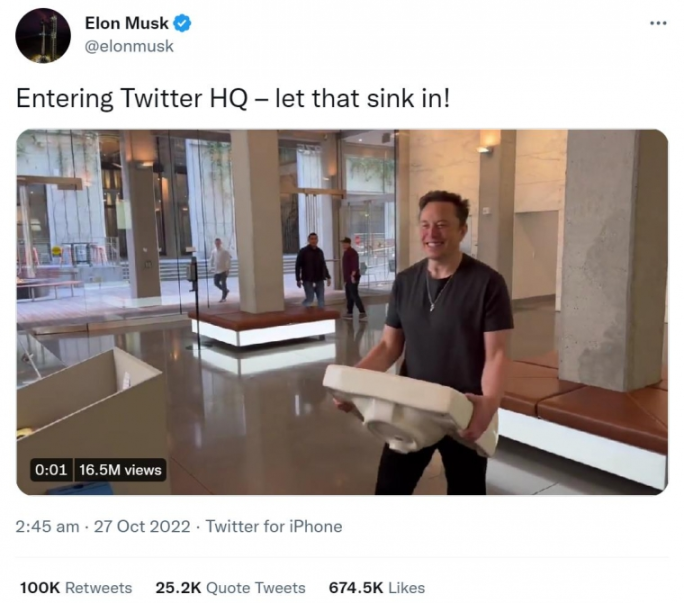
This detail was later widely reported by the media, but the real signal was the phrase in his tweet: "Let that sink in."

A pun. Let the sink in, and let it all sink in.

The outside world thought he bought Twitter for free speech or to defend Trump. They were wrong. Musk wanted revenge, revenge for the betrayal 25 years ago.

The first step was renaming.

X. A single letter, carrying all his anger and ambition. Those who mocked X.com for being too ahead of its time would now witness its resurrection on this platform.

But Musk was smart. He knew he couldn't go all out at once; turning Twitter directly into a bank would scare users away. So he chose a gradual transformation.

In early 2023, X was still primarily a lightweight social platform with a 140-character limit. Musk first adjusted the content strategy, encouraging more original content and real-time discussions. Then came paid subscriptions, getting users accustomed to spending money on the platform.

By mid-year, the long-tweet feature was launched. Users could post longer, more in-depth content, and the platform began shifting from a short-message square to an information hub.

Next came a significant enhancement of video features. Musk wanted X to become a one-stop platform for information consumption, eliminating the need for users to jump to YouTube or other video sites.

By the end of 2023, the creator revenue-sharing plan was officially introduced. The platform began to develop an economic ecosystem, allowing users to earn income through content creation. This was a crucial step; Musk was cultivating users' transaction habits.

Then came the big moves in 2024.

Financial license applications, payment system construction... Musk no longer hid his intentions; he wanted to turn X into a financial platform.

In January 2026, X product lead Nikita Bier stated that the platform was developing Smart Cashtags, allowing users to precisely point to specific assets or smart contracts when posting ticker symbols.
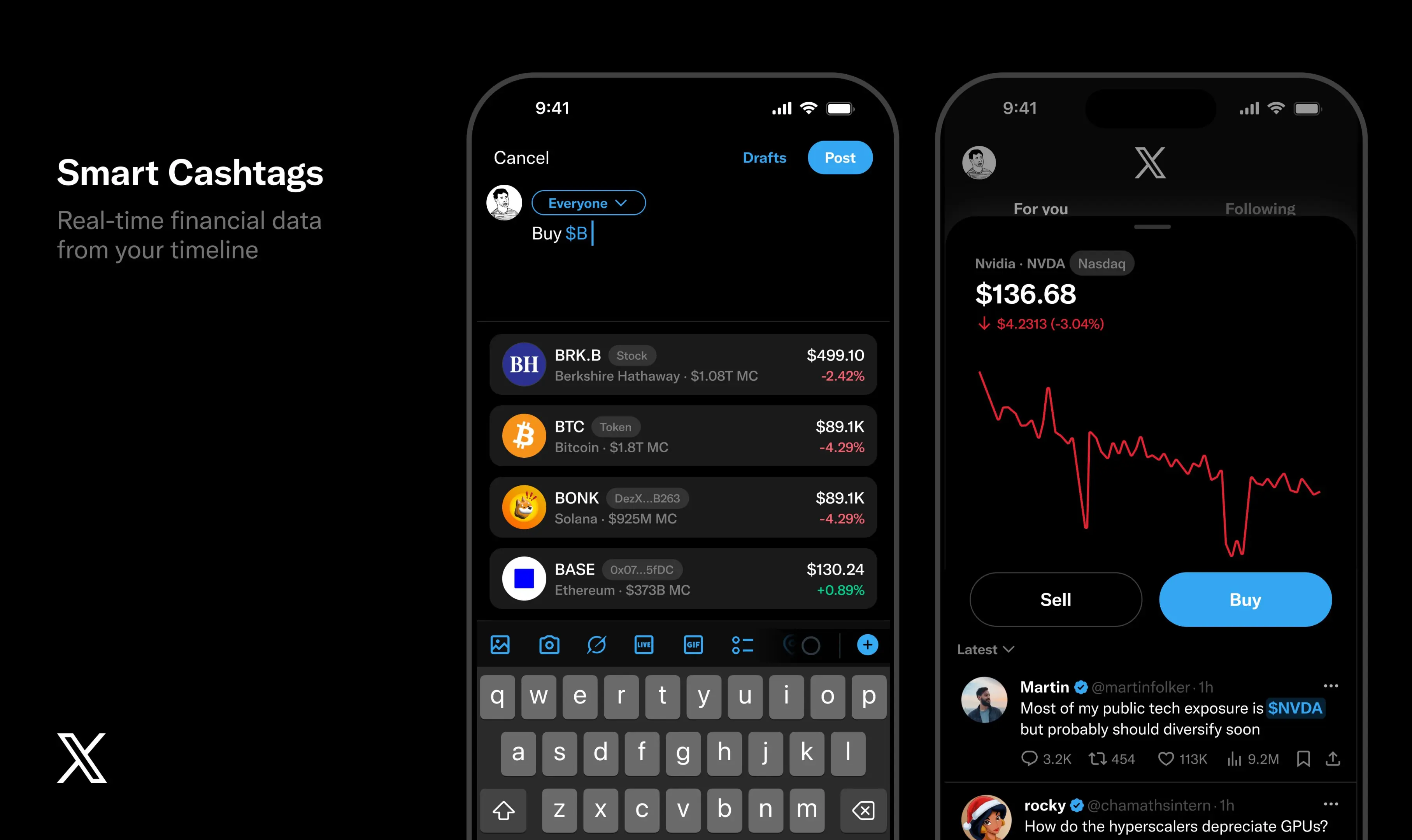
Users could embed tags like $TSLA in tweets to display stock prices in real-time. It seemed like just an information display feature, but it was actually the final piece of the financialization puzzle.

Imagine: You see a tweet about NVIDIA's new chip, and the stock price immediately jumps 5%. You then click the $NVDA tag to buy shares directly.

Social, information, and trading—all integrated. This was the vision Musk had for X.com back in 1999.

From a town square to an information hub, and then to a trading floor. Musk spent two years gradually guiding users to accept X's transformation.

To alleviate user concerns, Musk made an unprecedented decision: open-sourcing all algorithms.

On January 10, 2026, Musk announced on X that the platform would officially open-source its latest content recommendation algorithm within a week, covering code for both organic and ad content, with updates every four weeks along with developer explanations.

The recommendation algorithms of Facebook, YouTube, and TikTok are black boxes; no one knows why they see certain content. When financial services are involved, this lack of transparency becomes a fatal flaw.

Musk broke the black box with open source. Users can inspect the code, developers can audit security, and regulators can supervise compliance.

All to pave the way for financialization.

Belated Validation

X.com of 1999 died because it was "ahead of its time." The internet was still in the dial-up era, with broadband penetration below 10%. Online payments required dozens of security verifications, and users were terrified of putting their money online.

More importantly, the regulatory environment was extremely strict. Banking regulators viewed online finance as a menace, and governments were feeling their way forward. Musk's radical strategy was too risky in that conservative era.

But history proved his judgment right.

It's just that the validation came too late, and from an unexpected place: China.

In 2011, WeChat launched. Initially just a messaging app, it quickly evolved into the super app Musk had envisioned. Chatting, payments, ride-hailing, food delivery,理财—it could do everything. Alipay also developed from a simple third-party payment tool into a comprehensive financial platform.

Musk watched, anxious and impatient.

In June 2022, at his first all-hands meeting with Twitter employees, he publicly stated: "In China, people basically live on WeChat because it's so useful and helpful for daily life. I think if we can achieve that, or even come close to that, on Twitter, it would be a huge success."

This sounded like praise for WeChat, but also regret for his own failure 25 years ago. The Chinese had achieved in a decade what he had wanted to do in 1999.

Now it was his turn.

Mobile payments had rewritten global consumer habits, cryptocurrencies had evolved from geek toys to pension fund investments, and blockchain technology had made decentralized finance a reality. Regulators were also embracing innovation.

The U.S. SEC approved Bitcoin ETF, the EU launched a digital euro plan, and the People's Bank of China was piloting the digital yuan.

Musk waited 25 years for this moment.

With this context, when you look at Smart Cashtags, you realize Musk's opponent was never Zuckerberg.

Meta controls social relationships, Google controls information indexing, and Apple controls hardware access. But so far, no tech giant truly controls the global "flow of funds."

This is X's endgame. Finance is the underlying protocol of the commercial world. Whoever controls the flow of funds holds the throat of the digital economy. This is more lethal than building a search engine or selling phones.

Musk is reshaping an ultra-fast chain from "information" to "decision" to "action." Imagine: Musk tweets about a new Tesla technology. Within seconds, hundreds of thousands of people click the $TSLA tag. The algorithm predicts trends based on sentiment analysis, automatically pushes trading suggestions, and users place orders with one click. Influence is transformed into trading volume instantly.

This is the financialization of social media. The traditional Wall Street model—analysts writing reports, brokers making calls—will seem clumsy and expensive in the face of algorithms.

Back to the initial question: Why did Musk acquire Twitter?

The answer was already public. On October 5, 2022, Musk tweeted that acquiring Twitter accelerated the creation of the super app "X."

It's just that now, everyone truly understands this statement.

Dreaming back to 1999, the ghost of X.com finally found its moment to resurrect. This time, no one can stop him. He is no longer the 27-year-old entrepreneur at others' mercy but the world's richest man with absolute authority.

Welcome to the X Universe

If we zoom out, beyond Wall Street's fluctuations and Silicon Valley's grudges, you'll discover an even more chilling pattern.

Musk's obsession with the letter "X" has long transcended commercial branding, becoming an almost pathological totem worship.

Look at what he's done over the past two decades: When he tried to send humans to Mars, he named the company SpaceX; when he wanted to build a flagship SUV defining Tesla's future, he insisted on calling it Model X despite resistance; when he left OpenAI to develop his own AI model, he named it xAI.

He even named his most beloved son X Æ A-12, and in daily life, he calls him "Little X."
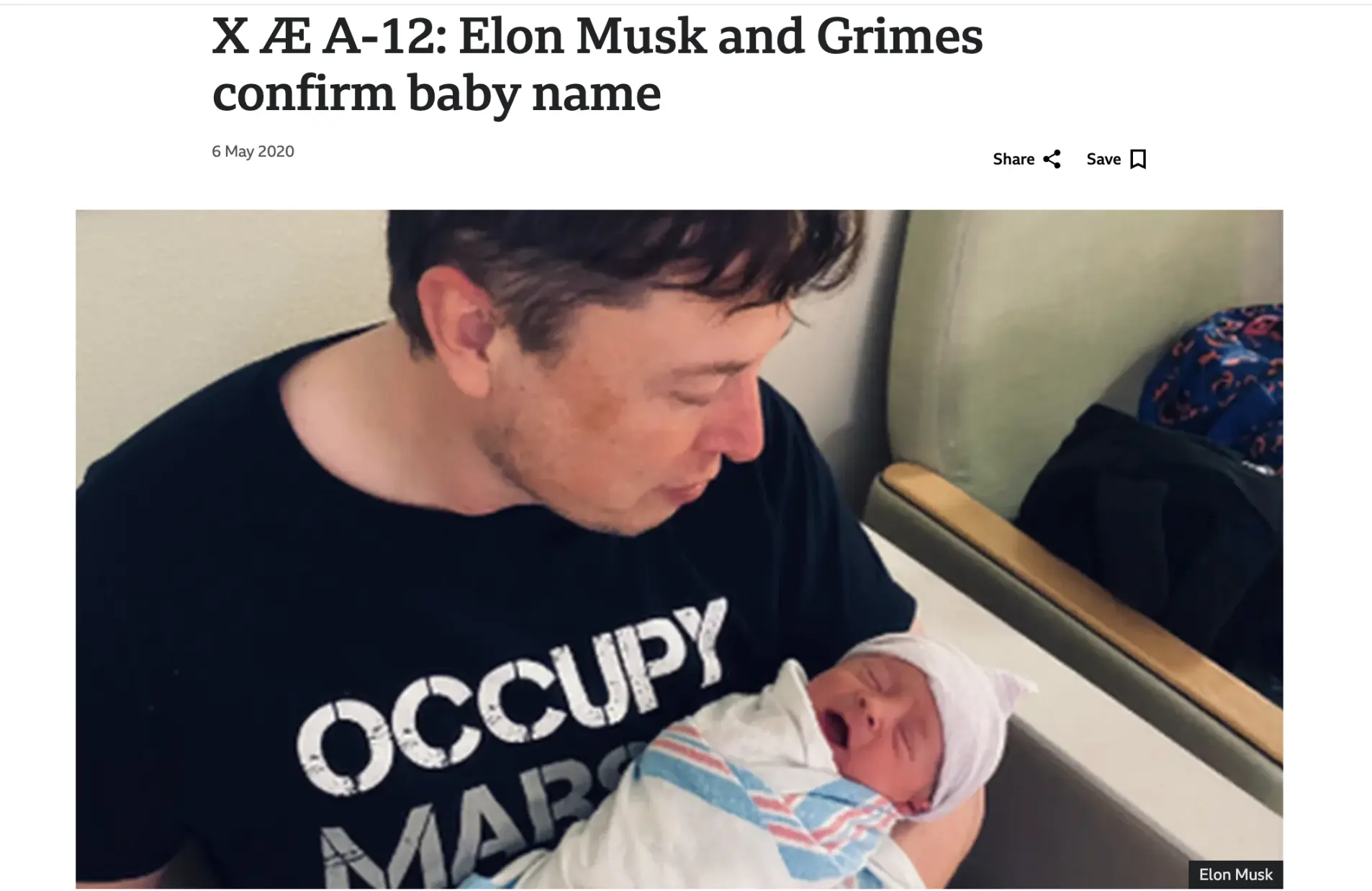
In mathematics, X represents the unknown, representing infinite possibilities. But in Musk's life script, X is the only constant.

25 years ago, that young man kicked out by the PayPal board lost his X. 25 years later, the billionaire with rockets, cars, AI, and the world's largest court of public opinion has finally picked up that piece of the puzzle.

Everything, everything, is to make X happen.

Welcome to Musk's X Universe.


Twitter:https://twitter.com/BitpushNewsCN

Bitpush TG Group:https://t.me/BitPushCommunity

Bitpush TG Subscription: https://t.me/bitpush

Original link:https://www.bitpush.news/articles/7603025

Related Questions

QWhat was the original vision for X.com that Elon Musk founded in 1999?

AElon Musk's original vision for X.com was to create an online financial operating system where all financial services—transfers, investments, loans, insurance, and even daily consumption—could be integrated into a single platform.

QWhy was Musk removed as CEO of X.com in 2000?

AMusk was ousted by the board of directors while he was on his honeymoon in Australia. The Stanford-educated executives from Confinity, which had merged with X.com, viewed his aggressive and unconventional engineering-led approach as too risky and disruptive.

QWhat major strategic shift did Musk initiate after acquiring Twitter (renamed X) in 2022?

AAfter acquiring Twitter, Musk initiated a gradual transformation of the platform from a short-message social network into an all-in-one information and financial hub. This included introducing long-form content, video features, a creator monetization program, and ultimately, financial services like payment systems and stock trading integration through features like Smart Cashtags.

QHow did Musk use the concept of open source to support X's financialization goals?

AMusk announced the open-sourcing of X's content recommendation algorithm to ensure transparency, build user trust, and facilitate regulatory compliance. This move was critical for a platform handling financial transactions, as it allowed users, developers, and regulators to audit the code for security and fairness.

QWhat does the 'X' symbol represent to Elon Musk across his various ventures?

AFor Elon Musk, 'X' is a symbolic constant representing infinite possibility and the unknown. It is a personal and professional motif seen in his companies (SpaceX, xAI), products (Tesla Model X), and even his son's name, reflecting his long-standing ambition to create an integrated financial and technological ecosystem, originally conceived with X.com.

Related Reads

North Korean Hackers Loot $500 Million in a Single Month, Becoming the Top Threat to Crypto Security

North Korean hackers, particularly the notorious Lazarus Group and its subgroup TraderTraitor, have stolen over $500 million from cryptocurrency DeFi platforms in less than three weeks, bringing their total theft for the year to over $700 million. Recent major attacks on Drift Protocol and KelpDAO, resulting in losses of approximately $286 million and $290 million respectively, highlight a strategic shift: instead of targeting core smart contracts, attackers are now exploiting vulnerabilities in peripheral infrastructure. For instance, the KelpDAO attack involved compromising downstream RPC infrastructure used by LayerZero's decentralized validation network (DVN), allowing manipulation without breaching core cryptography. This sophisticated approach mirrors advanced corporate cyber-espionage. Additionally, North Korea has systematically infiltrated the global crypto workforce, with an estimated 100 operatives using fake identities to gain employment at blockchain companies, enabling long-term access to sensitive systems and facilitating large-scale thefts. According to Chainalysis, North Korean-linked hackers stole a record $2 billion in 2025, accounting for 60% of all global crypto theft that year. Their total historical crypto theft has reached $6.75 billion. Post-theft, they employ specialized money laundering methods, heavily relying on Chinese OTC brokers and cross-chain mixing services rather than standard decentralized exchanges. Security experts, while acknowledging the increased sophistication, emphasize that many attacks still exploit fundamental weaknesses like poor access controls and centralized operational risks. Strengthening private key management, limiting privileged access, and enhancing coordination among exchanges, analysts, and law enforcement immediately after an attack are critical to improving defense and fund recovery chances. The industry's challenge now extends beyond secure smart contracts to safeguarding operational security at the infrastructure level.

marsbit55m ago

North Korean Hackers Loot $500 Million in a Single Month, Becoming the Top Threat to Crypto Security

marsbit55m ago

Circle CEO's Seoul Visit: No Korean Won Stablecoin Issuance, But Met All Major Korean Banks

Circle CEO Jeremy Allaire's recent activities in Seoul indicate a strategic shift for the company, moving away from issuing a Korean won-backed stablecoin and instead focusing on embedding itself as a key infrastructure provider within Korea’s financial and crypto ecosystem. Despite Korea accounting for nearly 30% of global crypto trading volume—with a market characterized by high retail participation and altcoin dominance—Circle has chosen not to compete for the role of stablecoin issuer. Instead, Allaire met with major Korean banks (including Shinhan, KB, and Woori), financial groups, leading exchanges (Upbit, Bithumb, Coinone), and tech firms like Kakao. This approach reflects a broader industry transition: the core of stablecoin competition is shifting from issuance rights to systemic positioning. With Korean regulators still debating whether banks or tech companies should issue stablecoins, Circle is avoiding regulatory uncertainty by strengthening its role as a service and technology partner. The company is deepening integration with trading platforms, building connections, and promoting stablecoin infrastructure. This positions Circle to benefit regardless of which entity eventually issues a won stablecoin. Allaire also noted the potential for a Chinese yuan stablecoin in the next 3–5 years, underscoring a regional trend of stablecoins becoming more regulated and integrated with traditional finance. Ultimately, Circle’s strategy highlights that future influence in the stablecoin market will belong not necessarily to the issuers, but to the foundational infrastructure layers that enable cross-system transactions.

marsbit1h ago

Circle CEO's Seoul Visit: No Korean Won Stablecoin Issuance, But Met All Major Korean Banks

marsbit1h ago

SpaceX Ties Up with Cursor: A High-Stakes AI Gambit of 'Lock First, Acquire Later'

SpaceX has secured an option to acquire AI programming company Cursor for $60 billion, with an alternative clause requiring a $10 billion collaboration fee if the acquisition does not proceed. This structure is not merely a potential acquisition but a strategic move to control core access points in the AI era. The deal is designed as a flexible, dual-path arrangement, allowing SpaceX to either fully acquire Cursor or maintain a binding partnership through high-cost collaboration. This "option-style" approach minimizes immediate regulatory and integration risks while ensuring long-term alignment between the two companies. At its core, the transaction exchanges critical AI-era resources: SpaceX provides its Colossus supercomputing cluster—one of the world’s most powerful AI training infrastructures—while Cursor contributes its AI-native developer environment and strong product adoption. This synergy connects compute power, models, and application layers, forming a closed-loop AI capability stack. Cursor, founded in 2022, has achieved rapid growth with over $1 billion in annual revenue and widespread enterprise adoption. Its value lies in transforming software development through AI agents capable of coding, debugging, and system design—positioning it as a gateway to future software production. For SpaceX, this move is part of a broader strategy to evolve from a aerospace company into an AI infrastructure empire, integrating xAI, supercomputing, and chip manufacturing. Controlling Cursor fills a gap in its developer tooling layer, strengthening its AI narrative ahead of a potential IPO. The deal reflects a shift in AI competition from model superiority to ecosystem and entry-point control. With programming tools as a key battleground, securing developer loyalty becomes crucial for dominating the software production landscape. Risks include questions around Cursor’s valuation, technical integration challenges, and potential regulatory scrutiny. Nevertheless, the deal underscores a strategic bet: controlling both compute and software development access may redefine power dynamics in the AI-driven future.

marsbit2h ago

SpaceX Ties Up with Cursor: A High-Stakes AI Gambit of 'Lock First, Acquire Later'

marsbit2h ago

Trading

Spot
Futures

Hot Articles

What is SONIC

Sonic: Pioneering the Future of Gaming in Web3 Introduction to Sonic In the ever-evolving landscape of Web3, the gaming industry stands out as one of the most dynamic and promising sectors. At the forefront of this revolution is Sonic, a project designed to amplify the gaming ecosystem on the Solana blockchain. Leveraging cutting-edge technology, Sonic aims to deliver an unparalleled gaming experience by efficiently processing millions of requests per second, ensuring that players enjoy seamless gameplay while maintaining low transaction costs. This article delves into the intricate details of Sonic, exploring its creators, funding sources, operational mechanics, and the timeline of significant events that have shaped its journey. What is Sonic? Sonic is an innovative layer-2 network that operates atop the Solana blockchain, specifically tailored to enhance the existing Solana gaming ecosystem. It accomplishes this through a customised, VM-agnostic game engine paired with a HyperGrid interpreter, facilitating sovereign game economies that roll up back to the Solana platform. The primary goals of Sonic include: Enhanced Gaming Experiences: Sonic is committed to offering lightning-fast on-chain gameplay, allowing players and developers to engage with games at previously unattainable speeds. Atomic Interoperability: This feature enables transactions to be executed within Sonic without the need to redeploy Solana programmes and accounts. This makes the process more efficient and directly benefits from Solana Layer1 services and liquidity. Seamless Deployment: Sonic allows developers to write for Ethereum Virtual Machine (EVM) based systems and execute them on Solana’s SVM infrastructure. This interoperability is crucial for attracting a broader range of dApps and decentralised applications to the platform. Support for Developers: By offering native composable gaming primitives and extensible data types - dining within the Entity-Component-System (ECS) framework - game creators can craft intricate business logic with ease. Overall, Sonic's unique approach not only caters to players but also provides an accessible and low-cost environment for developers to innovate and thrive. Creator of Sonic The information regarding the creator of Sonic is somewhat ambiguous. However, it is known that Sonic's SVM is owned by the company Mirror World. The absence of detailed information about the individuals behind Sonic reflects a common trend in several Web3 projects, where collective efforts and partnerships often overshadow individual contributions. Investors of Sonic Sonic has garnered considerable attention and support from various investors within the crypto and gaming sectors. Notably, the project raised an impressive $12 million during its Series A funding round. The round was led by BITKRAFT Ventures, with other notable investors including Galaxy, Okx Ventures, Interactive, Big Brain Holdings, and Mirana. This financial backing signifies the confidence that investment foundations have in Sonic’s potential to revolutionise the Web3 gaming landscape, further validating its innovative approaches and technologies. How Does Sonic Work? Sonic utilises the HyperGrid framework, a sophisticated parallel processing mechanism that enhances its scalability and customisability. Here are the core features that set Sonic apart: Lightning Speed at Low Costs: Sonic offers one of the fastest on-chain gaming experiences compared to other Layer-1 solutions, powered by the scalability of Solana’s virtual machine (SVM). Atomic Interoperability: Sonic enables transaction execution without redeployment of Solana programmes and accounts, effectively streamlining the interaction between users and the blockchain. EVM Compatibility: Developers can effortlessly migrate decentralised applications from EVM chains to the Solana environment using Sonic’s HyperGrid interpreter, increasing the accessibility and integration of various dApps. Ecosystem Support for Developers: By exposing native composable gaming primitives, Sonic facilitates a sandbox-like environment where developers can experiment and implement business logic, greatly enhancing the overall development experience. Monetisation Infrastructure: Sonic natively supports growth and monetisation efforts, providing frameworks for traffic generation, payments, and settlements, thereby ensuring that gaming projects are not only viable but also sustainable financially. Timeline of Sonic The evolution of Sonic has been marked by several key milestones. Below is a brief timeline highlighting critical events in the project's history: 2022: The Sonic cryptocurrency was officially launched, marking the beginning of its journey in the Web3 gaming arena. 2024: June: Sonic SVM successfully raised $12 million in a Series A funding round. This investment allowed Sonic to further develop its platform and expand its offerings. August: The launch of the Sonic Odyssey testnet provided users with the first opportunity to engage with the platform, offering interactive activities such as collecting rings—a nod to gaming nostalgia. October: SonicX, an innovative crypto game integrated with Solana, made its debut on TikTok, capturing the attention of over 120,000 users within a short span. This integration illustrated Sonic’s commitment to reaching a broader, global audience and showcased the potential of blockchain gaming. Key Points Sonic SVM is a revolutionary layer-2 network on Solana explicitly designed to enhance the GameFi landscape, demonstrating great potential for future development. HyperGrid Framework empowers Sonic by introducing horizontal scaling capabilities, ensuring that the network can handle the demands of Web3 gaming. Integration with Social Platforms: The successful launch of SonicX on TikTok displays Sonic’s strategy to leverage social media platforms to engage users, exponentially increasing the exposure and reach of its projects. Investment Confidence: The substantial funding from BITKRAFT Ventures, among others, emphasizes the robust backing Sonic has, paving the way for its ambitious future. In conclusion, Sonic encapsulates the essence of Web3 gaming innovation, striking a balance between cutting-edge technology, developer-centric tools, and community engagement. As the project continues to evolve, it is poised to redefine the gaming landscape, making it a notable entity for gamers and developers alike. As Sonic moves forward, it will undoubtedly attract greater interest and participation, solidifying its place within the broader narrative of blockchain gaming.

1.1k Total ViewsPublished 2024.04.04Updated 2024.12.03

What is SONIC

What is $S$

Understanding SPERO: A Comprehensive Overview Introduction to SPERO As the landscape of innovation continues to evolve, the emergence of web3 technologies and cryptocurrency projects plays a pivotal role in shaping the digital future. One project that has garnered attention in this dynamic field is SPERO, denoted as SPERO,$$s$. This article aims to gather and present detailed information about SPERO, to help enthusiasts and investors understand its foundations, objectives, and innovations within the web3 and crypto domains. What is SPERO,$$s$? SPERO,$$s$ is a unique project within the crypto space that seeks to leverage the principles of decentralisation and blockchain technology to create an ecosystem that promotes engagement, utility, and financial inclusion. The project is tailored to facilitate peer-to-peer interactions in new ways, providing users with innovative financial solutions and services. At its core, SPERO,$$s$ aims to empower individuals by providing tools and platforms that enhance user experience in the cryptocurrency space. This includes enabling more flexible transaction methods, fostering community-driven initiatives, and creating pathways for financial opportunities through decentralised applications (dApps). The underlying vision of SPERO,$$s$ revolves around inclusiveness, aiming to bridge gaps within traditional finance while harnessing the benefits of blockchain technology. Who is the Creator of SPERO,$$s$? The identity of the creator of SPERO,$$s$ remains somewhat obscure, as there are limited publicly available resources providing detailed background information on its founder(s). This lack of transparency can stem from the project's commitment to decentralisation—an ethos that many web3 projects share, prioritising collective contributions over individual recognition. By centring discussions around the community and its collective goals, SPERO,$$s$ embodies the essence of empowerment without singling out specific individuals. As such, understanding the ethos and mission of SPERO remains more important than identifying a singular creator. Who are the Investors of SPERO,$$s$? SPERO,$$s$ is supported by a diverse array of investors ranging from venture capitalists to angel investors dedicated to fostering innovation in the crypto sector. The focus of these investors generally aligns with SPERO's mission—prioritising projects that promise societal technological advancement, financial inclusivity, and decentralised governance. These investor foundations are typically interested in projects that not only offer innovative products but also contribute positively to the blockchain community and its ecosystems. The backing from these investors reinforces SPERO,$$s$ as a noteworthy contender in the rapidly evolving domain of crypto projects. How Does SPERO,$$s$ Work? SPERO,$$s$ employs a multi-faceted framework that distinguishes it from conventional cryptocurrency projects. Here are some of the key features that underline its uniqueness and innovation: Decentralised Governance: SPERO,$$s$ integrates decentralised governance models, empowering users to participate actively in decision-making processes regarding the project’s future. This approach fosters a sense of ownership and accountability among community members. Token Utility: SPERO,$$s$ utilises its own cryptocurrency token, designed to serve various functions within the ecosystem. These tokens enable transactions, rewards, and the facilitation of services offered on the platform, enhancing overall engagement and utility. Layered Architecture: The technical architecture of SPERO,$$s$ supports modularity and scalability, allowing for seamless integration of additional features and applications as the project evolves. This adaptability is paramount for sustaining relevance in the ever-changing crypto landscape. Community Engagement: The project emphasises community-driven initiatives, employing mechanisms that incentivise collaboration and feedback. By nurturing a strong community, SPERO,$$s$ can better address user needs and adapt to market trends. Focus on Inclusion: By offering low transaction fees and user-friendly interfaces, SPERO,$$s$ aims to attract a diverse user base, including individuals who may not previously have engaged in the crypto space. This commitment to inclusion aligns with its overarching mission of empowerment through accessibility. Timeline of SPERO,$$s$ Understanding a project's history provides crucial insights into its development trajectory and milestones. Below is a suggested timeline mapping significant events in the evolution of SPERO,$$s$: Conceptualisation and Ideation Phase: The initial ideas forming the basis of SPERO,$$s$ were conceived, aligning closely with the principles of decentralisation and community focus within the blockchain industry. Launch of Project Whitepaper: Following the conceptual phase, a comprehensive whitepaper detailing the vision, goals, and technological infrastructure of SPERO,$$s$ was released to garner community interest and feedback. Community Building and Early Engagements: Active outreach efforts were made to build a community of early adopters and potential investors, facilitating discussions around the project’s goals and garnering support. Token Generation Event: SPERO,$$s$ conducted a token generation event (TGE) to distribute its native tokens to early supporters and establish initial liquidity within the ecosystem. Launch of Initial dApp: The first decentralised application (dApp) associated with SPERO,$$s$ went live, allowing users to engage with the platform's core functionalities. Ongoing Development and Partnerships: Continuous updates and enhancements to the project's offerings, including strategic partnerships with other players in the blockchain space, have shaped SPERO,$$s$ into a competitive and evolving player in the crypto market. Conclusion SPERO,$$s$ stands as a testament to the potential of web3 and cryptocurrency to revolutionise financial systems and empower individuals. With a commitment to decentralised governance, community engagement, and innovatively designed functionalities, it paves the way toward a more inclusive financial landscape. As with any investment in the rapidly evolving crypto space, potential investors and users are encouraged to research thoroughly and engage thoughtfully with the ongoing developments within SPERO,$$s$. The project showcases the innovative spirit of the crypto industry, inviting further exploration into its myriad possibilities. While the journey of SPERO,$$s$ is still unfolding, its foundational principles may indeed influence the future of how we interact with technology, finance, and each other in interconnected digital ecosystems.

54 Total ViewsPublished 2024.12.17Updated 2024.12.17

What is $S$

What is AGENT S

Agent S: The Future of Autonomous Interaction in Web3 Introduction In the ever-evolving landscape of Web3 and cryptocurrency, innovations are constantly redefining how individuals interact with digital platforms. One such pioneering project, Agent S, promises to revolutionise human-computer interaction through its open agentic framework. By paving the way for autonomous interactions, Agent S aims to simplify complex tasks, offering transformative applications in artificial intelligence (AI). This detailed exploration will delve into the project's intricacies, its unique features, and the implications for the cryptocurrency domain. What is Agent S? Agent S stands as a groundbreaking open agentic framework, specifically designed to tackle three fundamental challenges in the automation of computer tasks: Acquiring Domain-Specific Knowledge: The framework intelligently learns from various external knowledge sources and internal experiences. This dual approach empowers it to build a rich repository of domain-specific knowledge, enhancing its performance in task execution. Planning Over Long Task Horizons: Agent S employs experience-augmented hierarchical planning, a strategic approach that facilitates efficient breakdown and execution of intricate tasks. This feature significantly enhances its ability to manage multiple subtasks efficiently and effectively. Handling Dynamic, Non-Uniform Interfaces: The project introduces the Agent-Computer Interface (ACI), an innovative solution that enhances the interaction between agents and users. Utilizing Multimodal Large Language Models (MLLMs), Agent S can navigate and manipulate diverse graphical user interfaces seamlessly. Through these pioneering features, Agent S provides a robust framework that addresses the complexities involved in automating human interaction with machines, setting the stage for myriad applications in AI and beyond. Who is the Creator of Agent S? While the concept of Agent S is fundamentally innovative, specific information about its creator remains elusive. The creator is currently unknown, which highlights either the nascent stage of the project or the strategic choice to keep founding members under wraps. Regardless of anonymity, the focus remains on the framework's capabilities and potential. Who are the Investors of Agent S? As Agent S is relatively new in the cryptographic ecosystem, detailed information regarding its investors and financial backers is not explicitly documented. The lack of publicly available insights into the investment foundations or organisations supporting the project raises questions about its funding structure and development roadmap. Understanding the backing is crucial for gauging the project's sustainability and potential market impact. How Does Agent S Work? At the core of Agent S lies cutting-edge technology that enables it to function effectively in diverse settings. Its operational model is built around several key features: Human-like Computer Interaction: The framework offers advanced AI planning, striving to make interactions with computers more intuitive. By mimicking human behaviour in tasks execution, it promises to elevate user experiences. Narrative Memory: Employed to leverage high-level experiences, Agent S utilises narrative memory to keep track of task histories, thereby enhancing its decision-making processes. Episodic Memory: This feature provides users with step-by-step guidance, allowing the framework to offer contextual support as tasks unfold. Support for OpenACI: With the ability to run locally, Agent S allows users to maintain control over their interactions and workflows, aligning with the decentralised ethos of Web3. Easy Integration with External APIs: Its versatility and compatibility with various AI platforms ensure that Agent S can fit seamlessly into existing technological ecosystems, making it an appealing choice for developers and organisations. These functionalities collectively contribute to Agent S's unique position within the crypto space, as it automates complex, multi-step tasks with minimal human intervention. As the project evolves, its potential applications in Web3 could redefine how digital interactions unfold. Timeline of Agent S The development and milestones of Agent S can be encapsulated in a timeline that highlights its significant events: September 27, 2024: The concept of Agent S was launched in a comprehensive research paper titled “An Open Agentic Framework that Uses Computers Like a Human,” showcasing the groundwork for the project. October 10, 2024: The research paper was made publicly available on arXiv, offering an in-depth exploration of the framework and its performance evaluation based on the OSWorld benchmark. October 12, 2024: A video presentation was released, providing a visual insight into the capabilities and features of Agent S, further engaging potential users and investors. These markers in the timeline not only illustrate the progress of Agent S but also indicate its commitment to transparency and community engagement. Key Points About Agent S As the Agent S framework continues to evolve, several key attributes stand out, underscoring its innovative nature and potential: Innovative Framework: Designed to provide an intuitive use of computers akin to human interaction, Agent S brings a novel approach to task automation. Autonomous Interaction: The ability to interact autonomously with computers through GUI signifies a leap towards more intelligent and efficient computing solutions. Complex Task Automation: With its robust methodology, it can automate complex, multi-step tasks, making processes faster and less error-prone. Continuous Improvement: The learning mechanisms enable Agent S to improve from past experiences, continually enhancing its performance and efficacy. Versatility: Its adaptability across different operating environments like OSWorld and WindowsAgentArena ensures that it can serve a broad range of applications. As Agent S positions itself in the Web3 and crypto landscape, its potential to enhance interaction capabilities and automate processes signifies a significant advancement in AI technologies. Through its innovative framework, Agent S exemplifies the future of digital interactions, promising a more seamless and efficient experience for users across various industries. Conclusion Agent S represents a bold leap forward in the marriage of AI and Web3, with the capacity to redefine how we interact with technology. While still in its early stages, the possibilities for its application are vast and compelling. Through its comprehensive framework addressing critical challenges, Agent S aims to bring autonomous interactions to the forefront of the digital experience. As we move deeper into the realms of cryptocurrency and decentralisation, projects like Agent S will undoubtedly play a crucial role in shaping the future of technology and human-computer collaboration.

549 Total ViewsPublished 2025.01.14Updated 2025.01.14

What is AGENT S

Discussions

Welcome to the HTX Community. Here, you can stay informed about the latest platform developments and gain access to professional market insights. Users' opinions on the price of S (S) are presented below.

活动图片