Morning Report | xAI Launches Skills; Duan Yongping Takes First Position in Circle in Q1 2026; Polymarket Partners with Nasdaq to Launch Prediction Market

链捕手Published on 2026-05-20Last updated on 2026-05-20

Abstract

**Title:** Daily Brief: Musk's xAI Launches "Skills"; Duan Yongping's First Circle Investment; Polymarket Partners with Nasdaq **Key Highlights:** * **AI Developments:** Elon Musk's xAI released "Skills," enabling its Grok AI to retain memory across conversations. OpenAI co-founder Andrej Karpathy joined rival Anthropic. * **Crypto & DeFi:** May saw 14 crypto hack incidents, including 3 major DeFi attacks in 5 days (Echo Protocol, THORChain, Verus). The Ethereum Foundation faces another exodus with two core members departing. * **Corporate Moves:** Investor Duan Yongping disclosed a new $19M position in Circle. Analog Devices is in talks to acquire AI chip firm Empower Semiconductor for ~$1.5B. * **Financials & Partnerships:** Canaan reported Q1 2026 revenue of $62.7M and record-high crypto reserves. Prediction market Polymarket partnered with Nasdaq to launch markets for private companies. * **Market Data:** VanEck predicts digital credit markets could reach $2.5T in a decade, with Bitcoin potentially hitting $1M. Top trending meme tokens on ETH, Solana, and Base networks are listed. **Featured Articles:** Three analysis pieces explore: 1) potential regulatory pressures on DEXs like Hyperliquid, 2) challenges to Solana's "internet capital market" narrative, and 3) the future emergence of a dedicated capital market for autonomous AI agents (Agents).

Compiled by: ChainCatcher


Key News:

  • Three Major DeFi Attacks in Five Days, Total Crypto Hacks in May Reach 14
  • Elon Musk's xAI Launches Skills
  • Analog Devices to Acquire AI Chip Company Empower Semiconductor for $1.5 Billion
  • Duan Yongping Takes First Position in Circle in Q1 2026, Holding Value $19.08 Million
  • Polymarket Partners with Nasdaq to Launch Prediction Market for Private Companies
  • Canaan Releases Q1 2026 Financials: Total Revenue $62.7 Million, Cryptocurrency Holdings Hit New High
  • Ethereum Foundation Hit by Another Wave of Departures, Core Members Carl Beek and Julian Ma Announce Exit

What Major Events Happened in the Past 24 Hours?

OpenAI Co-founder Andrej Karpathy Joins Anthropic

ChainCatcher news: OpenAI co-founder and former Tesla AI director Andrej Karpathy officially announced joining Anthropic, stating: "I believe the next few years will be a particularly critical period for frontier development of large language models (LLMs). I am very excited to join the team here and get back to R&D work. I remain passionate about education and plan to continue advancing related work at an appropriate time in the future."

Polymarket Partners with Nasdaq to Launch Prediction Market for Private Companies

Canaan Releases Q1 2026 Financials: Total Revenue $62.7 Million, Cryptocurrency Holdings Hit New High

ChainCatcher news, Canaan Inc. announced its first quarter 2026 financial results. The report shows total revenue of $62.7 million, in line with prior guidance; net loss of $88.7 million. As of March 31, 2026, the company's cryptocurrency holdings reached 1,807.60 Bitcoin and 3,951.53 Ethereum, hitting a new all-time high.

In terms of operations, the total installed hash rate capacity of the company's ten joint mining projects reached approximately 11 EH/s, up 10.7% quarter-over-quarter; 257 Bitcoin were produced in Q1. Strategically, the company acquired a 49% stake in the ABC project in West Texas from Cipher Mining, with project-level operating hash rate reaching approximately 4.4 EH/s; meanwhile, a "hash rate to heat" project was deployed in Northern Europe, with a planned total capacity of approximately 8 megawatts.

Canaan expects total revenue for the second quarter of 2026 to be in the range of $35 million to $45 million.

VanEck: Digital Credit Market Could Reach $2.5 Trillion in the Next Decade, BTC Could Hit $1 Million

Duan Yongping Takes First Position in Circle in Q1 2026, Holding Value $19.08 Million

ChainCatcher news: The SEC 13F filing for the first quarter of 2026 submitted by H&H International Investment, the US-managed investment account of prominent investor Duan Yongping, shows that as of March 31, 2026, the portfolio held 19 securities with a total value of approximately $20.004 billion, with all holdings under sole discretion.

Among them: Apple (AAPL) held 28,945,607 shares, valued at $7.346 billion; Berkshire Hathaway (BRK.B) held 9,147,796 shares, valued at $4.384 billion; Nvidia (NVDA) held 13,843,775 shares, valued at $2.414 billion; Pinduoduo (PDD) held 19,748,294 shares, valued at $2.018 billion; Tesla (TSLA) held 3,408,900 shares, valued at $1.267 billion. Microsoft (MSFT) held 1,016,000 shares, valued at $376 million. Circle was a newly disclosed position for the quarter, holding 200,000 shares valued at $19.082 million, accounting for approximately 0.1% of the portfolio.

Analog Devices to Acquire AI Chip Company Empower Semiconductor for $1.5 Billion

ChainCatcher news: According to informed sources, Analog Devices is in advanced negotiations to acquire AI chip startup Empower Semiconductor for approximately $1.5 billion.

If the deal goes through, it will further expand Analog Devices' footprint in high-performance computing infrastructure. The transaction reflects strong market demand for AI chip power supply and energy efficiency management technologies, as growing AI workloads impose higher requirements on power management and energy efficiency for AI chips.Agents Capital Markets: How Will Autonomous Agents Get Funded?

Elon Musk's xAI Launches Skills

ChainCatcher news, Elon Musk's AI company xAI announced the launch of the "Skills" feature simultaneously on web, iOS, and Android platforms. This feature endows the AI assistant Grok with persistent memory across conversations, marking Grok's evolution from a traditional single-session Q&A chatbot to a configurable, programmable automated workspace.

According to the introduction, with the "Skills" feature, users only need to teach Grok the operating method for a specific task once, and Grok will permanently remember the relevant personal preferences, formatting rules, or specific workflow steps in all subsequent independent conversations. This means users no longer need to tediously repeat entering cumbersome preamble prompts or background settings when starting new conversations.

Coinbase CEO Assists Law Enforcement with Blockchain Forensics Leading to 5 Convictions

Three Major DeFi Attacks in Five Days, Total Crypto Hacks in May Reach 14

ChainCatcher news, Echo Protocol suffered a vulnerability attack on the Monad network, with the attacker minting 1,000 eBTC (worth approximately $76.64 million). According to PeckShield tracking, the attacker deposited 45 eBTC (~$3.45 million) into Curvance, borrowed 11.29 WBTC, bridged to Ethereum and exchanged for ETH, with 384 ETH transferred into Tornado Cash. Curvance has suspended the affected market, stating that smart contracts were not compromised and other markets remain unaffected.

Echo Protocol has suspended all cross-chain transactions. Monad CEO Keone Hon clarified that the vulnerability did not affect the Monad network, and security researchers assessed the actual theft at approximately $816,000.

This incident pushes the total number of crypto hacks in May to 14, with three major DeFi attacks occurring in just the past five days: THORChain lost over $10 million to a vault exploit on May 15, and the Verus Ethereum cross-chain bridge was attacked three days later, losing approximately $11.58 million. The frequency of security incidents highlights the persistent systemic risks facing the DeFi space.

Top Meme Tokens

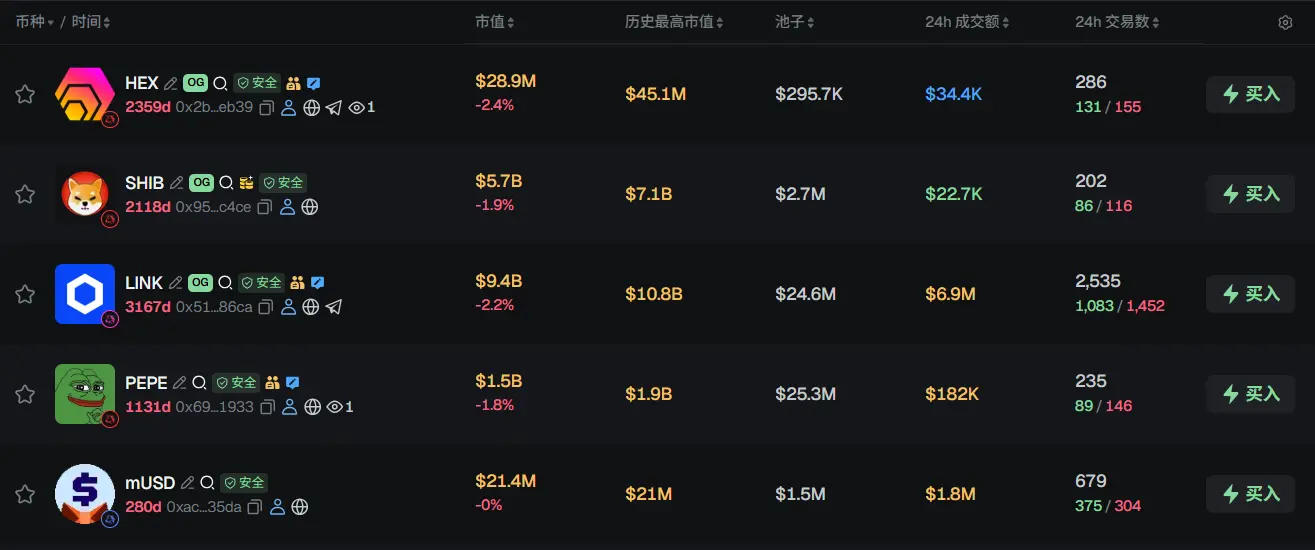
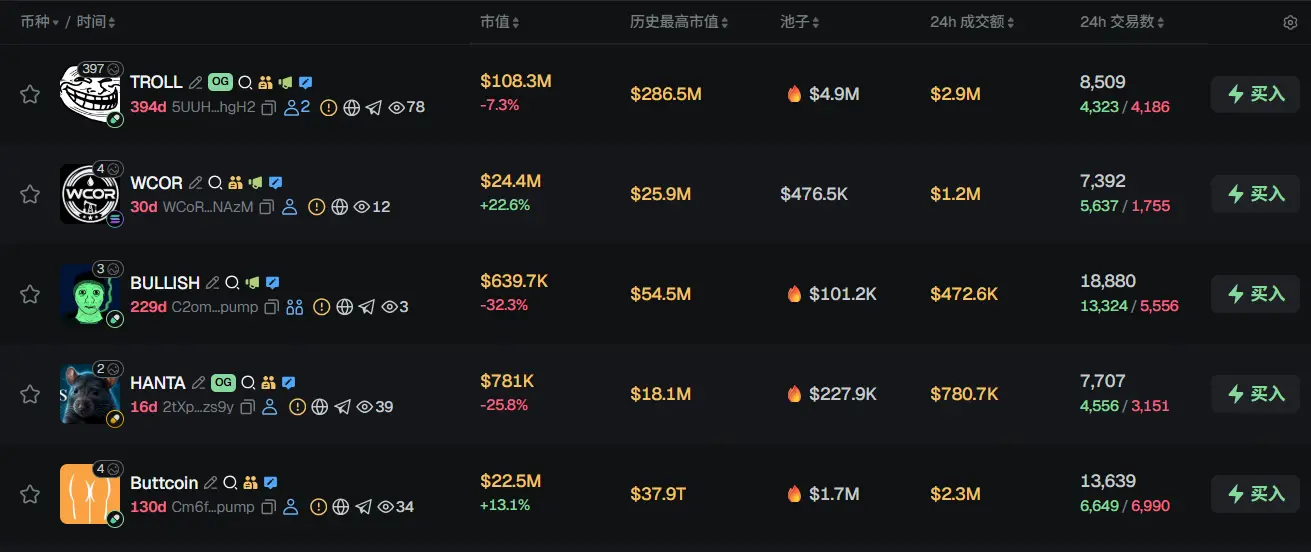
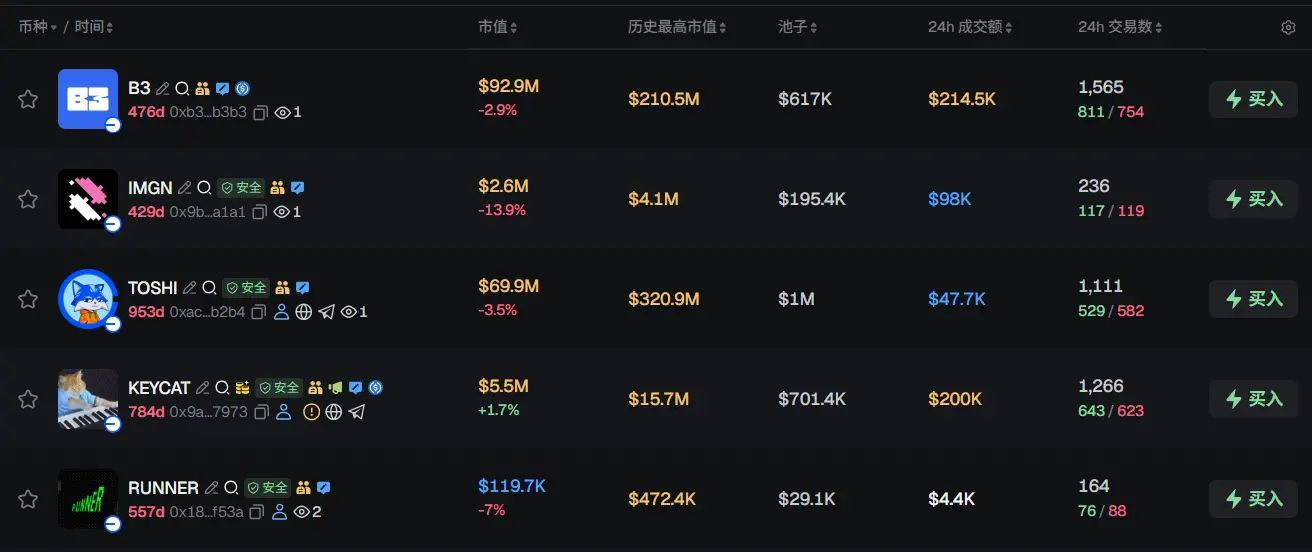
According to data from the meme token tracking and analysis platform GMGN, as of 09:00 on May 20,

The top five trending ETH tokens in the past 24h are: HEX, SHIB, LINK, PEPE, mUSD
The top five trending Solana tokens in the past 24h are: TROLL, WCOR, BULLISH, HANTA, Buttcoin
The top five trending Base tokens in the past 24h are: B3, IMGN, TOSHI, TOSHI, KEYCAT, BRETT
What Are the Must-Read Articles From the Past 24 Hours?

Is Hyperliquid Disrupting Wall Street's Game? Regulation Pending, Market Makers Flee First?

Yesterday, two addresses marked by the market as mainstream market makers on Hyperliquid withdrew nearly 90% of BTC and ETH liquidity during the same time period, with an estimated total withdrawal scale of nearly $100 million.

And it just so happens that 3 days prior, the world's two largest traditional exchanges, CME and ICE, jointly pressured the US CFTC and Congress to strictly regulate Hyperliquid.

Is this merely a single event of professional players 'pricing in regulatory risk,' or a sign that the regulatory arbitrage benefits DEXs have enjoyed over the past three years are coming to an end?

When Hyperliquid Steals Solana's "Internet Capital Market" Playbook

In the cyclical turns of the cryptocurrency market, Solana once regained its peak with the narrative of an 'Ethereum killer' and extreme performance. However, entering 2026, this 'high-performance computer' that once ran at full throttle is facing unprecedented deceleration pressure, first reflected in price.

Over the past year, SOL's price has fallen a maximum of 73.5% from its high, the largest drop among all major cryptocurrencies. In the recent market correction over the past month, SOL's upward momentum has also been very weak, significantly lagging behind other major cryptocurrencies like BTC and ETH.

Furthermore, Solana's core "internet capital market" vision has been severely hit by internal and external challenges, forcing the Solana Foundation's senior team to frequently speak out recently, building momentum for their ecosystem in the public opinion sphere.

Agents Capital Markets: How Will Autonomous Agents Get Funded?

Within a decade, Agent companies will have their own capital markets. Not a crypto sub-economy, not a thought experiment, but a real market: with rating agencies, underwriters, indices, brokers, and the institutional machinery that makes any market a market.

A capital market as real as the public stock market: a system where capital flows to a certain class of economic actors, without relying on the subjective judgment of any single capital allocator. These actors will be Agents — software entities wrapped in a legal shell. They can sign contracts, hold bank accounts, sue and be sued, and earn income through actual work.

The work itself is highly routine: marketing, logistics, legal research, procurement, property management, customer support — precisely the categories of routine business that fill the office parks of every medium-sized city today.

Agents will sell services to humans, other Agents, and any party with the ability to pay. Their need for capital will be no different from the reason every service company needs capital.


Related Questions

QWhat are the key new AI developments mentioned in the article?

AThe article highlights several key AI developments: 1) Elon Musk's xAI launched a new 'Skills' feature for its Grok AI, enabling persistent memory across conversations. 2) OpenAI co-founder Andrej Karpathy joined the AI company Anthropic. 3) Analog Devices is in advanced talks to acquire AI chip startup Empower Semiconductor for approximately $1.5 billion.

QWhat was the financial performance and strategy of Canaan Inc. (Canaan Technology) in Q1 2026?

ACanaan Inc. reported Q1 2026 total revenue of $62.7 million, with a net loss of $88.7 million. The company's cryptocurrency reserves, consisting of 1,807.60 BTC and 3,951.53 ETH, reached a record high. Strategically, it expanded its joint mining capacity to approximately 11 EH/s, acquired a 49% stake in a Texas mining project, and deployed a 'computing power to heat' project in Northern Europe. Q2 revenue is forecasted to be between $35 million and $45 million.

QWhat significant security incidents occurred in the DeFi space according to the article?

AIn May 2026, there were 14 crypto hacking incidents, including three major DeFi attacks in just five days: 1) An exploit on Echo Protocol on the Monad network, resulting in a potential $76.64 million loss (though actual losses were assessed around $816,000). 2) A THORChain vault exploit on May 15th causing over $10 million in losses. 3) An attack on the Verus Ethereum cross-chain bridge three days later, leading to losses of approximately $11.58 million.

QWhat investment moves did investor Duan Yongping (through H&H International Investment) make in Q1 2026?

AFor Q1 2026, Duan Yongping's portfolio, managed by H&H International Investment, had a total value of approximately $20.004 billion. The top holdings were Apple ($7.346B), Berkshire Hathaway ($4.384B), Nvidia ($2.414B), Pinduoduo ($2.018B), and Tesla ($1.267B). A notable new position was a first-time investment in Circle, comprising 200,000 shares valued at $19.082 million, representing about 0.1% of the portfolio.

QWhat partnership was announced between Polymarket and a traditional financial institution?

APolymarket, a prediction market platform, announced a partnership with Nasdaq to launch a prediction market specifically focused on private (non-public) companies. This collaboration represents a significant bridge between decentralized finance (DeFi) concepts and traditional capital markets infrastructure.

Related Reads

The U.S. Government Blocked the Anthropic Model. It Wasn't About 'Jailbreaking' at All.

Last Friday, the U.S. Commerce Department issued an enforcement letter that forced Anthropic to take its two most advanced AI models, Fable 5 and Mythos 5, offline. The stated reason was unspecified national security concerns, initially linked to potential "jailbreaks" of the models' safeguards. However, new details suggest the action stemmed more from a deteriorating relationship between the Trump administration and Anthropic, rather than a genuine technical threat. According to reports, the government cited a little-known export control regulation, compelling Anthropic to block access for all non-U.S. persons, including its own international employees. The company complied, shutting down the models without a court order or specific technical details from the government. Cybersecurity expert Katie Moussouris revealed she was privately shown a research paper detailing a potential safeguard bypass in Fable 5. She argued the described method was minor and did not warrant an export ban, stating that attempts to "fix" it would only weaken the model's defensive capabilities. Moussouris and other experts have since called for the order to be revoked, warning it dangerously removes advanced cybersecurity tools from U.S. defenders. Analysts like Justin Hendrix suggest the move appears retaliatory and sets a dangerous precedent, signaling that the U.S. government can unilaterally shut down a tech company's products. The incident has raised concerns about the reliability of American AI and the potential for political interference in the tech industry, serving as a warning to the broader sector.

marsbit3m ago

The U.S. Government Blocked the Anthropic Model. It Wasn't About 'Jailbreaking' at All.

marsbit3m ago

Ray Dalio: AI Bull Market Continues to Soar, Should Investors Go All In or Cash Out and Leave the Field?

In his latest notes, Ray Dalio addresses a critical question for investors amid the AI-driven stock market surge: how should one allocate assets during a transformative technological revolution? Dalio emphasizes that technological advancement does not automatically make related stocks attractive. Historical tech cycles—marked by excitement, crowding, volatility, and eventual shakeouts—show that even long-term winners like Microsoft and Apple experienced severe drawdowns. Today's AI sector faces similar uncertainties: overinvestment, intensifying competition, geopolitical tensions (e.g., Taiwan's chip supply), tax policy shifts, anti-AI sentiment, and potential disruption from future technologies like quantum computing. Dalio's core argument focuses on the highly concentrated market structure, where a few tech giants dominate major indices. He warns investors against unknowingly holding concentrated, correlated exposures. Instead of chasing a handful of AI leaders, he advocates for a robust, diversified portfolio of 15 or more high-quality, uncorrelated investments, risk-balanced to match an investor's volatility tolerance. Mathematically, such diversification significantly improves the risk-return ratio—for example, holding 15 uncorrelated assets can boost the ratio by over four times compared to a single concentrated bet. Dalio cautions that future equity returns appear low, with his bubble indicator suggesting real returns could be negative over the next 5-10 years. He stresses that knowing what you don't know is as important as knowing what you do. In an environment of high uncertainty and concentration, avoiding large, concentrated bets on AI stocks is prudent. The optimal strategy is disciplined diversification—the "holy grail" of investing—to navigate this technologically driven cycle with lower risk and comparable or better returns.

marsbit7m ago

Ray Dalio: AI Bull Market Continues to Soar, Should Investors Go All In or Cash Out and Leave the Field?

marsbit7m ago

The World Cup has only been played for a few days, but some AI prediction models have already been crowned as oracles, while others have stumbled badly.

The 2026 FIFA World Cup has sparked significant interest not only on the pitch but also in AI-driven match prediction. Major models like Qwen, Copilot, and ChatGPT are being used to forecast outcomes, scores, upsets, red cards, and key player performances. Qwen gained early attention by accurately predicting Mexico's 2-0 win over South Africa (including a red card risk) and South Korea's 2-1 victory over the Czech Republic in the opening matches. Copilot's pre-tournament predictions had notable successes, such as correctly calling the Mexico 2-0 scoreline, South Korea's 2-1 win, and Brazil's 1-1 draw with Morocco. However, it also had clear misses, failing to predict upsets like Australia's 2-0 win over Turkey or Switzerland's draw with Qatar. ChatGPT provided detailed analytical reasoning, correctly predicting Mexico's 2-0 win, but its full-tournament predictions tended to favor favorites, missing several underdog results and draws. Tests pitting multiple models (ChatGPT, Gemini, Grok, Claude) against the same match, like Mexico vs. South Africa, showed varying predictions, with only some hitting the exact score. In summary, while AI models like Qwen have shown promising early results in specific match details, and others have had isolated successes, they collectively struggle to consistently identify upsets and underdog performances. AI is becoming an additional reference tool for prediction markets but is far from a definitive source.

marsbit7m ago

The World Cup has only been played for a few days, but some AI prediction models have already been crowned as oracles, while others have stumbled badly.

marsbit7m ago

Missed Out on SpaceX's IPO? Take a Look at SpaceX's Complete Supply Chain

SpaceX is now public, but its high valuation and losses may deter some investors. However, the real opportunity, as seen with Apple, Tesla, and Nvidia, may lie in its extensive supply chain. SpaceX, funded primarily by its profitable Starlink service, spends hundreds of billions annually on components for its rockets, satellites, and planned orbital AI data centers, creating significant revenue streams for suppliers. Key suppliers are categorized by their indispensability. The first group includes irreplaceable players like **NVIDIA** (GPUs for AI supercomputers), **Eutelsat (SATS)** (spectrum rights), **Filtronic** (millimeter-wave amplifiers), **Materion (MTRN)** (beryllium alloys), and **STMicroelectronics (STM)** (phased array chips). The second category comprises suppliers costly to replace due to long certification cycles or deep integration, such as **Honeywell (HON)** (flight controls), **Carpenter Technology (CRS)** (specialty steel), **Hexcel (HXL)** (carbon fiber), **Broadcom (AVGO)** (data switching), and **Linde** (industrial gases). The third group involves high-volume, cost-critical manufacturers for mass-produced items like Starlink terminals. Major players here include Taiwanese contract manufacturer **Wistron NeWeb (6285)** and several Chinese-listed firms: **Sunway Communication (300136)**, **Parker Advanced Materials (605123)**, **Western Superconducting (002149)**, and **Yingliu Co., Ltd. (603308)**. Other niche providers include **Tianyin Electromechanical**, **Tongyu Communication**, **Trimble (TRMB)**, **Astronics (ATRO)**, and **CTSH**. The timing is now relevant because: 1) SpaceX's procurement is accelerating with plans for 100 launches in 2026, 30 million Starlink terminals, and orbital data centers. 2) Its IPO has brought unprecedented transparency to its supply chain. 3) This phase mirrors early days of the Tesla supply chain boom. The investment thesis shifts from betting on SpaceX's stock to betting on the steady, order-book-driven revenues of its essential suppliers. Risks remain, such as commodity cycles, geopolitical factors, and technological shifts, but the supply chain offers a potentially less speculative path to participate in SpaceX's growth.

marsbit25m ago

Missed Out on SpaceX's IPO? Take a Look at SpaceX's Complete Supply Chain

marsbit25m ago

Jane Street: The Most Powerful Behind-the-Scenes Operator in the Crypto Industry

Jane Street: Crypto's Most Powerful Behind-the-Scenes Operator A recent 13F filing revealed Jane Street, the secretive Wall Street quant giant, drastically reduced its Bitcoin ETF holdings while increasing stakes in Ethereum ETFs. This move highlights its role not as a directional investor, but as a critical infrastructure player extracting "tolls" from crypto's institutionalization. The firm, founded in 2000 and famously lacking a CEO, has systematically embedded itself across crypto markets. It acts as a key Authorized Participant (AP) and market maker for major Bitcoin and Ethereum ETFs, profiting from arbitrage between ETF shares and underlying assets. Its approach combines quantitative prowess with a willingness to hold positions for structural arbitrage, differing from pure high-frequency traders. Jane Street faces allegations related to the 2022 Terra (LUNA) collapse. A lawsuit claims it used non-public information to withdraw $85 million in UST minutes before a critical withdrawal by Terraform Labs, allegedly exacerbating the crash and avoiding over $200 million in losses. The company denies the claims. Further indicating its reach, a wallet suspected to be operated by Jane Street ("JaneStreetIndia") was identified on the prediction market Polymarket. This bot executed over 11,000 high-frequency trades on short-term crypto price movements with a near-perfect win rate, showcasing a套利 strategy divorced from traditional prediction. Beyond trading, Jane Street holds equity in crypto infrastructure like Kraken, 1inch, and Arbitrum, and mining stocks. Its strategy is clear: avoid betting on winners, but secure a position in the market's essential plumbing. By becoming a ubiquitous part of the liquidity infrastructure—from ETFs to OTC trading and potentially链上 markets—Jane Street operates as a market force itself, raising questions about whether crypto's decentralized,散户-friendly alpha is being permanently eroded by traditional finance's most sophisticated players.

Foresight News28m ago

Jane Street: The Most Powerful Behind-the-Scenes Operator in the Crypto Industry

Foresight News28m ago

Trading

Spot
Futures
活动图片