Morning Post | Bitmine Plans to Raise $300 Million Through Preferred Stock Issuance; Polymarket Accuses Kalshi of Commercial Espionage

链捕手Published on 2026-06-05Last updated on 2026-06-05

Abstract

ChainCatcher's Daily Crypto Brief: Key developments from the past 24 hours include significant funding moves, regulatory actions, and market predictions. Bitmine announced a $300 million preferred stock fundraising. Polymarket accused rival prediction platform Kalshi of corporate espionage, citing numerous suspicious coincidences in product launches, a claim Kalshi strongly denied. The U.S. Department of Justice, in a joint "Disruption Week" anti-fraud operation with companies like Coinbase and Meta, froze over $3.8 million in cryptocurrency linked to scams. In infrastructure news, Macau completed its integration with the multi-central bank digital currency bridge, mBridge, aiming to build efficient cross-border payment channels. Cosmos Labs acquired the block explorer Mintscan. Market-wise, Geoffrey Kendrick, Standard Chartered's Head of Digital Assets Research, stated Bitcoin is nearing a bottom around $63,000, maintaining a year-end target of $100,000. He noted stability in U.S. spot Bitcoin ETF holdings. Ahead of SpaceX's anticipated IPO, internal insiders at Rocket Lab (RKLB) sold over $18.41 million in stock. In tokenization, Goldman Sachs partnered with Apex and Archax to launch a tokenized real estate fund. The meme token tracker GMGN reported the top trending tokens: on Ethereum, HEX, SHIB, LINK, PEPE, mUSD; on Solana, TROLL, swarms, WORLDCUP, neet, Buttcoin; and on Base, PEPE, toby, ODDS, ELSA, SKI.

Compiled by: ChainCatcher


Key News:

  • Bitmine Announces Plan to Raise $300 Million Through Issuing Preferred Stock
  • Polymarket Accuses Kalshi of Commercial Espionage, Citing Too Many 'Coincidences' in Product Launches
  • U.S. DOJ Collaborates with Coinbase, Meta, and Others in Anti-Scam Operation, Freezing Over $3.8 Million in Crypto Assets
  • Macao Completes System Integration with Multilateral Central Bank Digital Currency Bridge mBridge, Building an Efficient and Secure Cross-Border Payment Channel
  • Cosmos Labs Acquires Block Explorer Mintscan
  • Goldman Sachs Partners with Apex and Archax to Launch Tokenized Real Estate Fund

What were the key events of the past 24 hours?

Macao Completes System Integration with Multilateral Central Bank Digital Currency Bridge mBridge, Building an Efficient and Secure Cross-Border Payment Channel

U.S. DOJ Collaborates with Coinbase, Meta, and Others in Anti-Scam Operation, Freezing Over $3.8 Million in Crypto Assets

ChainCatcher news, according to a report by The Block, the U.S. Department of Justice stated that in the joint anti-scam operation codenamed "Disruption Week," private sector participants froze over $3.8 million in cryptocurrency assets related to scams. Participating institutions included Coinbase, Meta, Google, Microsoft, SpaceX, TRM Labs, among others.

The operation also led to the arrest of seven scam operators by Thai police and the identification of multiple scam platforms handed over to U.S. authorities for investigation. According to FBI data, reported losses from cryptocurrency investment scams in 2025 grew by 24% year-over-year, exceeding $7.2 billion.

Standard Chartered's Head of Digital Assets Research: Bitcoin 'Bottom is Near,' Maintains Year-End $100,000 Target

ChainCatcher news, according to a report by The Block, Geoffrey Kendrick, Head of Digital Asset Research at Standard Chartered, stated that Bitcoin's "bottom has almost arrived" following the recent sharp decline, and the current range around $63,000 is a "buying zone." He pointed out that holdings of U.S. spot Bitcoin ETFs have remained largely flat overall since February, with no concentrated redemptions as feared, indicating that the funds are more "structurally stable."

Kendrick expects that after Strategy, which triggered recent selling pressure, sold 32 BTC, it may follow historical precedent by repurchasing 10 times or even 100 times that amount, potentially signaling a confirmation of a cyclical low. He also noted that Bitcoin still faces downside risks of falling below $60,000 but believes averaging into purchases is preferable to trying to time the exact bottom. The bank maintains its year-end targets of $100,000 for Bitcoin and $4,000 for Ethereum.

Ahead of SpaceX's IPO, Rocket Lab (RKLB) Insiders Cash Out Over $18.41 Million in Stock

ChainCatcher news, according to a report by Barron's, ahead of SpaceX's IPO, Rocket Lab insiders collectively sold over 124,000 shares, cashing out more than $18.41 million. This included the company's General Counsel Arjun Kampani, Vice President of Space Systems Brad Clevenger, COO Frank Klein, and Alex Slusky, head of Vector Capital, the entity behind the SPAC that took the company public.

The company's stock price had previously risen significantly due to industry optimism fueled by SpaceX's valuation increase. On Monday this week, Rocket Lab's (RKLB) stock price once fell by 15% to $122.39.

Polymarket Accuses Kalshi of Commercial Espionage, Citing Too Many 'Coincidences'

ChainCatcher news, prediction market platform Polymarket believes its competitor Kalshi may have engaged in commercial espionage against its New York office and employees. A Polymarket marketing executive confirmed the company is conducting an internal investigation, stating there were "too many coincidences" and suspecting Kalshi had ill intentions.

Reports indicate that Polymarket internally compiled a file named "Copycat," documenting about a dozen suspicious incidents. These included Polymarket's original plan to launch a free grocery pop-up event on February 12, while Kalshi launched a similar event approximately 9 days earlier. Additionally, Polymarket planned to announce its perpetual contract product plans on April 21, but about an hour before the announcement, tech media The Information reported that Kalshi was also preparing to launch a similar product.

Polymarket employees also expressed concern that the office of Paradigm, a venture capital firm backing Kalshi, is located opposite their workplace, posing a risk of employees' computer screens being viewed. It is reported that Polymarket installed window films on some office windows this spring.

In response, a Kalshi spokesperson denied all allegations, calling Polymarket's suspicions "pathetic and bordering on delusional."

Meme Token Hotlist

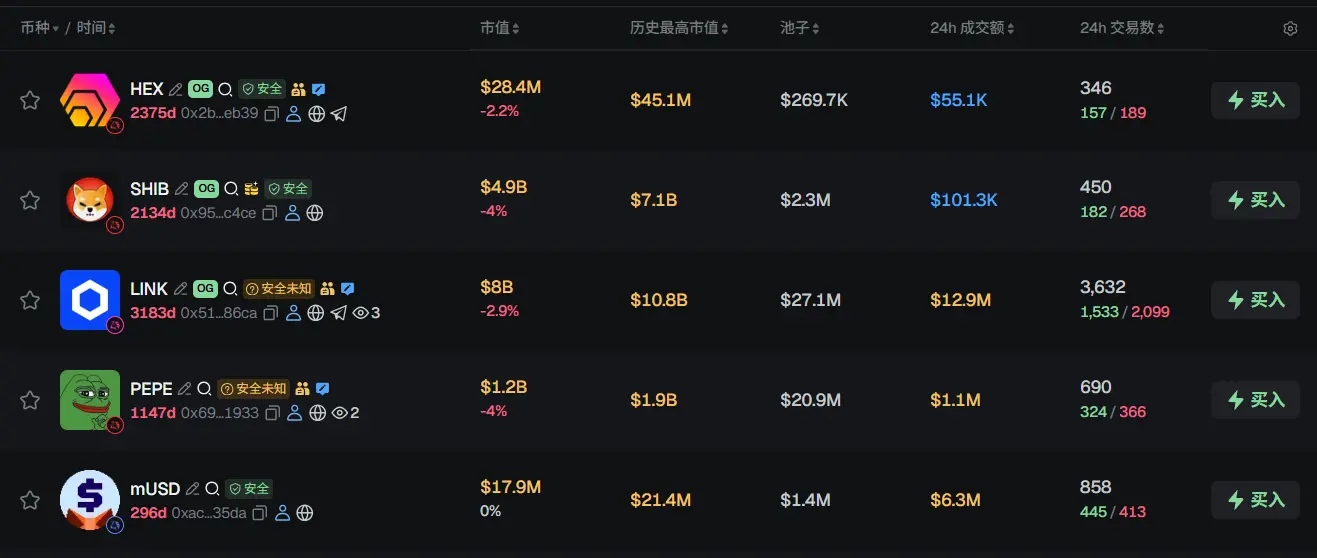
According to data from the meme token tracking and analysis platform GMGN, as of 09:00 on June 5th,

The top five popular tokens on ETH in the past 24h were: HEX, SHIB, LINK, PEPE, mUSD.
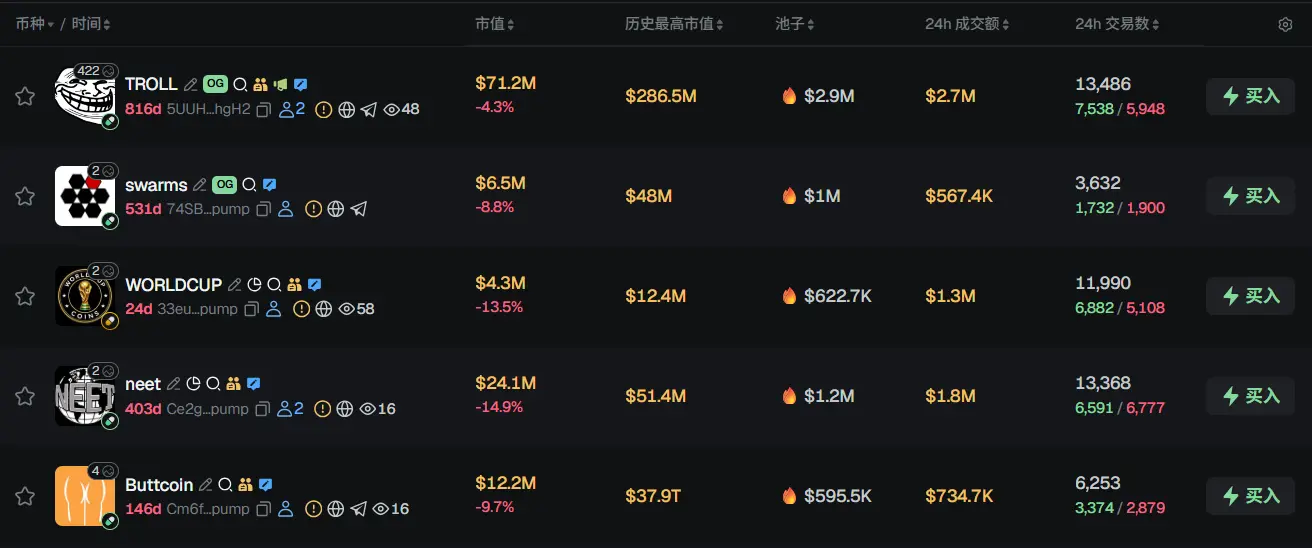
The top five popular tokens on Solana in the past 24h were: TROLL, swarms, WORLDCUP, neet, Buttcoin.
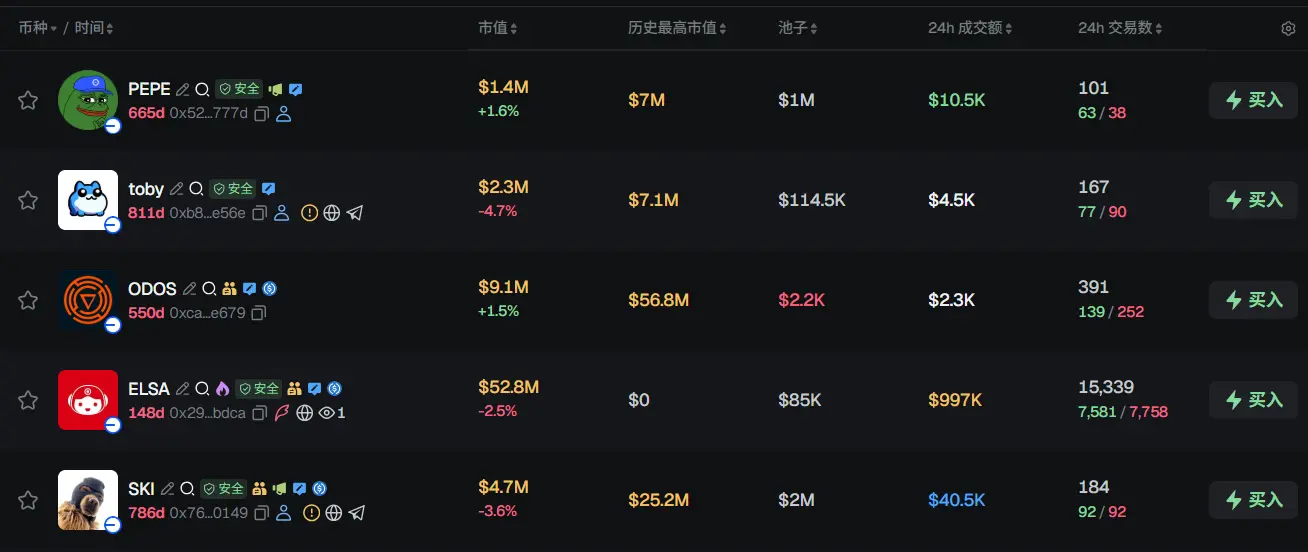
The top five popular tokens on Base in the past 24h were: PEPE, toby, ODDS, ELSA, SKI.
Related Questions

QWhat significant fundraising initiative has Bitmine announced, and how much does it aim to raise?

ABitmine has announced the issuance of preferred stock aiming to raise 300 million US dollars.

QWhat action has the US Department of Justice taken in collaboration with companies like Coinbase and Meta, and what was the outcome?

AThe US Department of Justice conducted a joint anti-fraud operation named 'Disruption Week' with companies including Coinbase, Meta, Google, Microsoft, SpaceX, and TRM Labs. The operation resulted in the freezing of over 3.8 million US dollars in cryptocurrency assets linked to scams.

QAccording to Geoffrey Kendrick of Standard Chartered Bank, what is the outlook for Bitcoin's price and what are his specific targets?

AGeoffrey Kendrick, Head of Digital Assets Research at Standard Chartered Bank, stated that Bitcoin's bottom is nearly in place after recent declines and considers the current price around 63,000 USD a 'buying range'. He maintains a year-end target of 100,000 USD for Bitcoin and 4,000 USD for Ethereum.

QWhat allegations has Polymarket made against its competitor Kalshi, and how has Kalshi responded?

APolymarket has accused its competitor Kalshi of potential corporate espionage, citing 'too many coincidences' in similar product launches and activities. Kalshi has denied all allegations, calling Polymarket's suspicions 'pathetic and bordering on delusional'.

QWhat major development has been completed regarding Macao and the mBridge system, and what is its purpose?

AMacao has completed system integration with the multilateral central bank digital currency bridge, mBridge. The purpose is to establish an efficient and secure cross-border payment and settlement channel.

Related Reads

War Trade Unwinding | TradeXYZ Weekend Observations

Weekend markets saw a clear return of risk appetite. Major indices rose broadly, with significant gains in tech and precious metals, while energy sectors fell sharply on the "end of war" narrative. On June 14, oil prices initially rose on reports Iran had not yet finalized a memorandum of understanding. Later, YNET reported Trump might immediately lift the maritime blockade on Iran and the Strait of Hormuz. At 21:30, Trump confirmed on Truth Terminal that a deal with Iran was done, authorizing an immediate end to the US blockade and toll-free opening of the Strait. Iran's deputy foreign minister simultaneously announced an immediate and permanent halt to military actions on multiple fronts. Oil prices had already fallen to weekend boundaries, pre-pricing the news. The S&P 500 subsequently touched 7530. Markets will likely remain in a waiting period until the formal peace deal signing on June 19. At the moment of the deal announcement, gold jumped from ~4,221 to a high of 4,337, and silver from ~67.85 to 70.83, before stabilizing at higher levels. Individual stocks and ETFs like NBIS, RKLB, and LITE performed strongly. NBIS, added to the Nasdaq index, saw a target price increase due to strong AI cloud growth. RKLB, also added to the index, benefited from positive SpaceX valuation sentiment. LITE received a $1,130 target from JPMorgan. SPCX rose quickly after Musk tweeted SpaceX could potentially reach ~$1 trillion in revenue by 2030. In summary, the market shock from the multi-month war is beginning to dissipate. Israel's actions remain the key variable before the June 19 signing. Upcoming events like Fed Chair Warsh's debut and BoJ rate hike expectations will also significantly impact markets this week.

marsbit8m ago

War Trade Unwinding | TradeXYZ Weekend Observations

marsbit8m ago

Will the Next Crypto Bull Run Start with On-Chain Trading of SpaceX?

This article presents a scenario-based forecast for the crypto industry from 2026 to 2029, arguing that the next major cycle will be driven not by technological narratives but by legal access to real-world assets. The author predicts that by mid-2026, pre-IPO perpetual contracts for top private companies like SpaceX, OpenAI, and Anthropic on platforms like Hyperliquid will become the primary gateway for accessing quality assets, as most crypto-native tokens fail to capture real value. The much-hyped AI x Crypto intersection largely fails except for prediction markets, which thrive on betting on AI model supremacy. By 2027, public blockchain foundations are forced to choose between catering to retail speculation or building compliant infrastructure for institutions, with many opting for the latter. Growth in stablecoins and tokenized private credit/equity hits a "triple ceiling" due to regulatory and political uncertainty rather than market demand. The pivotal shift is forecast for 2028. A major liquidation event in pre-IPO perpetuals exposes the structural flaw of synthetic markets lacking a real underlying asset anchor. In response, regulatory changes finally allow the public solicitation of private securities resales to verified accredited investors. This creates a legitimate secondary market for real company equity, which then becomes the core asset class of the new bull market, relegating synthetic perps to a niche role. By 2029, the industry becomes "boring" but foundational. Tokens without claims on real cash flows or assets cease trading. Stablecoin growth is steady but politically capped. Crypto infrastructure fades from view as it gets absorbed into traditional finance backends. The article's central thesis is that the key bottleneck for crypto's next phase is legal and regulatory channels for real asset ownership, not technology.

marsbit1h ago

Will the Next Crypto Bull Run Start with On-Chain Trading of SpaceX?

marsbit1h ago

The Value Distribution of Stablecoins

**Summary: The Value Distribution of Stablecoins** The article argues that stablecoins are evolving from mere trading tools into broader channels for dollar access. It divides the stablecoin ecosystem into four layers to analyze how value is distributed: 1. **Issuance Layer:** Mints stablecoins, holds reserve assets, and captures the spread between reserve yield and user costs (e.g., Tether, Circle). This layer currently earns the largest profit margin. 2. **Infrastructure Layer:** Connects stablecoins to the traditional financial system, handling fiat on/off-ramps, banking integration, compliance (KYC/AML), and asset management (e.g., Bridge, BVNK). This is the "unglamorous" but critical work, building the essential bridges between crypto and real-world finance. 3. **Acquiring/Distribution Layer:** Integrates stablecoins into merchant systems, manages payment flows, and provides enterprise financial software (e.g., Stripe, Coinbase). They act as the access point for businesses. 4. **Application Layer:** The end-users and businesses that ultimately use stablecoins for payments, settlements, or as a store of value. They benefit from convenience but have little pricing power. The core thesis is that while the issuance layer currently dominates profits, the often-overlooked **infrastructure layer holds significant long-term potential**. The real challenge and barrier to mass adoption is not the on-chain transfer of stablecoins (which is simple), but the complex "last mile" integration into existing business workflows, banking systems, and regulatory frameworks across different countries. Companies in this layer are currently in a "land grab" phase, investing heavily to build networks, secure bank partnerships, and establish compliance pathways. While their position is currently pressured by the profitable issuers above and distribution platforms below, the article suggests that if stablecoins become a default financial rail for businesses, the infrastructure providers who have done the hard work of integration will ultimately gain strong pricing power and become entrenched, essential players.

marsbit8h ago

The Value Distribution of Stablecoins

marsbit8h ago

The Value Distribution of Stablecoins

The Value Distribution of Stablecoins The article argues that stablecoins are evolving from a mere trading tool into a broad "dollar channel." It analyzes the industry's value chain through four layers: 1. **Issuance Layer (e.g., Tether, Circle):** The top layer that mints stablecoins, holds reserve assets, and captures the thickest interest rate spread. 2. **Infrastructure Layer (e.g., Bridge, BVNK):** Connects stablecoins to the traditional financial system, handling critical but complex "dirty work" like fiat on/off-ramps, banking integration, compliance (KYC/AML), and cross-border settlement. 3. **Acquiring/Distribution Layer (e.g., Stripe, Coinbase):** Embeds stablecoins into merchant systems, manages payment flows, and integrates with enterprise software. 4. **Application Layer:** End-users and businesses that ultimately use stablecoins for payments, settlement, or storing value. The author posits that while the issuance layer currently captures the most profit, the most overlooked and potentially critical layer is infrastructure. The core challenge for stablecoin adoption isn't the on-chain transfer (which is simple), but bridging the gap between blockchain and the real-world financial system. This involves solving practical problems for businesses: fiat conversion, reconciliation, tax handling, and user onboarding. Infrastructure companies are currently in a difficult "land-grab" phase—building networks, securing banking relationships, and achieving compliance country-by-country. They face pressure from both the profitable issuance layer above and distribution platforms below. However, the author suggests this layer is building a crucial moat. Once stablecoins become a default business rail, the infrastructure players who have done the hard work of integration may gain significant, durable value and pricing power.

链捕手8h ago

The Value Distribution of Stablecoins

链捕手8h ago

Trading

Spot
Futures
活动图片