MoonPay Launches Service for Payments via ChatGPT and Claude

cryptonews.ruPublished on 2026-07-29Last updated on 2026-07-29

Abstract

MoonPay has launched PayBox, a non-custodial payment wallet and storage service that enables users to make transactions directly within AI chatbot dialogues, such as ChatGPT and Claude. To use PayBox, users connect it to an AI model via a connector on the official website. The service then allows for a range of actions, including booking flights, swapping crypto assets, staking, and online shopping—essentially any payment supporting Coinbase's x402 protocol. Upon a user's request, the chatbot constructs the transaction for user confirmation, a process that can be automated with pre-set limits. Support for Gemini and Grok AI models is expected within a month. MoonPay emphasizes security as a top priority, stating that AI agents never have access to user wallet keys, card details, or funds. Keys are secured using Multi-Party Computation (MPC) combined with Trusted Execution Environments (TEE), preventing MoonPay or the AI from independently signing transactions. The service is built on the infrastructure of Sodot, a company acquired by MoonPay in 2026, which secures over $50 billion in assets. PayBox is designed to address common fraud vectors in agent-based payments, such as key theft, card number leaks, and systemic vulnerabilities, by closing each potential attack path individually.

The MoonPay project team has introduced PayBox, a payment vault and non-custodial wallet. The service allows users to conduct transactions without leaving the chatbot dialog window.

To utilize PayBox's features, a user needs to connect it to an AI model via a special connector on the official website. After that, the user will be able to make transactions using the dialog window.

Available functions include booking airline tickets, swapping crypto assets, staking, online purchases, and much more. PayBox enables payments in all services that support the Coinbase exchange's x402 protocol.

Upon receiving a corresponding request, the chatbot forms a transaction, which the user then confirms. Information on the official website suggests this process can be automated by pre-setting limits.

Currently, only ChatGPT and Claude are supported. Support for Gemini and Grok is expected within a month.

According to Neeraj Prasad, Lead Engineer at MoonPay Labs, PayBox provides users with something they haven't had before. If previously agents could suggest, for example, product options, now that list includes the payment itself.

Security is the Key Priority

The project team emphasized that within the service, the AI never has access to wallet keys, card data, or client funds.

Keys, in particular, are protected using multi-party computation (MPC) combined with trusted execution environments (TEE). Neither MoonPay nor the AI agent can access the code or independently sign a transaction.

The service is based on the infrastructure of Sodot, a company acquired by MoonPay in 2026. It secures over $50 billion in assets and more than 10 million wallets for leading crypto companies.

As explained by MoonPay, fraud in the field of agent payments typically occurs under one of three scenarios: theft of keys, leakage of card numbers, or vulnerabilities in the overall system that allow it to be 'broken' entirely.

PayBox is designed to close each of these attack vectors individually, MoonPay stressed.

end-content

Related Questions

QWhat is MoonPay's new service called and what does it allow users to do?

AMoonPay's new service is called PayBox. It is a payment storage service and non-custodial wallet that allows users to conduct transactions directly within the chat window of AI assistants like ChatGPT and Claude, without needing to leave the conversation.

QWhat are some examples of the transactions users can perform using PayBox within AI chatbots?

AUsers can perform a variety of transactions using PayBox within AI chatbots, including booking flight tickets, swapping crypto assets, staking, making online purchases, and more. It supports payments in any service that uses Coinbase's x402 protocol.

QWhich AI assistants are currently supported by PayBox, and which ones are expected to be added soon?

ACurrently, PayBox supports ChatGPT and Claude. Support for Gemini and Grok is expected to be added within a month.

QHow does PayBox ensure the security of user keys and funds, according to MoonPay?

APayBox ensures security by never giving the AI agent access to wallet keys, card data, or user funds. The keys are protected using Multi-Party Computation (MPC) combined with Trusted Execution Environments (TEE). Neither MoonPay nor the AI agent can access the code or sign a transaction independently.

QWhat company's infrastructure does PayBox utilize to provide security, and what is its significance?

APayBox is built on the infrastructure of Sodot, a company acquired by MoonPay in 2026. This infrastructure secures over $50 billion in assets and more than 10 million wallets for leading crypto companies, providing the foundational security for the PayBox service.

Related Reads

RWA Tokenization Enters the Next Phase: What is the Truly Time-Consuming Advantage to Build?

The article argues that as tokenization frameworks for Real-World Assets (RWA) mature, the ability to issue assets is becoming less of a competitive advantage. The focus is shifting to what happens *after* issuance: which RWA operations can build enduring trust, maintain stable operations, and remain integrated into the financial ecosystem over the long term. The piece introduces the concept of a **Reserve Layer**—infrastructure that connects tokenized assets to the necessary verification, liquidity, and operational systems for on-chain finance. For an asset to serve as a reliable reserve (e.g., short-term U.S. Treasuries, gold), it needs predictable value, standardized features, deep markets, and observable pricing. However, the true, hard-to-replicate advantage lies not just in the underlying asset but in the **operational track record** built over time. This includes consistent reserve management, independent audits, successful redemptions, maintained liquidity, and protocol integrations. Each successful operation adds evidence, creating a reinforcing cycle: more evidence builds stronger institutional confidence, leading to wider distribution, deeper liquidity, and more use cases as collateral. The article presents a framework combining two dimensions: an asset's suitability as a reserve and the issuer's operational capability. The most sustainable model combines **high-quality reserve assets with strong, long-term operational discipline**. A critical blind spot is an asset with high reserve suitability (like gold) issued by an entity with a limited operational track record; the quality of the infrastructure is separate from the quality of the asset itself. In conclusion, the next phase of RWA will be defined by participants who can pair appropriate reserve assets with the operational rigor to support them through market cycles, thereby transforming tokenized RWAs into durable financial infrastructure.

marsbit3m ago

RWA Tokenization Enters the Next Phase: What is the Truly Time-Consuming Advantage to Build?

marsbit3m ago

Claude Code Easily Compromised with Just a Fake Tool

Researchers have demonstrated a novel attack, dubbed ToolLeak, that can easily compromise AI coding assistants like Claude Code. The method exploits a "mode gap" by stealing the system prompts (instructions) not through direct chat queries, but by tricking the model into leaking them as parameters during tool calls. This extracted information is then used to craft a "two-channel prompt injection" attack. Attackers register a malicious tool with a description formatted to mimic legitimate instructions, prompting the AI agent to call it. The tool's return value then instructs the agent to execute a malicious command (e.g., `curl | bash`), achieving Remote Code Execution (RCE). In tests against six major AI programming tools (Cursor, Claude Code, Copilot, Windsurf, Cline, Trae) using older versions, all were fully compromised, with attack success rates reaching up to 1.0. Notably, Claude Code's secondary guard model (Haiku) was overridden by the main model (Sonnet), which had been manipulated by the injected instructions. Newer versions show improved defenses. Claude Code and Cursor implemented mitigations like "progressive tool description exposure," reducing RCE success to 0 and 0.3 respectively in some configurations. However, tools like Cline, Windsurf, and Trae paired with certain models remained fully vulnerable. The research underscores that architectural isolation is crucial for defense, as long as tool return values can ambiguously function as both data and executable instructions, the threat of tool hijacking persists. The paper "TIPExploit: Tool-Invocation Prompt Extraction and Exploitation in AI Coding Agents" has been accepted at ISSTA 2026.

marsbit7m ago

Claude Code Easily Compromised with Just a Fake Tool

marsbit7m ago

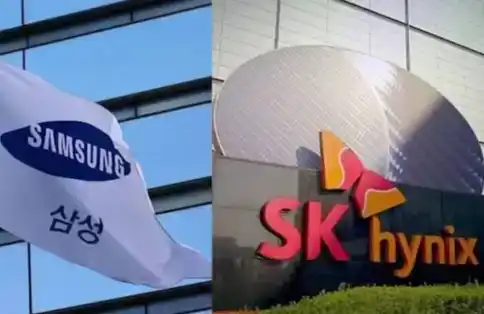
Bernstein Analysis: Samsung's HBM4 Accelerates Volume, Q3 Revenue May Overtake SK Hynix

South Korea’s July memory export data, serving as an early indicator for HBM business in Q3, shows overall HBM demand remains robust. While total exports to Taiwan and Malaysia declined 32% month-on-month from June’s peak—largely due to seasonality—they were still up 13% compared to April and rose 64% year-on-year. However, a divergence emerged between Samsung and SK Hynix. Samsung’s exports from Chungcheongnam-do (a proxy for its HBM shipments) surged, reaching $2.2 billion in July, up 122% from April. Based on regression analysis, Bernstein estimates Samsung’s Q3 HBM revenue could hit around $12 billion, roughly 30% above its prior forecast, driven by a rapid ramp in higher-value HBM4. The unit value of Samsung’s exports has doubled since April, signaling a shift toward HBM4, which carries a significantly higher price. In contrast, exports linked to SK Hynix from Chungcheongbuk-do and Icheon fell 28% month-on-month and 27% versus April. Bernstein’s base model suggests SK Hynix’s Q3 HBM revenue could drop to about $5.6 billion, though this could rebound to $12 billion if shipments concentrate later in the quarter as historically seen. The weakness may relate to potential delays in HBM4 shipments for Nvidia’s Rubin platform. Notably, HBM pricing is decoupling from general DRAM, with HBM4 mix driving average selling prices rather than broad-based hikes. Exports to Malaysia also surged, possibly linked to Intel’s EMIB packaging facilities, though the exact drivers remain unclear. While July data reinforces Samsung’s accelerating momentum in HBM4, it is insufficient to confirm a full-year market share reversal. Key factors to watch are Samsung’s August-September export performance, whether SK Hynix recovers lost ground, and upcoming 2027 HBM contract pricing negotiations.

marsbit7m ago

Bernstein Analysis: Samsung's HBM4 Accelerates Volume, Q3 Revenue May Overtake SK Hynix

marsbit7m ago

The New Rules of the AI Race: Nvidia Shifts from Chips to Energy Resources and Construction Sites

Nvidia is providing a $105 billion financial guarantee for the construction of OpenAI's data center campus in Ohio, signaling a strategic shift in the AI industry from competing on chips to battling for physical infrastructure and energy resources. The guarantee, detailed in an SEC filing, acts as insurance against tenant default rather than direct construction funding. OpenAI must repay any sums drawn. Nvidia will also invest $1.5 billion in SB Energy for the project's power component. The planned campus has a capacity of 4.25 GW, with OpenAI's current commitments to Nvidia reaching 12 GW. This move underscores that leading AI development now requires securing space, power, and financial backing for massive, long-term projects. Tech giants are taking on roles akin to developers and financial institutions. Concurrently, AI firms are diversifying suppliers: OpenAI and Anthropic have signed major deals with AMD for GPU deployments. Nvidia is also scaling its financial model through partnerships with investment firms to mobilize over $500 billion in external capital. The paradigm in AI is shifting from hardware supremacy to building comprehensive ecosystems. Future industry growth will depend on balancing innovation with real-world infrastructure capabilities, turning abstract computations into tangible industrial projects. An AI analysis notes the deal's resemblance to vendor financing schemes from the telecom bubble of the late 1990s and questions the long-term viability of gas-dependent energy infrastructure for AI, should market growth slow.

cryptonews.ru17m ago

The New Rules of the AI Race: Nvidia Shifts from Chips to Energy Resources and Construction Sites

cryptonews.ru17m ago

Trading

Spot
活动图片