Meta Spent $90 Billion to Close the Metaverse, $2 Billion to Let AI Live in Your Computer

marsbitPublished on 2026-03-19Last updated on 2026-03-19

Abstract

Meta spent $90 billion to build the metaverse, only to shut down its flagship VR platform, Horizon Worlds, on June 15. The virtual world, launched in 2021 with great fanfare, failed to attract a meaningful user base despite massive investment. Its closure marks a symbolic end to Meta’s ambitious—and costly—bet on the metaverse, which accumulated nearly $90 billion in losses over seven years. Simultaneously, Meta is aggressively pivoting to AI. It acquired AI startup Manus for $2 billion, which recently launched a desktop version allowing AI to operate directly on users' local machines—reading files, running apps, and executing commands. In contrast to the metaverse’s weak adoption, Manus reached one million paid users within eight months. The shift is stark: Meta is cutting 20% of its workforce—around 15,000 jobs—and reallocating nearly its entire $115–135 billion capital expenditure budget toward AI infrastructure. This abrupt turn reflects industry-wide FOMO (fear of missing out) on AI, similar to the metaverse hype half a decade ago. Companies like Block, Shopify, and Amazon are also slashing jobs to fund AI investments. While Meta faces internal challenges—including delayed AI models and executive departures—its drastic realignment underscores a broader trend: the consensus has shifted from virtual worlds to ambient AI. The question remains whether this new bet will prove more sustainable than the last.

Author: Curry, Deep Tide TechFlow

On October 28, 2021, Mark Zuckerberg stood next to a legless virtual avatar and announced the company's name change from Facebook to Meta.

At the time, he said the metaverse would reach one billion people within a decade, host hundreds of billions of dollars in digital commerce, and provide job opportunities for millions of creators and developers.

That year, the metaverse was the sexiest concept on Earth.

Microsoft talked about building a metaverse version of Teams, NVIDIA launched Omniverse, Nike opened a virtual store on Roblox... No one wanted to miss the boat.

Meta didn't just buy a ticket; it bought the entire ship.
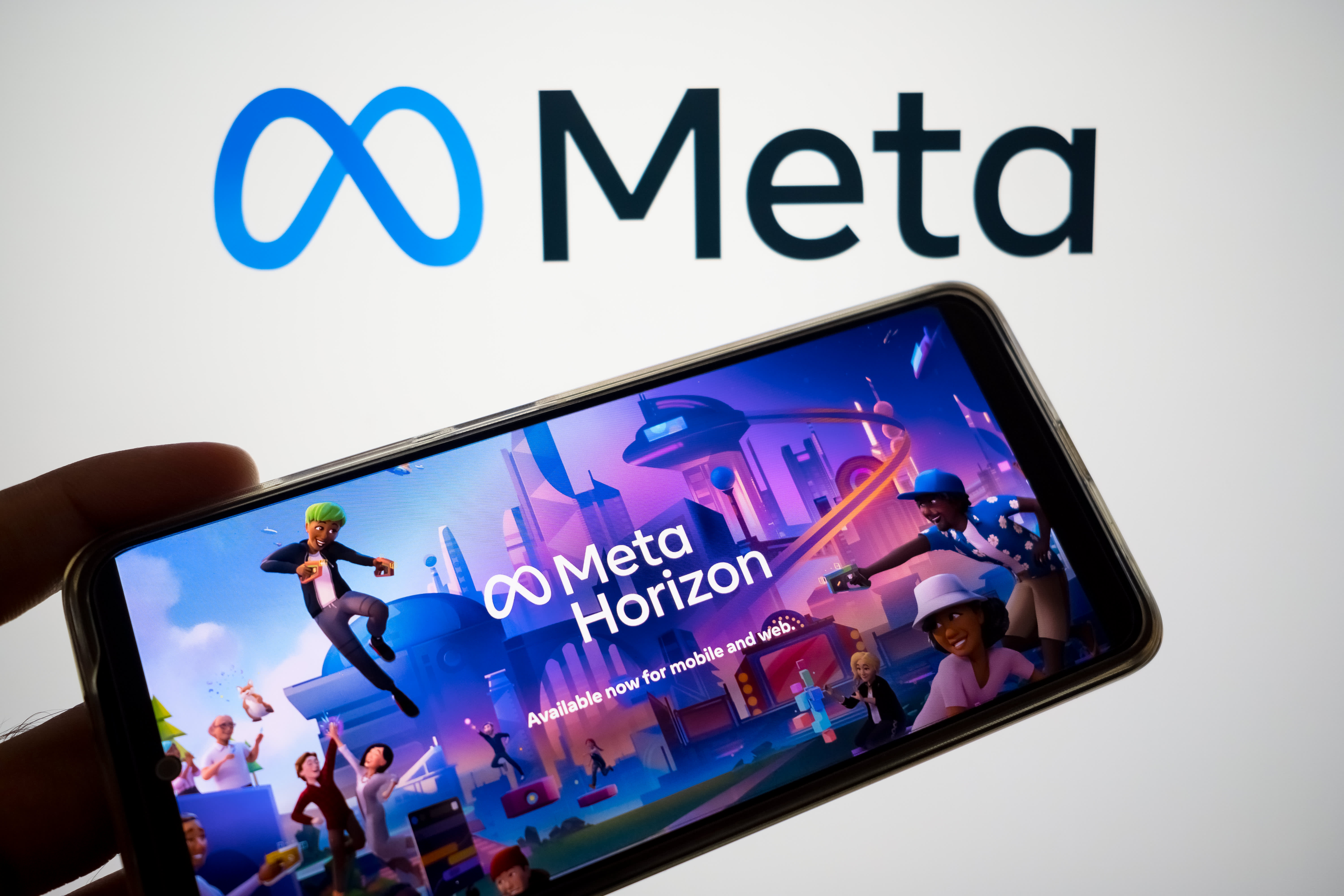
Looking back now, the product Horizon Worlds can be understood as the core evidence for Meta's rebranding story—you put on a headset, enter a virtual world, and hang out, play, and hold meetings with other people's cartoon avatars.

When it launched at the end of 2021, it was the flagship project personally endorsed by Zuckerberg. But four and a half years later, one billion people have not come to play.

On March 17, Meta posted an announcement on its community forum: the VR version of Horizon Worlds will be completely shut down on June 15, at which point the app will be removed from Quest headsets and the virtual world will no longer be accessible. A mobile version will remain available and continue to operate.

It's a bit like a restaurant closing its dine-in service and only keeping takeout, but this restaurant was originally built for dine-in.

The department footing the bill is called Reality Labs. Its cumulative operating losses over seven years are close to $90 billion. It lost $6 billion in the most recent quarter alone, with revenues of less than $1 billion, not even covering one-sixth of the losses.

In January of this year, this department laid off over 1,000 people, shut down multiple VR content studios, and canceled almost all ongoing virtual world projects.

The boat ticket everyone was afraid of missing in 2021—now the ship has sunk, and the ticket is still clutched in their hands.

In mid-March, Reuters reported that Meta was planning to lay off about 20% of its workforce, nearly 15,000 people. If implemented, this would be the largest round of layoffs since 2022.

At the same time, Meta's capital expenditure budget for this year is $115 to $135 billion, almost entirely poured into AI infrastructure.

Shut down the virtual world, lay off one-fifth of the people, and pour all the saved money and freed-up positions into AI.

The day the news came out, Meta's stock price still rose by 3%. When Zuckerberg said he would go all-in on the metaverse in 2021, the capital market applauded the same way.

The answer was already on the table the day before Horizon Worlds announced its shutdown.

Virtual World Closes, Personal Computer Steps In

On March 16, Manus, acquired by Meta for a hefty $2 billion, launched its desktop version.

It features a function called "My Computer" that brings AI down from the cloud directly into your local machine: reading files, opening applications, running terminal commands.

This happened the day before Horizon Worlds announced its shutdown.

The year Horizon Worlds launched, the experience was like this:

You spend a couple thousand dollars on a Quest headset, put it on, adjust the pupil distance, draw a safety boundary, and then enter a cartoon-style virtual lobby. The people inside have no legs and float around to move. You can explore themed worlds, play mini-games, and chat with strangers' virtual avatars.

After half an hour, the headset starts pressing on your face. After an hour, some people start feeling dizzy.

Meta spent four years and $90 billion on this lobby. The result is that it never disclosed active user numbers. Not for secrecy, but because it wouldn't look good.

The Manus Desktop experience is like this:

You download an application, open it, and type a sentence. For example, "Organize the thousands of files in my Downloads folder by type." It scans your hard drive, automatically creates subfolders, and automatically sorts and archives everything, all without you touching the keyboard.
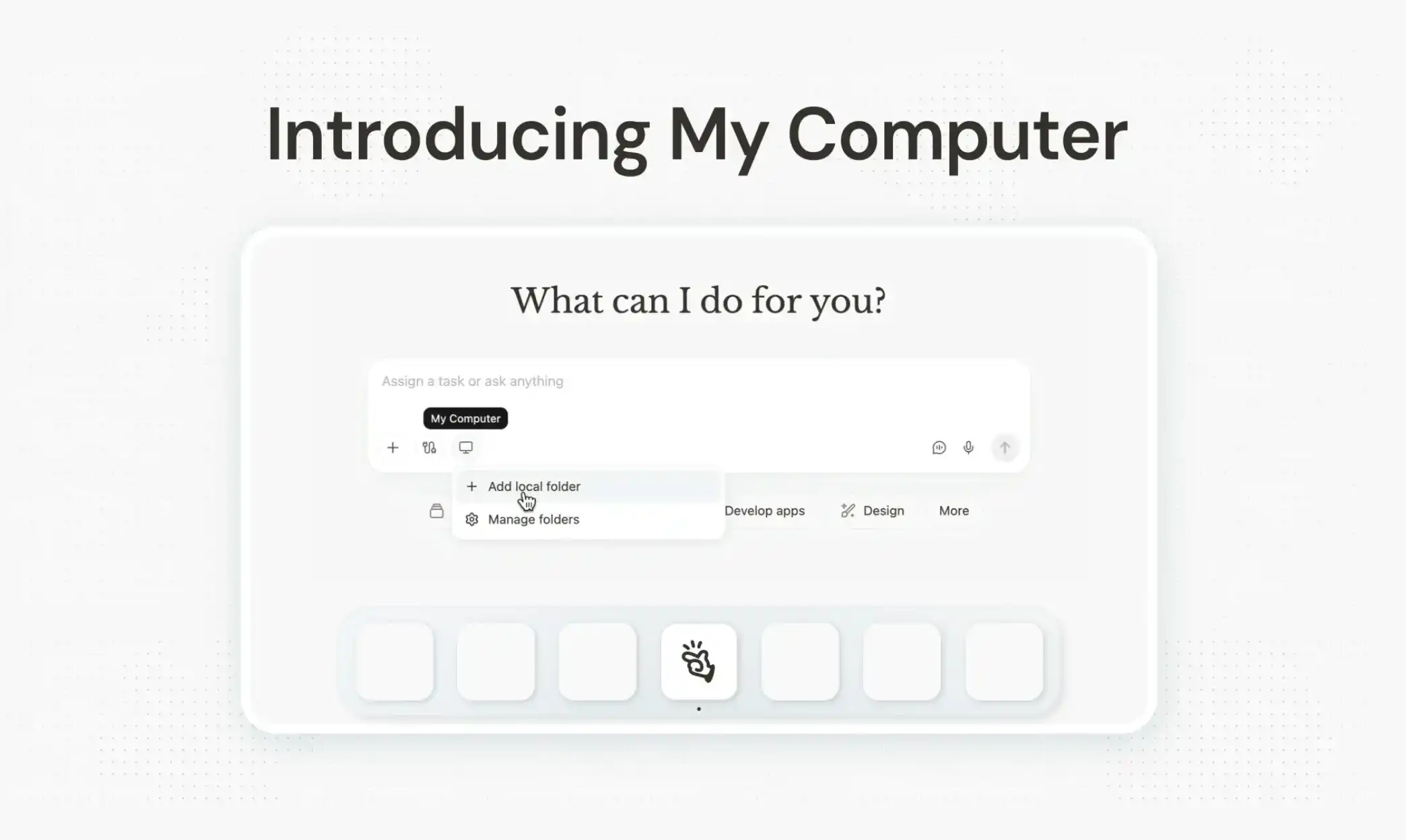
In a demo, someone had it write a macOS application from scratch in a local development environment; it took 20 minutes. Don't forget, Manus reached one million paid users within eight months of its previous launch, with annualized revenue exceeding $100 million.

When everyone says Meta overpaid for Manus, perhaps compare it to the now-shut-down metaverse project Horizon Worlds.

A product that spent $90 billion trying to get you into a virtual world, and no one came. A product that spent $2 billion to come into your real desktop, has real revenue and use cases—which one would you choose?

The same company, the same week, shut down the former and bet on the latter.

It used to be Meta building a world for you to come to. Now it's AI coming through the screen to you.

But having the right direction doesn't mean the path is smooth. After this U-turn, Meta doesn't exactly look more at ease.

The Metaverse and AI Might Be the Same Kind of FOMO

If you only read the headlines, Meta now looks like a company making one blunder after another.

The metaverse burned $90 billion and was shut down. The flagship AI model, Avocado, originally scheduled for release in March, was delayed to May after internal testing found its reasoning and programming lagged behind同期 (contemporary) products from Google, OpenAI, and Anthropic.

The previous generation, Llama 4, was released last year to a lukewarm reception, failing to stir much excitement in the developer community. It was reported that the company even internally discussed temporarily licensing Google's Gemini to fill in for its own products—a company spending $135 billion on AI infrastructure, needing to borrow someone else's model.

Chief AI Scientist Yann LeCun left to start his own company; the new AI head, Alexandr Wang, poached from Scale AI for $14.3 billion, hasn't yet delivered results...

Layoffs of 20%, shutting down the metaverse, model delays—the news from just one week painted a picture of a company that doesn't know what it's doing.

But if you shift your gaze away from Meta and look at the entire industry, you'll notice one thing:

Everyone is doing the exact same thing, embracing AI wholeheartedly.

In February of this year, Block's CEO Jack Dorsey announced laying off 4,000 people, nearly half the company. The layoff letter had no embellishments, stating directly that intelligent tools have changed how companies are built and operated, and smaller teams can achieve more. The stock price rose 25% that night.

Shopify's CEO sent a new rule to the whole company: from now on, if you want to request more headcount, first prove that AI can't do the job.

Amazon cut 16,000 jobs in January and targeted its robotics department in March. Atlassian laid off 1,600 people, saying it would pour all resources into AI enterprise software.

In the first 74 days of 2026, 166 tech companies laid off nearly 56,000 people in total.

Does this picture feel familiar?

2021 was like this too. After Zuckerberg renamed Meta, Microsoft talked about a metaverse Teams, NVIDIA pushed Omniverse, Nike opened a virtual store on Roblox, Disney established a metaverse division, Shanghai and Seoul released metaverse strategic plans...

Everyone was chasing the same direction. Everyone was afraid of missing out.

Five years have passed. The direction has changed, but the way of chasing hasn't.

Last time, the consensus was "the metaverse is the next computing platform." Meta spent $90 billion proving this consensus wrong. This time, the consensus is "AI can replace everything." Every company is cutting staff, slashing budgets, and pouring the saved money into AI.

There's only one difference: the last consensus has been disproven; this one hasn't yet.

But consensus is consensus. Its characteristic is that everyone believes it simultaneously, and then everyone discovers they were wrong simultaneously. The time difference in the middle is the speed at which money burns.

Meta isn't a company that's dumber than others. It just places bigger bets than anyone else each time, so when the consensus flips, its fall is the loudest.

In 2021, the whole industry bet on the metaverse, and Meta changed its name. In 2026, the whole industry is betting on AI, and Meta is laying off a fifth of its people.

Looking back five years from now, did everyone bet right on this round of AI?

No one knows. But we all know that when this question was asked in 2021, everyone's answer was also "of course we did."


Related Questions

QWhat was the main reason for Meta to shut down Horizon Worlds VR version?

AHorizon Worlds failed to attract a significant user base despite massive investment, with Meta never disclosing active user numbers due to poor performance.

QHow much cumulative operating loss did Meta's Reality Labs department incur over seven years?

AReality Labs incurred cumulative operating losses of nearly $90 billion over seven years.

QWhat is the key feature of Meta's newly launched Manus Desktop application?

AManus Desktop features 'My Computer' functionality, allowing AI to operate directly on a user's local computer to perform tasks like file organization and application development without manual input.

QHow did Meta's stock market react to the news of restructuring and AI investment?

AMeta's stock price rose by 3% following announcements of restructuring,裁员, and increased AI investment, similar to the positive market response during its initial metaverse push.

QWhat broader industry trend does the article compare Meta's AI shift to?

AThe article compares Meta's AI shift to the earlier metaverse trend, noting that both involved industry-wide FOMO (fear of missing out), with companies aggressively reallocating resources to pursue the perceived next big technological paradigm.

Related Reads

That Year, Elon Musk and I Talked About His "Space Dream"

"The Year I Talked to Musk About His 'Space Dream'" by Zhang Peng. On June 12, 2024, SpaceX, now incorporating X, xAI, and Starlink, completed a historic IPO, reaching a $2 trillion valuation. This piece reflects on a 2014 conversation between the author, founder of GeekPark, and Elon Musk during his first public appearance in China at the GeekPark Singularity Summit. Their discussion centered on Musk's motivations and unique mindset. Musk described himself not as a CEO but as an "engineer" driven to solve fundamental problems. He explained his work on Tesla aimed to shift the automotive industry's paradigm toward sustainable transport, while SpaceX was born from a desire to make humanity a multi-planetary species, drastically reducing space access costs through reusability. He emphasized persistence in the face of likely failure, noting that traditional entities like NASA, with abundant resources, often lacked the imperative for radical innovation that drives commercial ventures. Musk dismissed the idea of entering politics, believing change is best achieved through compelling products. The author sees the 2020 successful Crew Dragon launch as a pivotal moment, marking the maturation of commercial spaceflight and the true beginning of a scalable, industry-driven space age. He views Musk as a pioneer clearing the path for broader participation, expressing hope that affordable space travel will become a reality, fueled by commercial momentum.

marsbit5m ago

That Year, Elon Musk and I Talked About His "Space Dream"

marsbit5m ago

US Government Suddenly Halts Anthropic's Strongest Model, "Quasi-IPO Stock Price" Plunges 3.7% Overnight

U.S. Government Halts Anthropic's Top AI Models, 'Pre-IPO' Price Drops 3.7% On June 12, the U.S. government ordered Anthropic to shut down access to its two most powerful AI models, Claude Fable 5 and Claude Mythos 5, citing national security concerns. The directive, issued by the Department of Commerce, required Anthropic to block access for all foreign nationals, leading the company to disable the models globally for all users. Anthropic strongly opposed the move, arguing the government's basis was a "narrow jailbreak vulnerability" and warning that applying such a standard industry-wide would effectively halt all frontier model deployments. The news impacted Anthropic's implied valuation in speculative markets. The Anthropic perpetual contract on Hyperliquid fell approximately 3.7% to around $1,627, down from highs above $1,800 following the models' release. Unauthorized tokenized products linked to Anthropic on Solana also saw significant declines. The models, launched just days earlier on June 9, represented a major capability leap for Anthropic. Fable 5 was its first public release of a "Mythos"-tier model above its flagship Claude Opus. The shutdown creates an ironic situation for Anthropic, a company founded on "AI safety" principles, and adds uncertainty to its ongoing IPO preparations. The company is actively engaging with regulators to resolve what it calls a "misunderstanding" and restore service.

marsbit25m ago

US Government Suddenly Halts Anthropic's Strongest Model, "Quasi-IPO Stock Price" Plunges 3.7% Overnight

marsbit25m ago

SpaceX IPO Creates Trillion-Dollar Billionaire: Musk's Wealth Equals Half of Crypto Market

SpaceX's record-breaking IPO has propelled Elon Musk to become the first modern billionaire with a personal net worth exceeding $1 trillion, reaching $1.11 trillion according to Bloomberg. This staggering wealth surpasses the total market capitalization of all cryptocurrencies excluding Bitcoin and equals roughly half of the entire crypto market's value. The milestone highlights extreme wealth concentration and the significant devaluation of the altcoin market, whose total cap has nearly halved since late 2025 as capital flows into large tech stocks. SpaceX's Nasdaq debut saw its valuation hit $2.2 trillion, with shares soaring from a $135 offer price to close at $161. Its first-day trading volume of $85 billion set a new global IPO record. Musk owns 42% of the company. Despite his wealth dwarfing the altcoin sector, Musk maintains deep ties to digital assets. He personally holds Bitcoin, Ethereum, and Dogecoin, while his companies, SpaceX and Tesla, collectively hold over 30,000 Bitcoin, ranking among the top corporate BTC holders globally. His acquisition and integration of financial data tools into X (formerly Twitter) further connect his ecosystem to the markets. Ultimately, Musk's trillion-dollar status underscores the immense wealth controlled by tech founders, though this fortune remains largely tied to volatile stock prices rather than liquid assets.

Foresight News32m ago

SpaceX IPO Creates Trillion-Dollar Billionaire: Musk's Wealth Equals Half of Crypto Market

Foresight News32m ago

Hardcore First Look | Ocean Embodied Intelligence Company 'Shihang Intelligence' Secures Record-Breaking 1 Billion in Funding, Zhu Xiaohu, Temasek Place Bets

Breaking News | Ocean Embodied Intelligence company "Shihang Intelligent" secures a record-breaking 1 billion RMB (approximately 10 billion yuan) in Series A financing, with investment from Zhu Xiaohu and Temasek. Author: Qiu Xiaofen | Editor: Yuan Silai Ocean Embodied Intelligence company "Shihang Intelligent" has completed its Series A funding round, raising over 1 billion RMB. This marks the largest single funding round in the global marine robotics field to date. Investors include upstream momentum funds from chip companies "Moore Thread" and "Kunlunxin," Singapore's state-owned investment platform Vertex Growth, and listed company Dyneo, among others. Existing investors like GSR Ventures (whose founder Zhu Xiaohu has invested for the fifth time), Vertex Ventures China, Hua Ying Capital, and Long Capital also significantly increased their investments. Founder and CEO Chen Xiaobo, a 1989-born alumnus of Harbin Engineering University, is a long-time expert in underwater robotics. He received the National Defense Science and Technology Progress Award at age 28 (the youngest recipient) and led the development of China's first commercial underwater cleaning robot. The funds will be used for core technology R&D, global market expansion, and building the industry chain ecosystem to scale the application of marine robots in complex underwater scenarios. The ocean is considered one of the most challenging environments for robotics due to low light, high turbidity, complex currents, limited communication, high pressure, and corrosion. "Shihang Intelligent" focuses on developing core underlying technologies for marine robots, covering six key systems: power, control, sensing, navigation, sealing, and deployment. Its robots are capable of operating at depths from 0 to 10,000 meters with full degrees of freedom, performing complex maneuvers, autonomous navigation, and multi-robot collaboration. Applications include ship cleaning, underwater security, offshore wind power, marine ranching, and seabed inspection. The company's order value for the first half of 2026 alone has exceeded 1 billion RMB. Its "Orca Robot" is used by major shipping companies and has performed maintenance on over a thousand large vessels. In April of this year, the company launched its ocean embodied large model "Cangqiong CEORION." Unlike traditional remote-controlled or pre-programmed robots, this model integrates environmental perception, task understanding, and action generation into a single end-to-end architecture. Trained on millions of hours of commercial operation data and simulation data, it covers 12 major underwater operation scenarios. In simulations, it achieved over 90% task success rate and over 70% zero-shot adaptation capability to unseen environments. A built-in physics reasoning module reduces collision risk by 80%, enabling autonomous operation even with weak or no communication. Recently, "Shihang Intelligent" was selected as a core technology partner for Singapore's Maritime and Port Authority national hull inspection and cleaning program. These advancements indicate marine robotics is moving from pilot projects to scaled applications, with real-world operations generating valuable data to continuously improve robot capabilities. CEO Chen Xiaobo stated the company will continue investing in core marine robotics technology, the embodied intelligence model, and global application scenarios to expand into more high-risk, high-difficulty, and high-value underwater operations.

marsbit58m ago

Hardcore First Look | Ocean Embodied Intelligence Company 'Shihang Intelligence' Secures Record-Breaking 1 Billion in Funding, Zhu Xiaohu, Temasek Place Bets

marsbit58m ago

Three Months, 35 Billion Yuan: Investors Rush to Grab the OpenAI of the Physical World

Investors flock to a physical AI startup as the race for the "OpenAI of the physical world" heats up. Ji Jia Shi Jie (GigaWorld), a company dedicated to developing Artificial General Intelligence (AGI) for the physical world, has raised 3.5 billion RMB (approximately $490 million) in just three months, according to a report from investment media outlet Touzijie. The latest B2 funding round of 1 billion RMB attracted a wide range of top-tier investors, including sovereign wealth funds, industrial capital, and financial institutions. This brings the total funding for the young company, now valued over 10 billion RMB, to 3.5 billion RMB across three recent rounds. The company is led by Huang Guan, a post-90s Tsinghua University PhD with extensive experience in AI, autonomous driving, and entrepreneurship. Its core innovation is a "dual-pyramid" system comprising a five-layer data pyramid (from internet videos to real-world robot data) and a three-layer algorithm pyramid focused on world simulation, action alignment, and reinforcement learning. This system underpins its key models: the "World Action Model" (e.g., GigaBrain series for robot control) and the "World Generation Model" (e.g., GigaWorld series for simulating and understanding the physical world). Its models have reportedly achieved top rankings in global robotics benchmarks. Ji Jia Shi Jie argues that while current digital AGI excels in information processing, the next frontier is physical AGI—systems that can understand and interact with the real world. The company believes the field is approaching its "GPT-3 moment," a key inflection point in capability scaling. To achieve this, the company is pursuing a dual-market strategy. For the consumer (C) market, it launched the "SeeLight" brand and its S1 general-purpose humanoid robot, which has secured initial orders for deployment in real homes. For the business (B) market, it focuses on industrial automation with its Maker series robots, having signed agreements for large-scale deployment in factories, and its DriveDreamer world model for autonomous driving, which is already in use with over 30 automakers and tech companies. The report concludes that by bridging the gap between digital intelligence and physical action, Ji Jia Shi Jie aims to unlock a new wave of productivity, ultimately bringing physical AGI into everyday life.

marsbit1h ago

Three Months, 35 Billion Yuan: Investors Rush to Grab the OpenAI of the Physical World

marsbit1h ago

Trading

Spot
Futures
活动图片




