Jensen Huang: Vera Rubin Full Mass Production, AI Agent a Key Focus, Challenging Intel to Target the Next-Generation AI PC Gateway

marsbitPublished on 2026-06-01Last updated on 2026-06-01

Abstract

NVIDIA CEO Jensen Huang delivered the keynote speech at GTC Taipei 2026, announcing several major product launches and strategic directions. The company's Vera Rubin architecture is now in full-scale production, with OpenAI, Anthropic, and SpaceX among the first customers. NVIDIA highlighted AI Agent as a key future focus, introducing the Vera CPU designed for AI agents and the Vera BlueField-4 STX for secure, chip-level AI storage processing. A significant move involves challenging Intel in the PC market. NVIDIA, in collaboration with MediaTek, is developing the RTX SPARK PC chip (manufactured by TSMC) for Windows systems, set to launch this fall for laptops and desktops. This signals NVIDIA's push into the next-generation AI PC arena, aiming to provide a vertically integrated core computing platform for the entire Windows ecosystem, similar to Apple's approach. Other announcements include the new Nemotron 3 Ultra AI model and the NVIDIA DSX platform, described as a complete "playbook" for building AI factories, allowing performance simulation and validation before physical deployment. In automotive, the DRIVE Hyperion platform was positioned as a global robotaxi platform, with major Chinese automakers like BYD, Geely, Zeekr, Xiaomi, and Pony.ai already adopting or developing autonomous driving solutions based on it. The Alpamayo 2 super open inference model for robotaxis was also introduced. For robotics, NVIDIA unveiled the Isaac GR00T humanoid robot reference platform...

Author: Wall Street Insights

On June 1st, NVIDIA founder and CEO Jensen Huang delivered the NVIDIA GTC Taipei 2026 keynote speech in Taipei, China.

During this speech, Huang focused on releasing multiple new products and platforms including the Vera Rubin architecture, the Vera CPU for AI Agents, the AI model Nemotron 3 Ultra, and the AI factory platform DSX.

Simultaneously, NVIDIA further signaled its push into the next-generation AI PC market, targeting the entire Windows ecosystem.

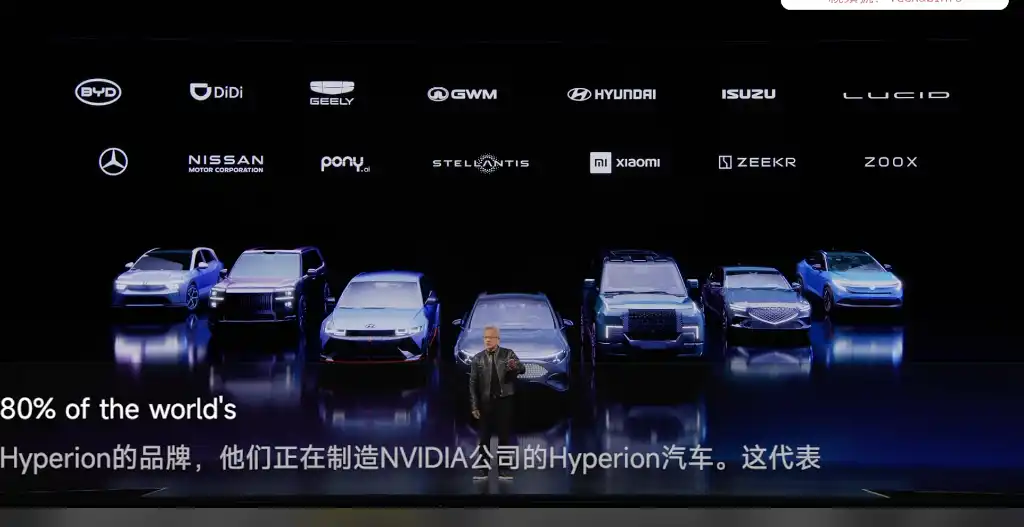
NVIDIA revealed at the event that mainstream Chinese automakers and autonomous driving companies including BYD, Geely, ZEEKR, Xiaomi, and Pony.ai have adopted or are developing autonomous driving based on the NVIDIA Hyperion platform.

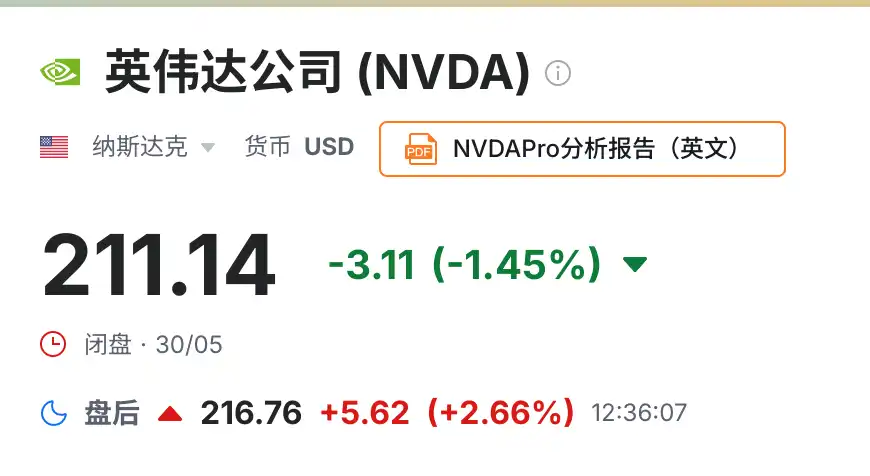
NVIDIA's U.S. stock pre-market price rose 2.7%.
Vera Rubin Now in Full Mass Production

Jensen Huang stated that the Vera Rubin architecture has now fully entered mass production, with OpenAI, Anthropic, and SpaceX becoming the first customers for NVIDIA's Vera chips.
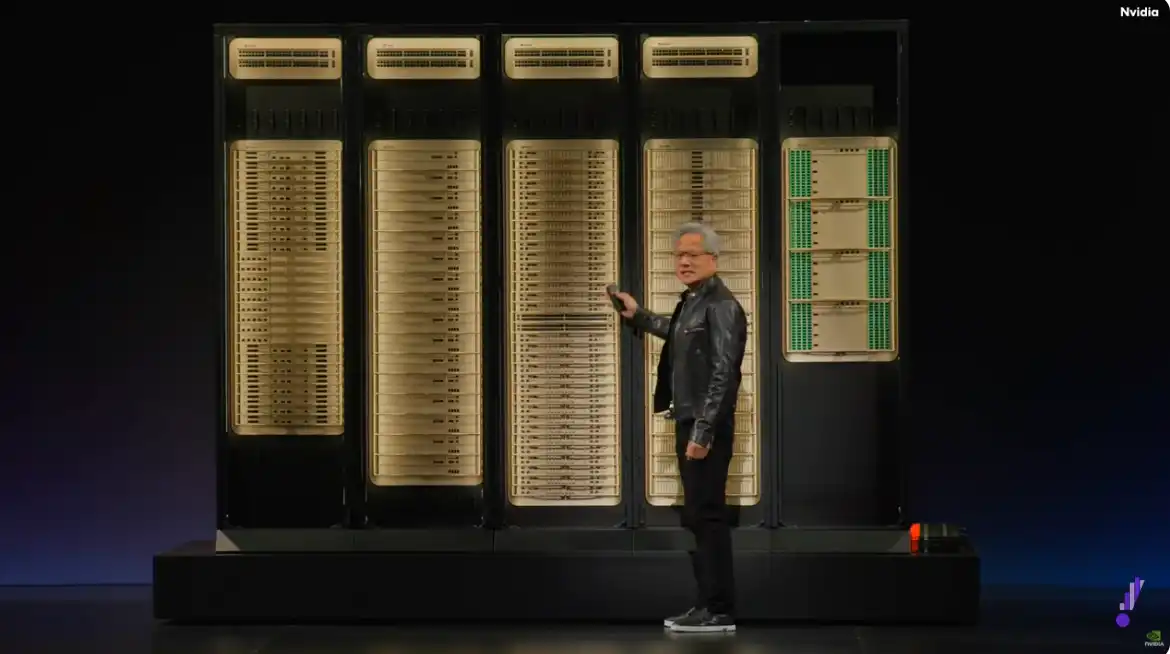
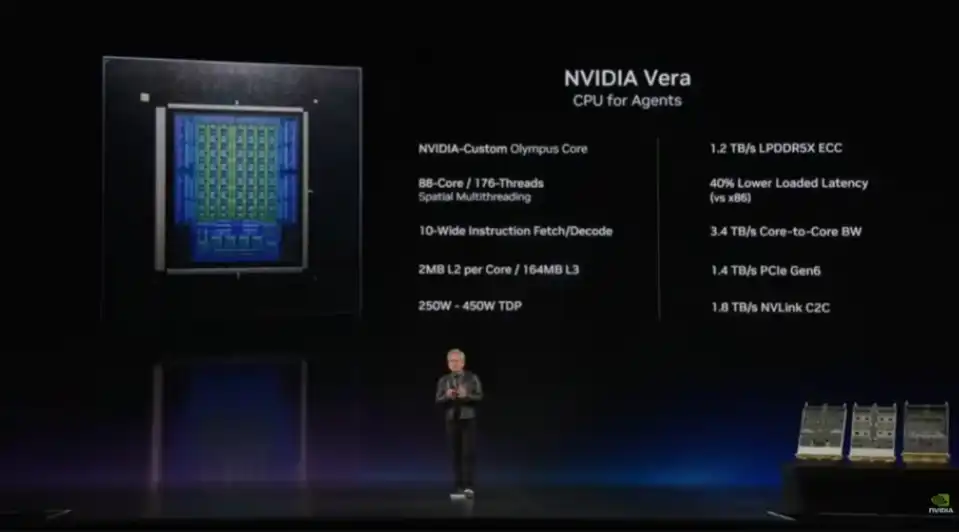
AI Agents will become a key focus for future efforts, and NVIDIA will launch the Vera CPU for AI agents.

Huang also emphasized that NVIDIA Vera BlueField-4 STX delivers chip-level secure, agentic AI storage processing capabilities.
Targeting the Next-Generation AI PC Gateway

Notably, NVIDIA unveiled a new processor for Windows-based personal computers, challenging Intel.

NVIDIA will collaborate with MediaTek to develop the RTX SPARK personal computer chip, which will be manufactured by TSMC. Huang revealed that NVIDIA's personal computer chip will launch this fall, suitable for laptops and desktops.

Jensen Huang stated that NVIDIA will launch a new generation of personal computer (PC) chips alongside each generation of its AI processors.

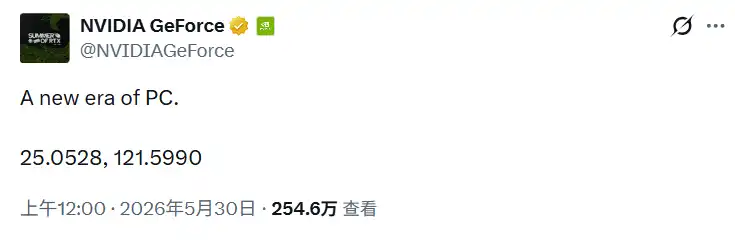
Previously, NVIDIA's official social media account issued a three-word teaser—"A new era of PC"—signaling its aim for the next-generation AI PC gateway.
Analysis suggests NVIDIA intends to integrate CPU, GPU, and AI units into a single SoC, directly supplying a complete core computing platform to OEMs like Dell and Lenovo, fundamentally altering its position in the value chain. This follows the vertical integration path of Apple Silicon, but targets the entire Windows ecosystem.

NVIDIA: Will Collaborate with Unitree Tech and Other Global Humanoid Robot Makers to Develop Robots

NVIDIA plans to collaborate not only with China's Unitree Tech but also with humanoid robot manufacturers in the United States, Europe, and South Korea on research robot projects.

Launches New AI Model + AI Factory "Action Guide"

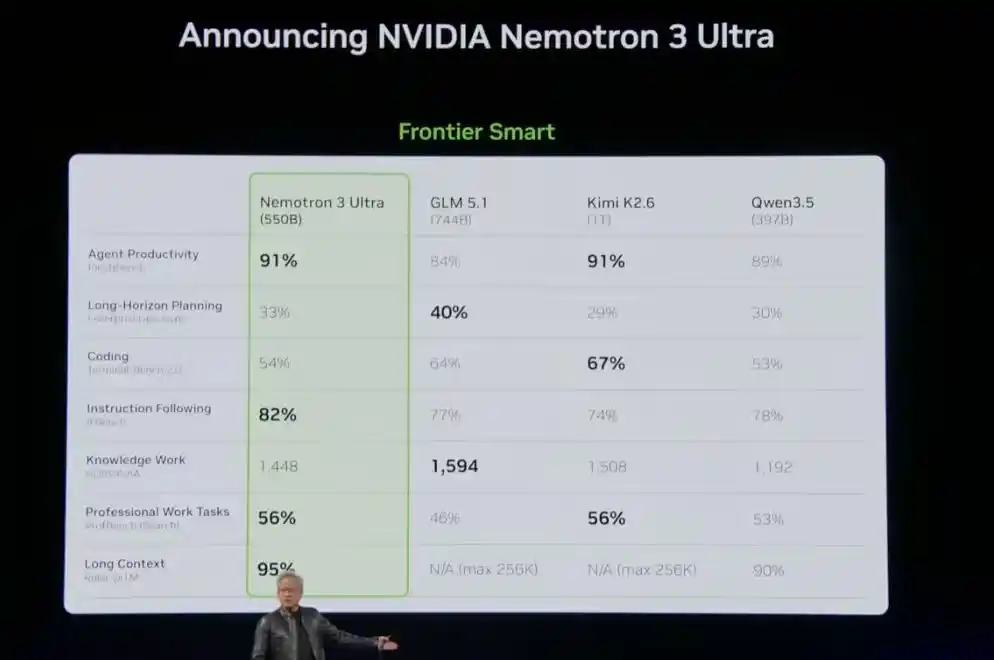
Furthermore, NVIDIA announced the launch of a new AI model, Nemotron 3 Ultra.
NVIDIA announced the launch of the NVIDIA DSX platform, providing infrastructure builders with a complete action guide for creating AI factories. Jensen Huang stated:

With the DSX platform, you can simulate the entire factory without spending a dime, validate performance before installing a single rack, and operate with the reliability required for production-grade AI.

Autonomous Driving Platform Hyperion Ecosystem Emerges

NVIDIA DRIVE Hyperion becomes the global autonomous robotaxi platform.

NVIDIA revealed at the event that mainstream Chinese automakers and autonomous driving companies including BYD, Geely, ZEEKR, Xiaomi, and Pony.ai have adopted or are developing autonomous driving based on the NVIDIA Hyperion platform.

NVIDIA also launched the Alpamayo 2 super open inference model for autonomous taxis.
Building the Development Ecosystem for the Robotics Era

In the field of humanoid robots, NVIDIA is attempting to play the role of an "infrastructure provider."

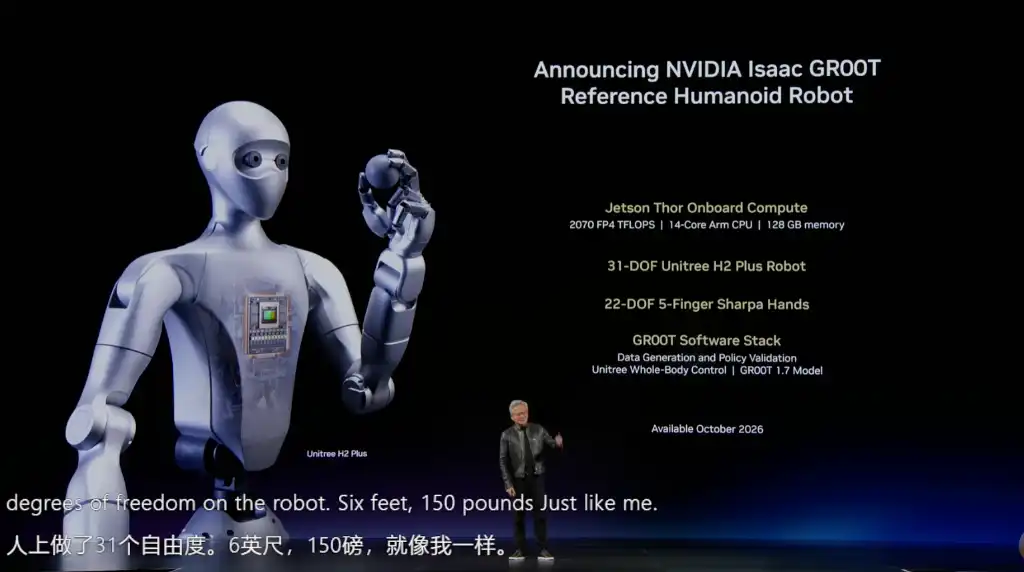
At this launch event, NVIDIA introduced the NVIDIA Isaac GR00T humanoid robot reference platform for academic research, while also releasing a large-scale open-source toolkit of agents and skills for Physical AI.

At the event, NVIDIA selected Unitree Tech's H2 Plus as the reference model, introducing the Isaac GR00T reference humanoid robot platform. This platform integrates Jetson Thor computing chips, the GR00T software stack, as well as dexterous hand and full-body control systems, providing robot manufacturers with a hardware-to-software one-stop development framework.
Related Questions

QWhat major new products or platforms did Jensen Huang announce during his GTC Taipei 2026 keynote?

AJensen Huang announced several major new products and platforms, including the Vera Rubin architecture, the Vera CPU for AI Agents, the Nemotron 3 Ultra AI model, the DSX platform for building AI factories, and new processors for Windows PCs developed in partnership with MediaTek (RTX SPARK chips).

QWhat is the significance of NVIDIA's partnership with MediaTek on the RTX SPARK PC chips?

AThe partnership with MediaTek to develop RTX SPARK PC chips signifies NVIDIA's major push into the next-generation AI PC market, directly challenging Intel. These SoC (System on Chip) designs integrate CPU, GPU, and AI units, aiming to provide a complete core computing platform to OEMs like Dell and Lenovo. This represents a fundamental shift in NVIDIA's position in the value chain.

QWhich major companies were mentioned as the first customers for the new Vera Rubin architecture chips?

AOpenAI, Anthropic, and SpaceX were named as the first customers for NVIDIA's Vera Rubin architecture chips.

QIn which key application areas besides AI PCs did NVIDIA highlight its ecosystem growth during the keynote?

ANVIDIA highlighted significant ecosystem growth in two key areas: Autonomous Driving, with companies like BYD, Geely, ZEEKR, Xiaomi, and Pony.ai adopting the NVIDIA Hyperion platform, and Robotics, with announced collaborations with global humanoid robot makers including China's Unitree Robotics.

QHow does NVIDIA's Isaac GR00T platform aim to support development in the robotics field?

ANVIDIA's Isaac GR00T is a reference humanoid robot platform designed to be a development ecosystem provider. It integrates the Jetson Thor compute chip, the GR00T software stack, and dexterous hand and whole-body control systems. It provides robot manufacturers with a comprehensive hardware-to-software development framework, with Unitree's H2 Plus robot serving as a reference model.

Related Reads

The Value Distribution of Stablecoins

**Summary: The Value Distribution of Stablecoins** The article argues that stablecoins are evolving from mere trading tools into broader channels for dollar access. It divides the stablecoin ecosystem into four layers to analyze how value is distributed: 1. **Issuance Layer:** Mints stablecoins, holds reserve assets, and captures the spread between reserve yield and user costs (e.g., Tether, Circle). This layer currently earns the largest profit margin. 2. **Infrastructure Layer:** Connects stablecoins to the traditional financial system, handling fiat on/off-ramps, banking integration, compliance (KYC/AML), and asset management (e.g., Bridge, BVNK). This is the "unglamorous" but critical work, building the essential bridges between crypto and real-world finance. 3. **Acquiring/Distribution Layer:** Integrates stablecoins into merchant systems, manages payment flows, and provides enterprise financial software (e.g., Stripe, Coinbase). They act as the access point for businesses. 4. **Application Layer:** The end-users and businesses that ultimately use stablecoins for payments, settlements, or as a store of value. They benefit from convenience but have little pricing power. The core thesis is that while the issuance layer currently dominates profits, the often-overlooked **infrastructure layer holds significant long-term potential**. The real challenge and barrier to mass adoption is not the on-chain transfer of stablecoins (which is simple), but the complex "last mile" integration into existing business workflows, banking systems, and regulatory frameworks across different countries. Companies in this layer are currently in a "land grab" phase, investing heavily to build networks, secure bank partnerships, and establish compliance pathways. While their position is currently pressured by the profitable issuers above and distribution platforms below, the article suggests that if stablecoins become a default financial rail for businesses, the infrastructure providers who have done the hard work of integration will ultimately gain strong pricing power and become entrenched, essential players.

marsbit4h ago

The Value Distribution of Stablecoins

marsbit4h ago

The Value Distribution of Stablecoins

The Value Distribution of Stablecoins The article argues that stablecoins are evolving from a mere trading tool into a broad "dollar channel." It analyzes the industry's value chain through four layers: 1. **Issuance Layer (e.g., Tether, Circle):** The top layer that mints stablecoins, holds reserve assets, and captures the thickest interest rate spread. 2. **Infrastructure Layer (e.g., Bridge, BVNK):** Connects stablecoins to the traditional financial system, handling critical but complex "dirty work" like fiat on/off-ramps, banking integration, compliance (KYC/AML), and cross-border settlement. 3. **Acquiring/Distribution Layer (e.g., Stripe, Coinbase):** Embeds stablecoins into merchant systems, manages payment flows, and integrates with enterprise software. 4. **Application Layer:** End-users and businesses that ultimately use stablecoins for payments, settlement, or storing value. The author posits that while the issuance layer currently captures the most profit, the most overlooked and potentially critical layer is infrastructure. The core challenge for stablecoin adoption isn't the on-chain transfer (which is simple), but bridging the gap between blockchain and the real-world financial system. This involves solving practical problems for businesses: fiat conversion, reconciliation, tax handling, and user onboarding. Infrastructure companies are currently in a difficult "land-grab" phase—building networks, securing banking relationships, and achieving compliance country-by-country. They face pressure from both the profitable issuance layer above and distribution platforms below. However, the author suggests this layer is building a crucial moat. Once stablecoins become a default business rail, the infrastructure players who have done the hard work of integration may gain significant, durable value and pricing power.

链捕手4h ago

The Value Distribution of Stablecoins

链捕手4h ago

How to Do Research Well: Deliberately Practice the Real Skills That Matter

No one truly teaches you how to do research. You're often given a desk, a pre-selected problem, and vague instructions to "create something new." Consequently, many people reverse-engineer the job based on visible outputs—papers, posts, announcements—learning only how to *appear* like a researcher rather than how to *become* one. True research capability is built from stacking small, trainable skills, nearly all of which can be developed through deliberate practice. **Pick Your Own Problem:** Most researchers absorb problems from advisors or trends, lacking the underlying reasoning. Choosing a problem you genuinely care about, as John Schulman advises, leads to original work. Develop "taste" like a muscle: predict experiment outcomes, guess paper results from methods, and track which findings remain important over time. **Upgrade Your Inputs:** Relying on shared reading lists (arXiv hot lists, filtered group chats) leads to unoriginal conclusions. Undervalued old literature often holds crucial insights (e.g., MoE, LSTM, backpropagation). Richard Sutton's "The Bitter Lesson" or Claude Shannon's 1952 talk on creative thinking are more predictive than lengthy modern surveys. Breadth matters as much as depth: draw from neuroscience, mechanism design, hardware knowledge, and honest statistics. Read papers directly, especially appendices and limitations sections. **Write Everything Down:** As Paul Graham noted, writing exposes flaws in seemingly mature ideas. Writing is the cheapest defense against self-deception. Following Feynman's principle, Darwin programmatically wrote down facts contradicting his theory to combat memory bias. Maintain a detailed log of hypotheses, setups, predictions, results, and updated understandings. Reviewing past logs fosters essential humility.

marsbit6h ago

How to Do Research Well: Deliberately Practice the Real Skills That Matter

marsbit6h ago

Trading

Spot
Futures
活动图片