Israel-US-Iran Conflict Surpasses 100 Days, One Key to US-Iran Reconciliation Lies in Asset Unfreezing?

Odaily星球日报Published on 2026-06-10Last updated on 2026-06-10

Abstract

The U.S.-Israel-Iran conflict has surpassed 100 days, with peace talks remaining difficult. A key sticking point in U.S.-Iran negotiations is the approximately $24 billion in frozen Iranian assets, including around $1 billion in cryptocurrencies like USDT, BTC, and ETH seized by the U.S. Treasury. Iran demands at least 50% of its assets be unfrozen immediately upon any agreement, a condition U.S. President Trump has firmly rejected, insisting no sanctions will be lifted early. Trump's inconsistent statements about an imminent deal have complicated negotiations. Iran has proposed a four-phase peace plan, with the second phase focusing on core issues like asset unfreezing. Meanwhile, the U.S. is reportedly considering using the frozen Iranian funds to aid Gulf nations affected by the conflict. Analysts suggest the asset dispute and broader geopolitical tensions mean a pattern of "fighting while talking" is likely to continue, with the conflict having a general macro impact on crypto markets rather than causing direct sell-offs of specific assets.

Original | Odaily Planet Daily (@OdailyChina)

Author | Wenser (@wenser 2010 )
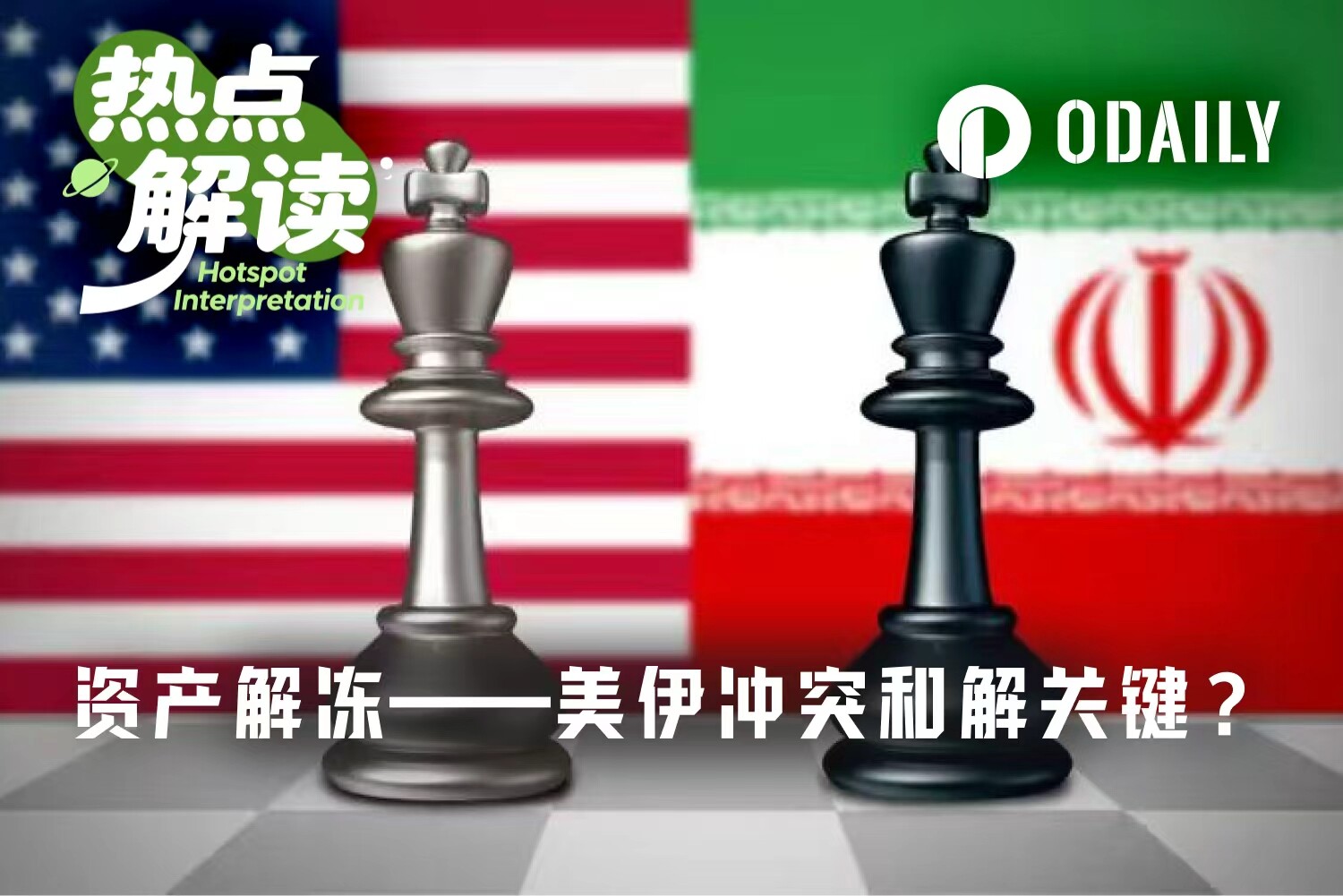
June 10th, the 103rd day since the outbreak of the US-Israel-Iran war, peace talks between the US and Iran remain arduous with no conclusion yet.

Today, following Israel's strike action against Iran, according to US officials, the US's third round of strikes against Iran has also commenced and swiftly concluded. Behind this century-defining conflict, the key to reconciliation is not only the deeper issues of Iran's nuclear weapons and uranium enrichment materials but also a current major sticking point between the two sides: the $24 billion worth of Iranian assets frozen by the US, including approximately $1 billion in crypto assets.

Where do these assets come from? What do the crypto assets include? Can the US and Iran reach an agreement on this matter going forward? These are the main topics we will explore in this article.

Trump's Laughably 'Hot-and-Cold' Duplicity: Coexisting Toughness and Compromise

Whether the US-Iran conflict can end through negotiations naturally hinges on the key figure, US President Trump. However, the businessman-turned-president Trump has a particularly flexible character and, compared to politician-type presidents, is more focused on practical interests. Therefore, his projected image is also extremely fragmented: on one hand, his public statements are sometimes tough, sometimes conciliatory; on the other hand, he is accustomed to setting up smokescreens, using pretexts like negotiations, reconciliation, and 'an agreement is about to be reached' to mislead Iran and even global news media, thereby achieving goals such as 'manipulating capital markets' and other undisclosed purposes.

According to CNN reports, since the outbreak of the Iran conflict on February 28th, Trump has made statements like 'a US-Iran agreement is about to be reached' more than 30 times (Odaily Planet Daily note: some say at least 37 times) on social media, in public appearances, and during phone interviews with reporters.

In view of this, Iran has also not harbored a 'quick-fix' fantasy about the peace talks, instead envisioning them as a four-stage plan.

On June 4th, according to reports from the Iranian media Fars News, Iran outlined a four-phase plan for an agreement with the United States:

  • The first phase focuses on a comprehensive cessation of military action on all fronts, including Iran, the United States, and the Axis of Resistance;
  • The core of the second phase is the implementation of measures for four key issues, including: the Strait of Hormuz and related mechanisms, lifting the blockade, canceling oil restrictions and sanctions, and unfreezing part of Iran's assets;
  • The third phase would initiate broader negotiations on sanctions and nuclear issues after objective and verifiable measures are implemented;
  • The fourth phase involves establishing a supervisory committee to monitor the implementation of the agreement and track the parties' compliance.

Previously, the US and Iran had ceased hostilities, but due to Israel attacking Iran again and the turbulent situation in Lebanon, the efforts of the first phase were temporarily thwarted; the second phase is now the main sticking point in the US-Iran talks.

Specific Amount of Frozen Iranian Assets: Iran Claims $24 Billion, US Confiscated $1 Billion in Crypto Assets

Previously, according to CNN, a US official familiar with the negotiations stated that one of the remaining key sticking points in the US-Iran negotiations is the issue of economic compensation, as Trump is eager to secure a deal perceived as superior to the agreement reached during the Obama administration.

The official said, Iran has informed mediators that once both sides agree on an initial Memorandum of Understanding, they want some form of economic compensation as soon as possible, not deferred to a future date. But officials in the Trump administration worry that unfreezing funds at such an early stage could alleviate the economic damage inflicted on Iran—this might eliminate, or at least weaken, a key leverage Washington holds over Tehran. This leverage would be crucial for the US entering the second phase of negotiations to discuss specific details of Iran's nuclear program. Trump has made clear to his team that he wants any deal to appear much tougher than the 2015 agreement and to avoid any action that could be interpreted as 'handing over large sums of cash'—a phrase Trump used to criticize Obama's decision to provide economic compensation to Iran.

On June 6th, media reports indicated that a potential US-Iran agreement depends on whether the US agrees to release $24 billion in frozen Iranian assets. This figure was later confirmed by Iranian officials.

That day, according to Iran's Tasnim News Agency, Iran's Deputy Foreign Minister for Legal and International Affairs, Kazem Gharibabadi, stated that at least 50% of Iran's frozen financial assets must be unfrozen immediately upon signing any Memorandum of Understanding with the US. He added that the remaining funds should be 'unfrozen within a limited time of one to two months after the agreement is signed.' Gharibabadi stated that these assets belong to Iran and were 'illegally frozen' by the US, and unfreezing them is a core requirement of any potential understanding. He said the remaining details of the access-to-funds mechanism, including technical and financial arrangements, would be negotiated further during the 60-day implementation period after the memorandum is signed.

However, this demand was immediately met with Trump's stern refusal: he stated he would not unfreeze Iranian assets or lift any sanctions in advance of any agreement.

In late May, US Treasury Secretary Scott Bessent stated in an interview with Fox News that the US had seized approximately $1 billion in Iranian crypto assets. Bessent said the action was part of sanctions against the Iranian regime and its proxy networks, and the funds had been frozen. This includes about $344 million worth of USDT stablecoin frozen by stablecoin issuer Tether in April this year, as well as other cryptocurrencies like BTC and ETH.

He stated that before the US Treasury Department intervened, the Iranian regime was stealing $400 to $500 million per month and distributing the money to dozens of senior officials. 'We are working with allies across Europe to seize various villas, houses, and properties,' Bessent explained. 'And this money was actually stolen from the Iranian people.' Additionally, according to Bitcoin News analysis, the figure Bessent initially disclosed in late April was 'close to $500 million,' while the latest figure as of May 29th has surpassed the $1 billion mark, indicating that the enforcement intensity of this operation, named 'Operation Economic Fury,' continues to increase.

It is worth mentioning that, according to Wikipedia, the US had previously even seized an Iranian government-owned skyscraper in Manhattan (valued at over $1 billion) and its accumulated rent (approximately $50 million).

Furthermore, according to the latest media reports, the US is considering using frozen Iranian assets to fund the reconstruction and repair work in Gulf countries affected by the 'US-Israel-Iran conflict.' According to informed sources, US Treasury Secretary Scott Bessent has directed relevant teams to assess the damage Iran has caused to Gulf allies. Additionally, the US is considering using frozen Iranian assets to compensate for potential future losses.

Considering all the above information, despite Trump stating last night that he was 'very close to a very good, strong, powerful agreement,' the US-Israel-Iran conflict will find it difficult to achieve reconciliation before the issues of compensation and the handling of frozen assets are determined.

As for the impact on crypto assets, it is largely confined to the macro landscape affecting the broader crypto market; the direct market-dumping impact on specific cryptocurrencies like BTC and ETH is relatively minor.

In the foreseeable future, although both sides hope to end this conflict quickly, constrained by conflicts of interest and the international situation, 'fighting while talking, talking while fighting' will likely remain the norm for the US, Iran, and even Israel.


Related Questions

QAccording to the article, what is identified as a key obstacle in the US-Iran negotiations after the initial ceasefire?

AAccording to the article, a key obstacle in the US-Iran negotiations is the issue of Iran's frozen assets, specifically the process and timing of their unfreezing, with Iran demanding immediate access to at least 50% of the $24 billion in total.

QWhat are the four stages of the agreement plan outlined by Iran's Fars News, as mentioned in the article?

AAccording to Iran's Fars News, the four-stage plan is: 1) A comprehensive cessation of military operations on all fronts. 2) Addressing four key issues: mechanisms for the Strait of Hormuz, lifting the blockade, canceling oil restrictions/sanctions, and unfreezing part of Iran's assets. 3) Initiating broader talks on sanctions and nuclear issues after verifiable measures from stage 2 are implemented. 4) Forming a supervisory committee to oversee the implementation of the agreement.

QWhat amount of Iranian assets, particularly in cryptocurrency, did US Treasury Secretary Scott Bessent claim were seized by the United States?

AUS Treasury Secretary Scott Bessent stated that the United States had seized approximately $1 billion in Iranian cryptocurrency assets, which included around $344 million in USDT stablecoin frozen by Tether in April, as well as other cryptocurrencies like BTC and ETH.

QWhat was President Trump's reported reaction to Iran's demand for the immediate unfreezing of its assets?

APresident Trump reportedly rejected the demand, stating he would not unfreeze Iranian assets or lift any sanctions ahead of any agreement.

QHow does the article assess the potential impact of the US-Iran conflict on the cryptocurrency market, specifically on assets like BTC and ETH?

AThe article assesses that the impact of the conflict is primarily on the macro landscape of the cryptocurrency market, with minimal direct market 'dumping' pressure on specific coins like BTC and ETH.

Related Reads

The World Cup is Here: The Battle for Entry into Prediction Markets Has Begun

The 2026 FIFA World Cup has begun, and alongside the on-field competition, a new off-field battleground is emerging: prediction markets. These blockchain-based platforms, which convert crowd wisdom into tradable probabilities, are gaining significant traction. However, their complexity—involving wallets, gas fees, and smart contracts—has historically limited participation to crypto-native users. Centralized exchanges (CEXs), like Gate, are tackling this adoption barrier. By integrating with leading prediction market protocol Polymarket, Gate simplifies the user experience. Users can participate directly with their exchange account and USDT, bypassing complex Web3 steps. Gate offers a streamlined "Prediction Mode" for casual users and a professional "Trading Mode" with advanced tools. Key features include two-way trading (allowing users to buy or sell positions before event resolution), support for diverse markets (sports, crypto, macroeconomics), and a suite of information tools like a "Smart Money" leaderboard, wallet tracking, and AI-powered insights. For the World Cup, Gate launched a dedicated hub aggregating schedules, standings, and relevant markets. This allows fans to seamlessly follow games and trade on outcomes, transforming passive viewing into active participation where they can monetize their predictions and trade on shifting consensus throughout a match. The article argues that prediction markets have proven their value in event forecasting. The next challenge is mass adoption. The competition is shifting from building effective protocols to creating accessible user entry points. By lowering technical barriers and building a complete ecosystem for information and trading, platforms like Gate aim to transition prediction markets from a niche crypto tool to a mainstream platform for expressing and trading on collective intelligence.

Odaily星球日报6m ago

The World Cup is Here: The Battle for Entry into Prediction Markets Has Begun

Odaily星球日报6m ago

Spain Held to a Draw by Cape Verde, Jucom Prediction Market Witnesses Historic Upset

In a major upset at the 2026 FIFA World Cup, tournament favorites Spain were held to a surprising 0-0 draw by debutants Cape Verde in their Group H opener on June 16, Beijing time. Despite dominating possession (74%) and recording 27 shots with an expected goals figure of 2.16, Spain failed to break down a resilient Cape Verde defense, with their 40-year-old goalkeeper Vozinha making 7 saves to earn Man of the Match. Pre-match predictions on the Jucom prediction market had heavily favored Spain, assigning them a 92% win probability. The actual result, a goalless draw, triggered significant volatility across related prediction markets. This outcome forces a market-wide reassessment of several key probabilities, including Spain's likelihood of winning the group and the tournament itself, while Cape Verde's previously near-zero chance of advancing is now being re-evaluated. The event highlights both the efficiency and the inherent limitations of prediction markets. While prices aggregate known information, football's low-scoring, high-variance nature means unquantifiable in-game factors can lead to unlikely results. The core value of such markets lies not in perfect foresight but in their ability to dynamically reflect how new information is incorporated into collective expectations. Platforms like Jucom, which track outcomes from single matches to the final champion, provide a real-time lens into how global consensus evolves with each game.

链捕手10m ago

Spain Held to a Draw by Cape Verde, Jucom Prediction Market Witnesses Historic Upset

链捕手10m ago

Standard Chartered Bank Places a 40x 'Bet', Calls for UNI to Rise to $100

Standard Chartered Bank’s digital asset research head, Geoff Kendrick, initiated coverage on Uniswap with a highly bullish long-term price target of $100 for its UNI token by 2030—a roughly 40-fold increase from its ~$2.60 trading price at the time of the report. The bank’s thesis hinges on the exponential growth of tokenized real-world assets (RWA), projected to surge from ~$340 billion to $4 trillion by 2028. It expects the share of these assets deployed in DeFi to rise from 3.5% to 30%, driving total DeFi TVL to around $2.7 trillion. As the leading decentralized exchange (DEX), Uniswap is positioned to capture a significant portion of this liquidity influx. A key catalyst is Uniswap’s “fee switch,” activated in late 2024, which directs a portion of protocol fees to UNI token buybacks and burns. This transforms UNI from a pure governance token into a yield-generating, deflationary asset, narrowing its valuation gap with centralized exchanges like Coinbase. The report draws an analogy: Coinbase operates like Netflix (centralized, high-cost), while Uniswap functions like YouTube (open, user-generated, network-effect driven). Despite its dominant market share and recent institutional adoption—such as BlackRock’s BUIDL fund and Fidelity’s stablecoin using Uniswap for liquidity—the path faces challenges. Competition from Solana-based DEXs and aggregators threatens user mindshare, while regulatory delays or setbacks in RWA adoption could slow the projected growth. Furthermore, UNI remains down over 92% from its 2021 peak, reflecting persistent market skepticism. Ultimately, Standard Chartered’s report signals a shift in traditional finance’s perception of DeFi, valuing network effects and cash flow potential. However, realizing the $100 target depends on Uniswap successfully navigating intense competition, regulatory hurdles, and the multi-year timeline for massive tokenized asset adoption.

marsbit35m ago

Standard Chartered Bank Places a 40x 'Bet', Calls for UNI to Rise to $100

marsbit35m ago

Trading

Spot
Futures

Hot Articles

How to Buy ONE

Welcome to HTX.com! We've made purchasing Harmony (ONE) simple and convenient. Follow our step-by-step guide to embark on your crypto journey.Step 1: Create Your HTX AccountUse your email or phone number to sign up for a free account on HTX. Experience a hassle-free registration journey and unlock all features.Get My AccountStep 2: Go to Buy Crypto and Choose Your Payment MethodCredit/Debit Card: Use your Visa or Mastercard to buy Harmony (ONE) instantly.Balance: Use funds from your HTX account balance to trade seamlessly.Third Parties: We've added popular payment methods such as Google Pay and Apple Pay to enhance convenience.P2P: Trade directly with other users on HTX.Over-the-Counter (OTC): We offer tailor-made services and competitive exchange rates for traders.Step 3: Store Your Harmony (ONE)After purchasing your Harmony (ONE), store it in your HTX account. Alternatively, you can send it elsewhere via blockchain transfer or use it to trade other cryptocurrencies.Step 4: Trade Harmony (ONE)Easily trade Harmony (ONE) on HTX's spot market. Simply access your account, select your trading pair, execute your trades, and monitor in real-time. We offer a user-friendly experience for both beginners and seasoned traders.

3.9k Total ViewsPublished 2024.03.29Updated 2026.06.02

How to Buy ONE

Discussions

Welcome to the HTX Community. Here, you can stay informed about the latest platform developments and gain access to professional market insights. Users' opinions on the price of ONE (ONE) are presented below.

活动图片