In-Depth Analysis of Katana: What Happens to Your Funds When You Bridge from Ethereum to Layer 2?

marsbitPublished on 2026-01-23Last updated on 2026-01-23

Abstract

This report analyzes Katana, a Layer 2 solution that actively utilizes bridged assets instead of leaving them idle. Unlike typical L2s where assets are locked in bridge contracts, Katana deploys them into Ethereum lending protocols (via its Vault Bridge) to generate yield. This yield, along with 100% of net sequencer fees (Chain-owned Liquidity) and off-chain US Treasury yields from its native stablecoin AUSD, is reinvested into DeFi protocols to enhance incentives. Users only earn rewards by actively deploying assets (e.g., providing liquidity), not by holding them. Over 95% of Katana’s TVL is actively utilized in DeFi, far exceeding the industry average. The network partners with risk managers like Gauntlet to mitigate the added risks of this active capital strategy.

This report is authored by Tiger Research. What if bridged assets could be utilized? We conducted an in-depth analysis of Katana, a blockchain that never sleeps. It reinvests 100% of on-chain, off-chain yields and transaction fees back into DeFi.

Key Takeaways

  • Most Layer 2s lock bridged assets without using them. Katana deploys these assets into Ethereum lending protocols to generate yield, then redistributes the yield as incentives for DeFi protocols.
  • Storing assets in custody does not generate any returns. Users must deploy their capital into Katana's DeFi protocols to earn additional rewards.
  • As of Q3 2025, over 95% of Katana's TVL is actively deployed in DeFi protocols. This contrasts with most chains, where utilization rates range from 50% to 70%.
  • Katana reinvests 100% of net sequencer fee revenue into liquidity provisioning, maintaining stable trading conditions even during market volatility.

1. Why Capital Sits Idle

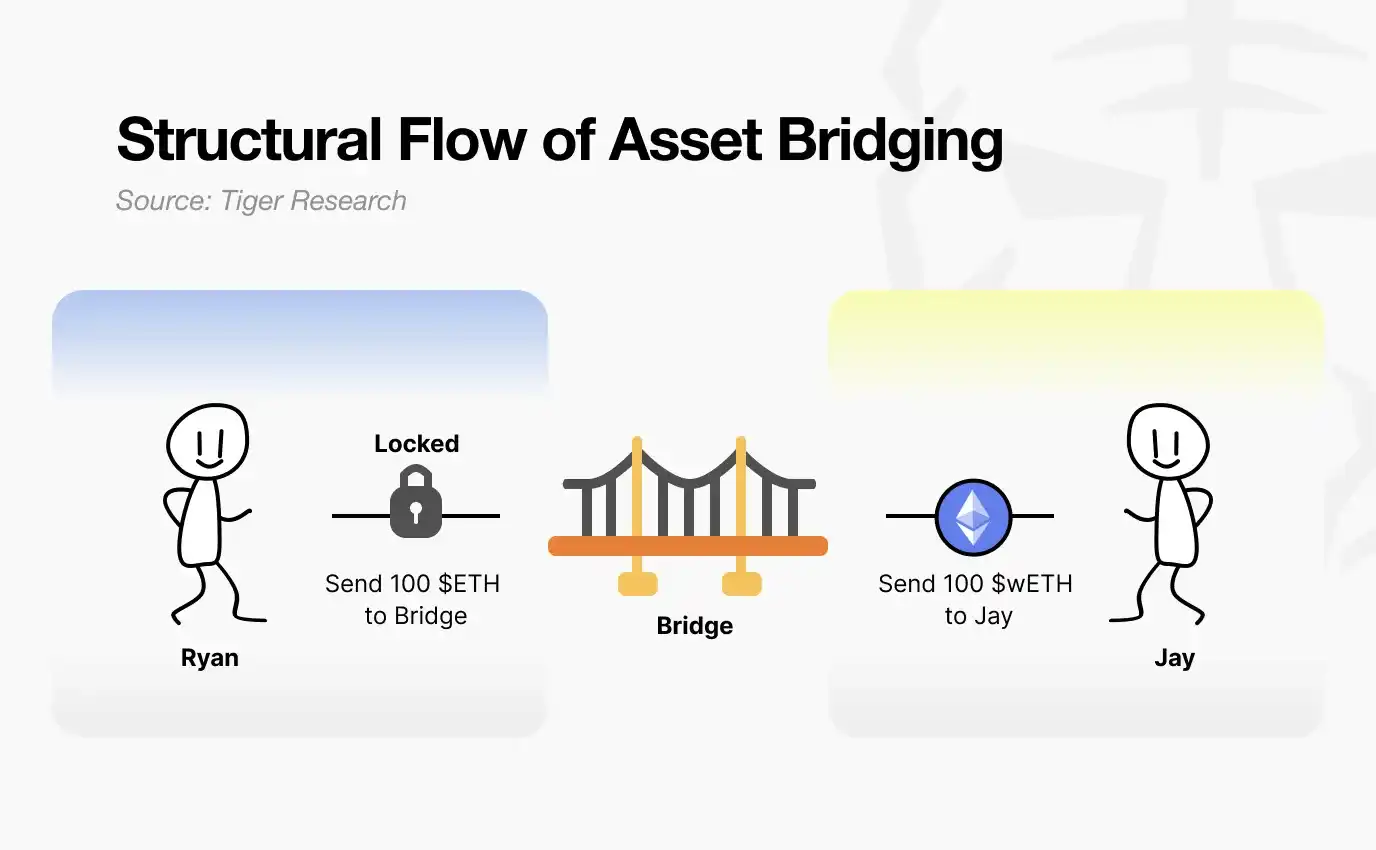
What happens to your funds when you bridge from Ethereum to Layer 2?
Source: Tiger Research

Most people think their assets are simply transferred. In reality, the process is closer to freezing. When you deposit assets into a bridge contract, the contract custodies them. The Layer 2 mints an equivalent amount of tokens. You can trade freely on the Layer 2, but your original assets on the mainnet remain locked and idle.
Source: Tiger Research

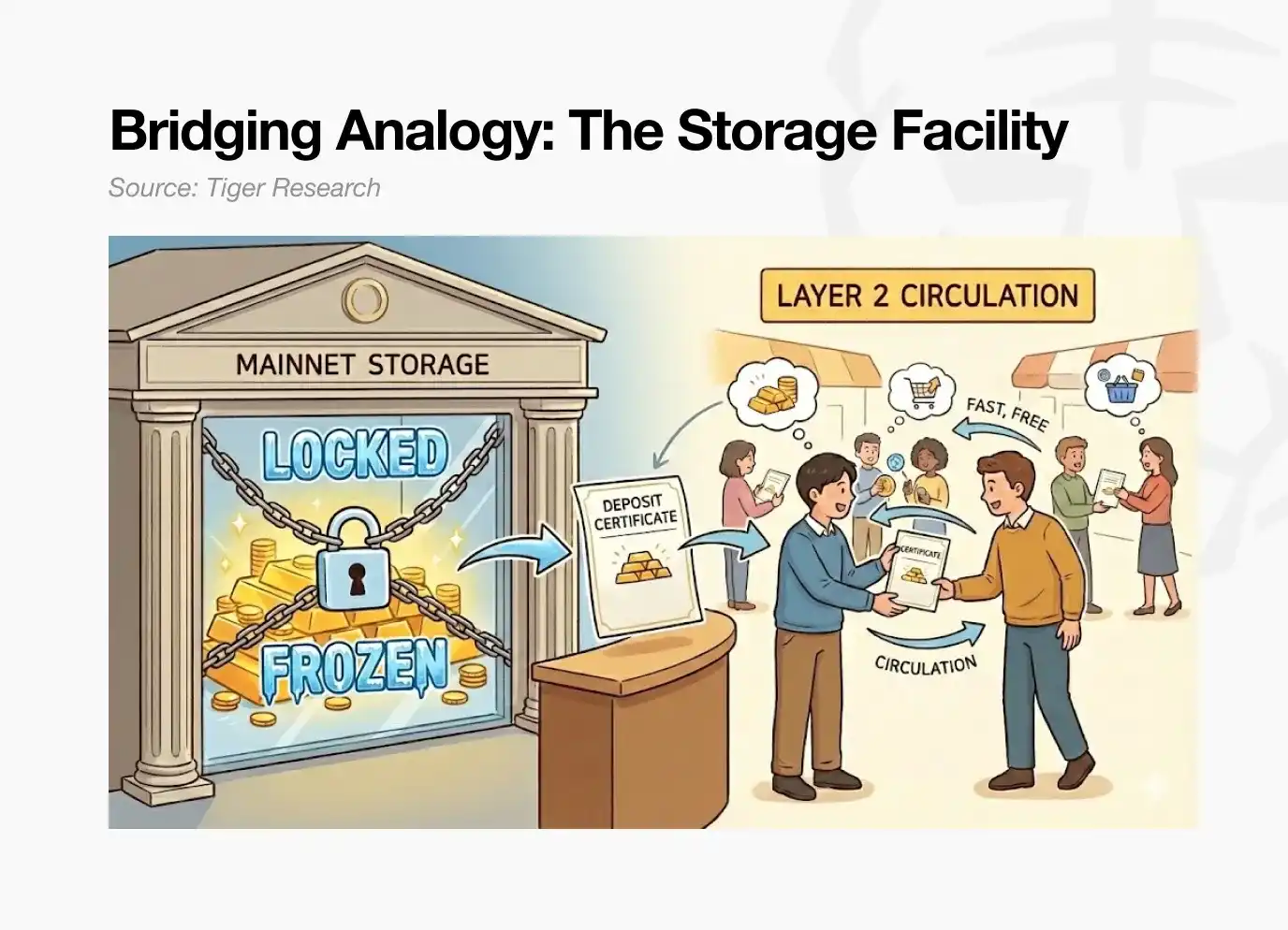
Consider a simple analogy. You store items in a storage facility and receive a claim ticket. This ticket can be transferred to someone else. But the items themselves remain in storage until you retrieve them.

This describes how most Layer 2 bridges work. The assets custodied in the Ethereum escrow contract do not generate any yield. They sit passively, waiting until users withdraw them back to the mainnet.

What if bridge deposits on the mainnet could earn DeFi yield, while you still get fast, low-cost transactions on the Layer 2?

Katana directly answers this question. Capital entering the bridge does not sit idle. It gets put to work.

2. How Katana Puts Capital to Work

Katana activates capital through three mechanisms:

  1. Bridged assets are deployed to Ethereum lending markets to generate yield.
  2. Transaction fee revenue is reinvested into liquidity pools.
  3. The native stablecoin, AUSD, captures US Treasury yield.

External capital is put to work, and capital generated on-chain is also put to work. These three mechanisms collectively eliminate idle assets on Katana.

2.1. Vault Bridge

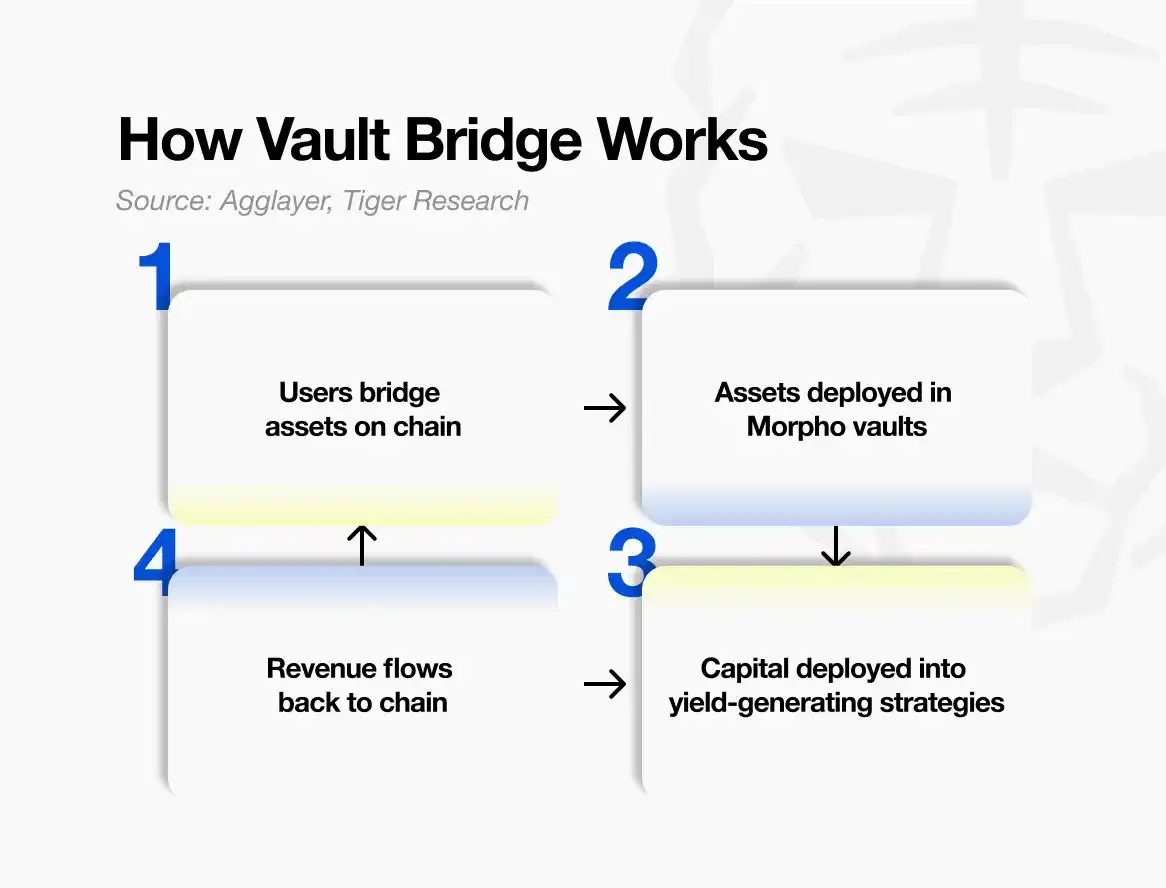
The first mechanism is the Vault Bridge. When users send assets to Katana, the original assets left on the Ethereum mainnet are deployed into lending markets to earn interest.
Source: Agglayer, Tiger Research

When you bridge USDC from Ethereum to Katana, these assets are not simply locked. On the Ethereum mainnet, they are deployed into curated vault strategies on Morpho, a leading lending protocol. The yield generated is not distributed directly to individual users but is instead collected at the network level and then redistributed as rewards to core DeFi markets on Katana.

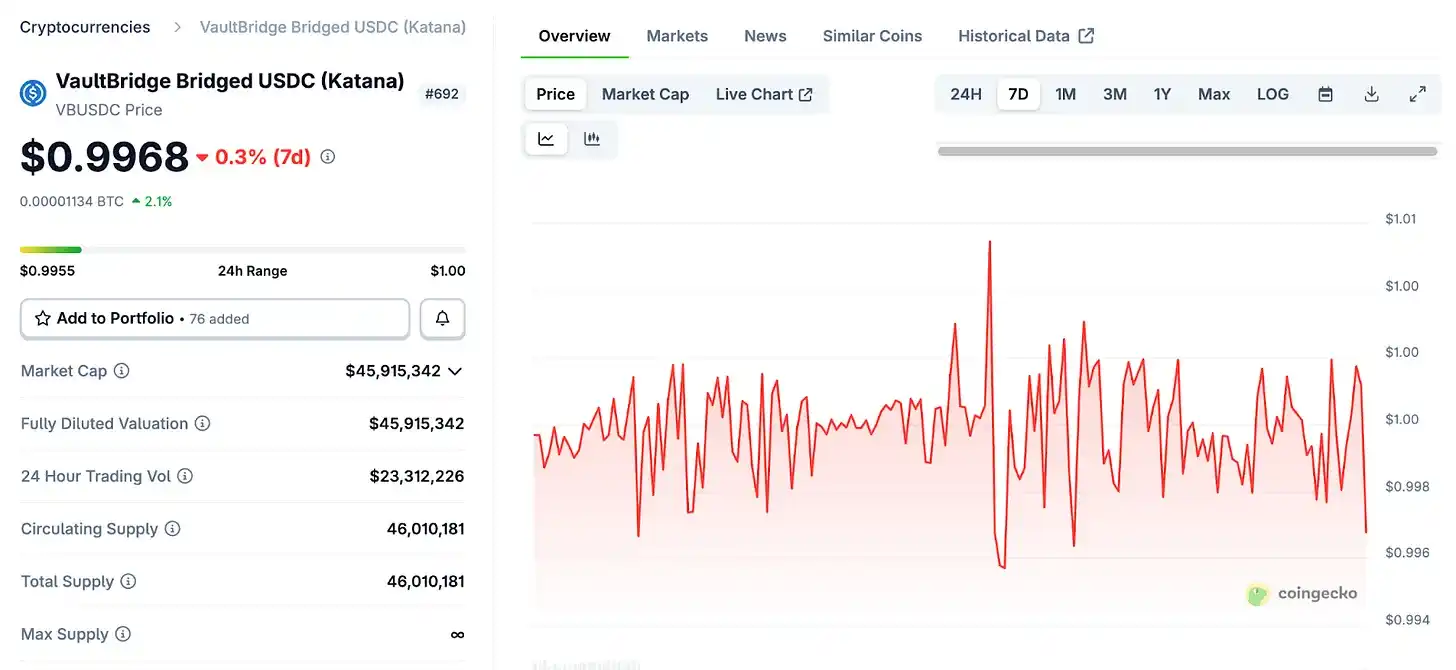
On Katana, users receive corresponding vbTokens, such as vbUSDC. This token can be used freely within Katana's DeFi ecosystem.

A common misconception needs clarification here. vbTokens are not comparable to staking derivatives like Lido's stETH. stETH automatically increases in value as staking rewards accumulate.
Source: Coingecko

The mechanism for vbTokens is entirely different. Holding vbUSDC in a wallet does not increase its quantity or price. The yield generated by the Vault Bridge on Ethereum does not flow to individual vbToken holders but to Katana's DeFi capital pools. This revenue is periodically distributed to the network to enhance incentive mechanisms for Sushi liquidity pools and Morpho lending markets.

Users only benefit by actively deploying their vbTokens. By supplying vbTokens to Sushi liquidity pools or lending strategies offered by platforms like Yearn, users can earn base yield plus additional rewards from the Vault Bridge. Simply holding vbTokens yields no return.

Katana rewards the active use of assets, not passive holding. Capital that moves gets rewarded; capital that sits idle does not.

2.2. Chain-owned Liquidity (CoL)

The second mechanism is Chain-owned Liquidity (CoL). Katana captures 100% of net sequencer fee revenue (i.e., transaction processing fees minus Ethereum settlement costs).

The Foundation uses this revenue to directly become a liquidity provider, supplying assets to Sushi trading pools and Morpho lending markets. This liquidity is owned and managed by the chain itself.

This creates a self-reinforcing cycle. As users transact on Katana, sequencer fees accumulate. These fees are converted into chain-owned liquidity, further deepening the pools. Slippage decreases, borrowing rates stabilize, and the user experience improves. A better experience attracts more users, generating more fees. The cycle repeats.

In theory, this structure is particularly effective during market downturns. External liquidity is highly mobile and often flees quickly during market stress. In contrast, chain-owned liquidity is designed to remain in place, allowing pools to continue functioning and absorb market shocks more effectively.

In practice, this places Katana in stark contrast to most DeFi systems that rely on token emissions to incentivize external capital. By directly maintaining its own liquidity, the network aims for more stable and sustainable operations.

2.3. AUSD Treasury Yield

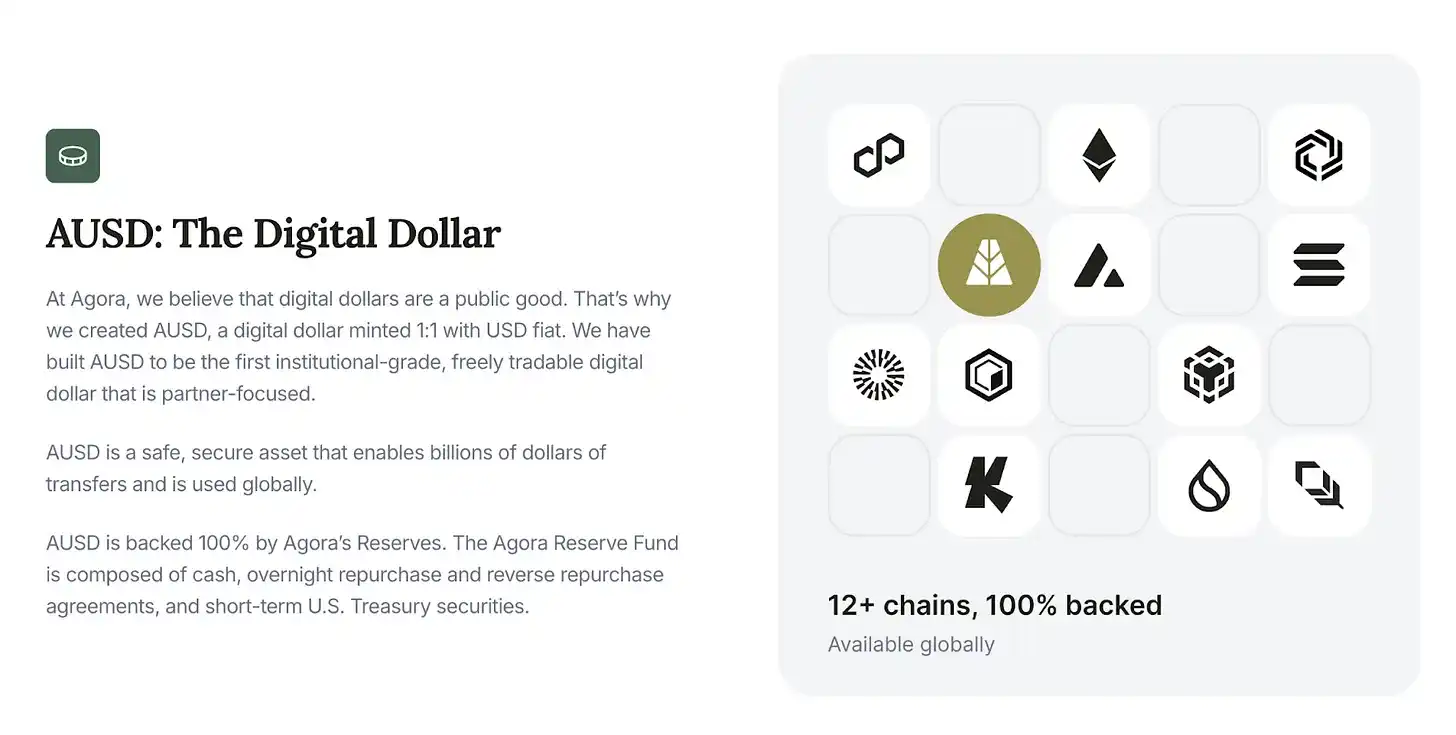
The third mechanism is AUSD, Katana's native stablecoin. AUSD is backed by US Treasuries, and the off-chain yield generated from these Treasury holdings flows into the Katana ecosystem.
Source: Agora

AUSD is issued by Agora. The collateral backing AUSD is invested in physical US Treasuries. Interest earned from these Treasuries accumulates off-chain and is then periodically channeled to the Katana network to enhance incentive mechanisms for pools denominated in AUSD.

If the Vault Bridge brings on-chain yield, then AUSD brings off-chain yield. These two revenue sources are fundamentally different. Vault Bridge yield fluctuates with Ethereum DeFi market conditions, while AUSD yield is tied to US Treasury rates, offering relative stability.

This diversifies Katana's revenue structure. When on-chain markets are volatile, off-chain yield provides a buffer; when on-chain yields are low, Treasury returns support the overall yield. This structure spans both the crypto market and traditional finance.

3. Locking Capital vs. Putting Capital to Work

As mentioned earlier, most existing cross-chain bridges choose to simply lock assets for a reason—security. When assets don't move, the system design remains simple, and the attack surface is limited. Most Layer 2 networks adopt this approach. While secure, the capital sits idle.

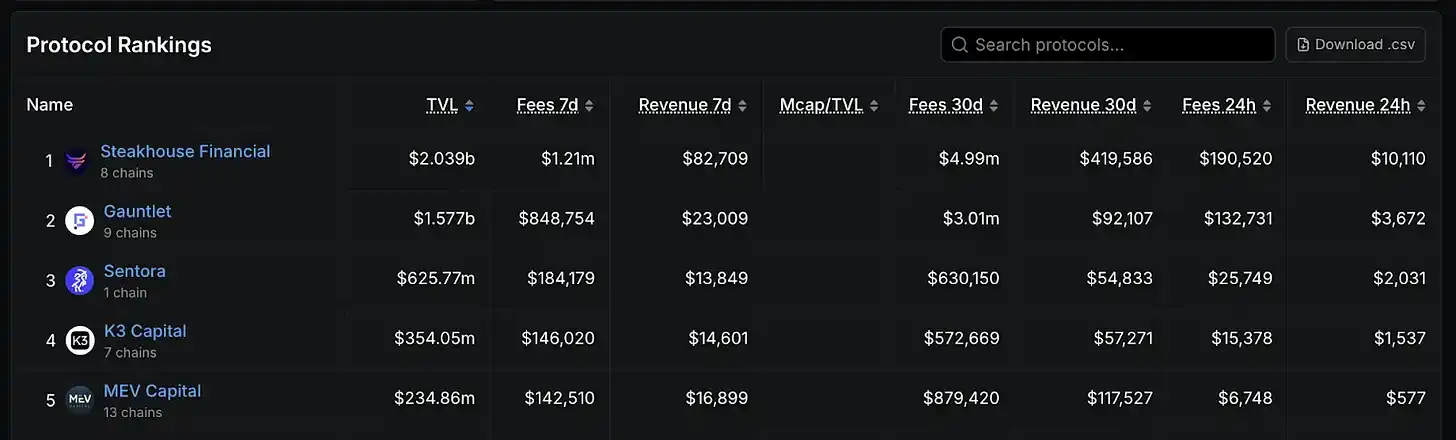
Katana takes the opposite stance. Activating idle assets introduces additional risk, and Katana is very transparent about this trade-off. Instead of avoiding risk, the network partners with established risk management experts in the DeFi space, including firms like Gauntlet and Steakhouse Financial.
Source: DefiLlama

Gauntlet and Steakhouse Financial are seasoned risk management firms in DeFi, with extensive experience setting parameters for major lending protocols and advising top DeFi projects. Their role is akin to professional asset managers in traditional finance, responsible for assessing which protocols to allocate capital to, determining appropriate position sizes, and continuously monitoring risk exposure.
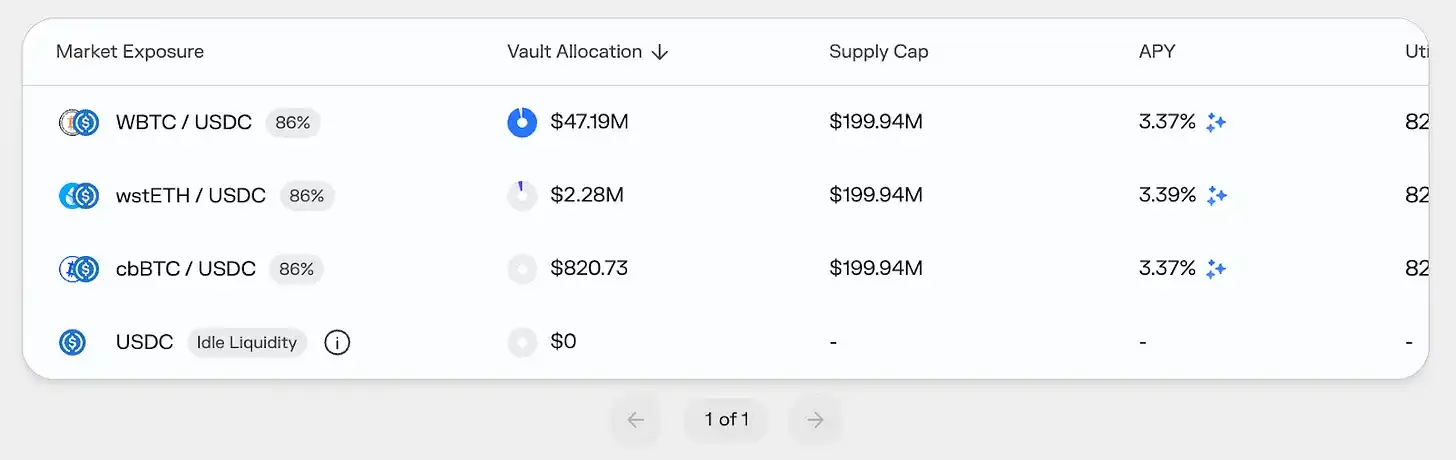
Source: Morpho

No financial system offers 100% security, so concerns about residual risk are valid.

However, Katana partners with top-tier risk managers and maintains a conservative vault architecture. An internal risk committee oversees operations. Additional safety measures include multiple protective mechanisms, such as liquidity buffers provided by Cork Protocol.

4. The DeFi Utopia Katana is Building

The current DeFi market suffers from liquidity fragmentation. Pools trading the same assets are scattered across different chains and protocols, which reduces execution efficiency, increases slippage, and lowers capital utilization. Some users profit from these inefficiencies through arbitrage, but most users bear higher costs.

Katana addresses this problem at a systemic level.

The Vault Bridge and Chain-owned Liquidity concentrate liquidity into core protocols. The result is improved trade execution, reduced slippage, and more stable borrowing rates. Most importantly, yield from idle assets on the Ethereum mainnet is layered on top of the base yield, increasing the overall APY.
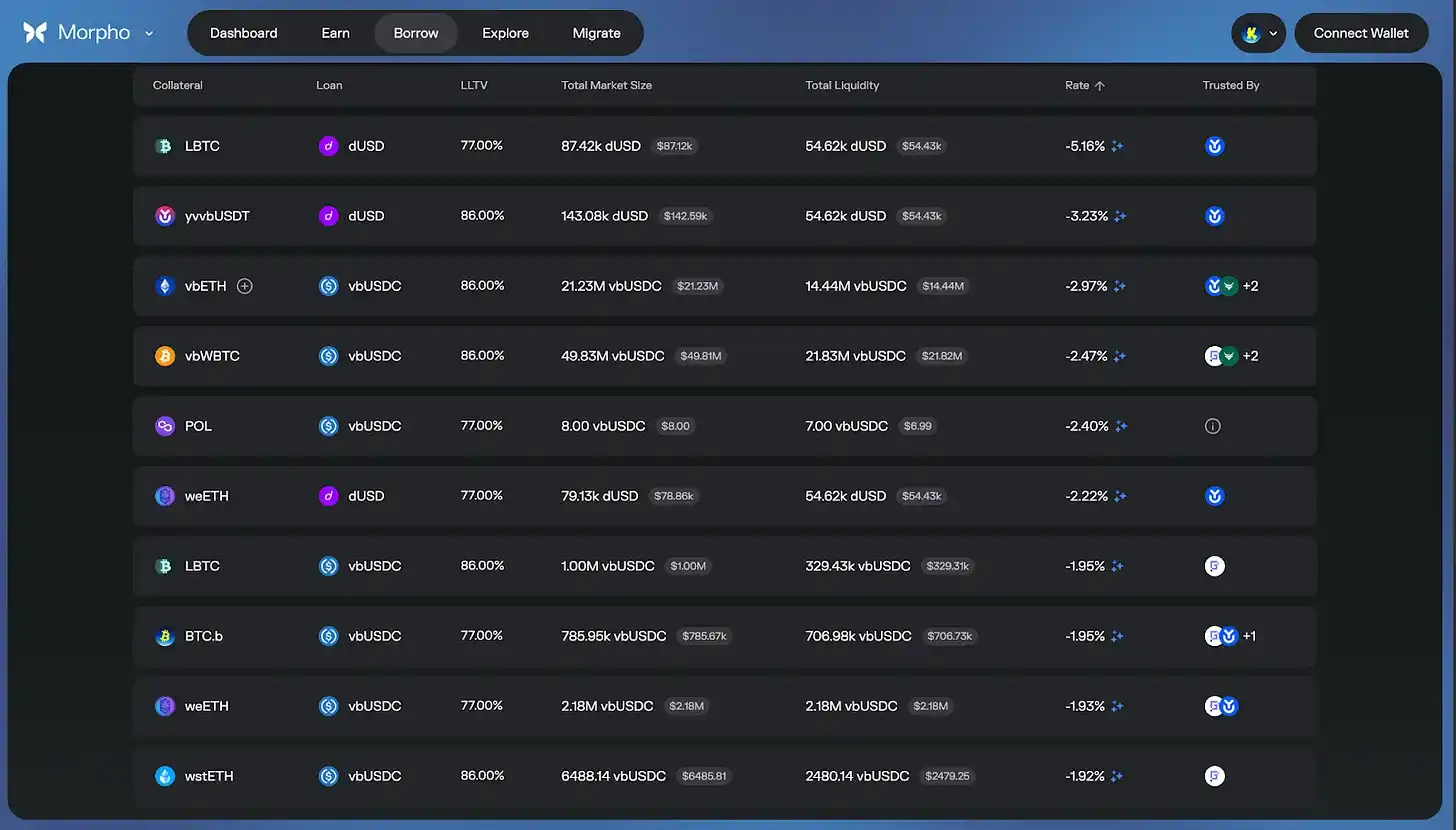
Source: Morpho

Katana's incentive structure can also significantly reduce the real cost of borrowing at specific times, even creating negative rates depending on market conditions and reward programs. This is because yields from the Vault Bridge, CoL, and AUSD are all reinvested into core markets. It's important to note, however, that these are incentive-driven outcomes that vary with market conditions.

This is why, as of Q3 2025, over 95% of Katana's TVL is actively deployed in DeFi protocols. In contrast, most chains see capital utilization rates between only 50% and 70%. Ultimately, Katana is building a chain where capital never sleeps, a system that truly rewards actual usage.

Katana never sleeps.

Related Questions

QWhat is the key difference between how Katana handles bridged assets compared to most Layer 2 solutions?

AMost Layer 2 solutions simply lock bridged assets in a custodial contract on Ethereum, leaving them idle. Katana, however, actively deploys these assets into Ethereum's DeFi lending protocols (like Morpho) to generate yield, which is then redistributed to incentivize its own DeFi ecosystem.

QWhat is a vbToken and how does it differ from a staking derivative like stETH?

AA vbToken (e.g., vbUSDC) is a representation of an asset bridged to Katana. Unlike stETH, which automatically increases in value as staking rewards accrue, holding a vbToken does not generate any individual rewards. The yield from the underlying asset is collected at the network level and used to boost incentives in Katana's DeFi pools. Users must actively deploy their vbTokens (e.g., in liquidity pools) to earn rewards.

QWhat are the three main mechanisms Katana uses to activate capital and prevent it from being idle?

A1. Vault Bridge: Deploys bridged assets on Ethereum to lending markets to generate yield. 2. Chain-owned Liquidity (CoL): Reinvests 100% of net sequencer fee revenue back into liquidity pools (e.g., on Sushi) and lending markets. 3. AUSD Treasury Yield: The native stablecoin AUSD is backed by US Treasuries, and the off-chain yield from these assets is funneled into the Katana ecosystem to boost incentives.

QHow does Katana's Chain-owned Liquidity (CoL) mechanism create a self-reinforcing cycle?

ACoL uses 100% of the net sequencer fees (transaction fees minus Ethereum settlement costs) to provide liquidity to core DeFi protocols like Sushi and Morpho. This deepens the liquidity, which reduces slippage and stabilizes borrowing rates, leading to a better user experience. This attracts more users, who generate more fees, which are then reinvested as liquidity, continuing the cycle.

QHow does Katana manage the additional risk introduced by actively deploying bridged capital instead of simply locking it?

AKatana manages this risk by partnering with established DeFi risk management experts like Gauntlet and Steakhouse Financial. These firms act like professional asset managers, assessing which protocols to use, determining appropriate position sizes, and continuously monitoring risk exposure. An internal risk committee also oversees operations, and additional safety measures like liquidity buffers from Cork Protocol are in place.

Related Reads

Why Pricing Social Interactions is Doomed to Fail?

Titled "Why Putting a Price on Social Interaction Is Doomed to Fail," this article critiques attempts to monetize social networks directly through SocialFi models, arguing their inevitable failure stems from a fundamental misunderstanding of media dynamics. Using Marshall McLuhan's theory of "hot" and "cold" media, the author posits that social networks are inherently "cold" media. Their value isn't contained in individual posts but is co-created through user participation, interpretation, and fragmented, ongoing interaction (e.g., replies, shares). This ambiguity and need for user involvement are core to their function. The article asserts that SocialFi projects like Friend.tech failed because introducing real-time, tradable financial pricing (a definitive "hot" signal) into this "cold" environment doesn't add a layer—it replaces the medium's essence. The unambiguous price signal overshadows and nullifies the nuanced, participatory social signal. Users become traders, not participants, and when speculative profits vanish, the underlying social ecosystem—never genuinely cultivated—collapses entirely. This principle extends beyond crypto. The author argues platforms like Twitter have gradually "heated up" through metrics (likes, retweets counts, algorithmically defined value), shifting users from participants to performers and eroding organic engagement. The solution isn't to abandon capital but to manage its entry point. Successful models like Substack, Patreon, or Bandcamp allow capital to "condense" at specific, isolated nodes (e.g., subscriptions, one-time payments) without permeating and "heating" every social interaction. They preserve the core "cold," participatory medium while enabling monetization at designated boundaries. The NFT boom and bust serves as a stark parallel: the ancient "cold" medium of collecting (valued for story, community, gradual accumulation) was rapidly destroyed by platforms that introduced real-time floor prices, rarity scores, and trading dashboards, transforming collectors into speculators and vaporizing cultural value when prices fell. The core lesson: "Liquidity equals heat." Injecting high liquidity and definitive pricing into a "cold" participatory medium doesn't optimize it; it fundamentally alters and destroys its value-creating mechanism. The future lies not in pricing every social gesture but in finding precise, non-invasive points for capital to condense without overheating the entire ecosystem.

marsbit1m ago

Why Pricing Social Interactions is Doomed to Fail?

marsbit1m ago

Jensen Huang's CMU Speech: In the AI Era, Don't Just Watch, Build

Jensen Huang, CEO of NVIDIA and a first-generation immigrant, delivered the commencement address to Carnegie Mellon University's class of 2026. He shared his personal journey from a humble background to founding NVIDIA, emphasizing resilience, learning from failure, and the responsibility that comes with leadership. Huang framed the present moment as the dawn of the AI revolution, a shift he believes is more profound than previous computing waves. He described AI as fundamentally resetting computing—moving from human-written software to machines that understand, reason, and use tools. This will create a new industry for generating intelligence and transform every sector. While acknowledging AI's potential to automate tasks and displace some jobs, Huang distinguished between the *tasks* of a job and its core *purpose*. He argued AI will augment human capability, not replace humans. The real risk, he stated, is not AI itself, but people being left behind by those who effectively use AI. He presented AI as a generational opportunity for massive infrastructure investment—in chip factories, data centers, energy grids, and advanced manufacturing—that could re-industrialize nations like the U.S. and bridge the digital divide by making computing and intelligent tools accessible to all. Huang called for a balanced approach: advancing AI safely and responsibly, establishing prudent policies, ensuring broad access, and encouraging universal participation. He urged the graduates not to fear the future but to engage with optimism and ambition, reminding them of CMU's motto, "My heart is in the work." His core message was clear: this is their moment to actively build and shape the AI-powered future, not merely observe it.

marsbit58m ago

Jensen Huang's CMU Speech: In the AI Era, Don't Just Watch, Build

marsbit58m ago

The Era Has Arrived Where Human Writers Must Prove They Are Not Machines

The article describes an era where AI-generated content is flooding the market, forcing human authors to prove they are not machines. It begins with the example of dozens of AI-written, error-ridden biographies of Henry Kissinger appearing on Amazon within hours of his death, a pattern repeated for other deceased celebrities and even living experts who find fraudulent books under their names. This spam content has exploded, with monthly new book releases on platforms like Amazon reaching 300,000 by late 2025. The issue spans genres, from suspiciously high proportions of AI-written teen romance and self-help books to dangerous, AI-generated foraging guides containing lethal advice. The platforms' automated review systems, designed to catch plagiarism and banned words, are ill-equipped to detect AI-generated text that avoids these pitfalls while being nonsensical or fraudulent. The problem has infiltrated traditional publishing. A major publisher, Hachette, had to recall a bestselling horror novel after AI detection tools suggested 78% of its content was machine-generated. An acclaimed European philosophy book was later revealed to be entirely written by AI under a fake author persona. In response, authors are fighting back. At the 2026 London Book Fair, 10,000 writers published a blank book titled "Don't Steal This Book" containing only their signatures—using emptiness as a protest weapon in an age of AI overproduction. Initiatives like the "Human Author Certification" program have emerged, ironically placing the burden on humans to prove their work is not machine-made. The article warns of a vicious cycle: AI-generated low-quality books pollute the data used to train future AI models, leading to "model collapse" and an ever-worsening flood of digital waste, eroding trust in publishing and devaluing human creativity.

marsbit1h ago

The Era Has Arrived Where Human Writers Must Prove They Are Not Machines

marsbit1h ago

Trading

Spot
Futures

Hot Articles

Discussions

Welcome to the HTX Community. Here, you can stay informed about the latest platform developments and gain access to professional market insights. Users' opinions on the price of ETH (ETH) are presented below.

活动图片