If You're Long on Oil, Maduro's Arrest Is Not Good News

marsbitPublished on 2026-01-06Last updated on 2026-01-06

Abstract

The article argues that the capture of Venezuelan leader Nicolás Maduro by the U.S. could be negative for oil bulls. It posits that his removal could pave the way for a potential U.S.-backed intervention to reclaim nationalized oil assets and restore the rule of law. With the world's largest oil reserves, Venezuela's production has collapsed to just 1% of global supply due to corruption and mismanagement. The author, an oil sector investor, contends that with secure property rights and investment from major oil companies, Venezuela's output could surge from its current ~900,000 barrels per day (bpd) to over 5 million bpd, structurally altering global oil markets and leading to lower long-term prices. This outcome would weaken petrostates like Russia and Iran, benefit global prosperity, and is a geopolitical victory for peace. The analysis is highly supportive of such U.S. action and pessimistic on oil prices if it succeeds.

Let me quickly break down the major events currently unfolding in Venezuela. Since oil is one of my areas of expertise, I will try to be concise and clear in my views, and I'm making this free to read. If you like my analysis, please help share it.

Dictator Nicolás Maduro, the bus driver turned autocrat, has been responsible for tens of thousands of deaths, 8 million people fleeing into exile, and the oppression of 34 million people. And all of this stems primarily from the curse of oil wealth, corruption, and the "warm of collectivism." Yes, the resource curse is very real.

Today, the U.S. government announced the successful capture of Maduro in a special military operation. According to reports, Maduro and his wife have been transported from Caracas to the United States, are currently detained at an undisclosed location, and are set to be prosecuted in New York on charges of "narcoterrorism" and "drug trafficking."

So, what happens next? We don't know yet. But if Trump decides to reclaim U.S. oil assets that were expropriated by the Venezuelan government, or even temporarily takes over the country to rebuild its institutions, I fully support it. And if you think deeply about it, you should too.

Why? Because for decades, Venezuela's elite have proven incapable of escaping the "resource curse." Such a policy would be a blessing for humanity and freedom, as well as for peace. Why do I say that?

The reason is that Venezuela is not just any ordinary OPEC (Organization of the Petroleum Exporting Countries) member, as you can see from the OPEC production table I've included below. (Note: The mentioned actions by Trump and the U.S. government are hypothetical discussions and not factual. Readers are advised to distinguish accordingly.)
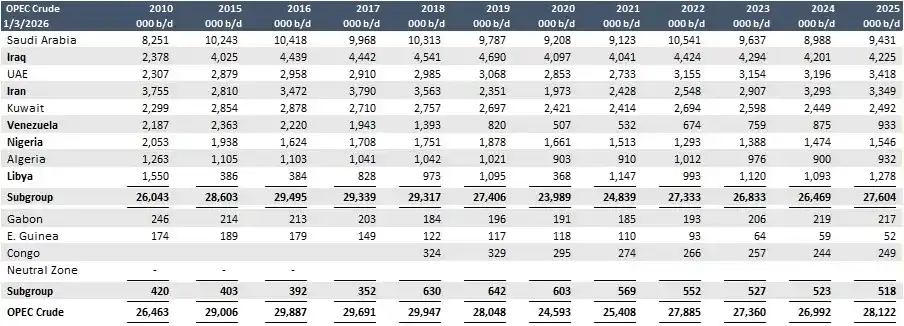
In fact, Venezuela has the largest oil reserves in the world, and the quality of its conventional oil is on par with Saudi Arabia's. In other words, it has the potential to significantly impact global oil prices, just like Saudi Arabia. Generally speaking, lower oil prices (which is what Trump desires) are often considered a blessing for peace and prosperity.

Before diving into geological conditions and oil production, let's return to basic principles. In my humble opinion (I am Swiss, not a U.S. voter), Trump's view that "U.S. oil assets should be returned to their legitimate American owners" is correct. This is clearly his stance. So yes, this intervention is not just about drugs; it's also closely tied to oil, and I fully support this position.

As a resource investor, I am tired of seeing dictators and regimes around the world seize Western assets without fair compensation, while Western leaders either turn a blind eye or hide behind procedures and polite statements.

We should not reward corrupt leaders, now or in the future. We should firmly uphold the rule of law when Western corporate interests are violated. Even if you disagree with me (which is perfectly fine), as a resource investor, you should be relieved because Trump may have, to some extent, reduced the above-ground risks for all commodities in emerging markets, at least in the short term.

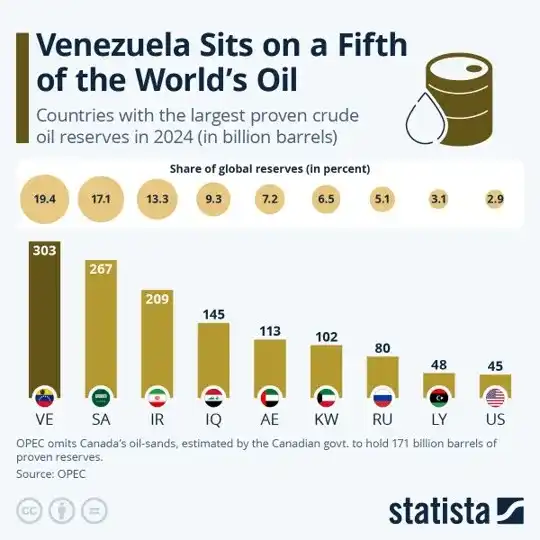
In any case, Venezuela has the largest oil reserves in the world, much of which originally belonged to Western companies that discovered and developed these reserves. These companies not only developed part of the resources but also paid the required taxes to the host country.

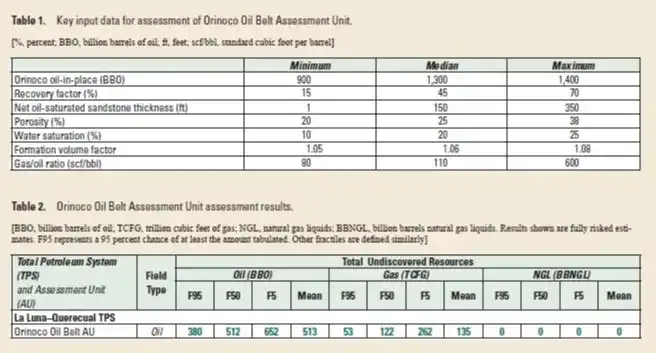
The Orinoco Belt alone represents the largest accumulation of oil on Earth, with an average estimated technically recoverable heavy oil volume of about 513 billion barrels. In terms of reserves, i.e., the portion proven economically recoverable, Venezuela accounts for about 20% of the world's known reserves.

However, in a market with a total daily oil demand of about 85 million barrels (note: this excludes the total liquid fuel production of about 103 million barrels per day), Venezuela's oil production accounts for only 1%.

Ladies and gentlemen, this is the consequence of socialism and corruption.

Under Maduro's rule, people have even died on the streets from hunger for years. The next time someone tries to sell us the "warmth of collectivism," remember this.

It's worth noting that OPEC's oil reserve data is often inflated because these figures determine their production quotas. This is why every seasoned geologist will tell you that, for example, Kuwait's heavy oil reserve data is overstated.

However, if you carefully study the U.S. Geological Survey (USGS) reports, you'll find that Venezuela's heavy oil resources are unlikely to be overestimated.

Even if the medium viscosity of the Orinoco Belt halves the ultimately recoverable amount, other resources are highly likely to be discovered elsewhere, including offshore Venezuela (such as neighboring Guyana).

So, no matter how you look at it, this is a huge "cake," and in the long run, it has the potential for significant production growth.
If the U.S. oil industry and the global oil services sector are allowed to develop this "treasure," Venezuela will surpass Saudi Arabia's production within the next decade.

Mark my words, I'm telling you now.

The conventionality and richness of these oil fields are so high that once the advanced technology of today's oil industry is fully applied to these reserves, their potential will be immeasurable.

American entrepreneurship has already squeezed 9.8 million barrels of oil per day from hard shale.

Venezuela's oil resources are like a Texas-sized swimming pool filled with oil, just waiting to be extracted, pipelined, and utilized. This is the last frontier of oil wealth.
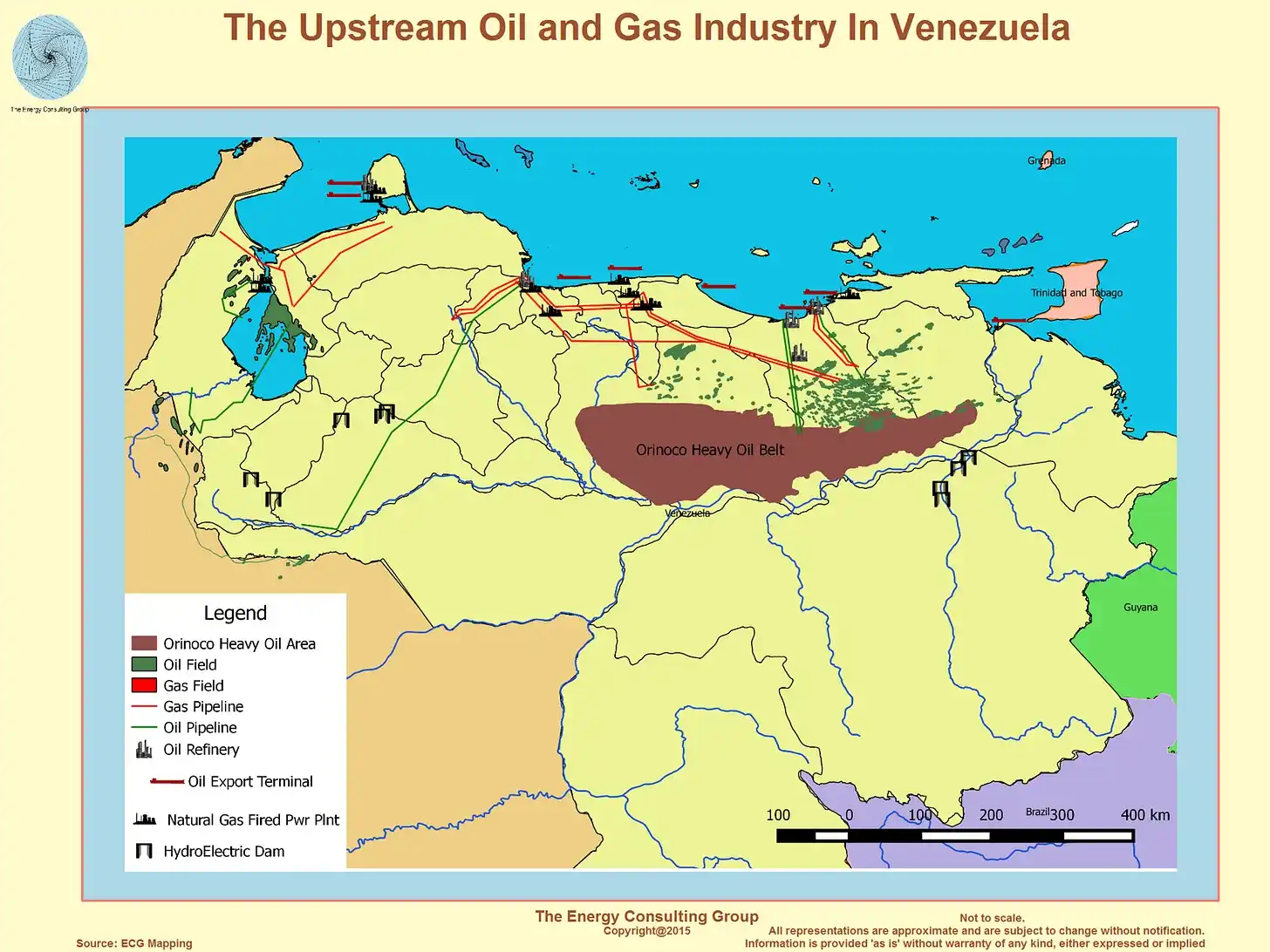
Growth in oil production will be a blessing for all aspects: massive tax revenues, high-paying jobs, and an explosive growth in related service industries—from oil services to construction, from leisure and entertainment to hospitality, a complete ecosystem will form.

Imagine the prosperity of Texas, but on a larger scale.

The left may describe it as "colonialism." But as Texas and Norway have shown, this is called capitalism.

Capitalism works well in environments with sound institutions, but it struggles in emerging markets lacking effective governance.

This is a fact, and you can quote me anytime, anywhere.
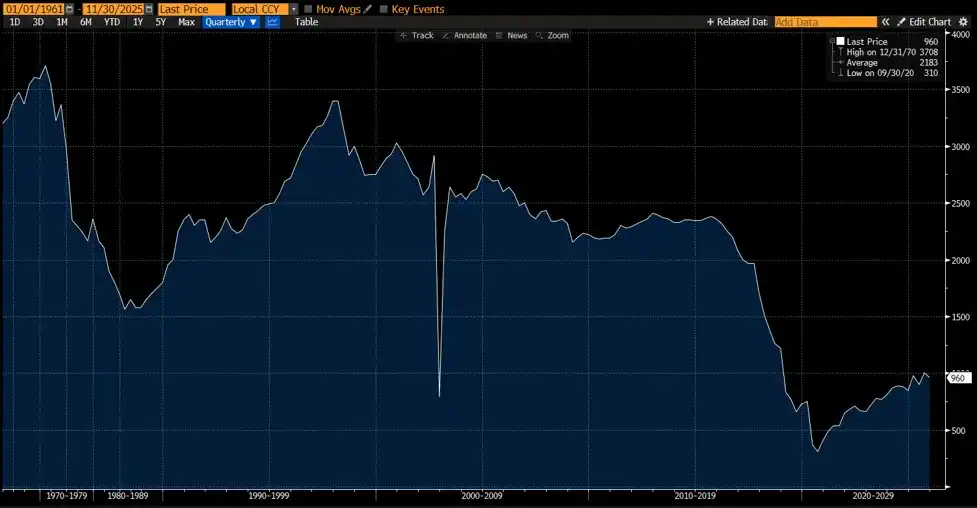
Under the right conditions, Venezuela's oil production can increase rapidly, and even a "modest" increase will have a huge impact in a commodity market where marginal prices are determined.

Currently, Venezuela's oil production is about 900,000 barrels per day. If property rights and the rules of the game are fixed, raising production to 1.5 million barrels per day within 18 months is a realistic initial goal. This growth will be led by international oil majors with the most experience, strongest financial resources, and largest outstanding claims, including Chevron, ConocoPhillips, ExxonMobil, and possibly Shell and Italy's ENI.

These companies have suffered losses in the past and still have significant unpaid amounts to recover. Reportedly, ConocoPhillips alone has over $10 billion in outstanding claims. However, it's important to note that, apart from Chevron, these oil giants are unlikely to actively participate until political stability is achieved, the actual rulers of the country are clear, and a solid, unalterable legal framework is established.

If bottlenecks in infrastructure such as pipelines, electricity, upgrading, and ports are resolved, a return to 3.5 million barrels per day is achievable. But note that big numbers can be misleading. Assuming it takes $60 billion to restore pipeline, power, and export infrastructure to normal, that may sound like a huge amount, but consider that in 2010 alone, the U.S. shale oil industry invested more than that in drilling.

The capital exists, the capability exists, and the key determinant of speed is the legal framework.

Without a stable legal environment, not much will change.

If the rules are changed after Trump, or if Venezuela simply goes from one corrupt mess to another, production will at best remain between 1.5 million and 3 million barrels per day. This is the worst-case scenario. However, if the rule of law is truly implemented, reaching 10 million barrels per day within the next decade is not a fantasy. It's simply the natural outcome of world-class resources being developed by a world-class industry.

The key point is: Even without achieving the best-case scenario, simply making Venezuela a stable producer of 5 million barrels per day (similar to Canada today) and maintaining that level for decades to come would at least offset the production decline from maturing U.S. shale fields. In a market where marginal barrels determine prices, this would be a huge impact.

In fact, you don't even need to wait for Venezuela's oil production to reach 5 million barrels per day. Just the increase from the current 900,000 barrels to 1.5 million barrels next year, this trend alone is enough to impact Brent crude prices, as the market is already in a "surplus state" for 2026 and 2027.

Yes, physical commodities are priced based on current demand, not future expectations. But in the oil market, the number of "paper barrels" traded far exceeds the physical volume of the actual market, and market expectations often drive price fluctuations before the physical oil arrives.

Recall the fourth quarter of 2018, when Trump single-handedly pulled Brent crude from $90 to $55 per barrel just with changes in Iran sanction waivers and tone, without almost any actual supply changes.

In any case, long-term low oil prices are a blessing for all humanity.

I want to further explain my views and preemptively respond to critics who might question my predictions. After all, consulting firms like Energy Aspects always try to make things sound more complicated.

First, without being modest, I have invested directly or indirectly in the oil industry for twenty years. I have been to more remote oil fields than many industry "keyboard experts." I have experienced success and failure with my own money, not someone else's.

I have spent hundreds of hours analyzing this market from scratch, from single wells to countries to every barrel of oil globally. I have used almost all serious data tools, from Kpler to OilX, Kayrros, JODI, and services from major institutions. At one point, I really felt I could almost track the flow of every barrel of oil in real time. So trust me, when I simplify the analysis here, I have a basis for it.

Second, of course, I cannot accurately predict future production; it's not a physics problem. It is path-dependent, meaning it entirely depends on what happens next. If Trump doesn't follow through on his plans, if property rights issues aren't resolved, if Venezuela just goes from one corrupt mess to another after Maduro's downfall, then nothing will change, or there will only be marginal changes.

But if Trump gets it right even halfway, believe me, Venezuela's prospects will exceed expectations. These wells will be "monsters," and the industry will be able to develop these resources at record speed, provided political interference is kept out.

However, these key conditions must be established first. The starting point for driving oil production growth lies in property rights protection, the rule of law, and a free market economy. Without these foundations, even with abundant oil reserves, significant growth is difficult to achieve. Maybe by the end of 2027, production could reach 1.5 million barrels per day? Who knows.

Third, and this is something most people overlook, Venezuela is not starting from zero. It is known in the industry as a "brownfield," meaning its oil fields already have some development foundation. Currently, Chevron is already producing about 300,000 barrels of oil per day in Venezuela. They received permission during the Biden administration, and Chevron's history in Venezuela dates back nearly 100 years.

This means Chevron has decades of geological data, production history, and operational experience. ConocoPhillips and ExxonMobil left in 2007, when then-President Hugo Chávez forcibly renegotiated contracts with all oil majors, including European companies.

Thus, these oil giants already know where the oil fields are, what technologies work, which equipment is prone to failure, and how to scale up production. They likely have more detailed data than Venezuela's state oil company, PDVSA. This provides a huge first-mover advantage for any revival plan.

Because of this, Venezuela's situation is not like that after the Soviet Union's collapse. Back then, Western companies were blocked for political reasons and had to learn everything from scratch. The oil industry is not just about pipelines and pumps; it involves logistics, engineering, process management, and massive amounts of data. Once this knowledge is mastered and the rules of the game are clear, capital and capability will naturally follow.

Of course, there are still many uncertainties. But even a medium outcome, such as production of 4 to 5 million barrels per day, would structurally change the global supply and demand balance for liquid energy. Believe me, it would be a brutal shock, as Venezuela would produce some of the cheapest oil in the world. This change would be profound. We can only hope it materializes.

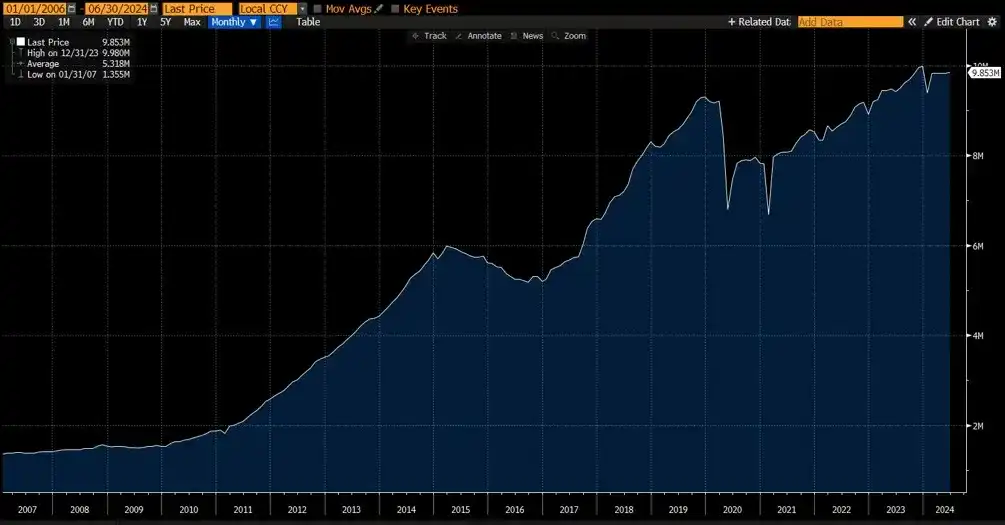
For those skeptical about significant oil production growth in Venezuela, I want to offer another perspective. The United States once accomplished a feat that seemed equally absurd. U.S. shale oil production grew from 1.8 million barrels per day in 2010 to 9.8 million barrels per day by the end of 2025. In other words, American entrepreneurship squeezed out a "Saudi Arabia"-sized oil production from rock. If you add production from Alaska and the Gulf of Mexico, the U.S. total oil production is now about 13.8 million barrels per day, a whole new level higher than what most people thought possible 15 years ago.
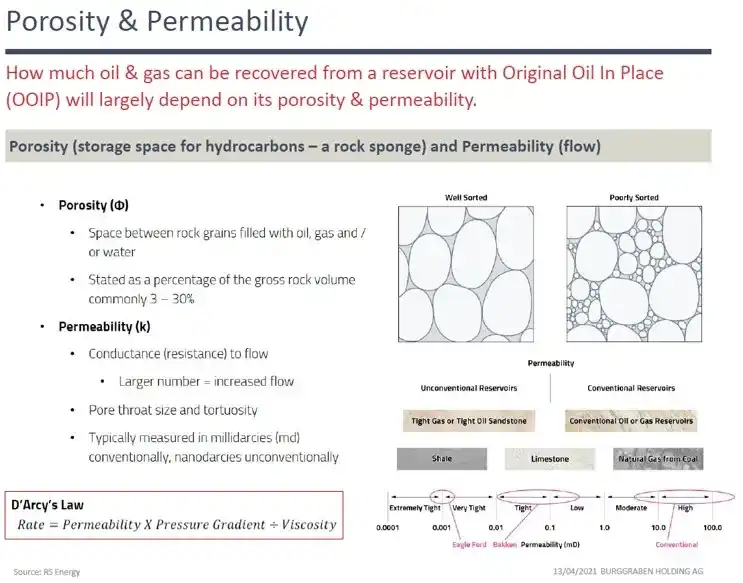
So, the question is: Why is shale oil extraction so complex? Compared to conventional onshore oil fields, shale oil extraction is exceptionally difficult. In conventional fields, oil is usually stored in "natural tanks" made of limestone or sandstone, and the oil and gas flow naturally. Shale oil, however, is trapped in dense source rock with extremely low porosity and permeability, meaning the oil almost cannot flow on its own.

In shale fields, you can't simply "drill a well" and let it produce naturally. Instead, you need to "assault" the rock with horizontal drilling, multi-stage fracking technology, and massive amounts of equipment, personnel, water, sand, steel, and capital, just to release a small amount of oil.

Moreover, each shale oil well yields only hundreds of thousands of barrels, unlike conventional fields that can provide millions or even tens of millions of barrels and sustain for years. In contrast, shale oil wells typically peak within months, and then you need to drill the next well.

This phenomenon is known in the industry as the "Drilling Frenzy."
The shale revolution is one of the greatest industrial achievements of our time. It's not just a geology story; it's the result of incentives, property rights, technology, logistics, and capital markets all working together.

Now compare this achievement to Venezuela, especially the Orinoco Belt. Whatever you think about heavy oil, yes, it faces upgrading and processing challenges, but from the pure perspective of "can we get the oil molecules out of the ground," compared to shale, extracting heavy oil from the Orinoco is much easier.

A quick look at the chart above gives you a numerical comparison. Shale permeability typically ranges from 0.001 to 0.1 millidarcies, while the permeability of heavy oil reservoirs in Venezuela's Orinoco Belt is usually between 1,000 and 13,000+ millidarcies. This is not a simple rounding error; it's a difference of several orders of magnitude.

The same goes for porosity. The best Permian shale typically has a porosity of 4% to 8%, while Orinoco heavy oil sands have a porosity between 20% and 38%. So, ask yourself a simple question: If politics were taken out of the equation, which resource would you rather drill and produce? Which one do you think has a lower full-cycle breakeven cost?
Yes, the rapid development of U.S. shale oil was fueled by three strong tailwinds.

First, property rights. In places like Texas, landowners typically own the mineral rights under their land, which directly incentivizes them to develop these resources.

Second, the oil services ecosystem. Texas has a large and decentralized oil services industry that can mobilize quickly and compete effectively.

Third, financing capability. The U.S. has the deepest debt and equity markets in the world, and shale oil was funded on a massive scale even when it seemed impractical to outsiders. Combine these factors, and you get the rapid rise of the shale oil industry.

But the key point is: Even with these tailwinds, shale oil is a technical nightmare compared to the traditional onshore resources of the Orinoco Belt. If American capitalism could create a "Saudi Arabia" from tight rock in 15 years, then once Venezuela establishes effective property rights and basic rule of law, the global oil and gas industry will flock to the Orinoco Belt as what it should be—the world's last great frontier of oil wealth. Because it truly is.

Will Trump accept the political risk of nation-building in this situation?

The answer is yes. This is actually his explicitly stated goal, expressed in the most straightforward way a president can. You can listen to him yourself.

The Trump administration will not leave easily. They want to reclaim oil assets, rebuild the oil industry, and hope to compensate for past expropriations and losses. This is their strategy, clear and simple.

My view? Be very bearish on oil prices. Trump's statements are significant. From my perspective in the oil industry, this is a game-changer. Of course, it won't happen overnight, but it will change step by step, every day. You've been warned.

Furthermore, I don't think this administration faces the risks typically described by critics. This is not fighting a hostile insurgency in Afghanistan, nor is it trying to transplant Western institutions in an Islamic political order like Iran or Afghanistan, where there is inherent hostility to Western values.

This is Venezuela. It is culturally Western, overwhelmingly Christian, and before it was systematically destroyed by socialists Hugo Chávez and Nicolás Maduro, it was a successful beacon. This country can be fixed.

Now let's zoom out. This is not just a story about Venezuela; it's a story about global oil prices, and thus a geopolitical story. Venezuela has the potential to structurally bring about long-term low oil prices, or at least maintain current low prices (all else being equal). If this materializes, it will cut off the "financial oxygen" funding the war in Ukraine, weaken the Kremlin's grip, and significantly reduce the geopolitical influence of certain major powers.

And before that happens, another chain reaction might begin, such as the potential collapse of hardline regimes in other countries that also have vast untapped oil reserves waiting for the "invisible hand" of the rule of law to release them.

All of this would break the funding chains of terrorism sponsors, whether in Qatar or elsewhere. And all of this, ladies and gentlemen, is a blessing for peace and humanity.
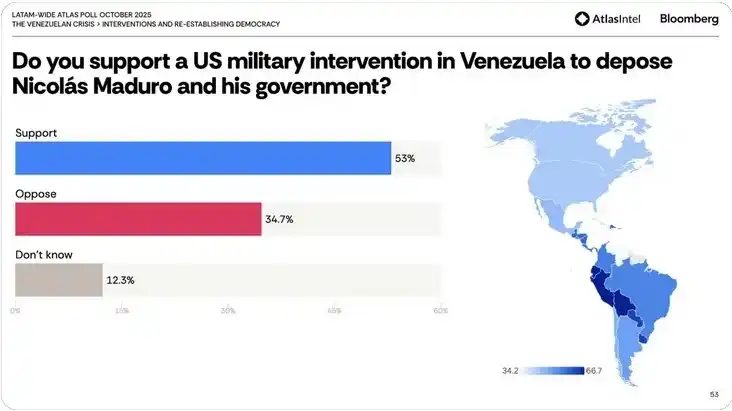
In the coming weeks, you won't hear these points from the so-called progressive left "do-gooder" Marxist worshippers. But the fact is, low oil prices are one of the greatest drivers of peace and prosperity. Yet, few truly realize this.

Instead, the left will raise all sorts of objections, no matter how absurd, until they inevitably end up siding with murderers and dictators. Sadly, this is the rule of the game in today's traditional media, which is completely partisan.
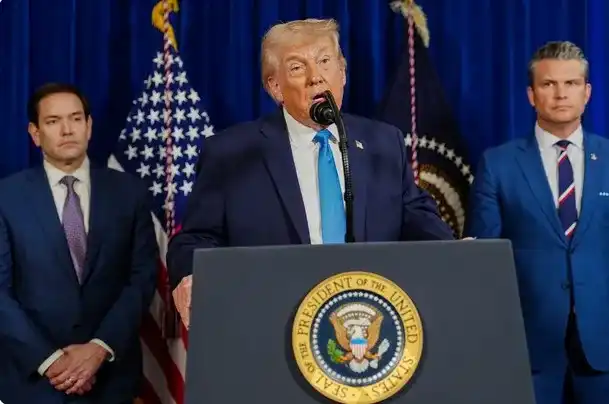
January 3, 2026, President Trump held a press conference on Venezuela. Of course, the situation in Venezuela is far from over, and the final outcome is not yet settled. But if good luck, sustained courage, and the right decisions continue to accompany Trump, he might truly deserve a Nobel Prize. From my perspective, he is currently moving in the right direction.

So, credit where credit is due. We should praise or criticize each action based on its actual performance, not on partisan lines. President Trump and his team, well done.

Please don't try to criticize this precise and highly successful military operation for even a second. Salute it, as I have.

Best regards,

Alexander

Related Questions

QWhy is the arrest of Nicolás Maduro potentially bad news for those who are long on oil?

ABecause it could lead to a restoration of Venezuela's oil production under a stable legal framework, significantly increasing global supply and driving down oil prices, which would negatively impact long positions.

QWhat is the potential impact on global oil prices if Venezuela's oil production is significantly increased?

AA substantial increase in Venezuela's oil production, even a modest rise from 0.9 to 1.5 million barrels per day, could structurally alter the global supply-demand balance, leading to lower oil prices due to the market being marginal-price determined.

QWhat are the key factors that have prevented Venezuela from realizing its full oil production potential according to the article?

AThe key factors are the 'resource curse,' systemic corruption, collectivist/socialist policies, and the lack of a stable legal framework, property rights, and the rule of law, which have deterred necessary foreign investment and expertise.

QHow does the author compare the technical challenge of developing Venezuela's Orinoco Belt to US shale oil production?

AThe author argues that developing the Orinoco Belt's conventional heavy oil is technically far easier than US shale production, citing orders of magnitude higher permeability and porosity, suggesting much lower breakeven costs if political risks are removed.

QWhat broader geopolitical consequences does the author suggest could result from a successful revival of Venezuela's oil industry?

AThe author suggests that long-term low oil prices could cut off financial oxygen for the war in Ukraine, weaken the Kremlin's grip, reduce the geopolitical influence of certain major powers, and disrupt funding for terrorism sponsors.

Related Reads

Trading

Spot
Futures

Hot Articles

What is SONIC

Sonic: Pioneering the Future of Gaming in Web3 Introduction to Sonic In the ever-evolving landscape of Web3, the gaming industry stands out as one of the most dynamic and promising sectors. At the forefront of this revolution is Sonic, a project designed to amplify the gaming ecosystem on the Solana blockchain. Leveraging cutting-edge technology, Sonic aims to deliver an unparalleled gaming experience by efficiently processing millions of requests per second, ensuring that players enjoy seamless gameplay while maintaining low transaction costs. This article delves into the intricate details of Sonic, exploring its creators, funding sources, operational mechanics, and the timeline of significant events that have shaped its journey. What is Sonic? Sonic is an innovative layer-2 network that operates atop the Solana blockchain, specifically tailored to enhance the existing Solana gaming ecosystem. It accomplishes this through a customised, VM-agnostic game engine paired with a HyperGrid interpreter, facilitating sovereign game economies that roll up back to the Solana platform. The primary goals of Sonic include: Enhanced Gaming Experiences: Sonic is committed to offering lightning-fast on-chain gameplay, allowing players and developers to engage with games at previously unattainable speeds. Atomic Interoperability: This feature enables transactions to be executed within Sonic without the need to redeploy Solana programmes and accounts. This makes the process more efficient and directly benefits from Solana Layer1 services and liquidity. Seamless Deployment: Sonic allows developers to write for Ethereum Virtual Machine (EVM) based systems and execute them on Solana’s SVM infrastructure. This interoperability is crucial for attracting a broader range of dApps and decentralised applications to the platform. Support for Developers: By offering native composable gaming primitives and extensible data types - dining within the Entity-Component-System (ECS) framework - game creators can craft intricate business logic with ease. Overall, Sonic's unique approach not only caters to players but also provides an accessible and low-cost environment for developers to innovate and thrive. Creator of Sonic The information regarding the creator of Sonic is somewhat ambiguous. However, it is known that Sonic's SVM is owned by the company Mirror World. The absence of detailed information about the individuals behind Sonic reflects a common trend in several Web3 projects, where collective efforts and partnerships often overshadow individual contributions. Investors of Sonic Sonic has garnered considerable attention and support from various investors within the crypto and gaming sectors. Notably, the project raised an impressive $12 million during its Series A funding round. The round was led by BITKRAFT Ventures, with other notable investors including Galaxy, Okx Ventures, Interactive, Big Brain Holdings, and Mirana. This financial backing signifies the confidence that investment foundations have in Sonic’s potential to revolutionise the Web3 gaming landscape, further validating its innovative approaches and technologies. How Does Sonic Work? Sonic utilises the HyperGrid framework, a sophisticated parallel processing mechanism that enhances its scalability and customisability. Here are the core features that set Sonic apart: Lightning Speed at Low Costs: Sonic offers one of the fastest on-chain gaming experiences compared to other Layer-1 solutions, powered by the scalability of Solana’s virtual machine (SVM). Atomic Interoperability: Sonic enables transaction execution without redeployment of Solana programmes and accounts, effectively streamlining the interaction between users and the blockchain. EVM Compatibility: Developers can effortlessly migrate decentralised applications from EVM chains to the Solana environment using Sonic’s HyperGrid interpreter, increasing the accessibility and integration of various dApps. Ecosystem Support for Developers: By exposing native composable gaming primitives, Sonic facilitates a sandbox-like environment where developers can experiment and implement business logic, greatly enhancing the overall development experience. Monetisation Infrastructure: Sonic natively supports growth and monetisation efforts, providing frameworks for traffic generation, payments, and settlements, thereby ensuring that gaming projects are not only viable but also sustainable financially. Timeline of Sonic The evolution of Sonic has been marked by several key milestones. Below is a brief timeline highlighting critical events in the project's history: 2022: The Sonic cryptocurrency was officially launched, marking the beginning of its journey in the Web3 gaming arena. 2024: June: Sonic SVM successfully raised $12 million in a Series A funding round. This investment allowed Sonic to further develop its platform and expand its offerings. August: The launch of the Sonic Odyssey testnet provided users with the first opportunity to engage with the platform, offering interactive activities such as collecting rings—a nod to gaming nostalgia. October: SonicX, an innovative crypto game integrated with Solana, made its debut on TikTok, capturing the attention of over 120,000 users within a short span. This integration illustrated Sonic’s commitment to reaching a broader, global audience and showcased the potential of blockchain gaming. Key Points Sonic SVM is a revolutionary layer-2 network on Solana explicitly designed to enhance the GameFi landscape, demonstrating great potential for future development. HyperGrid Framework empowers Sonic by introducing horizontal scaling capabilities, ensuring that the network can handle the demands of Web3 gaming. Integration with Social Platforms: The successful launch of SonicX on TikTok displays Sonic’s strategy to leverage social media platforms to engage users, exponentially increasing the exposure and reach of its projects. Investment Confidence: The substantial funding from BITKRAFT Ventures, among others, emphasizes the robust backing Sonic has, paving the way for its ambitious future. In conclusion, Sonic encapsulates the essence of Web3 gaming innovation, striking a balance between cutting-edge technology, developer-centric tools, and community engagement. As the project continues to evolve, it is poised to redefine the gaming landscape, making it a notable entity for gamers and developers alike. As Sonic moves forward, it will undoubtedly attract greater interest and participation, solidifying its place within the broader narrative of blockchain gaming.

1.3k Total ViewsPublished 2024.04.04Updated 2024.12.03

What is SONIC

What is $S$

Understanding SPERO: A Comprehensive Overview Introduction to SPERO As the landscape of innovation continues to evolve, the emergence of web3 technologies and cryptocurrency projects plays a pivotal role in shaping the digital future. One project that has garnered attention in this dynamic field is SPERO, denoted as SPERO,$$s$. This article aims to gather and present detailed information about SPERO, to help enthusiasts and investors understand its foundations, objectives, and innovations within the web3 and crypto domains. What is SPERO,$$s$? SPERO,$$s$ is a unique project within the crypto space that seeks to leverage the principles of decentralisation and blockchain technology to create an ecosystem that promotes engagement, utility, and financial inclusion. The project is tailored to facilitate peer-to-peer interactions in new ways, providing users with innovative financial solutions and services. At its core, SPERO,$$s$ aims to empower individuals by providing tools and platforms that enhance user experience in the cryptocurrency space. This includes enabling more flexible transaction methods, fostering community-driven initiatives, and creating pathways for financial opportunities through decentralised applications (dApps). The underlying vision of SPERO,$$s$ revolves around inclusiveness, aiming to bridge gaps within traditional finance while harnessing the benefits of blockchain technology. Who is the Creator of SPERO,$$s$? The identity of the creator of SPERO,$$s$ remains somewhat obscure, as there are limited publicly available resources providing detailed background information on its founder(s). This lack of transparency can stem from the project's commitment to decentralisation—an ethos that many web3 projects share, prioritising collective contributions over individual recognition. By centring discussions around the community and its collective goals, SPERO,$$s$ embodies the essence of empowerment without singling out specific individuals. As such, understanding the ethos and mission of SPERO remains more important than identifying a singular creator. Who are the Investors of SPERO,$$s$? SPERO,$$s$ is supported by a diverse array of investors ranging from venture capitalists to angel investors dedicated to fostering innovation in the crypto sector. The focus of these investors generally aligns with SPERO's mission—prioritising projects that promise societal technological advancement, financial inclusivity, and decentralised governance. These investor foundations are typically interested in projects that not only offer innovative products but also contribute positively to the blockchain community and its ecosystems. The backing from these investors reinforces SPERO,$$s$ as a noteworthy contender in the rapidly evolving domain of crypto projects. How Does SPERO,$$s$ Work? SPERO,$$s$ employs a multi-faceted framework that distinguishes it from conventional cryptocurrency projects. Here are some of the key features that underline its uniqueness and innovation: Decentralised Governance: SPERO,$$s$ integrates decentralised governance models, empowering users to participate actively in decision-making processes regarding the project’s future. This approach fosters a sense of ownership and accountability among community members. Token Utility: SPERO,$$s$ utilises its own cryptocurrency token, designed to serve various functions within the ecosystem. These tokens enable transactions, rewards, and the facilitation of services offered on the platform, enhancing overall engagement and utility. Layered Architecture: The technical architecture of SPERO,$$s$ supports modularity and scalability, allowing for seamless integration of additional features and applications as the project evolves. This adaptability is paramount for sustaining relevance in the ever-changing crypto landscape. Community Engagement: The project emphasises community-driven initiatives, employing mechanisms that incentivise collaboration and feedback. By nurturing a strong community, SPERO,$$s$ can better address user needs and adapt to market trends. Focus on Inclusion: By offering low transaction fees and user-friendly interfaces, SPERO,$$s$ aims to attract a diverse user base, including individuals who may not previously have engaged in the crypto space. This commitment to inclusion aligns with its overarching mission of empowerment through accessibility. Timeline of SPERO,$$s$ Understanding a project's history provides crucial insights into its development trajectory and milestones. Below is a suggested timeline mapping significant events in the evolution of SPERO,$$s$: Conceptualisation and Ideation Phase: The initial ideas forming the basis of SPERO,$$s$ were conceived, aligning closely with the principles of decentralisation and community focus within the blockchain industry. Launch of Project Whitepaper: Following the conceptual phase, a comprehensive whitepaper detailing the vision, goals, and technological infrastructure of SPERO,$$s$ was released to garner community interest and feedback. Community Building and Early Engagements: Active outreach efforts were made to build a community of early adopters and potential investors, facilitating discussions around the project’s goals and garnering support. Token Generation Event: SPERO,$$s$ conducted a token generation event (TGE) to distribute its native tokens to early supporters and establish initial liquidity within the ecosystem. Launch of Initial dApp: The first decentralised application (dApp) associated with SPERO,$$s$ went live, allowing users to engage with the platform's core functionalities. Ongoing Development and Partnerships: Continuous updates and enhancements to the project's offerings, including strategic partnerships with other players in the blockchain space, have shaped SPERO,$$s$ into a competitive and evolving player in the crypto market. Conclusion SPERO,$$s$ stands as a testament to the potential of web3 and cryptocurrency to revolutionise financial systems and empower individuals. With a commitment to decentralised governance, community engagement, and innovatively designed functionalities, it paves the way toward a more inclusive financial landscape. As with any investment in the rapidly evolving crypto space, potential investors and users are encouraged to research thoroughly and engage thoughtfully with the ongoing developments within SPERO,$$s$. The project showcases the innovative spirit of the crypto industry, inviting further exploration into its myriad possibilities. While the journey of SPERO,$$s$ is still unfolding, its foundational principles may indeed influence the future of how we interact with technology, finance, and each other in interconnected digital ecosystems.

54 Total ViewsPublished 2024.12.17Updated 2024.12.17

What is $S$

What is AGENT S

Agent S: The Future of Autonomous Interaction in Web3 Introduction In the ever-evolving landscape of Web3 and cryptocurrency, innovations are constantly redefining how individuals interact with digital platforms. One such pioneering project, Agent S, promises to revolutionise human-computer interaction through its open agentic framework. By paving the way for autonomous interactions, Agent S aims to simplify complex tasks, offering transformative applications in artificial intelligence (AI). This detailed exploration will delve into the project's intricacies, its unique features, and the implications for the cryptocurrency domain. What is Agent S? Agent S stands as a groundbreaking open agentic framework, specifically designed to tackle three fundamental challenges in the automation of computer tasks: Acquiring Domain-Specific Knowledge: The framework intelligently learns from various external knowledge sources and internal experiences. This dual approach empowers it to build a rich repository of domain-specific knowledge, enhancing its performance in task execution. Planning Over Long Task Horizons: Agent S employs experience-augmented hierarchical planning, a strategic approach that facilitates efficient breakdown and execution of intricate tasks. This feature significantly enhances its ability to manage multiple subtasks efficiently and effectively. Handling Dynamic, Non-Uniform Interfaces: The project introduces the Agent-Computer Interface (ACI), an innovative solution that enhances the interaction between agents and users. Utilizing Multimodal Large Language Models (MLLMs), Agent S can navigate and manipulate diverse graphical user interfaces seamlessly. Through these pioneering features, Agent S provides a robust framework that addresses the complexities involved in automating human interaction with machines, setting the stage for myriad applications in AI and beyond. Who is the Creator of Agent S? While the concept of Agent S is fundamentally innovative, specific information about its creator remains elusive. The creator is currently unknown, which highlights either the nascent stage of the project or the strategic choice to keep founding members under wraps. Regardless of anonymity, the focus remains on the framework's capabilities and potential. Who are the Investors of Agent S? As Agent S is relatively new in the cryptographic ecosystem, detailed information regarding its investors and financial backers is not explicitly documented. The lack of publicly available insights into the investment foundations or organisations supporting the project raises questions about its funding structure and development roadmap. Understanding the backing is crucial for gauging the project's sustainability and potential market impact. How Does Agent S Work? At the core of Agent S lies cutting-edge technology that enables it to function effectively in diverse settings. Its operational model is built around several key features: Human-like Computer Interaction: The framework offers advanced AI planning, striving to make interactions with computers more intuitive. By mimicking human behaviour in tasks execution, it promises to elevate user experiences. Narrative Memory: Employed to leverage high-level experiences, Agent S utilises narrative memory to keep track of task histories, thereby enhancing its decision-making processes. Episodic Memory: This feature provides users with step-by-step guidance, allowing the framework to offer contextual support as tasks unfold. Support for OpenACI: With the ability to run locally, Agent S allows users to maintain control over their interactions and workflows, aligning with the decentralised ethos of Web3. Easy Integration with External APIs: Its versatility and compatibility with various AI platforms ensure that Agent S can fit seamlessly into existing technological ecosystems, making it an appealing choice for developers and organisations. These functionalities collectively contribute to Agent S's unique position within the crypto space, as it automates complex, multi-step tasks with minimal human intervention. As the project evolves, its potential applications in Web3 could redefine how digital interactions unfold. Timeline of Agent S The development and milestones of Agent S can be encapsulated in a timeline that highlights its significant events: September 27, 2024: The concept of Agent S was launched in a comprehensive research paper titled “An Open Agentic Framework that Uses Computers Like a Human,” showcasing the groundwork for the project. October 10, 2024: The research paper was made publicly available on arXiv, offering an in-depth exploration of the framework and its performance evaluation based on the OSWorld benchmark. October 12, 2024: A video presentation was released, providing a visual insight into the capabilities and features of Agent S, further engaging potential users and investors. These markers in the timeline not only illustrate the progress of Agent S but also indicate its commitment to transparency and community engagement. Key Points About Agent S As the Agent S framework continues to evolve, several key attributes stand out, underscoring its innovative nature and potential: Innovative Framework: Designed to provide an intuitive use of computers akin to human interaction, Agent S brings a novel approach to task automation. Autonomous Interaction: The ability to interact autonomously with computers through GUI signifies a leap towards more intelligent and efficient computing solutions. Complex Task Automation: With its robust methodology, it can automate complex, multi-step tasks, making processes faster and less error-prone. Continuous Improvement: The learning mechanisms enable Agent S to improve from past experiences, continually enhancing its performance and efficacy. Versatility: Its adaptability across different operating environments like OSWorld and WindowsAgentArena ensures that it can serve a broad range of applications. As Agent S positions itself in the Web3 and crypto landscape, its potential to enhance interaction capabilities and automate processes signifies a significant advancement in AI technologies. Through its innovative framework, Agent S exemplifies the future of digital interactions, promising a more seamless and efficient experience for users across various industries. Conclusion Agent S represents a bold leap forward in the marriage of AI and Web3, with the capacity to redefine how we interact with technology. While still in its early stages, the possibilities for its application are vast and compelling. Through its comprehensive framework addressing critical challenges, Agent S aims to bring autonomous interactions to the forefront of the digital experience. As we move deeper into the realms of cryptocurrency and decentralisation, projects like Agent S will undoubtedly play a crucial role in shaping the future of technology and human-computer collaboration.

577 Total ViewsPublished 2025.01.14Updated 2025.01.14

What is AGENT S

Discussions

Welcome to the HTX Community. Here, you can stay informed about the latest platform developments and gain access to professional market insights. Users' opinions on the price of S (S) are presented below.

活动图片













