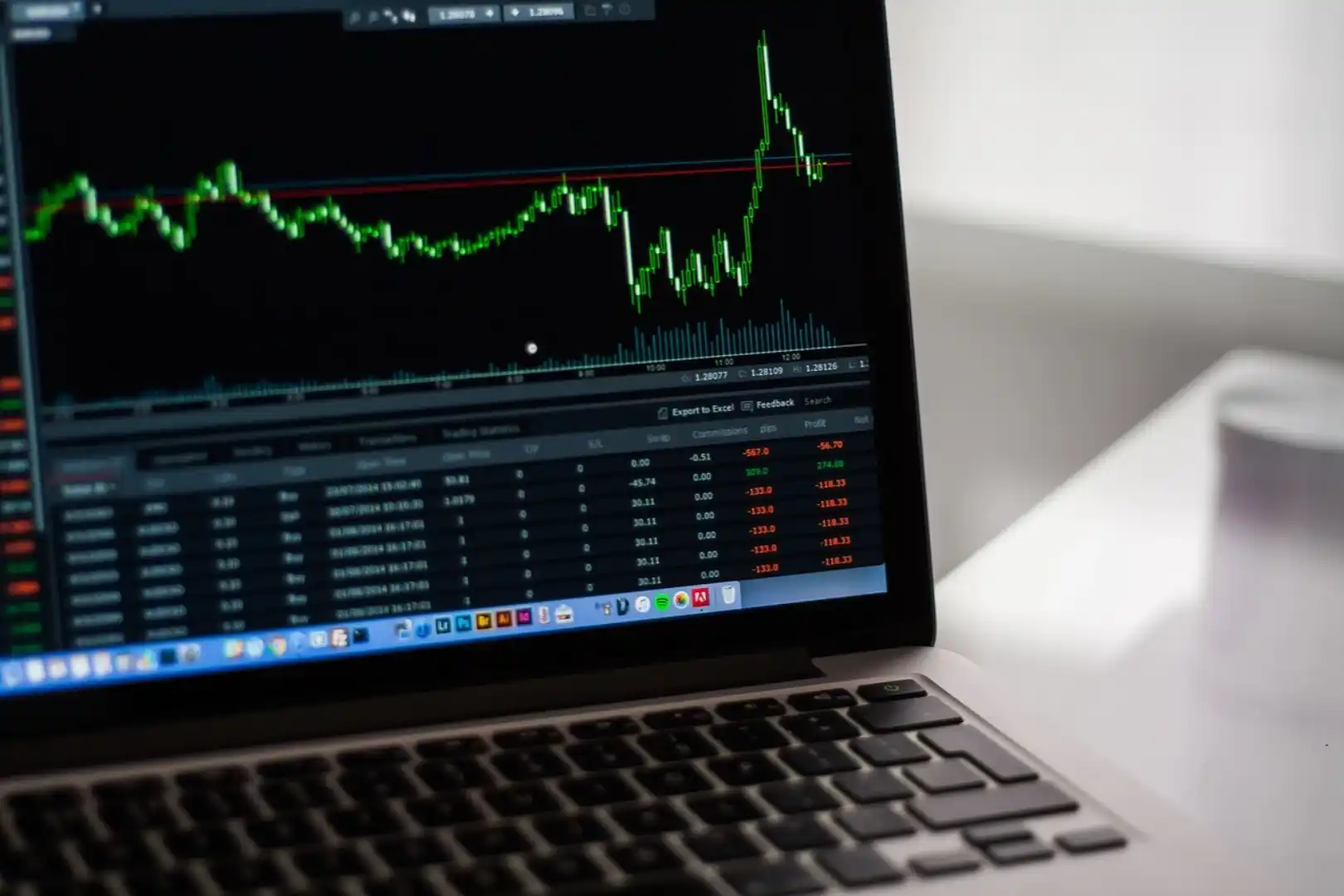
Hyperliquid, Wall Street's 24/7 Trading Convenience Store

marsbitPublished on 2026-06-04Last updated on 2026-06-04

Abstract

Hyperliquid: The 24/7 Trading "Convenience Store" for Wall Street Hyperliquid, a decentralized cryptocurrency exchange, has become a go-to platform for Wall Street traders seeking to trade around the clock, especially during traditional market closures. Founded by Jeff Yan, a former quantitative trader, after the FTX collapse, the platform emphasizes user self-custody of assets. It offers a wide range of perpetual contracts—leveraged derivatives with no expiry—on assets from Bitcoin and crude oil to the S&P 500 and even pre-IPO companies like SpaceX. A notable example involves a hedge fund trader who capitalized on geopolitical news over a weekend, securing a 243% return on oil derivatives before markets reopened. The platform, run by just 11 employees, generated approximately $800 million in revenue last year, and its native token HYPE has seen significant growth. Its rise highlights the merging of traditional finance and crypto. While U.S. users are currently restricted, recent CFTC rule changes could open access. The platform is known for its transparency, having processed $10 billion in liquidations during a market crash while competitors faltered. Regulators warn of the high risks and complexity of perpetual contracts for retail investors. Key to its appeal is a strong community culture, direct engagement with founders, and a simple interface. Despite rules against VPN use, it attracts global users with its permissionless approach. Hyperliquid plans to expand into pr...

By: Vicky Ge Huang, The Wall Street Journal

Compiled by: Luffy, Foresight News

One Saturday in February, when the phone of hedge fund commodity trader Vala Zeinali lit up with the news that President Trump had announced airstrikes against Iran, he immediately opened the Hyperliquid website.

As a decentralized crypto trading platform, Hyperliquid is open for business 24/7, all year round. Since the beginning of this year, it has become the go-to destination for short-term traders on Wall Street. During weekends when U.S. stock markets are closed, investors can open or close positions here in advance, locking in profits before the U.S. markets open.

Back in early 2026, anticipating that geopolitical conflict might erupt in the Middle East, Zeinali had deployed four-figure capital into crude oil derivatives. When the airstrike news hit and oil prices surged, he promptly closed his position on Hyperliquid, securing a hefty 243% return.

"I was particularly grateful at that moment," Zeinali said. "Typically, the oil price spike from such geopolitical news tends to retrace before the U.S. markets open on Monday. Luckily, I could exit in time, and most of my positions were successfully cashed out."

An increasing number of traditional finance and crypto traders are flocking to the platform, trading a diverse range of assets: Bitcoin, the S&P 500, crude oil, and even pre-IPO stars like SpaceX. The primary focus is on perpetual contracts, a type of derivative with no expiry date that trades around the clock and allows leveraged amplification of gains and losses.

Hyperliquid founder Jeff Yan, appearing at an event, stated that the platform's ultimate goal is to host all financial activities.

Hyperliquid was founded three years ago by Jeff Yan, a former quantitative trader at high-frequency trading firm Hudson River Trading. The FTX collapse inspired him: the crypto market desperately needed a high-performance trading system where users self-custody their assets.

"Self-custody isn't some abstract academic concept; it's a fundamental user need," Jeff Yan said in an interview. "After the FTX incident, more users should have prioritized this. The core essence is having assets in your own hands."

The company behind Hyperliquid has only 11 employees. According to Blockworks Research data, the platform and its associated blockchain generated approximately $800 million in revenue last year; the blockchain's native token, HYPE, has surged over 100% since its launch in late 2024, with a current market cap of around $16 billion.

Hyperliquid's rapid rise is a microcosm of the accelerating convergence between traditional finance and crypto markets. Perpetual contracts linked to U.S. stocks and commodities have firmly captured Wall Street's attention.

Recently, Eric Vishria, a general partner at venture capital firm Benchmark, shared an image on platform X showing a banker monitoring the price of perpetual futures linked to AI chipmaker Cerebras. Earlier this year, Trade [XYZ], a licensed partner of S&P Dow Jones Indices, launched an S&P 500 index perpetual product on Hyperliquid, which has also become one of the platform's popular contracts.

Significant capital is betting on the IPO prospects of unlisted companies. According to Hyperdash data, perpetual contracts for SpaceX have accumulated a trading volume of $280 million on Hyperliquid.

Currently, users within the U.S. cannot legally access the platform, but this may change. Last Friday, the U.S. Commodity Futures Trading Commission (CFTC) introduced a new regulatory framework allowing licensed domestic platforms to list perpetual contracts; it also approved Kalshi to launch a Bitcoin perpetual product, and U.S. Coinbase users can access its global perpetual contracts through an affiliated entity.

Perpetual contracts inherently carry high leverage and risk, magnifying both profits and losses. For example, on October 10th last year, when Trump suddenly announced 100% tariffs on China, the market crashed violently, with over $19 billion in leveraged positions liquidated across all markets. Hyperliquid alone accounted for $10 billion of that.

Jeff Yan stated that the actual industry-wide losses were far higher than $19 billion. Hyperliquid was singled out in statistics because its liquidation data is fully transparent, and its system remained fully operational during the extreme volatility, while several competing platforms suffered outages and were unable to function normally.

Benjamin Schiffrin, Director of Securities Policy at financial watchdog Better Markets, issued a warning: "Perpetual contracts are structurally complex; even seasoned finance professionals struggle to fully grasp them. The current level of risk disclosure to retail investors is severely inadequate. This combination harbors significant dangers."

Despite restrictions, traders from the U.S. and other prohibited regions still participate via VPNs. The key attraction lies in the platform's lack of mandatory identity verification, a stark contrast to the rigorous due diligence required by traditional brokerages. The platform's user agreement explicitly prohibits U.S. user participation and forbids using VPNs to circumvent restrictions.

Another major advantage retaining users is the simple and user-friendly interface, diverse trading offerings, and strong community atmosphere.

Geneva-based trader Pascal Lin joined in late 2023 and quickly became a power user. What impressed him most was the ability to give direct product feedback to founder Jeff Yan and the team via the Discord community.

"The sense of involvement is intense; it feels like you're building the product yourself," said Pascal, who also runs the proprietary trading desk at ARES Capital Management, primarily trading HYPE and crude oil perpetuals. He previously capitalized on a major oil bull run, riding prices from $67 per barrel to nearly $100.

His obsession with Hyperliquid is such that he even set up real-time price alerts on his Apple Watch, though he admits he wouldn't recommend ordinary traders to follow suit. "Waking up at any hour of the night, you can open the app with one tap to check HYPE's price."

He's not the only fervent user. The platform's unique community culture is central to its traffic. On platform X, users habitually tag Hyperliquid at the end of their posts, regardless of topic. Many users adopt the green-hoodie smiling cat Hypurr as their social avatar. Beyond the meme culture, third-party developers continuously build supporting ecosystem tools like market trackers and data dashboards.

Lawrence Wu, co-founder of Hyperdash, remarked: "I think the reason it has such a massive community is that it's trying to achieve crypto's original vision—a meritocratic, permissionless system. It's highly idealistic."

Jeff Yan stated that Hyperliquid's ultimate goal is to consolidate all financial activity. The next step for Hyperliquid is to venture into prediction markets and options trading. Its first set of contracts tracking Bitcoin prices, launched in early May, has already generated millions in trading volume.


Related Questions

QAccording to the article, why has Hyperliquid become the preferred platform for Wall Street traders in 2026?

AHyperliquid has become the preferred platform because it is a decentralized crypto trading platform that operates 24/7, 365 days a year. This allows investors to open or close positions on weekends when U.S. stock markets are closed, enabling them to lock in profits or hedge before the markets reopen.

QWhat was the key inspiration for Jeff Yan, the founder of Hyperliquid, to create the platform?

AJeff Yan was inspired to create Hyperliquid by the FTX collapse. This event highlighted the crypto market's need for a high-performance trading system where users could have self-custody of their assets, a core principle he views as a critical user demand.

QWhat significant advantage does Hyperliquid claim to have over its competitors during the market crash on October 10, 2025?

ADuring the market crash, Hyperliquid claims its system continued to function normally while several competing platforms went down. Additionally, its liquidation data is fully transparent, which is why its liquidation amount of $10 billion was distinctly reported amidst the total market liquidation of over $19 billion.

QWhat is one of the main regulatory concerns raised about perpetual contracts, as mentioned in the article?

AOne major regulatory concern is that perpetual contracts are structurally complex and difficult for even seasoned finance professionals to fully understand. The current risk disclosures for retail investors are deemed severely inadequate, creating a potentially dangerous combination.

QWhat are some key features, besides 24/7 trading, that contribute to Hyperliquid's strong user community and appeal?

AKey features contributing to its strong community include a simple and user-friendly interface, a wide variety of tradable assets, and a vibrant community culture. Users can directly interact with the founder and team on Discord, fostering a strong sense of participation. The community also actively uses memes like the 'Hypurr' cat and develops third-party tools, creating a unique ecosystem.

Related Reads

SpaceX, OpenAI, Anthropic: The Three AI Giants Racing for IPO, Which One Is Worth Betting On?

SpaceX, OpenAI, and Anthropic are poised for historic IPOs within weeks, potentially raising a combined $180 billion—a sum exceeding the entire internet bubble's fundraising. The hosts of the Limitless Podcast argue this isn't just individual company financing but an unprecedented capital concentration for AI infrastructure, driven by an insatiable need for compute, data centers, power, and chips. SpaceX's IPO is notable for reportedly changing market index rules to allow faster inclusion, potentially funneling trillions in passive retirement funds into its stock, despite its unproven space-based data center business model. In contrast, Anthropic demonstrates explosive growth, with ARR reportedly hitting $45 billion and approaching profitability, fueled by strong enterprise adoption of products like Claude Code. Google's separate $80 billion raise highlights the immense capital pressure, even for giants. The discussion acknowledges bubble risks but leans optimistic. The hosts contend the massive spending is building essential physical infrastructure for the next technological era. A key bottleneck isn't capital but the real-world limits of chip manufacturing and construction speed. As long as demand for AI compute outstrips supply, this investment cycle represents a foundational build-out rather than a purely financial bubble. All three companies are seen as foundational bets on the future, with Anthropic often cited as the most immediately compelling due to its proven revenue trajectory.

marsbit2h ago

SpaceX, OpenAI, Anthropic: The Three AI Giants Racing for IPO, Which One Is Worth Betting On?

marsbit2h ago

From 'Old Guys' to 'New Favorites': How AI Is Revaluing Old Infrastructure from Dell to Nokia?

From "Vintage Tech" to "New AI Darlings": How AI Revalues Old Infrastructure One year ago, tech giants like Dell, Nokia, Cisco, and Western Data were seen as slow-growth, low-valuation stories, far from the AI spotlight dominated by players like Nvidia. Now, these legacy tech stocks are gaining market attention, sparking debate on whether this is genuine industry revaluation or a temporary narrative. As AI moves from model parameters to real-world data centers, the market is recognizing companies with proven delivery and infrastructure capabilities. This shift marks a change in the AI investment thesis: from pure model and GPU focus to the complex systems engineering required for deployment. Companies like Dell, HPE, and Corning are being revalued not for being "sexy" AI innovators, but for their decades of accumulated expertise in supply chains, enterprise delivery, and infrastructure—assets that have become critical in the AI buildout phase. The revaluation is unfolding across three key infrastructure lines: 1. **Servers & System Integration:** Dell and HPE are emerging as crucial system integrators or "general contractors" for AI data centers, translating GPU orders into complete, deployable server racks integrated with power, cooling, and networking. 2. **Networking & Connectivity:** AI's scale demands robust high-speed connections. Corning (fiber optics), Nokia (AI-RAN, 6G), and Cisco (data center switches) are gaining importance for enabling efficient data transfer within and between AI clusters. 3. **Storage:** Beyond high-speed memory (HBM/DRAM), the AI data explosion is driving demand for high-capacity hard drives (HDDs) from companies like Western Digital and Seagate to handle training data, logs, and cold storage cost-effectively. For this revaluation to be substantive and not just a narrative, three criteria are key: 1) Concrete AI-related order and revenue growth (e.g., Dell's AI server sales), 2) Upward revisions to company financial guidance, and 3) Sustainable improvements in profit quality, not just top-line revenue spikes. In essence, AI's transition to a real construction phase is re-pricing "old assets" against "new demand." The opportunity, however, is selective. Only those legacy firms that are demonstrably integrated into the capital expenditure chains of data center and enterprise AI deployment are likely to experience a true "logic re-rating" rather than just a temporary valuation bounce.

marsbit2h ago

From 'Old Guys' to 'New Favorites': How AI Is Revaluing Old Infrastructure from Dell to Nokia?

marsbit2h ago

Trading

Spot
Futures
活动图片