From "Heaven-Sent Public Chain" to "Heaven-Forsaken Public Chain": What Led to the Collapse of Berachain?

比推Published on 2026-01-15Last updated on 2026-01-15

Abstract

Once hailed as a "top-tier public chain," Berachain has seen a dramatic decline, with its new nickname "doomed chain" reflecting its severe downturn. Launched in February 2025 with an innovative Proof-of-Liquidity (PoL) consensus mechanism aimed at boosting DeFi efficiency, the project initially attracted significant interest. Its TVL surged to $3.3 billion, with over 140,000 active addresses. However, the ecosystem quickly deteriorated. TVL has since collapsed to $180 million, and the chain’s daily revenue dropped to just $84. The sharp decline is attributed to several critical issues. The tokenomics heavily favored venture capitalists (VCs), who received 34.31% of the total token supply, while retail participants received minimal allocations. This high Fully Diluted Valuation (FDV) and low circulating supply model led to artificial price spikes followed by a steep crash—BERA fell from a high of $9 to around $0.7, a drop of over 90%. Internal challenges also mounted. The foundation cut most of its retail-focused marketing team and saw key developers, including the chief developer, leave. Community trust eroded further when a Balancer protocol vulnerability forced a network halt in November 2025. Additionally, major token unlocks are scheduled starting February 2026, with 12.16% of supply—including significant VC holdings—set to be released, likely increasing selling pressure. Despite attempts at strategic shifts, including a partnership to use BERA as a reserve asset, the...

Author: Ma He, Foresight News

Original Title: Token Price Crash, Layoffs, Developers Fleeing—Is Berachain Becoming a Heaven-Forsaken Public Chain?


On January 14, BERA experienced a sudden surge, rising from $0.5 to $0.9, a rare occurrence amid a previous 12-week consecutive decline. That day, the Berachain Foundation released its year-end summary for 2025, highlighting ecosystem expansion, technical optimization, and community engagement after the mainnet launch, but also candidly acknowledging the pressures brought by market volatility.

After the Berachain mainnet launch, both TVL and token price experienced severe fluctuations. This may not only be due to market cycles but also the combined result of internal strategies and external pressures.

TVL Drops from $3 Billion to $180 Million, Chain Revenue $84 in 24 Hours

In February 2025, Berachain officially launched its mainnet, introducing an innovative Proof of Liquidity (PoL) consensus mechanism. This mechanism aims to incentivize application and user participation through liquidity proof rather than traditional Proof of Stake, making Berachain a Layer 1 chain designed specifically for DeFi applications, intended to enhance capital efficiency and user adoption. Initially, the ecosystem expanded rapidly, attracting hundreds of dApps, including DEXs like BEX, lending protocols, and NFT markets.

TVL once soared to $3.3 billion, with over 140,000 active addresses and 9.59 million transactions. The Foundation also supported multiple ecosystem projects through the RFA (Request for Application) and RFC (Request for Comment) programs and collaborated with institutions like BitGo to provide custody services, enhancing the project's professionalism. Additionally, Berachain's community building and marketing strategies were outstanding in the early stages. Bear-themed NFT series (such as Bong Bears) attracted a large number of users, and airdrops and incentive programs further stimulated participation. These initiatives helped Berachain become a hotspot in the DeFi space in the first half of 2025, ranking as the sixth-largest DeFi chain.
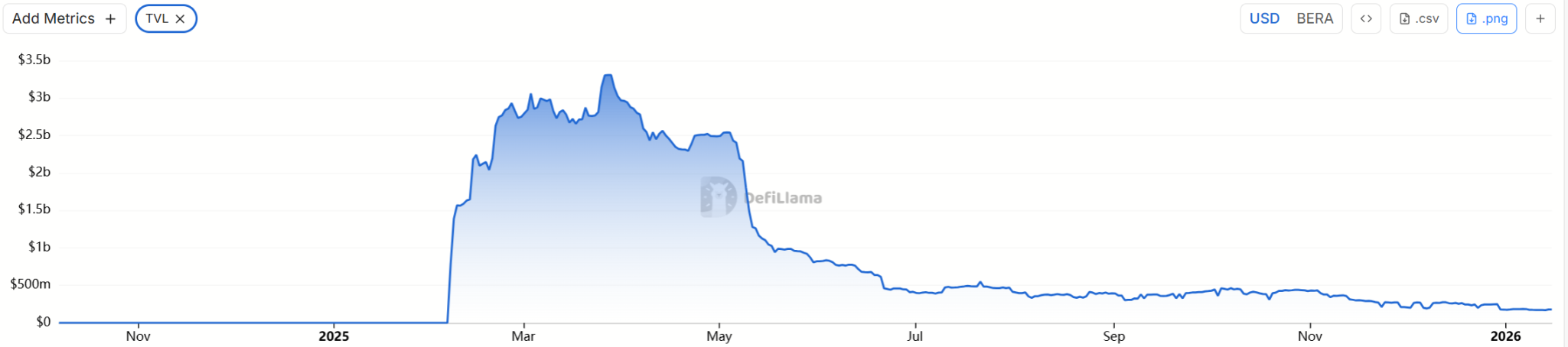
However, as the token price continued to decline, data from DefiLlama shows that its TVL has fallen to $180 million, with 24-hour chain revenue at $84, and the total stablecoin supply on the chain is $153.5 million.

Retail First? Majority of Tokens Allocated to VCs, Major Unlock in February

In its year-end update, the Berachain Foundation admitted that the "retail first" strategy in the crypto market had generally underperformed, leading to a reallocation of resources. This directly triggered a series of issues. First, layoffs and team changes. As part of the strategic adjustment, the Berachain Foundation cut most of its retail marketing team, shifting focus to foundational development. Berachain's lead developer, Alberto, is also leaving to co-found a Web2 company with former banking colleagues.

The Foundation emphasized that the departure was amicable, but this undoubtedly weakens the project's core technical strength. In the community, some developers have already moved to other chains like Monad, further exacerbating the talent drain.

Perhaps the "retail first" strategy promoted by the Berachain Foundation never truly took off.

The project initially emphasized community-driven approaches, but in practice, the incentive mechanisms failed to consistently attract users, and token allocation left retail investors out in the cold.

Although the PoL mechanism is innovative, its complexity (such as the multi-token model, including BERA and BGT) deterred users, leading to a sharp decline in network activity. In November 2025, the project paused the network due to a Balancer protocol vulnerability, fortunately without affecting user funds.

The BERA token price has fallen from a high of $9 to the current $0.7, a drop of over 10 times in just one year for the once so-called "heaven-sent" public chain token.
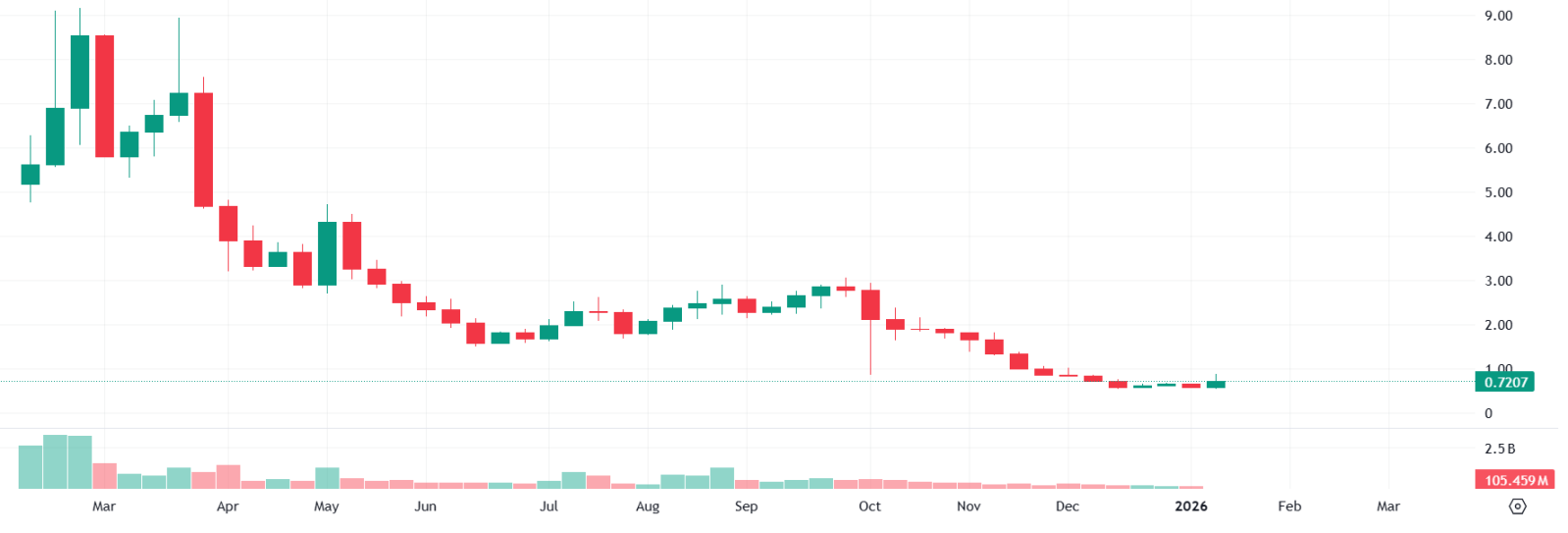
This collapse stems from a low circulation and high FDV model, leading to artificially inflated prices followed by a rapid crash, and these issues are rooted in Berachain's token distribution mechanism. Early contributors received 16.82% of the total supply, while private sale investors received a staggering 34.31% of the token share, typical of a VC coin. Additionally, NFT holders could receive tens of millions of dollars in tokens, while testnet users received only $60 in airdrops, sparking controversy over "wealth disparity" and marginalizing some loyal users.
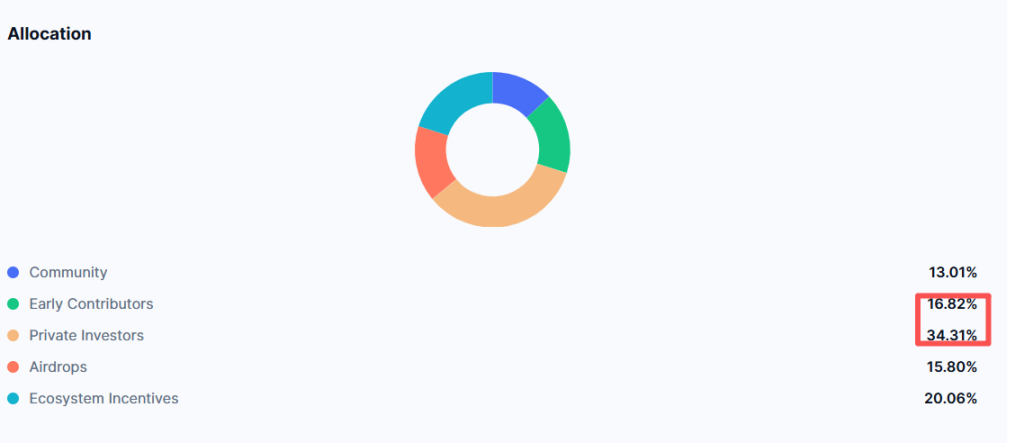
This runs counter to the "retail first" slogan; the project is essentially a VC-dominated low-circulation, high-FDV model: early investors entered at $0.82, achieving 10-15x returns, while retail investors bear the crash. Foundation founder Smokey admitted that if done over, he would not sell so many tokens to VCs and has repurchased some to reduce dilution. In October 2025, the Berachain Foundation partnered with Greenlane Holdings to launch BeraStrategy, making BERA a reserve asset, but this failed to reverse the token's decline.

Furthermore, VCs like Brevan Howard's Nova fund hold refund rights, allowing them to request a full refund of $25 million before February 2026, further highlighting Berachain's tilt toward VCs.

Community dissatisfaction is high, with many users calling it the "ultimate fraudulent L1."
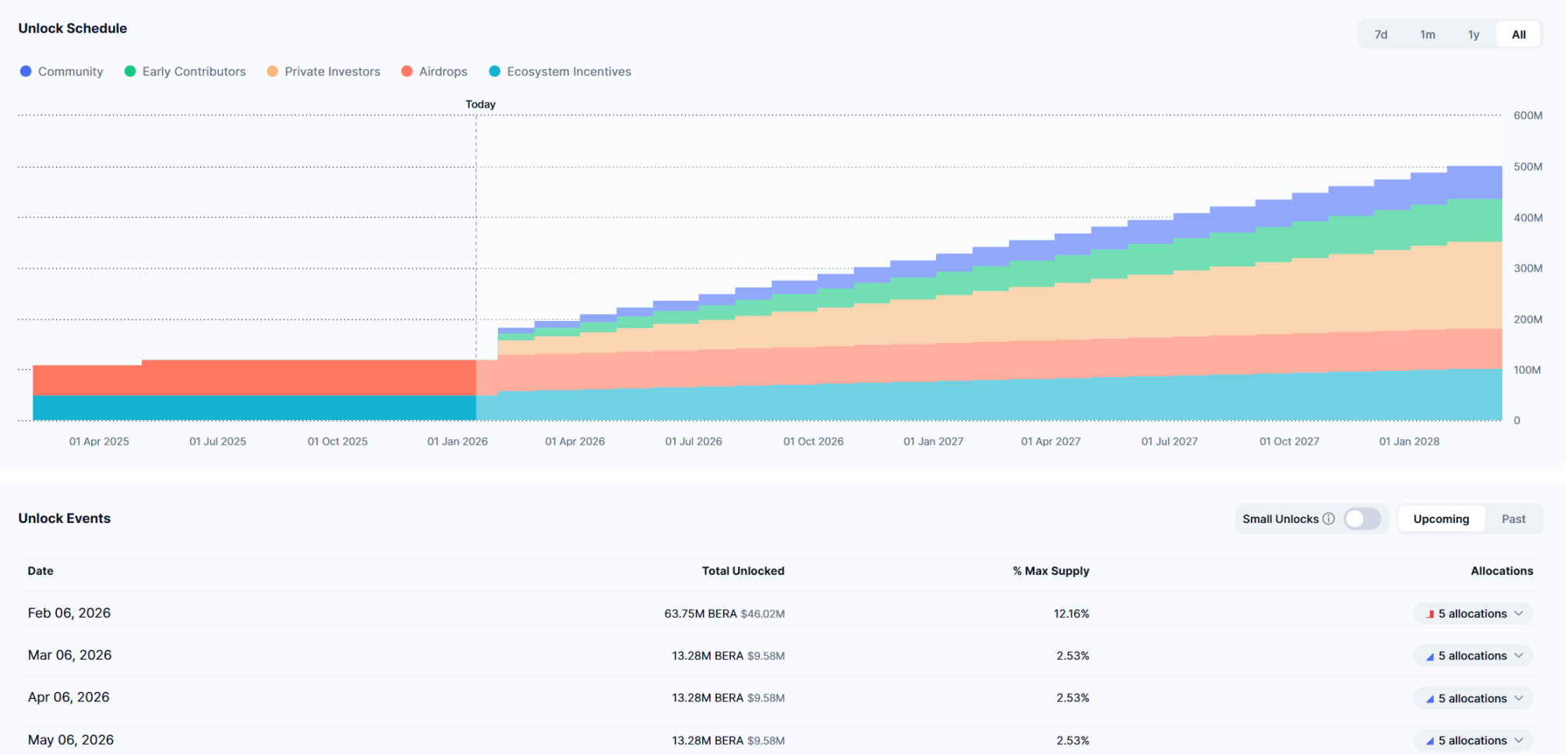
On February 6 this year, Berachain will unlock 63.75 million BERA, approximately 12.16% of the total supply. Of the unlocked portion, private sale investors account for 28.58 million. Starting from March this year, BERA will unlock 2.53% of the total supply each month. Given the current liquidity drought, the continuous large unlocks this year may trigger significant selling pressure.


Twitter:https://twitter.com/BitpushNewsCN

BitPush TG Discussion Group:https://t.me/BitPushCommunity

BitPush TG Subscription: https://t.me/bitpush

Original Link:https://www.bitpush.news/articles/7603193

Related Questions

QWhat were the main factors that led to the collapse of Berachain's token price and TVL?

AThe collapse was driven by a combination of internal strategy flaws and external market pressures. Key factors included the project's high Fully Diluted Valuation (FDV) with low initial circulation, significant token allocations to venture capitalists (VCs) rather than retail users, the complexity of its Proof-of-Liquidity (PoL) mechanism, loss of key developers, and upcoming large token unlocks that created selling pressure.

QHow did Berachain's token distribution model contribute to its problems?

ABerachain's token distribution was heavily skewed towards VCs and early contributors, with 34.31% allocated to private sale investors and 16.82% to early contributors. This left retail users with minimal allocations, contradicting the project's 'retail-first' marketing. The low circulation and high FDV model artificially inflated the price initially, leading to a sharp decline when early investors began selling.

QWhat was the significance of the upcoming token unlocks in February for Berachain?

AOn February 6, Berachain was scheduled to unlock 63.75 million BERA tokens, representing 12.16% of the total supply. This included 28.58 million tokens for private sale investors. Given the already low liquidity and declining price, these unlocks were expected to create substantial selling pressure, further depressing the token value.

QWhy did Berachain's innovative Proof-of-Liquidity (PoL) consensus mechanism fail to sustain user engagement?

AThe PoL mechanism, while innovative, was complex and involved a multi-token system (BERA and BGT) that confused users. This complexity reduced network activity and participation, as users found it difficult to engage with the ecosystem effectively, leading to a decline in TVL and overall chain activity.

QWhat internal challenges did Berachain face regarding its development team and community?

ABerachain experienced significant internal challenges, including the departure of key developers such as Chief Developer Alberto, who left to start a Web2 company. The foundation also cut most of its retail marketing team, shifting focus to core development. Additionally, community developers migrated to other chains like Monad, exacerbating talent loss and reducing project momentum.

Related Reads

Will the Fed Definitely Raise Interest Rates in September? How Will Crypto and U.S. Stocks Withstand the Pressure?

The market's expectation for a September Fed rate hike surged dramatically in early August, jumping from under 50% to over 80% within a week. This shift followed a contentious July FOMC meeting, where a 9-3 vote to hold rates revealed growing dissent from hawkish members advocating for an immediate hike to combat persistent inflation. The primary catalyst for this repricing is rising oil prices, driven by renewed geopolitical tensions around the Strait of Hormuz, which threaten global supply. Energy costs directly influence inflation metrics, making the upcoming July CPI report (due August 12th) a critical data point. If it shows inflation reaccelerating, the probability of a September hike will solidify. For Bitcoin and crypto assets, this is typically bearish news. Bitcoin continues to behave as a high-beta, liquidity-sensitive risk asset. A rate hike raises the opportunity cost of holding non-yielding assets and could drive capital toward money markets, pressuring crypto prices in the short term. However, historical patterns suggest that if a hike is perceived as the end of a tightening cycle rather than the start, any negative price impact may be brief. U.S. stocks, particularly crypto-linked equities like Coinbase and growth-oriented tech stocks, are also vulnerable. Higher rates increase discount rates in valuation models, putting pressure on high-multiple companies. This coincides with a pivotal tech earnings season where investor focus has shifted from massive AI capital expenditure to tangible revenue and cash flow generation. Companies with negative cash flow and weak growth narratives could face heightened volatility if borrowing costs rise in September. In summary, a September Fed hike has evolved into a mainstream market scenario. Key factors to watch are oil prices, the July CPI report, and Fed communications, which will determine the final decision and its impact on volatile crypto and equity markets.

marsbit2m ago

Will the Fed Definitely Raise Interest Rates in September? How Will Crypto and U.S. Stocks Withstand the Pressure?

marsbit2m ago

A 'Overlooked' Market Event: Joint US-Japan-South Korea Intervention, Rare US Treasury Involvement, and Bessent's Quiet 'Market Rescue'?

Summary: The United States, Japan, and South Korea executed their largest coordinated foreign exchange intervention in nearly 30 years. The action targeted depreciation pressure on the Japanese yen and South Korean won. This move is seen as a significant effort by the US to stabilize the financial markets of its key allies and prevent the spillover of risks. Key details: * Japan reportedly intervened on July 30 using approximately 8.45 trillion yen (about $52.8 billion). South Korean authorities also intervened that day, selling dollars to support the won. * Notably, the US Treasury Department intervened directly in yen markets for the first time in roughly 30 years. The New York Fed, reportedly acting on behalf of the Treasury, sold euros to buy yen via Goldman Sachs and Morgan Stanley on July 31. Analysts view the use of the euro-yen pair as a way to alleviate yen pressure without adding selling pressure to the US dollar. * Prior to the action, the New York Fed conducted "rate checks" on both USD/JPY and EUR/JPY, a newer signaling tool that falls between verbal and physical intervention. The intervention is interpreted as going beyond traditional currency stabilization. Analysts, such as Michael Hartnett of Bank of America, suggest it resembles a "Price Keeping Operation" for the AI era. The core US objectives are perceived to be: 1. Preventing rapid yen depreciation from triggering a sharp rise in Japanese government bond yields. 2. Containing financial stress from spreading across Asian markets like South Korea and Japan. 3. Reducing the risk of disorderly capital flows impacting the US bond market. This coordinated action underscores the importance of Japan and South Korea as critical partners in the US semiconductor and AI supply chain. Stabilizing their financial markets is seen as vital to mitigating risks to the broader tech industry and the US market itself. The intervention coincides with market pressures, including the KOSDAQ index hitting a low since October 2022. While seen as a move to control volatility, some analysts caution it may not fundamentally reverse existing market trends.

marsbit6m ago

A 'Overlooked' Market Event: Joint US-Japan-South Korea Intervention, Rare US Treasury Involvement, and Bessent's Quiet 'Market Rescue'?

marsbit6m ago

Will the Federal Reserve Definitely Raise Interest Rates in September? How Will Cryptocurrencies and US Stocks Bear the Pressure?

In early August 2024, market expectations for a September Federal Reserve rate hike surged dramatically, from below 50% to over 80%, driven by renewed inflation concerns. This shift followed a contentious July FOMC meeting where a 9-3 vote to hold rates revealed a growing hawkish faction advocating for an immediate hike, citing prolonged above-target inflation. The key catalyst is escalating conflict near the Strait of Hormuz, which has pushed oil prices up approximately 20% in July, threatening to reignite inflation. The next critical data point is the July CPI report on August 12th; a hot reading could solidify hike expectations. For crypto assets, particularly Bitcoin, this represents near-term pressure. Bitcoin continues to exhibit high-beta, risk-on characteristics, making it sensitive to tightening liquidity and higher opportunity costs. However, historical precedent suggests that if a hike is perceived as the cycle's end rather than its start, the negative impact may be brief, with markets quickly pivoting to anticipate future rate cuts. U.S. stocks, especially crypto-linked equities like Coinbase and high-valuation tech stocks, face amplified volatility. Higher rates increase discount rates in valuation models, pressuring growth stocks. This coincides with a pivotal tech earnings season where investor focus has shifted from massive AI capital expenditures to demonstrable revenue and cash flow generation. Companies with negative cash flows and weak growth narratives could see severe pressure if a September hike materializes, as financing costs would rise. Key indicators to watch include oil prices, upcoming inflation data, and Fed commentary at events like the Jackson Hole symposium.

Odaily星球日报6m ago

Will the Federal Reserve Definitely Raise Interest Rates in September? How Will Cryptocurrencies and US Stocks Bear the Pressure?

Odaily星球日报6m ago

Trading

Spot
活动图片