From Cheap Customer Service to Billion-Dollar Leaks: The Dual Faces of India's Outsourcing Industry

比推Published on 2026-01-06Last updated on 2026-01-06

Abstract

An investigation into India's massive BPO (Business Process Outsourcing) industry reveals a dual reality of cost efficiency and severe security risks, highlighted by a major data breach at Coinbase. In December 2025, Coinbase’s CEO announced the arrest of a former customer support employee in Hyderabad, India, linked to a $400 million data leak. The employee, working for outsourcing firm TaskUs, allegedly stole and sold user data for substantial personal gain—earning up to 200 times their daily wage per photo of sensitive information. This incident is not isolated. Companies like Amazon and Microsoft have also experienced similar breaches due to insider threats from underpaid Indian外包 employees, who often earn as little as $300–500 per month. Despite these risks, India remains the global leader in BPO, with its market valued at around $50 billion in 2024 and projected to grow significantly. The country’s advantages include low labour costs, English proficiency, and time-zone benefits for Western companies. However, the industry is evolving. Many multinationals are now establishing Global Capability Centers (GCCs) in India for higher-value work like R&D and AI, leveraging local talent for innovation at lower costs. Meanwhile, repetitive low-end tasks face growing competition from automation and AI. While companies like Coinbase continue to rely on Indian outsourcing for economic reasons, the recurring security lapses underscore ongoing management challenges and the human cos...

Author: Cookie

Original Title: India, the Outsourcing Factory of the Crypto World


On December 27, 2025, Coinbase CEO Brian Armstrong announced on Twitter that the Hyderabad police in India had arrested a former Coinbase customer service employee and were continuing to pursue more individuals involved in the case.

This is related to a data breach case with estimated losses of up to $400 million. On June 2 of last year, according to a Reuters report, six informed sources revealed to Reuters that Coinbase had known as early as January of last year about a user data breach at TaskUs, the company handling its customer service outsourcing. An employee at the customer service center set up by TaskUs in Indore, India, was found using their personal phone to take pictures of their work computer and was suspected of selling Coinbase data to hackers along with an accomplice. The hackers used this information to impersonate Coinbase employees, defraud victims of their cryptocurrency, and demand a $20 million ransom for the user data.

However, after such a serious security incident, although Coinbase has made progress in apprehending those involved, there has been no clear public information indicating that they will shift to hiring employees from other countries and regions or from the United States. This trend has sparked much dissatisfaction on X, with many believing that outsourcing services from India are unreliable and that Coinbase lacks a serious attitude toward user data security.

Although TaskUs is not an Indian company, the problem did indeed occur at TaskUs' Indian branch. And companies suffering losses due to Indian outsourcing staff actively engaging in malicious activities for profit are not limited to Coinbase.

One of the most famous "insider" cases in the e-commerce field involved Amazon outsourcing its "Seller Support" and "Anti-Fraud Review" services to third-party service providers in Hyderabad and Bangalore, India. Some Indian outsourcing employees were bribed by third-party sellers through channels like Telegram, receiving cash rewards ranging from a few hundred to a few thousand dollars for each negative review deleted, suspended account reinstated, or internal sales data of competitors leaked. The monthly salary of these outsourcing employees was only about $300 - $500.

Microsoft also outsourced its basic technical support services to third-party providers in India. Similarly, outsourcing employees, dissatisfied with their meager salaries, sold information to fraud gangs and even actively guided customers to click on phishing websites or purchase fake services during work hours.

The model of entrusting external service providers with customer service, customer support, auditing, and other business processes is called "BPO (Business Process Outsourcing)." To reduce costs, improve efficiency, and focus on core business, these highly repetitive, non-creative business processes are handed over to third parties.

Despite so many problems, India remains the king of the global outsourcing industry. A research report from Astute Analytica shows that in 2024, the size of India's BPO market was approximately $50 billion and is expected to reach $139.35 billion by 2033. For business processes resolved by voice, Indians handle 35% of the entire industry. For non-voice (email, online chat, etc.) business processes, Indians handle 45% of the entire industry.

The massive scale comes with chaos caused by structural problems. It can solve problems but also creates them. Indian outsourcing—what is the real situation inside?

Cheap is Really Fragrant, Simply Irresistible

Everyone says that one of the advantages of Indian outsourcing is definitely "cheap." This is correct, and it even explains why Coinbase suffered a data breach with losses of up to $400 million.

When TaskUs finally discovered the data breach, the mastermind Ashita Mishra's phone contained data for over 10,000 Coinbase users. This employee and other accomplices could receive a reward of $200 for each photo they took of user account data. Ashita Mishra sometimes took up to 200 photos a day.

According to data from 6figr.com, the salary TaskUs offers for customer support positions is an annual 330,000 - 400,000 rupees, equivalent to approximately $3,700 - $4,440 USD. Calculated as a daily wage, the daily salary is no more than $15.

This means that Ashita Mishra's daily "photo-taking" income could be more than 2,600 times her daily salary. This is why the hackers chose to bribe TaskUs' outsourcing employees and why the bribery was successful.

In comparison, the expected salary level Coinbase offers on web3.career for a "Customer Support Agent" position is $69,000 - $77,000.
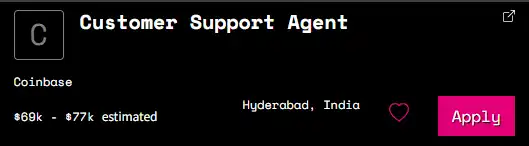
The huge salary gap between "full-time employees" and "outsourced staff," coupled with the lack of stricter controls on data access permissions for outsourced employees, is the reason for Coinbase's data security incident.

As long as the labor costs saved by outsourcing are greater than the money paid for accident compensation, these companies will continue. We cannot simply say they are persistently short-sighted, choosing to sacrifice long-term interests. After the incidents, these companies have taken measures to prevent similar accidents from happening again. For example, the direct hiring of Indian customer service positions by Coinbase we saw earlier was a change from outsourcing to direct hiring after the incident. Amazon's seller support centers now implement extreme physical controls; employees must hand in their phones and smartwatches before entering the office area, and paper and pens are strictly prohibited on desks.

"Cheap" is certainly a huge advantage, but if we switch our perspective to these ordinary outsourcing employees doing the specific execution, "cheap" actually stems from the fact that outsourcing itself is a form of labor arbitrage. The process of transferring work or production to locations with lower labor costs for arbitrage inherently involves layers of "subcontracting." An outsourcing contract from a large enterprise can sometimes be subcontracted 2-4 more times, with commissions, management fees, and profits deducted each time.

Although there is no public data to tell us exactly how much Coinbase paid TaskUs, resulting in TaskUs' Indian employees receiving a daily salary of only about $15. However, according to a research report on the outsourcing market by Astute Analytica last year, in Tier 1 cities in India, the monthly salary offered for each position is approximately 15,000 - 20,000 rupees (about $165 - $220 USD), and it's lower in Tier 2 cities, 8,000 - 12,000 rupees (about $88 - $132 USD). What is the billing standard given by the outsourcing company as a service provider? $12 to $15 per hour for voice processes, and $18 to $22 per hour for non-voice processes.
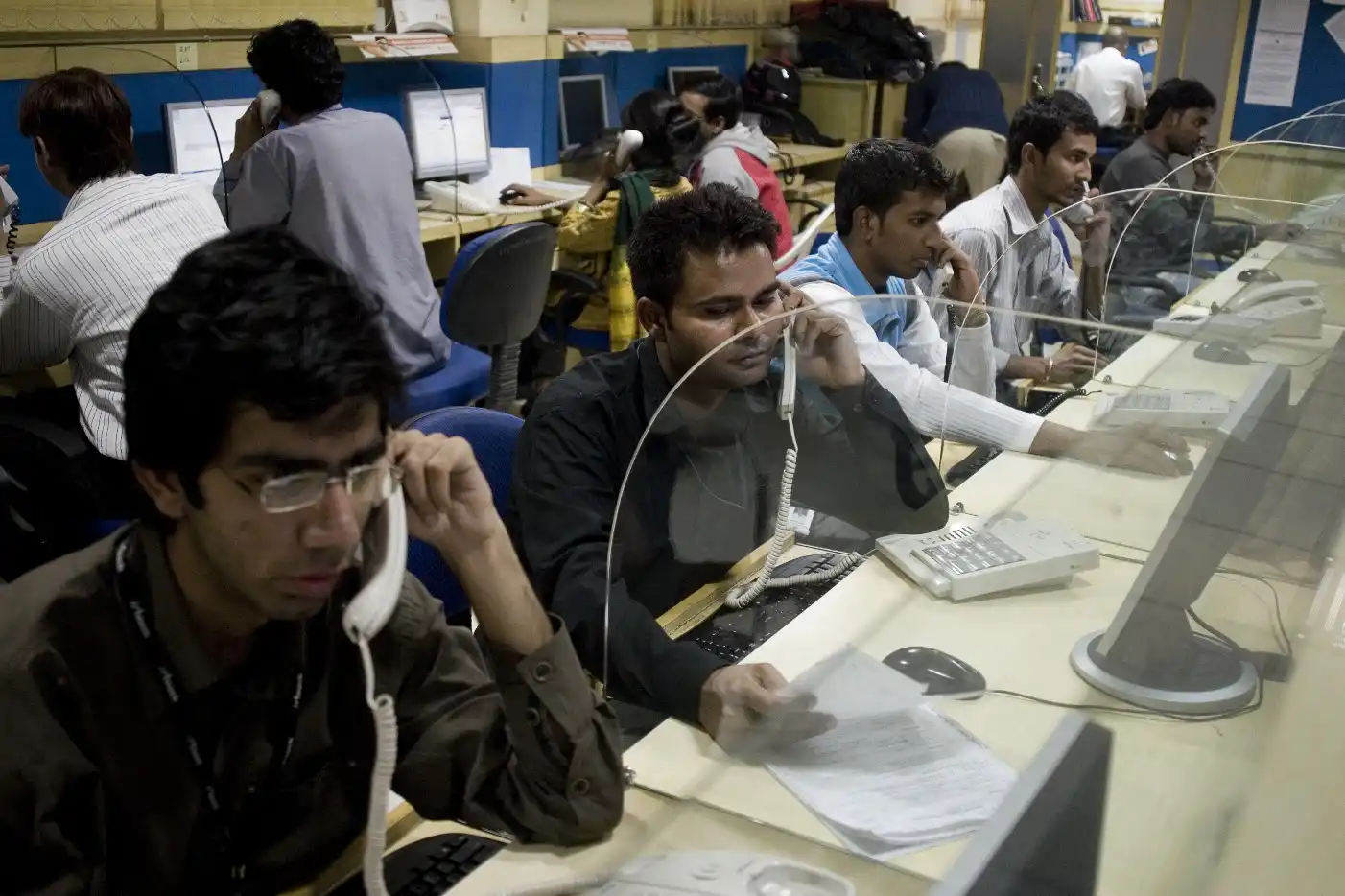
This is roughly equivalent to the outsourcing company paying you, the outsourced worker, the value of just 1 day's salary for working 24 hours a day non-stop for a full month. Because this job is so grueling, employee turnover is extremely high, with a rate of up to 30%, and this is an optimized level down from 50%.

You might think, it's just answering phones and being a客服, what higher salary could you want? In reality, the global outsourcing that India undertakes poses another level of考验 for customer service. In 2024, the United States contributed 55 - 60% of the revenue to India's outsourcing industry. Considering the approximately 12-hour time difference between India and the US, it basically means working in an environment and life schedule that never sees daylight, stationed in front of the phone or computer screen. As an Indian客服, communicating with users from Europe and America requires not only mastering business knowledge but also minimizing one's accent for the other party to understand, and being familiar with the other party's dialects, word usage habits, and culture to communicate more efficiently.

Cheap is indeed irresistibly fragrant, but it is also built on the sweat and blood of the底层 Indians.

The Counterattack of "Cheap Labor": The Path of Indian Outsourcing

In the early 1990s, the average salary in India was less than 1/10th of that in the United States. Not only that, India had a large workforce with higher education who could work in English. American managers discovered that instead of finding expensive programmers locally, it was better to send tasks to India, where there were almost no obstacles in document exchange and phone conferences.

Not only was there no "language barrier" in communication, but the approximately 12-hour time difference between India and the US also meant that when US company finished work and passed the task to India, Indian employees started working; by the next day when the US started work, the task was already completed. This "sun-never-sets" development model greatly shortened project cycles.

How does that sound? Quite like the爽感 of those idle mobile games with "offline auto-leveling," right? This is also known as the "time zone dividend."

As the saying goes, "right time, right place, right people." The emergence of the "Y2K" crisis around the turn of the century over 20 years ago became the "right time" for India's IT industry. Faced with the massive and tedious information and data storage problems caused by "Y2K," European and American companies, due to IT talent shortages and high labor costs, turned to subcontracting their company's data processing work to Indian companies with cost and language advantages. Indian companies, in the process of solving "Y2K" for European and American companies, accumulated experience and customer channels, thus making a name for themselves and putting the industry on the fast track.

To shed the label of "cheap labor," Indians also thought of a universally applicable good solution—certification. In the late 1990s, nearly 75% of the companies globally that obtained CMM Level 5 (the highest level of software capability maturity) certification were Indian companies. With certificates in hand, it meant an image of specialization and process orientation was established. Indians realized this nearly 30 years ago.

As they progressed, the Indian government also found this to be a good industry. The IT industry doesn't require physical bridge or road construction; with internet cables and talent in place, it can snowball. Therefore, India established a large number of Software Technology Parks (STPI) very early on, providing satellite links (solving India's poor infrastructure and power/network outage problems at the time) and tax exemptions. India's top universities also continued to cultivate excellent talent for the industry.

Thus, India gradually摸索出了 the complete formula for conquering the global outsourcing market—cheap English-speaking talent + seizing historical opportunities (Y2K) + certification to establish professional process assurance + government support + continuous talent cultivation. With this formula, they succeeded.

But now, this formula is also beginning to分化.

High-End "Offshore Outsourcing," Low-End "Struggling"

Indians, of course, are not content with only doing low-end outsourcing of repetitive work; they are still developing. In recent years, more and more well-known companies have established GCCs (Global Capability Centers) in India. Currently, India has over 1,900 GCCs, with about 35% of Fortune 500 companies having this kind of "wholly-owned direct" technology and R&D base in India.

These companies include giants from various industries, such as JPMorgan Chase, Goldman Sachs, HSBC, Wells Fargo in finance; Microsoft, Amazon, Google in technology; Walmart, Target in retail.

These GCCs no longer handle repetitive work like customer service or basic code maintenance but are directly subordinate to the parent company, responsible for global, core business. The R&D and innovation activities of Indian GCCs can already contribute over even 50% of the industry's revenue, and about 45% of Indian GCCs have begun managing end-to-end global product lifecycles, from conceptual design to final release, all completed in India. This means Indians are not only cheap and fragrant but also确实有东西 (really have something).

GCCs are like these global leading companies leaving their home countries and conducting "offshore outsourcing" in India.

It's hard to imagine that even Japanese companies have significantly begun to flee their home country to build GCCs in India over the past year. Honda and Hitachi expanded their R&D scale in India in 2025. Their reason was that digital transformation in Japan is too slow, there is a talent gap, and in India, they can obtain the most cutting-edge AI and Software Defined Vehicle (SDV) technology at 1/3 of the cost in Japan.

In India, if you want to recruit 500 engineers mastering specific cloud technologies within a month, the recruitment market in Bangalore or Hyderabad can respond quickly. India currently possesses about 20% of the world's digital skills talent. In generative AI, cybersecurity, and cloud architecture, the scale of its talent pool is难以比拟 (hard to match) by other regions (such as Eastern Europe or Latin America).

And Indian university graduates also love going to these GCCs—no need to leave their hometowns, yet enjoying the same福利待遇 (benefits and treatment) and career development paths as employees at the headquarters of these global large enterprises. The flywheel is running again.

As for repetitive, non-creative outsourcing work like customer service and auditing, although there are some competitors like Vietnam and the Philippines that can challenge India starting from "cheap," the most threatening opponent for India is still the rapidly evolving AI technology.

Conclusion

Therefore, Coinbase's attitude is not strange; it's a pragmatic business decision, but the occurrence of the accident also exposed major loopholes in previous internal management.

Loopholes? No problem. I, Coinbase, will arrest who needs arresting, fix what needs fixing, and then we continue with business as usual.

The reason why Indian outsourcing can "defeat the world无敌手 (be unmatched)" is also very clear by now—places cheaper than it don't have as much talent, places with better English than it aren't as cheap, places cheaper than it don't have as much talent...

But this advantage that satisfies large companies and allows them to chat and laugh freely, is it not also the fatigue and心酸 (heartache) of the employees?


Twitter:https://twitter.com/BitpushNewsCN

Bitpush TG Discussion Group:https://t.me/BitPushCommunity

Bitpush TG Subscription: https://t.me/bitpush

Original link:https://www.bitpush.news/articles/7600484

Related Questions

QWhat was the estimated financial loss in the Coinbase data breach case involving an Indian outsourcing employee?

AThe estimated loss was up to $400 million.

QWhich company was the outsourcing provider for Coinbase's customer support when the data breach occurred?

ATaskUs was the outsourcing provider for Coinbase's customer support.

QWhat is the primary reason companies like Coinbase continue to use Indian outsourcing despite security risks?

AThe primary reason is cost savings, as Indian outsourcing offers significantly cheaper labor compared to hiring locally in countries like the US.

QWhat does BPO stand for, and what type of business processes does it typically involve?

ABPO stands for Business Process Outsourcing, and it typically involves repetitive, non-creative business processes such as customer service, customer support, and auditing.

QWhat is a GCC in the context of Indian outsourcing, and how does it differ from traditional BPO?

AGCC stands for Global Capability Center, which is a fully-owned subsidiary of a multinational company in India that handles core, global business functions like R&D and innovation, unlike traditional BPO which focuses on repetitive tasks.

Related Reads

20 Billion Valuation, Alibaba and Tencent Competing to Invest, Whose Money Will Liang Wenfeng Take?

DeepSeek, an AI startup founded by Liang Wenfeng, is reportedly in talks with Alibaba and Tencent for an external funding round that could value the company at over $20 billion. This marks a significant shift, as DeepSeek had previously relied solely on funding from its parent company,幻方量化 (Huanfang Quantitative), and had resisted external investment. The potential valuation would place DeepSeek among the top-tier AI model companies in China, comparable to competitors like MoonDark (valued at ~$18 billion) and ahead of recently listed firms like MiniMax and Zhipu. The funding—which could range from $600 million (for a 3% stake) to $2 billion (for 10%)—is seen as a move to secure resources for model development, retain talent, and support infrastructure needs, particularly as competition in inference models and AI agents intensifies. Both Alibaba and Tencent are eager to invest, not only for financial returns but also to integrate DeepSeek into their broader AI ecosystems. However, DeepSeek’s leadership is cautious about maintaining independence and may prefer financial investors over strategic ones to avoid being locked into a specific tech ecosystem. Alternative options, such as state-backed funds, offer longer-term capital and policy support but may come with slower decision-making and potential constraints on global expansion. With competing AI firms accelerating their IPO plans, DeepSeek’s window for securing optimal terms may be narrowing. The final decision will reflect a trade-off between capital, resources, and strategic independence.

marsbit19m ago

20 Billion Valuation, Alibaba and Tencent Competing to Invest, Whose Money Will Liang Wenfeng Take?

marsbit19m ago

After Losing 97% of Its Market Value, iQiyi Attempts to Use AI to Forcefully Extend Its Lifespan

After losing 97% of its market value since its 2018 peak, iQiyi is aggressively pivoting to AI in a desperate attempt to survive. At its 2026 World Conference, CEO Gong Yu announced an "AI Artist Library" with over 100 virtual performers and a new AIGC platform, "NaDou Pro," promising faster production and lower costs. This shift comes as the company faces severe financial distress: its market cap sits near delisting thresholds at $1.36 billion, with significant losses, declining membership revenue, and depleted cash flow. The AI strategy has sparked controversy. Top actors have issued legal threats against unauthorized digital replicas, while in Hengdian, over 134,000 background actors are seeing their already scarce job opportunities vanish as AI replaces them for background roles. iQiyi's move represents a fundamental shift from being a high-cost content buyer to a landlord" to becoming a "platform capitalist" that transfers production risk to creators. This contrasts with competitors like Douyin (TikTok's Chinese counterpart), which is investing heavily in *real* actor-led short dramas, betting that authentic human connection retains users better than AI-generated content. The article draws a parallel to the 1920s transition to "talkies," which made cinema musicians obsolete but ultimately enriched the art form. In contrast, iQiyi's AI drive is framed not as an artistic evolution but as a cost-cutting measure that could degrade storytelling, replacing genuine human emotion with algorithmically calculated stimulation and potentially numbing audiences' capacity for empathy. The core question remains: can a company focused solely on financial survival preserve the art of storytelling?

marsbit22m ago

After Losing 97% of Its Market Value, iQiyi Attempts to Use AI to Forcefully Extend Its Lifespan

marsbit22m ago

Only a 50% Chance of Passing This Year, Can the CLARITY Bill Succeed Before the Midterm Elections?

The CLARITY Act, which passed the House in July 2025 with strong bipartisan support (294-134), faces a critical juncture in the Senate. The Senate Banking Committee is expected to hold a markup soon, but key issues remain unresolved, including stablecoin yield provisions, DeFi regulations, and securing full Republican committee support. Other contentious points involve the Blockchain Regulatory Certainty Act (BRCA), ethics amendments for government officials, and SEC-related matters. The legislative calendar is tight, with limited time before the midterm elections. If the committee markup is delayed beyond mid-May, the chances of passage in 2026 drop significantly. Senator Cynthia Lummis has warned that failure this year could delay comprehensive crypto market structure legislation until 2030 or later. Galaxy estimates the probability of the CLARITY Act becoming law in 2026 is only about 50%. The bill provides crucial regulatory clarity by defining jurisdictional boundaries between the SEC and CFTC, establishing a path for decentralization, and bringing digital commodity intermediaries under federal regulation. Its passage is seen as vital before potential power shifts in the next Congress, which could bring less favorable leadership to key committees. The timeline is compressed, and the bill must compete for floor time with other priorities like Iran authorization and DHS appropriations. Key hurdles include finalizing the stablecoin yield compromise text, addressing law enforcement concerns about BRCA, and navigating political dynamics around SEC nominations. The outcome of the Banking Committee markup and the level of bipartisan support will be critical indicators of its future success.

marsbit1h ago

Only a 50% Chance of Passing This Year, Can the CLARITY Bill Succeed Before the Midterm Elections?

marsbit1h ago

Trading

Spot
Futures

Hot Articles

What is SONIC

Sonic: Pioneering the Future of Gaming in Web3 Introduction to Sonic In the ever-evolving landscape of Web3, the gaming industry stands out as one of the most dynamic and promising sectors. At the forefront of this revolution is Sonic, a project designed to amplify the gaming ecosystem on the Solana blockchain. Leveraging cutting-edge technology, Sonic aims to deliver an unparalleled gaming experience by efficiently processing millions of requests per second, ensuring that players enjoy seamless gameplay while maintaining low transaction costs. This article delves into the intricate details of Sonic, exploring its creators, funding sources, operational mechanics, and the timeline of significant events that have shaped its journey. What is Sonic? Sonic is an innovative layer-2 network that operates atop the Solana blockchain, specifically tailored to enhance the existing Solana gaming ecosystem. It accomplishes this through a customised, VM-agnostic game engine paired with a HyperGrid interpreter, facilitating sovereign game economies that roll up back to the Solana platform. The primary goals of Sonic include: Enhanced Gaming Experiences: Sonic is committed to offering lightning-fast on-chain gameplay, allowing players and developers to engage with games at previously unattainable speeds. Atomic Interoperability: This feature enables transactions to be executed within Sonic without the need to redeploy Solana programmes and accounts. This makes the process more efficient and directly benefits from Solana Layer1 services and liquidity. Seamless Deployment: Sonic allows developers to write for Ethereum Virtual Machine (EVM) based systems and execute them on Solana’s SVM infrastructure. This interoperability is crucial for attracting a broader range of dApps and decentralised applications to the platform. Support for Developers: By offering native composable gaming primitives and extensible data types - dining within the Entity-Component-System (ECS) framework - game creators can craft intricate business logic with ease. Overall, Sonic's unique approach not only caters to players but also provides an accessible and low-cost environment for developers to innovate and thrive. Creator of Sonic The information regarding the creator of Sonic is somewhat ambiguous. However, it is known that Sonic's SVM is owned by the company Mirror World. The absence of detailed information about the individuals behind Sonic reflects a common trend in several Web3 projects, where collective efforts and partnerships often overshadow individual contributions. Investors of Sonic Sonic has garnered considerable attention and support from various investors within the crypto and gaming sectors. Notably, the project raised an impressive $12 million during its Series A funding round. The round was led by BITKRAFT Ventures, with other notable investors including Galaxy, Okx Ventures, Interactive, Big Brain Holdings, and Mirana. This financial backing signifies the confidence that investment foundations have in Sonic’s potential to revolutionise the Web3 gaming landscape, further validating its innovative approaches and technologies. How Does Sonic Work? Sonic utilises the HyperGrid framework, a sophisticated parallel processing mechanism that enhances its scalability and customisability. Here are the core features that set Sonic apart: Lightning Speed at Low Costs: Sonic offers one of the fastest on-chain gaming experiences compared to other Layer-1 solutions, powered by the scalability of Solana’s virtual machine (SVM). Atomic Interoperability: Sonic enables transaction execution without redeployment of Solana programmes and accounts, effectively streamlining the interaction between users and the blockchain. EVM Compatibility: Developers can effortlessly migrate decentralised applications from EVM chains to the Solana environment using Sonic’s HyperGrid interpreter, increasing the accessibility and integration of various dApps. Ecosystem Support for Developers: By exposing native composable gaming primitives, Sonic facilitates a sandbox-like environment where developers can experiment and implement business logic, greatly enhancing the overall development experience. Monetisation Infrastructure: Sonic natively supports growth and monetisation efforts, providing frameworks for traffic generation, payments, and settlements, thereby ensuring that gaming projects are not only viable but also sustainable financially. Timeline of Sonic The evolution of Sonic has been marked by several key milestones. Below is a brief timeline highlighting critical events in the project's history: 2022: The Sonic cryptocurrency was officially launched, marking the beginning of its journey in the Web3 gaming arena. 2024: June: Sonic SVM successfully raised $12 million in a Series A funding round. This investment allowed Sonic to further develop its platform and expand its offerings. August: The launch of the Sonic Odyssey testnet provided users with the first opportunity to engage with the platform, offering interactive activities such as collecting rings—a nod to gaming nostalgia. October: SonicX, an innovative crypto game integrated with Solana, made its debut on TikTok, capturing the attention of over 120,000 users within a short span. This integration illustrated Sonic’s commitment to reaching a broader, global audience and showcased the potential of blockchain gaming. Key Points Sonic SVM is a revolutionary layer-2 network on Solana explicitly designed to enhance the GameFi landscape, demonstrating great potential for future development. HyperGrid Framework empowers Sonic by introducing horizontal scaling capabilities, ensuring that the network can handle the demands of Web3 gaming. Integration with Social Platforms: The successful launch of SonicX on TikTok displays Sonic’s strategy to leverage social media platforms to engage users, exponentially increasing the exposure and reach of its projects. Investment Confidence: The substantial funding from BITKRAFT Ventures, among others, emphasizes the robust backing Sonic has, paving the way for its ambitious future. In conclusion, Sonic encapsulates the essence of Web3 gaming innovation, striking a balance between cutting-edge technology, developer-centric tools, and community engagement. As the project continues to evolve, it is poised to redefine the gaming landscape, making it a notable entity for gamers and developers alike. As Sonic moves forward, it will undoubtedly attract greater interest and participation, solidifying its place within the broader narrative of blockchain gaming.

1.1k Total ViewsPublished 2024.04.04Updated 2024.12.03

What is SONIC

What is $S$

Understanding SPERO: A Comprehensive Overview Introduction to SPERO As the landscape of innovation continues to evolve, the emergence of web3 technologies and cryptocurrency projects plays a pivotal role in shaping the digital future. One project that has garnered attention in this dynamic field is SPERO, denoted as SPERO,$$s$. This article aims to gather and present detailed information about SPERO, to help enthusiasts and investors understand its foundations, objectives, and innovations within the web3 and crypto domains. What is SPERO,$$s$? SPERO,$$s$ is a unique project within the crypto space that seeks to leverage the principles of decentralisation and blockchain technology to create an ecosystem that promotes engagement, utility, and financial inclusion. The project is tailored to facilitate peer-to-peer interactions in new ways, providing users with innovative financial solutions and services. At its core, SPERO,$$s$ aims to empower individuals by providing tools and platforms that enhance user experience in the cryptocurrency space. This includes enabling more flexible transaction methods, fostering community-driven initiatives, and creating pathways for financial opportunities through decentralised applications (dApps). The underlying vision of SPERO,$$s$ revolves around inclusiveness, aiming to bridge gaps within traditional finance while harnessing the benefits of blockchain technology. Who is the Creator of SPERO,$$s$? The identity of the creator of SPERO,$$s$ remains somewhat obscure, as there are limited publicly available resources providing detailed background information on its founder(s). This lack of transparency can stem from the project's commitment to decentralisation—an ethos that many web3 projects share, prioritising collective contributions over individual recognition. By centring discussions around the community and its collective goals, SPERO,$$s$ embodies the essence of empowerment without singling out specific individuals. As such, understanding the ethos and mission of SPERO remains more important than identifying a singular creator. Who are the Investors of SPERO,$$s$? SPERO,$$s$ is supported by a diverse array of investors ranging from venture capitalists to angel investors dedicated to fostering innovation in the crypto sector. The focus of these investors generally aligns with SPERO's mission—prioritising projects that promise societal technological advancement, financial inclusivity, and decentralised governance. These investor foundations are typically interested in projects that not only offer innovative products but also contribute positively to the blockchain community and its ecosystems. The backing from these investors reinforces SPERO,$$s$ as a noteworthy contender in the rapidly evolving domain of crypto projects. How Does SPERO,$$s$ Work? SPERO,$$s$ employs a multi-faceted framework that distinguishes it from conventional cryptocurrency projects. Here are some of the key features that underline its uniqueness and innovation: Decentralised Governance: SPERO,$$s$ integrates decentralised governance models, empowering users to participate actively in decision-making processes regarding the project’s future. This approach fosters a sense of ownership and accountability among community members. Token Utility: SPERO,$$s$ utilises its own cryptocurrency token, designed to serve various functions within the ecosystem. These tokens enable transactions, rewards, and the facilitation of services offered on the platform, enhancing overall engagement and utility. Layered Architecture: The technical architecture of SPERO,$$s$ supports modularity and scalability, allowing for seamless integration of additional features and applications as the project evolves. This adaptability is paramount for sustaining relevance in the ever-changing crypto landscape. Community Engagement: The project emphasises community-driven initiatives, employing mechanisms that incentivise collaboration and feedback. By nurturing a strong community, SPERO,$$s$ can better address user needs and adapt to market trends. Focus on Inclusion: By offering low transaction fees and user-friendly interfaces, SPERO,$$s$ aims to attract a diverse user base, including individuals who may not previously have engaged in the crypto space. This commitment to inclusion aligns with its overarching mission of empowerment through accessibility. Timeline of SPERO,$$s$ Understanding a project's history provides crucial insights into its development trajectory and milestones. Below is a suggested timeline mapping significant events in the evolution of SPERO,$$s$: Conceptualisation and Ideation Phase: The initial ideas forming the basis of SPERO,$$s$ were conceived, aligning closely with the principles of decentralisation and community focus within the blockchain industry. Launch of Project Whitepaper: Following the conceptual phase, a comprehensive whitepaper detailing the vision, goals, and technological infrastructure of SPERO,$$s$ was released to garner community interest and feedback. Community Building and Early Engagements: Active outreach efforts were made to build a community of early adopters and potential investors, facilitating discussions around the project’s goals and garnering support. Token Generation Event: SPERO,$$s$ conducted a token generation event (TGE) to distribute its native tokens to early supporters and establish initial liquidity within the ecosystem. Launch of Initial dApp: The first decentralised application (dApp) associated with SPERO,$$s$ went live, allowing users to engage with the platform's core functionalities. Ongoing Development and Partnerships: Continuous updates and enhancements to the project's offerings, including strategic partnerships with other players in the blockchain space, have shaped SPERO,$$s$ into a competitive and evolving player in the crypto market. Conclusion SPERO,$$s$ stands as a testament to the potential of web3 and cryptocurrency to revolutionise financial systems and empower individuals. With a commitment to decentralised governance, community engagement, and innovatively designed functionalities, it paves the way toward a more inclusive financial landscape. As with any investment in the rapidly evolving crypto space, potential investors and users are encouraged to research thoroughly and engage thoughtfully with the ongoing developments within SPERO,$$s$. The project showcases the innovative spirit of the crypto industry, inviting further exploration into its myriad possibilities. While the journey of SPERO,$$s$ is still unfolding, its foundational principles may indeed influence the future of how we interact with technology, finance, and each other in interconnected digital ecosystems.

54 Total ViewsPublished 2024.12.17Updated 2024.12.17

What is $S$

What is AGENT S

Agent S: The Future of Autonomous Interaction in Web3 Introduction In the ever-evolving landscape of Web3 and cryptocurrency, innovations are constantly redefining how individuals interact with digital platforms. One such pioneering project, Agent S, promises to revolutionise human-computer interaction through its open agentic framework. By paving the way for autonomous interactions, Agent S aims to simplify complex tasks, offering transformative applications in artificial intelligence (AI). This detailed exploration will delve into the project's intricacies, its unique features, and the implications for the cryptocurrency domain. What is Agent S? Agent S stands as a groundbreaking open agentic framework, specifically designed to tackle three fundamental challenges in the automation of computer tasks: Acquiring Domain-Specific Knowledge: The framework intelligently learns from various external knowledge sources and internal experiences. This dual approach empowers it to build a rich repository of domain-specific knowledge, enhancing its performance in task execution. Planning Over Long Task Horizons: Agent S employs experience-augmented hierarchical planning, a strategic approach that facilitates efficient breakdown and execution of intricate tasks. This feature significantly enhances its ability to manage multiple subtasks efficiently and effectively. Handling Dynamic, Non-Uniform Interfaces: The project introduces the Agent-Computer Interface (ACI), an innovative solution that enhances the interaction between agents and users. Utilizing Multimodal Large Language Models (MLLMs), Agent S can navigate and manipulate diverse graphical user interfaces seamlessly. Through these pioneering features, Agent S provides a robust framework that addresses the complexities involved in automating human interaction with machines, setting the stage for myriad applications in AI and beyond. Who is the Creator of Agent S? While the concept of Agent S is fundamentally innovative, specific information about its creator remains elusive. The creator is currently unknown, which highlights either the nascent stage of the project or the strategic choice to keep founding members under wraps. Regardless of anonymity, the focus remains on the framework's capabilities and potential. Who are the Investors of Agent S? As Agent S is relatively new in the cryptographic ecosystem, detailed information regarding its investors and financial backers is not explicitly documented. The lack of publicly available insights into the investment foundations or organisations supporting the project raises questions about its funding structure and development roadmap. Understanding the backing is crucial for gauging the project's sustainability and potential market impact. How Does Agent S Work? At the core of Agent S lies cutting-edge technology that enables it to function effectively in diverse settings. Its operational model is built around several key features: Human-like Computer Interaction: The framework offers advanced AI planning, striving to make interactions with computers more intuitive. By mimicking human behaviour in tasks execution, it promises to elevate user experiences. Narrative Memory: Employed to leverage high-level experiences, Agent S utilises narrative memory to keep track of task histories, thereby enhancing its decision-making processes. Episodic Memory: This feature provides users with step-by-step guidance, allowing the framework to offer contextual support as tasks unfold. Support for OpenACI: With the ability to run locally, Agent S allows users to maintain control over their interactions and workflows, aligning with the decentralised ethos of Web3. Easy Integration with External APIs: Its versatility and compatibility with various AI platforms ensure that Agent S can fit seamlessly into existing technological ecosystems, making it an appealing choice for developers and organisations. These functionalities collectively contribute to Agent S's unique position within the crypto space, as it automates complex, multi-step tasks with minimal human intervention. As the project evolves, its potential applications in Web3 could redefine how digital interactions unfold. Timeline of Agent S The development and milestones of Agent S can be encapsulated in a timeline that highlights its significant events: September 27, 2024: The concept of Agent S was launched in a comprehensive research paper titled “An Open Agentic Framework that Uses Computers Like a Human,” showcasing the groundwork for the project. October 10, 2024: The research paper was made publicly available on arXiv, offering an in-depth exploration of the framework and its performance evaluation based on the OSWorld benchmark. October 12, 2024: A video presentation was released, providing a visual insight into the capabilities and features of Agent S, further engaging potential users and investors. These markers in the timeline not only illustrate the progress of Agent S but also indicate its commitment to transparency and community engagement. Key Points About Agent S As the Agent S framework continues to evolve, several key attributes stand out, underscoring its innovative nature and potential: Innovative Framework: Designed to provide an intuitive use of computers akin to human interaction, Agent S brings a novel approach to task automation. Autonomous Interaction: The ability to interact autonomously with computers through GUI signifies a leap towards more intelligent and efficient computing solutions. Complex Task Automation: With its robust methodology, it can automate complex, multi-step tasks, making processes faster and less error-prone. Continuous Improvement: The learning mechanisms enable Agent S to improve from past experiences, continually enhancing its performance and efficacy. Versatility: Its adaptability across different operating environments like OSWorld and WindowsAgentArena ensures that it can serve a broad range of applications. As Agent S positions itself in the Web3 and crypto landscape, its potential to enhance interaction capabilities and automate processes signifies a significant advancement in AI technologies. Through its innovative framework, Agent S exemplifies the future of digital interactions, promising a more seamless and efficient experience for users across various industries. Conclusion Agent S represents a bold leap forward in the marriage of AI and Web3, with the capacity to redefine how we interact with technology. While still in its early stages, the possibilities for its application are vast and compelling. Through its comprehensive framework addressing critical challenges, Agent S aims to bring autonomous interactions to the forefront of the digital experience. As we move deeper into the realms of cryptocurrency and decentralisation, projects like Agent S will undoubtedly play a crucial role in shaping the future of technology and human-computer collaboration.

549 Total ViewsPublished 2025.01.14Updated 2025.01.14

What is AGENT S

Discussions

Welcome to the HTX Community. Here, you can stay informed about the latest platform developments and gain access to professional market insights. Users' opinions on the price of S (S) are presented below.

活动图片