From a $41 Million Fine to Assisting Governments in Freezing Assets: How Has Tether Completed Its Role Transformation?

比推Published on 2026-02-09Last updated on 2026-02-09

Abstract

Tether, the issuer of the $185 billion stablecoin USDT, has shifted from regulatory penalties to active collaboration with global law enforcement. Recently, it assisted Turkish authorities in freezing over $500 million in assets linked to an illegal gambling and money laundering operation led by Veysel Sahin. This action is part of a broader crackdown in which Turkey has frozen over $1 billion in illicit assets. Tether CEO Paolo Ardoino emphasized the company follows legal procedures when cooperating with agencies like the U.S. Department of Justice and FBI. According to Elliptic, Tether and competitor Circle have blacklisted around 5,700 wallets holding approximately $2.5 billion, with three-quarters containing USDT. Tether claims to have assisted in over 1,800 cases across 62 countries, freezing $3.4 billion tied to illegal activities. This marks a significant change from 2021, when Tether paid a $41 million fine to settle allegations of misrepresenting its reserves. The company has since re-entered the U.S. market with a compliant stablecoin, USAT, and has gained recognition for its proactive stance against crypto-related crimes, despite ongoing scrutiny over USDT’s use in illicit finance.

Author: Ryan Weeks, Todd Gillespie, Taylan Bilgic

Compilation: Luffy, Foresight News

Original Title: Assisting Turkey in Freezing $1 Billion in Assets, Tether's Compliance Approach Has Changed


On January 30, Turkish authorities announced the freezing of assets worth over $500 million under the name of Veysel Sahin, who is accused of operating an illegal gambling platform and涉嫌洗钱. The Chief Prosecutor of Istanbul revealed that an unnamed cryptocurrency company carried out the freezing operation at the request of the Turkish government.

This company is Tether Holdings SA, the issuer of the stablecoin USDT with a market capitalization of $185 billion. Recently, the company has actively assisted governments around the world in combating various cryptocurrency-related criminal activities, including money laundering, drug trafficking, and sanctions evasion.

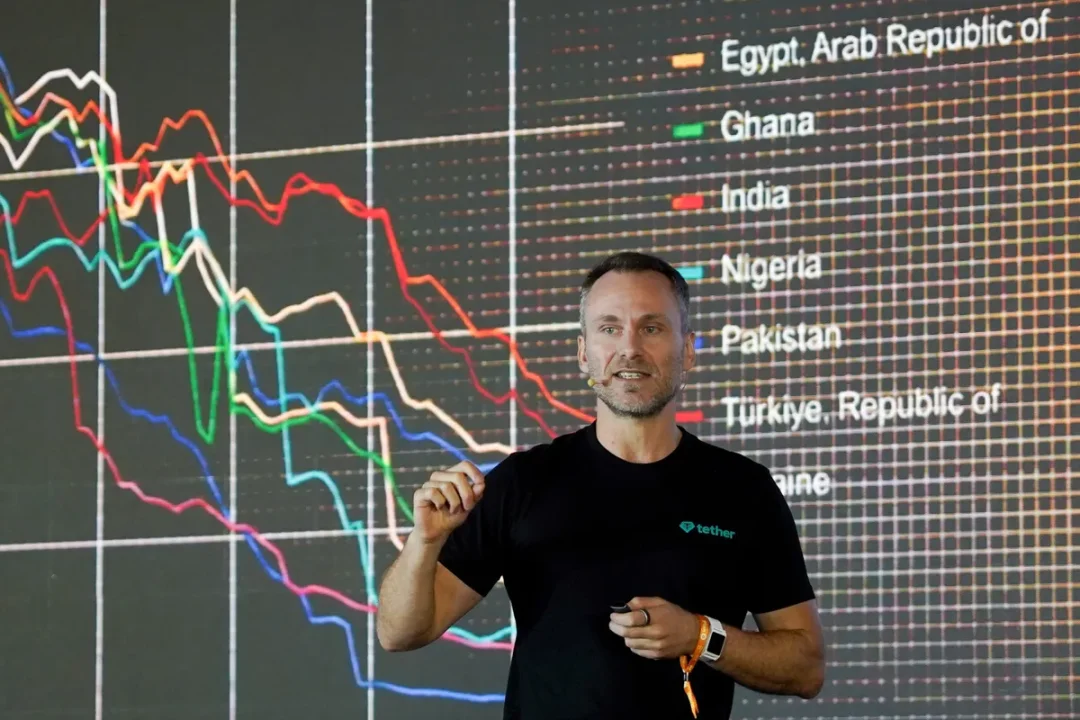
Tether CEO Paolo Ardoino stated in a recent interview with Bloomberg News: "Law enforcement agencies approach us, provide relevant information, we verify the information, and then take action in accordance with the laws of the country in question. We follow this process when cooperating with the U.S. Department of Justice, the FBI, and other agencies."
Tether did not comment further on this case. Bloomberg was unable to reach Sahin. A Turkish official also declined to disclose the name of the company mentioned in the prosecutor's statement.

The frozen assets, amounting to 460 million euros (approximately $544 million), are part of a large-scale law enforcement operation in Turkey, where the total value of frozen涉案资产 has exceeded $1 billion. According to Turkish television NTV, a few days after the announcement of the freezing of Sahin's assets, another individual was investigated for涉嫌洗钱 and illegal gambling, and加密资产 worth $500 million under their name were also frozen. However, it is currently unclear whether this asset freeze involved tokens issued by Tether.

A Turkish official, who spoke anonymously on sensitive legal matters to Bloomberg, revealed that authorities discovered the "financial traces" of these涉嫌非法收入 by tracking fund flows and analyzing加密资产. The official also stated that similar asset freezing actions will be taken in the future against individuals involved in illegal gambling and payment systems.

For Tether, this freezing operation is just one of its increasingly frequent fund freezes, highlighting the growing efforts of this cryptocurrency giant to cooperate with global law enforcement agencies.

A report released in January by analytics firm Elliptic showed that by the end of 2025, Tether and its competitor Circle Internet Group Inc. had blacklisted approximately 5,700 wallets, involving assets of about $2.5 billion, a number that was negligible two years ago. At the time of freezing, three-quarters of these wallets held USDT.

Arda Akartuna, Head of Crypto Threat Intelligence for Asia-Pacific at Elliptic, said: "As the legitimate application of cryptocurrencies and the integration of global payments accelerate, illegal usage has also increased, prompting stablecoin issuers to intervene more actively."

Tether often publicizes its efforts to combat criminal activities, including in communications aimed at potential investors. The company is seeking financing at a valuation of up to $500 billion. According to its website, Tether has assisted law enforcement agencies in 62 countries with over 1,800 cases, freezing $3.4 billion worth of USDT related to涉嫌非法活动.

Nathan McCauley, Co-founder and CEO of Tether partner Anchorage Digital Bank, said in an interview: "They (Tether) are extremely proactive in their cooperation. Among stablecoin issuers, the company has the 'recognized best reputation' among law enforcement agencies."

Anchorage is the issuer of Tether's compliant dollar stablecoin USAT, which was launched in late January, marking Tether's return to the U.S. market.

This represents a significant shift from the tense situation between Tether and U.S. regulators a few years ago. After clashing with regulators in 2018, Tether largely withdrew from the U.S. market and paid a $41 million fine in 2021 to settle charges of misrepresenting its reserves.

However, the second Trump administration has welcomed the cryptocurrency industry. Last year, Ardoino attended, along with several other executives, the ceremony where President Trump signed the stablecoin regulatory bill.

Even so, Tether's USDT continues to face scrutiny from regulators due to its widespread use by criminals.

On January 9, the U.S. Attorney's Office for the Eastern District of Virginia announced charges against a Venezuelan citizen for using USDT to launder $1 billion. A recent report from Elliptic showed that the Central Bank of Iran purchased over $500 million worth of USDT to alleviate its currency crisis and evade U.S. sanctions.

Turkish fugitive Sahin is accused of leading an organization that laundered money for illegal online gambling platforms. According to local media reports, Sahin was sentenced to 10 years in prison in 2017, released in 2023, and sentenced to another 21 years in prison one month later. His current whereabouts are unknown, but the Turkish official news agency Anadolu Agency reported on January 30 that "the relevant authorities are advancing the legal process for his extradition back to Turkey."


Twitter:https://twitter.com/BitpushNewsCN

Bitpush TG Discussion Group:https://t.me/BitPushCommunity

Bitpush TG Subscription: https://t.me/bitpush

Original link:https://www.bitpush.news/articles/7610331

Related Questions

QWhat was the cryptocurrency company Tether's role in the Turkish government's asset freeze operation?

ATether Holdings SA, the issuer of the USDT, assisted the Turkish government by freezing over 500 million dollars in assets belonging to Veysel Sahin, who was accused of operating an illegal gambling platform and money laundering.

QHow has Tether's relationship with U.S. regulators changed in recent years according to the article?

ATether's relationship with U.S. regulators has significantly improved. After a $41 million settlement in 2021 over allegations of misrepresenting reserves, the company has since increased cooperation with law enforcement and attended the signing ceremony of a stablecoin regulation bill under the Trump administration.

QWhat does the increase in the number of blacklisted wallets by Tether and Circle indicate?

AThe increase to about 5,700 blacklisted wallets, holding approximately $2.5 billion in assets, indicates that stablecoin issuers are becoming more proactive in intervening against the illegal use of cryptocurrencies, such as money laundering and sanctions evasion.

QWhat specific illegal activities is Tether's cooperation with global law enforcement agencies targeting?

ATether's cooperation targets a range of cryptocurrency-related crimes, including money laundering, drug trafficking, and evasion of sanctions.

QWhat new product did Tether launch in its effort to re-enter the U.S. market, and who is the issuer?

ATether launched a compliant U.S. dollar stablecoin called USAT in late January, which is issued by its partner Anchorage Digital Bank.

Related Reads

The "Impossible Triad" Is Fundamentally a Pseudo-Problem

The article argues that blockchain's fundamental limitation is not the scalability trilemma (decentralization, scalability, security), which has been largely solved, but the lack of **privacy** and, until recently, clear **legitimacy**. Blockchain is described as a slow, expensive, globally shared computer whose core value is censorship resistance and verifiability. While ideal for native digital assets like money (e.g., stablecoins), its default transparency acts as a **tax**, exposing all transactions and enabling MEV extraction, which deters serious institutional capital. Simultaneously, its permissionless nature created regulatory ambiguity. The piece contends that **privacy** is the missing critical feature. It rejects the false choice between total transparency and complete anonymity. Modern cryptography (like zero-knowledge proofs) enables **compliant privacy**: users can prove facts (solvency, KYC status, compliance) without revealing the underlying sensitive data (specific holdings, identities). This preserves auditability for regulators and eliminates the leak of financial information. With recent regulatory progress (e.g., the GENIUS Act) addressing legitimacy, adding default, provably compliant privacy becomes a pure upgrade. It transforms blockchain from a costly, public ledger into a confidential settlement layer, finally bridging the gap to mainstream institutional and individual adoption of on-chain finance.

链捕手10h ago

The "Impossible Triad" Is Fundamentally a Pseudo-Problem

链捕手10h ago

Optical Chips: Collective Capacity Expansion

The global optical chip industry is experiencing a massive wave of expansion driven by surging AI data center demand. Major players across the US, Japan, Europe, and China are aggressively investing to ramp up production capacity. In the US, Coherent is expanding its 6-inch Indium Phosphide (InP) semiconductor fab in Texas, supported by CHIPS Act funding and a $2 billion strategic investment from NVIDIA. Lumentum is building a new factory for InP optical devices, and Nokia is scaling its advanced photonic chip packaging and testing capabilities. NVIDIA's investments aim to secure future supply of critical lasers and optical interconnect products for AI infrastructure. Japan's JX Advanced Metals, a leading InP substrate supplier, plans a multi-billion yen investment to increase its capacity 7-10 times, strengthening its grip on the crucial upstream materials market. In Europe, IQE and Tower Semiconductor settled a patent dispute and signed a multi-year InP epitaxial wafer supply agreement, highlighting that next-generation silicon photonics platforms will integrate high-performance InP components. STMicroelectronics and Sivers Semiconductors are also expanding silicon photonics production and partnerships. China is rapidly building out its domestic supply chain. Dongshan Precision's subsidiary, Source Photonics, announced a $12 billion project to expand optical chip and module production. Companies like Sanan Optoelectronics and Yunnan Germanium are scaling up InP chip manufacturing and substrate production, moving towards vertical integration from materials to modules. While debate continues around the exact future architecture—whether CPO (Co-Packaged Optics), NPO, or pluggables will dominate—analysts like Morgan Stanley argue the underlying driver is unchangeable: the explosive growth in bandwidth demand. This will inevitably increase the volume of optical engines, lasers, and related content per GPU, regardless of the final technical path. The competition for "more light" in the AI era has intensified into a global, full-chain capacity race.

marsbit13h ago

Optical Chips: Collective Capacity Expansion

marsbit13h ago

Stablecoins Finally Find Real Yield: An In-Depth Look at On-Chain Reinsurance Re | A Conversation with Re Founder Karan Saroya

Stablecoin Real Yield Found: A Deep Dive into On-Chain Reinsurance with Re's Karan Saroya As stablecoin supply exceeds $170 billion, the search for sustainable, non-speculative yield intensifies. Re, an on-chain reinsurance platform, provides an answer: connecting stablecoin capital to the trillion-dollar traditional reinsurance market. Re operates as a regulated reinsurer, accepting stablecoin deposits as collateral to back US insurance companies. These insurers pay premiums, generating yield that flows back to on-chain depositors. Currently supporting 35 insurers and underwriting $500 million, Re projects scaling to over $1 billion soon. Key insights from a Bankless podcast with founder Karan Saroya and investor Avichal of Electric Capital: 1. **Uncorrelated, Real-World Yield:** Re offers stablecoin holders access to reinsurance returns (targeting 12-14%+), an asset class entirely separate from crypto or equity markets. 2. **Operational Efficiency via Smart Contracts:** Re replaces traditional, labor-intensive capital fundraising with smart contracts, allowing a ~12-person team to compete with industry giants. 3. **Regulatory Leverage:** For every $1 of collateral, regulations allow backing $5-7 in written premiums. This leverage amplifies returns from the underlying risk-free rate. 4. **DeFi Integration:** Depositors receive receipt tokens, which can be used in protocols like Morpho for "looping," potentially pushing yields to 18-20%+. 5. **The "DeFi Mullet" Model:** A compliant front-end (regulated reinsurer) paired with a decentralized back-end (smart contracts, DeFi capital markets). 6. **RE Governance Token:** Modeled on Lloyd's of London, the token governs the central capital pool's allocation, counterparty acceptance, and parameters. 7. **Real Economic Impact:** Capital funds real-world productivity (factories, clinics, businesses) via insurance, moving beyond crypto's internal loops. The discussion highlights a pivotal moment: DeFi's supply-side infrastructure is now met by real demand for productive yield, potentially kickstarting a flywheel where vast on-chain stablecoin capital seeks these real-world returns.

链捕手14h ago

Stablecoins Finally Find Real Yield: An In-Depth Look at On-Chain Reinsurance Re | A Conversation with Re Founder Karan Saroya

链捕手14h ago

Trading

Spot
Futures
活动图片