Free Mirror or Land Grab? OpenClaw Founder Blasts Tencent for Copying

Odaily星球日报Published on 2026-03-13Last updated on 2026-03-13

Abstract

OpenClaw founder Peter Steinberger publicly criticized Tencent for creating SkillHub, a localized platform mirroring OpenClaw, accusing the tech giant of copying without supporting the project. Tencent responded by clarifying that SkillHub acts as a local mirror site, properly attributing OpenClaw as the data source and reducing bandwidth strain on the origin server by processing significant traffic locally. It also expressed willingness to become a sponsor. However, Steinberger remained unsatisfied, emphasizing that the core issue was not technical but ethical—Tencent failed to communicate beforehand. The dispute highlights deeper concerns about big tech’s approach to open-source ecosystems: while mirroring is common and often legal under open-source licenses, Tencent’s move is seen as an attempt to control user access, distribution channels, and future commercial influence within the AI agent ecosystem. The incident reflects a broader pattern in China’s internet industry, where major companies rapidly embrace emerging technologies like OpenClaw not purely for innovation, but to capture entry points, traffic, and platform dominance. By offering localized, convenient services, they risk enclosing open ecosystems within their own walled gardens—ultimately dictating which tools get visibility, monetization, and user adoption. As OpenClaw gains explosive popularity in China, the episode underscores a tension between open-source ideals and commercial strategies, where co...

Original | Odaily Planet Daily (@OdailyChina)

Author | Golem (@web 3_golem)
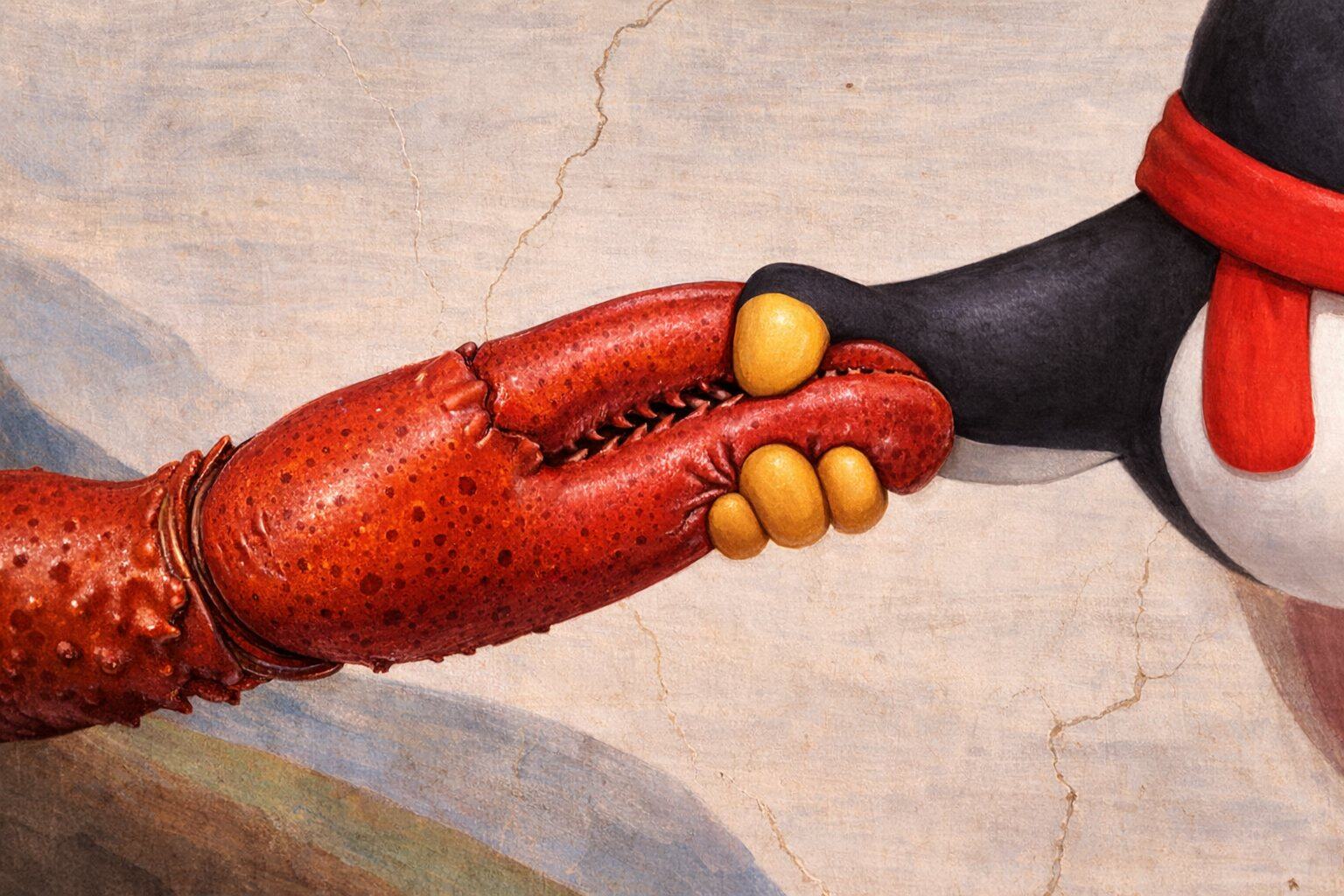
As domestic tech giants rush to launch "one-click OpenClaw installation," controversy has followed.

On March 12, OpenClaw founder Peter Steinberger publicly questioned Tencent's creation of Skillhub on X, accusing it of causing official speed reductions that prevent rapid data scraping, and stating, "they copy but do not support the project in any way."

In response to the controversy, Tencent quickly replied, expressing understanding of Peter Steinberger's concerns. They stated that SkillHub is a localized Skills platform built by Tencent based on the OpenClaw ecosystem. As a local mirror site, it always credits ClawHub as the data source. In its first week, it handled 180GB of traffic for users (870,000 downloads) and only pulled 1GB of non-concurrent requests from the official source. Tencent also expressed willingness to become a sponsor.

Logically, Tencent's response should have clarified the most contentious issue of "whether they are excessively consuming the source site's resources." However, Peter was not satisfied, stating that this was not the main point. He suggested that SkillHub could be made the official fifth mirror to synchronize download statistics, but Tencent should have proactively communicated with him beforehand.

Although the matter ended here, viewing it simply as "the OpenClaw founder's emotional outburst" or "a misunderstanding of a big tech company's normal localization efforts" would be a superficial understanding.

The Problem Isn't the Mirror, But the Big Tech's "High-Handedness"

If you only look at the technical actions, this is not unusual.

In China's developer ecosystem, mirroring open-source projects is a common practice. International open-source infrastructures like npm, PyPI, and Docker Hub have numerous local mirrors in China. Precisely because of this, Tencent denied that its creation of Skillhub was copying, but rather a localized Skills platform. It explained that it was not free-riding or draining the official site but was distributing, accelerating, and adapting to help OpenClaw land in China.

In a sense, Tencent's approach does address the most practical needs of Chinese "lobster farmers." OpenClaw is incredibly popular in China, but not everyone is willing or able to stably access the original community, let alone the fact that the installation, discovery, and retrieval experience for many Skills is still quite primitive.
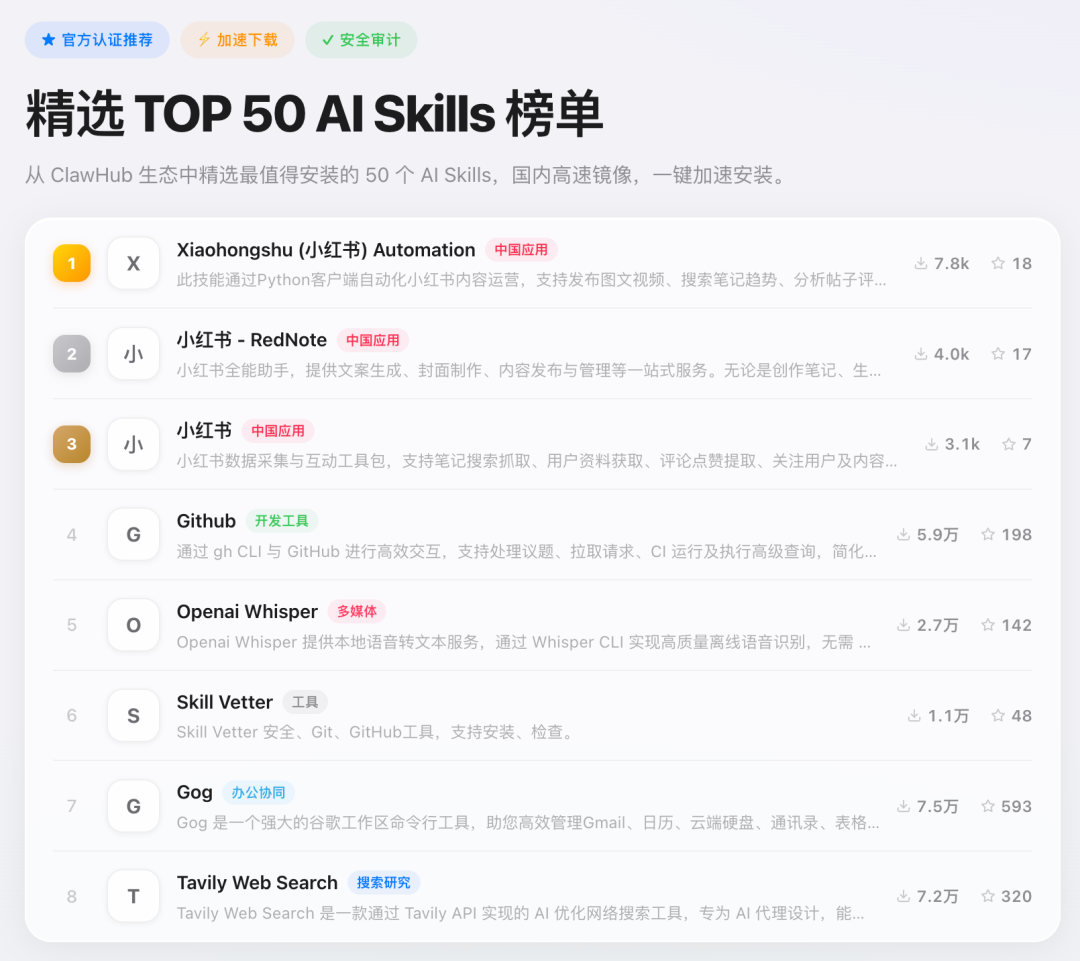
Skillhub

But is a mirror site inherently blameless? The answer is not necessarily.

Because what the open-source license allows, what community ethics accept, and what commercial reality ultimately brings are often three different sets of accounts.

At the license level, as long as the license is followed and the source is credited, many mirroring and redistribution actions are valid. At the community ethics level, Tencent's SkillHub credits the OpenClaw official source and has actively reduced the source site's bandwidth costs, seemingly taking responsibility.

But Tencent forgot that OpenClaw is not a small open-source project needing big tech's deliberate resource injection. It is the hottest project on GitHub with the most stars. In this context, Tencent's action without prior notice becomes "high-handed." It's no longer just a simple mirroring issue but quickly involves three more sensitive questions: Who represents the official ecosystem? Who is taking the user entry point? And who is defining the download, distribution, and statistical metrics?

This is what truly discomforted Peter, who stated that Tencent's behavior directly affects download statistics. Peter isn't opposed to Tencent localizing OpenClaw for China but believes they should have communicated first, rather than building the platform, onboarding users, and then explaining under public pressure that they were actually there to help.

Furthermore, from a commercial reality perspective, once a platform shell like SkillHub gains scale, the official status and statistical authority originally held by the OpenClaw community can easily be marginalized. Today it's a localized Skills platform; tomorrow it could be the "default Skills distribution market"; later, it might be "who decides which Skills are seen, installed, and commercialized."

This is the real danger signal behind this controversy and a scene all too familiar in the Chinese internet over the past decade: the enclosure movement.

Big Tech Isn't "Farming Lobsters"; They're Using Lobsters to Enclose AI Land

In the past period, "farming lobsters" has become the hottest meme in the Chinese AI circle, and OpenClaw has been rapidly pushed into an almost emotional industry symbol. Everyone says lobsters represent the new imagination of the Agent era and the future of personal AI assistants, which sounds very passionate.

But big tech doesn't look at lobsters with idealism; they see entry points, traffic, distribution power, and the shell of the next-generation operating system.

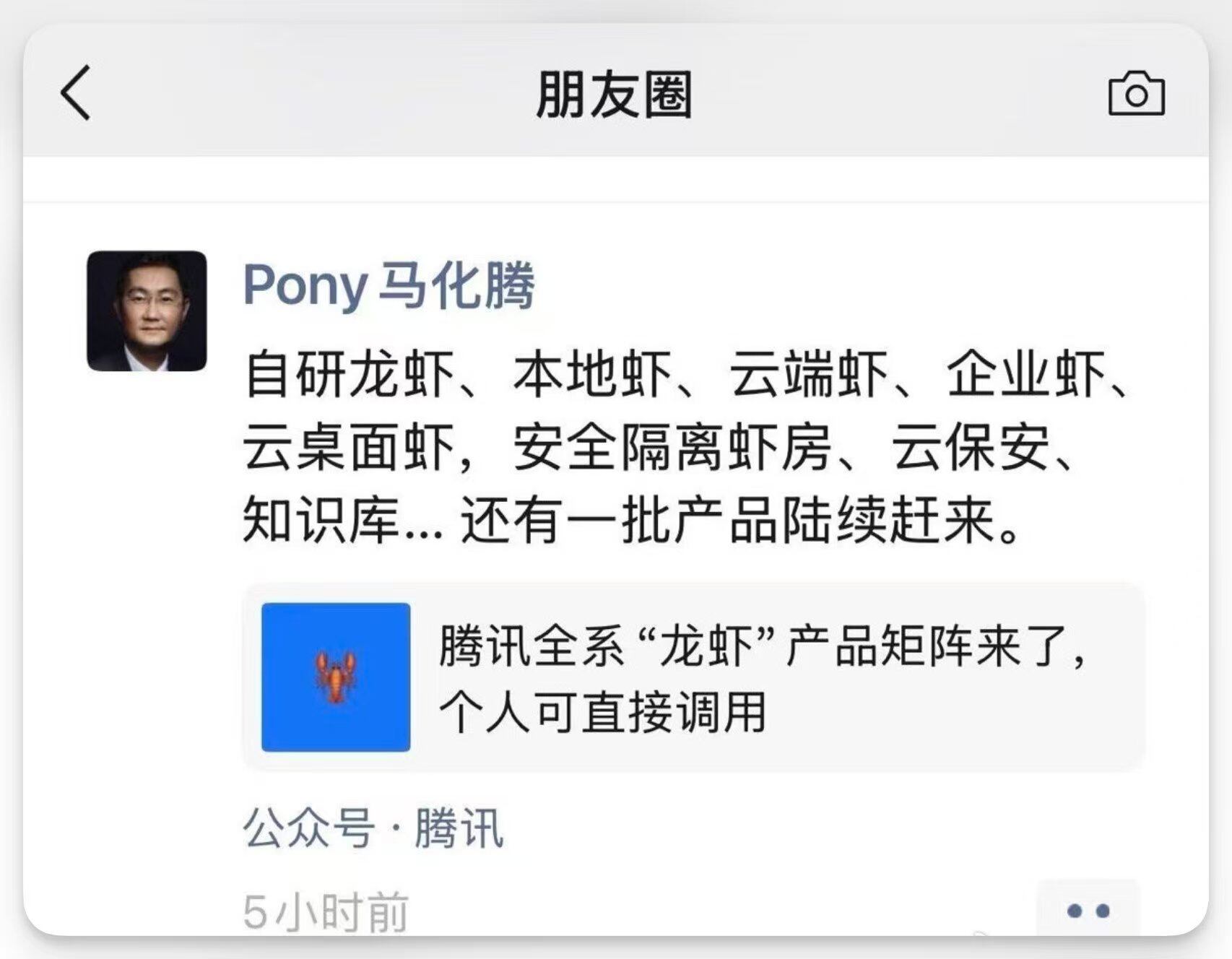
In the early hours of March 11, Pony Ma promoted Tencent's full suite of "lobster" products on his WeChat Moments. Tencent's "Lobster Family Bucket" customizes a "little lobster" for general users, developers, and enterprise users, supporting one-click installation with no threshold. SkillHub was launched simultaneously at this time, built with 13,000 localized Skills for one-click invocation, usable directly in scenarios like Xiaohongshu operations and Baidu search.
Of course, Tencent isn't the only one "smelling the wind and moving." If you stretch the timeline, you'll find that domestic tech giants have almost collectively jumped in to help users solve the "lobster farming"难题, their movements so整齐 they seem to have pressed the same switch, though Tencent is currently the most comprehensive.

On the surface, everyone means well, but in reality, this hides the most familiar path dependency in the commercial playbook of Chinese internet companies. Facing a new ecosystem already validated by the market and heated up by public opinion, the first move isn't about profit and business models, but grabbing the entry point first, building the platform first, onboarding users first.

What Tencent wants is not just to make it easier for Chinese users to "farm lobsters," but to ensure that when Chinese users truly start "using Agents to get things done," their first instinct is to do it within Tencent's product shell.

This is the most intriguing aspect of actions like SkillHub. It表面上 (superficially) is a mirror site, but in essence, it could be the starting point of a larger closed loop. Today users see local Skill search and download; tomorrow it might be default access to some cloud, some account system, some enterprise workbench. Later, developers might slowly realize that although they are still developing within the OpenClaw ecosystem, the real decisions about exposure, recommendation, review, and commercialization paths are made by the platform.

This script has been played out too many times in the Chinese internet. From ride-hailing to food delivery, from short-video platforms to cloud markets, almost every "ecological prosperity"背后 (behind it) has been accompanied by the same structural ending—the platform first uses free, open strategies to attract users, then builds walls, using traffic, advertising, and other means to turn the ecology back into its own附属层 (subsidiary layer).

Big tech companies all know that old entry points like search, social, content, and e-commerce are fiercely competitive to the limit, while Agent might be the most promising new entry point for the next round. In that case, rather than waiting for OpenClaw to grow wildly on its own, it's better to take it over while it's still in its explosive early stages, encapsulate it first, and get users accustomed to "bossing lobsters around" within their own systems.

Therefore, everyone is too familiar with what will happen next after big tech companies争先恐后 (scramble) to help users solve the OpenClaw installation problem. And Peter, who doesn't understand the Chinese internet, naturally can't comprehend why Tencent didn't communicate with him beforehand or synchronize data with him.

OpenClaw originally represented another AI future: local operation, personal control, community extension, open connection. Its most imaginative aspect is making Agents truly the user's own execution layer. But once this ecosystem gets repackaged by big tech with "localized mirrors," "domestic adaptation," "unified distribution," and "security review," the flavor changes. In the product logic of big tech, the entry point belongs to me, distribution belongs to me, so ultimately, payment and commercialization should also belong to me.

To put it more bluntly, big tech companies aren't "embracing lobsters"; they are "using lobsters to enclose territory in the AI era."

And this is the most unsettling aspect behind this small controversy. Walls are never built all at once; they always grow slowly under the guise of "more convenient" and "more stable." By the time developers, users, and traffic are all contained within the same shell, so-called openness and autonomy might ultimately just become a component within the big tech ecosystem.

OpenClaw currently faces the most paradoxical fate in China: The lobster hasn't fully grown yet, but big tech has already started setting up the nets.


Related Questions

QWhat was the main criticism raised by OpenClaw founder Peter Steinberger against Tencent?

APeter Steinberger accused Tencent of copying OpenClaw without supporting the project, specifically criticizing their SkillHub platform for not communicating beforehand and potentially affecting official download statistics.

QHow did Tencent respond to the allegations made by the OpenClaw founder?

ATencent stated that SkillHub is a localized Skills platform based on the OpenClaw ecosystem, serving as a mirror site that credited ClawHub as the data source. They claimed to have handled 180GB of traffic for users in the first week while only pulling 1GB from the official source, and expressed willingness to become a sponsor.

QWhat broader concern does the article highlight beyond the technical aspects of mirroring OpenClaw?

AThe article highlights concerns about large tech companies like Tencent potentially seizing user entry points, distribution channels, and statistical control, ultimately leading to a 'walled garden' approach where the platform dictates visibility, installation, and commercialization of Skills, marginalizing the original open ecosystem.

QWhy does the author compare Tencent's actions to a 'land grab' in the AI industry?

AThe author compares it to a 'land grab' because Tencent and other large Chinese tech companies are rapidly integrating OpenClaw into their platforms to control the future AI agent entry points, user habits, and distribution power, rather than purely supporting open ecosystem growth.

QWhat is the ironic situation OpenClaw faces in China according to the article?

AOpenClaw faces the ironic situation where 'the lobster hasn't even grown up yet, but big tech companies are already building fences around it'—meaning the open ecosystem is being enclosed by platforms before it fully matures, risking loss of autonomy and community-driven development.

Related Reads

US Government Suddenly Halts Anthropic's Strongest Model, "Quasi-IPO Stock Price" Plunges 3.7% Overnight

U.S. Government Halts Anthropic's Top AI Models, 'Pre-IPO' Price Drops 3.7% On June 12, the U.S. government ordered Anthropic to shut down access to its two most powerful AI models, Claude Fable 5 and Claude Mythos 5, citing national security concerns. The directive, issued by the Department of Commerce, required Anthropic to block access for all foreign nationals, leading the company to disable the models globally for all users. Anthropic strongly opposed the move, arguing the government's basis was a "narrow jailbreak vulnerability" and warning that applying such a standard industry-wide would effectively halt all frontier model deployments. The news impacted Anthropic's implied valuation in speculative markets. The Anthropic perpetual contract on Hyperliquid fell approximately 3.7% to around $1,627, down from highs above $1,800 following the models' release. Unauthorized tokenized products linked to Anthropic on Solana also saw significant declines. The models, launched just days earlier on June 9, represented a major capability leap for Anthropic. Fable 5 was its first public release of a "Mythos"-tier model above its flagship Claude Opus. The shutdown creates an ironic situation for Anthropic, a company founded on "AI safety" principles, and adds uncertainty to its ongoing IPO preparations. The company is actively engaging with regulators to resolve what it calls a "misunderstanding" and restore service.

marsbit15m ago

US Government Suddenly Halts Anthropic's Strongest Model, "Quasi-IPO Stock Price" Plunges 3.7% Overnight

marsbit15m ago

SpaceX IPO Creates Trillion-Dollar Billionaire: Musk's Wealth Equals Half of Crypto Market

SpaceX's record-breaking IPO has propelled Elon Musk to become the first modern billionaire with a personal net worth exceeding $1 trillion, reaching $1.11 trillion according to Bloomberg. This staggering wealth surpasses the total market capitalization of all cryptocurrencies excluding Bitcoin and equals roughly half of the entire crypto market's value. The milestone highlights extreme wealth concentration and the significant devaluation of the altcoin market, whose total cap has nearly halved since late 2025 as capital flows into large tech stocks. SpaceX's Nasdaq debut saw its valuation hit $2.2 trillion, with shares soaring from a $135 offer price to close at $161. Its first-day trading volume of $85 billion set a new global IPO record. Musk owns 42% of the company. Despite his wealth dwarfing the altcoin sector, Musk maintains deep ties to digital assets. He personally holds Bitcoin, Ethereum, and Dogecoin, while his companies, SpaceX and Tesla, collectively hold over 30,000 Bitcoin, ranking among the top corporate BTC holders globally. His acquisition and integration of financial data tools into X (formerly Twitter) further connect his ecosystem to the markets. Ultimately, Musk's trillion-dollar status underscores the immense wealth controlled by tech founders, though this fortune remains largely tied to volatile stock prices rather than liquid assets.

Foresight News23m ago

SpaceX IPO Creates Trillion-Dollar Billionaire: Musk's Wealth Equals Half of Crypto Market

Foresight News23m ago

Hardcore First Look | Ocean Embodied Intelligence Company 'Shihang Intelligence' Secures Record-Breaking 1 Billion in Funding, Zhu Xiaohu, Temasek Place Bets

Breaking News | Ocean Embodied Intelligence company "Shihang Intelligent" secures a record-breaking 1 billion RMB (approximately 10 billion yuan) in Series A financing, with investment from Zhu Xiaohu and Temasek. Author: Qiu Xiaofen | Editor: Yuan Silai Ocean Embodied Intelligence company "Shihang Intelligent" has completed its Series A funding round, raising over 1 billion RMB. This marks the largest single funding round in the global marine robotics field to date. Investors include upstream momentum funds from chip companies "Moore Thread" and "Kunlunxin," Singapore's state-owned investment platform Vertex Growth, and listed company Dyneo, among others. Existing investors like GSR Ventures (whose founder Zhu Xiaohu has invested for the fifth time), Vertex Ventures China, Hua Ying Capital, and Long Capital also significantly increased their investments. Founder and CEO Chen Xiaobo, a 1989-born alumnus of Harbin Engineering University, is a long-time expert in underwater robotics. He received the National Defense Science and Technology Progress Award at age 28 (the youngest recipient) and led the development of China's first commercial underwater cleaning robot. The funds will be used for core technology R&D, global market expansion, and building the industry chain ecosystem to scale the application of marine robots in complex underwater scenarios. The ocean is considered one of the most challenging environments for robotics due to low light, high turbidity, complex currents, limited communication, high pressure, and corrosion. "Shihang Intelligent" focuses on developing core underlying technologies for marine robots, covering six key systems: power, control, sensing, navigation, sealing, and deployment. Its robots are capable of operating at depths from 0 to 10,000 meters with full degrees of freedom, performing complex maneuvers, autonomous navigation, and multi-robot collaboration. Applications include ship cleaning, underwater security, offshore wind power, marine ranching, and seabed inspection. The company's order value for the first half of 2026 alone has exceeded 1 billion RMB. Its "Orca Robot" is used by major shipping companies and has performed maintenance on over a thousand large vessels. In April of this year, the company launched its ocean embodied large model "Cangqiong CEORION." Unlike traditional remote-controlled or pre-programmed robots, this model integrates environmental perception, task understanding, and action generation into a single end-to-end architecture. Trained on millions of hours of commercial operation data and simulation data, it covers 12 major underwater operation scenarios. In simulations, it achieved over 90% task success rate and over 70% zero-shot adaptation capability to unseen environments. A built-in physics reasoning module reduces collision risk by 80%, enabling autonomous operation even with weak or no communication. Recently, "Shihang Intelligent" was selected as a core technology partner for Singapore's Maritime and Port Authority national hull inspection and cleaning program. These advancements indicate marine robotics is moving from pilot projects to scaled applications, with real-world operations generating valuable data to continuously improve robot capabilities. CEO Chen Xiaobo stated the company will continue investing in core marine robotics technology, the embodied intelligence model, and global application scenarios to expand into more high-risk, high-difficulty, and high-value underwater operations.

marsbit49m ago

Hardcore First Look | Ocean Embodied Intelligence Company 'Shihang Intelligence' Secures Record-Breaking 1 Billion in Funding, Zhu Xiaohu, Temasek Place Bets

marsbit49m ago

Three Months, 35 Billion Yuan: Investors Rush to Grab the OpenAI of the Physical World

Investors flock to a physical AI startup as the race for the "OpenAI of the physical world" heats up. Ji Jia Shi Jie (GigaWorld), a company dedicated to developing Artificial General Intelligence (AGI) for the physical world, has raised 3.5 billion RMB (approximately $490 million) in just three months, according to a report from investment media outlet Touzijie. The latest B2 funding round of 1 billion RMB attracted a wide range of top-tier investors, including sovereign wealth funds, industrial capital, and financial institutions. This brings the total funding for the young company, now valued over 10 billion RMB, to 3.5 billion RMB across three recent rounds. The company is led by Huang Guan, a post-90s Tsinghua University PhD with extensive experience in AI, autonomous driving, and entrepreneurship. Its core innovation is a "dual-pyramid" system comprising a five-layer data pyramid (from internet videos to real-world robot data) and a three-layer algorithm pyramid focused on world simulation, action alignment, and reinforcement learning. This system underpins its key models: the "World Action Model" (e.g., GigaBrain series for robot control) and the "World Generation Model" (e.g., GigaWorld series for simulating and understanding the physical world). Its models have reportedly achieved top rankings in global robotics benchmarks. Ji Jia Shi Jie argues that while current digital AGI excels in information processing, the next frontier is physical AGI—systems that can understand and interact with the real world. The company believes the field is approaching its "GPT-3 moment," a key inflection point in capability scaling. To achieve this, the company is pursuing a dual-market strategy. For the consumer (C) market, it launched the "SeeLight" brand and its S1 general-purpose humanoid robot, which has secured initial orders for deployment in real homes. For the business (B) market, it focuses on industrial automation with its Maker series robots, having signed agreements for large-scale deployment in factories, and its DriveDreamer world model for autonomous driving, which is already in use with over 30 automakers and tech companies. The report concludes that by bridging the gap between digital intelligence and physical action, Ji Jia Shi Jie aims to unlock a new wave of productivity, ultimately bringing physical AGI into everyday life.

marsbit1h ago

Three Months, 35 Billion Yuan: Investors Rush to Grab the OpenAI of the Physical World

marsbit1h ago

What's the Connection Between Pinduoduo's Huang Zheng and Blockchain?

This text explores the unexpected connection between Pinduoduo founder Colin Huang and blockchain, as suggested in his article *Turning Capitalism Upside Down*. Huang argues Pinduoduo's core business is about managing "uncertainty." He posits that wealth flows to the rich because they absorb life's uncertainties (e.g., illness, job loss) that devastate the poor, who pay a premium for certainty through insurance or stable prices. Pinduoduo's model attempts a "reverse insurance": by aggregating consumer demand via group-buying and flash sales, it creates a large, predictable order for manufacturers. This certainty allows factories to remove risk premiums, passing savings back as lower prices, thus partially reversing the wealth flow. The key obstacle, Huang notes, is that an individual's buying intent is an unreliable promise. He then asks if blockchain is the natural solution for this "reverse insurance." The text elaborates that blockchain, through smart contracts with binding deposits, could transform casual intent into a costly-to-break, enforceable commitment. This replaces interpersonal trust with coded rules, making promises credible, pricable, and resistant to fraud. Finally, the author draws a parallel to Bitcoin, framing two paths to creating certainty: the "Pinduoduo path" of aggregating decentralized will into scale, and the "Bitcoin path" of locking rules into immutable code. Both sacrifice something—personal freedom or system flexibility—to manufacture trust and predictability.

链捕手2h ago

What's the Connection Between Pinduoduo's Huang Zheng and Blockchain?

链捕手2h ago

Trading

Spot
Futures
活动图片




