Four Outrageous Details Hidden in Justin Sun's Lawsuit Against WLFI

marsbitPublished on 2026-04-24Last updated on 2026-04-24

Abstract

Cryptocurrency billionaire Justin Sun has filed a lawsuit against World Liberty Financial (WLFI), accusing its executives of fraud, theft, and other violations. The complaint highlights four key allegations: First, it details the controversial history of WLFI co-founder Chase Herro, including past scams, a prison record, tax liens, and alleged visits to Jeffrey Epstein’s private island. Second, Sun claims WLFI secretly upgraded its smart contract without token holder approval, granting itself the power to freeze and seize WLFI tokens—a move allegedly used against Sun. WLFI defended the action as necessary to protect user interests. Third, the dispute may have been fueled by Sun’s $100 million purchase of TRUMP meme tokens issued by a Trump-affiliated project. WLFI reportedly objected, though the purchase was allegedly approved by a Trump family member involved with both projects. Finally, Sun accuses WLFI of operating an unlicensed money transmission business due to its centralized control over token transfers, potentially violating federal and state laws. WLFI CEO Zach Witkoff dismissed the suit as a desperate distraction from Sun’s own misconduct. Herro did not directly address the allegations.

Written by: Aleks Gilbert

Compiled by: Chopper, Foresight News

Cryptocurrency tycoon Justin Sun wants to maintain good relations with Donald Trump, but he has taken a hard line against the former president's business partners.

In a lawsuit filed on Tuesday, Sun accused World Liberty Financial executives of fraud, theft, and other illegal activities.

These allegations are not couched in lengthy, dry legal jargon. Instead, the complaint emphasizes that World Liberty Financial is facing "collapse and potential bankruptcy" and is struggling to operate.

Sun directs the most damaging content at one person: World Liberty co-founder Chase Herro, whom the complaint describes as a habitual fraudster and tax evader.

Some details have been reported before. And content such as World Liberty's imminent collapse is purely speculative. Nevertheless, this lawsuit will provide ample ammunition for the company's critics, including disgruntled investors and opposition lawmakers waiting to pounce.

When asked about the lawsuit on Wednesday, a spokesperson for World Liberty Financial pointed to a statement posted on social media by the company's co-founder.

The company's CEO, Zach Witkoff, called the lawsuit "a desperate attempt by Justin Sun to divert attention from his own misconduct."

Herro did not directly respond to the lawsuit. He reposted a motivational poem by Rudyard Kipling and Witkoff's statement, captioning it: "Building is never easy; it is often filled with successes and failures, like a huge maze you need to navigate."

Here are the four most noteworthy allegations and details from the 52-page lawsuit.

Herro's Past

Mainstream media reports have previously detailed Herro's checkered history, including a prison record, inflammatory remarks, questionable business practices, and involvement in a DeFi protocol in 2024 that lost almost all of its crypto assets due to a hack.

The complaint includes all of the above and adds several new details.

The complaint states: "Herro's business misconduct was so egregious that around 2010, deceived clients and partners set up a website called ChaseHeroScam.com."

The website was inaccessible on Thursday, and DL News could not verify whether the content mentioned in Sun's complaint existed on the site.

The complaint alleges that Herro has been subject to four federal tax liens, and a tax deed was issued for a property he owned in Florida.

The complaint also states that Herro "publicly boasted" about visiting Little St. James Island, the private island owned by the disgraced financier Jeffrey Epstein. However, the complaint does not provide evidence of this statement, and DL News has not been able to verify whether Herro made such remarks.

"Secret" Upgrade

Since the early stages of the project, holders of World Liberty Financial's governance token, WLFI, have had very limited rights.

According to company documents, token holders have no right to participate in the operation of World Liberty Financial but can vote on upgrades to the underlying technology.

Sun alleges that World Liberty executives broke their promise and unilaterally and quietly carried out two technical upgrades last year without any governance vote or disclosure to WLFI holders.

The upgrade allegedly gave World Liberty Financial the authority to freeze and seize WLFI tokens, and this authority has been used against Sun. Sun describes this upgrade as a devastating move.

"Although the upgrade is queryable on the public blockchain, World Liberty Financial hid it deep in the code, failing to inform token holders of the function's existence and potential impact," the complaint states. "The company secretly added a 'blacklist' function that could be activated at will."

World Liberty Financial stated that the freezing function is only used to protect user rights.

Witkoff said in a statement: "Justin Sun engaged in违规 behavior, and World Liberty Financial had to take action to protect its own and its users' rights. World Liberty Financial will continue to take all necessary measures to protect the community ecosystem."

TRUMP Meme Coin

World Liberty Financial's allegations of Sun's so-called misconduct have been vague. But Sun says company executives provided detailed explanations in private.

The reasons include: executives determined that Sun's selling of tokens caused the WLFI price to drop by 40%, that he违规 purchased tokens on behalf of others, and that he violated the "token purchase agreement," among others.

But the complaint points to another trigger for the conflict: the TRUMP Meme coin.

"World Liberty Financial stated that one of the reasons for freezing the WLFI tokens was dissatisfaction with Sun's purchase of $100 million worth of TRUMP tokens (issued by another Trump-backed project)," the complaint states. Part of the next sentence is redacted, but the ending indicates that something (likely the purchase of TRUMP tokens) "was approved in advance by a member of the Trump family, who is also a partner in both projects."

The complaint does not explain why World Liberty Financial would object to Sun buying TRUMP coins.

Money Transmission Business违规

Last year, two crypto developers were sentenced to prison for operating an unlicensed money transmission business, and another was convicted on the same charge but has not yet been sentenced.

Sun alleges that World Liberty Financial is also in violation of this regulation.

The complaint argues that by granting itself the power to transfer tokens on behalf of others, World Liberty Financial became a money transmitter.

"World Liberty's highly centralized control over WLFI tokens is not only completely contrary to the philosophy of DeFi but also indicates that it is conducting a money transmission business without registration or a license, violating numerous U.S. federal and state criminal laws."

Related Questions

QWhat are the four key allegations or details highlighted in Justin Sun's lawsuit against WLFI?

AThe four key details are: 1) Chase Herro's alleged history as a 'recidivist fraudster and tax evader,' including a dedicated scam website and tax liens. 2) A 'secret' protocol upgrade that gave WLFI the power to freeze tokens without a governance vote. 3) A dispute partly fueled by Sun's purchase of $100 million in TRUMP meme coins. 4) An allegation that WLFI was operating an unlicensed money transmission business.

QWhat reason did WLFI's CEO, Zach Witkoff, give for the company's actions against Justin Sun?

AZach Witkoff stated that the lawsuit was a 'desperate attempt by Justin Sun to divert attention from his own misconduct' and that WLFI 'took action to protect itself and its users' from Sun's alleged violations, vowing to take all necessary measures to protect the community.

QAccording to the lawsuit, what was one of the controversial reasons WLFI gave for freezing Justin Sun's tokens?

AOne of the lawsuit claims is that WLFI was dissatisfied with Justin Sun's purchase of $100 million worth of TRUMP meme tokens, which were issued by a different Trump-affiliated project.

QWhat new power did the alleged 'secret upgrade' to the WLFI protocol grant the company?

AThe 'secret upgrade' allegedly granted World Liberty Financial the power to freeze and seize WLFI tokens, a function that was hidden deep within the code and enabled a 'blacklist' function without informing token holders.

QWhat specific federal violation does Justin Sun accuse World Liberty Financial of in the lawsuit?

AJustin Sun accuses World Liberty Financial of operating an unlicensed money transmission business, violating U.S. federal and state criminal laws, due to its highly centralized control over the WLFI tokens which allows it to transfer tokens on behalf of others.

Related Reads

GitHub, Transfixed by AI

On the night of February 9th, GitHub suffered a major outage caused by a simple configuration change—reducing a cache refresh interval from 12 to 2 hours—that triggered a cascade of failures. This was not an isolated event, but part of a broader pattern. In early 2026, GitHub experienced at least 8 major incidents, failing to meet its promised 99.9% availability. These outages stemmed from structural issues: explosive growth in load, tight service coupling, and insufficient protection against abnormal traffic. This unprecedented load is driven by AI Agents. In 2025, GitHub handled ~1 billion commits. By 2026, weekly commits reached 275 million, projecting to ~14 billion for the year—a 14x increase. AI tools like Claude Code now contribute 4.5% of all public repository commits, with weekly submissions surging 25x in just three months. AI-generated pull requests jumped from 4 million to 17 million per month in half a year. Unlike human developers, AI Agents work continuously, generating commits at a scale that overwhelms infrastructure designed for human rhythms. The surge also shattered GitHub's business model. Copilot's flat-rate pricing, based on assisting human developers, became unsustainable as Agentic AI sessions consumed resources worth hundreds of dollars for a few dollars in fees. In response, GitHub imposed usage limits and, by June 1st, shifted to a pay-per-use "AI Credits" system. Facing this new reality, GitHub realized a 10x scaling plan was insufficient. It announced a need to *redesign* its architecture for 30x current scale—decoupling services, adding fault isolation, and improving change management to prevent cascading failures. Other platforms like Stripe and AWS are facing similar challenges with AI Agents. Fundamentally, GitHub is transitioning from a human collaboration platform to an "exhaust pipe" for automated AI workflows. Its detailed post-mortem reports aim to maintain trust during this turbulent rebuild. The February outage was not just a technical glitch, but a signal of the software industry's entry into a new, AI-driven era.

marsbit13m ago

GitHub, Transfixed by AI

marsbit13m ago

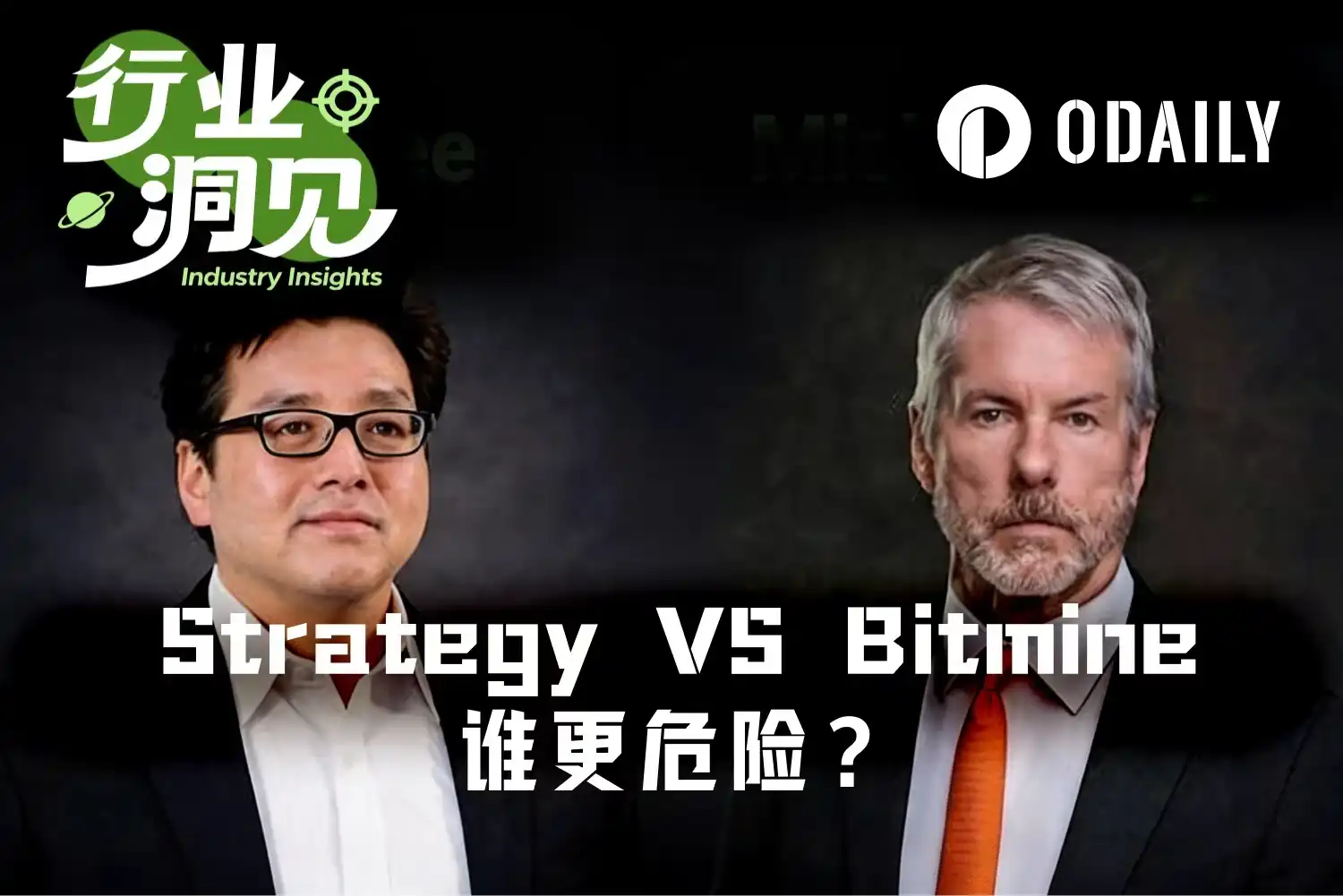
Both Suffer Massive Losses Exceeding $90 Billion, Which Is in Greater Peril: Strategy or Bitmine?

Facing massive paper losses exceeding $90 billion each amidst a sharp market downturn, "Digital Asset Treasury" (DAT) giants Strategy and Bitmine find themselves in a precarious position, but with different underlying risks. Strategy, heavily invested in Bitcoin (BTC), faces significant financial strain. Its strategy relies heavily on debt, including convertible notes and preferred stock (STRC) requiring substantial dividend payments. With its cash reserves dwindling and BTC offering no staking yield for cash flow, Strategy's high leverage makes it vulnerable. A continued price decline could force asset sales to meet obligations, potentially creating a negative feedback loop. Its market value has already fallen sharply. In contrast, Bitmine, an Ethereum (ETH) holder, appears on firmer financial ground. It primarily funds its purchases through equity offerings (like ATM programs), avoiding debt pressure. It also generates income by staking a large portion of its ETH holdings. While not immune to market drops and shareholder dilution concerns, Bitmine maintains more flexibility, recently announcing a new preferred share offering to raise further capital. The core divergence lies in their financing: Bitmine uses equity (investor money), while Strategy uses debt (borrowed money). Consequently, Bitmine currently faces less immediate liquidity pressure than Strategy, which must navigate the dual challenge of servicing debt/dividends and a declining core asset (BTC) price.

marsbit20m ago

Both Suffer Massive Losses Exceeding $90 Billion, Which Is in Greater Peril: Strategy or Bitmine?

marsbit20m ago

Where the AI Bubble Really Is: Which Layer of Players Are Naked

AI Bubble: Where It Really Is and Who's Swimming Naked This analysis dissects the AI industry not as a single entity but as a five-layer pyramid, arguing that bubbles are concentrated in specific tiers, not uniformly distributed. **Key Distinction from the 2000 Dot-com Bubble:** Unlike 2000, where companies had stock prices before revenue, today's leading AI players have massive, contract-backed revenue driving their valuations. Core infrastructure demand is real, with every GPU running at full capacity for paying customers. **The Five-Layer Pyramid & Bubble Assessment:** * **L0 (Fab/Manufacturing) & Top L4 (Leading AI Apps): NO BUBBLE.** Companies like TSMC, NVIDIA, major cloud providers (Microsoft, Google, Meta, Amazon), and top AI labs have real revenues and orders. Supply is tightly constrained by TSMC's disciplined capacity control and physical limits like power/land for data centers, preventing a supply glut. * **L1 (Memory): BATTLEGROUND.** Sky-high HBM margins could signal a new structural cycle or a classic "boom before bust." The oligopoly of three major players may enforce supply discipline, making this a high-stakes bet. * **L2 (Interconnect/Optical Modules): BUBBLE TERRITORY.** Companies like Lumentum and AAOI have seen stock surges (4-10x) far outpacing revenue growth. This hardware segment has lower physical barriers to expansion than fabs, allowing speculation. It mirrors the 2000 bubble's epicenter—optics. * **L3 (Infrastructure/"GPU Landlords"): VULNERABLE.** GPU leasing companies profit from the current compute shortage but own no long-term moat. Their business model relies on a temporary bottleneck that will ease as big tech expands and new tech (e.g., potential space-based data centers) emerges. * **L4 Long Tail (VC-backed Startups): STRONG BUBBLE SIGNALS.** VC funding concentration in AI is twice that of the 1999 peak. Many startups with little revenue use the valuation logic of successful giants to justify their own, creating high risk of a "valuation crunch" when funding dries up. **Critical Risks to Monitor:** 1. **GPU Depreciation & Accounting:** Companies extending the assumed useful life of GPUs artificially boost profits. The true economic life depends on future generational leaps from NVIDIA. 2. **"GPU Credit" & Off-Balance-Sheet Leverage:** Emerging structures where shell companies borrow to buy GPUs and lease them out (with chipmakers sometimes investing) move debt off major balance sheets. This echoes the "vendor financing" of 2000 and the securitization risks of 2008, though currently small-scale. 3. **TSMC Abandoning Caution:** If the primary supply bottleneck (TSMC's conservative capacity planning) breaks, runaway supply could trigger a bust. 4. **Algorithmic Efficiency Breakthrough:** A major leap in software efficiency could drastically reduce the need for raw compute hardware, undermining the investment thesis. **Conclusion:** The AI boom is expensive and has frothy areas, but its core is underpinned by real demand and physical supply constraints. The bubble risk is layered: most present in optical components, GPU leasing, and the long-tail startup ecosystem, while the foundational chip manufacturing and leading application layers remain relatively solid—for now.

marsbit32m ago

Where the AI Bubble Really Is: Which Layer of Players Are Naked

marsbit32m ago

Trading

Spot
Futures

Hot Articles

How to Buy SUN

Welcome to HTX.com! We've made purchasing SUN (SUN) simple and convenient. Follow our step-by-step guide to embark on your crypto journey.Step 1: Create Your HTX AccountUse your email or phone number to sign up for a free account on HTX. Experience a hassle-free registration journey and unlock all features.Get My AccountStep 2: Go to Buy Crypto and Choose Your Payment MethodCredit/Debit Card: Use your Visa or Mastercard to buy SUN (SUN) instantly.Balance: Use funds from your HTX account balance to trade seamlessly.Third Parties: We've added popular payment methods such as Google Pay and Apple Pay to enhance convenience.P2P: Trade directly with other users on HTX.Over-the-Counter (OTC): We offer tailor-made services and competitive exchange rates for traders.Step 3: Store Your SUN (SUN)After purchasing your SUN (SUN), store it in your HTX account. Alternatively, you can send it elsewhere via blockchain transfer or use it to trade other cryptocurrencies.Step 4: Trade SUN (SUN)Easily trade SUN (SUN) on HTX's spot market. Simply access your account, select your trading pair, execute your trades, and monitor in real-time. We offer a user-friendly experience for both beginners and seasoned traders.

6.9k Total ViewsPublished 2024.03.29Updated 2026.06.02

How to Buy SUN

Discussions

Welcome to the HTX Community. Here, you can stay informed about the latest platform developments and gain access to professional market insights. Users' opinions on the price of SUN (SUN) are presented below.

活动图片