Author / Wenser(@wenser2010)
Original Title: Five Meme Coins Soar Against the Market Trend, Which is the Next Potential Coin?
The crypto market continues to experience a downward trend with high volatility. However, even in such a cold market, a few tokens defy the trend, maintaining their own independent rhythm of "sharp rises and dramatic falls." Odaily Planet Daily will梳理(review) the recent standout "meme coins" with impressive price performance in this article, attempting to summarize their common characteristics to help discover the next investment target with potential for explosive growth.
PIPPIN: The Orphan of the AI Agent Craze, a Masterpiece of "Insider Trading"
From late last year to January this year, AI Agent tokens once captured the absolute focus of the crypto market. Tokens like ai16z(ELIZAOS) and swarms frequently topped the token gain charts. PIPPIN was also a product of that same batch of AI-themed tokens.
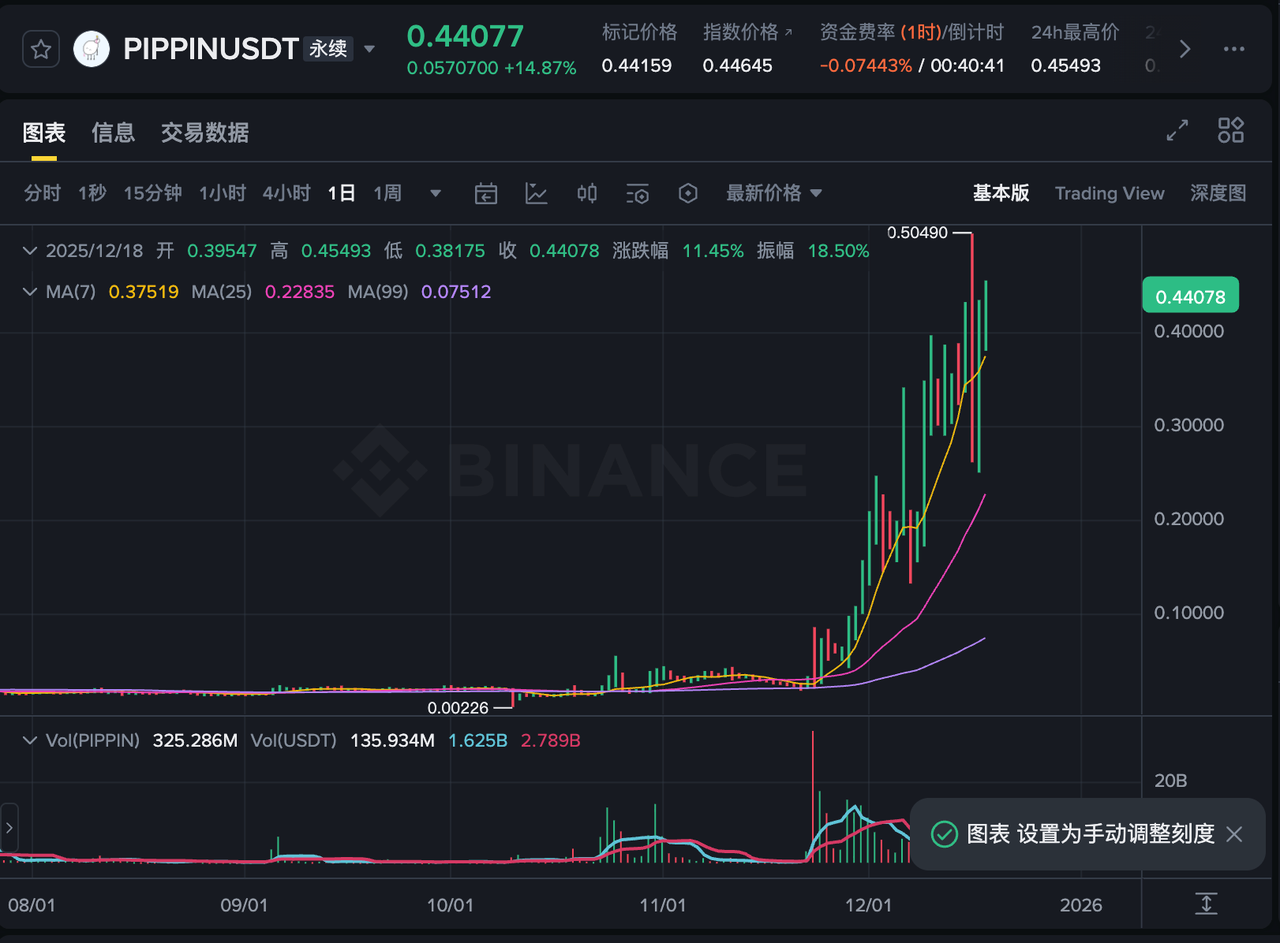
But now, nearly a year later, only PIPPIN remains, possibly selected by wildcat market makers for its ease of price manipulation. In the past half month, it has been on a continuous upward climb. It's worth noting that on November 23rd, its price was merely around $0.05. Just one week later, its price had skyrocketed to over $0.17:
On December 1st, PIPPIN defied the market trend, surging over 60%, with its price approaching $0.18. At that time, analyst @frontrunnersx warned that PIPPIN showed characteristics of concentrated accumulation, with some addresses continuously buying and holding without significant selling, causing the price to continuously hit short positions during the rise, triggering chain liquidations. One address bought about $200,000 worth of PIPPIN 6 days prior, sold after the price doubled, and was currently performing a similar operation on ARC.
On December 2nd, Bubblemaps monitoring revealed that 50 linked addresses purchased $19 million worth of PIPPIN tokens. They also found that 26 addresses withdrew 44% of PIPPIN's token supply, totaling $96 million, from the Gate platform over two months, with most wallets being newly funded. Most PIPPIN token withdrawals occurred on October 24th and November 23rd. By then, the PIPPIN token price had already surged 1000%, with insiders controlling half of the token supply, valued at $120 million.
In other words, the wildcat market makers' accumulation period for PIPPIN started even earlier, about a month prior, with the truly violent pump occurring about a month and a week after accumulation began.
Subsequently, a diamond hands address liquidated its previously hoarded 24.8 million PIPPIN tokens, with floating profits shrinking from a peak of $7.6 million to $3.65 million.
On December 6th, Onchain Lens monitoring showed a whale spent 23,736 SOL (worth approximately $3.3 million) to buy 16.35 million PIPPIN at $0.20 per token over 3 days, resulting in a floating profit of over $740,000 at that time.
On December 16th, Bubblemaps issued another warning: PIPPIN's price continued to rise, but internal addresses now held about 80% of the supply, valued at approximately $380 million. Bubblemaps pointed out: Since the last disclosure (December 2nd), 16 new wallets with the same pattern have appeared (funded from HTX, received similar amounts of SOL, no history, large PIPPIN withdrawals from CEXs); another set of 11 wallets linked to Bitget was identified, collectively holding about 9% of the supply, with highly consistent fund flow patterns and timing windows, suspected to be controlled by the same entity.
That night, as PIPPIN's price fell below $0.3, this "meme coin spectacle" was declared阶段性收网(phase concluded/stage wrapped up). But the next day, December 17th, PIPPIN surged to around $0.5, causing another large wave of short liquidations. It must be said, the brutal methods of bear market wildcat market makers are堪称残忍(deservingly called cruel).
As of writing, PIPPIN's price is temporarily reported at $0.44, with a 24-hour increase of over 15%. Its performance continues.
FOLKS: Cross-Chain DeFi Protocol Token, Surged Nearly 24x from Low Point Following S2 Incentive Announcement
As a cross-chain DeFi protocol offering lending, staking, and trading services, primarily operating on the Algorand chain, Folks Finance originally didn't attract much attention. However, with the official announcement of the S2 incentive campaign, market enthusiasm for its token reignited.
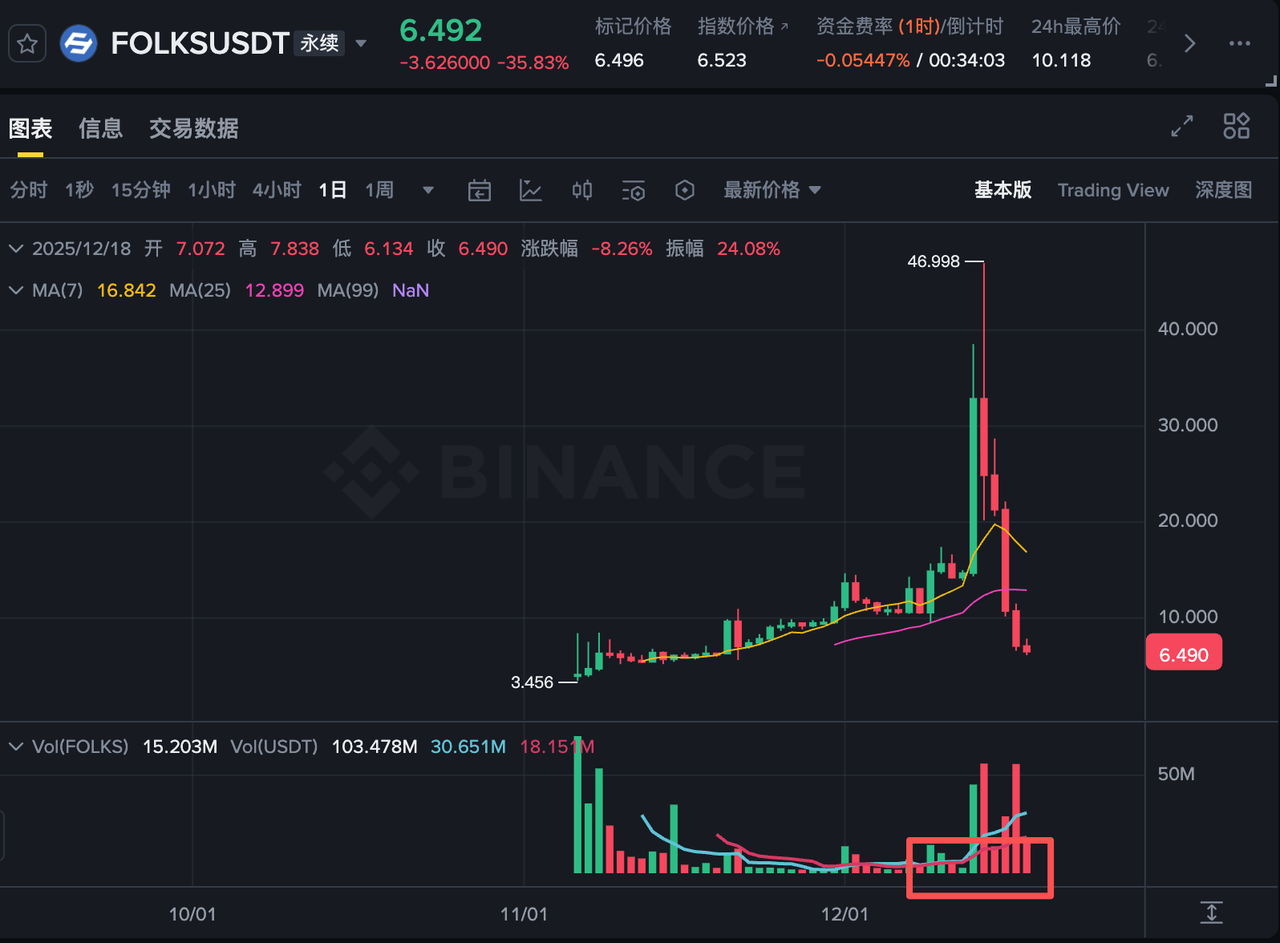
It's worth mentioning that Folks Finance distributed 1.5 million FOLKS tokens during the S1 incentive campaign, including Chainlink incentives. On November 6th, FOLKS officially launched on Binance Alpha, with a historical low price around $2.
After the official Folks Finance announcement on December 9th, the FOLKS token price soared from under $10;
On December 14th, after nearly a week of speculation, the FOLKS token price broke through $40 for the first time, eventually rising to nearly $47, representing a gain of nearly 24 times from its low point;
Subsequently, the FOLKS price rapidly retreated, falling by about 80%.
As of writing, the FOLKS price is temporarily reported at $6.4, with a 24-hour decrease of over 24%. The circulating supply is 12.7 million tokens (25.4% of total supply), with a temporary market cap of around $81 million.
BEAT: A True Meme Coin Needs Few Words
As another altcoin choosing to root itself in the BNB Chain ecosystem, similar to previous meme coins like MYX and COAI, BEAT's rise is another classic case.
It is worth noting that the official account behind the BEAT token project promotes the concept of a "Web3 AI entertainment platform + IP creation platform" – essentially a repackaged version of hot concepts. After listing on Binance Alpha and futures in early November, BEAT's official claims甚至超(surpassed) 1.2 million unique on-chain holding addresses, prompting the remark "audacity leads to high yield".
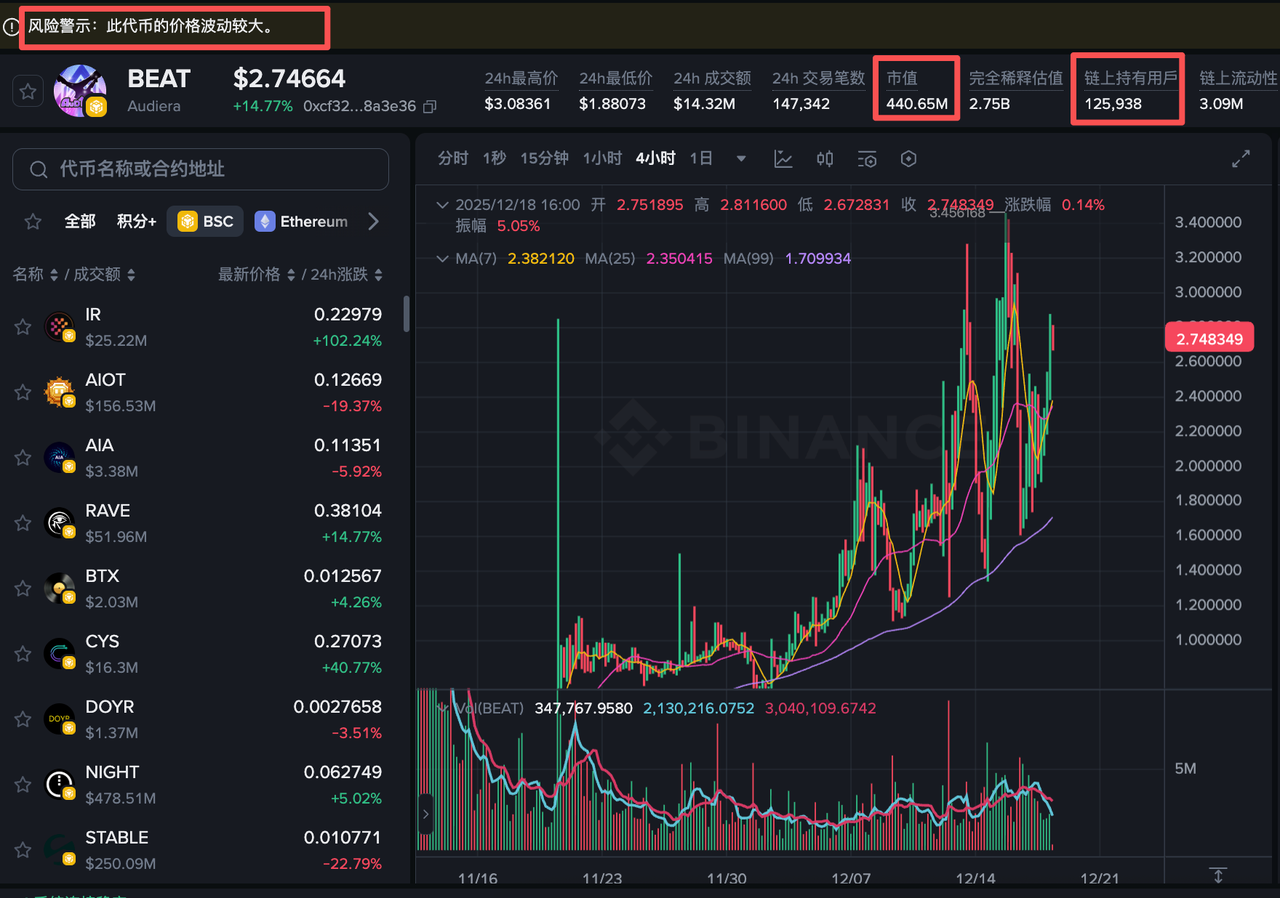
Similar to the price action of previous meme coins, BEAT started with a low market cap – initially rising after listing on Binance Alpha but still staying around $25 million; subsequently, the price飞速上涨(rapidly increased) amidst repeated pumps and dumps.
As of writing, the BEAT price is temporarily reported around $2.7, with a 24-hour increase of over 14%. The circulating market cap is temporarily reported at $440 million, with about 126,000 on-chain holding addresses.
AIA: Decentralized AI Agent Concept Token, Volatility from Contract Migration
As the project token for DeAgent AI, AIA previously attracted significant market liquidity and attention due to a massive surge after listing on Binance futures, its price once skyrocketing over $1. However, constrained by the increasingly cold market environment and the gradual cooling of the AI narrative, the token price gradually fell into silence, experiencing a continuous slow decline.
But the incident of "Binance delisting AIA futures" injected volatile energy into its liquidity once again.
On December 11th, according to an official announcement, Binance Futures announced it would close all AIAUSDT perpetual contract positions at 20:15 on December 11, 2025 (UTC+8) and perform automatic settlement. After settlement, the contract would be delisted. AIA plummeted over 90%.
But subsequently, Binance announced that Alpha 2.0 would support a contract migration for DeAgentAI (AIA). Starting from 20:00 on December 11, 2025 (UTC+8), Binance Alpha 2.0 had closed AIA trading to execute this contract migration. This migration would be executed at a 1:1 ratio. The snapshot time was 20:00 on December 11, 2025 (UTC+8). Binance Alpha 2.0 would resume DeAgentAI (AIA) trading at 16:00 on December 15, 2025 (UTC+8).
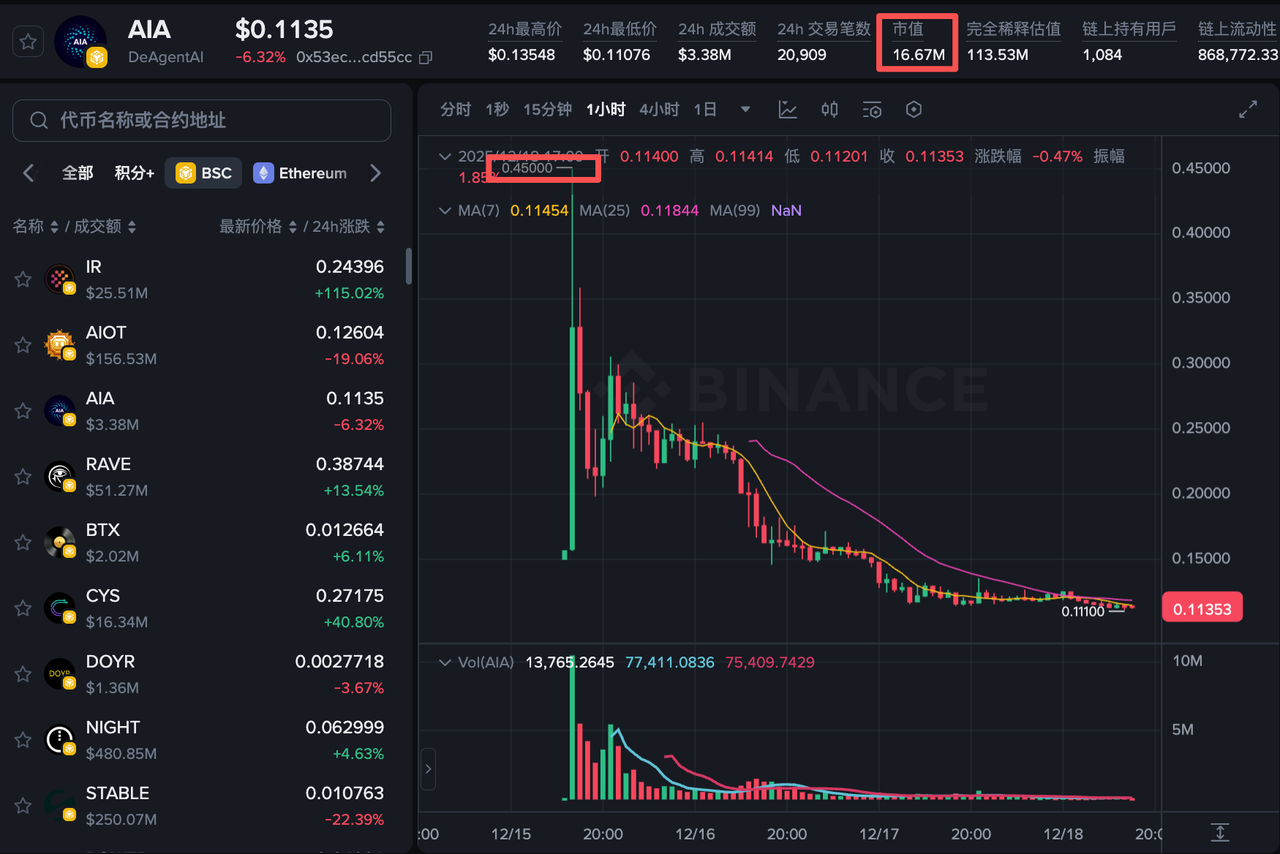
On December 15th, official data from Binance Alpha showed that DeAgentAI (AIA) had completed its smart contract migration and officially resumed trading at 16:00 (UTC+8) on December 15th. Market data showed AIA surged significantly after opening, with gains一度超过(exceeding) 160%, topping the Binance Alpha gainers chart.
As of writing, the AIA price is temporarily reported at $0.11, with a 24-hour decrease of 6.3%. The circulating market cap is temporarily reported at $16 million.
RAVE: Offline Community-Driven Culture Platform, Supported by Retweets from Trump's Eldest Son and CZ
As a DAO organization promoting the concept of a "decentralized music and culture community and platform ecosystem," RaveDAO's development speed has been like a cheat code. After months of community building and project development, RaveDAO has previously completed several member NFT sales.
On November 10th, RaveDAO officially announced its token economic model and airdrop details. The official stated that the token aims to connect artists, organizers, and fans through token economics, promoting a "culture as protocol" decentralized entertainment ecosystem. RAVE has a total supply of 1 billion tokens, allocated as follows: Community 30%, Ecosystem 31%, Team & Co-builders 20%, Early Supporters 5%, Liquidity 5%, Airdrop 3%, Foundation & Public Goods Pool 6%. Approximately 23.03% will be in circulation after the Token Generation Event (TGE), with the remainder subject to a 12-month cliff and a 36-month linear vesting period.
A month later, on December 10th, Binance Alpha announced it would soon list RaveDAO(RAVE).
The next day, news spread that RaveDAO received support from both the WLFI and Aster ecosystems. On December 12th, within an hour of listing on Binance Alpha, RAVE's trading volume exceeded $25 million.
Moreover, RaveDAO's "high-level connections" were remarkably prominent – on the evening of the 12th, Trump's eldest son retweeted and followed the dynamic regarding Aster's cooperation with USD1. RaveDAO, as one of the cooperation participants, gained massive exposure from this. CZ subsequently retweeted this post, and the RAVE price也随之水涨船高(rose accordingly).
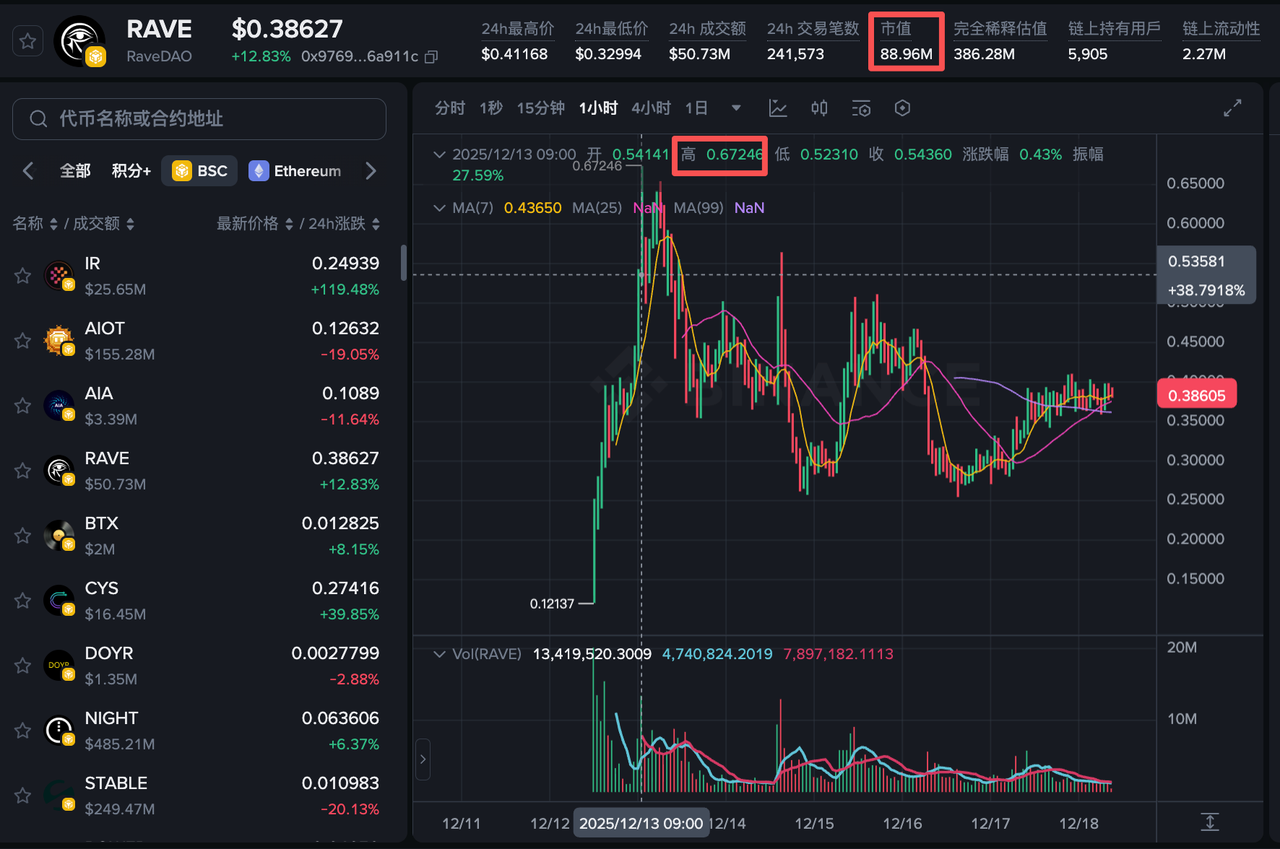
On December 13th, the RAVE price一度触及(reached) $0.67, with a 24-hour increase of over 410%;
On December 14th, Binance Futures launched RAVE U本位(USD-M) futures contracts;
On December 15th, RAVE was successively listed on OKX, Bybit, Bitget, Aster, Gate, Kucoin, MEXC, and other centralized exchanges. The price at that time had回落至(retreated to) around $0.41.
As of writing, the on-chain price of RAVE is temporarily reported at $0.38, with a 24-hour increase of over 12%. The circulating market cap is temporarily reported at $88 million.
Twitter:https://twitter.com/BitpushNewsCN
BitPush TG Discussion Group:https://t.me/BitPushCommunity
BitPush TG Subscription: https://t.me/bitpush