Ex-Ripple Exec Shares What Burning XRP Means, But Does It Influence Price?

bitcoinistPublished on 2026-03-17Last updated on 2026-03-17

Abstract

Former Ripple CTO David Schwartz has challenged the common belief within the XRP community that burning tokens directly and immediately impacts the asset's price. This discussion arose after a community member questioned Ripple's recent $750 million share buyback, suggesting the company should instead burn the XRP held in escrow to benefit holders. To support his argument, Schwartz shared a price chart of Stellar (XLM), which burned half of its supply in 2019, showing no immediate price surge from the event. He asserted that while burns can have indirect market effects, they do not directly cause price rallies. The debate then expanded to question whether Ripple's other initiatives, such as its upcoming stablecoin RLUSD and Real-World Asset (RWA) tokenization, would provide any direct benefit to XRP's price if burns do not.

A former Ripple executive has weighed in on an ongoing debate over XRP token burns, shedding light on their actual impact on an asset’s value. In a heated discussion on X, the executive challenged the XRP community’s long-held belief that burning tokens directly influences their immediate price action or automatically triggers a sharp price rally.

Ex Ripple CTO Reveals Real Impact Of Burning XRP

David Schwartz, the former Chief Technology Officer (CTO) of Ripple, has taken to X to share new details about XRP burning and its direct influence on price. Notably, Schwartz’s statements come in response to the recent backlash and criticism stemming from Ripple’s latest $750 million share buyback.

In a post on March 12, a pseudonymous XRP community member known as ‘XRP Launch’ on X tagged several of Ripple’s top executives, including Schwartz, CEO Brad Garlinghouse, President Monica Long, and CLO Stuart Alderoty. The user questioned the company’s recent share buyback, asking why Ripple would prioritize this approach over initiatives that directly benefit XRP holders.

He urged the executives to consider burning the XRP currently held in escrow rather than pursuing share buybacks that primarily benefit Ripple as a company. In a sarcastic remark, he added that perhaps the escrow cannot be burned, as doing so might push XRP’s price beyond $1.39.

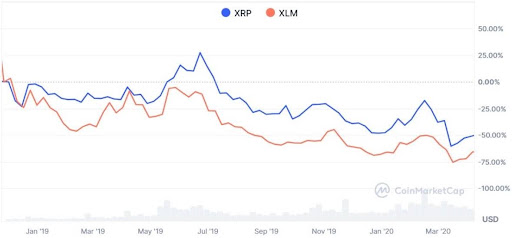
Responding to the remarks, Schwartz shared a price chart illustrating the historical performance of both XRP and Stellar (XLM). The chart highlights volatility in both assets, with notable price spikes in some months and relatively subdued action in others. The former Ripple CTO then challenged the XRP member to identify where, on the chart, XLM had burned half of its total supply.
Source: X

Notably, Stellar conducted a large-scale token burn in November 2019, eliminating half of its supply. Schwartz argued that, despite the significant reduction in supply, the move had no immediate, direct impact on XLM’s price. The chart showed no meaningful price surge throughout November that year or in the following months, with the only noticeable upward movement appearing around February to March of the next year.

Schwartz pushed back against the user’s claim that burning escrowed XRP would trigger a price rally, arguing that token burns have no direct impact on an asset’s performance or valuation. However, he acknowledged that such actions can, in some cases, exert indirect influence on market dynamics.

Concerns About RLUSD And RWA Impact On XRP Arise

As Schwartz debunked misconceptions about XRP burns, the debate quickly shifted to Ripple’s stablecoin, RLUSD, and the XRP Ledger’s (XRPL) Real-World Assets (RWAs) tokenization. A community member known as Spade reasoned that if burning tokens added no value to XRP, then, by extension, initiatives such as RLUSD, RWAs, and XRP’s role as a bridge asset may also provide little to no direct benefit to the cryptocurrency’s price.

He contended that the only immediate effect these activities would have on the ecosystem is burning XRP, which, according to Schwartz’s argument, would not positively influence the price. Spade further asserted that liquidity generated by using RLUSD does not increase XRP’s value. In his view, buying and holding XRP can increase its price. He also criticized the broader narrative that XRP “frees up capital,” arguing that the concept is counterproductive to the asset’s price growth.

Price goes on another uptrend | Source: XRPUSDT on TradingView.com

Related Questions

QWhat did the former Ripple executive, David Schwartz, claim about the direct impact of token burns on XRP's price?

ADavid Schwartz argued that token burns have no direct impact on an asset's performance or valuation, using Stellar's (XLM) 2019 burn of half its supply as an example which did not cause an immediate price surge.

QWhy was the XRP community member 'XRP Launch' critical of Ripple's recent $750 million share buyback?

AThe member was critical because they believed Ripple should prioritize initiatives that directly benefit XRP holders, like burning the escrowed XRP, instead of a share buyback which primarily benefits the company itself.

QAccording to the article, what was the community's concern regarding Ripple's stablecoin RLUSD and Real-World Asset (RWA) tokenization?

AThe concern was that if burning tokens doesn't add value, then initiatives like RLUSD, RWAs, and XRP's role as a bridge asset might also provide little to no direct benefit to XRP's price.

QWhat was the main point of the community member 'Spade' in the debate about what increases XRP's value?

ASpade contended that the only immediate way to increase XRP's price is through buying and holding it, and criticized the narrative that XRP 'frees up capital' as counterproductive to price growth.

QWhat evidence did David Schwartz use to support his argument against the effectiveness of token burns?

AHe shared a price chart comparing XRP and XLM and challenged others to identify where XLM burn occurred, pointing out that the massive burn in November 2019 did not result in an immediate price increase for XLM.

Related Reads

A Nation Blocks Chips, a Giant Buys a Nuclear Power Plant: Why It's Time to Seriously Consider DeAI

**Title: Great Powers Blockade Chips, Giants Buy Nuclear Plants: Why It's Time to Seriously Consider DeAI** In May 2026, the US closed loopholes for Chinese firms to acquire advanced NVIDIA chips via overseas subsidiaries. That same month, Kenya halted a $1B geothermal data center project involving Microsoft, fearing its immense energy consumption. Meanwhile, Huawei announced mass production of its Ascend AI chip. These disparate events underscore a new reality: the competition for computing power ("compute") has escalated beyond the tech industry, becoming a geopolitical and infrastructural battleground. A new era of oligopoly is forming, with control over the AI stack—from GPU chips (NVIDIA) and cloud platforms (AWS, Azure, Google Cloud) to foundational models (OpenAI, Anthropic)—concentrating in a few Western "AI Octopus" corporations. This centralization creates systemic risks: pricing power and platform lock-in for users, infrastructure fragility, and a widening "compute divide" that threatens to marginalize nations without independent AI capacity. An "AI Iron Curtain" is deepening through export controls. In response, some nations like Saudi Arabia and the UAE are investing heavily to buy compute power, aiming to transition from oil to AI economies. The EU seeks to triple its compute capacity by 2030 to reduce dependency. However, the spending gap is vast, with four US tech giants alone planning ~$750B in AI capex for 2026. The race is increasingly constrained by energy, with AI tasks consuming up to 1000x more power than web searches, pushing firms to even acquire nuclear plants. This landscape is fueling interest in Decentralized AI (DeAI). It proposes a third way: using open protocols to coordinate a global network of idle GPUs, independent developers, and data centers, creating an AI infrastructure without a single controlling entity. Leveraging blockchain and cryptographic verification, DeAI aims to break market concentration, disperse energy demands, reduce geopolitical dependencies, and enhance transparency. While still nascent in performance and stability, DeAI's core promise is not immediate superiority but providing a crucial alternative architecture to resist monopoly, censorship, and centralized power. As specialized AI hardware costs fall and open-source models flourish, the window to build this foundation is open. The very existence of such competition serves as a vital check against the inevitable abuse of concentrated power.

marsbit36m ago

A Nation Blocks Chips, a Giant Buys a Nuclear Power Plant: Why It's Time to Seriously Consider DeAI

marsbit36m ago

Outpoll Review: A Prediction Market Platform Built for Active Traders

Outpoll Review: A Prediction Market Platform Built for Active Traders In recent years, prediction markets have grown from a niche sector to a mainstream arena, attracting billions in trading volume and institutional capital. However, the user experience and tools for traders have not kept pace. Outpoll, a new global prediction market platform, aims to fill this gap by providing enhanced trading infrastructure for active and professional traders. Built on standard prediction market principles, Outpoll allows users to trade on the outcome of specific events. It uses fully collateralized contracts with USDC settlement, charges a competitive 0.1% fee per trade, and provides clear settlement rules upfront to minimize disputes. A key focus for Outpoll is its professional-grade trading tools. The platform supports limit and market orders, as well as take-profit and stop-loss orders for open positions—features uncommon in prediction markets. For automated trading, Outpoll offers comprehensive REST and WebSocket APIs, enabling portfolio management, price arbitrage, and integration with existing tools. The platform also features a creator-led market model, where approved experts and community leaders can create and manage markets for niche topics under platform supervision. Its integrated interface combines news feeds directly with trading functions, allowing users to monitor events and manage positions seamlessly. Outpoll launched with a native Android app (available on Google Play) and plans an iOS version later this year. In summary, Outpoll distinguishes itself with trader-focused tools, practical APIs, transparent and collateralized markets, integrated news, and an expanding creator program. For active traders, its advanced order types and API access alone make it a platform worth watching. Outpoll is now globally accessible via outpoll.com and Google Play.

marsbit45m ago

Outpoll Review: A Prediction Market Platform Built for Active Traders

marsbit45m ago

Bitwise: Crypto Becomes a Contrarian Investment, Three Logics to Understand the Current Market

**Summary** Matt Hougan, Bitwise's CIO, analyzes the current crypto market through three key lenses, arguing it has shifted from a momentum-driven to a contrarian investment. **1) Crypto Becomes a Contrarian Play:** The market is weak, with major assets like Bitcoin and Ethereum down significantly. Capital has moved to hot sectors like AI, leaving crypto as an "unloved" asset class. This transforms crypto investing from trend-following to a test of patience and fundamental analysis. Investors now favor projects with solid fundamentals (e.g., Hyperliquid) over speculative ones. **2) Regulatory Overhang:** The uncertain fate of the U.S. CLARITY Act, a major crypto regulatory framework, is a key headwind. With its passage in 2024 seen as far from guaranteed (estimates range from 30-55%), institutional capital remains on the sidelines, choosing less risky alternatives like AI stocks. The market needs clarity—whether the bill passes or fails—more than any specific outcome to move decisively. **3) Capital Rotates to New Fundamentals:** This cycle differs from past bear markets where money fled to Bitcoin. Now, capital seeks smaller assets with strong use cases. While major cryptos fell in May 2024, tokens like Hyperliquid (+72%), Zcash (+50%), and XLM (+44%) rallied on their specific fundamentals. This rotation confirms the new contrarian, fundamentals-driven logic and signals the bear market may be in its later stages. **Conclusion:** Short-term pressure persists due to regulatory uncertainty and competition from AI narratives. Investing in crypto now requires a contrarian mindset—acting against the crowd and focusing on fundamental value. Patience and targeting high-quality projects based on their merits are essential for capturing long-term gains.

marsbit1h ago

Bitwise: Crypto Becomes a Contrarian Investment, Three Logics to Understand the Current Market

marsbit1h ago

ChatGPT Might Be Disappearing Soon

OpenAI announced at its "Intelligence at Work" event that its coding assistant, Codex, will be fully integrated into the ChatGPT app within weeks. This move marks a strategic shift from a conversational AI (Chat) towards a unified "agentic" platform capable of execution. Codex, originally launched to compete with Anthropic's Claude Code, has grown rapidly to 5 million weekly active users, with 20% being non-developers like analysts and designers. Its enterprise revenue now constitutes 40% of OpenAI's total. The integration is the first step in creating a super-app combining ChatGPT (interface), Codex (execution engine), and the Atlas browser (web access). OpenAI also unveiled new Codex features: specialized Agent plugins for six professional roles, an "Annotations" tool for direct document editing, and a "Sites" function to turn work into shareable web apps. Internally, this reflects a power shift; the Codex team now leads core product strategy. While the ChatGPT brand remains for its vast user base, the platform's future is focused on autonomous agents that perform tasks, not just chat. The article notes that competition with Claude Code pushed OpenAI's development, with Codex competing on cost-effectiveness and accessibility rather than raw coding quality. It concludes that the essence of "ChatGPT" is evolving from a chatbot into an AI agent platform, with the name potentially becoming a legacy symbol of its original function.

marsbit1h ago

ChatGPT Might Be Disappearing Soon

marsbit1h ago

Trading

Spot
Futures

Hot Articles

What is XRP 2.0

XRP 2.0: A New Frontier in the Cryptocurrency Landscape Introduction to XRP 2.0 In the ever-evolving realm of cryptocurrency, new projects continuously emerge, vying for attention and adoption. One such promising initiative is XRP 2.0, a novel cryptocurrency project designed to leverage advanced blockchain technology and robust encryption methodologies. While the name draws parallels with Ripple’s XRP, it’s crucial to note that XRP 2.0 operates independently, focusing on enhancing transaction security, privacy, and scalability. As the digital financial landscape increasingly embraces decentralized solutions, XRP 2.0 aims to contribute meaningfully to web3 and the overall expansion of crypto projects. What is XRP 2.0? At its core, XRP 2.0 is a cryptocurrency project that aims to create a secure and decentralized digital currency ecosystem. Its foundational technology integrates sophisticated blockchain principles with cutting-edge encryption techniques. The overarching goal of XRP 2.0 is to establish itself as a reliable and efficient platform enabling swift transaction execution while prioritizing enhanced privacy protections for its users. The project is promoted as a solution to many limitations faced by existing cryptocurrencies, proposing a system that can handle a higher volume of transactions with improved speed and privacy. This versatility positions XRP 2.0 as a significant contender in a marketplace riddled with various digital currencies. Who is the Creator of XRP 2.0? The identity of the creator behind XRP 2.0 has been flagged as ‘Wilbur.’ However, comprehensive details regarding Wilbur or their associated entity remain elusive. The anonymity of many cryptocurrency creators is not an uncommon phenomenon in the industry, often designed to maintain a degree of privacy and security. Who are the Investors of XRP 2.0? As of now, specific information related to the investment foundations or organizations supporting XRP 2.0 is not publicly available. In the cryptocurrency sector, the backing by reputed investors can significantly influence a project's credibility and success, yet the transparency regarding the financial supporters of XRP 2.0 has not been established. How Does XRP 2.0 Work? XRP 2.0 stands out by employing a combination of blockchain technology and advanced encryption algorithms that ensures secure and decentralized transactions. Its innovative structure includes unique features designed to foster user engagement and broaden functionalities beyond conventional cryptocurrency transactions. Among these features, XRP 2.0 incorporates AI-powered capabilities, such as text-to-image and text-to-speech functionalities. These additions are designed to enhance the interactive experience for users, promoting broader applicability across various sectors. By bridging technological advancements with user-centered design, XRP 2.0 aims to capture the attention of a diverse range of individuals and enterprises looking to integrate cryptocurrency solutions into their operational frameworks. Timeline of XRP 2.0 Understanding XRP 2.0 requires examining the milestones that have defined its journey thus far: July 23, 2023: XRP 2.0 is introduced as a novel cryptocurrency project, aiming to revolutionize secure and decentralized transaction capabilities in the blockchain domain. September 8, 2023: The launching of another project, XRP20, occurs, marking the emergence of an ERC-20 token on the Ethereum blockchain that remains unrelated to XRP 2.0. November 13, 2023: The XRP Ledger undergoes a significant update with the release of rippled server software version 2.0.0. It is essential to note that this development is disconnected from the XRP 2.0 cryptocurrency project. Key Points About XRP 2.0 To distill the essence of XRP 2.0, several critical factors emerge: Unique Features: The inclusion of features like AI-powered text-to-image and text-to-speech further diversifies the potential applications of XRP 2.0. Blockchain Technology: The framework utilizes advanced blockchain mechanisms and encryption protocols, ensuring a secure and decentralized environment for transactions. Scalability and Privacy: XRP 2.0 prioritizes enhanced privacy protections in transaction processes and the scalability necessary to accommodate a growing user base. No Affiliation with Ripple: Importantly, despite its name, XRP 2.0 does not have any allegiance or collaboration with Ripple’s XRP, distinguishing its operational framework and objectives within the cryptocurrency ecosystem. Conclusion XRP 2.0 represents an ambitious venture into the cryptocurrency sphere, aiming to offer a combination of security, privacy, and efficiency in digital transactions. By integrating sophisticated technologies and user-friendly features, the project sets out to broaden the horizons of what cryptocurrency can achieve in today's digital economy. While the anonymity of its creator and lack of disclosed investors might raise questions for some, XRP 2.0's focus on advanced functionalities and decentralisation enhances its appeal amidst an increasingly crowded crypto market. As the cryptocurrency landscape continues to evolve, XRP 2.0 may yet emerge as a pivotal player in the expansion of secure and scalable blockchain solutions.

942 Total ViewsPublished 2024.04.01Updated 2024.12.03

What is XRP 2.0

Discussions

Welcome to the HTX Community. Here, you can stay informed about the latest platform developments and gain access to professional market insights. Users' opinions on the price of XRP (XRP) are presented below.

活动图片