ETHZilla moves into onchain housing finance with 15% Zippy acquisition

cointelegraphPublished on 2025-12-10Last updated on 2025-12-10

Abstract

ETHZilla (ETHZ) has acquired a 15% stake in digital housing lender Zippy for $5 million in cash and $16.1 million in stock, marking its second acquisition in a week as part of a broader move into real-world asset (RWA) markets. The partnership aims to integrate Zippy’s loan-origination and AI-powered systems with ETHZilla’s tokenization platform to bring manufactured-home loans onchain. As part of the deal, ETHZilla gains a board seat and a 36-month exclusivity agreement with Zippy. Despite this expansion, ETHZilla’s stock has declined roughly 10% following the announcement, continuing a downward trend seen across several Ether treasury companies amid falling ETH prices.

Former biotech company ETHZilla (ETHZ) is doubling down on its push into real-world asset markets, taking a 15% stake in digital housing lender Zippy to bring manufactured-home loans onchain. The deal marks the company’s second acquisition in a week.

According to Wednesday’s announcement, ETHZilla will pay $5 million in cash and $16.1 million in stock for a 15% stake in Zippy, a US-based lender founded in 2021 that originates manufactured-home loans through a digital platform.

The companies plan to link Zippy’s loan-origination and AI-powered systems with ETHZilla’s tokenization stack for onchain distribution of manufactured-home chattel loans, including potential forward-flow sales to institutional investors.

As part of the transaction, ETHZilla will gain a board seat at Zippy and secure a 36-month exclusivity period requiring Zippy to conduct all blockchain infrastructure, digital asset issuance and tokenization through ETHZilla’s platforms.

ETHZilla, the sixth-largest Ether (ETH) treasury company according to CoinGecko data, said the investment builds on its broader push into real-world asset (RWA) markets.
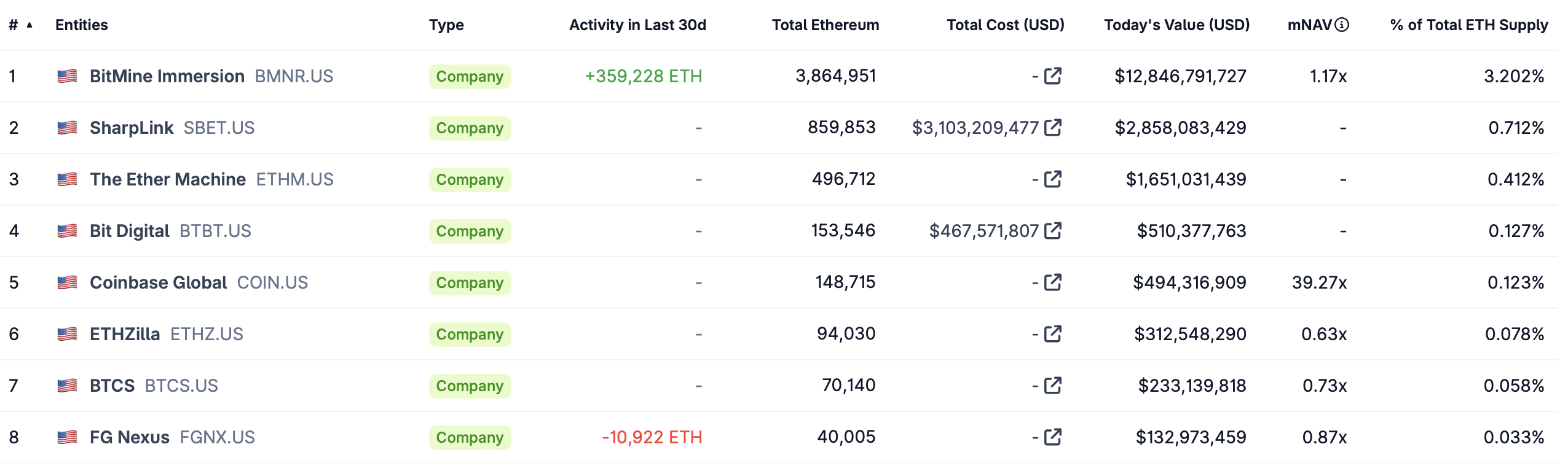
Top Ethereum treasury companies. Source: CoinGecko

The announcement comes one week after ETHZilla acquired a 20% fully diluted stake in auto-finance startup Karus for $10 million in cash and stock.

ETHZilla’s stock price was down around 10% at the time of writing, according to Yahoo Finance data.
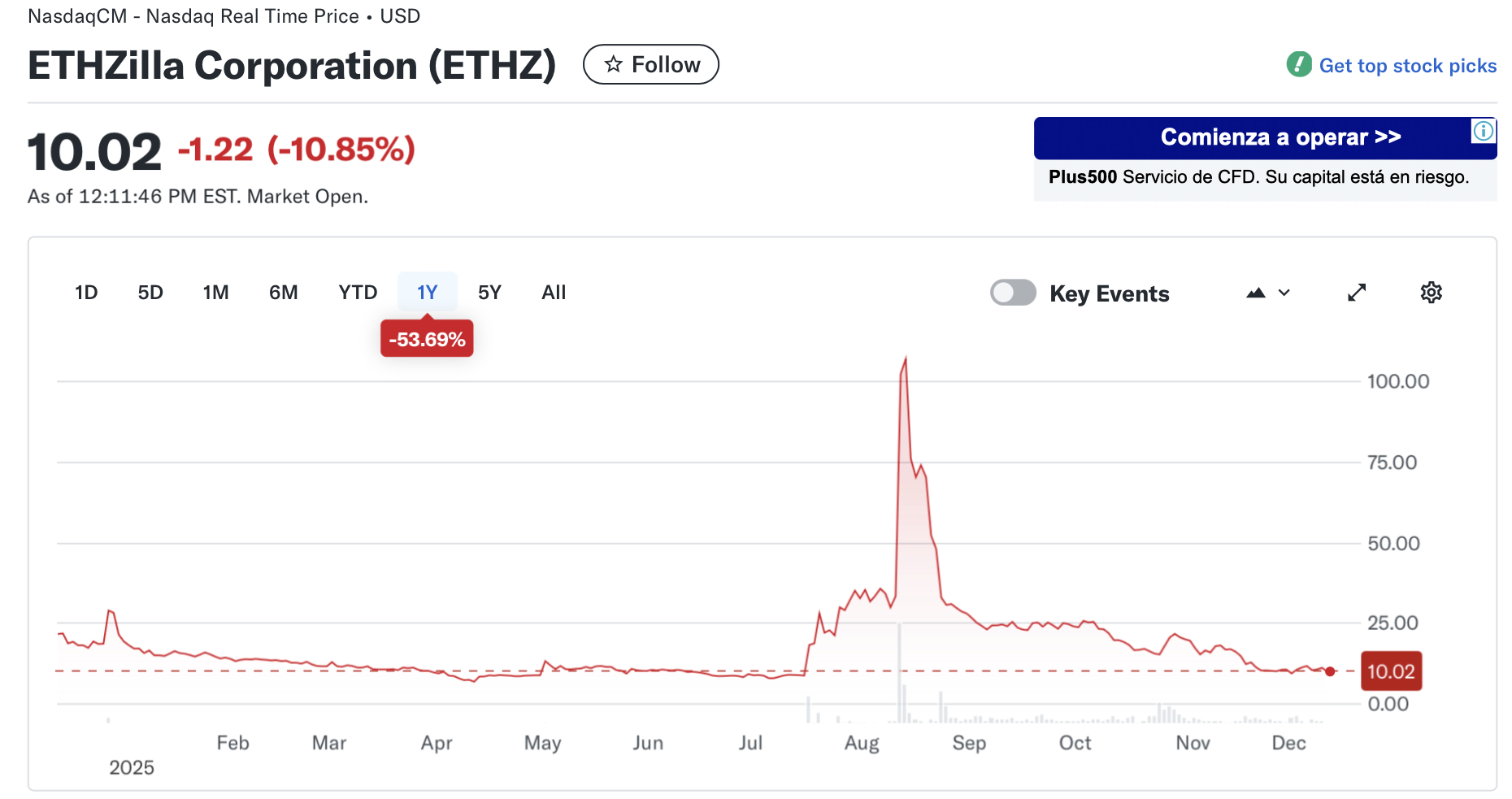
Source: Yahoo Finance

Related: Ethereum rising to $3.3K proves bottom is in: Is 100% ETH rally next?

Ether treasury stocks face steep declines

Several public companies that adopted Ether as a balance-sheet asset this year have seen sharp share-price reversals as the token price has fallen from its peak, ETHZilla among them.

ETHZilla, formerly 180 Life Sciences Corp, announced its pivot to an Ether treasury company on July 29. Its stock climbed from a $45 open that day to a $107 close by Aug. 13. However, the stock has declined roughly 91% since then, trading around $10 at this writing.

SharpLink Gaming launched an Ethereum treasury strategy in May, alongside a $425 million private placement that included Consensys as an investor and coincided with the nomination of Ethereum co-founder Joseph Lubin as chairman.

The company’s stock climbed more than 130% on the news to $79.21 on May 29, but has since dropped sharply to trade around $11.77 on Wednesday, according to Yahoo Finance data.
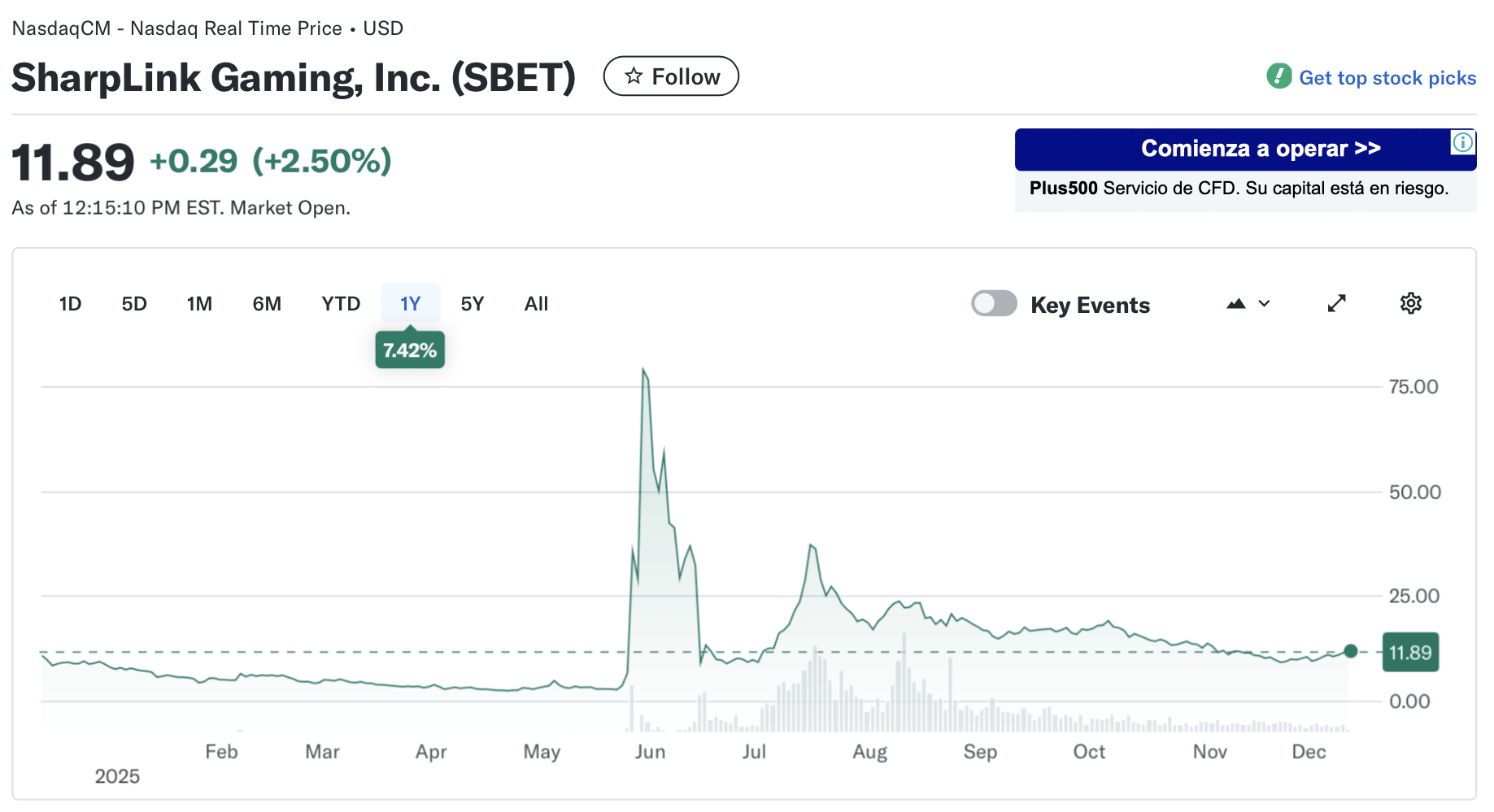
Source: Yahoo Finance

Bitmine Immersion, an Ether treasury company led by Fundstrat’s co-founder Tom Lee, has also struggled in recent months. Its stock hit an all-time high of $135 in July, but has since fallen to around $40 at this writing.
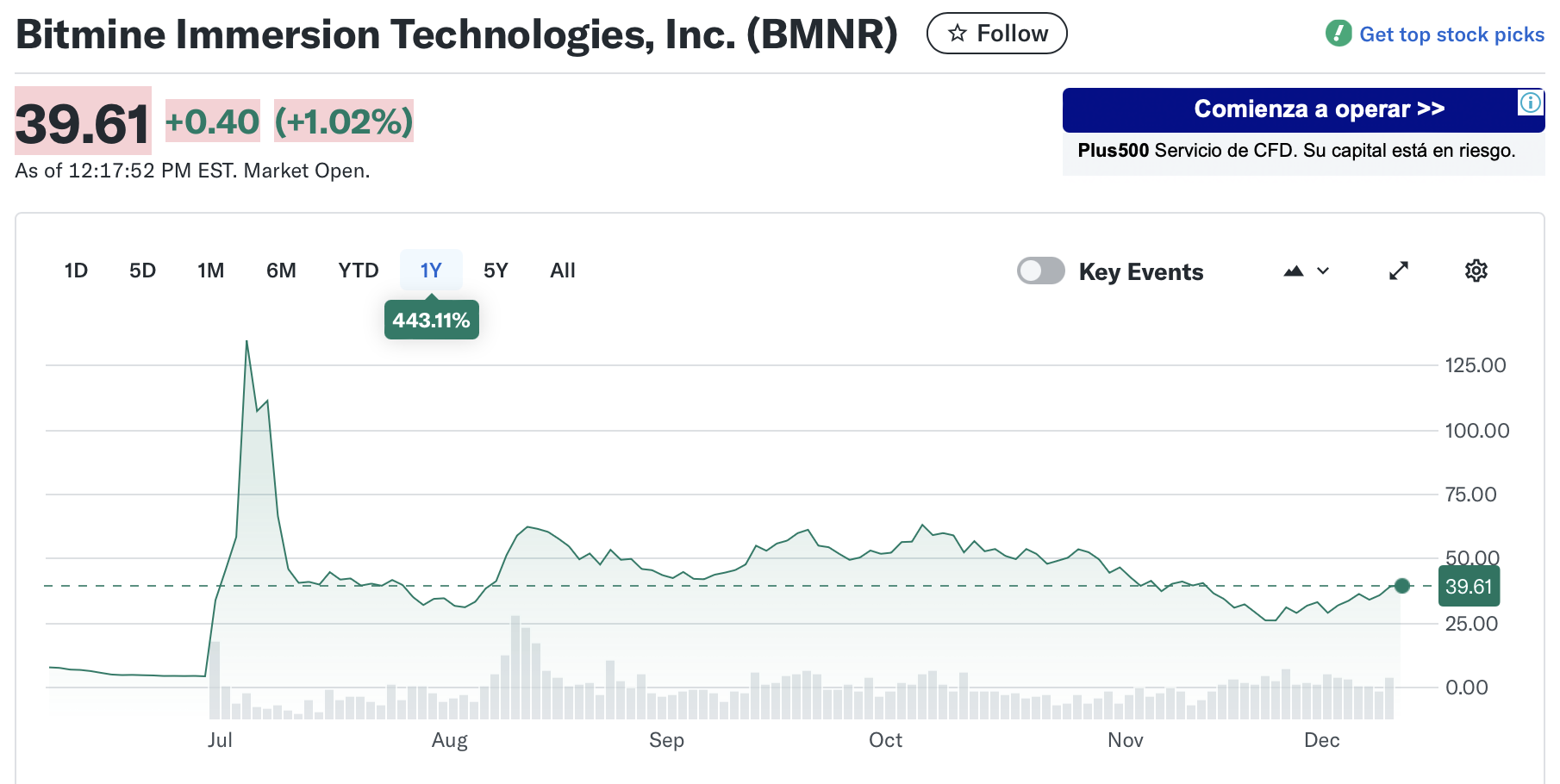
Source: Yahoo Finance

In August, Komodo Platform chief technology officer Kadan Stadelmann told Cointelegraph that companies adopting ETH treasury strategies face structural risks, and warned that a downturn in the market could force liquidations and amplify selling pressure on the token.

Ether has fallen since its all-time high of $4,946.05 on Aug. 24 and now trades at $3,365, according to CoinGecko data.

Magazine: Meet the onchain crypto detectives fighting crime better than the cops



Related Reads

Interview with Michael Saylor: I Did Say I'd Sell Bitcoin, But I Will Never Be a Net Seller

**Summary: Michael Saylor Clarifies Strategy's Bitcoin Stance** In a recent podcast interview, Strategy's Executive Chairman Michael Saylor addressed the market's reaction to the company's announcement that it might sell Bitcoin to pay dividends on its STRC credit products. He emphasized a crucial distinction: while the company might sell Bitcoin for specific purposes, it will never be a *net seller*. Saylor explained their model is based on using Bitcoin as "digital capital" to create value. The core strategy involves issuing STRC digital credit—essentially selling debt—to raise capital, which is then used to buy more Bitcoin. He estimates Bitcoin appreciates at roughly 40% annually. A small portion of these capital gains (e.g., ~2.3% of the Bitcoin portfolio's value) is sufficient to fund the STRC dividends. Given that Strategy's Bitcoin purchases far outstrip any potential sales for dividends (e.g., buying $3.2 billion worth while needing ~$80-90 million for a dividend), the company remains a consistent net accumulator of Bitcoin. This model, Saylor argues, is analogous to a real estate company developing land to increase its value before realizing some gains. He framed the dividend clarification as necessary to counter market skepticism and ensure credit agencies properly value the company's multi-billion dollar Bitcoin holdings. Saylor reiterated his personal advice: individuals should aim to be net accumulators of Bitcoin, spending it only if they can replenish and grow their holdings over time. Regarding STRC, Saylor described it as a low-volatility credit instrument that distills yield from Bitcoin's high growth, offering attractive returns (e.g., ~11-12% yield) for risk-averse investors. He noted that Strategy's STRC issuance now constitutes about 60% of the U.S. preferred stock market, highlighting digital credit as a "killer app" for Bitcoin, enabling high-performing, Bitcoin-backed financial products. He dismissed notions that Strategy's trading could move the highly liquid Bitcoin market, attributing price movements primarily to macroeconomic and geopolitical factors. Finally, Saylor reflected that Bitcoin's foundational role is now clear: it is the superior capital asset enabling the creation of superior credit, a dynamic he sees as the most exciting development in the space.

marsbit11m ago

Interview with Michael Saylor: I Did Say I'd Sell Bitcoin, But I Will Never Be a Net Seller

marsbit11m ago

380,000 Apps Exposed, 2,000+ Apps Leaked Secrets: AI Programming Turns 'Intranet' into Public Internet

Israeli cybersecurity firm RedAccess uncovered a severe data exposure trend linked to "vibe coding" or AI-powered software development tools. Their research found approximately 38,000 publicly accessible web applications built with platforms like Lovable, Base44, Netlify, and Replit. Of these, an estimated 2,000 apps exposed sensitive corporate and personal data, including medical records, financial information, internal strategic documents, and customer chat logs. In some cases, access even granted administrative privileges. The core issue stems from default privacy settings that make applications public by default, combined with a lack of built-in security controls (like authentication) in the AI-generated code. This allows employees without security expertise—"citizen developers"—to easily create and deploy applications that bypass standard corporate security reviews. The exposed apps, often indexed by search engines, are trivially discoverable. While some platform providers (Replit, Lovable, Wix/Base44) argue that security configuration is the user's responsibility and question the validity of some findings, security researchers confirm the widespread reality of such exposures. This pattern, also noted in prior studies, highlights a critical security gap as AI democratizes app creation, potentially leading to massive, unintentional data leaks.

marsbit1h ago

380,000 Apps Exposed, 2,000+ Apps Leaked Secrets: AI Programming Turns 'Intranet' into Public Internet

marsbit1h ago

Attracting Global Capital, Asia's New 'Super Cycle' Is Unfolding

Investors are turning to Asia as the next frontier for global equity growth, with a new "super cycle" unfolding across the region. Driven by the AI revolution, Asian markets, particularly South Korea, have seen significant rallies. According to Morgan Stanley analysis, the underlying drivers of Asia's industrial cycle are shifting from traditional sectors like real estate and manufacturing to massive investments in AI infrastructure, energy security and transition, and supply chain resilience. Fixed asset investment in Asia is projected to grow from around $11 trillion in 2025 to $16 trillion by 2030, with a 7% annual growth rate from 2026-2030. The AI wave is a primary catalyst, driving immense capital expenditure for chips, servers, data centers, and power systems. Asia is central to this hardware supply chain. In China, AI investment is focused on building a full-system domestic capability, with the local AI chip market potentially reaching $86 billion by 2030. Beyond AI, China's export story is expanding from EVs and batteries to robotics. The country already captures about half of new global industrial robot demand and over 90% of humanoid robot shipments. This growth phase mirrors the early stages of China's EV export boom. Simultaneously, energy security investments, spurred by AI's massive power needs, are rising, with China benefiting from its leadership in solar, batteries, and EVs. Regional defense spending is also increasing structurally, supporting demand for advanced manufacturing. The main beneficiaries are China, South Korea, and Japan, positioned in core supply chain areas. However, risks remain, including potential overcapacity, profit margin pressures from competition, persistent technological restrictions, geopolitical friction, and workforce displacement due to AI-driven automation. Market volatility is also expected to increase as investor expectations diverge on the realization of these capital investment and export themes.

marsbit1h ago

Attracting Global Capital, Asia's New 'Super Cycle' Is Unfolding

marsbit1h ago

Trading

Spot
Futures
活动图片




