Ethereum is struggling to regain traction as it continues to trade below the critical $3,200 level, weighed down by persistent selling pressure and growing macro uncertainty. Market sentiment has deteriorated notably in recent weeks, with many analysts increasingly calling for a broader bear market phase.
From a structural perspective, ETH remains below several key technical levels that previously acted as support, reinforcing the perception that downside risks are still present and that bullish momentum remains fragile.
Beyond price action, on-chain data is beginning to confirm this cautious outlook. According to a CryptoQuant report by CryptoOnchain, Ethereum’s network activity has contracted sharply, signaling a meaningful decline in underlying demand. The 7-day Simple Moving Average (SMA) of Active Addresses has fallen to 327,000, marking the lowest reading since May 2025.
This represents a significant pullback from earlier cycle highs and suggests that fewer users are actively interacting with the Ethereum network.
Historically, sustained bullish trends in ETH have been supported by expanding network usage and rising participation. The current decline in active addresses indicates a reduction in network utility, often associated with cooling investor interest and the exit of short-term participants.
Ethereum Network Activity Signals Cooling Demand
According to the CryptoQuant report, the current decline in Ethereum’s Active Addresses represents a sharp pullback from the peak of roughly 483,000 addresses recorded in August. Since that high, network participation has steadily weakened, highlighting a clear loss of momentum in on-chain activity.
This contraction has closely mirrored Ethereum’s market performance over the same period. As active addresses declined, ETH’s price corrected significantly, falling from a cycle high near $4,800 to the current $3,100 area.
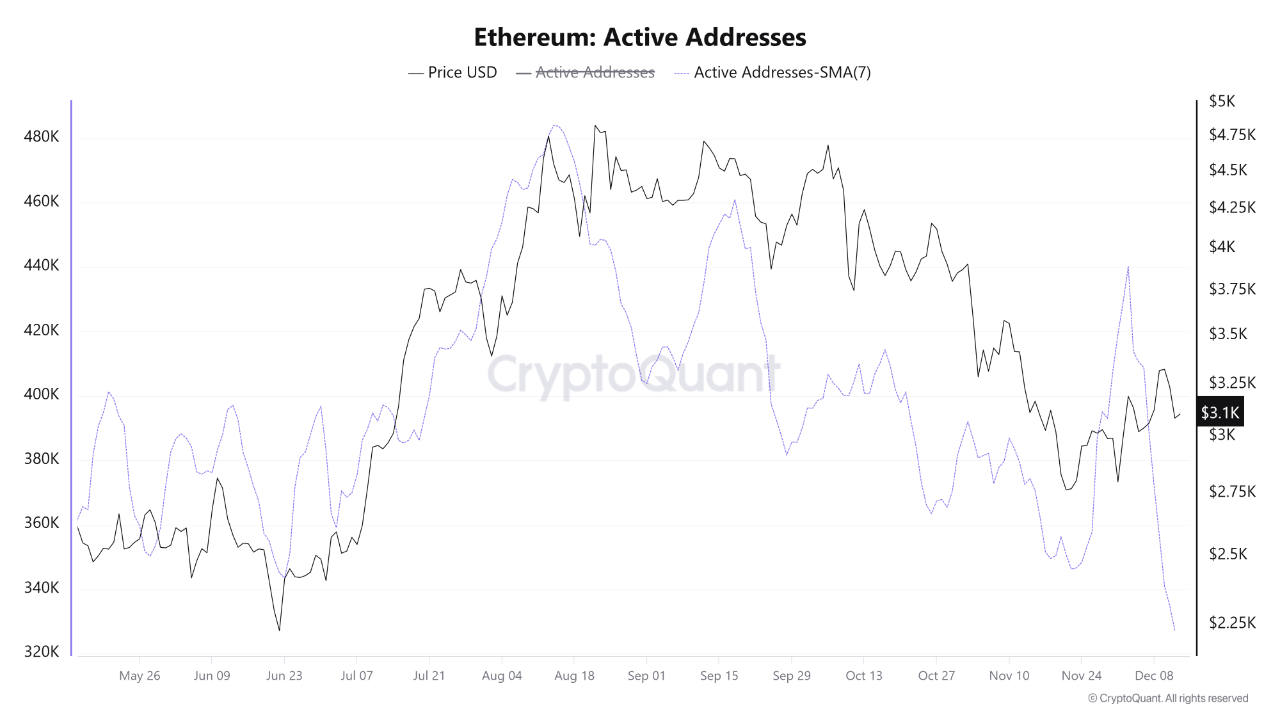
The simultaneous drop in both price and network activity is a critical signal. It suggests a reduction in demand for block space and points to a potential exit of retail traders or short-term participants who typically drive spikes in transaction activity during strong bullish phases. When fewer users interact with the network, it often reflects lower speculative interest and diminished transactional demand.
In a healthy and sustainable bull market, rising prices are usually accompanied by expanding network usage, with active addresses trending higher as adoption and participation grow. The current divergence from that pattern indicates a cooling ecosystem rather than an acceleration phase.
For Ethereum to establish a durable price reversal, this metric will be essential to watch. A sustained recovery in Active Addresses would be one of the clearest early signals that demand is returning and that the network is regaining fundamental strength.




















