Digital asset ETPs post third straight week of net inflows, led by US demand

cointelegraphPublished on 2025-12-15Last updated on 2025-12-15

Abstract

Digital asset exchange-traded products (ETPs) recorded $864 million in net inflows for the third consecutive week, driven primarily by U.S. demand, according to CoinShares. Bitcoin products led with $522 million in inflows, while Ether saw $338 million. Solana and XRP also attracted significant inflows of $65 million and $46.9 million, respectively. The U.S., Germany, and Canada accounted for the majority of regional inflows, while Switzerland posted outflows. Year-to-date, Bitcoin has attracted $27.7 billion, though still below 2024 levels. Multi-asset crypto ETPs and blockchain equity funds saw mixed flows during the period.

Crypto exchange-traded products (ETPs) recorded about $864 million in inflows last week, according to a report on Monday by European digital asset manager CoinShares.

The United States led regional inflows with about $796 million, followed by Germany with roughly $68.6 million and Canada with about $26.8 million. Together, the three countries account for approximately 98.6% of year-to-date (YTD) inflows into digital asset investment products.

Switzerland-listed crypto ETPs recorded about $41.4 million in weekly outflows, while YTD net flows were about $622.4 million, according to the data.
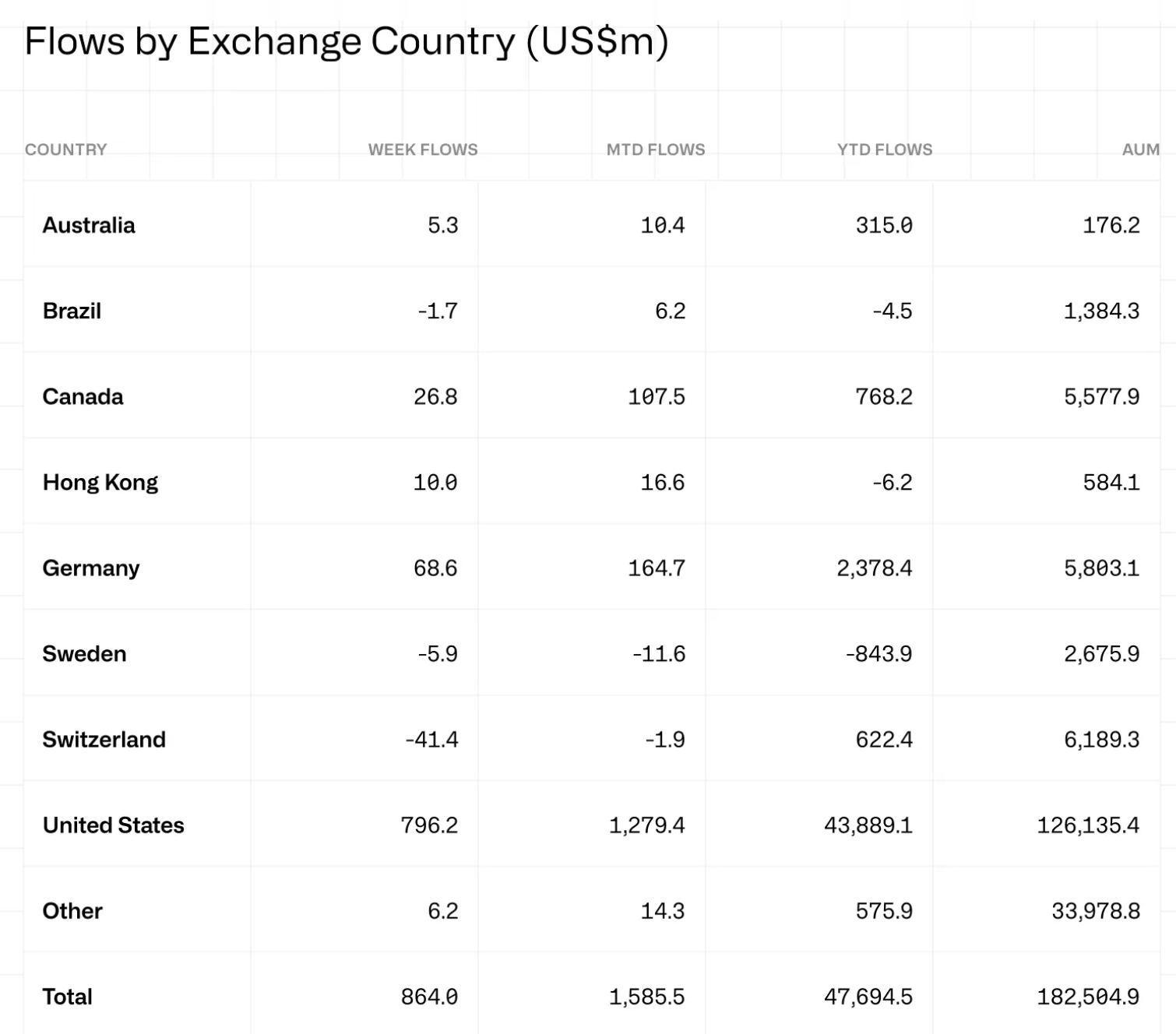
Flows by Exchange Country (US$m). Source: CoinShares’ Report

Bitcoin and Ether dominate inflows, followed by Solana and XRP

Bitcoin (BTC) investment products recorded about $522 million in weekly inflows, while short-Bitcoin products posted roughly $1.8 million in net outflows, “signalling a recovery in sentiment,” according to the report.

Ether (ETH) saw approximately $338 million in inflows during the week, lifting YTD to about $13.3 billion, up 148% from 2024.

Beyond Bitcoin and Ether, Solana (SOL) investment products recorded about $65 million in weekly inflows, bringing YTD inflows to roughly $3.46 billion, a tenfold increase from last year.

XRP (XRP) products also attracted fresh capital, with approximately $46.9 million added during the week and about $3.18 billion in inflows accumulated YTD, according to the data.

Smaller-cap products saw more mixed results, with Aave (AAVE)-linked products recording about $5.9 million in weekly inflows and Chainlink (LINK) adding roughly $4.1 million. Hyperliquid (HYPE) products posted net outflows of around $14.1 million during the period.

This is the third consecutive week of inflows for crypto ETPs, following about $716 million in inflows last week and roughly $1 billion the week before.

Bitcoin has attracted around $27.7 billion YTD, still below the $41 billion it recorded in 2024.

Related: XRP sinks below $2 despite $1B in ETF inflows: How low can price go?

Assets under management and equity ETP flows

By assets under management, Bitcoin investment products hold about $141.8 billion, while Ether-linked products account for roughly $26 billion.

Outside of single-asset products, multi-asset crypto ETPs recorded about $104.9 million in weekly outflows, extending net redemptions to roughly $69.5 million YTD, despite holding approximately $6.8 billion in assets under management, according to the data.
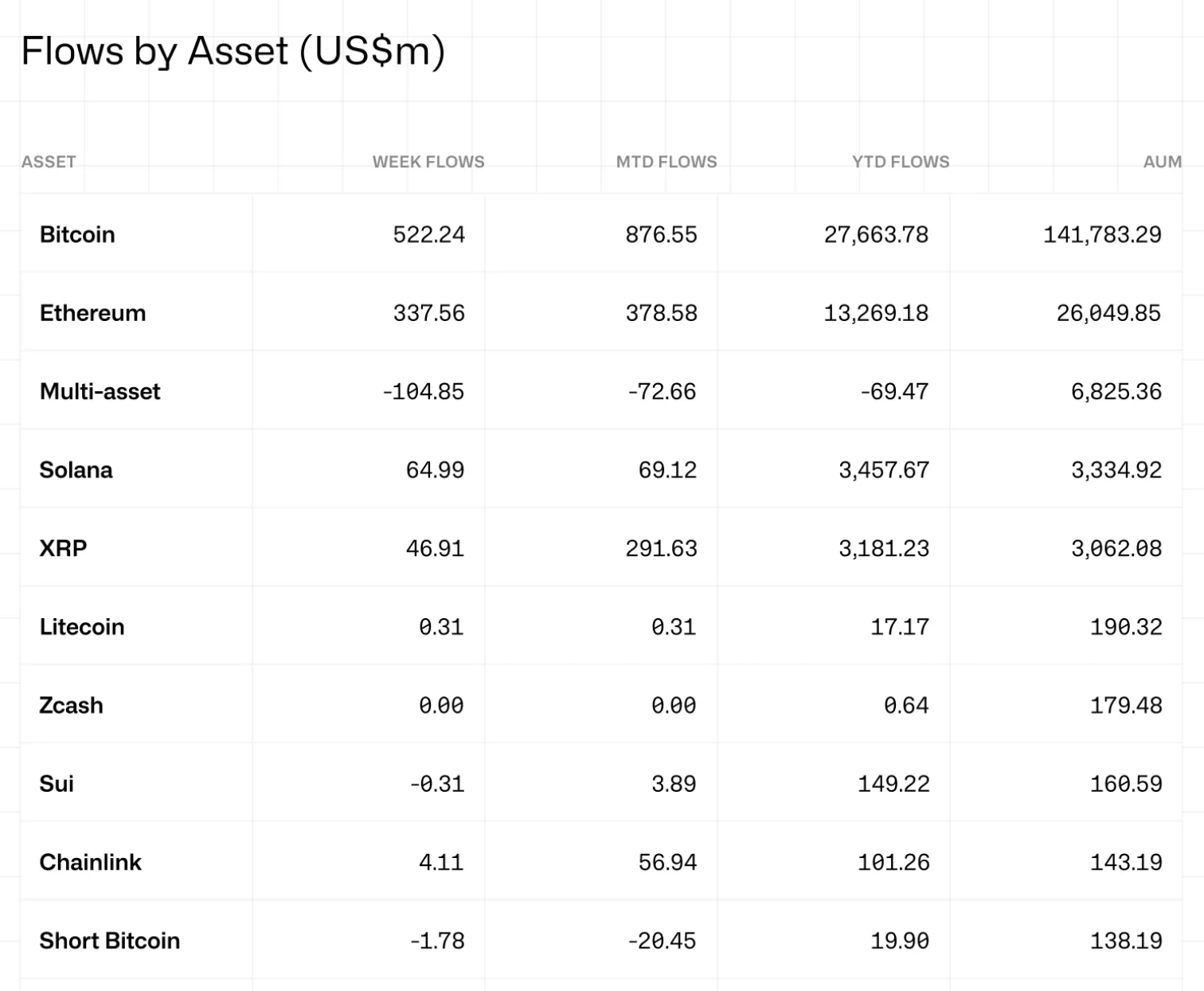
Crypto ETP USD flows by asset. Source: CoinShares

Funds that invest in publicly traded blockchain-related companies saw mixed investor flows during the week. VanEck’s Digital Transformation fund posted the largest weekly inflow at about $45.8 million, followed by VanEck Crypto and Blockchain at roughly $20.5 million and Schwab’s Crypto Thematic ETF at about $7.2 million.

Invesco CoinShares’ Global Blockchain and Bitwise Crypto Industry Innovators ETPs recorded modest net outflows during the week.
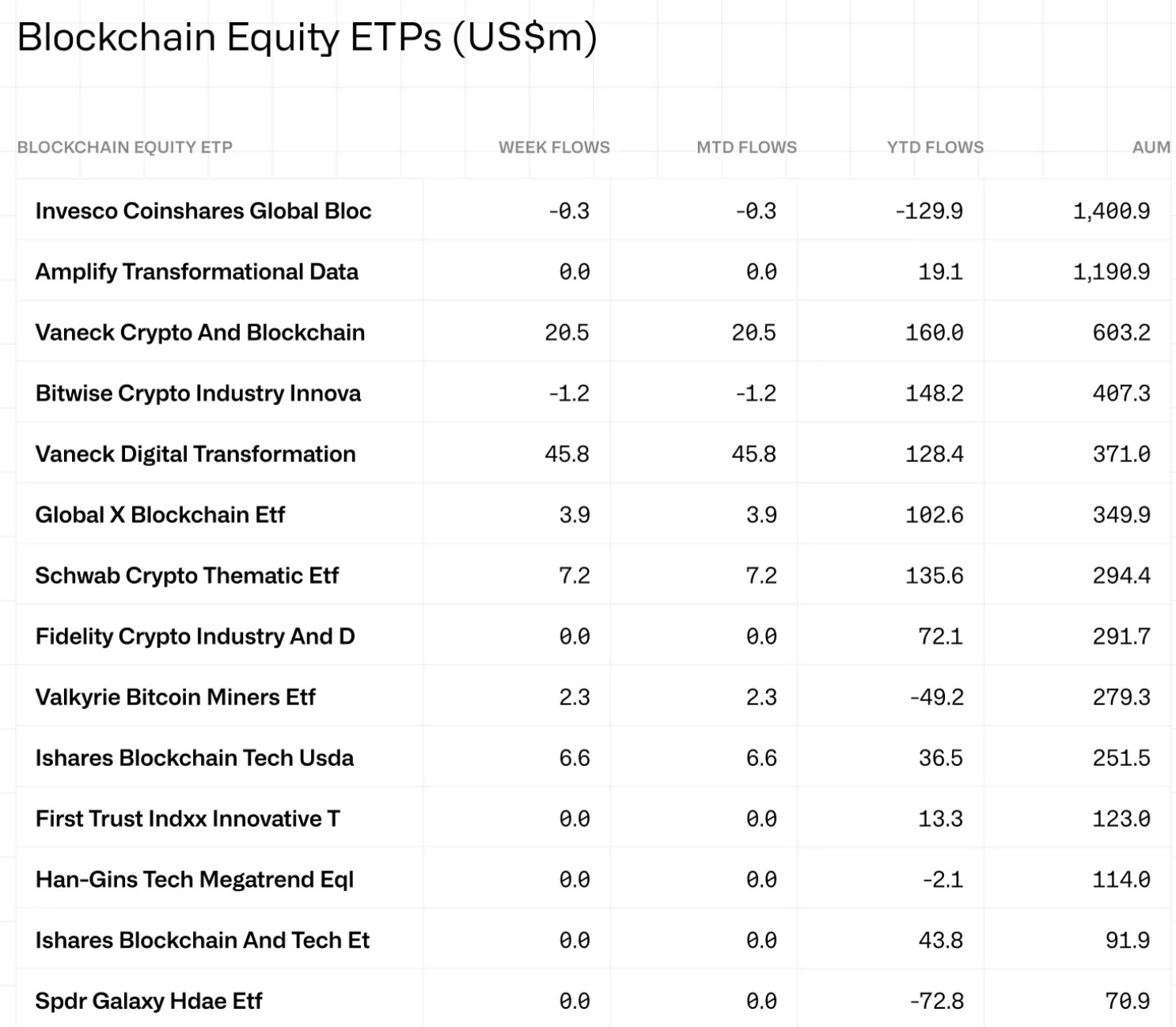
Blockchain Equity ETPs. Source: CoinShares’

Magazine: Big questions: Would Bitcoin survive a 10-year power outage?

Related Reads

Justin Sun Sues Trump Family: What $75 Million Bought Was Only a Blacklist

Justin Sun, founder of Tron, has filed a lawsuit in federal court against World Liberty Financial (WLF), alleging he was made the "primary target of a fraudulent scheme" after investing $75 million. Sun claims the investment secured him an advisor title and WLFI tokens, which were later frozen by WLF, causing "hundreds of millions in losses." The dispute began in late 2024 when Sun's investment helped revive WLF's struggling token sale, which ultimately raised $550 million. Shortly after, the SEC dropped its lawsuit against Sun following Donald Trump's inauguration. However, relations soured when Sun refused WLF's demands for additional funding. In August 2025, WLF added a "blacklist" function to its smart contract, allowing it to unilaterally freeze tokens. Sun's holdings, worth approximately $107 million, were frozen, and he was threatened with token destruction. The lawsuit highlights WLF's structure, which directs 75% of token sale profits to the Trump family, who had earned $1 billion by December 2025. WLF's CEO is Zach Witkoff, son of U.S. Middle East envoy Steve Witkoff. The project faces scrutiny for opaque operations, including a controversial loan arrangement on the Dolomite platform, co-founded by a WLF advisor. Despite Sun's history with the SEC, the case underscores centralization risks within DeFi, as WLF controls governance and holds powers to freeze assets arbitrarily. Sun's tokens remain frozen as legal proceedings begin.

marsbit7m ago

Justin Sun Sues Trump Family: What $75 Million Bought Was Only a Blacklist

marsbit7m ago

$500 to Buy OpenAI Stock: Silicon Valley's Most Respectable Liquidity Invitation

Silicon Valley's largest venture capital platform, AngelList, has launched a new fund called USVC, allowing U.S. retail investors to buy into high-profile AI companies like OpenAI, Anthropic, and xAI with a minimum investment of $500—no accredited investor status required. Promoted by AngelList co-founder Naval Ravikant, the fund is framed as an opportunity for ordinary people to access high-growth private tech investments traditionally reserved for VCs. However, critics argue it functions more like an exit vehicle for early insiders. USVC acquires shares not through primary rounds but largely via secondary transactions—purchasing stakes from early investors, VC funds, and employees looking to cash out at peak valuations. With companies like xAI heavily weighted in the portfolio, the fund effectively channels retail money into providing liquidity for insiders who entered at much lower valuations. The fund’s structure raises concerns: shares are illiquid, with no secondary market, and buybacks are limited and discretionary. The actual annual fee reaches 3.61%, far above the advertised 1% management fee. This model parallels the "low float, high fully diluted valuation" strategy seen in crypto, where early investors profit by selling to latecomers at inflated prices. The timing—alongside similar moves by platforms like Robinhood—suggests that Silicon Valley’s sudden interest in retail inclusion may be less about democratizing access and more about securing exits for insiders.

marsbit37m ago

$500 to Buy OpenAI Stock: Silicon Valley's Most Respectable Liquidity Invitation

marsbit37m ago

Trading

Spot
Futures

Hot Articles

How to Buy US

Welcome to HTX.com! We've made purchasing Talus Network (US) simple and convenient. Follow our step-by-step guide to embark on your crypto journey.Step 1: Create Your HTX AccountUse your email or phone number to sign up for a free account on HTX. Experience a hassle-free registration journey and unlock all features.Get My AccountStep 2: Go to Buy Crypto and Choose Your Payment MethodCredit/Debit Card: Use your Visa or Mastercard to buy Talus Network (US) instantly.Balance: Use funds from your HTX account balance to trade seamlessly.Third Parties: We've added popular payment methods such as Google Pay and Apple Pay to enhance convenience.P2P: Trade directly with other users on HTX.Over-the-Counter (OTC): We offer tailor-made services and competitive exchange rates for traders.Step 3: Store Your Talus Network (US)After purchasing your Talus Network (US), store it in your HTX account. Alternatively, you can send it elsewhere via blockchain transfer or use it to trade other cryptocurrencies.Step 4: Trade Talus Network (US)Easily trade Talus Network (US) on HTX's spot market. Simply access your account, select your trading pair, execute your trades, and monitor in real-time. We offer a user-friendly experience for both beginners and seasoned traders.

4.4k Total ViewsPublished 2025.12.11Updated 2025.12.11

How to Buy US

Discussions

Welcome to the HTX Community. Here, you can stay informed about the latest platform developments and gain access to professional market insights. Users' opinions on the price of US (US) are presented below.

活动图片