
Detained for 37 Days: The First Wave of People Who Got Rich from 'AI Gateways' Are Starting to Go to Jail

marsbitPublished on 2026-05-21Last updated on 2026-05-21

Abstract

A prominent AI proxy service operator was reportedly detained for 37 days and is now on bail pending trial, highlighting the legal risks in China's booming but unregulated AI intermediary market. These services act as "AI scalpers," providing domestic users with access to restricted overseas models (like OpenAI, Claude) by bundling APIs, handling payments, and bypassing network blocks, all for a fee. Their controversial profitability stems from practices like bulk-registering accounts to resell free credits, exploiting refund policies, overcharging for tokens, substituting cheaper models, and illegally selling user conversation data. Major figures, including cryptocurrency entrepreneurs, are now entering this space. Legally, these operations face severe risks. Their core model often involves unauthorized API access and operating without required telecom licenses, potentially constituting illegal business operations. They fail to meet data security obligations for the vast amounts of user data they process, risking charges for failing to fulfill network security duties. Crucially, the unauthorized collection and sale of user data, which can include personal and commercial secrets, easily meets the threshold for the crime of infringing on personal information. The case underscores a critical juncture for the AI industry. While proxies lower access barriers, they expose user data to unsecured middlemen and undermine the business models of AI developers, forcing them to divert...

Author: Lawyer Shao Shiwei

According to industry insider news, in May 2026, an operator of an AI gateway service publicly stated that they had been criminally detained for 37 days for illegally reverse-engineering, scraping, and reselling low-cost AI API resources, and is currently under a status of release on bail pending trial.

Although Lawyer Shao has also seen fellow lawyers commenting on this incident, stating that an AI gateway operator was criminally detained by Shanghai police, as there is no official announcement yet, the specific charges and handling of the case cannot be confirmed.

In the past two years, the demand for AI applications in China has exploded. However, due to regional restrictions on overseas large language models, more and more people are operating AI gateways. Simply put, domestic users want to use them but can't, so the gateway helps bridge the channel and charges a toll.

Therefore, using this case as an example, we can discuss: Can the currently booming business of AI gateways still be done? What risks might ordinary people face when operating an AI gateway?

The Lucrative Business of AI Gateways

According to a report by Xinhua News Agency, China's average daily Token usage has increased over a thousandfold from early 2024 to March 2026. The demand is clearly there.

However, if domestic users want to use overseas large models (OpenAI, Anthropic, Google, etc.), they encounter numerous hurdles such as network environment, payment channels, and identity verification.

Where there are hurdles, there is business. AI gateways have emerged accordingly. Currently, on many self-media platforms, it's claimed that AI API gateways are one of the most profitable projects in 2026, and this is not false.

AI gateways can also be understood as AI scalpers. They package interfaces from different AI model providers into a unified outlet, handling backend connections to all models for the user. Users also avoid the need for accessing restricted networks or figuring out foreign currency payments.

On platforms like Taobao, Xianyu, and Xiaohongshu, many such posts can be seen, with prices shockingly low.
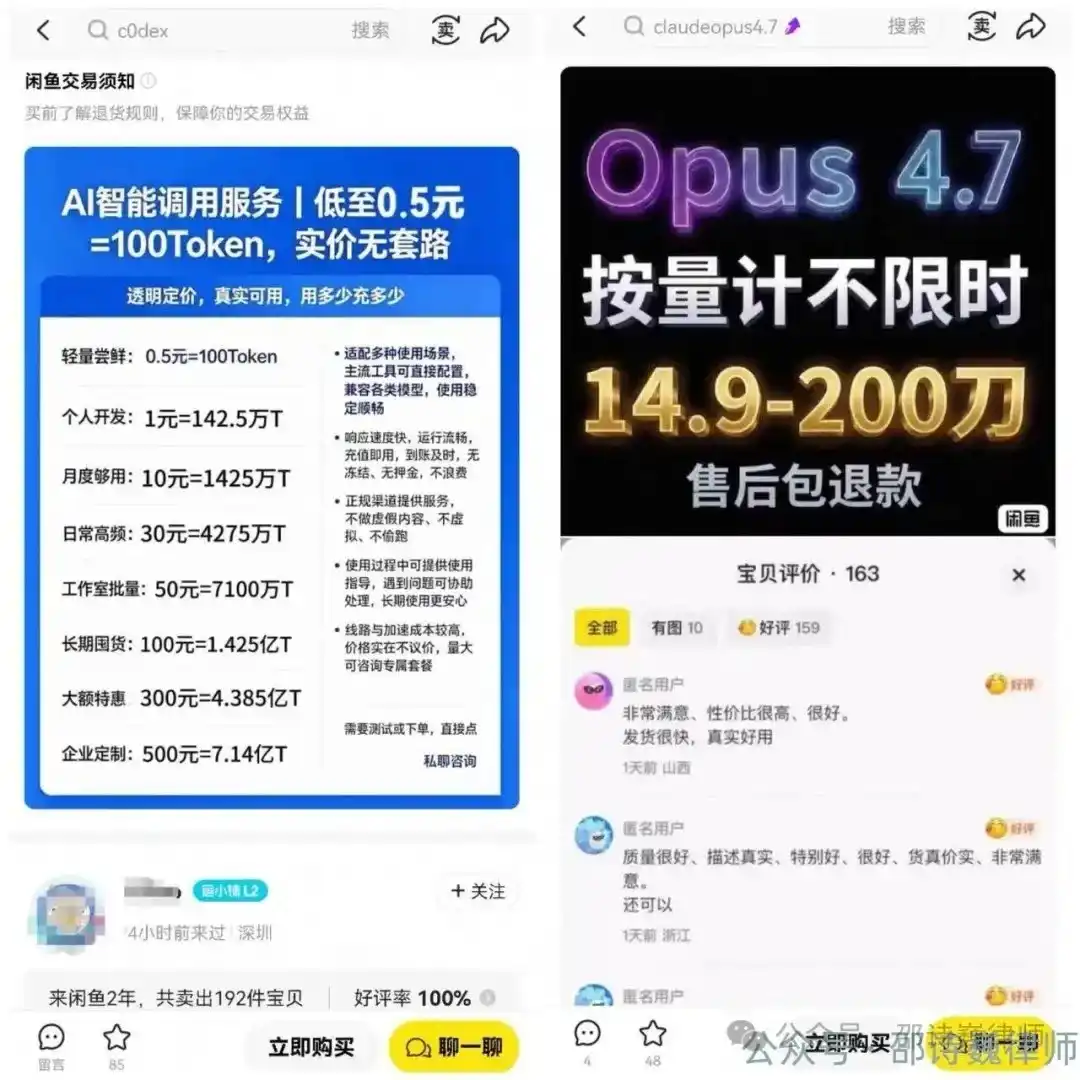

So the question arises: With prices pushed so low, how exactly do the gateway operators make money?

Reselling free credits. Platforms like ChatGPT and Claude offer free credits upon registering new accounts. The bulk account merchants behind the gateway service register large quantities of accounts, exploit the platform's free credits, then use technical means to reverse-engineer these accounts' web interfaces into standard APIs, and sell them uniformly. The cost is almost zero.

Refund arbitrage. They batch-register official accounts, top them up, and call the APIs. What if the account gets banned? Apply for a refund. In most cases, the pre-loaded money can be recovered. This means they use your money to call the APIs, and if banned, they get the cost back from the official source, profiting from both ends.

Over-reporting Tokens. Official APIs strictly charge based on the number of Tokens used, but the gateway's billing system is written by the operator themselves. Normally, 1 Chinese character is about 1.5 to 2 Tokens. Some gateways adjust the multiplier in the backend, so your 1 Chinese character could be charged as 3 to 4 Tokens. Users have no way to verify this.

Model swapping. You pay for Claude Opus 4.7, but you might actually be calling a small open-source model. This is also why many users feel that models via gateways seem "dumbed down".
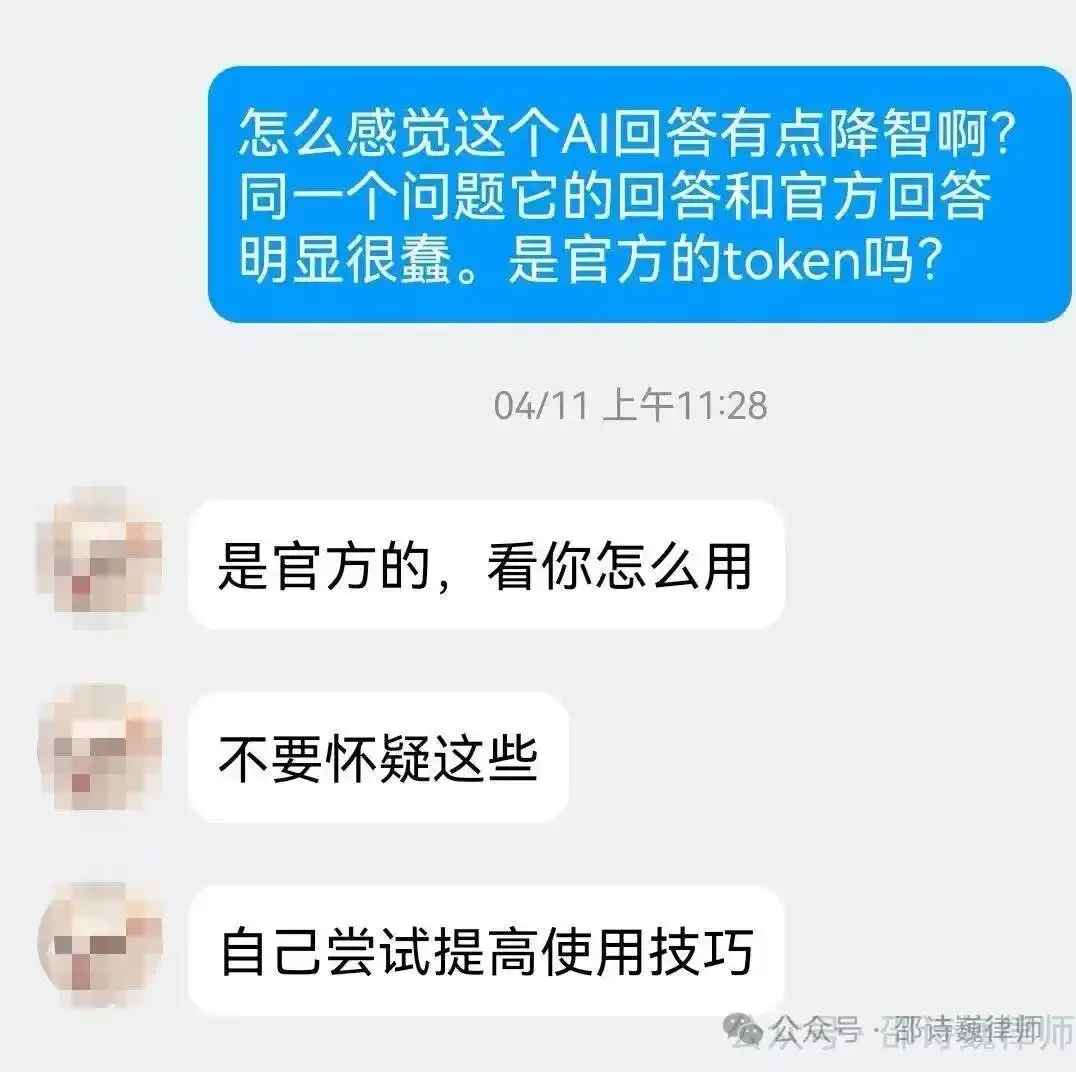
Data resale. They package and sell users' complete conversation records, especially high-quality training data like code in programming scenarios, reasoning processes, and engineering decisions, to model vendors. Why are gateways so cheap? They often profit by selling data.

This business has grown so large that even celebrities are entering the field. On May 1, 2026, Tron founder Justin Sun launched the AI gateway B.AI, with the slogan "One API Key = Claude + GPT + Gemini + Full Series of Domestic Large Models." On May 5, the cryptocurrency company WLFI, linked to the Trump family, launched WorldRouter, directly connecting AI calls with the cryptocurrency system.

But the greater the traffic, the greater the associated risks.

Why Could Running an AI Gateway Lead to Arrest?

Earlier, we outlined the profit models of AI gateways. As a gateway operator, one might be aware of the risks in such gray-area projects. However, after operating for some time and genuinely making money, and seeing peers doing the same without incident, one tends to become complacent.

From a legal perspective, the criminal risks of AI gateways mainly concentrate on three levels.

First, the business model itself may be illegal.

The computing resources of AI gateways are not obtained through legitimate procurement of API interfaces. Instead, they involve batch-registering accounts to exploit free credits or using technical means to reverse-engineer and obtain interface access. This no longer falls under the category of normal commercial agency.

Providing information relay and data processing services essentially constitutes a telecommunications value-added service. According to the "Regulations of the People's Republic of China on Telecommunications," operating such a business requires corresponding administrative permits. Operating without permission carries the risk of violating the crime of Illegal Business Operations.

Furthermore, overseas large model providers have access restrictions for users in China. Gateways help users circumvent these restrictions through proxy IPs, fabricated identities, etc., essentially assisting in bypassing the service provider's access conditions. If such acts are deemed as disrupting market order, they could also fall within the scope of the crime of Illegal Business Operations.

Second, lack of data security obligations.

AI gateways process a large volume of interaction data between users and models daily. User prompts, code snippets, business documents are all transmitted and processed through gateway servers. As the actual handler of the data, the gateway legally bears corresponding security management responsibilities.

However, the reality is that the vast majority of gateways have not established any data security management system—data storage locations, access control, and security measures are all non-existent. Once a data breach occurs, whether due to external attacks or internal mismanagement, the gateway, as a network service provider, could face criminal prosecution for the crime of Refusing to Perform Information Network Security Management Obligations. This crime targets precisely the act of "having a legal obligation but failing to fulfill it."

Third, illegal collection and sale of user data.

Some gateways package and sell user conversation logs to third parties, which is not an isolated phenomenon within the industry. However, the corresponding legal risk of this behavior is generally underestimated.

Conversation content between users and AI models often contains personal information, commercial secrets, and other sensitive data. Gateways rarely obtain explicit user consent when collecting this data, let alone inform users of the data's purpose and flow. Collecting and providing such information to third parties without consent, if serious, constitutes the crime of Infringing on Citizens' Personal Information.

The threshold for this crime is not high. According to relevant judicial interpretations, illegally obtaining, selling, or providing 50 or more pieces of personal information such as location tracking, communication content, credit information, property information, or 500 or more pieces of other personal information that may affect personal or property safety, such as accommodation information, communication records, health and physiological information, transaction information, meets the standard for prosecution. Considering the daily data processing volume of a gateway, reaching this threshold is not difficult.

Final Thoughts

Regarding the issue of AI gateways, Lawyer Shao does not wish to limit the discussion merely to whether operators will be prosecuted. The incident reflects issues the AI industry inevitably faces during its rapid development phase.

For users, gateways lower the usage barrier, but also expose users' sensitive data to an intermediate link without qualifications or security safeguards. Once problems occur, users might not even find a party against whom to assert their rights.

For model vendors, the existence of gateways consumes their technological investment and business models. Free credits are exploited in bulk, paid interfaces are reverse-engineered and misused, and pricing systems are undermined. Vendors are forced to divert significant resources from product development to risk control and countermeasures, and these costs ultimately get passed on to normal paying users. A deeper damage lies in the fact that when gateways dump computing power at low prices, the market's perception of the value of AI services is being distorted—users gradually come to believe that these capabilities should be almost free. This harms the sustainable development of the entire industry.

As a lawyer specializing in the new economy sector, Lawyer Shao has also been following the development of the AI industry and has served many practitioners in this field. How far an industry can go depends not on how fast it runs, but on whether it can establish a basic commercial order and foundation of trust. The AI industry is at a critical stage of transitioning from wild growth to standardized operation. The choices of every practitioner are shaping the future ecosystem of this industry.

A healthy AI industry requires vendors to continuously invest in technological R&D, users' data rights to be genuinely protected, and practitioners to participate in market competition in a compliant and responsible manner. These are prerequisites for the industry's long-term survival. What Lawyer Shao hopes to see is more practitioners choosing to do the difficult but right thing, making the foundation of this industry even more solid.

Special Disclaimer: This article is an original work by Lawyer Shao Shiwei. It represents only the author's personal views and does not constitute legal consultation or advice on specific matters.


Related Questions

QWhat is an 'AI Relay Station' as described in the article?

AAn 'AI Relay Station' is a service that acts as an intermediary between Chinese users and overseas large AI models (like OpenAI, Anthropic, Google). It helps users bypass restrictions such as network access, payment channels, and identity verification, providing a unified API interface in exchange for a fee.

QWhat are some unethical profit models used by certain AI Relay Station operators mentioned in the article?

AThe article lists several unethical practices: 1) Reselling the free usage quotas from newly registered AI service accounts. 2) Refund arbitrage—charging users for API calls, then requesting refunds from the official service after the account gets banned. 3) Inflating token counts in their own billing systems to overcharge users. 4) Model swapping—delivering a less capable model than what the user paid for. 5) Collecting and selling users' high-quality conversation data, such as code and business discussions.

QWhat are the main legal risks for operating an AI Relay Station in China according to the article?

AThe main legal risks are: 1) Operating without the necessary telecom value-added service permits, which could lead to charges of illegal business operations. 2) Failing to implement data security measures, risking prosecution for refusal to fulfill information network security management obligations. 3) Illegally collecting and selling user conversation data, which may contain personal information or trade secrets, potentially constituting the crime of infringing on citizens' personal information.

QWhy does the article suggest that AI Relay Stations can harm the long-term development of the AI industry?

AThe article argues that these stations distort the market by devaluing AI services through predatory pricing (e.g., using stolen quotas). This forces legitimate model providers to divert resources from R&D to fraud prevention, increasing costs for genuine users. It also creates a perception that advanced AI capabilities should be nearly free, undermining sustainable business models and the industry's foundation of trust and fair competition.

QWhat event prompted the discussion in this article, and what was the reported outcome?

AThe discussion was prompted by an incident in May 2026 where the operator of an AI Relay Station publicly stated they had been criminally detained for 37 days for illegally reverse-engineering and reselling low-cost AI API resources. The individual was reportedly released on bail awaiting trial, though the article notes there was no official confirmation of the case details from authorities.

Related Reads

STRC Breaks Below $95: Why Does It Continue to Depeg? Is There Default Risk?

"STRC Falls Below $95: Why the Persistent Depegging and Is There Default Risk?" The article discusses the recent decline in the price of STRC, a perpetual preferred stock issued by Strategy (MSTR) designed to trade around a $100 par value. As of publication, STRC traded at $94.65, raising market concerns. STRC is described as a high-yield cash flow product, offering an 11.50% annual dividend paid monthly. Its "preferred" status grants it priority over common stock for dividends and in liquidation. Key reasons cited for the price depegging include: 1. **Bitcoin's Price Drop:** MSTR's assets are heavily tied to Bitcoin (BTC), which fell over 21% from its recent high, pressuring all Strategy-related products. 2. **Competitive Pressure:** Rival Strive Asset Management's similar product, SATA, offers daily dividends and has maintained its $100 par value with a ~13% yield. In response, Strategy has proposed changing STRC's dividend frequency from monthly to bi-weekly, pending shareholder vote. 3. **Technical Selling:** A break below $100 may have triggered algorithmic selling and stop-losses, exacerbating the decline. Regarding default risk, the analysis suggests it is currently low. Strategy founder Michael Saylor confirmed the June 2026 dividend rate remains at 11.50% with no cuts or suspensions. The company's massive reserve of 843,706 BTC provides a significant backstop for its obligations. Industry opinions are mixed. Some analysts view the BTC holdings as reliable support for dividends, while critics like Peter Schiff warn of potential dividend cuts leading to price crashes and lawsuits. Others highlight inflation risk and the company's ability to reduce dividends without a formal default. In summary, STRC's drop is attributed to BTC volatility, competition, and technical factors. While immediate default risk appears contained, the product faces challenges from market conditions and competitive dynamics.

marsbit11m ago

STRC Breaks Below $95: Why Does It Continue to Depeg? Is There Default Risk?

marsbit11m ago

AI Trading Cools, South Korean Stocks Plunge 1.8%, Spot Gold Rises 1%, Bitcoin Dives

A sell-off in AI-related stocks, triggered by Broadcom's disappointing earnings forecast, sent shockwaves through global markets. South Korea's KOSPI led Asia's decline, plunging 1.8% as the risks from concentrated chip stock gains and surging leveraged investments came to the fore. The tech-heavy Nasdaq 100 futures fell 0.5% following Broadcom's 14% after-hours plunge, which signaled a slower-than-expected transition to AI clients. This pullback extended Wall Street's weakness, halting the S&P 500's nine-day rally amid hawkish Fed signals and renewed Middle East tensions. South Korean authorities convened an emergency meeting, pledging "immediate measures" against market volatility and warning of record-high stock margin debt. The adjustment rippled across assets: Bitcoin fell to around $64,000, its lowest since February, while safe-haven gold rose 1% on bargain hunting. Oil prices dipped on Middle East ceasefire news. Market analysts noted the sell-off was driven by profit-taking after massive gains, particularly in chip stocks like Samsung and SK Hynix, which now dominate the KOSPI. Wall Street banks are divided on Korea's outlook, with Goldman Sachs raising its target while Citigroup and others warn of overvaluation and a potential bubble. Bridgewater's Ray Dalio noted that great technological shifts often create bubbles. Meanwhile, Fed officials' hints at potential future rate hikes added to the cautious mood ahead of key U.S. jobs data.

华尔街日报37m ago

AI Trading Cools, South Korean Stocks Plunge 1.8%, Spot Gold Rises 1%, Bitcoin Dives

华尔街日报37m ago

Seeking Alpha's Hot Article: Why Might the U.S. Stock Market Crash in June?

In a recent Seeking Alpha article, financial professor and analyst Damir Tokic argues that the US stock market may be poised for a significant crash in June 2026. The core thesis centers on a "mega-bubble" in equities, particularly within the technology sector, which has driven the S&P 500 to near-record valuations, with a Shiller P/E ratio exceeding 40—a level comparable to the 2000 dot-com bubble. Tokic identifies two primary catalysts for a potential collapse. First, he points to unsustainable market exuberance fueled by what he terms the "Trump Stimulus"—massive AI capital expenditure by tech giants, which he believes is politically driven and cannot last. Second, and more urgently, he highlights the escalating Iran war as a critical threat. The ongoing closure of the Strait of Hormuz has created a severe global energy supply crunch. Strategic petroleum reserves are projected to hit critically low operational levels by June, potentially causing oil prices to spike above $200 per barrel and triggering a severe, supply-driven inflationary shock. This scenario, Tokic warns, would force the Federal Reserve's hand. Despite currently maintaining a dovish bias, the Fed would likely be compelled to officially pivot to a hawkish stance at its June FOMC meeting to combat soaring inflation and bond yields. He contends that such a shift—or even a failure to act, which would destroy Fed credibility—could be the trigger that punctures the market bubble. The resulting downturn, he concludes, could rival the bear markets of 2000 and 2008, advising investors to prepare for a major correction.

marsbit1h ago

Seeking Alpha's Hot Article: Why Might the U.S. Stock Market Crash in June?

marsbit1h ago

Trading

Spot
Futures

Hot Articles

How to Buy PEOPLE

Welcome to HTX.com! We've made purchasing ConstitutionDAO (PEOPLE) simple and convenient. Follow our step-by-step guide to embark on your crypto journey.Step 1: Create Your HTX AccountUse your email or phone number to sign up for a free account on HTX. Experience a hassle-free registration journey and unlock all features.Get My AccountStep 2: Go to Buy Crypto and Choose Your Payment MethodCredit/Debit Card: Use your Visa or Mastercard to buy ConstitutionDAO (PEOPLE) instantly.Balance: Use funds from your HTX account balance to trade seamlessly.Third Parties: We've added popular payment methods such as Google Pay and Apple Pay to enhance convenience.P2P: Trade directly with other users on HTX.Over-the-Counter (OTC): We offer tailor-made services and competitive exchange rates for traders.Step 3: Store Your ConstitutionDAO (PEOPLE)After purchasing your ConstitutionDAO (PEOPLE), store it in your HTX account. Alternatively, you can send it elsewhere via blockchain transfer or use it to trade other cryptocurrencies.Step 4: Trade ConstitutionDAO (PEOPLE)Easily trade ConstitutionDAO (PEOPLE) on HTX's spot market. Simply access your account, select your trading pair, execute your trades, and monitor in real-time. We offer a user-friendly experience for both beginners and seasoned traders.

6.9k Total ViewsPublished 2024.03.29Updated 2026.06.02

How to Buy PEOPLE

Discussions

Welcome to the HTX Community. Here, you can stay informed about the latest platform developments and gain access to professional market insights. Users' opinions on the price of PEOPLE (PEOPLE) are presented below.

活动图片