Data: 75% of Traders on Hyperliquid Are Losing Money. What Are the Profitable Ones Using?

marsbitPublished on 2026-05-20Last updated on 2026-05-20

Abstract

On Hyperliquid, approximately 75% of addresses are losing money, indicating that manual traders are increasingly competing against automated systems. Profitable traders primarily employ one of three approaches: 1) Running systematic, high-frequency strategies (e.g., one address executed 261k trades with a 64.75% win rate), 2) Placing high-conviction, asymmetric bets with large positions (e.g., 50 trades yielding $4.48M at a 28% win rate), or 3) Using algorithms for execution while making manual macro judgments. The article argues that traditional methods like chart patterns or reacting to social media news are often already priced in by bots, making such traders the "exit liquidity" for systematic players. Success now depends on unique narrative timing, structural insights, or conviction during market capitulation.

Author: Stacy Muur

Compiled by: Deep Tide TechFlow

Deep Tide Guide: Three-quarters of addresses on Hyperliquid are losing money. It's not bad luck; the rules of the game have changed. While you're still looking at candlestick patterns for formations, arbitrage bots have already made their profit. Data shows that truly profitable traders either use algorithmic systematic execution or place large bets on asymmetric opportunities with high conviction. Manual retail traders watching screens are becoming the exit liquidity for others.
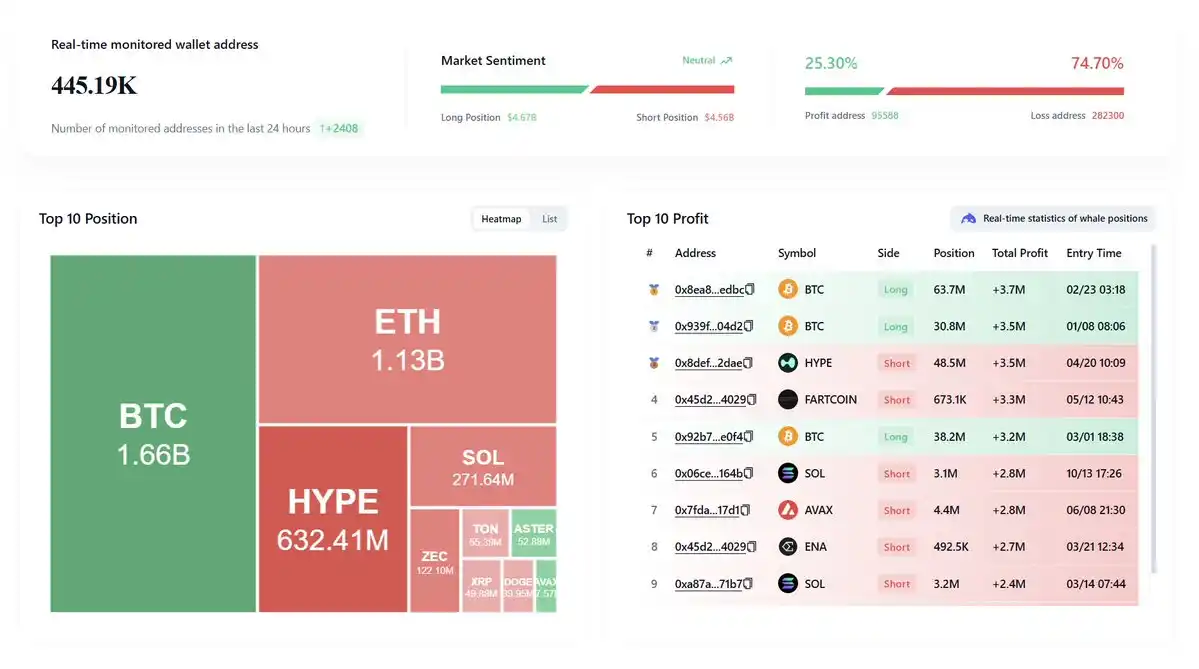
About 75% of addresses on Hyperliquid are in a loss-making position.

The reality is that people trading manually on Hyperliquid are competing against systems that never rest. The trading opportunity you just discovered has likely already been priced in by the system.

When you see a certain pattern, chances are it has already been arbitraged.

Extreme funding rates are balanced in an instant.

Technical patterns have already appeared across more than 50 order books.

News headlines are priced in as soon as they appear.

What the most profitable traders are doing:

→1. Running systematic strategies (the second most profitable address executed 261,000 trades this month with a 64.75% win rate)

→ 2. Holding high-conviction positions, betting on asymmetric returns (a wallet made $4.48 million with just 50 trades and a 28% win rate)

→ 3. Using algorithms as execution tools while making macro judgments manually

If you have timing in narratives, structural insight, or conviction when everyone else capitulates, you can still make profitable trades.

But if your trades are based on chart patterns or news you saw on X, you are likely just exit liquidity.


Related Questions

QAccording to the article, what percentage of addresses on Hyperliquid are losing money, and what is presented as the primary reason?

AApproximately 75% of addresses on Hyperliquid are losing money. The primary reason is that manual traders are competing against automated, systemized strategies that execute trades faster and more efficiently, often pricing in opportunities before a human trader can act.

QWhat are the two main strategies used by the most profitable traders on Hyperliquid, as described in the article?

AThe two main strategies are: 1. Running systematic, automated strategies (one example executed 261,000 trades with a 64.75% win rate). 2. Holding high-conviction positions to bet on asymmetric opportunities (one wallet made $4.48M with only 50 trades, despite a 28% win rate).

QThe article suggests that several common trading signals are often ineffective. Name at least three of these signals.

AThree common but often ineffective signals mentioned are: 1. Technical chart patterns (which appear across many order books). 2. Extreme funding rates (which get arbitraged instantly). 3. News headlines (which are priced in immediately upon release).

QWhat role does the article suggest algorithms can play for a trader who still wants to make manual, high-level decisions?

AThe article suggests using algorithms as an execution tool. A trader can make macro or high-level directional judgments manually, and then use an algorithm to handle the rapid, systematic execution of trades based on that judgment.

QAccording to the article's conclusion, what kind of manual trader is most likely to succeed, and what kind is most likely to fail?

AA manual trader who succeeds is likely one acting on deep narrative timing, unique structural insights, or having strong conviction when others are capitulating. A manual trader who fails is likely one whose decisions are based on commonly seen chart patterns or news headlines found on social media (like X), as they become 'exit liquidity' for others.

Related Reads

Critical Moments in Bitcoin: Cost Zones That Demand Attention Have Been Identified!

Analytics firm Glassnode reported that reduced expectations for U.S. interest rate cuts, along with pricing in possible rate hikes, have suppressed risk appetite in the cryptocurrency market. The Fed's interest rate decisions are crucial for market direction. U.S. Treasury yields have surpassed returns from crypto carry trades, leading investors to favor cash and low-risk interest-bearing instruments over crypto assets. A strong U.S. dollar further weakens marginal demand for crypto. Bitcoin is currently trading below its most intensive cost basis level, with approximately $69,000 identified as the breakeven zone and significant resistance for short-term investors. For a stronger recovery, Bitcoin needs to reclaim the $69,000 threshold with increased trading volume. Renewed active demand for spot Bitcoin ETFs is also deemed critical. According to Glassnode, the current Bitcoin decline represents the shallowest bear market in terms of price drawdown depth to date. However, based on previous cycle durations, this downturn may not be over yet. Spot trading volumes have fallen to multi-year lows, and sell-side order books have thinned, though many buy orders are placed significantly below current prices. Glassnode's risk indicator, Vector, signaled "risk off," suggesting a capital preservation mindset. The current market structure is being driven more by macroeconomic factors like monetary policy, bond yields, and dollar strength than by crypto-sector developments. Losing Bitcoin's support range of $62,000-$68,000, coupled with renewed exchange inflows, could negate the recovery scenario. Conversely, more favorable monetary policy, increased trading volume, a Bitcoin recovery above $69,000, and a resumption of spot ETF buying could signal a market turnaround.

cryptonews.ru1h ago

Critical Moments in Bitcoin: Cost Zones That Demand Attention Have Been Identified!

cryptonews.ru1h ago

Breaking News: Full Detailed Rationale and Explanation of the Fed's Interest Rate Decision Released!

As expected, the Federal Reserve kept its key interest rate unchanged at 3.50-3.75 percent, marking the fifth consecutive meeting without a rate change. The Federal Open Market Committee's (FOMC) decision passed with a 9-3 majority vote. Cleveland Fed President Loretta Mester, Minneapolis Fed President Neel Kashkari, and Dallas Fed President Lorie Logan dissented, voting in favor of a 25 basis point rate hike. This was the first meeting since 2016 where three regional Fed presidents voted against holding rates steady, signaling growing influence among members advocating for tighter monetary policy to combat inflation. The Fed's statement noted that economic activity has been expanding at a solid pace despite high uncertainty, partly due to Middle East conflicts. It highlighted that growth in productivity and investment remained strong, employment gains have aligned with labor force growth, and the unemployment rate has remained relatively stable. The Fed also committed to maintaining ample reserves in the banking system. The statement emphasized that inflation remains above the Fed's 2% target. It noted that supply shocks, including in the energy sector, are adding to inflationary pressures. The Committee stated it will continue to closely monitor incoming data and risks in pursuit of its price stability goal. The dissenting members argued that the target range for the federal funds rate should have been increased by 25 basis points.

cryptonews.ru1h ago

Breaking News: Full Detailed Rationale and Explanation of the Fed's Interest Rate Decision Released!

cryptonews.ru1h ago

Trading

Spot
活动图片