Crypto Victims Relieved – Or Too Late? What Operation Atlantic Really Means

bitcoinistPublished on 2026-04-10Last updated on 2026-04-10

Abstract

Operation Atlantic is a major UK-US-Canada law enforcement initiative targeting crypto fraud and approval-phishing scams, involving agencies like the UK's National Crime Agency and the U.S. Secret Service, along with private partners such as Chainalysis. The operation aims to identify victims and compromised wallets in real time, freeze illicit funds before laundering, and generate investigative leads. Initial results include over 20,000 identified victims, more than 20,000 flagged wallet addresses, and over $12 million in frozen suspected scam proceeds. Globally, $45 million in stolen crypto has been identified. Approval phishing scams trick users into signing malicious transactions, allowing direct wallet draining. The operation highlights growing efforts to combat these rapidly evolving crypto crimes.

Crypto companies and public authorities are joining forces in “Operation Atlantic”, a coordinated push to shut down crypto fraud schemes and approval‐phishing attacks.

A Transnational Operation Against Crypto Phishing Scams

Operation Atlantic is a rare case of law enforcement moving in near real time to block scammers before funds fully disappear on‐chain. The operation is a joint UK–US–Canada venture led by the UK’s National Crime Agency and the US Secret Service, targeting crypto investment and “approval phishing” scams. The multiparty operation is also joined by private industry partners like Chainalysis. The blockchain data and analytics company announced the partnership in a yesterday’s post on their website.

As stated by Chainalysis:

Operation Atlantic’s objective is simple but ambitious: spot victims and compromised wallets in real time, freeze and secure illicit funds before they can be laundered through exchanges or services, generate new investigative leads on the fraud networks behind these scams, and lay the groundwork for ongoing investigations based on the intelligence collected during the operation.

Inside Operation Atlantic’s First Results

The operation, announced last month, has yielded its first striking results.

According to a new report from the National Crime Agency (NCA) of the United Kingdom, more than 20,000 victims have been identified, with over 20,000 wallet addresses flagged and more than $12 million in suspected scam proceeds frozen.

More than $45 million stolen in cryptocurrency fraud schemes has been identified around the world.

The report also highlighted that the operation identified one UK victim that lost more than £52,000 to this type of fraud.

Phishing 101

In approval phishing scams, victims are tricked into signing malicious on‐chain approvals that grant the scammers permission to drain tokens directly from their wallets. These attempts are often disguised as investment opportunities or “account security” prompts.

Such tactics are increasingly favored by organized fraud networks because they bypass traditional password theft and rely on users misunderstanding what they are signing.

Just yesterday, our sister website NewsBTC reported that South Korean authorities are rolling out a new standardized withdrawal‐delay across all exchanges in order to prevent damage from phishing scams that depend on speed.

Last month, the Solana memecoin issuance platform Bonk.fun was hichjacked by a phishing scam that set up a fake “Terms of Services” (TOS) signature prompt which, when signed, allowed the drainer to move the unaware user’s funds.

At the beginning of the month, the social network X announced it is in the process of rolling out its toughest anti-crypto scam measure to date, particularly design to combat phishing scams.

As law enforcement becomes more adept at tracing and freezing stolen funds, scam operations will likely move to more complex laundering routes, creating both new tail risks and new on‐chain data signals for sophisticated traders to track.
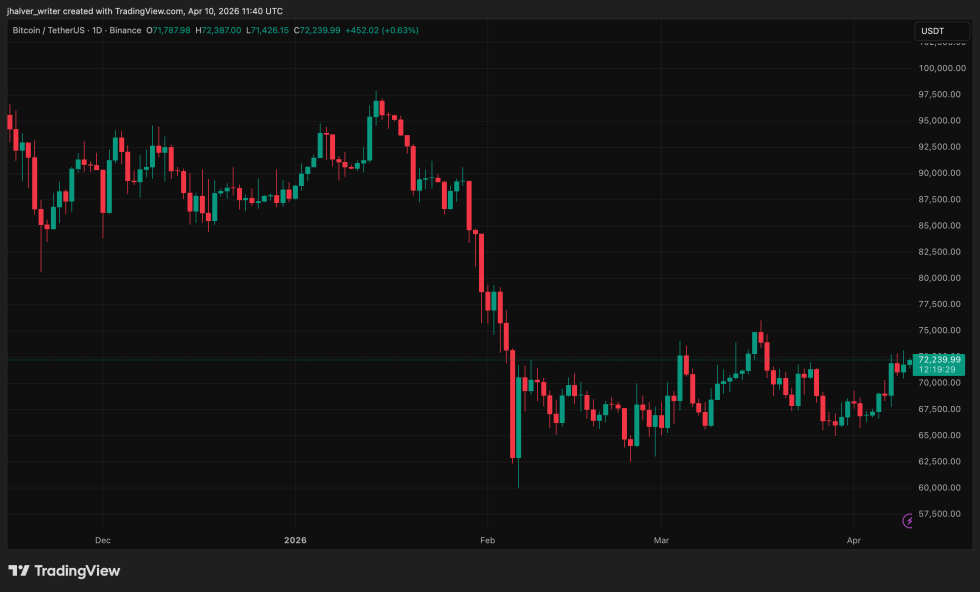
At the moment of writing, BTC trades for the more than $72k on the daily chart. Source: BTCUSDT on Tradingview.

Cover image from Perplexity. BTCUSDT chart from Tradingview.

Related Questions

QWhat is the main objective of Operation Atlantic as described in the article?

AThe main objective of Operation Atlantic is to spot victims and compromised wallets in real time, freeze and secure illicit funds before they can be laundered, generate new investigative leads on the fraud networks, and lay the groundwork for ongoing investigations.

QWhich countries and private company are leading the joint venture known as Operation Atlantic?

AOperation Atlantic is a joint UK-US-Canada venture led by the UK's National Crime Agency and the US Secret Service, with the private industry partner Chainalysis also participating.

QAccording to the article, what were the first key results achieved by Operation Atlantic?

AThe operation identified more than 20,000 victims, flagged over 20,000 wallet addresses, and froze more than $12 million in suspected scam proceeds. It also identified over $45 million stolen in cryptocurrency fraud schemes worldwide.

QHow do approval phishing scams work, according to the article?

AIn approval phishing scams, victims are tricked into signing malicious on-chain approvals that grant scammers permission to drain tokens directly from their wallets. These attempts are often disguised as investment opportunities or 'account security' prompts.

QWhat recent actions have other entities taken to combat phishing scams, as mentioned in the article?

ASouth Korean authorities are rolling out a new standardized withdrawal-delay across all exchanges. The social network X announced it is implementing its toughest anti-crypto scam measure to date, specifically designed to combat phishing scams.

Related Reads

The Shutdown of Claude Mythos Revealed the True Cost of Renting AI to Me

The sudden shutdown of Claude Mythos this week starkly highlights a critical, often overlooked risk for founders: when your core capability relies entirely on someone else's platform, your fate is not in your own hands. The key question becomes: who truly owns the intelligence your product depends on? For years, the debate around open-source models focused on cost. Now, the evidence is clear: fine-tuned open-source models can achieve frontier-level quality for specific, mission-critical tasks at a fraction of the cost. However, the deeper issue is control. Relying on a third-party API is like renting; it works until the landlord changes the rules, raises the rent, or asks you to leave—as Mythos experienced. The lesson is not to stop using frontier models—they are incredible infrastructure. The goal is ownership. Ownership means starting with a powerful open-source model and shaping it around what makes your company unique: your data, workflows, domain expertise, and definition of "good." Over time, the model becomes less generic and more reflective of your business, creating durable value. The optimistic conclusion is that AI's future doesn't hinge on one superior model. There is no single frontier. The frontier includes proprietary models, models fine-tuned on company-specific knowledge, specialized models for narrow problems, and intelligent routers orchestrating model ensembles. The most interesting development is not models getting smarter, but intelligence becoming increasingly customizable. The winning companies will be those that transform intelligence into a unique, owned asset. Looking ahead, the vision is not one model dominating all, but many teams owning the part of the frontier that matters most to them.

marsbit35m ago

The Shutdown of Claude Mythos Revealed the True Cost of Renting AI to Me

marsbit35m ago

Tiger Research: U.S. Strategic Bitcoin Reserve - Should the Market Be Happy or Disappointed?

Tiger Research analyzes the evolution of U.S. legislative efforts regarding a strategic Bitcoin reserve, concluding the market impact is limited in the short term but potentially positive long-term. The core event was a March 2025 executive order by former President Trump, which designated confiscated Bitcoin as a strategic reserve and promised not to sell existing holdings (approx. 190k BTC). As it contained no mandate to purchase new Bitcoin, the market reacted negatively, with prices dropping 5.7%. Legislative history shows a significant retreat from initial ambitions. The 2024 "BITCOIN Act" proposed mandatory purchases of 1 million BTC over five years. Reintroduced in 2025, it stalled due to high fiscal costs, concerns over dollar hegemony, and opposition from the Treasury Secretary. The current frontrunner, the 2026 "American Retirement and Monetary Advancement (ARMA) Act," is a compromise. It lacks any purchase requirement, instead focusing on consolidating existing government-held Bitcoin and legally prohibiting its sale for at least 20 years. While ARMA has higher passage odds due to bipartisan support and no purchase mandate, its immediate market effect is neutral. It eliminates potential government selling pressure but creates no new demand. The long-term significance is that formally establishing Bitcoin as a national reserve asset in law could later reignite debates on mandatory purchases. Therefore, the path to a government buyer is longer than initially priced by the market, but the directional narrative remains intact.

marsbit38m ago

Tiger Research: U.S. Strategic Bitcoin Reserve - Should the Market Be Happy or Disappointed?

marsbit38m ago

US Stock Market Trend (June 16): SpaceX Rises 42% in Two Days, New Fed Chairman Takes Office Today

**U.S. Stocks Trend (June 16): SpaceX Soars 42% in Two Days, New Fed Chair Takes Office Today** Markets surged on Monday following former President Trump's social media announcement of a completed U.S.-Iran deal to reopen the Strait of Hormuz, pending a June 19 signing. The news triggered a broad risk-on rally: oil prices crashed, tech stocks soared, bond yields fell, and defensive sectors lagged. **Market Performance:** The Nasdaq jumped 3.07%, led by semiconductor stocks like Micron (+9.2%). The S&P 500 gained 1.65%, and the Dow rose 0.92% to a record high. However, the Russell 2000 small-cap index underperformed (+0.72%). SpaceX continued its hot streak, rising another 5% pre-market after disclosures of large buys by an Australian billionaire and Cathie Wood's ARK. Boeing also rallied on the transportation optimism. Conversely, energy stocks like Chevron fell over 3% on the oil price plunge, with other defensive sectors also selling off. The day's action showed a clear rotation of funds from energy/defensive plays into AI and tech narratives. **Macro & Outlook:** The VIX fear index fell 8.37%. Treasury yields declined, and WTI crude dropped over 5%. Attention now shifts to a packed schedule: the Bank of Japan is widely expected to hike rates to 1.0% on Tuesday. The Fed's June meeting concludes Wednesday, marking new Chair Wash's debut. While rates are expected to hold, his tone on stubborn inflation and the "dot plot" will be crucial for gauging the 2024 rate path. The formal Iran deal signing is set for Friday. **Trend Perspective:** While the peace deal is a genuine positive, Monday's explosive rally may have gotten ahead of itself, pricing in a swift resolution to inflation concerns. The shortened trading week faces a triple test: BoJ tightening, the Fed's policy stance, and deal implementation details. Tech and semiconductors, which led the surge, remain vulnerable to any disappointment from these key events. The real price discovery begins with the central banks' communications this week.

marsbit59m ago

US Stock Market Trend (June 16): SpaceX Rises 42% in Two Days, New Fed Chairman Takes Office Today

marsbit59m ago

Trading

Spot
Futures
活动图片





