Crypto rebounds, but Fear Index shows traders aren’t convinced

ambcryptoPublished on 2026-02-25Last updated on 2026-02-25

Abstract

Cryptocurrency markets experienced a broad recovery on Wednesday, led by Bitcoin and Ethereum, which rose approximately 5.6% to around $67,400 and 9.6% to above $1,950, following a sharp sell-off. Other major altcoins, including Solana, XRP, and BNB, also posted significant gains. However, the Crypto Fear and Greed Index remains at 11, indicating "Extreme Fear" and suggesting that trader sentiment is still cautious. The rebound appears driven by short covering and tactical buying rather than strong bullish conviction, with key resistance levels yet to be reclaimed. Stablecoin activity remained flat, reinforcing concerns that the recovery may be fragile and susceptible to renewed volatility.

Crypto markets staged a broad rebound on Wednesday, 25 February, with Bitcoin and Ethereum leading gains after last week’s sharp sell-off. However, sentiment indicators suggest the recovery remains fragile, as investor confidence lags behind price action.

At the time of writing, Bitcoin was trading around $67,400, up roughly 5.6% on the day. Ethereum climbed nearly 9.6%, reclaiming levels above $1,950.

Major altcoins followed suit, with Solana up 11.5%, XRP gaining 6.7%, and BNB rising 6.1%, according to market data.

Despite the green-heavy heatmap, sentiment metrics tell a more cautious story.

Bitcoin and Ethereum lead a broad market bounce

The rebound follows a volatile trading session that saw Bitcoin briefly dip toward the $62,000–$63,000 range before buyers stepped in. Trading volume spiked during the sell-off, suggesting forced liquidations and defensive positioning played a role in the initial move lower.

Ethereum mirrored Bitcoin’s trajectory, falling sharply before rebounding from lows near $1,850. The synchronized recovery across majors points to market-wide positioning rather than asset-specific catalysts.

Still, neither asset has meaningfully reclaimed key resistance levels from earlier in the month, keeping the broader trend technically unresolved.

Fear and Greed Index signals persistent risk aversion

While prices bounced, sentiment remains deeply strained. The Crypto Fear and Greed Index currently sits at 11, firmly in “Extreme Fear” territory.

Historically, such readings indicate heightened uncertainty and risk aversion among traders, even during short-term recoveries. Previous instances of similar fear levels have often coincided with volatile consolidation phases rather than immediate trend reversals.

Notably, the index remains well below neutral despite Bitcoin’s rebound of more than $4,000 from its recent low, highlighting a disconnect between price action and trader conviction.

Rebound driven by positioning, not conviction

The structure of the rebound suggests it may be driven more by short covering and tactical dip-buying than by renewed bullish confidence.

Stablecoins, including USDT and USDC, remained flat on the day, reinforcing the view that capital rotation into risk assets remains cautious.

Until sentiment improves and price holds above recent breakdown levels, the move higher may be vulnerable to renewed volatility.


Final Summary

  • Prices rebounded sharply, with Bitcoin up ~5.6% and Ethereum up ~9.6% on the day.
  • The rally looks tactical, suggesting caution until confidence and structure improve.

Trending Cryptos

Related Questions

QWhat were the price movements of Bitcoin and Ethereum on Wednesday, 25 February, as mentioned in the article?

ABitcoin was up roughly 5.6% on the day, trading around $67,400. Ethereum climbed nearly 9.6%, reclaiming levels above $1,950.

QWhat does the current reading of the Crypto Fear and Greed Index indicate about trader sentiment?

AThe Crypto Fear and Greed Index sits at 11, which is firmly in 'Extreme Fear' territory, indicating heightened uncertainty and risk aversion among traders.

QAccording to the article, what was the suggested primary driver behind the market rebound?

AThe rebound was suggested to be driven more by short covering and tactical dip-buying rather than by renewed bullish confidence.

QWhat key support level did Bitcoin briefly dip toward before buyers stepped in?

ABitcoin briefly dipped toward the $62,000–$63,000 range before buyers stepped in.

QHow did the performance of stablecoins like USDT and USDC reinforce the view of the rebound?

AStablecoins, including USDT and USDC, remained flat on the day, reinforcing the view that capital rotation into risk assets remains cautious.

Related Reads

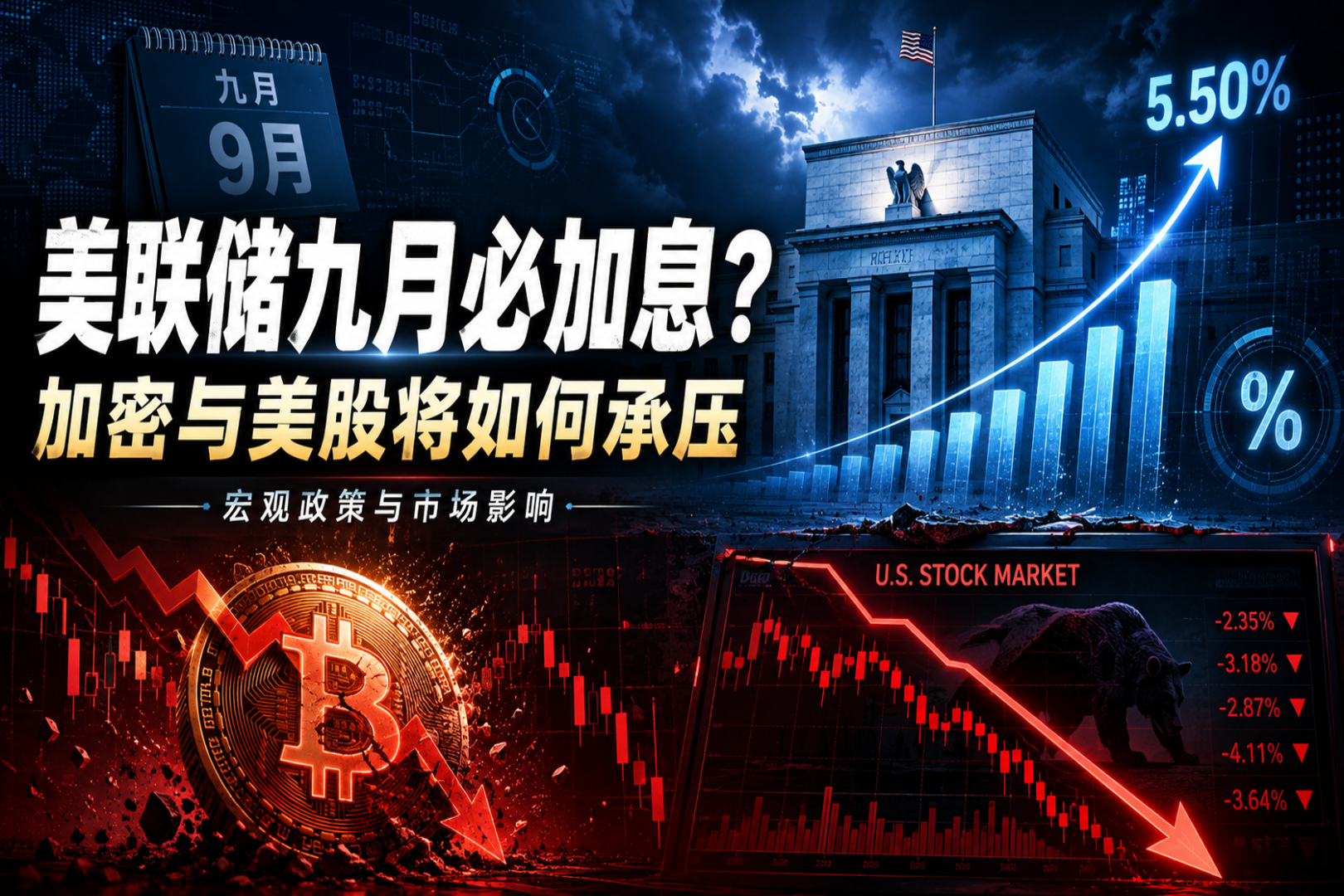
Will the Fed Definitely Raise Interest Rates in September? How Will Crypto and U.S. Stocks Withstand the Pressure?

The market's expectation for a September Fed rate hike surged dramatically in early August, jumping from under 50% to over 80% within a week. This shift followed a contentious July FOMC meeting, where a 9-3 vote to hold rates revealed growing dissent from hawkish members advocating for an immediate hike to combat persistent inflation. The primary catalyst for this repricing is rising oil prices, driven by renewed geopolitical tensions around the Strait of Hormuz, which threaten global supply. Energy costs directly influence inflation metrics, making the upcoming July CPI report (due August 12th) a critical data point. If it shows inflation reaccelerating, the probability of a September hike will solidify. For Bitcoin and crypto assets, this is typically bearish news. Bitcoin continues to behave as a high-beta, liquidity-sensitive risk asset. A rate hike raises the opportunity cost of holding non-yielding assets and could drive capital toward money markets, pressuring crypto prices in the short term. However, historical patterns suggest that if a hike is perceived as the end of a tightening cycle rather than the start, any negative price impact may be brief. U.S. stocks, particularly crypto-linked equities like Coinbase and growth-oriented tech stocks, are also vulnerable. Higher rates increase discount rates in valuation models, putting pressure on high-multiple companies. This coincides with a pivotal tech earnings season where investor focus has shifted from massive AI capital expenditure to tangible revenue and cash flow generation. Companies with negative cash flow and weak growth narratives could face heightened volatility if borrowing costs rise in September. In summary, a September Fed hike has evolved into a mainstream market scenario. Key factors to watch are oil prices, the July CPI report, and Fed communications, which will determine the final decision and its impact on volatile crypto and equity markets.

marsbit4m ago

Will the Fed Definitely Raise Interest Rates in September? How Will Crypto and U.S. Stocks Withstand the Pressure?

marsbit4m ago

A 'Overlooked' Market Event: Joint US-Japan-South Korea Intervention, Rare US Treasury Involvement, and Bessent's Quiet 'Market Rescue'?

Summary: The United States, Japan, and South Korea executed their largest coordinated foreign exchange intervention in nearly 30 years. The action targeted depreciation pressure on the Japanese yen and South Korean won. This move is seen as a significant effort by the US to stabilize the financial markets of its key allies and prevent the spillover of risks. Key details: * Japan reportedly intervened on July 30 using approximately 8.45 trillion yen (about $52.8 billion). South Korean authorities also intervened that day, selling dollars to support the won. * Notably, the US Treasury Department intervened directly in yen markets for the first time in roughly 30 years. The New York Fed, reportedly acting on behalf of the Treasury, sold euros to buy yen via Goldman Sachs and Morgan Stanley on July 31. Analysts view the use of the euro-yen pair as a way to alleviate yen pressure without adding selling pressure to the US dollar. * Prior to the action, the New York Fed conducted "rate checks" on both USD/JPY and EUR/JPY, a newer signaling tool that falls between verbal and physical intervention. The intervention is interpreted as going beyond traditional currency stabilization. Analysts, such as Michael Hartnett of Bank of America, suggest it resembles a "Price Keeping Operation" for the AI era. The core US objectives are perceived to be: 1. Preventing rapid yen depreciation from triggering a sharp rise in Japanese government bond yields. 2. Containing financial stress from spreading across Asian markets like South Korea and Japan. 3. Reducing the risk of disorderly capital flows impacting the US bond market. This coordinated action underscores the importance of Japan and South Korea as critical partners in the US semiconductor and AI supply chain. Stabilizing their financial markets is seen as vital to mitigating risks to the broader tech industry and the US market itself. The intervention coincides with market pressures, including the KOSDAQ index hitting a low since October 2022. While seen as a move to control volatility, some analysts caution it may not fundamentally reverse existing market trends.

marsbit8m ago

A 'Overlooked' Market Event: Joint US-Japan-South Korea Intervention, Rare US Treasury Involvement, and Bessent's Quiet 'Market Rescue'?

marsbit8m ago

Will the Federal Reserve Definitely Raise Interest Rates in September? How Will Cryptocurrencies and US Stocks Bear the Pressure?

In early August 2024, market expectations for a September Federal Reserve rate hike surged dramatically, from below 50% to over 80%, driven by renewed inflation concerns. This shift followed a contentious July FOMC meeting where a 9-3 vote to hold rates revealed a growing hawkish faction advocating for an immediate hike, citing prolonged above-target inflation. The key catalyst is escalating conflict near the Strait of Hormuz, which has pushed oil prices up approximately 20% in July, threatening to reignite inflation. The next critical data point is the July CPI report on August 12th; a hot reading could solidify hike expectations. For crypto assets, particularly Bitcoin, this represents near-term pressure. Bitcoin continues to exhibit high-beta, risk-on characteristics, making it sensitive to tightening liquidity and higher opportunity costs. However, historical precedent suggests that if a hike is perceived as the cycle's end rather than its start, the negative impact may be brief, with markets quickly pivoting to anticipate future rate cuts. U.S. stocks, especially crypto-linked equities like Coinbase and high-valuation tech stocks, face amplified volatility. Higher rates increase discount rates in valuation models, pressuring growth stocks. This coincides with a pivotal tech earnings season where investor focus has shifted from massive AI capital expenditures to demonstrable revenue and cash flow generation. Companies with negative cash flows and weak growth narratives could see severe pressure if a September hike materializes, as financing costs would rise. Key indicators to watch include oil prices, upcoming inflation data, and Fed commentary at events like the Jackson Hole symposium.

Odaily星球日报8m ago

Will the Federal Reserve Definitely Raise Interest Rates in September? How Will Cryptocurrencies and US Stocks Bear the Pressure?

Odaily星球日报8m ago

Trading

Spot

Hot Articles

How to Buy T

Welcome to HTX.com! We've made purchasing Threshold Network Token (T) simple and convenient. Follow our step-by-step guide to embark on your crypto journey.Step 1: Create Your HTX AccountUse your email or phone number to sign up for a free account on HTX. Experience a hassle-free registration journey and unlock all features.Get My AccountStep 2: Go to Buy Crypto and Choose Your Payment MethodCredit/Debit Card: Use your Visa or Mastercard to buy Threshold Network Token (T) instantly.Balance: Use funds from your HTX account balance to trade seamlessly.Third Parties: We've added popular payment methods such as Google Pay and Apple Pay to enhance convenience.P2P: Trade directly with other users on HTX.Over-the-Counter (OTC): We offer tailor-made services and competitive exchange rates for traders.Step 3: Store Your Threshold Network Token (T)After purchasing your Threshold Network Token (T), store it in your HTX account. Alternatively, you can send it elsewhere via blockchain transfer or use it to trade other cryptocurrencies.Step 4: Trade Threshold Network Token (T)Easily trade Threshold Network Token (T) on HTX's spot market. Simply access your account, select your trading pair, execute your trades, and monitor in real-time. We offer a user-friendly experience for both beginners and seasoned traders.

12.7k Total ViewsPublished 2024.03.29Updated 2026.06.02

How to Buy T

Discussions

Welcome to the HTX Community. Here, you can stay informed about the latest platform developments and gain access to professional market insights. Users' opinions on the price of T (T) are presented below.

活动图片