Crypto Billionaire’s $7M Gift Puts UK Reform Leader Under Ethics Spotlight

bitcoinistPublished on 2026-05-14Last updated on 2026-05-14

Abstract

UK Reform Party leader Nigel Farage is under investigation by the Parliamentary Commissioner for Standards for allegedly failing to properly declare a £5 million ($6.7 million) gift from cryptocurrency billionaire Christopher Harborne. The donation, made in early 2024 before Farage's election to Parliament, is under scrutiny as MPs must register significant benefits received in the 12 months prior to their election. Farage claims the money was a private, unconditional gift for personal security costs. Opposition parties, including the Conservatives who filed the complaint, are demanding transparency. This follows a prior late registration of interests by Farage, which was deemed accidental. The inquiry could result in outcomes ranging from an apology to suspension from Parliament.

A £5 million ($6.7 million) gift from crypto billionaire Christopher Harborne has landed Reform UK leader Nigel Farage before a parliamentary standards watchdog over an alleged disclosure failure.

The Size Of The Donation

According to reports, the money came from Harborne, a British cryptocurrency investor based in Thailand who gave £9 million to Reform UK in a single donation last year — the largest gift to a UK political party by a living person in British history.

His total contributions to Reform reached £12 million in 2025. The separate £5 million payment went directly to Farage in early 2024, months before Farage won a seat in Parliament.
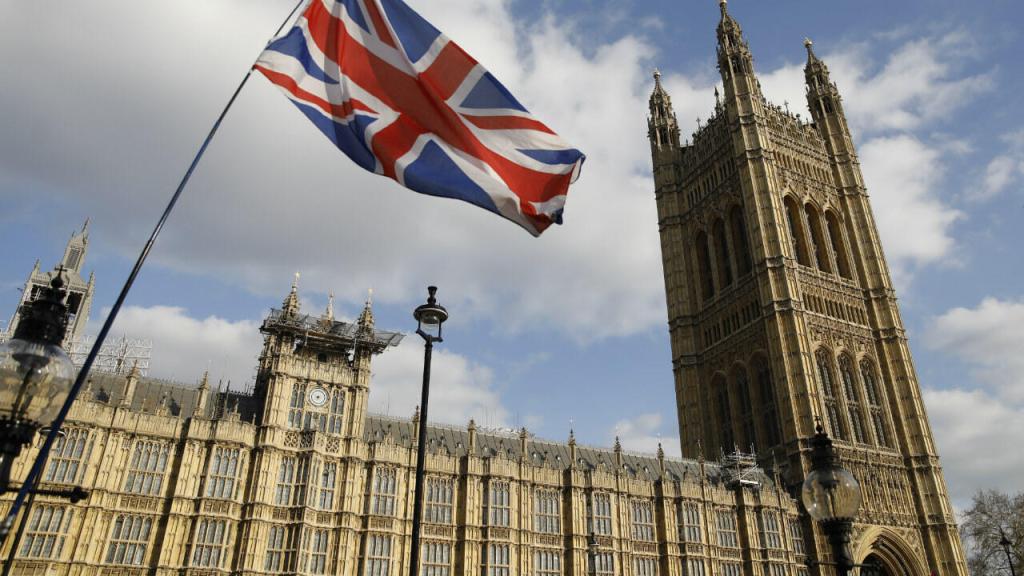
The UK Parliament. Image: France24

Farage says the money was given to cover his personal security costs and describes it as a private, unconditional gift with no political strings attached.

His office confirmed it is in contact with the Parliamentary Commissioner for Standards and said they expect the inquiry to clear him. “No rules were broken,” a Reform spokesman said.

What The Rules Actually Say

Commons rules require newly elected MPs to register financial interests and any benefits received in the 12 months before their election. Farage was elected in July 2024. The gift was made in early 2024, which places it squarely within that window.

The rules do allow exemptions for purely personal gifts, but they also state that both the giver’s possible motive and the intended use of the money must be weighed. Where doubt exists, registration is expected.

BTCUSD trading at $79,075 on the 24-hour chart: TradingView

This is not the first time Farage has run into disclosure issues. Earlier this year, he was found to have registered £384,000 in interests late. Standards commissioner Daniel Greenberg ruled that breach was accidental and allowed Farage to update his records without facing formal punishment.

Opposition Parties Push Back

Labour and the Conservatives have both called for answers. Labour Party chair Anna Turley said Farage has been dodging questions since the gift first came to light and called the investigation appropriate.

The Conservatives, who filed the complaint that triggered the inquiry, also raised the matter separately with the Electoral Commission, which said it is reviewing the information.

A Conservative spokesman put it bluntly: £5 million is more than most people earn in a lifetime, and Farage owes the public an explanation for how and why he received it.

If the Commissioner finds Farage violated the code of conduct, possible consequences range from a formal apology to suspension from Parliament. Expulsion remains an option in the most serious cases.

Featured image from Mark Thomas/Alamy, chart from TradingView

Related Questions

QWhy is Reform UK leader Nigel Farage under investigation by the parliamentary standards watchdog?

AHe is under investigation for an alleged failure to properly disclose a £5 million ($6.7 million) gift from crypto billionaire Christopher Harborne. The gift was received in early 2024, within the 12-month pre-election period requiring registration.

QWhat was the intended purpose of the £5 million gift given to Nigel Farage, according to him?

ANigel Farage says the money was an unconditional, private gift intended to cover his personal security costs, with no political strings attached.

QWhat is the parliamentary rule relevant to this gift and its disclosure?

ACommons rules require newly elected MPs to register financial interests and benefits received in the 12 months before their election. While personal gifts can be exempt, factors like the giver's motive and intended use must be considered, and registration is expected where doubt exists.

QHow have other political parties reacted to news of the gift and investigation?

ABoth the Labour and Conservative parties have called for answers. The Conservatives filed the complaint triggering the inquiry. Labour criticized Farage for dodging questions and supported the investigation.

QWhat are the potential consequences if the Commissioner finds Nigel Farage violated the code of conduct?

APossible consequences range from a formal apology to suspension from Parliament. Expulsion remains an option in the most serious cases.

Related Reads

GitHub, Transfixed by AI

On the night of February 9th, GitHub suffered a major outage caused by a simple configuration change—reducing a cache refresh interval from 12 to 2 hours—that triggered a cascade of failures. This was not an isolated event, but part of a broader pattern. In early 2026, GitHub experienced at least 8 major incidents, failing to meet its promised 99.9% availability. These outages stemmed from structural issues: explosive growth in load, tight service coupling, and insufficient protection against abnormal traffic. This unprecedented load is driven by AI Agents. In 2025, GitHub handled ~1 billion commits. By 2026, weekly commits reached 275 million, projecting to ~14 billion for the year—a 14x increase. AI tools like Claude Code now contribute 4.5% of all public repository commits, with weekly submissions surging 25x in just three months. AI-generated pull requests jumped from 4 million to 17 million per month in half a year. Unlike human developers, AI Agents work continuously, generating commits at a scale that overwhelms infrastructure designed for human rhythms. The surge also shattered GitHub's business model. Copilot's flat-rate pricing, based on assisting human developers, became unsustainable as Agentic AI sessions consumed resources worth hundreds of dollars for a few dollars in fees. In response, GitHub imposed usage limits and, by June 1st, shifted to a pay-per-use "AI Credits" system. Facing this new reality, GitHub realized a 10x scaling plan was insufficient. It announced a need to *redesign* its architecture for 30x current scale—decoupling services, adding fault isolation, and improving change management to prevent cascading failures. Other platforms like Stripe and AWS are facing similar challenges with AI Agents. Fundamentally, GitHub is transitioning from a human collaboration platform to an "exhaust pipe" for automated AI workflows. Its detailed post-mortem reports aim to maintain trust during this turbulent rebuild. The February outage was not just a technical glitch, but a signal of the software industry's entry into a new, AI-driven era.

marsbit31m ago

GitHub, Transfixed by AI

marsbit31m ago

Both Suffer Massive Losses Exceeding $90 Billion, Which Is in Greater Peril: Strategy or Bitmine?

Facing massive paper losses exceeding $90 billion each amidst a sharp market downturn, "Digital Asset Treasury" (DAT) giants Strategy and Bitmine find themselves in a precarious position, but with different underlying risks. Strategy, heavily invested in Bitcoin (BTC), faces significant financial strain. Its strategy relies heavily on debt, including convertible notes and preferred stock (STRC) requiring substantial dividend payments. With its cash reserves dwindling and BTC offering no staking yield for cash flow, Strategy's high leverage makes it vulnerable. A continued price decline could force asset sales to meet obligations, potentially creating a negative feedback loop. Its market value has already fallen sharply. In contrast, Bitmine, an Ethereum (ETH) holder, appears on firmer financial ground. It primarily funds its purchases through equity offerings (like ATM programs), avoiding debt pressure. It also generates income by staking a large portion of its ETH holdings. While not immune to market drops and shareholder dilution concerns, Bitmine maintains more flexibility, recently announcing a new preferred share offering to raise further capital. The core divergence lies in their financing: Bitmine uses equity (investor money), while Strategy uses debt (borrowed money). Consequently, Bitmine currently faces less immediate liquidity pressure than Strategy, which must navigate the dual challenge of servicing debt/dividends and a declining core asset (BTC) price.

marsbit38m ago

Both Suffer Massive Losses Exceeding $90 Billion, Which Is in Greater Peril: Strategy or Bitmine?

marsbit38m ago

Trading

Spot
Futures
活动图片





