CoreWeave's second-quarter performance once again demonstrates that demand for AI infrastructure is still growing rapidly as enterprises and AI companies continue to expand their computing power investments.
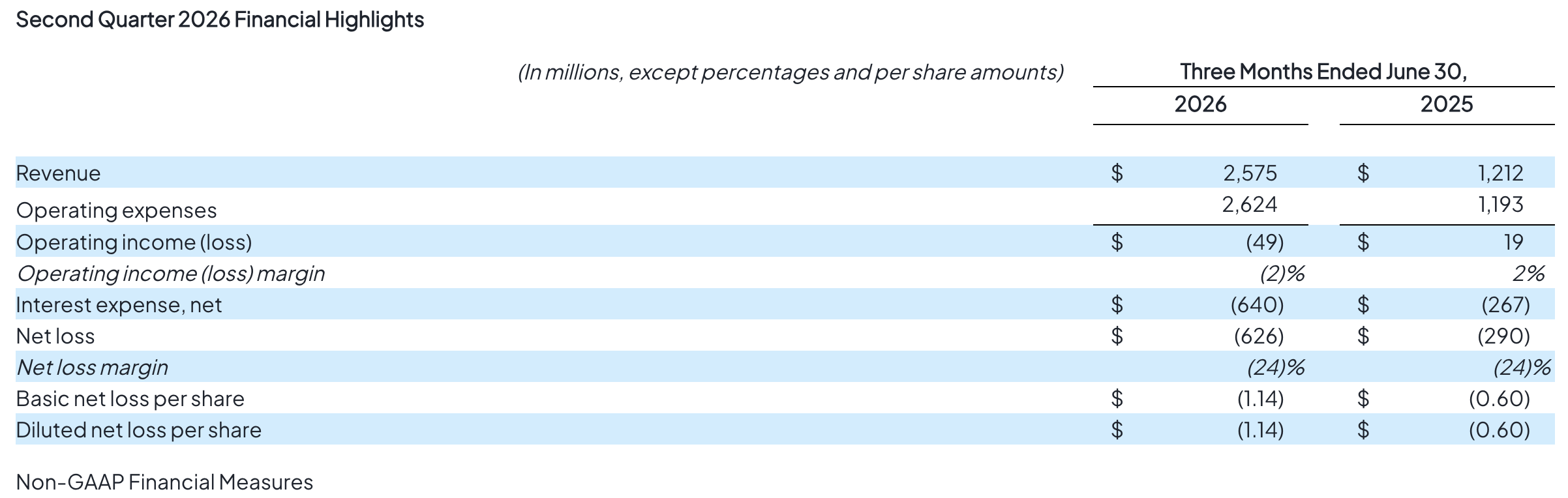
CoreWeave's Q2 revenue increased approximately 112% year-over-year to $2.575 billion, surpassing market expectations of about $2.56 billion; net loss was $626 million, or a loss of $1.14 per share, with the loss margin being better than analysts' expected loss per share of $1.41.
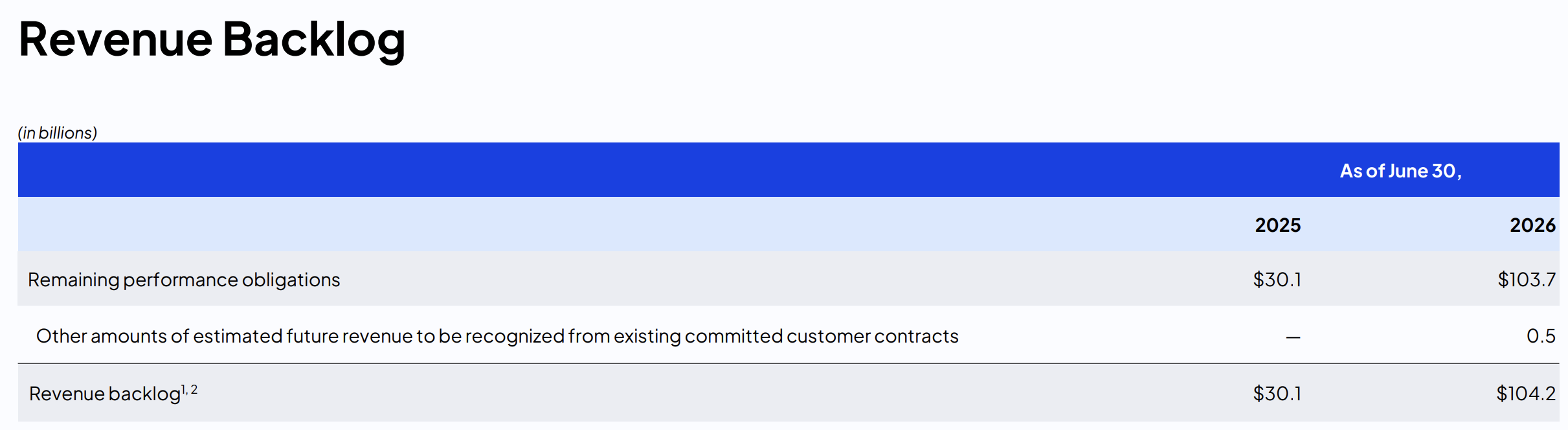
One of the company's most watched metrics—its revenue backlog—reached approximately $104 billion, a further increase from $99.4 billion at the end of the first quarter.
The company also disclosed that it added over $25 billion in customer commitments at the beginning of the third quarter, which is not yet included in the aforementioned $104 billion backlog. Previously, the backlog at the end of Q1 had grown 284% year-over-year.
The company's CEO stated that customer contracts signed in the second quarter are expected to contribute a profit margin 5‑10 percentage points higher than contracts added in recent quarters.
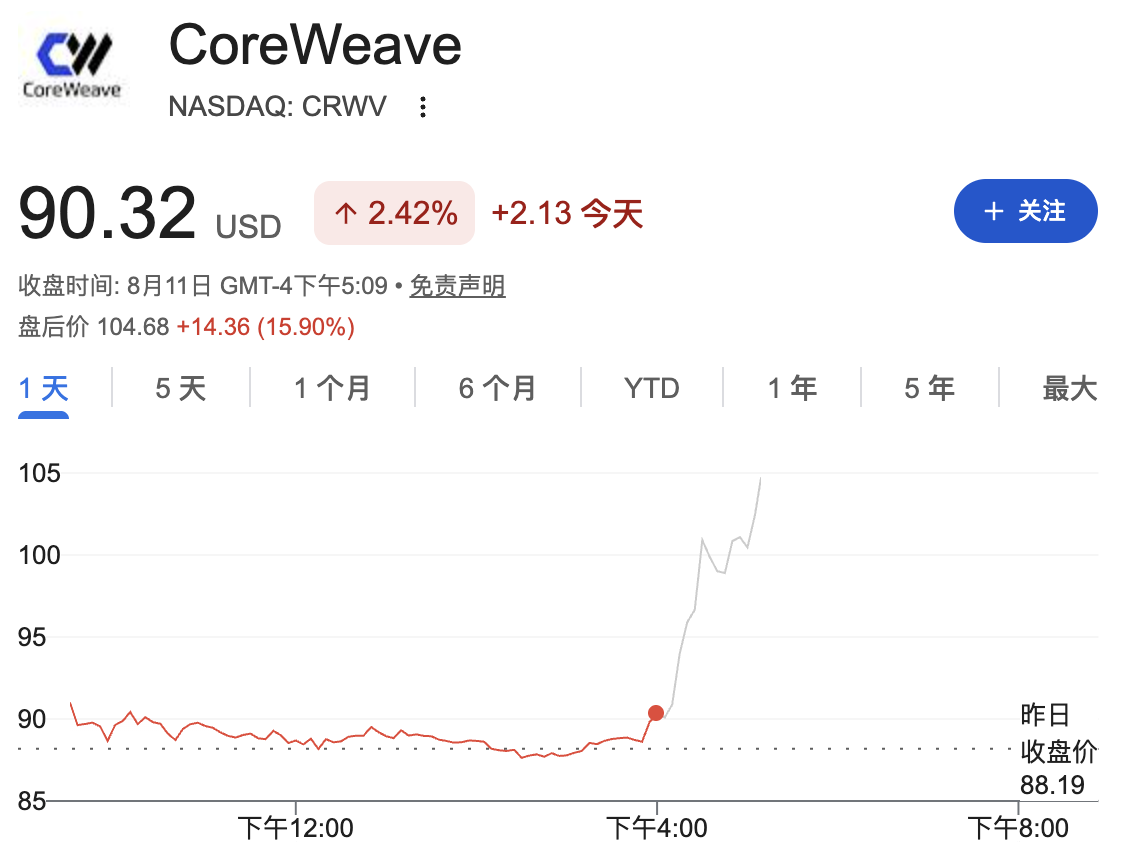
Following the earnings release, CoreWeave's after-hours stock price surged 16%. As of Tuesday's close, the stock has risen about 26% year-to-date.
AI Computing Power Orders Continue Rapid Growth
In terms of business scale, CoreWeave is rapidly expanding its AI infrastructure supply.
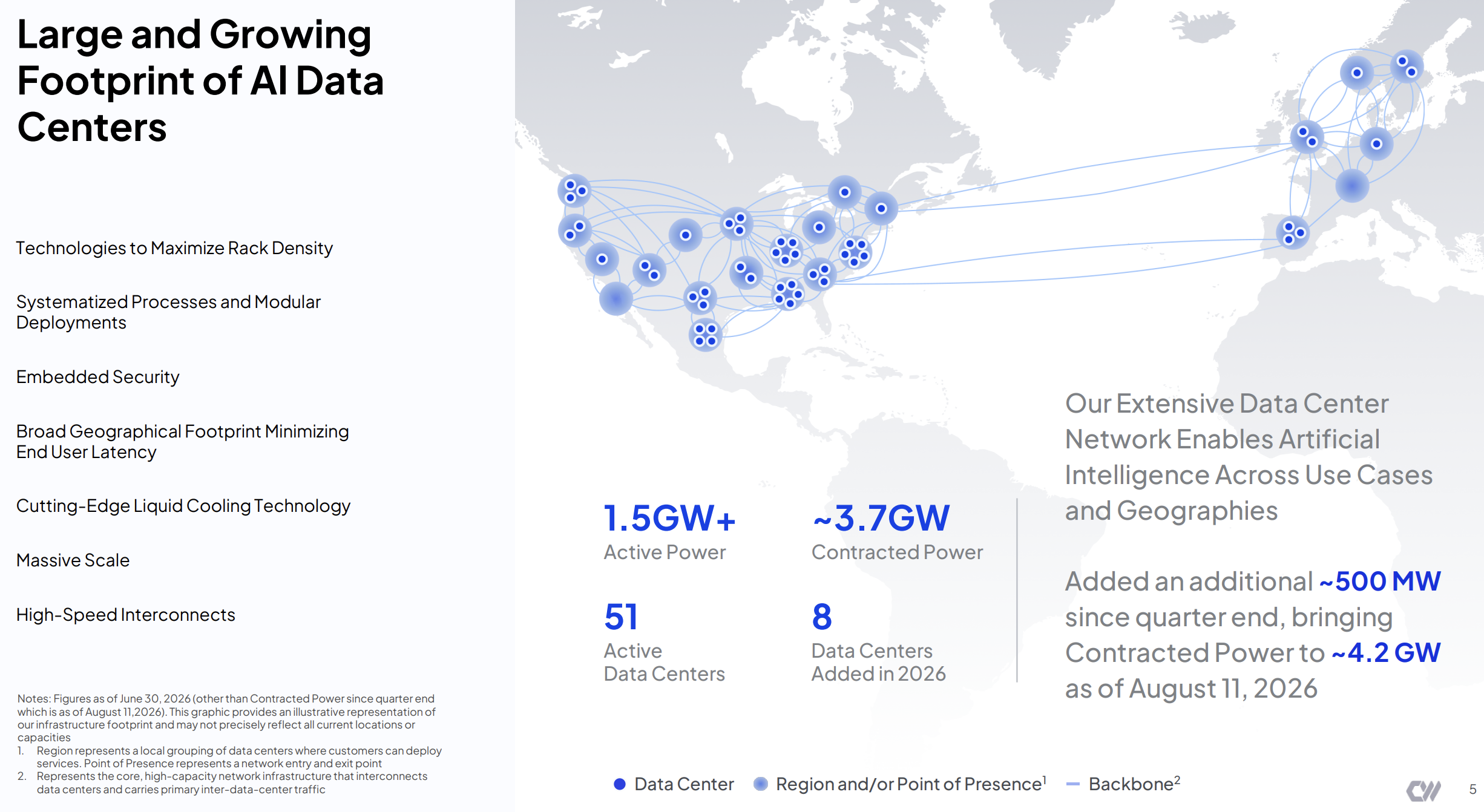
In Q2, the company expanded its active power capacity by nearly 500 megawatts, reaching 1.5 gigawatts; total contracted power capacity reached approximately 3.7 gigawatts, and it further expanded its data center land reserves and supplier portfolio.
Regarding customers, CoreWeave continues to expand cooperation with AI labs, hyperscale cloud computing companies, and large enterprises.
The company disclosed that Bentley Systems, Caterpillar, Grammarly, Isomorphic Labs, and Sunday Robotics have become new customers, while it has further expanded cooperation with existing customers such as Cognition, Databricks, Hudson River Trading, Rescale, and Runway ML.
The company also stated that it has completed the industry's first deployment verification of the NVIDIA Vera Rubin NVL72 system and has set new MLPerf training and inference records on the NVIDIA Grace Blackwell platform.
These developments indicate that CoreWeave is expanding from simply providing GPU computing power to an integrated AI cloud platform covering training, inference, data transmission, and AI agent runtime environments.
CEO Michael Intrator said that customer demand is accelerating as the scope of enterprise AI adoption broadens and the company's technology platform deepens.
Revenue Surges, but Profitability Remains the Biggest Concern
CoreWeave's performance highlights are mainly concentrated on the revenue and order side, while the income statement still faces significant pressure.
In Q2, the company's operating expenses reached $2.624 billion, more than doubling year-over-year, resulting in an operating loss of $49 million. More notably, net interest expense surged from $267 million in the same period last year to $640 million.
Ultimately, the company's Q2 net loss reached $626 million. Although the loss rate remained around 24% of revenue, the absolute scale of the loss significantly expanded.
On a non-GAAP basis, the company's adjusted EBITDA for Q2 reached $1.51 billion, an increase of approximately 100% year-over-year, but the adjusted EBITDA margin decreased from 62% to 59% compared to the same period last year; adjusted operating profit fell from $200 million to $128 million.
This means that although CoreWeave is securing an increasing number of AI computing power orders, the revenue growth is still accompanied by huge financing costs and infrastructure investments, with scale expansion not yet fully translating into profit growth.
This is also the issue Wall Street is currently most focused on regarding CoreWeave: a $104 billion backlog implies high visibility of future revenue, but how much capital the company needs to invest to fulfill these orders and, ultimately, how much cash flow it can retain.
High-Debt Model Bets on Long-Term AI Infrastructure Boom
CoreWeave has adopted an extremely aggressive expansion model in recent years, heavily borrowing to purchase AI chips and build data centers to meet the growing computing power demands of large customers.
The company disclosed in Q2 that it completed a $3.1 billion term loan and raised over $10 billion through unsecured bonds and convertible notes, including the company's first euro-denominated bond issuance.
Additionally, Jane Street made a strategic investment of $1 billion in CoreWeave.
The continuous expansion of financing scale, on one hand, indicates that financial institutions and large customers are still willing to fund AI infrastructure. On the other hand, it also means CoreWeave's dependence on capital markets and debt financing is increasing.
Analysts point out that CoreWeave's various metrics this quarter were generally above expectations but not "off the charts." The market had already priced in its high-speed growth to some extent, so simply exceeding revenue expectations is not enough to completely alleviate investor concerns about profit margins and debt levels.
CoreWeave Is Becoming a "Thermometer" for AI Capital Expenditure
The unique aspect of CoreWeave is that it is one of the few publicly traded "neocloud" service providers currently available. Therefore, its order book and data center expansion are viewed by the market as an important window into AI computing power demand.
The core signal released by CoreWeave's earnings is that AI computing power demand remains strong, sufficient to support its continued large-scale infrastructure expansion.
Microsoft previously reported its fastest cloud business growth in four years; Alphabet's Google Cloud also exceeded revenue expectations in Q2, with its backlog growing further to $514 billion from about $460 billion in Q1.
Meanwhile, CoreWeave's order backlog reached $104 billion, with over $25 billion in new customer commitments added at the beginning of Q3. Looking at the order books of these large cloud service providers and AI computing power suppliers, there are no obvious signs of cooling in the AI infrastructure investment cycle yet.
Recently, CoreWeave's stock price has experienced significant volatility. After the AI fund Situational Awareness liquidated its public market holdings, AI infrastructure stocks like CoreWeave came under pressure. Subsequently, Citadel purchased a large number of AI stocks from that fund, and market sentiment quickly recovered.
Bloomberg data shows that as of the end of March, Situational Awareness held approximately 1.6% of CoreWeave's outstanding shares.