Circle stock drops nearly 20% as stablecoin yield restrictions spark concern

ambcryptoPublished on 2026-03-24Last updated on 2026-03-24

Abstract

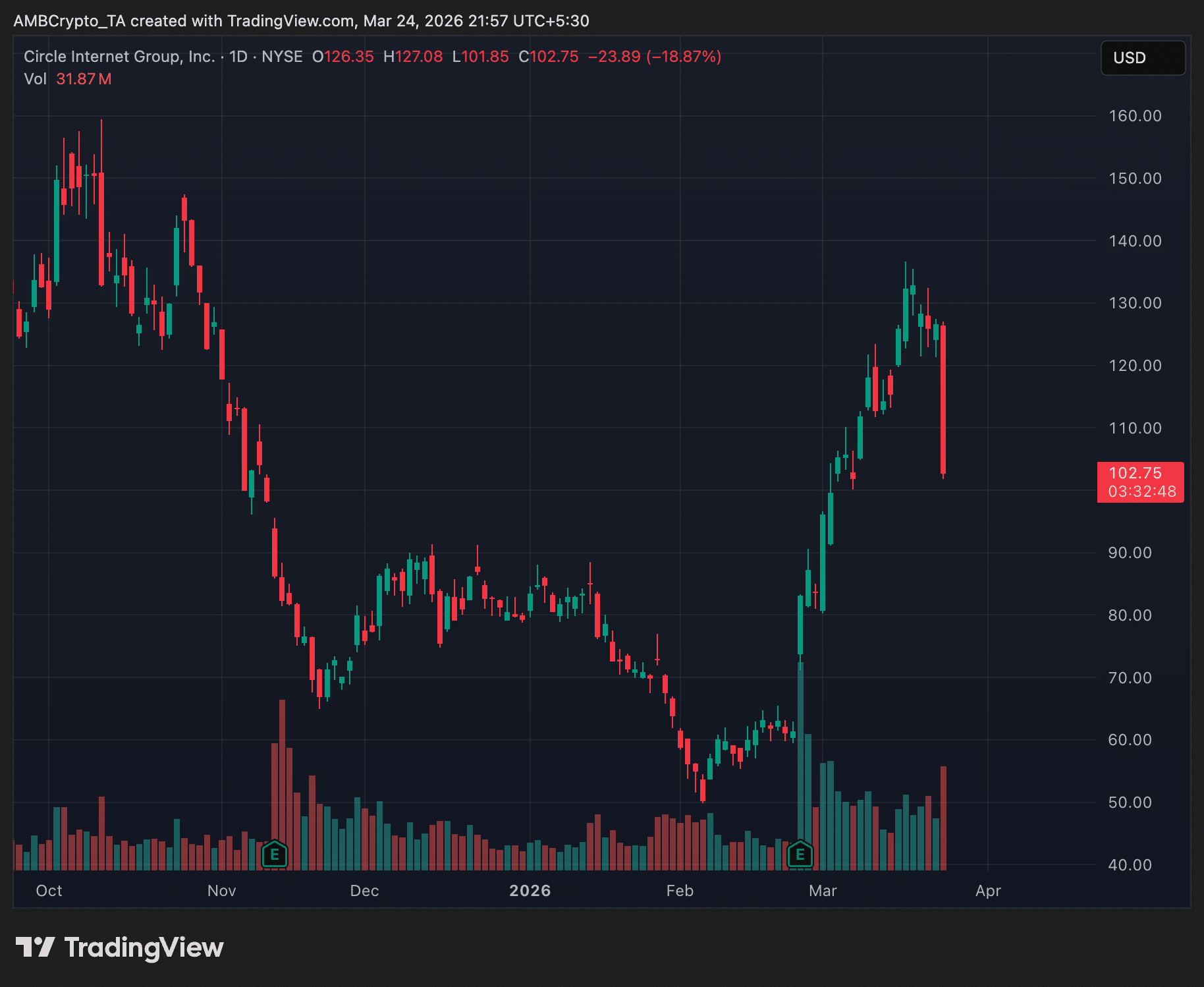
Shares of Circle Internet Group (CRCL) fell nearly 19% on March 24, dropping from an intraday high of around $127 to approximately $102. The sharp decline followed a strong rally earlier in March and was accompanied by high trading volume, indicating a shift in investor sentiment. The sell-off appears linked to emerging regulatory concerns, particularly a draft legislative proposal that could prohibit platforms from offering yield or interest-like rewards for holding stablecoins. This restriction, which targets both direct and indirect incentives, may impact Circle’s USDC stablecoin growth and user engagement. The proposal would still permit activity-based rewards but could reduce stablecoins' competitiveness against traditional financial products. The move underscores the sensitivity of crypto equities to regulatory developments.

Shares of Circle Internet Group [CRCL] fell sharply on 24 March, dropping nearly 19% in a single session as markets reacted to emerging concerns around potential restrictions on stablecoin yield and rewards.

The stock declined from an intraday high of around $127 to approximately $102, marking one of its steepest single-day losses in recent weeks. The move comes after a strong rally earlier in March, when CRCL climbed from below $60 to above $130.

Sharp reversal follows March rally

CRCL’s latest decline stands in contrast to its recent momentum, with the stock having more than doubled earlier this month before reversing course.
Source: TradingView

The sell-off was accompanied by a spike in trading volume, suggesting strong conviction behind the move rather than routine market fluctuations.

The abrupt reversal suggests a potential shift in sentiment, with investors reacting quickly to new developments in the stablecoin sector.

While no official trigger has been confirmed, the timing of the decline coincides with growing regulatory scrutiny around stablecoins.

Draft proposal targets stablecoin yield

According to a report from Eleanor Terrett, new legislative language under discussion could significantly limit how stablecoin issuers and platforms offer rewards to users.

The proposal would prohibit platforms from offering yield “directly or indirectly” for holding a stablecoin, or in any way that resembles a bank deposit. The restriction would apply broadly across exchanges, brokers, and affiliated services.

It would also ban any mechanism deemed “economically or functionally equivalent” to interest.

At the same time, the draft would allow activity-based rewards tied to user behavior, such as loyalty or promotional programs, provided they are not interpreted as interest-like incentives.

The proposal is expected to undergo further review, including feedback from banking representatives.

Implications for Circle and stablecoin issuers

For Circle, which issues the USDC stablecoin, yield restrictions could have direct implications for growth and user incentives.

Stablecoin yield and reward programs have become a key mechanism for attracting and retaining users across exchanges and platforms.

Limiting these features could reduce stablecoins’ competitiveness relative to traditional financial products and narrow revenue opportunities tied to user balances.

The uncertainty surrounding how regulators may interpret “economic equivalence” adds another layer of risk, particularly for business models that rely on flexible reward structures.


Final Summary

  • Circle’s sharp decline highlights how sensitive crypto-linked equities are to emerging regulatory risks, particularly around stablecoin incentives.
  • Growing scrutiny and industry moves toward transparency suggest a structural shift in how stablecoin issuers operate going forward.


Related Questions

QWhat caused Circle's stock (CRCL) to drop nearly 20% on March 24?

AThe sharp decline was triggered by emerging concerns and a draft legislative proposal that could restrict stablecoin issuers and platforms from offering yield or interest-like rewards to users.

QWhat was the price range of CRCL's intraday movement during the sell-off?

AThe stock dropped from an intraday high of around $127 to approximately $102.

QWhat specific activity does the new legislative proposal aim to prohibit regarding stablecoins?

AThe proposal aims to prohibit platforms from offering yield 'directly or indirectly' for holding a stablecoin, or any mechanism deemed 'economically or functionally equivalent' to interest or a bank deposit.

QHow might the proposed restrictions impact Circle and other issuers?

AThe restrictions could reduce stablecoins' competitiveness compared to traditional financial products, narrow revenue opportunities from user balances, and create uncertainty for business models relying on reward structures.

QWhat type of rewards would still be allowed under the draft proposal?

AActivity-based rewards tied to user behavior, such as loyalty or promotional programs, are allowed provided they are not interpreted as interest-like incentives.

Related Reads

Bitcoin Boom in Full Swing: Saylor's Latest Statement Fuels Buying Speculation

MicroStrategy's Executive Chairman Michael Saylor has fueled speculation about a new Bitcoin purchase by posting "Bitcoin Drive engaged" on August 2, accompanied by the company's customary purchase tracker. This aligns with his pattern of hinting at treasury changes ahead of weekly reports. The accompanying report showed MicroStrategy's Bitcoin holdings at 843,775 BTC, with an average cost of $75,653 per coin and an unrealized loss of -$10.58B. A similar signal preceded the company's July 27 announcement, strengthening expectations for a treasury update on Monday. However, MicroStrategy's real-time ledger reflects two recent Bitcoin sales totaling 3,588 BTC, reducing holdings from 847,363 BTC to the current 843,775 BTC. The company stated these sales funded preferred stock dividends and replenished its U.S. dollar reserve. Recent reports indicate the company made no Bitcoin purchases the week ending July 26 while increasing its dollar reserve to approximately $3.75B. The company faces financial headwinds after reporting an $8.33B operating loss for Q2 2026, including an $8.32B unrealized loss on its digital assets. Management may sell up to $1.25B more in Bitcoin to meet cash obligations. The expected Monday update will reveal if the "Bitcoin Drive" signal marks a return to accumulation as MicroStrategy balances its massive Bitcoin stash against growing cash commitments.

cryptonews.ru1h ago

Bitcoin Boom in Full Swing: Saylor's Latest Statement Fuels Buying Speculation

cryptonews.ru1h ago

Trading

Spot
活动图片




