Charles Hoskinson Slams Ripple CEO Brad Garlinghouse Over CLARITY Act Support

ccn.comPublished on 2026-01-19Last updated on 2026-01-19

Abstract

Cardano founder Charles Hoskinson criticized Ripple CEO Brad Garlinghouse for supporting the CLARITY Act, a U.S. crypto regulation bill. Hoskinson argued that Garlinghouse's willingness to accept imperfect legislation compromises crypto's core principles and risks granting excessive power to hostile regulators like the SEC. He warned that the bill, now with over 130 amendments, would treat most tokens as securities by default, forcing projects to seek exemptions from agencies that have historically targeted the industry. In contrast, Garlinghouse and companies like Ripple, Kraken, and Robinhood support the bill for providing regulatory clarity. The divide reflects a broader tension between pragmatic and idealistic approaches to crypto regulation.

Key Takeaways

  • Charles Hoskinson criticized Brad Garlinghouse for accepting imperfect U.S. crypto regulation bills rather than fighting for better ones.
  • The jab targeted Garlinghouse’s view, with Hoskinson calling compromise dangerous and a betrayal of crypto’s core principles.
  • This reflects ongoing tension between pragmatic leaders like Garlinghouse and purists like Hoskinson.

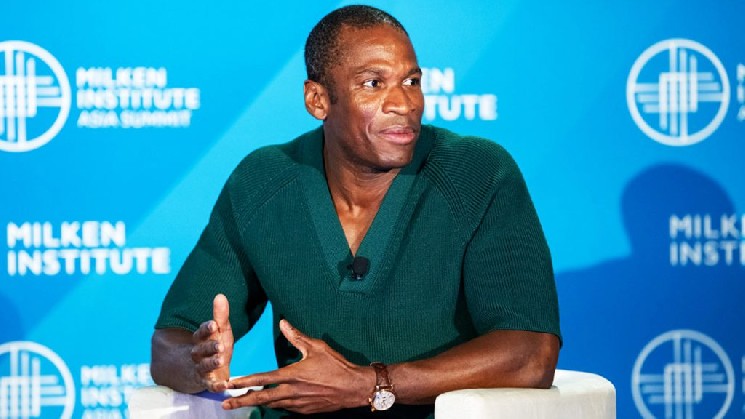
In a fiery Jan. 18 live-stream broadcast , Cardano founder Charles Hoskinson delivered a passionate, roughly 29-minute rant on the state of the crypto industry.

Amid discussions of market cycles, Midnight’s privacy tech roadmap, and motivational calls to reject “learned helplessness” in the community, Hoskinson took a pointed swipe at Ripple CEO Brad Garlinghouse.

Try Our Recommended Crypto Exchanges
Sponsored
Disclosure
We sometimes use affiliate links in our content, when clicking on those we might receive a commission at no extra cost to you. By using this website you agree to our terms and conditions and privacy policy.
"}' data-trk="68df7fd8872238d510dfbf06" href="https://clicks.pipaffiliates.com/c?c=1104900&l=en&p=1" rel="nofollow" target="_blank">
XM.com<\/h3>"}' data-trk="68df7fd8872238d510dfbf06" href="https://clicks.pipaffiliates.com/c?c=1104900&l=en&p=1" rel="nofollow" target="_blank">

XM.com

promotions
Get 100% Bonus up to $100 on your first Deposit.<\/strong>"}' data-trk="68df7fd8872238d510dfbf06" href="https://clicks.pipaffiliates.com/c?c=1104900&l=en&p=1" rel="nofollow" target="_blank"> Get 100% Bonus up to $100 on your first Deposit.
Coins
28
Claim Offer
"}' data-trk="6899b9831836d97539c51aa6" href="https://www.bitunix.com/" rel="nofollow" target="_blank">
Bitunix<\/h3>"}' data-trk="6899b9831836d97539c51aa6" href="https://www.bitunix.com/" rel="nofollow" target="_blank">

Bitunix

promotions
Receive up to $100,000 worth of exclusive gifts for newcomers upon registration.<\/strong>"}' data-trk="6899b9831836d97539c51aa6" href="https://www.bitunix.com/" rel="nofollow" target="_blank"> Receive up to $100,000 worth of exclusive gifts for newcomers upon registration.
Coins
151
Claim Offer
"}' data-trk="67adf8d4f12aaec7e4808bf5" href="https://bonus.bitget.com/CCN12" rel="nofollow" target="_blank">
Bitget<\/h3>"}' data-trk="67adf8d4f12aaec7e4808bf5" href="https://bonus.bitget.com/CCN12" rel="nofollow" target="_blank">

Bitget

promotions
New user rewards up to 6,200 USDT.<\/strong>"}' data-trk="67adf8d4f12aaec7e4808bf5" href="https://bonus.bitget.com/CCN12" rel="nofollow" target="_blank"> New user rewards up to 6,200 USDT.
Coins
88
Claim Offer
Explore All Offers

Hoskinson Takes a Jab at Ripple’s Garlinghouse

The Cardano founder didn’t mince words when he took aim at Ripple CEO Brad Garlinghouse, calling out what he sees as an overly accommodating approach to U.S. crypto regulation.

Hoskinson’s criticism focused on Garlinghouse’s willingness to accept imperfect legislation in the name of progress, particularly as Congress debates new market structure rules for digital assets.

Referencing Garlinghouse’s recent comments, Hoskinson paraphrased his stance as: “It’s not perfect, but we just need to get something done.” Hoskinson responded with a sharp rebuke.

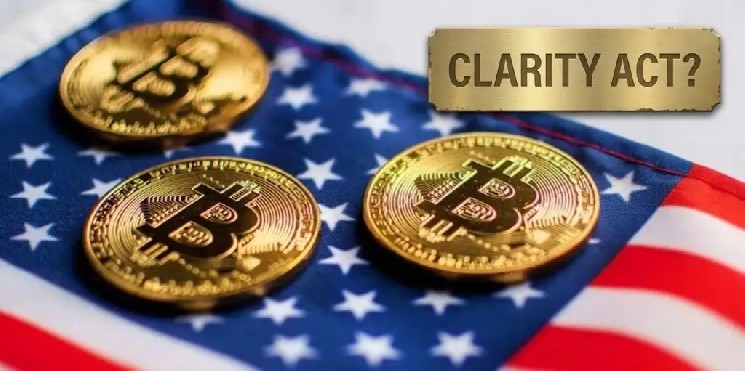
The remarks came amid intensifying debate over the Digital Asset Market Clarity Act, commonly known as the CLARITY Act , along with related market structure proposals working their way through Congress.

The legislation aims to clarify how authorities regulate digital assets in the U.S., which includes:

  • Tokens classification.
  • How stablecoins are governed,
  • Division of authority between the Securities and Exchange Commission (SEC) and the Commodity Futures Trading Commission (CFTC).

A Deeper Split Over Crypto’s Regulatory Future

Hoskinson has emerged as one of the bill’s most vocal critics.

He pointed to the growing complexity of the draft, which has reportedly ballooned to more than 130 amendments, arguing that the revisions risk handing sweeping authority back to the SEC.

In his view, the changes would treat most new tokens as securities by default, forcing projects to seek exemptions from the same regulators that have spent years pursuing enforcement actions against the industry.

He warned that such a framework would push builders into a defensive posture.

This will require them to “beg and plead” for regulatory approval while empowering agencies that have relied on subpoenas, lawsuits, and threats of criminal penalties.

Garlinghouse, by contrast, has publicly supported versions of the legislation, framing regulatory clarity as a necessary step forward even if the final product falls short of perfection.

He has argued that prolonged uncertainty has stifled innovation in the U.S. and that constructive engagement with lawmakers offers a better path than rejecting compromise outright.

The Bill That Has Divided the Crypto Community

The market structure bill is one of the key pieces of crypto legislation the industry has been closely watching, as it promised a comprehensive rulebook for both crypto companies and regulators.

However, the most recent version of the bill has angered much of the crypto community, with critics arguing it would do more harm than good.

Coinbase CEO Brian Armstrong publicly rebuked the current draft, saying it would be better to have no bill at all than the one currently up for consideration.

Coinbase subsequently withdrew its support for the legislation, further delaying its progress and discussion in Congress.

In contrast, the bill has found backing from companies such as Ripple, Kraken, Robinhood, and several others.

Hoskinson framed Garlinghouse’s pro-bill stance as a dangerous capitulation.

The Cardano founder argued that it would hand “the keys to the cryptocurrency kingdom” to hostile regulators, simply to “get something” passed on paper.

He tied this position to broader industry failings, accusing some leaders of prioritizing personal or corporate interests over the cypherpunk ideals of decentralization and financial freedom.

Hoskinson’s remarks sparked mixed reactions.

Some XRP supporters accused him of hypocrisy, given his past outreach to regulators. Others backed his principled opposition to what they view as a rushed and flawed bill.

The exchange highlights deepening divisions within crypto leadership, as pragmatists like Garlinghouse clash with purists like Hoskinson.

At the same time, the industry is navigating a critical period for regulation, stablecoins, and broader adoption heading into 2026.

Top Trending Crypto Articles
  • Best Exchanges Check Out Our Recommended Exchanges Here
  • Buy Crypto Fast How To Buy Crypto with a Credit Card Now
  • Safe Crypto Gambling See Our Picks for the Best Crypto Gambling Sites

Related Questions

QWhat was the main criticism Charles Hoskinson directed at Brad Garlinghouse?

ACharles Hoskinson criticized Brad Garlinghouse for accepting imperfect U.S. crypto regulation bills rather than fighting for better ones, calling compromise dangerous and a betrayal of crypto's core principles.

QWhich specific legislation is at the center of the debate between Hoskinson and Garlinghouse?

AThe Digital Asset Market Clarity Act, commonly known as the CLARITY Act, is the legislation at the center of the debate.

QWhat did Hoskinson argue would be the consequence of the current draft of the market structure bill?

AHoskinson argued that the bill would treat most new tokens as securities by default, forcing projects to seek exemptions from regulators like the SEC and pushing builders into a defensive posture where they must 'beg and plead' for regulatory approval.

QWhich companies have publicly supported the current version of the market structure bill?

ARipple, Kraken, Robinhood, and several other companies have publicly supported the current version of the market structure bill.

QHow did Coinbase CEO Brian Armstrong react to the most recent version of the bill?

ABrian Armstrong publicly rebuked the current draft, stating it would be better to have no bill at all than the one currently up for consideration, and Coinbase subsequently withdrew its support for the legislation.

Related Reads

Fundraising is Like a Strange Dance: The 'Absurd Drama' of Silicon Valley Founders' Capital Raises

The article details a series of absurd and revealing anecdotes shared by Silicon Valley founders about their venture capital fundraising experiences, sparked by Greg Isenberg's story of pitching to a sleeping a16z partner. Founders describe surreal pitch meetings: one faced a barefoot, peanut-eating investor who offered triple the requested amount after 30 seconds; another performed a pitch in a VC's parked car; a founder discovered his audience understood no English beyond "yes." These stories highlight the often irrational and performative nature of fundraising. Beyond the absurdity, darker power imbalances are exposed. Stories include investors suggesting founders fire co-founders for their equity, blatant market misjudgments, disrespectful behavior from LPs, and discriminatory remarks. A debate also emerges around "Sequoia's" practice of splitting a round into two valuations. However, the thread isn't solely critical. Positive counter-narratives celebrate supportive VCs who offered crucial advice during crises, respected founders' timelines, and showed simple gestures of respect—like a partner personally fetching coffee before a major pitch. Ultimately, the collective sharing acts as a pressure release, illustrating that fundraising is a complex dance of power, trust, and sometimes sheer theater. It underscores that beyond capital, mutual respect and integrity remain the most enduring foundations of the founder-investor relationship.

marsbit12m ago

Fundraising is Like a Strange Dance: The 'Absurd Drama' of Silicon Valley Founders' Capital Raises

marsbit12m ago

Vitalik's Vision for the Next Evolution of On-Chain Finance: How to Reconstruct DeFi with an 'Options Mindset'?

Vitalik Buterin recently proposed a conceptual shift for DeFi: replacing traditional Collateralized Debt Positions (CDPs) and forced liquidations with an options-based mechanism. This aims to address key vulnerabilities in current DeFi lending. The traditional CDP model, foundational to protocols like MakerDAO and Aave, allows users to borrow against collateral but relies on real-time oracles and triggers sudden, mandatory liquidations during price volatility. This can cause cascading sell-offs, oracle manipulation risks, and significant MEV extraction, exacerbating market stress. Vitalik's alternative envisions splitting an asset like 1 ETH into two complementary components: one offering stable/index-like exposure and the other absorbing the opposite risk/reward. Instead of a hard liquidation threshold, a user's exposure to the target asset would gradually and smoothly deviate (following a near-quadratic curve) as the collateral price moves. The system would primarily depend on "slow oracles" for periodic settlement rather than instant price feeds. Key potential benefits include: the elimination of abrupt, forced liquidations; drastically reduced reliance on vulnerable real-time oracles; and inherent resistance to certain MEV exploits centered on liquidation auctions. The article posits that for Ethereum DeFi to maintain its relevance amid competition from faster, cheaper chains, it must compete on sophisticated financial engineering and robustness—not just transaction speed or yields. The core value proposition should shift towards offering users clearer, more manageable risk structures, greater autonomy, and resilience in extreme scenarios, moving DeFi from high-risk experimentation towards becoming reliable financial infrastructure.

marsbit50m ago

Vitalik's Vision for the Next Evolution of On-Chain Finance: How to Reconstruct DeFi with an 'Options Mindset'?

marsbit50m ago

AI Agent Completely Transforms Web3 Gaming: From the Rugpull Bakery Bot Controversy to the New 2026 Agent Paradigm

This article explores how the AI Agent paradigm is fundamentally transforming Web3 gaming, moving from a disruptive force to a core, legitimized element. It begins with the controversy in the competitive baking game Rugpull Bakery, where automated scripts caused fairness issues. Instead of banning them, the developers integrated AI Agents into the official gameplay by providing technical documentation (skill.md, agent.json), marking a shift towards "Agentic Gaming." The piece outlines three primary implementation models for AI Agents in Web3 games by 2026: 1. **Autonomous Competitors & Economic Entities:** AI Agents act as independent players with unique strategies. Examples include TEN Protocol's poker agents, AI Arena's trainable NFT fighters, and Satoshi Strike Force's "Digital Athletes" trained on player data. The Somnia blockchain is highlighted as a dedicated "Agentic L1" infrastructure supporting this model at scale. 2. **Modular Infrastructure & Programmable Environments:** This model, exemplified by EVE Frontier, allows AI Agents to program game world logic itself. Using "Smart Assemblies" (e.g., Smart Turrets, Smart Gates), Agents can modify shared economic and physical rules on-chain, creating dynamic, player/AI-built worlds. The ERC-8183 standard further enables these automated entities to hire other AI services for complex tasks. 3. **Hybrid Companions & Dynamic Adaptation:** Here, AI serves as a collaborative partner. In Parallel Colony, highly autonomous AI Avatars work alongside human players who provide high-level guidance. Illuvium plans to use AI to make NPCs dynamic and responsive, creating personalized, emergent narratives for each player. The conclusion posits that Web3 gaming has reached a "post-human" inflection point. Blockchains' transparency and programmability, combined with new standards and infrastructure like Somnia, make integrating and governing AI Agents not just viable but essential. The future lies in a symbiotic digital order where players transition from manual laborers to commanders and partners of algorithmic intelligence.

marsbit1h ago

AI Agent Completely Transforms Web3 Gaming: From the Rugpull Bakery Bot Controversy to the New 2026 Agent Paradigm

marsbit1h ago

Trading

Spot
Futures
活动图片