Bybit Hosts Forum on the Future of Crypto-Powered Payments in Georgia

TheNewsCryptoPublished on 2026-03-13Last updated on 2026-03-13

Abstract

Bybit, the world's second-largest crypto exchange, hosted a high-level forum in Tbilisi, Georgia, bringing together regulators, financial institutions, and digital asset innovators to discuss the future of crypto-powered payments. The event also marked the launch of the Bybit Card in Georgia, enabling users to make contactless payments via Apple Pay and spend digital assets in daily transactions. This initiative follows Bybit’s acquisition of a Payment Service Provider license in late 2025, allowing it to strengthen local payment infrastructure. Government representatives endorsed the move, highlighting Georgia’s commitment to financial innovation. Bybit executives reiterated their long-term dedication to supporting Georgia’s digital economy and positioning the country as a regional hub for crypto payment innovation.

At a high-level forum in Tbilisi, regulators, global payment networks, banking executives, and digital asset innovators were brought together by Bybit, the world’s second-largest cryptocurrency exchange by trading volume. The session was designed to explore the future of crypto-powered payments.

During the event, participants from all parts of the financial ecosystem came together to explore the ways in which digital assets may be integrated with conventional payment infrastructure, how they might increase their usefulness in the real world, and how they can help the ongoing growth of Georgia’s digital economy.

At the same time, the forum marked the launch of the Bybit Card in Georgia, which is a step toward making cryptocurrency payments more accessible to the general public. The card is compatible with Apple Pay in Georgia, which enables users to make secure contactless payments straight from their digital wallets. Additionally, the card enables users to spend digital assets for day-to-day transactions.

Following the acquisition of a Payment Service Provider (PSP) license in Georgia during the fourth quarter of 2025, Bybit was able to expand its operations into the payments sector. With this license, Bybit is able to issue Bybit cards in Georgia, which helps to improve the local fiat payment rails and enables a tighter interaction between digital asset services and the financial infrastructure of the nation.
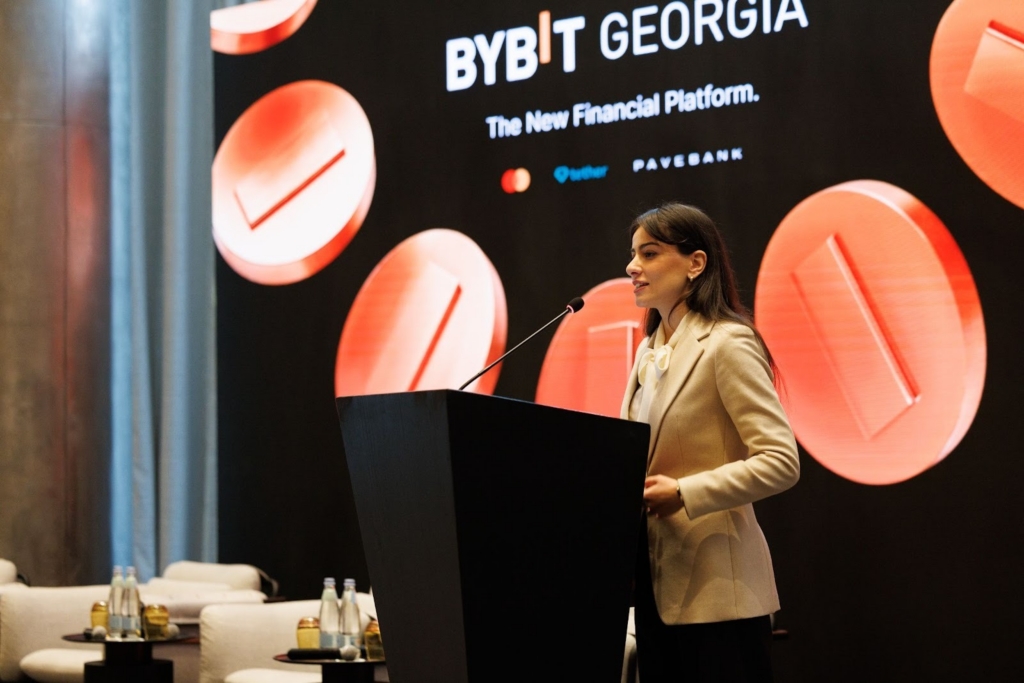
Representatives of the government have expressed their gratitude for the introduction of the Bybit Card in Georgia, acknowledging it as a significant step toward increasing the use of digital assets for legitimate transactions in the real world. There has already been a rising acceptance of the Bybit Card in the local community, thanks to the strong backing it has received from the government and authorities. Bybit intends to further extend card issuance in Georgia and throughout surrounding markets, with the goal of Georgia being a regional center for the development of crypto-powered payment innovations.

For the purpose of highlighting Georgia’s commitment to responsible financial innovation and modern payment infrastructure, the event featured keynote remarks from representatives of the Ministry of Economy and Sustainable Development of Georgia as well as the National Bank of Georgia.

An important feature of the event was a panel discussion that was titled “The Future of Payments.” The purpose of the discussion was to investigate how government authorities, global payment networks, financial institutions, and blockchain businesses might work together to hasten the adoption of cryptocurrency payments in the real world.

The following individuals were present on the panel: Ben Zhou, the Co-Founder and CEO of Bybit; Shota Lomtadze, the Director of Bybit Georgia; Natia Turnava, the Governor of the National Bank of Georgia; David Zgudadze, the Vice President for Georgia and Armenia at Mastercard; Salim Dhanani, the Co-Founder and CEO of Pave Bank; Marco Dal Lago, the Vice President of Global Expansion and Strategic Partnerships at Tether; and Tekla Iashagashvili, the Regional Manager of Bybit Georgia

Bybit executives emphasized the company’s long-term commitment to the development of payment infrastructure and the provision of support for the ecosystem of digital assets in the local jurisdiction.

“Georgia has emerged as one of the most promising environments for digital financial innovation,” said Shota Lomtadze, Director of Bybit Georgia. “With the launch of the Bybit Card and the foundation provided by our PSP license, we are strengthening the infrastructure that allows digital assets to move seamlessly between trading platforms and everyday payments. Together with regulators, global partners, and local financial institutions, we aim to support Georgia’s ambition to become a regional leader in next-generation financial services.”

“Bybit is here to stay,” said Ben Zhou, Co-Founder and CEO of Bybit. “We are committed to being the most reliable partner for the National Bank of Georgia and the most valuable ally for Georgia’s business community. We will continue to invest, hire, and bring our global capabilities to this local market. Together, let’s show the world what happens when a brave nation and a global platform build the future of finance together.”

At the moment, Bybit provides customers in Georgia with access to a full digital asset platform. This platform has over 600 spot trading pairs, one-click buy capability, over-the-counter services, and an institutional-grade security infrastructure.

At the end of the event, there were networking sessions that brought together policymakers, financial institutions, leaders in the fintech industry, and innovators in the blockchain space. These discussions served to reinforce Georgia’s rising position as a center for digital asset innovation and the future of global payments.


TagsBybitexchange

Related Questions

QWhat was the main purpose of the high-level forum hosted by Bybit in Tbilisi, Georgia?

AThe forum was designed to explore the future of crypto-powered payments, bringing together regulators, global payment networks, banking executives, and digital asset innovators to discuss integrating digital assets with conventional payment infrastructure and supporting Georgia's digital economy growth.

QWhat significant product did Bybit launch in Georgia, and how does it function?

ABybit launched the Bybit Card in Georgia, which allows users to make secure contactless payments directly from their digital wallets via Apple Pay and spend digital assets for day-to-day transactions.

QWhat license did Bybit acquire in Georgia in Q4 2025, and why is it important?

ABybit acquired a Payment Service Provider (PSP) license in Georgia, enabling the company to issue Bybit cards, improve local fiat payment rails, and facilitate tighter integration between digital asset services and the nation's financial infrastructure.

QWho were some of the key participants in the panel discussion titled 'The Future of Payments'?

AKey participants included Ben Zhou (Co-Founder and CEO of Bybit), Shota Lomtadze (Director of Bybit Georgia), Natia Turnava (Governor of the National Bank of Georgia), David Zgudadze (Vice President for Georgia and Armenia at Mastercard), Salim Dhanani (Co-Founder and CEO of Pave Bank), Marco Dal Lago (Vice President of Global Expansion and Strategic Partnerships at Tether), and Tekla Iashagashvili (Regional Manager of Bybit Georgia).

QHow does Bybit plan to support Georgia's financial ecosystem according to its executives?

ABybit executives emphasized long-term commitment to developing payment infrastructure and supporting the digital asset ecosystem in Georgia, aiming to make the country a regional leader in next-generation financial services through investment, hiring, and collaboration with regulators and local institutions.

Related Reads

In-Depth Report on the On-Chain Lending Market: When Off-Chain Credit Meets On-Chain Liquidation

The on-chain lending market has evolved from a peripheral DeFi niche into core financial infrastructure. As of early 2026, total value locked (TVL) in on-chain lending protocols has reached $64.3 billion, accounting for 53.54% of total DeFi TVL, making it the largest and most mature vertical within decentralized finance. Aave dominates the sector with approximately $32.9 billion in TVL, commanding nearly half of the market—a leadership position that is unlikely to be challenged in the foreseeable future. However, the path of on-chain lending forward is not without risk. Liquidation cascades, credit defaults, and cross-chain vulnerabilities remain systemic threats hanging over the industry. At the same time, a deeper structural transformation is underway: on-chain lending is shifting from a “leverage tool for crypto-native users” to a “compliant gateway for institutional capital”. The scale of RWA (Real World Asset) lending has surpassed $18.5 billion, with U.S. Treasuries and government securities increasingly serving as core collateral. Institutional capital inflows are reshaping both the user base and risk appetite of the sector. This report systematically analyzes the evolution of on-chain lending definitions, competitive dynamics, core risks, and future trends, providing a comprehensive industry outlook for investors and trade practitioners. Key findings suggest that the “one dominant player with several strong challengers” structure will persist in the short term, while fixed-rate lending, compliant collateral, and institutional credit underwriting will define the next phase of competition. For investors focused on DeFi infrastructure, three key opportunity tracks stand out, namely, the Aave ecosystem (Morpho, Spark), RWA lending protocols (Ondo, Maple) and fixed-rate innovation (Notional, Pendle).

HTX Learn26m ago

In-Depth Report on the On-Chain Lending Market: When Off-Chain Credit Meets On-Chain Liquidation

HTX Learn26m ago

Fu Peng's First Public Speech in 2026: What Exactly Are Crypto Assets? Why Did I Join the Crypto Asset Industry?

Fu Peng, a renowned macroeconomist and now Chief Economist at New火 Group, delivered his first public speech of 2026 at the Hong Kong Web3 Festival. He explained his perspective on crypto assets and why he joined the industry, framing it within the context of macroeconomic trends and financial evolution. Fu emphasized that crypto assets are transitioning from an early, belief-driven phase to a mature, institutionally integrated asset class. He drew parallels to the 1970s-80s, when technological advances (like computing) revolutionized traditional finance, leading to the rise of FICC (Fixed Income, Currencies, and Commodities). Similarly, current advancements in AI, data, and blockchain are reshaping finance, with crypto assets becoming part of a new "FICC + C" (C for Crypto) framework. He noted that institutional capital, including traditional hedge funds, avoided early crypto due to its speculative nature but are now engaging as regulatory clarity emerges (e.g., stablecoin laws, CFTC classifying crypto as a commodity). Fu predicted that 2025-2026 marks a turning point where crypto becomes a standardized, financially viable asset for diversified portfolios, akin to commodities or derivatives in traditional finance. Fu defined Bitcoin not as "digital gold" in a simplistic sense but as a value-preserving, financially tradable asset. He highlighted that crypto's future lies in regulated, institutional adoption, moving away from retail-dominated trading. His entry into crypto signals this maturation, where traditional finance integrates crypto into mainstream asset management.

marsbit1h ago

Fu Peng's First Public Speech in 2026: What Exactly Are Crypto Assets? Why Did I Join the Crypto Asset Industry?

marsbit1h ago

Justin Sun Sues Trump Family: What $75 Million Bought Was Only a Blacklist

Justin Sun, founder of Tron, has filed a lawsuit in federal court against World Liberty Financial (WLF), alleging he was made the "primary target of a fraudulent scheme" after investing $75 million. Sun claims the investment secured him an advisor title and WLFI tokens, which were later frozen by WLF, causing "hundreds of millions in losses." The dispute began in late 2024 when Sun's investment helped revive WLF's struggling token sale, which ultimately raised $550 million. Shortly after, the SEC dropped its lawsuit against Sun following Donald Trump's inauguration. However, relations soured when Sun refused WLF's demands for additional funding. In August 2025, WLF added a "blacklist" function to its smart contract, allowing it to unilaterally freeze tokens. Sun's holdings, worth approximately $107 million, were frozen, and he was threatened with token destruction. The lawsuit highlights WLF's structure, which directs 75% of token sale profits to the Trump family, who had earned $1 billion by December 2025. WLF's CEO is Zach Witkoff, son of U.S. Middle East envoy Steve Witkoff. The project faces scrutiny for opaque operations, including a controversial loan arrangement on the Dolomite platform, co-founded by a WLF advisor. Despite Sun's history with the SEC, the case underscores centralization risks within DeFi, as WLF controls governance and holds powers to freeze assets arbitrarily. Sun's tokens remain frozen as legal proceedings begin.

marsbit1h ago

Justin Sun Sues Trump Family: What $75 Million Bought Was Only a Blacklist

marsbit1h ago

Trading

Spot
Futures
活动图片