BTC Returns to $93,000 as Fed Injects $16 Billion to Rescue the Market?

marsbitPublished on 2026-01-05Last updated on 2026-01-05

Abstract

Bitcoin has surged back to $93,000, marking a five-day consecutive rally and breaking a three-month downtrend. Ethereum also rose strongly, surpassing $3,200, while meme coins like PEPE and BONK saw significant gains. The crypto rebound coincides with a broader risk-asset rally across global markets, including equities and precious metals. A key factor behind the momentum is the Federal Reserve’s injection of $16 billion in liquidity via overnight repo operations—the second-largest since the COVID-19 crisis—which is seen as a supportive signal for risk assets, including cryptocurrencies. Market analysts suggest this may indicate a shift toward easier monetary conditions, boosting investor confidence. Additionally, Bitcoin and Ethereum spot ETFs recorded substantial net inflows, with BTC ETFs seeing $471 million on January 2 and ETH ETFs hitting a multi-month high. While some analysts warn of persistent investor fatigue and long-term holders taking profits, others are optimistic about a structural shift in market sentiment. The overall mood has improved, with the market’s fear and greed index returning to neutral levels after months of pessimism. The outlook remains cautious yet hopeful, with emphasis on disciplined trading and risk management as the market enters a potential new phase of growth.

Since 2019, BTC has never experienced four consecutive months of declines. Now, this pattern seems to be holding. After falling in October this year, BTC continued to decline for three months, dropping to near $80,000 at its lowest point.
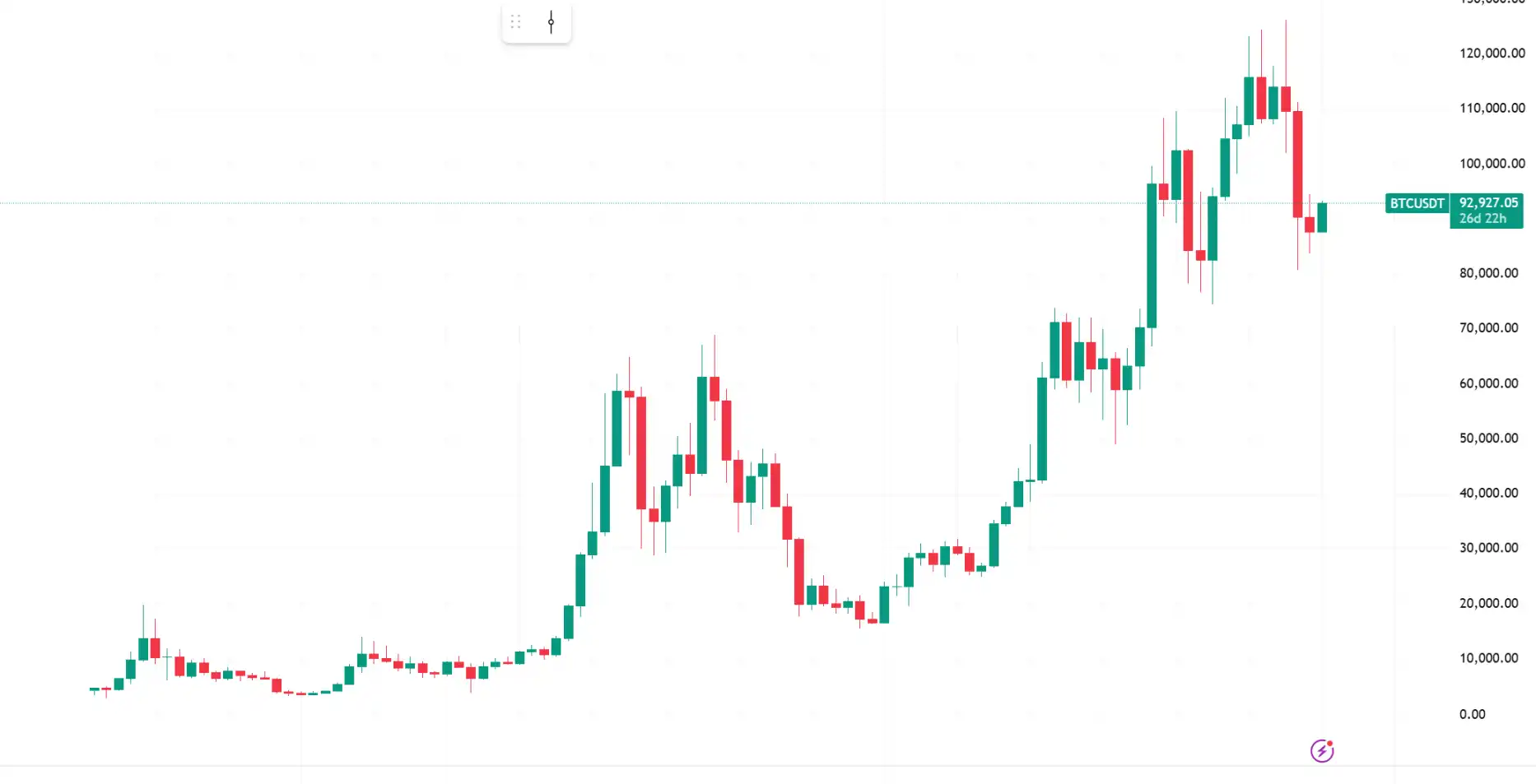
Starting January 1, Bitcoin’s daily chart showed five consecutive days of gains, even breaking through $93,000 on January 5. ETH also surged strongly past $3,200. Meme coins like PEPE, BONK, PENGU, and BOME have recently taken turns topping the gainers list.

Coinglass data shows that total open interest liquidations reached $216 million in 24 hours, with short positions accounting for $168 million in liquidations.

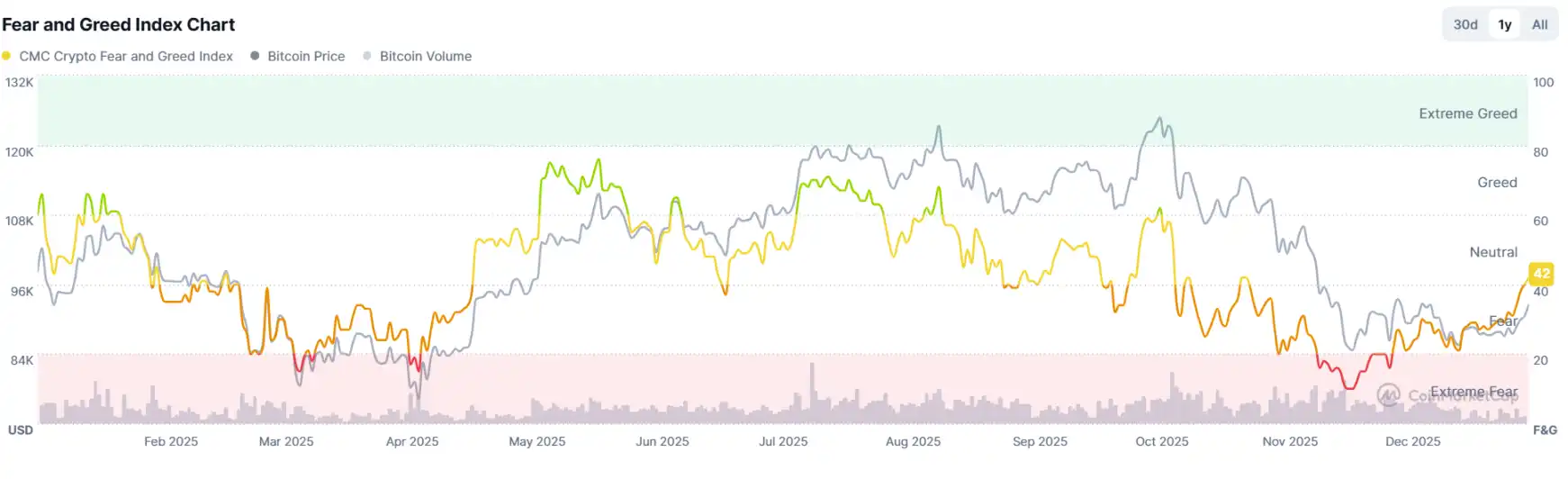
After more than three months of sustained低迷, the Fear and Greed Index today罕见地 rose to 42, returning to a neutral market sentiment.
Global risk asset markets saw broad gains today, with Japanese and South Korean stock markets leading the rise. South Korea's KOSPI index rose over 2.27% in early trading, breaking through 4,400 points for the first time to hit a record high. Japan's Nikkei 225 index surged over 1,100 points in early trading, coming within 2% of its all-time high. China's Shanghai Composite Index opened up 0.46%, approaching 4,000 points. The Hang Seng Index opened up 0.09%.

In U.S. stocks, S&P 500 futures rose 0.46%, Nasdaq futures rose 0.26%, and Dow Jones futures rose 0.58%. Precious metals saw significant gains, with spot gold breaking through $4,420 per ounce, up over 2% in 24 hours, and spot silver breaking through $76 per ounce, surging 4.5%.

Is the altcoin rebound here?

Fed Injects $16 Billion in Liquidity at End of 2025

Cryptocurrencies, led by BTC, are closely tied to global market liquidity. Prices struggle to rise significantly when liquidity is low but can sustain a recovery when liquidity is ample.

On December 30, 2025, according to Barchart data, the Fed injected $16 billion into the U.S. banking system via overnight repurchase agreements, the second-largest liquidity injection since the COVID-19 pandemic.
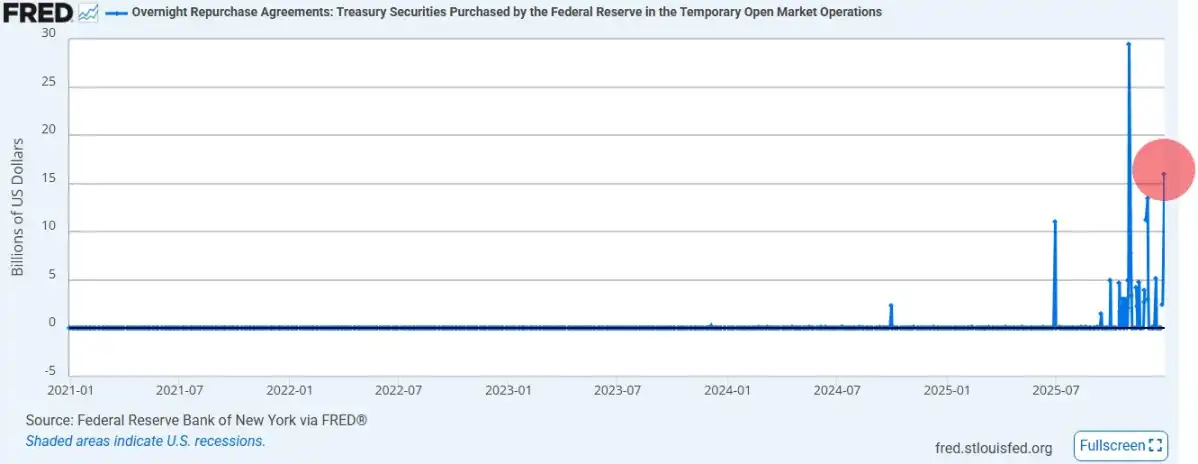
This move is often seen by the market as a signal of the Fed's support in addressing potential bank liquidity shortages or financial stress. Although the chart shows a recent spike in injections, the overall trend reflects a shift towards looser monetary policy. In the cryptocurrency market, such liquidity injections often stimulate risk appetite, as cheap money tends to flow into high-risk asset classes, driving up crypto prices. Investors may interpret this as the Fed's unwillingness to let the economy hard-land, thereby boosting market confidence and averting more severe recession risks.

On December 31, BitMEX co-founder Arthur Hayes stated that crypto market liquidity may have bottomed in November and is slowly recovering, and it's time for cryptocurrencies to start rising.

Jens Naervig Pedersen, a foreign exchange and interest rate strategist at Danske Bank, said in a report that global market liquidity is expected to remain thin this week but could pick up next week. The strategist noted: "Looking ahead, market liquidity should improve next week with the release of more economic data." Key data next week includes important U.S. labor market figures, such as the December non-farm payrolls report and ISM survey due on January 9. During the year-end period, many market participants are on holiday or closing positions, which typically leads to lower liquidity.

BTC and ETH Spot ETFs See Large Net Inflows at Start of Year

After months of sluggish performance, Bitcoin spot ETF data showed a net inflow of $355 million on December 30, and another net inflow of $471.14 million on January 2.
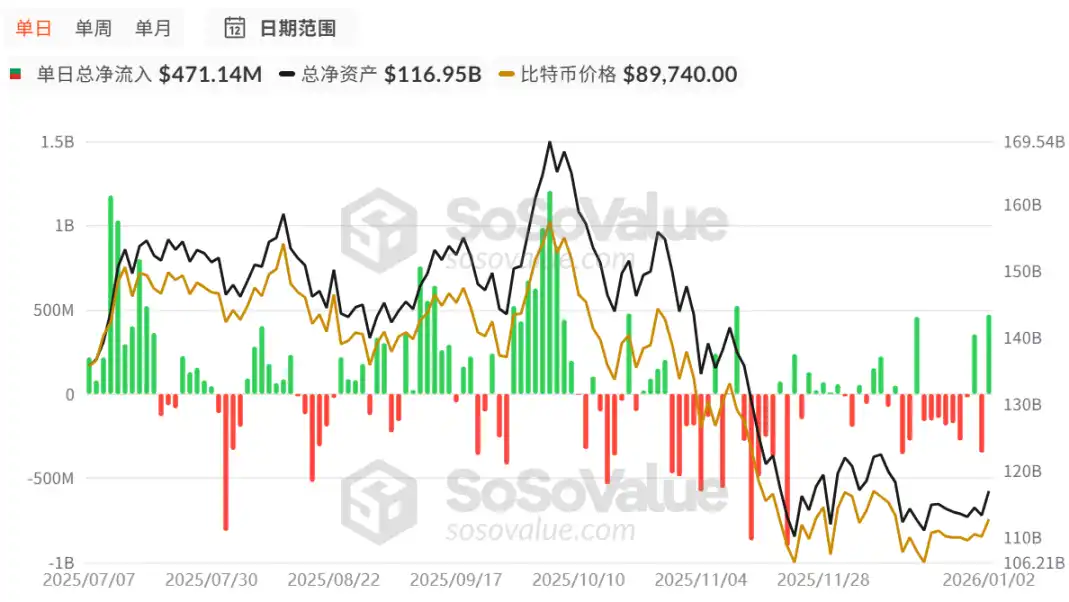
The magnitude and momentum of this sudden growth in net inflows are relatively significant.

For ETH spot ETFs, net inflows were $67.84 million on December 30 and reached $174.43 million on January 2, setting a new high for single-day net inflows since last year December.

The current ETF data performance for both still requires continued observation, but the strong net inflow performance at the start of the year has a significant positive effect on boosting coin prices.

What's Next for the Market?

On January 3, Liquid Capital founder JackYi tweeted, "Before the 2026 bull market, shorts closing early lose small, those closing later will lose big and惨. Those still bearish now are either all talk or cannon fodder. After more than a month of consolidation, the longs will surely扬眉吐气. The pessimist is always 'right,' the optimist always moves forward."

On the same day, 10x Research also published an article hinting at potential structural rebound opportunities in the market. "Beneath the surface of the crypto market, important changes are happening. As Bitcoin's dominance begins to decline, our models are detecting key turning signals that historically mark a shift from defense to opportunity. This cycle's focus isn't on a single token or narrative, but the broad协同 validation格局 forming between major coins and selected altcoins. Momentum effects, relative performance, and market participation are beginning to resonate, something traders cannot ignore.
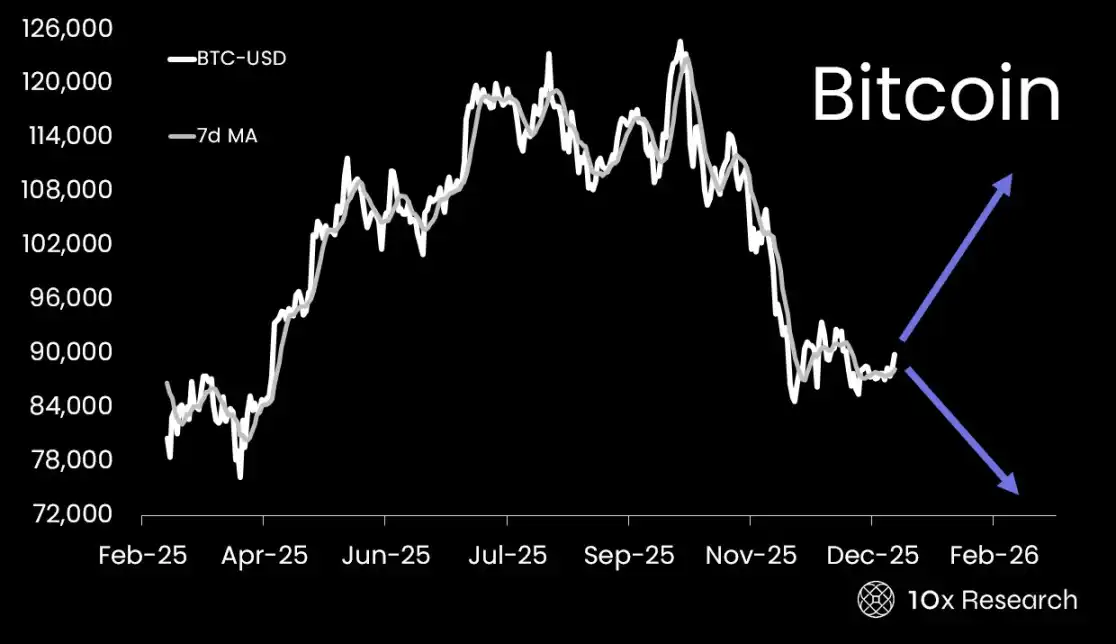
10x Research stated that the current environment is not a broad-based rally, nor is it suitable for passive waiting. The next phase will test discipline, strategic rules, and active position management more; clear risk control will be key to distinguishing profit-takers from market noise. While most investors wait for headlines to guide direction, traders should focus on market structure and signal validation.

Analysts from the blockchain analytics platform Santiment pointed out that cryptocurrency market participants showed strong sentiment on social media at the start of the year but warned that further market gains depend on whether retail investors can stay rational. "We need retail to maintain a certain level of caution, a certain level of pessimism, and a certain level of impatience," Santiment analyst Brian Quinlivan said in a YouTube video released on Saturday. Although other crypto sentiment indicators show fear among market participants, Quinlivan said Santiment's social media data points in the opposite direction. "The current sentiment is very positive," he said, "which is usually somewhat concerning, but this time it might just be a normal rebound after the holidays." Quinlivan said he isn't overly worried about "a lot of FOMO sentiment emerging" but added that if Bitcoin quickly climbs to $92,000, such sentiment could flood the market.

However, data charts also show some pessimistic sentiment in the market.
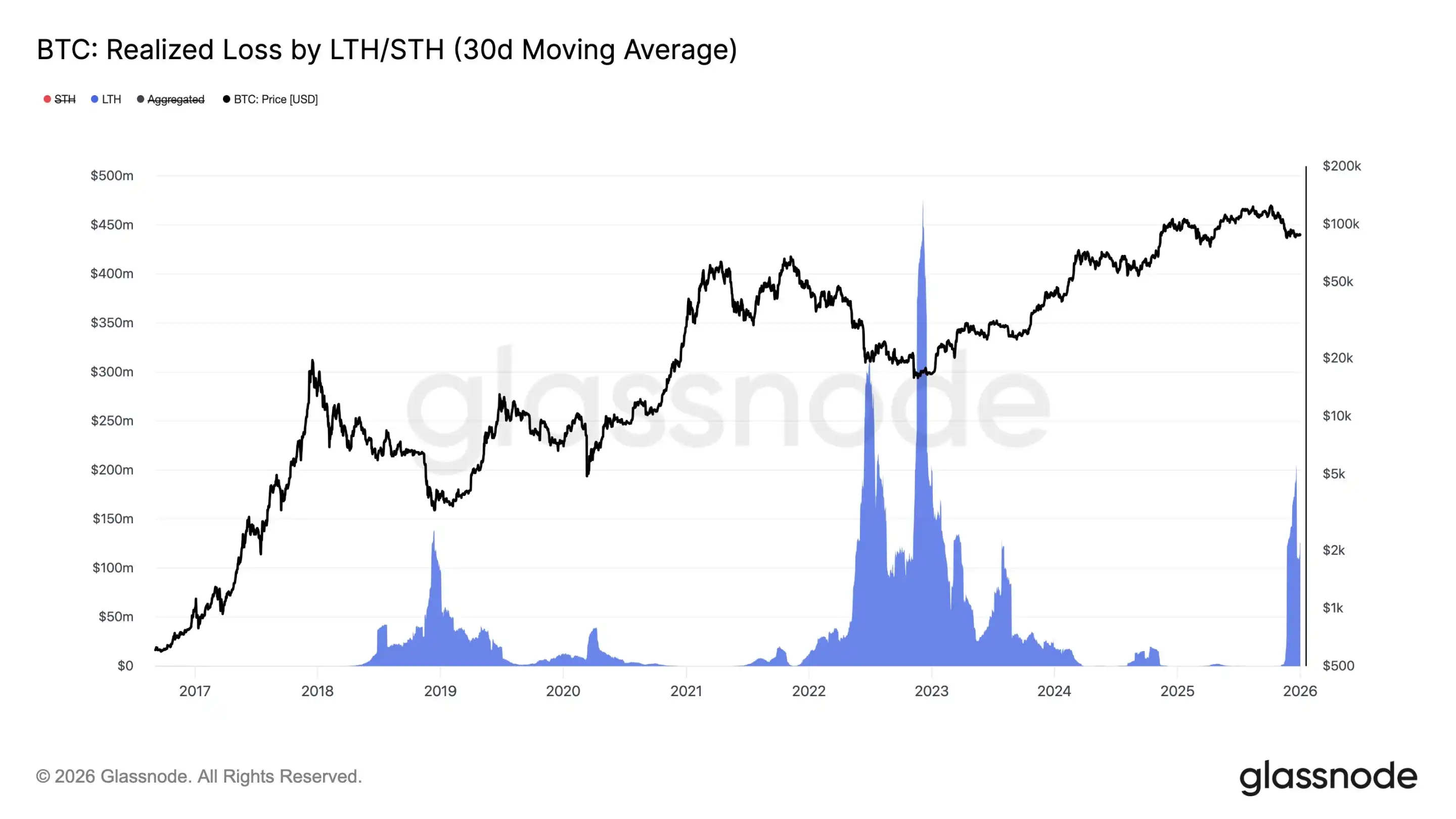
glassnode recently tweeted that the slowdown in fund inflows coincides with long-term holders increasing their realized losses. This situation is gradually emerging as BTC price fluctuates within a narrow range. This reflects growing investor fatigue over time, a common feature of prolonged bear market phases.


Related Questions

QWhat was the significant action taken by the Federal Reserve in late December 2025 that is linked to the crypto market rally?

AOn December 30, 2025, the Federal Reserve injected $16 billion in liquidity through overnight repurchase operations, the second-largest such injection since the COVID-19 pandemic.

QWhat was the net inflow for Bitcoin spot ETFs on January 2nd, as mentioned in the article?

AThe net inflow for Bitcoin spot ETFs on January 2nd was $471.14 million.

QAccording to the article, what did the Fear and Greed Index rise to, indicating a return to neutral market sentiment?

AThe Fear and Greed Index rose to 42, indicating a return to neutral market sentiment.

QWhich founder suggested that crypto market liquidity may have bottomed in November and is now slowly recovering?

ABitMEX co-founder Arthur Hayes suggested that crypto market liquidity may have bottomed in November and is slowly recovering.

QWhat does the article cite as a common characteristic of a prolonged bear market phase, as indicated by glassnode's data?

AThe article states that a common characteristic of a prolonged bear market phase is investor fatigue over time, as long-term holders increase their selling at a loss.

Related Reads

Trading

Spot
Futures

Hot Articles

What is $BITCOIN

DIGITAL GOLD ($BITCOIN): A Comprehensive Analysis Introduction to DIGITAL GOLD ($BITCOIN) DIGITAL GOLD ($BITCOIN) is a blockchain-based project operating on the Solana network, which aims to combine the characteristics of traditional precious metals with the innovation of decentralized technologies. While it shares a name with Bitcoin, often referred to as “digital gold” due to its perception as a store of value, DIGITAL GOLD is a separate token designed to create a unique ecosystem within the Web3 landscape. Its goal is to position itself as a viable alternative digital asset, although specifics regarding its applications and functionalities are still developing. What is DIGITAL GOLD ($BITCOIN)? DIGITAL GOLD ($BITCOIN) is a cryptocurrency token explicitly designed for use on the Solana blockchain. In contrast to Bitcoin, which provides a widely recognized value storage role, this token appears to focus on broader applications and characteristics. Notable aspects include: Blockchain Infrastructure: The token is built on the Solana blockchain, known for its capacity to handle high-speed and low-cost transactions. Supply Dynamics: DIGITAL GOLD has a maximum supply capped at 100 quadrillion tokens (100P $BITCOIN), although details regarding its circulating supply are currently undisclosed. Utility: While precise functionalities are not explicitly outlined, there are indications that the token could be utilized for various applications, potentially involving decentralized applications (dApps) or asset tokenization strategies. Who is the Creator of DIGITAL GOLD ($BITCOIN)? At present, the identity of the creators and development team behind DIGITAL GOLD ($BITCOIN) remains unknown. This situation is typical among many innovative projects within the blockchain space, particularly those aligning with decentralized finance and meme coin phenomena. While such anonymity may foster a community-driven culture, it intensifies concerns about governance and accountability. Who are the Investors of DIGITAL GOLD ($BITCOIN)? The available information indicates that DIGITAL GOLD ($BITCOIN) does not have any known institutional backers or prominent venture capital investments. The project seems to operate on a peer-to-peer model focused on community support and adoption rather than traditional funding routes. Its activity and liquidity are primarily situated on decentralized exchanges (DEXs), such as PumpSwap, rather than established centralized trading platforms, further highlighting its grassroots approach. How DIGITAL GOLD ($BITCOIN) Works The operational mechanics of DIGITAL GOLD ($BITCOIN) can be elaborated on based on its blockchain design and network attributes: Consensus Mechanism: By leveraging Solana’s unique proof-of-history (PoH) combined with a proof-of-stake (PoS) model, the project ensures efficient transaction validation contributing to the network's high performance. Tokenomics: While specific deflationary mechanisms have not been extensively detailed, the vast maximum token supply implies that it may cater to microtransactions or niche use cases that are still to be defined. Interoperability: There exists the potential for integration with Solana’s broader ecosystem, including various decentralized finance (DeFi) platforms. However, the details regarding specific integrations remain unspecified. Timeline of Key Events Here is a timeline that highlights significant milestones concerning DIGITAL GOLD ($BITCOIN): 2023: The initial deployment of the token occurs on the Solana blockchain, marked by its contract address. 2024: DIGITAL GOLD gains visibility as it becomes available for trading on decentralized exchanges like PumpSwap, allowing users to trade it against SOL. 2025: The project witnesses sporadic trading activity and potential interest in community-led engagements, although no noteworthy partnerships or technical advancements have been documented as of yet. Critical Analysis Strengths Scalability: The underlying Solana infrastructure supports high transaction volumes, which could enhance the utility of $BITCOIN in various transaction scenarios. Accessibility: The potential low trading price per token could attract retail investors, facilitating wider participation due to fractional ownership opportunities. Risks Lack of Transparency: The absence of publicly known backers, developers, or an audit process may yield skepticism regarding the project's sustainability and trustworthiness. Market Volatility: The trading activity is heavily reliant on speculative behavior, which can result in significant price volatility and uncertainty for investors. Conclusion DIGITAL GOLD ($BITCOIN) emerges as an intriguing yet ambiguous project within the rapidly evolving Solana ecosystem. While it attempts to leverage the “digital gold” narrative, its departure from Bitcoin's established role as a store of value underscores the need for a clearer differentiation of its intended utility and governance structure. Future acceptance and adoption will likely depend on addressing the current opacity and defining its operational and economic strategies more explicitly. Note: This report encompasses synthesised information available as of October 2023, and developments may have transpired beyond the research period.

363 Total ViewsPublished 2025.05.13Updated 2025.05.13

What is $BITCOIN

Discussions

Welcome to the HTX Community. Here, you can stay informed about the latest platform developments and gain access to professional market insights. Users' opinions on the price of BTC (BTC) are presented below.

活动图片














