BREAKING – Bitcoin Depot, Operator Of 9,000+ ATMs, Files For Bankruptcy Protection

bitcoinistPublished on 2026-05-18Last updated on 2026-05-18

Abstract

Bitcoin Depot Inc., once the world's largest Bitcoin ATM operator, has filed for Chapter 11 bankruptcy protection. The company, which operated over 9,000 kiosks, cited insurmountable regulatory pressure as the primary cause for its collapse. Its network is now offline. CEO Alex Holmes stated the filing aims to facilitate an orderly wind-down and sale of assets, not a restructuring to continue operations. The announcement followed a steep decline in its stock price and severe financial losses, including a 49% year-over-year revenue drop in Q1 2026. Leadership changes preceded the bankruptcy, which includes both U.S. and Canadian entities.

Bitcoin Depot Inc, once the largest operator of Bitcoin ATMs in the world, watched its stock lose more than 40% in the week before Monday’s bankruptcy announcement, dragging the year-to-date loss to 67%.

When the filing became public, the company’s shares, BTM, dropped an additional 20% in overnight trading. The NASDAQ-listed company had built its business around giving everyday people quick access to Bitcoin through physical kiosks — a model that regulators eventually made impossible to sustain.

The company filed for voluntary Chapter 11 bankruptcy protection on May 18 in the US Bankruptcy Court for the Southern District of Texas. Its entire network of more than 9,000 Bitcoin teller machines has been taken offline.

A Company Squeezed From Every Direction

CEO Alex Holmes said the decision came after weighing all available options. “After evaluating all options, we determined to initiate this court-supervised process to facilitate an orderly wind-down of operations and a sale of the company’s assets,” Holmes said in a press release.

Both US and Canadian entities are included in the bankruptcy proceedings. The company also plans additional restructuring in Canada and a wind-down of non-US operations under applicable laws.

BTCUSD now trading at $76,797. Chart: TradingView

Holmes pointed to a wave of regulatory pressure as the main driver behind the collapse. Bitcoin ATM operators across North America have faced increasingly strict compliance requirements, including new transaction limits, outright bans in some jurisdictions, enforcement actions, and lawsuits.

Bitcoin Depot responded by tightening its own controls — adding stronger identity verification, customer fraud warnings, and lower transaction caps — but those measures could not reverse the financial damage already done.

Revenue had been falling sharply. Data shows the company posted a 49% year-over-year revenue decline in the first quarter of 2026 and recorded a net loss of $9.5 million in the same period.
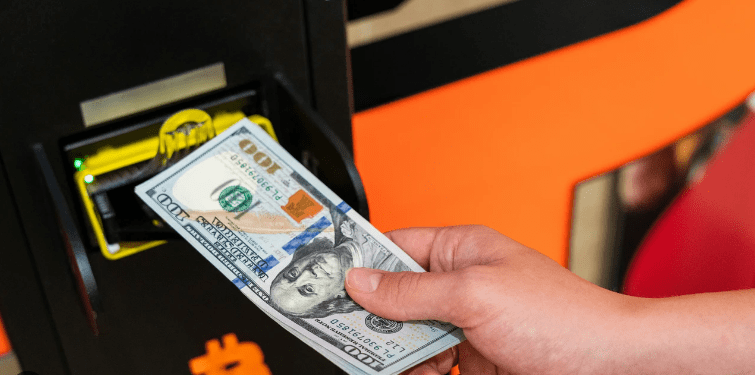
Source: Getty Images

Leadership had also been shifting before the collapse. Scott Buchanan stepped down as CEO in March, and Holmes was appointed to lead the company and chair its board. Founder Brandon Mintz moved from executive chair to a non-executive board seat around the same time.

A Wind-Down, Not A Rescue

The bankruptcy filing is not aimed at restructuring the business and keeping it alive. Based on the company’s own statements, the goal is an orderly sale of assets and a full wind-down of operations. No buyer has been publicly named.

Bitcoin Depot’s fall is one of the most visible signs yet of how hard the regulatory environment has hit physical crypto infrastructure businesses. The company once operated one of the largest cash-to-Bitcoin networks in North America. That network is now dark.

Featured image from Unsplash, chart from TradingView

Related Questions

QWhat was the main reason cited by Bitcoin Depot's CEO for the company's decision to file for Chapter 11 bankruptcy?

ACEO Alex Holmes cited a wave of regulatory pressure as the main driver behind the collapse, including increasingly strict compliance requirements, new transaction limits, outright bans, enforcement actions, and lawsuits.

QWhat type of bankruptcy protection did Bitcoin Depot file for, and what is the stated goal of this filing?

ABitcoin Depot filed for voluntary Chapter 11 bankruptcy protection. The stated goal is not to restructure and save the business, but to facilitate an orderly wind-down of operations and a sale of the company's assets.

QHow significant was the company's financial decline leading up to the bankruptcy announcement?

AThe financial decline was severe. The company's stock lost over 40% in the week before the announcement, bringing the year-to-date loss to 67%. Furthermore, revenue fell 49% year-over-year in Q1 2026, with a net loss of $9.5 million for that period.

QWhat has happened to Bitcoin Depot's network of Bitcoin ATMs?

AThe company's entire network of more than 9,000 Bitcoin teller machines (BTMs) has been taken offline.

QWhich geographic regions are included in the bankruptcy proceedings, and what broader trend does the article suggest Bitcoin Depot's collapse represents?

ABoth US and Canadian entities are included in the bankruptcy proceedings, with plans for additional restructuring in Canada. The article suggests the collapse is a highly visible sign of how harsh regulatory environments have impacted physical crypto infrastructure businesses.

Related Reads

STRC Breaks Below $95: Why Does It Continue to Depeg? Is There Default Risk?

"STRC Falls Below $95: Why the Persistent Depegging and Is There Default Risk?" The article discusses the recent decline in the price of STRC, a perpetual preferred stock issued by Strategy (MSTR) designed to trade around a $100 par value. As of publication, STRC traded at $94.65, raising market concerns. STRC is described as a high-yield cash flow product, offering an 11.50% annual dividend paid monthly. Its "preferred" status grants it priority over common stock for dividends and in liquidation. Key reasons cited for the price depegging include: 1. **Bitcoin's Price Drop:** MSTR's assets are heavily tied to Bitcoin (BTC), which fell over 21% from its recent high, pressuring all Strategy-related products. 2. **Competitive Pressure:** Rival Strive Asset Management's similar product, SATA, offers daily dividends and has maintained its $100 par value with a ~13% yield. In response, Strategy has proposed changing STRC's dividend frequency from monthly to bi-weekly, pending shareholder vote. 3. **Technical Selling:** A break below $100 may have triggered algorithmic selling and stop-losses, exacerbating the decline. Regarding default risk, the analysis suggests it is currently low. Strategy founder Michael Saylor confirmed the June 2026 dividend rate remains at 11.50% with no cuts or suspensions. The company's massive reserve of 843,706 BTC provides a significant backstop for its obligations. Industry opinions are mixed. Some analysts view the BTC holdings as reliable support for dividends, while critics like Peter Schiff warn of potential dividend cuts leading to price crashes and lawsuits. Others highlight inflation risk and the company's ability to reduce dividends without a formal default. In summary, STRC's drop is attributed to BTC volatility, competition, and technical factors. While immediate default risk appears contained, the product faces challenges from market conditions and competitive dynamics.

marsbit1h ago

STRC Breaks Below $95: Why Does It Continue to Depeg? Is There Default Risk?

marsbit1h ago

AI Trading Cools, South Korean Stocks Plunge 1.8%, Spot Gold Rises 1%, Bitcoin Dives

A sell-off in AI-related stocks, triggered by Broadcom's disappointing earnings forecast, sent shockwaves through global markets. South Korea's KOSPI led Asia's decline, plunging 1.8% as the risks from concentrated chip stock gains and surging leveraged investments came to the fore. The tech-heavy Nasdaq 100 futures fell 0.5% following Broadcom's 14% after-hours plunge, which signaled a slower-than-expected transition to AI clients. This pullback extended Wall Street's weakness, halting the S&P 500's nine-day rally amid hawkish Fed signals and renewed Middle East tensions. South Korean authorities convened an emergency meeting, pledging "immediate measures" against market volatility and warning of record-high stock margin debt. The adjustment rippled across assets: Bitcoin fell to around $64,000, its lowest since February, while safe-haven gold rose 1% on bargain hunting. Oil prices dipped on Middle East ceasefire news. Market analysts noted the sell-off was driven by profit-taking after massive gains, particularly in chip stocks like Samsung and SK Hynix, which now dominate the KOSPI. Wall Street banks are divided on Korea's outlook, with Goldman Sachs raising its target while Citigroup and others warn of overvaluation and a potential bubble. Bridgewater's Ray Dalio noted that great technological shifts often create bubbles. Meanwhile, Fed officials' hints at potential future rate hikes added to the cautious mood ahead of key U.S. jobs data.

华尔街日报2h ago

AI Trading Cools, South Korean Stocks Plunge 1.8%, Spot Gold Rises 1%, Bitcoin Dives

华尔街日报2h ago

Trading

Spot
Futures

Hot Articles

What is $BITCOIN

DIGITAL GOLD ($BITCOIN): A Comprehensive Analysis Introduction to DIGITAL GOLD ($BITCOIN) DIGITAL GOLD ($BITCOIN) is a blockchain-based project operating on the Solana network, which aims to combine the characteristics of traditional precious metals with the innovation of decentralized technologies. While it shares a name with Bitcoin, often referred to as “digital gold” due to its perception as a store of value, DIGITAL GOLD is a separate token designed to create a unique ecosystem within the Web3 landscape. Its goal is to position itself as a viable alternative digital asset, although specifics regarding its applications and functionalities are still developing. What is DIGITAL GOLD ($BITCOIN)? DIGITAL GOLD ($BITCOIN) is a cryptocurrency token explicitly designed for use on the Solana blockchain. In contrast to Bitcoin, which provides a widely recognized value storage role, this token appears to focus on broader applications and characteristics. Notable aspects include: Blockchain Infrastructure: The token is built on the Solana blockchain, known for its capacity to handle high-speed and low-cost transactions. Supply Dynamics: DIGITAL GOLD has a maximum supply capped at 100 quadrillion tokens (100P $BITCOIN), although details regarding its circulating supply are currently undisclosed. Utility: While precise functionalities are not explicitly outlined, there are indications that the token could be utilized for various applications, potentially involving decentralized applications (dApps) or asset tokenization strategies. Who is the Creator of DIGITAL GOLD ($BITCOIN)? At present, the identity of the creators and development team behind DIGITAL GOLD ($BITCOIN) remains unknown. This situation is typical among many innovative projects within the blockchain space, particularly those aligning with decentralized finance and meme coin phenomena. While such anonymity may foster a community-driven culture, it intensifies concerns about governance and accountability. Who are the Investors of DIGITAL GOLD ($BITCOIN)? The available information indicates that DIGITAL GOLD ($BITCOIN) does not have any known institutional backers or prominent venture capital investments. The project seems to operate on a peer-to-peer model focused on community support and adoption rather than traditional funding routes. Its activity and liquidity are primarily situated on decentralized exchanges (DEXs), such as PumpSwap, rather than established centralized trading platforms, further highlighting its grassroots approach. How DIGITAL GOLD ($BITCOIN) Works The operational mechanics of DIGITAL GOLD ($BITCOIN) can be elaborated on based on its blockchain design and network attributes: Consensus Mechanism: By leveraging Solana’s unique proof-of-history (PoH) combined with a proof-of-stake (PoS) model, the project ensures efficient transaction validation contributing to the network's high performance. Tokenomics: While specific deflationary mechanisms have not been extensively detailed, the vast maximum token supply implies that it may cater to microtransactions or niche use cases that are still to be defined. Interoperability: There exists the potential for integration with Solana’s broader ecosystem, including various decentralized finance (DeFi) platforms. However, the details regarding specific integrations remain unspecified. Timeline of Key Events Here is a timeline that highlights significant milestones concerning DIGITAL GOLD ($BITCOIN): 2023: The initial deployment of the token occurs on the Solana blockchain, marked by its contract address. 2024: DIGITAL GOLD gains visibility as it becomes available for trading on decentralized exchanges like PumpSwap, allowing users to trade it against SOL. 2025: The project witnesses sporadic trading activity and potential interest in community-led engagements, although no noteworthy partnerships or technical advancements have been documented as of yet. Critical Analysis Strengths Scalability: The underlying Solana infrastructure supports high transaction volumes, which could enhance the utility of $BITCOIN in various transaction scenarios. Accessibility: The potential low trading price per token could attract retail investors, facilitating wider participation due to fractional ownership opportunities. Risks Lack of Transparency: The absence of publicly known backers, developers, or an audit process may yield skepticism regarding the project's sustainability and trustworthiness. Market Volatility: The trading activity is heavily reliant on speculative behavior, which can result in significant price volatility and uncertainty for investors. Conclusion DIGITAL GOLD ($BITCOIN) emerges as an intriguing yet ambiguous project within the rapidly evolving Solana ecosystem. While it attempts to leverage the “digital gold” narrative, its departure from Bitcoin's established role as a store of value underscores the need for a clearer differentiation of its intended utility and governance structure. Future acceptance and adoption will likely depend on addressing the current opacity and defining its operational and economic strategies more explicitly. Note: This report encompasses synthesised information available as of October 2023, and developments may have transpired beyond the research period.

363 Total ViewsPublished 2025.05.13Updated 2025.05.13

What is $BITCOIN

Discussions

Welcome to the HTX Community. Here, you can stay informed about the latest platform developments and gain access to professional market insights. Users' opinions on the price of BTC (BTC) are presented below.

活动图片