Bitcoin's Dormant Capital Has Finally Awakened

深潮Published on 2025-12-09Last updated on 2025-12-09

Abstract

Bitcoin, the largest and most secure cryptocurrency, has historically been underutilized, with over 60% of its supply dormant for more than a year and less than 1% engaged in DeFi. While other ecosystems like Ethereum and Solana evolved with smart contracts and vibrant economies, Bitcoin’s largely remained a passive asset due to its security-first architecture, limited scripting capabilities, slow upgrade processes, and cultural conservatism. Previous workarounds—wrapped BTC, federated systems, cross-chain bridges, and sidechains—introduced trust assumptions, custodial risks, and security vulnerabilities, failing to align with Bitcoin’s trust-minimized ethos. Recent breakthroughs are changing this. Innovations like BitVM enable Bitcoin to verify off-chain computations without executing them, allowing for Bitcoin-backed rollups, trust-minimized bridges, and programmable vaults. Upgrades like Taproot have expanded Bitcoin’s capabilities, enabling native assets (e.g., Taproot Assets for stablecoins) and more complex cryptographic structures. New models also allow Bitcoin to earn yield natively—through staking, restaking, and Lightning Network-based liquidity provision—without leaving self-custody. This emerging BTCFi ecosystem comprises infrastructure for secure execution environments, verifiable bridges, yield markets, and Bitcoin-native assets, all without compromising Bitcoin’s core security or self-custody principles. This marks the first time Bitcoin has a financial eco...

Author: Vaidik Mandloi

Compiled: Block unicorn

Preface

Today, most people buy Bitcoin and then do nothing with it.

They hold Bitcoin, call it digital gold, and proudly declare that they are "in it for the long term." And that's perfectly fine; Bitcoin has certainly earned that reputation.

But such massive holdings have created one of the largest pools of idle capital in the current crypto ecosystem. Approximately 61% of Bitcoin hasn't moved in over a year, and nearly 14% hasn't moved in over a decade. Despite a market capitalization exceeding $2 trillion, only 0.8% of Bitcoin is currently participating in any form of decentralized finance (DeFi) activity.

In other words, Bitcoin is the most valuable asset in cryptocurrency, but also the least utilized.

Now, let's compare this to other aspects of the cryptocurrency space:

  • Stablecoins settle payments on a massive scale globally.

  • Ethereum powers smart contracts, decentralized autonomous organizations (DAOs), wallets, and entire economies.

  • Layer 2 networks (L2s) run complete ecosystems encompassing lending, trading, gaming, and thousands of applications.

Meanwhile, Bitcoin, the largest, most secure, and most widely held asset, cannot do any of these things.

In contrast, it sits on trillions of dollars in value, lying idle, generating no yield, creating no liquidity, and contributing nothing to the overall economy beyond security and price appreciation.

When people have tried to solve this problem, the solutions introduced new issues. Wrapped BTC (WBTC) was popular for a time but required trusting a custodian. Cross-chain bridges allow you to another chain but introduce security risks. Bitcoin holders want to use their Bitcoin, but the infrastructure has never provided a secure, native way to do so.

But this is finally changing. Over the past few years, a whole new ecosystem is forming around Bitcoin, attempting to unlock all this "dormant capital" without forcing people to wrap their Bitcoin, trust intermediaries, or move it into someone else's custody.

How Bitcoin Got Here

Bitcoin becoming a passive asset was no accident. Its entire architecture steered it in this direction. Long before DeFi existed, Bitcoin made a clear trade-off: prioritize security above all else. This decision shaped its culture, developer environment, and ultimately, the type of economic activity that flourished around it.

The result is an extremely immutable blockchain, great for moving value but severely limiting for innovation. Most people only see the surface symptoms: low liquidity, high dormancy rates, and the dominance of wrapped Bitcoin, but the root cause goes much deeper.

The first limitation is Bitcoin's scripting model. It deliberately avoids complexity, keeping the base layer predictable and hard to exploit. This means no general computation, no native financial logic, no on-chain automation. Ethereum, Solana, and all modern L1s were built on the assumption that developers *would* build. Bitcoin was built on the assumption that developers *shouldn't*.

The second limitation is Bitcoin's upgrade path. Any change, even a minor feature, requires coordination across the entire ecosystem. Hard forks are socially nearly impossible, and soft forks take years. So, while other cryptocurrencies iterated through entire design paradigms (e.g., AMMs, account abstraction, L2s, modular blockchains), Bitcoin remained largely stagnant. It became a settlement layer but never truly an execution layer.

The third limitation is cultural. Bitcoin's developer ecosystem is inherently conservative. This conservatism protects the network but also stifles experimentation. Any proposal that introduces complexity is met with skepticism. This mindset protects the base layer but ensures new financial primitives don't emerge on Bitcoin like they do elsewhere.
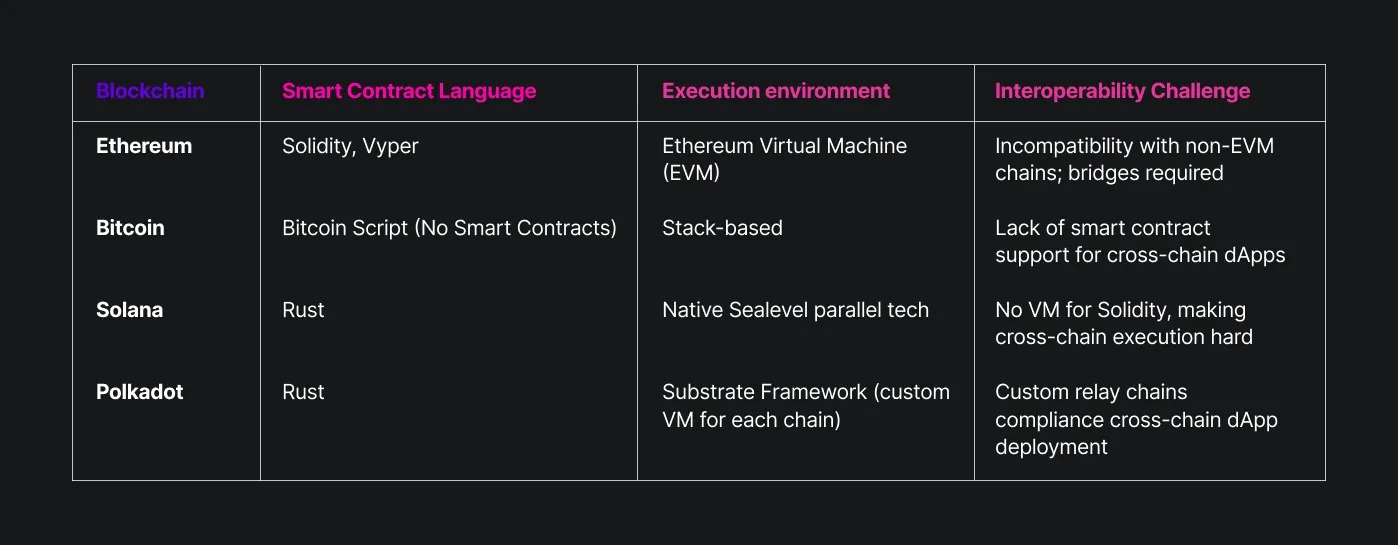
Furthermore, there's a structural limitation: Bitcoin's value grew faster than its utility infrastructure. Ethereum had smart contracts from the start; Solana had high throughput from the start. Bitcoin's value ballooned into an asset class *before* its "usable surface area" could expand. Consequently, the entire ecosystem ended up with a paradox: you have trillions in capital with almost nowhere to deploy it.

The final limitation is interoperability. Bitcoin is uniquely isolated; it doesn't interoperate with other blockchains and has no native bridges. Until recently, there was no way to connect Bitcoin to external execution environments with minimal trust. Thus, any attempt to make Bitcoin usable required completely abandoning Bitcoin's security model—wrapping, bridging, custodial minting, multisigs, federations. For an asset built on distrust of intermediaries, this could never scale.

The First Workarounds: Wrappers, Sidechains, and Bridges

When it became clear that the Bitcoin base layer couldn't support meaningful activity, the industry did what it always does: it developed workarounds. Initially, these seemed like progress, enabling Bitcoin to enter realms where DeFi activity thrived. But upon closer inspection, they all shared a common flaw: using them required surrendering part of Bitcoin's trust model.

The most prominent example is Wrapped Bitcoin (WBTC). It became the default bridge between Bitcoin and Ethereum, and for a while, this model seemed to work. It unlocked liquidity, allowing Bitcoin to be used as collateral, traded in AMMs, lent out, looped, restaked—essentially everything Bitcoin itself couldn't do. But the cost was that WBTC existed only if the real Bitcoin was held by someone else. This meant custody, reliance on external entities, operational risk, and a guarantee system divorced from Bitcoin's base security.
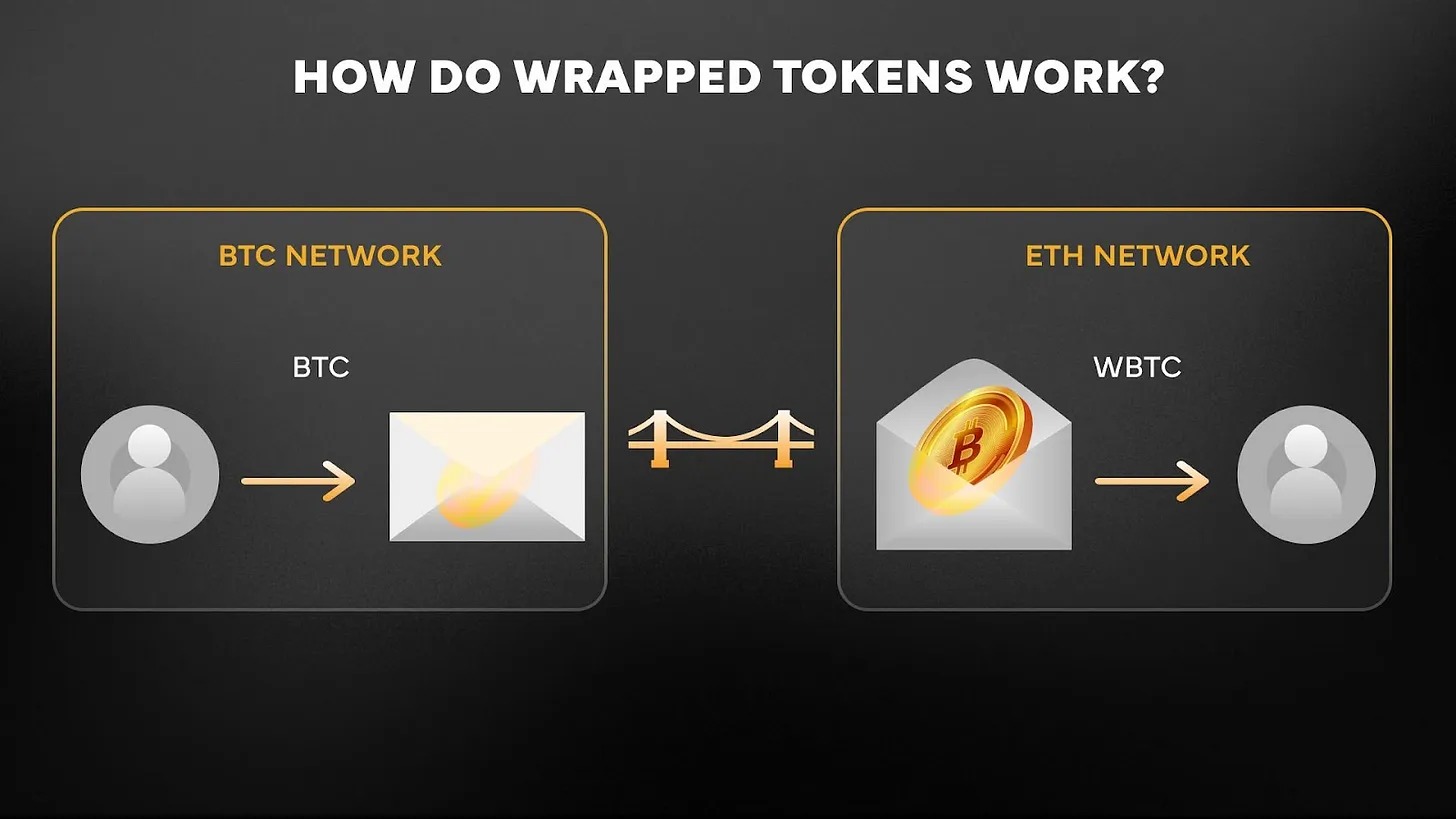
Federated systems attempted to mitigate this trust burden by dispersing control among multiple entities. Instead of a single custodian, a group collectively holds the Bitcoin backing the wrapped asset. This was an improvement but far from trustless. Users still relied on a coordinated set of operators, and the strength of the peg was only as good as their incentives and honesty. For a community that prefers trust-minimized systems, this wasn't ideal.

Bridge technology introduced a new set of problems. Instead of relying on custody, users relied on an external set of validators whose security was often weaker than the chain they were leaving. Bridge tech enabled moving Bitcoin across chains but also became one of the largest security holes in crypto. Multiple analyses point to bridge exploits as one of the biggest sources of fund loss in the space.
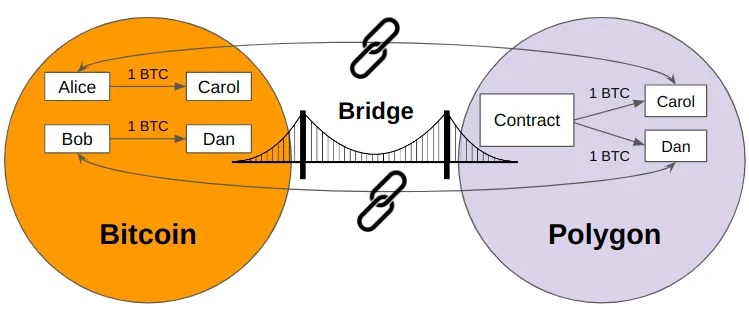
Sidechains added further complexity. They are chains independent of Bitcoin, connected via various peg mechanisms. Some use multisig control, others use Simplified Payment Verification (SPV) proofs. But none inherit Bitcoin's security. They run their own consensus, their own validator sets, their own risk assessments. The "Bitcoin sidechain" label was often more marketing than reality. Liquidity moved, but security guarantees did not.
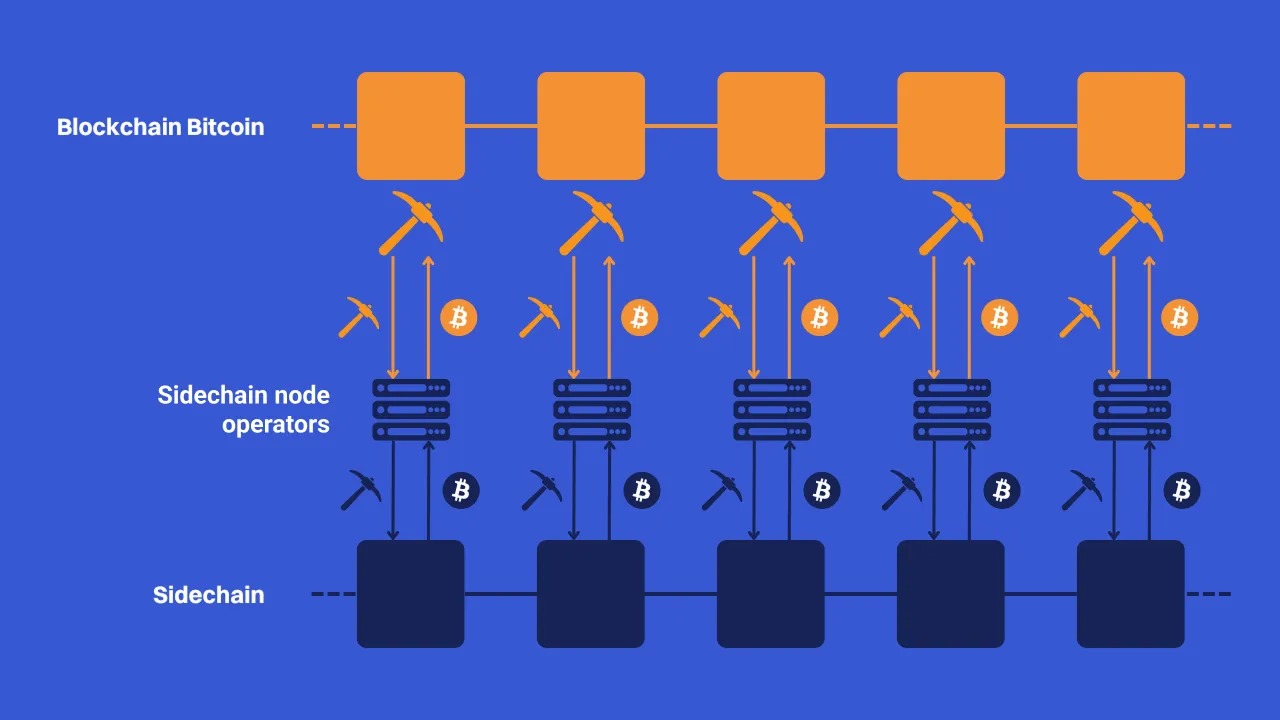
What all these approaches had in common was that they pushed Bitcoin *outside*, off its base layer, into environments where others enforced the rules. This solved the availability problem in the short term but created a larger one: Bitcoin was suddenly operating under the very trust models it was designed to avoid.

The flaws were evident:

  • Wrapped BTC (WBTC) grew large only because people tolerated custodians as a temporary fix.

  • Sidechains existed but remained niche because they failed to inherit Bitcoin's security.

  • Bridges connected Bitcoin to other chains but introduced entirely new attack vectors.

Every workaround solved one problem but created another.

The Breakthrough: Bitcoin Finally Gets New Primitives

For a long time, Bitcoin's limitations were seen as irreversible. The base layer wouldn't change, upgrades were slow, and any proposal aimed at increasing its expressiveness was dismissed as unnecessary risk.

But over the past few years, that assumption began to crack.

1. Bitcoin gained a "verify, don't execute" capability: The most important breakthrough was the emergence of a new class of verification models that allow Bitcoin to check computations done elsewhere without running them itself.

This is the breakthrough that made BitVM, and later BitVM-like systems, possible. These systems don't change Bitcoin's functionality; they leverage Bitcoin's ability to enforce outcomes via fraud proofs.

This means you can build logic, applications, even full execution environments *outside* of Bitcoin, and Bitcoin can still ensure their correctness. This is fundamentally different from Ethereum's "execute everything on L1" approach. Bitcoin can now act as a judge. This is what finally opened the door to:

  • Bitcoin-backed rollups

  • Trust-minimized bridges

  • Programmable vaults

  • Off-chain computation, on-chain verification

2. Upgrades like Taproot quietly expanded Bitcoin's scope: Taproot wasn't initially promoted as a DeFi upgrade, but it provided the cryptographic foundation BTCFi needed: cheaper multisigs, more flexible key path spending, and better privacy. More importantly, it enabled architectures like Taproot Assets (for stablecoins) and more advanced vault systems.
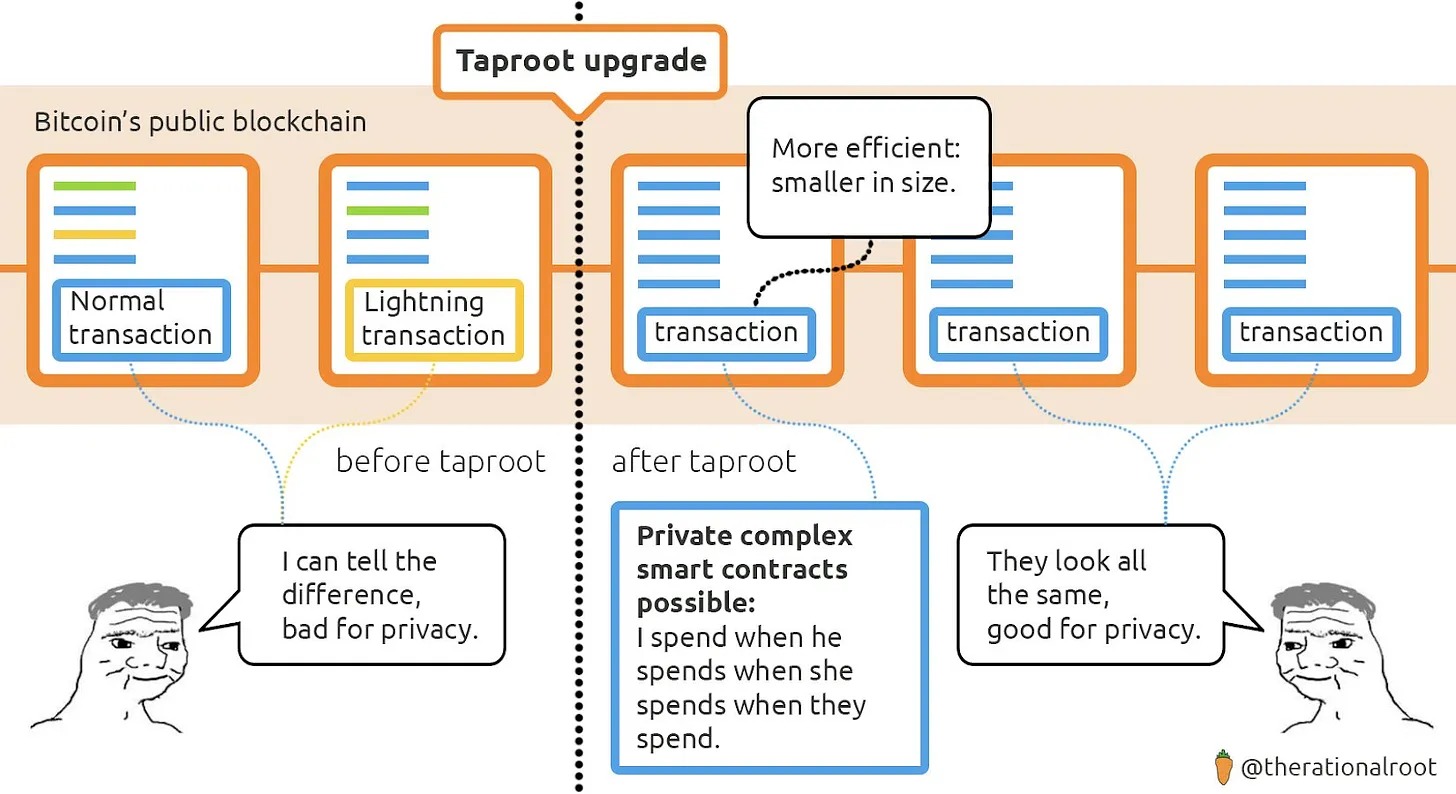
3. The emergence of Bitcoin-native assets: With Taproot and newer proof systems, projects began launching assets that are either on Bitcoin or derive security from Bitcoin, without requiring BTC to be wrapped.

Combining Taproot, Schnorr signatures, and new off-chain verification techniques, developers can now build assets *on* Bitcoin itself, or assets that directly inherit Bitcoin's security.
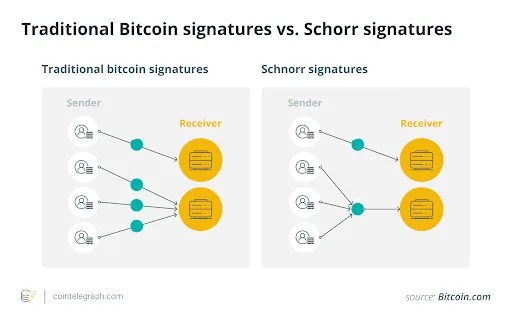
This includes:

  • Taproot Assets (Tether minting USDT directly on the Bitcoin/Lightning stack)

  • Bitcoin-native stablecoins that don't rely on Ethereum, Solana, or Cosmos

  • BTC-backed synthetic assets that don't rely on custodial pegs

  • Programmable vaults and multisig structures that were previously impossible

For the first time, assets issued on Bitcoin can be used without leaving Bitcoin. And assets backed by Bitcoin can exist without taking Bitcoin out of self-custody.

4. Bitcoin yield became possible: Bitcoin itself never had yield. Historically, the only way to "earn" yield with Bitcoin was to wrap it, send it to a custodian, lend it on a centralized platform, or bridge it to another blockchain. All of these carried risk and completely departed from its security model.

BTCFi introduces a completely new way for Bitcoin to earn yield. How? By creating systems where Bitcoin contributes to the security of networks. This leads to three types:

Bitcoin staking (for other networks): BTC can now secure PoS networks or appchains without leaving the Bitcoin chain.

Bitcoin restaking: Similar to how Ethereum can secure multiple protocols via shared security, Bitcoin can now be used as collateral to back external chains, oracles, DA layers, etc.

Lightning-based yield systems: Protocols like Stroom allow BTC used in Lightning channels to earn yield by providing liquidity, again without wrapping or relying on custodial bridges.

None of this was possible before BTCFi.

5. Bitcoin finally got an execution layer: Recent advances in off-chain verification allow Bitcoin to enforce the outcome of computations it doesn't perform itself. This lets developers build rollups, bridges, and contract systems *around* Bitcoin that rely on Bitcoin for verification, not computation. The base layer remains unchanged, but external layers can now run logic and prove their correctness to Bitcoin when needed.

This gives Bitcoin a capability it never had before: the ability to support applications, contract-like behavior, and new financial primitives without moving Bitcoin into custodial systems or rewriting the protocol. This isn't "smart contracts on Bitcoin" but a verification model that preserves Bitcoin's simplicity while allowing more complex systems to exist around it.
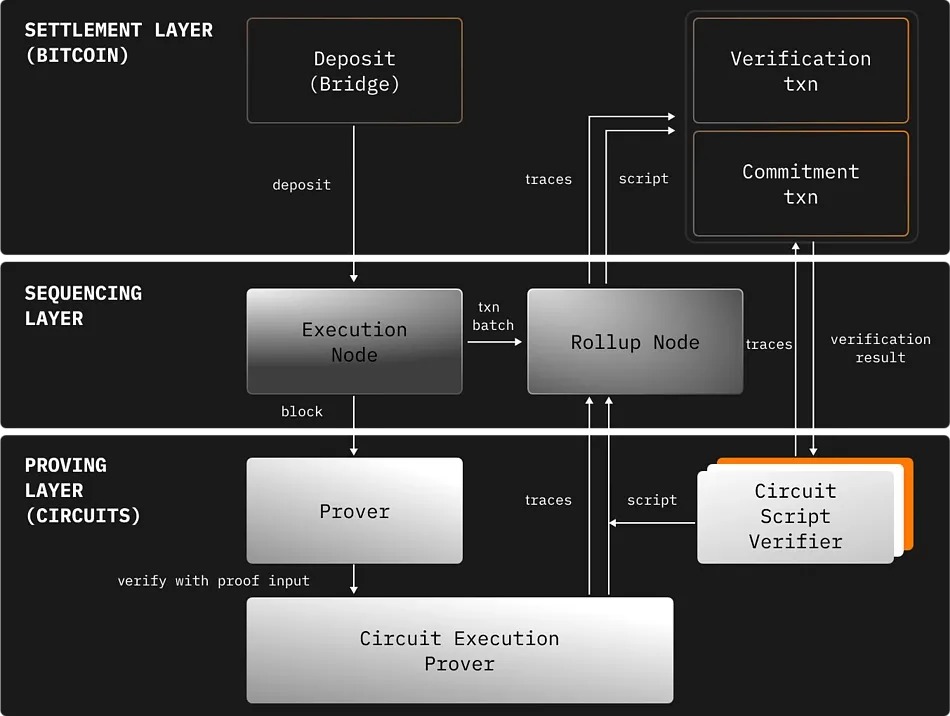
BTCFi Overview: What's Actually Being Built

As the underlying verification and portability tooling matured, the Bitcoin ecosystem finally began to expand in ways that no longer rely on custodians or wrapped assets. What's emerging today isn't a single product or category but a series of interconnected layers that, for the first time, give Bitcoin a functional economy. The easiest way to understand this is to see how these components complement each other.
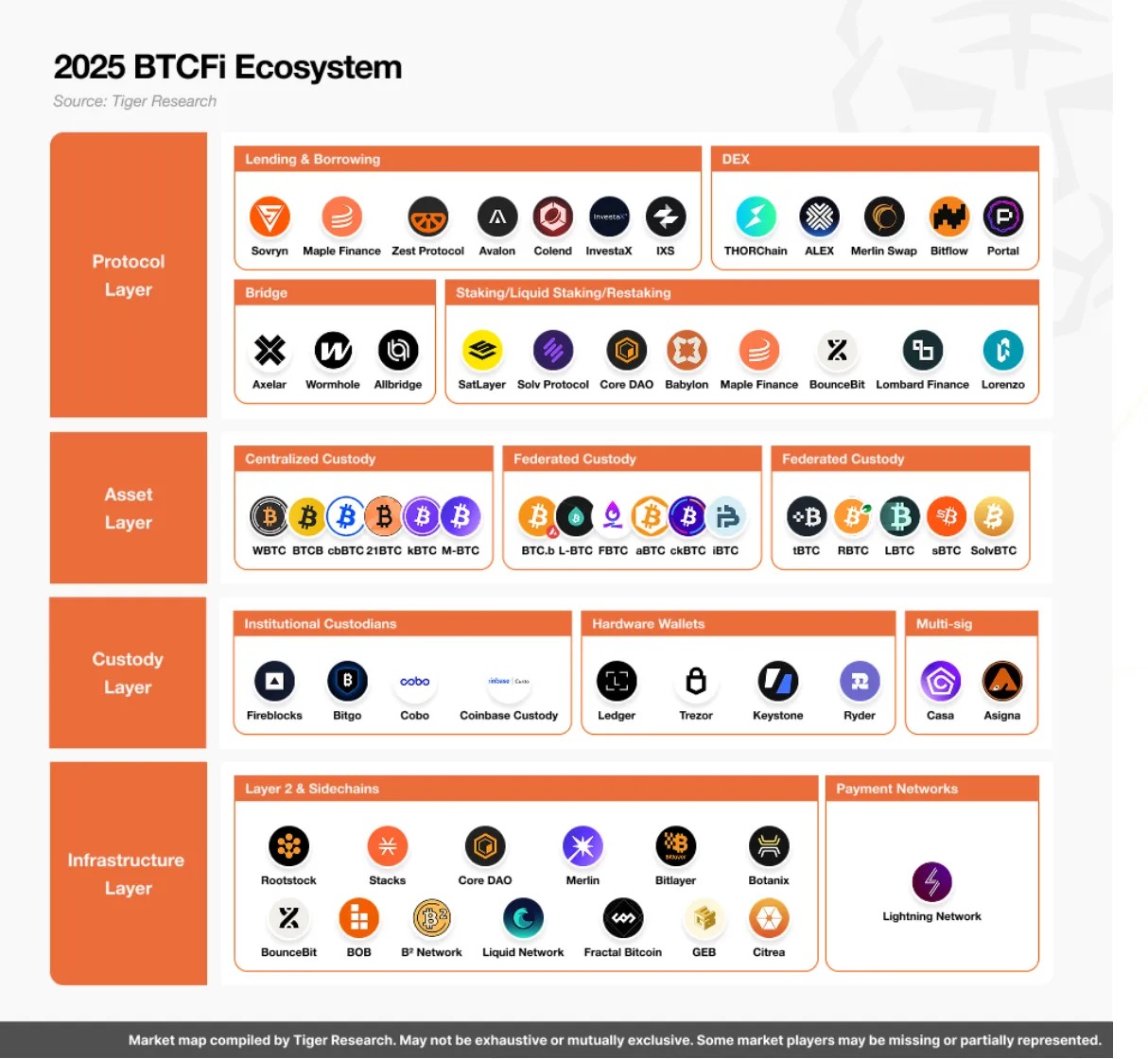
Infrastructure Layer: The first significant change is the emergence of Bitcoin-secured execution environments. These are not L1 competitors trying to turn Bitcoin into a smart contract platform. They are external systems that handle computation, relying on Bitcoin *only* for verification. This separation is crucial. It creates a space where lending, trading, collateral management, and even more complex primitives can exist without requiring any changes to Bitcoin's base layer. It also avoids the pitfalls of the old model, where using Bitcoin meant handing it to a custodian or trusting a multisig. Now, Bitcoin itself remains unchanged; the computation happens *around* it.

Assets & Custody Layer: Simultaneously, a new generation of Bitcoin bridges is forming. These are no longer the custodial, high-trust bridges of the last cycle but bridges built around verifiable outcomes. Instead of requiring users to trust a set of operators, these systems use challenge mechanisms and fraud proofs to automatically reject incorrect state transitions. The result is a safer way to move Bitcoin to external environments without relying on the fragile trust assumptions of previous designs. More importantly, this type of bridge aligns with the inherent Bitcoin holder mindset: minimal trust, minimal dependency.

Protocol Layer: As asset movement becomes safer, the next wave of innovation focuses on what Bitcoin can *do* in these environments. This is where yield markets and security markets emerge. For most of Bitcoin's history, earning any yield with Bitcoin required sending it to an exchange or wrapping it onto another blockchain. Now, staking and restaking models allow Bitcoin to contribute to the security of external networks without leaving its own custody. The yield doesn't come from credit risk or rehypothecation but from the economic value of maintaining consensus or verifying computation results.

At the same time, Bitcoin-native assets are emerging. Instead of wrapping Bitcoin or moving it to Ethereum, developers are starting to use Taproot, Schnorr signatures, and off-chain verification to issue assets *on* Bitcoin or pegged to Bitcoin's security. This includes stablecoins minted directly on Bitcoin infrastructure, synthetic assets that don't rely on custodians, and vault structures that allow for more flexible spending conditions. All of this expands Bitcoin's utility without introducing it to a different trust model.

These developments are interesting individually. Together, they mark the birth of the first coherent Bitcoin financial system. Computation can happen off-chain and be enforced on Bitcoin. Bitcoin can be moved securely without custody. It can earn yield without leaving self-custody. Assets can exist natively without relying on another ecosystem's security. Each development solves a different part of the liquidity trap that has plagued Bitcoin for over a decade.

My Take?

I think the simplest way to view BTCFi is this: Bitcoin is finally getting an ecosystem that matches its scale. For years, people tried to build a Bitcoin ecosystem with tools that were never meant to handle trillion-dollar liquidity. No serious Bitcoin holder would stake their Bitcoin on a custodial peg, an unverified bridge, or a jury-rigged sidechain—and they didn't.

This wave is different because it meets Bitcoin on its own terms. The security model remains intact, self-custody remains intact, and the surrounding systems are finally robust enough to carry meaningful capital. If even a small fraction of dormant BTC starts moving because the infrastructure is finally worthy of it, the impact will be profound.

This new wave is different because it approaches the challenge Bitcoin's way. The security model stays the same, self-custody remains whole, and the systems around Bitcoin are finally strong enough to handle significant capital flow. Even if only a small portion of dormant Bitcoin starts moving because the infrastructure has finally matured, the impact will be significant.


Related Reads

Polymarket's "2028 Presidential Election" Volume King Is... LeBron James???

An article from Odaily Planet Daily, authored by Azuma, discusses a peculiar phenomenon observed on the prediction market platform Polymarket regarding the "2028 US Presidential Election" event. Despite having a real-time probability of less than 1%, unlikely candidates such as NBA star LeBron James (with $48.41 million in trading volume), celebrity Kim Kardashian ($33.84 million), and even ineligible figures like Elon Musk ($23.14 million) and New York City Mayor Zohran Mamdani ($18.39 million) account for approximately 70% of the total trading volume. In contrast, high-probability candidates like Vice President JD Vance ($10.58 million), California Governor Gavin Newsom ($15.71 million), and Secretary of State Marco Rubio ($9.32 million) have significantly lower trading activity. The article explains that this counterintuitive trend is not driven by irrational speculation but by rational strategies. Polymarket offers a 4% annualized holding reward for certain markets, including the 2028 election, to maintain long-term pricing accuracy. This yield exceeds the current 5-year US Treasury rate (3.98%), attracting large investors ("whales") to hold "NO" shares on low-probability candidates for risk-free returns. Additionally, some users utilize a platform feature that allows converting a set of "NO" shares into corresponding "YES" shares for better liquidity or pricing efficiency, rather than directly buying "YES" shares for their preferred candidates. Thus, the seemingly absurd trading activity is strategically motivated.

marsbit51m ago

Polymarket's "2028 Presidential Election" Volume King Is... LeBron James???

marsbit51m ago

Dialogue with ViaBTC CEO Yang Haipo: Is the Essence of Blockchain a Libertarian Experiment?

"ViaBTC CEO Yang Haipo: Blockchain as a Hardcore Libertarian Experiment" In a deep-dive interview, ViaBTC CEO Yang Haipo reframes the essence of blockchain, arguing it is not merely a new technology or infrastructure but a hardcore libertarian experiment. This experiment, born from the 2008 financial crisis and decades of cypherpunk ideology, tests a fundamental question: to what extent can freedom and self-organization exist without centralized trust? The discussion highlights the experiment's verified outcomes. On one hand, it has proven its core value of censorship resistance, providing critical financial lifelines for entities like WikiLeaks and individuals in hyperinflationary or sanctioned countries via tools like stablecoins. However, Yang points out a key paradox: the most successful product, USDT, is itself a centralized compromise, showing users prioritize a less-controlled pipeline over pure decentralization. On the other hand, the experiment has exposed the severe costs of this freedom—a "dark forest" without safeguards. Events like the collapses of LUNA, Celsius, and FTX, resulting in massive wealth destruction and prison sentences for founders, underscore the system's fragility and the inherent risks of an unregulated environment. Yang observes that despite decentralized protocols, human nature inevitably recreates centralized power structures, speculative frenzies, and narrative-driven cycles (from ICOs to Meme coins), where emotion and belonging often trump technological substance. Looking forward, he believes blockchain's future is significant but niche. Its real value lies in serving specific, real-world needs for financial sovereignty and bypassing traditional controls, not as a universal infrastructure replacing all centralized systems. For the average participant, Yang's crucial advice is to cultivate independent judgment. True freedom is not holding a crypto wallet, but possessing a mind resilient to groupthink and narrative hype in a high-risk, often irrational market.

marsbit1h ago

Dialogue with ViaBTC CEO Yang Haipo: Is the Essence of Blockchain a Libertarian Experiment?

marsbit1h ago

Trading

Spot
Futures

Hot Articles

What is SONIC

Sonic: Pioneering the Future of Gaming in Web3 Introduction to Sonic In the ever-evolving landscape of Web3, the gaming industry stands out as one of the most dynamic and promising sectors. At the forefront of this revolution is Sonic, a project designed to amplify the gaming ecosystem on the Solana blockchain. Leveraging cutting-edge technology, Sonic aims to deliver an unparalleled gaming experience by efficiently processing millions of requests per second, ensuring that players enjoy seamless gameplay while maintaining low transaction costs. This article delves into the intricate details of Sonic, exploring its creators, funding sources, operational mechanics, and the timeline of significant events that have shaped its journey. What is Sonic? Sonic is an innovative layer-2 network that operates atop the Solana blockchain, specifically tailored to enhance the existing Solana gaming ecosystem. It accomplishes this through a customised, VM-agnostic game engine paired with a HyperGrid interpreter, facilitating sovereign game economies that roll up back to the Solana platform. The primary goals of Sonic include: Enhanced Gaming Experiences: Sonic is committed to offering lightning-fast on-chain gameplay, allowing players and developers to engage with games at previously unattainable speeds. Atomic Interoperability: This feature enables transactions to be executed within Sonic without the need to redeploy Solana programmes and accounts. This makes the process more efficient and directly benefits from Solana Layer1 services and liquidity. Seamless Deployment: Sonic allows developers to write for Ethereum Virtual Machine (EVM) based systems and execute them on Solana’s SVM infrastructure. This interoperability is crucial for attracting a broader range of dApps and decentralised applications to the platform. Support for Developers: By offering native composable gaming primitives and extensible data types - dining within the Entity-Component-System (ECS) framework - game creators can craft intricate business logic with ease. Overall, Sonic's unique approach not only caters to players but also provides an accessible and low-cost environment for developers to innovate and thrive. Creator of Sonic The information regarding the creator of Sonic is somewhat ambiguous. However, it is known that Sonic's SVM is owned by the company Mirror World. The absence of detailed information about the individuals behind Sonic reflects a common trend in several Web3 projects, where collective efforts and partnerships often overshadow individual contributions. Investors of Sonic Sonic has garnered considerable attention and support from various investors within the crypto and gaming sectors. Notably, the project raised an impressive $12 million during its Series A funding round. The round was led by BITKRAFT Ventures, with other notable investors including Galaxy, Okx Ventures, Interactive, Big Brain Holdings, and Mirana. This financial backing signifies the confidence that investment foundations have in Sonic’s potential to revolutionise the Web3 gaming landscape, further validating its innovative approaches and technologies. How Does Sonic Work? Sonic utilises the HyperGrid framework, a sophisticated parallel processing mechanism that enhances its scalability and customisability. Here are the core features that set Sonic apart: Lightning Speed at Low Costs: Sonic offers one of the fastest on-chain gaming experiences compared to other Layer-1 solutions, powered by the scalability of Solana’s virtual machine (SVM). Atomic Interoperability: Sonic enables transaction execution without redeployment of Solana programmes and accounts, effectively streamlining the interaction between users and the blockchain. EVM Compatibility: Developers can effortlessly migrate decentralised applications from EVM chains to the Solana environment using Sonic’s HyperGrid interpreter, increasing the accessibility and integration of various dApps. Ecosystem Support for Developers: By exposing native composable gaming primitives, Sonic facilitates a sandbox-like environment where developers can experiment and implement business logic, greatly enhancing the overall development experience. Monetisation Infrastructure: Sonic natively supports growth and monetisation efforts, providing frameworks for traffic generation, payments, and settlements, thereby ensuring that gaming projects are not only viable but also sustainable financially. Timeline of Sonic The evolution of Sonic has been marked by several key milestones. Below is a brief timeline highlighting critical events in the project's history: 2022: The Sonic cryptocurrency was officially launched, marking the beginning of its journey in the Web3 gaming arena. 2024: June: Sonic SVM successfully raised $12 million in a Series A funding round. This investment allowed Sonic to further develop its platform and expand its offerings. August: The launch of the Sonic Odyssey testnet provided users with the first opportunity to engage with the platform, offering interactive activities such as collecting rings—a nod to gaming nostalgia. October: SonicX, an innovative crypto game integrated with Solana, made its debut on TikTok, capturing the attention of over 120,000 users within a short span. This integration illustrated Sonic’s commitment to reaching a broader, global audience and showcased the potential of blockchain gaming. Key Points Sonic SVM is a revolutionary layer-2 network on Solana explicitly designed to enhance the GameFi landscape, demonstrating great potential for future development. HyperGrid Framework empowers Sonic by introducing horizontal scaling capabilities, ensuring that the network can handle the demands of Web3 gaming. Integration with Social Platforms: The successful launch of SonicX on TikTok displays Sonic’s strategy to leverage social media platforms to engage users, exponentially increasing the exposure and reach of its projects. Investment Confidence: The substantial funding from BITKRAFT Ventures, among others, emphasizes the robust backing Sonic has, paving the way for its ambitious future. In conclusion, Sonic encapsulates the essence of Web3 gaming innovation, striking a balance between cutting-edge technology, developer-centric tools, and community engagement. As the project continues to evolve, it is poised to redefine the gaming landscape, making it a notable entity for gamers and developers alike. As Sonic moves forward, it will undoubtedly attract greater interest and participation, solidifying its place within the broader narrative of blockchain gaming.

1.1k Total ViewsPublished 2024.04.04Updated 2024.12.03

What is SONIC

What is $S$

Understanding SPERO: A Comprehensive Overview Introduction to SPERO As the landscape of innovation continues to evolve, the emergence of web3 technologies and cryptocurrency projects plays a pivotal role in shaping the digital future. One project that has garnered attention in this dynamic field is SPERO, denoted as SPERO,$$s$. This article aims to gather and present detailed information about SPERO, to help enthusiasts and investors understand its foundations, objectives, and innovations within the web3 and crypto domains. What is SPERO,$$s$? SPERO,$$s$ is a unique project within the crypto space that seeks to leverage the principles of decentralisation and blockchain technology to create an ecosystem that promotes engagement, utility, and financial inclusion. The project is tailored to facilitate peer-to-peer interactions in new ways, providing users with innovative financial solutions and services. At its core, SPERO,$$s$ aims to empower individuals by providing tools and platforms that enhance user experience in the cryptocurrency space. This includes enabling more flexible transaction methods, fostering community-driven initiatives, and creating pathways for financial opportunities through decentralised applications (dApps). The underlying vision of SPERO,$$s$ revolves around inclusiveness, aiming to bridge gaps within traditional finance while harnessing the benefits of blockchain technology. Who is the Creator of SPERO,$$s$? The identity of the creator of SPERO,$$s$ remains somewhat obscure, as there are limited publicly available resources providing detailed background information on its founder(s). This lack of transparency can stem from the project's commitment to decentralisation—an ethos that many web3 projects share, prioritising collective contributions over individual recognition. By centring discussions around the community and its collective goals, SPERO,$$s$ embodies the essence of empowerment without singling out specific individuals. As such, understanding the ethos and mission of SPERO remains more important than identifying a singular creator. Who are the Investors of SPERO,$$s$? SPERO,$$s$ is supported by a diverse array of investors ranging from venture capitalists to angel investors dedicated to fostering innovation in the crypto sector. The focus of these investors generally aligns with SPERO's mission—prioritising projects that promise societal technological advancement, financial inclusivity, and decentralised governance. These investor foundations are typically interested in projects that not only offer innovative products but also contribute positively to the blockchain community and its ecosystems. The backing from these investors reinforces SPERO,$$s$ as a noteworthy contender in the rapidly evolving domain of crypto projects. How Does SPERO,$$s$ Work? SPERO,$$s$ employs a multi-faceted framework that distinguishes it from conventional cryptocurrency projects. Here are some of the key features that underline its uniqueness and innovation: Decentralised Governance: SPERO,$$s$ integrates decentralised governance models, empowering users to participate actively in decision-making processes regarding the project’s future. This approach fosters a sense of ownership and accountability among community members. Token Utility: SPERO,$$s$ utilises its own cryptocurrency token, designed to serve various functions within the ecosystem. These tokens enable transactions, rewards, and the facilitation of services offered on the platform, enhancing overall engagement and utility. Layered Architecture: The technical architecture of SPERO,$$s$ supports modularity and scalability, allowing for seamless integration of additional features and applications as the project evolves. This adaptability is paramount for sustaining relevance in the ever-changing crypto landscape. Community Engagement: The project emphasises community-driven initiatives, employing mechanisms that incentivise collaboration and feedback. By nurturing a strong community, SPERO,$$s$ can better address user needs and adapt to market trends. Focus on Inclusion: By offering low transaction fees and user-friendly interfaces, SPERO,$$s$ aims to attract a diverse user base, including individuals who may not previously have engaged in the crypto space. This commitment to inclusion aligns with its overarching mission of empowerment through accessibility. Timeline of SPERO,$$s$ Understanding a project's history provides crucial insights into its development trajectory and milestones. Below is a suggested timeline mapping significant events in the evolution of SPERO,$$s$: Conceptualisation and Ideation Phase: The initial ideas forming the basis of SPERO,$$s$ were conceived, aligning closely with the principles of decentralisation and community focus within the blockchain industry. Launch of Project Whitepaper: Following the conceptual phase, a comprehensive whitepaper detailing the vision, goals, and technological infrastructure of SPERO,$$s$ was released to garner community interest and feedback. Community Building and Early Engagements: Active outreach efforts were made to build a community of early adopters and potential investors, facilitating discussions around the project’s goals and garnering support. Token Generation Event: SPERO,$$s$ conducted a token generation event (TGE) to distribute its native tokens to early supporters and establish initial liquidity within the ecosystem. Launch of Initial dApp: The first decentralised application (dApp) associated with SPERO,$$s$ went live, allowing users to engage with the platform's core functionalities. Ongoing Development and Partnerships: Continuous updates and enhancements to the project's offerings, including strategic partnerships with other players in the blockchain space, have shaped SPERO,$$s$ into a competitive and evolving player in the crypto market. Conclusion SPERO,$$s$ stands as a testament to the potential of web3 and cryptocurrency to revolutionise financial systems and empower individuals. With a commitment to decentralised governance, community engagement, and innovatively designed functionalities, it paves the way toward a more inclusive financial landscape. As with any investment in the rapidly evolving crypto space, potential investors and users are encouraged to research thoroughly and engage thoughtfully with the ongoing developments within SPERO,$$s$. The project showcases the innovative spirit of the crypto industry, inviting further exploration into its myriad possibilities. While the journey of SPERO,$$s$ is still unfolding, its foundational principles may indeed influence the future of how we interact with technology, finance, and each other in interconnected digital ecosystems.

54 Total ViewsPublished 2024.12.17Updated 2024.12.17

What is $S$

What is AGENT S

Agent S: The Future of Autonomous Interaction in Web3 Introduction In the ever-evolving landscape of Web3 and cryptocurrency, innovations are constantly redefining how individuals interact with digital platforms. One such pioneering project, Agent S, promises to revolutionise human-computer interaction through its open agentic framework. By paving the way for autonomous interactions, Agent S aims to simplify complex tasks, offering transformative applications in artificial intelligence (AI). This detailed exploration will delve into the project's intricacies, its unique features, and the implications for the cryptocurrency domain. What is Agent S? Agent S stands as a groundbreaking open agentic framework, specifically designed to tackle three fundamental challenges in the automation of computer tasks: Acquiring Domain-Specific Knowledge: The framework intelligently learns from various external knowledge sources and internal experiences. This dual approach empowers it to build a rich repository of domain-specific knowledge, enhancing its performance in task execution. Planning Over Long Task Horizons: Agent S employs experience-augmented hierarchical planning, a strategic approach that facilitates efficient breakdown and execution of intricate tasks. This feature significantly enhances its ability to manage multiple subtasks efficiently and effectively. Handling Dynamic, Non-Uniform Interfaces: The project introduces the Agent-Computer Interface (ACI), an innovative solution that enhances the interaction between agents and users. Utilizing Multimodal Large Language Models (MLLMs), Agent S can navigate and manipulate diverse graphical user interfaces seamlessly. Through these pioneering features, Agent S provides a robust framework that addresses the complexities involved in automating human interaction with machines, setting the stage for myriad applications in AI and beyond. Who is the Creator of Agent S? While the concept of Agent S is fundamentally innovative, specific information about its creator remains elusive. The creator is currently unknown, which highlights either the nascent stage of the project or the strategic choice to keep founding members under wraps. Regardless of anonymity, the focus remains on the framework's capabilities and potential. Who are the Investors of Agent S? As Agent S is relatively new in the cryptographic ecosystem, detailed information regarding its investors and financial backers is not explicitly documented. The lack of publicly available insights into the investment foundations or organisations supporting the project raises questions about its funding structure and development roadmap. Understanding the backing is crucial for gauging the project's sustainability and potential market impact. How Does Agent S Work? At the core of Agent S lies cutting-edge technology that enables it to function effectively in diverse settings. Its operational model is built around several key features: Human-like Computer Interaction: The framework offers advanced AI planning, striving to make interactions with computers more intuitive. By mimicking human behaviour in tasks execution, it promises to elevate user experiences. Narrative Memory: Employed to leverage high-level experiences, Agent S utilises narrative memory to keep track of task histories, thereby enhancing its decision-making processes. Episodic Memory: This feature provides users with step-by-step guidance, allowing the framework to offer contextual support as tasks unfold. Support for OpenACI: With the ability to run locally, Agent S allows users to maintain control over their interactions and workflows, aligning with the decentralised ethos of Web3. Easy Integration with External APIs: Its versatility and compatibility with various AI platforms ensure that Agent S can fit seamlessly into existing technological ecosystems, making it an appealing choice for developers and organisations. These functionalities collectively contribute to Agent S's unique position within the crypto space, as it automates complex, multi-step tasks with minimal human intervention. As the project evolves, its potential applications in Web3 could redefine how digital interactions unfold. Timeline of Agent S The development and milestones of Agent S can be encapsulated in a timeline that highlights its significant events: September 27, 2024: The concept of Agent S was launched in a comprehensive research paper titled “An Open Agentic Framework that Uses Computers Like a Human,” showcasing the groundwork for the project. October 10, 2024: The research paper was made publicly available on arXiv, offering an in-depth exploration of the framework and its performance evaluation based on the OSWorld benchmark. October 12, 2024: A video presentation was released, providing a visual insight into the capabilities and features of Agent S, further engaging potential users and investors. These markers in the timeline not only illustrate the progress of Agent S but also indicate its commitment to transparency and community engagement. Key Points About Agent S As the Agent S framework continues to evolve, several key attributes stand out, underscoring its innovative nature and potential: Innovative Framework: Designed to provide an intuitive use of computers akin to human interaction, Agent S brings a novel approach to task automation. Autonomous Interaction: The ability to interact autonomously with computers through GUI signifies a leap towards more intelligent and efficient computing solutions. Complex Task Automation: With its robust methodology, it can automate complex, multi-step tasks, making processes faster and less error-prone. Continuous Improvement: The learning mechanisms enable Agent S to improve from past experiences, continually enhancing its performance and efficacy. Versatility: Its adaptability across different operating environments like OSWorld and WindowsAgentArena ensures that it can serve a broad range of applications. As Agent S positions itself in the Web3 and crypto landscape, its potential to enhance interaction capabilities and automate processes signifies a significant advancement in AI technologies. Through its innovative framework, Agent S exemplifies the future of digital interactions, promising a more seamless and efficient experience for users across various industries. Conclusion Agent S represents a bold leap forward in the marriage of AI and Web3, with the capacity to redefine how we interact with technology. While still in its early stages, the possibilities for its application are vast and compelling. Through its comprehensive framework addressing critical challenges, Agent S aims to bring autonomous interactions to the forefront of the digital experience. As we move deeper into the realms of cryptocurrency and decentralisation, projects like Agent S will undoubtedly play a crucial role in shaping the future of technology and human-computer collaboration.

549 Total ViewsPublished 2025.01.14Updated 2025.01.14

What is AGENT S

Discussions

Welcome to the HTX Community. Here, you can stay informed about the latest platform developments and gain access to professional market insights. Users' opinions on the price of S (S) are presented below.

活动图片