Bitcoin hunts liquidity as US CPI inflation drops to lowest since 2021

cointelegraphPublished on 2025-12-18Last updated on 2025-12-18

Abstract

US CPI inflation dropped to 2.7% year-over-year in November, the lowest level since March 2021, significantly below expectations. This led to increased market volatility, with Bitcoin briefly surpassing $89,000 before retracing. The unexpected decline fuels expectations of Federal Reserve interest rate cuts, with markets pricing in a 26.6% probability of a cut in January. Analysts note Bitcoin's price action resembles early 2025 patterns, suggesting potential further downside toward $75,000. Over $630 million in crypto liquidations occurred amid ongoing volatility and perceived market manipulation.

Bitcoin (BTC) ramped up volatility into Thursday’s Wall Street open as markets reacted to surprise US inflation data.

Key points:

  • Bitcoin traders weather more snap BTC price volatility as CPI surprises to the downside.

  • US inflation unexpectedly drops to multiyear lows, fueling bets of interest-rate cuts.

  • Bitcoin price action continues repeating its early 2025 fractal.

Bitcoin stays erratic after “massive” CPI miss

Data from Cointelegraph Markets Pro and TradingView showed BTC/USD passing $89,000 before reversing lower.
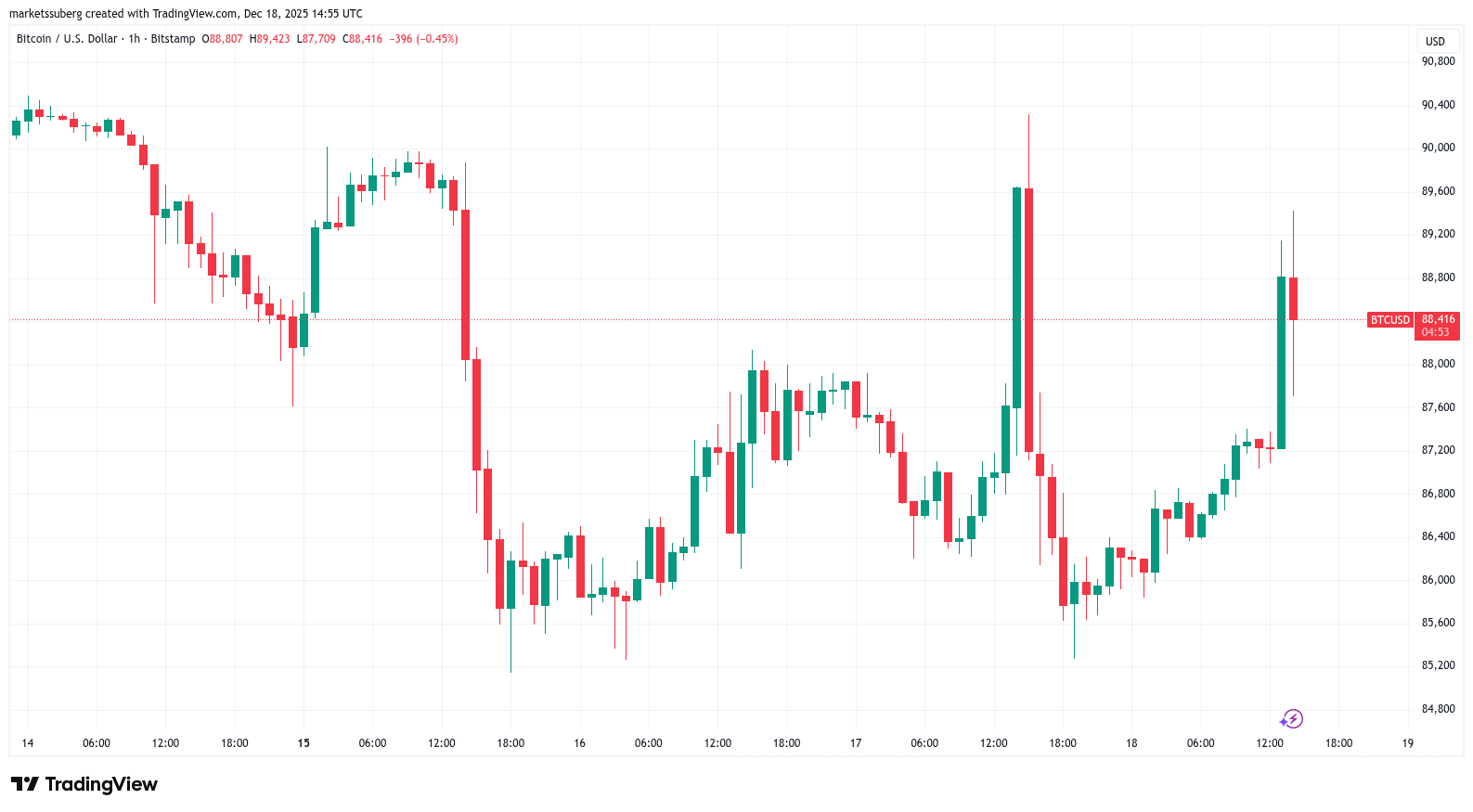
BTC/USD one-hour chart. Source: Cointelegraph/TradingView


The move followed the November release of the Consumer Price Index (CPI), which printed one of its largest monthly declines since 2023 — firmly against expectations.

“The all items index rose 2.7 percent for the 12 months ending November, after rising 3.0 percent over the 12 months ending September,” an official statement from the US Bureau of Labor Statistics (BLS) confirmed.

The BLS noted that October’s CPI report was not issued due to the government shutdown.

Reacting, trading resource The Kobeissi Letter led the surprise, suggesting that contrarian inflation signals could continue into next year.

“This puts Core CPI inflation in the US at its lowest level since March 2021,” it wrote in a post on X.

“According to this data, inflation is now at its closest point to the Fed's 2% target since the pandemic. 2026 is going to be a wild year.”
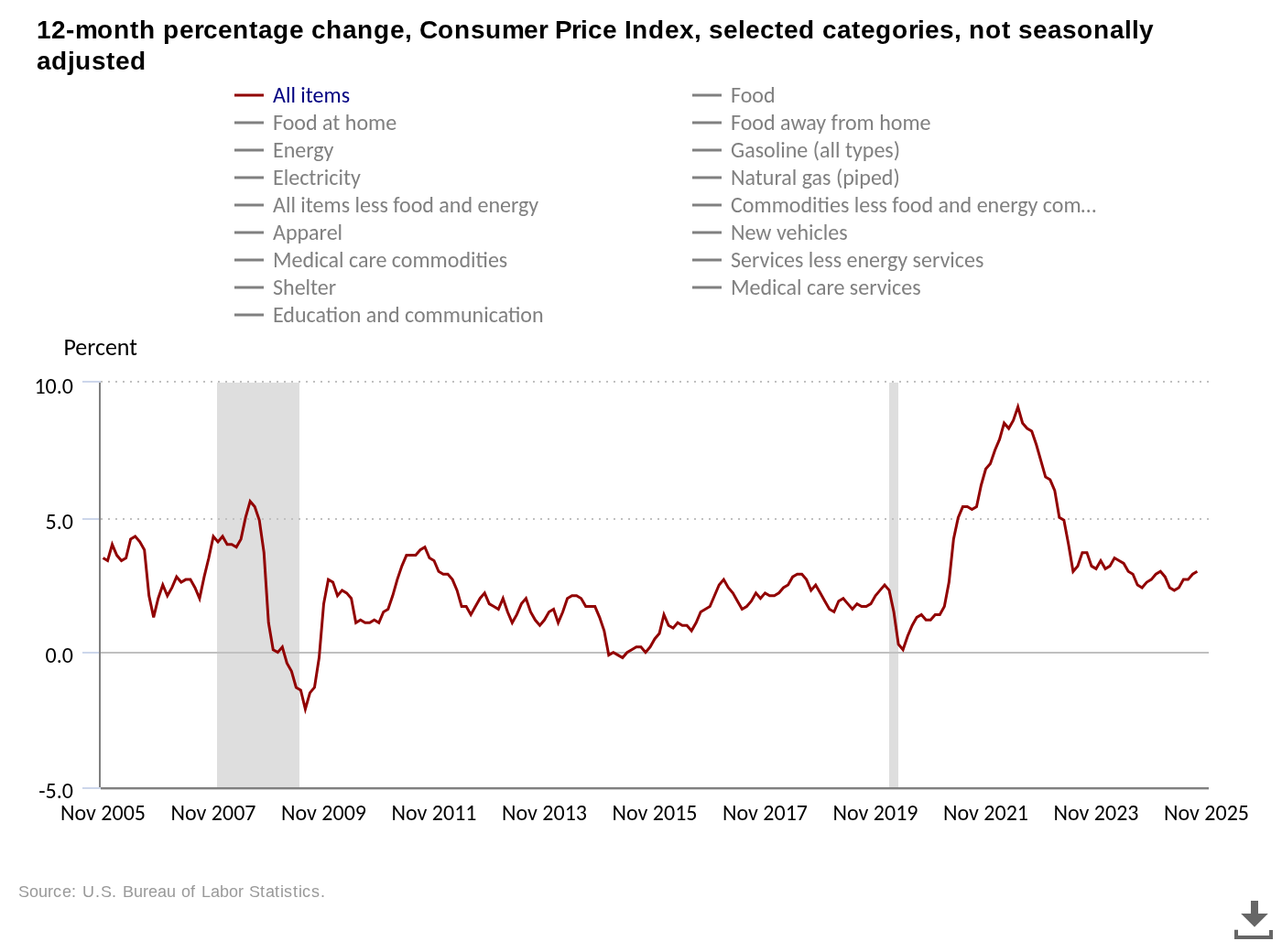
US CPI 12-month % change. Source: BLS


Versus the anticipated 3.1% increase, CPI had come in short by a “massive amount,” crypto trader Daan Crypto Trades continued.

“Risk assets like $BTC are rallying on the back of this, combined with a large fall in the dollar and bond yields,” an X post read.

“The 3 month annualized CPI is now just slightly over 2%. This should be very welcomed by the Fed. More rate cuts are expected to get priced in following this data.”
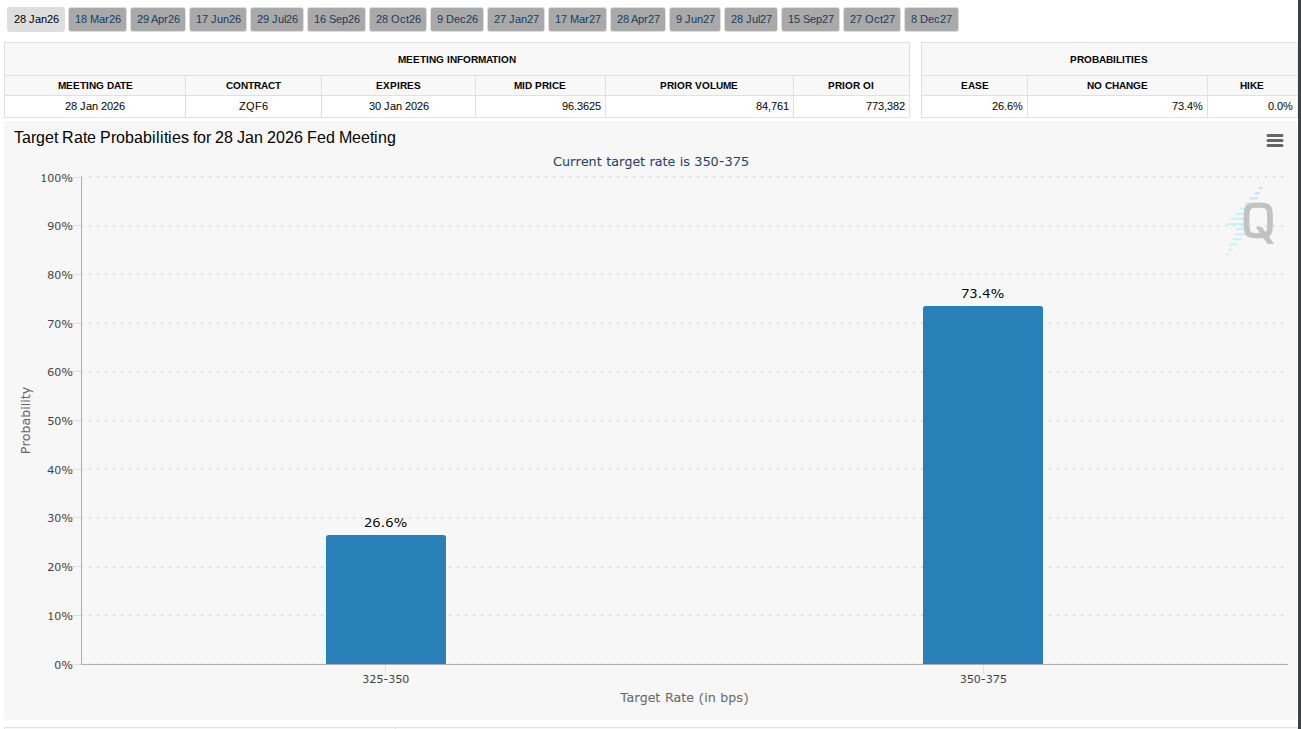
Fed target rate probabilities for January FOMC meeting (screenshot). Source: CME Group


Data from CME Group’s FedWatch Tool put the odds of a fresh interest-rate cut at the Fed’s Jan. 28 meeting at 26.6%.

New long-term BTC price low next?

As Cointelegraph reported, traders were suspicious of Bitcoin price action through this week and last due to “fakeouts” in either direction during US trading sessions.

Related: Bears take over below $90K? 5 things to know in Bitcoin this week

Accusations of market “manipulation” came as BTC/USD hit walls of liquidity both above and below while failing to sustain a new trend.

Total crypto liquidations for the 24 hours to the time of writing were over $630 million, per CoinGlass.
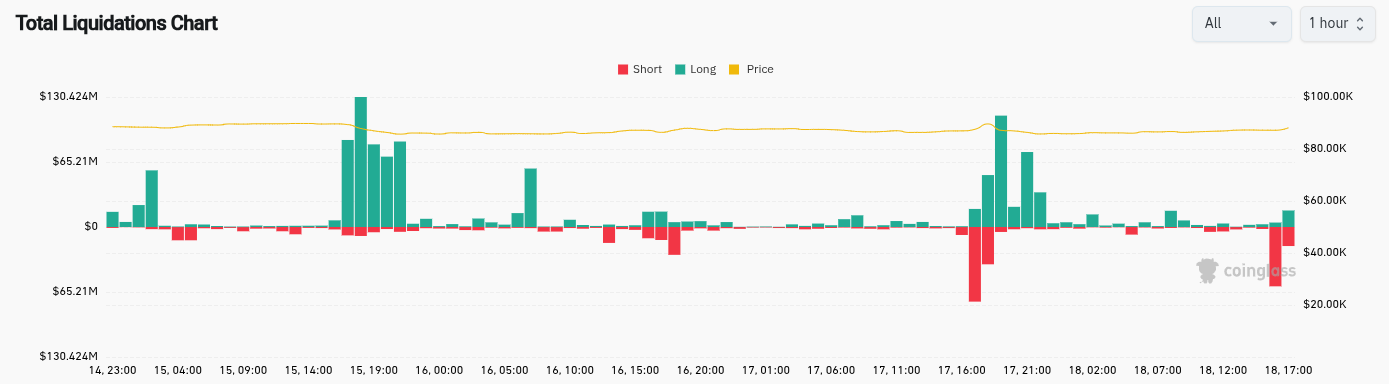
Crypto total liquidations (screenshot). Source: CoinGlass


With the snap moves continuing on the day, crypto trader and entrepreneur Ted Pillows eyed similarities to the start of the year.

“$BTC is mimicking the Q1 2025 fractal. What if this plays out?” he queried alongside a chart of Bitcoin futures.

The chart implied another macro bottom for BTC/USD still to come, similar to that seen in early April when the pair briefly dipped below $75,000.
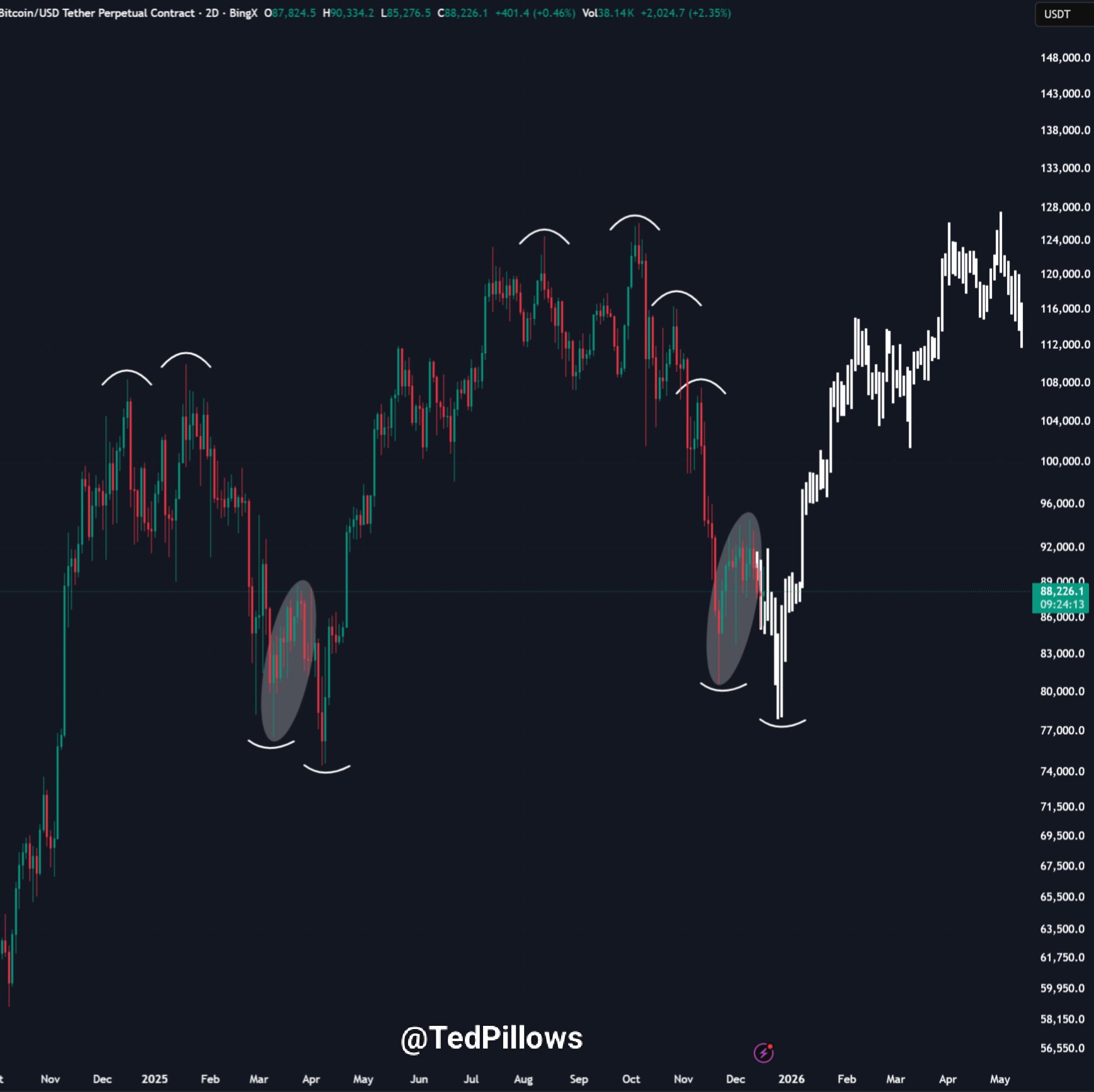
Bitcoin futures chart fractal. Source: Ted Pillows/X

This article does not contain investment advice or recommendations. Every investment and trading move involves risk, and readers should conduct their own research when making a decision. While we strive to provide accurate and timely information, Cointelegraph does not guarantee the accuracy, completeness, or reliability of any information in this article. This article may contain forward-looking statements that are subject to risks and uncertainties. Cointelegraph will not be liable for any loss or damage arising from your reliance on this information.

Related Questions

QWhat was the key economic data released that caused Bitcoin's price volatility?

AThe US Consumer Price Index (CPI) for November, which showed inflation dropping to 2.7% year-over-year, the lowest since March 2021 and a significant miss against expectations.

QHow did the unexpected CPI data impact market expectations for Federal Reserve interest rates?

AThe data fueled bets on interest-rate cuts, with the CME Group's FedWatch Tool indicating a 26.6% probability of a rate cut at the Fed's January 28 meeting.

QAccording to the article, what pattern is Bitcoin's price action repeating?

ABitcoin's price action is repeating its early 2025 fractal, which some traders believe could imply another macro price bottom is still to come.

QWhat was the total value of crypto liquidations in the 24 hours surrounding the CPI news?

ATotal crypto liquidations for the 24 hours to the time of writing were over $630 million.

QWhy was the October CPI report not issued, as noted in the article?

AThe October CPI report was not issued due to the US government shutdown.

Related Reads

Who Will Define the Rules of the AI Era? Anthropic Discusses the 2028 US-China AI Landscape

This article, based on Anthropic's analysis, outlines the intensifying systemic competition between the U.S./allies and China for AI leadership by 2028. It argues that access to advanced computing power ("compute") is the critical bottleneck, where the U.S. currently holds a significant advantage through chip export controls and allied innovation. However, China's AI labs remain competitive by exploiting policy loopholes—via chip smuggling, overseas data center access, and "model distillation" attacks to copy U.S. model capabilities—keeping them close to the frontier. The piece presents two contrasting scenarios for 2028. In the first, decisive U.S. action to tighten compute controls and curb distillation locks in a 12-24 month AI capability lead, cementing democratic influence over global AI norms, security, and economic infrastructure. In the second, policy inaction allows China to achieve near-parity through continued access to U.S. technology, enabling Beijing to promote its AI stack globally and integrate advanced AI into its military and governance systems, altering the strategic balance. Anthropic contends that maintaining a decisive U.S. lead is essential for shaping safe AI development and governance. The core recommendation is for U.S. policymakers to urgently close compute and model access loopholes while promoting global adoption of the U.S. AI technology stack to secure a lasting strategic advantage.

marsbit53m ago

Who Will Define the Rules of the AI Era? Anthropic Discusses the 2028 US-China AI Landscape

marsbit53m ago

“Why Didn’t You Buy 2x Long SK Hynix?”

The article discusses the immense popularity of the "2x Long SK Hynix ETF" (07709.HK) in Hong Kong, which became the world's largest single-stock leveraged ETF by May 2026. Launched in October 2025, the ETF's net value soared over 1000% in seven months, significantly outperforming the 324% gain of SK Hynix's underlying stock, driven by the AI boom and a critical shift in industry demand from computing power to memory. It highlights the mechanics and risks of daily-rebalanced leveraged ETFs. In a smooth bullish market, they generate amplified returns, but during volatile periods—exemplified by market swings during geopolitical tensions in the Strait of Hormuz in March-April 2026—they suffer severe "volatility decay," where choppy price action can cause losses far exceeding twice the drop of the underlying asset. The piece frames SK Hynix, as NVIDIA's primary HBM supplier, within the classic cycle of the memory chip industry—a commoditized sector prone to boom-and-bust cycles of shortage, price hikes, overcapacity, and crashes. While current AI-driven demand and high margins (Q1 2026毛利率~79%) create a "super cycle," the article questions its sustainability. It warns that extreme profits will inevitably tempt competitors like Samsung and Micron to ramp up HBM production, potentially eroding scarcity. Furthermore, the entire narrative remains tethered to the massive AI capital expenditure of tech giants. In conclusion, the ETF's trajectory symbolizes the accelerated, all-in nature of the current AI revolution, where timeframes are compressed and market moves are extreme. However, it also underscores that while industry trends define ultimate returns, macro-geopolitical risks dictate the volatile and uncertain path to get there.

marsbit55m ago

“Why Didn’t You Buy 2x Long SK Hynix?”

marsbit55m ago

a16z Crypto: A Guide to the CLARITY Act for Crypto Entrepreneurs

The CLARITY Act, a bipartisan crypto market structure bill, has advanced through the Senate Banking Committee, marking a potential historic shift in U.S. digital asset regulation. For years, a lack of clear rules has stifled innovation, pushed development overseas, and exposed consumers to risk. This bill aims to establish a comprehensive framework, providing long-needed regulatory clarity for blockchain networks and digital assets. It builds upon previous legislative efforts like FIT21 and the House version of CLARITY, which gained strong bipartisan support. CLARITY is crucial because it recognizes that blockchain networks are fundamentally different from traditional companies. Networks operate through decentralized, shared rules rather than centralized control. Applying corporate legal frameworks to networks forces them into a centralized model, concentrating power and value. In contrast, decentralized blockchain networks can function as user-owned public infrastructure, distributing value more equitably among participants. The bill seeks to enable the safe launch of networks in the U.S., clarify regulatory jurisdiction between the SEC and CFTC, oversee crypto exchanges, and enhance consumer protections. Its passage would align U.S. law with the nature of decentralized technology, allowing builders to operate transparently and fund projects domestically without structural compromises due to regulatory uncertainty. Similar to the positive impact seen after the stablecoin-focused GENIUS Act, CLARITY could unlock a new wave of innovation, helping the U.S. reclaim leadership in the crypto space while combating fraud and abuse.

链捕手1h ago

a16z Crypto: A Guide to the CLARITY Act for Crypto Entrepreneurs

链捕手1h ago

Trading

Spot
Futures

Hot Articles

How to Buy US

Welcome to HTX.com! We've made purchasing Talus Network (US) simple and convenient. Follow our step-by-step guide to embark on your crypto journey.Step 1: Create Your HTX AccountUse your email or phone number to sign up for a free account on HTX. Experience a hassle-free registration journey and unlock all features.Get My AccountStep 2: Go to Buy Crypto and Choose Your Payment MethodCredit/Debit Card: Use your Visa or Mastercard to buy Talus Network (US) instantly.Balance: Use funds from your HTX account balance to trade seamlessly.Third Parties: We've added popular payment methods such as Google Pay and Apple Pay to enhance convenience.P2P: Trade directly with other users on HTX.Over-the-Counter (OTC): We offer tailor-made services and competitive exchange rates for traders.Step 3: Store Your Talus Network (US)After purchasing your Talus Network (US), store it in your HTX account. Alternatively, you can send it elsewhere via blockchain transfer or use it to trade other cryptocurrencies.Step 4: Trade Talus Network (US)Easily trade Talus Network (US) on HTX's spot market. Simply access your account, select your trading pair, execute your trades, and monitor in real-time. We offer a user-friendly experience for both beginners and seasoned traders.

4.6k Total ViewsPublished 2025.12.11Updated 2025.12.11

How to Buy US

Discussions

Welcome to the HTX Community. Here, you can stay informed about the latest platform developments and gain access to professional market insights. Users' opinions on the price of US (US) are presented below.

活动图片