Belarus Opens Door To Crypto Banks With New Presidential Decree

bitcoinistPublished on 2026-01-17Last updated on 2026-01-17

Abstract

Belarus has taken a significant step toward integrating cryptocurrency with traditional finance by issuing Presidential Decree No. 19, which establishes a legal framework for "cryptobanks." These entities, defined as joint-stock companies, will be permitted to conduct token operations alongside conventional banking and payment services. To operate, cryptobanks must be residents of the Belarus High-Tech Park (HTP) and will be registered in a special National Bank list. They will be subject to dual oversight from both the National Bank and HTP authorities, adhering to standards on capital, risk management, and anti-money laundering. Officials anticipate the first cryptobank could launch within six months, offering services such as crypto-backed loans, crypto-linked payment cards, and token salary payments for self-employed individuals. The move reinforces Belarus's strategy to formalize and attract digital asset businesses.

Belarus took a major step on January 16, 2026, when President Aleksandr Lukashenko signed Decree No. 19 to set rules for so-called “cryptobanks.” The move creates a clear legal spot for companies that want to mix token services with classic banking and payment work.

Decree Defines Cryptobanks And Rules

According to the decree, a cryptobank is a joint-stock company that may carry out token operations alongside banking, payment and other financial services.

Reports have disclosed that these firms must be residents of the Belarus High-Tech Park (HTP) and will be listed in a special register kept by the National Bank.

The new document ties cryptobank status to HTP residency, which aims to concentrate activity inside a known tech zone. That requirement also means the HTP’s rules will play a role in daily oversight.

Requirements For Market Entry

Based on reports from regulators, cryptobanks will face dual supervision: oversight from both the National Bank of the Republic of Belarus and the HTP’s governing bodies. This twin structure is meant to let token services grow while keeping closer control of financial risks.

BTCUSD trading at $95,519 on the 24-hour chart: TradingView

Officials say cryptobanks will follow many of the rules that apply to non-bank credit and financial organizations, including standards for capital, risk controls and anti-money-laundering checks.

That suggests applicants will need to show robust compliance systems before being accepted into the register.
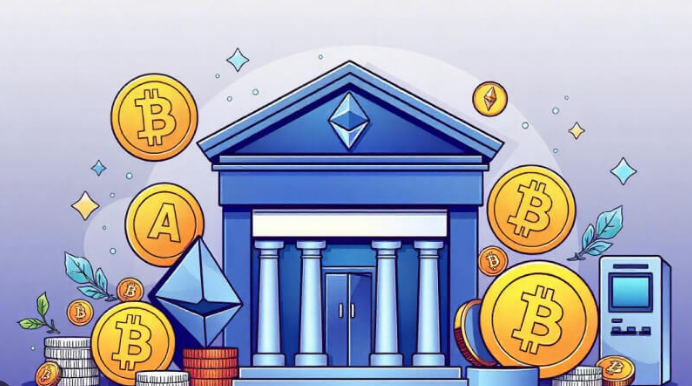
Image: Altorise

Belarus: Short-Term Business Plans

National Bank officials said that the decree could be followed by real market steps fast. Aliaksandr Yahorau, the First Deputy Chairman of the National Bank, said Belarus could see its first operating cryptobank within six months after laws and rules are aligned.

He added that cryptobanks may be able to issue loans secured by cryptocurrency, provide payment cards linked to crypto accounts, and allow self-employed people to receive salaries in tokens.

What Comes Next For Belarus

The decree builds on earlier efforts to attract tech and crypto business to Belarus, and it clearly signals a state interest in bringing token activity under formal control.

The next steps will include drafting implementing rules, creating the special registry at the National Bank, and deciding capital and licensing thresholds for applicants.

Featured image from Unsplash, chart from TradingView

Related Questions

QWhat is the main purpose of Decree No. 19 signed by President Aleksandr Lukashenko on January 16, 2026?

AThe main purpose of Decree No. 19 is to create a clear legal framework for 'cryptobanks,' which are companies that combine token operations with traditional banking and payment services.

QWhat are the two supervisory bodies that will oversee cryptobanks in Belarus?

ACryptobanks will be under the dual supervision of the National Bank of the Republic of Belarus and the governing bodies of the High-Tech Park (HTP).

QWhat is a key requirement for a company to be recognized as a cryptobank in Belarus?

AA key requirement is that the company must be a resident of the Belarus High-Tech Park (HTP) and will be listed in a special register maintained by the National Bank.

QAccording to the First Deputy Chairman of the National Bank, what are some of the services that cryptobanks may be able to provide?

ACryptobanks may be able to issue loans secured by cryptocurrency, provide payment cards linked to crypto accounts, and allow self-employed people to receive salaries in tokens.

QWhat are the next steps following the signing of the presidential decree on cryptobanks?

AThe next steps include drafting implementing rules, creating the special registry at the National Bank, and deciding on the capital and licensing thresholds for applicants.

Related Reads

Morning Post | Trump Media Group Releases Q1 Financial Report; Top Three DeFi Applications Return Nearly $100 Million in Revenue to Token Holders in 30 Days; Michael Saylor Shares Bitcoin Tracker Info Again

**Title: Daily Briefing | Trump Media Group Releases Q1 Report; Top 3 DeFi Apps Return Nearly $100M to Token Holders; Michael Saylor Signals Potential Bitcoin Buy** **Summary:** Key developments in the past 24 hours include: * **Economic Outlook:** Goldman Sachs has pushed back its forecast for the next two Federal Reserve interest rate cuts to December 2026 and March 2027, citing persistent inflationary pressures from energy costs. This delayed timeline is expected to tighten liquidity flow into risk assets, including cryptocurrencies. * **DeFi & Revenue:** Data from DefiLlama shows that three leading DeFi applications—Hyperliquid, Pump.fun, and EdgeX—collectively distributed $96.3 million in revenue to their token holders over the last 30 days. This trend highlights a shift in the crypto community's focus towards real protocol earnings and sustainable economic models. * **Corporate Bitcoin Moves:** Michael Saylor, founder of MicroStrategy (note: referred to as 'Strategy' in the text, likely a typographical error), has signaled potential upcoming Bitcoin purchases by posting a "Bitcoin Tracker" update, following a pattern that typically precedes the company's official disclosure of new acquisitions. * **Market Integrity:** Prediction market platform Polymarket announced updates to address platform issues, including identifying and banning clusters of accounts involved in "ghost-fill" activities and implementing measures to prevent bulk account creation. * **Regulation:** The Bank of England Governor warned that stablecoin regulation could lead to tensions between US and international regulators. In South Korea, the National Tax Service has launched a pilot program to entrust seized virtual assets to private custody firms for management. * **Meme Token Trends:** GMGN data lists the top trending meme tokens on Ethereum (e.g., HEX, SHIB), Solana (e.g., FWOG, TROLL), and Base (e.g., SKITTEN, PEPE) over the past day. **Financial Note:** Trump Media & Technology Group reported a Q1 loss of approximately $4 billion, primarily attributed to unrealized losses on its Bitcoin and other digital asset holdings.

链捕手20m ago

Morning Post | Trump Media Group Releases Q1 Financial Report; Top Three DeFi Applications Return Nearly $100 Million in Revenue to Token Holders in 30 Days; Michael Saylor Shares Bitcoin Tracker Info Again

链捕手20m ago

Telegram Takes Direct Control of TON, Social Traffic Rewrites the Public Chain Narrative

Telegram founder Pavel Durov announced that Telegram will replace the TON Foundation as the core driver and largest validator of The Open Network (TON). Key initiatives include a sixfold reduction in transaction fees, performance upgrades, and improved developer tools within the next few weeks. This marks a strategic shift from Telegram merely providing user access to deeply integrating TON into its platform's core infrastructure. The goal is to transform Telegram's massive social traffic into sustainable on-chain activity. While viral mini-apps like Notcoin have demonstrated Telegram's ability to drive user adoption, TON aims to support frequent, low-value transactions inherent to social platforms—such as tipping, in-app payments, and game rewards. Ultra-low fees and sub-second finality (0.6 seconds) are crucial to making blockchain interactions seamless and nearly invisible within the Telegram user experience. However, Telegram's increased central role raises questions about network decentralization. Durov argues that Telegram's participation will attract more large validators, thereby enhancing decentralization. TON also offers high annual staking rewards (18.8%), aiming to retain capital within its ecosystem. The fundamental challenge for TON is no longer leveraging Telegram's user base, but becoming an indispensable, seamless infrastructure layer for Telegram's everyday applications—moving from an adjacent chain to an embedded utility.

marsbit21m ago

Telegram Takes Direct Control of TON, Social Traffic Rewrites the Public Chain Narrative

marsbit21m ago

OpenAI Post-Training Engineer Weng Jiayi Proposes a New Paradigm Hypothesis for Agentic AI

OpenAI engineer Weng Jiayi's "Heuristic Learning" experiments propose a new paradigm for Agentic AI, suggesting that intelligent agents can improve not just by training neural networks, but also by autonomously writing and refining code based on environmental feedback. In the experiment, a coding agent (powered by Codex) was tasked with developing and maintaining a programmatic strategy for the Atari game Breakout. Starting from a basic prompt, the agent iteratively wrote code, ran the game, analyzed logs and video replays to identify failures, and then modified the code. Through this engineering loop of "code-run-debug-update," it evolved a pure Python heuristic strategy that achieved a perfect score of 864 in Breakout and performed competitively with deep reinforcement learning (RL) algorithms in MuJoCo control tasks like Ant and HalfCheetah. This approach, termed Heuristic Learning (HL), contrasts with Deep RL. In HL, experience is captured in readable, modifiable code, tests, logs, and configurations—a software system—rather than being encoded solely into opaque neural network weights. This offers potential advantages in explainability, auditability for safety-critical applications, easier integration of regression tests to combat catastrophic forgetting, and more efficient sample use in early learning stages, as demonstrated in broader tests on 57 Atari games. However, the blog acknowledges clear limitations. Programmatic strategies struggle with tasks requiring long-horizon planning or complex perception (e.g., Montezuma's Revenge), areas where neural networks excel. The future vision is a hybrid architecture: specialized neural networks for fast perception (System 1), HL systems for rules, safety, and local recovery (also System 1), and LLM agents providing high-level feedback and learning from the HL system's data (System 2). The core proposition is that in the era of capable coding agents, a significant portion of an AI's learned experience could be maintained as an auditable, evolving software system.

marsbit1h ago

OpenAI Post-Training Engineer Weng Jiayi Proposes a New Paradigm Hypothesis for Agentic AI

marsbit1h ago

Your Claude Will Dream Tonight, Don't Disturb It

This article explores the recent phenomenon of AI companies increasingly using anthropomorphic language—like "thinking," "memory," "hallucination," and now "dreaming"—to describe machine learning processes. Focusing on Anthropic's newly announced "Dreaming" feature for its Claude Agent platform, the piece explains that this function is essentially an automated, offline batch processing of an agent's operational logs. It analyzes past task sessions to identify patterns, optimize future actions, and consolidate learnings into a persistent memory system, akin to a form of reinforcement learning and self-correction. The article draws parallels to similar features in other AI agent systems like Hermes Agent and OpenClaw, which also implement mechanisms for reviewing historical data, extracting reusable "skills," and strengthening long-term memory. It notes a key difference from human dreaming: these AI "dreams" still consume computational resources and user tokens. Further context is provided by discussing the technical challenges of managing AI "memory" or context, highlighting the computational expense of large context windows and innovations like Subquadratic's new model claiming drastically longer contexts. The core critique argues that this strategic use of human-centric vocabulary does more than market products; it subtly reshapes user perception. By framing algorithms with terms associated with consciousness, companies blur the line between tool and autonomous entity. This linguistic shift can influence user expectations, tolerance for errors, and even perceptions of responsibility when systems fail, potentially diverting scrutiny from the companies and engineers behind the technology. The article concludes by speculating that terms like "daydreaming" for predictive task simulation might be next, continuing this trend of embedding the idea of an "inner life" into computational processes.

marsbit1h ago

Your Claude Will Dream Tonight, Don't Disturb It

marsbit1h ago

Trading

Spot
Futures
活动图片





