In recent days, it's hard to scroll through Twitter without seeing BAGS everywhere.
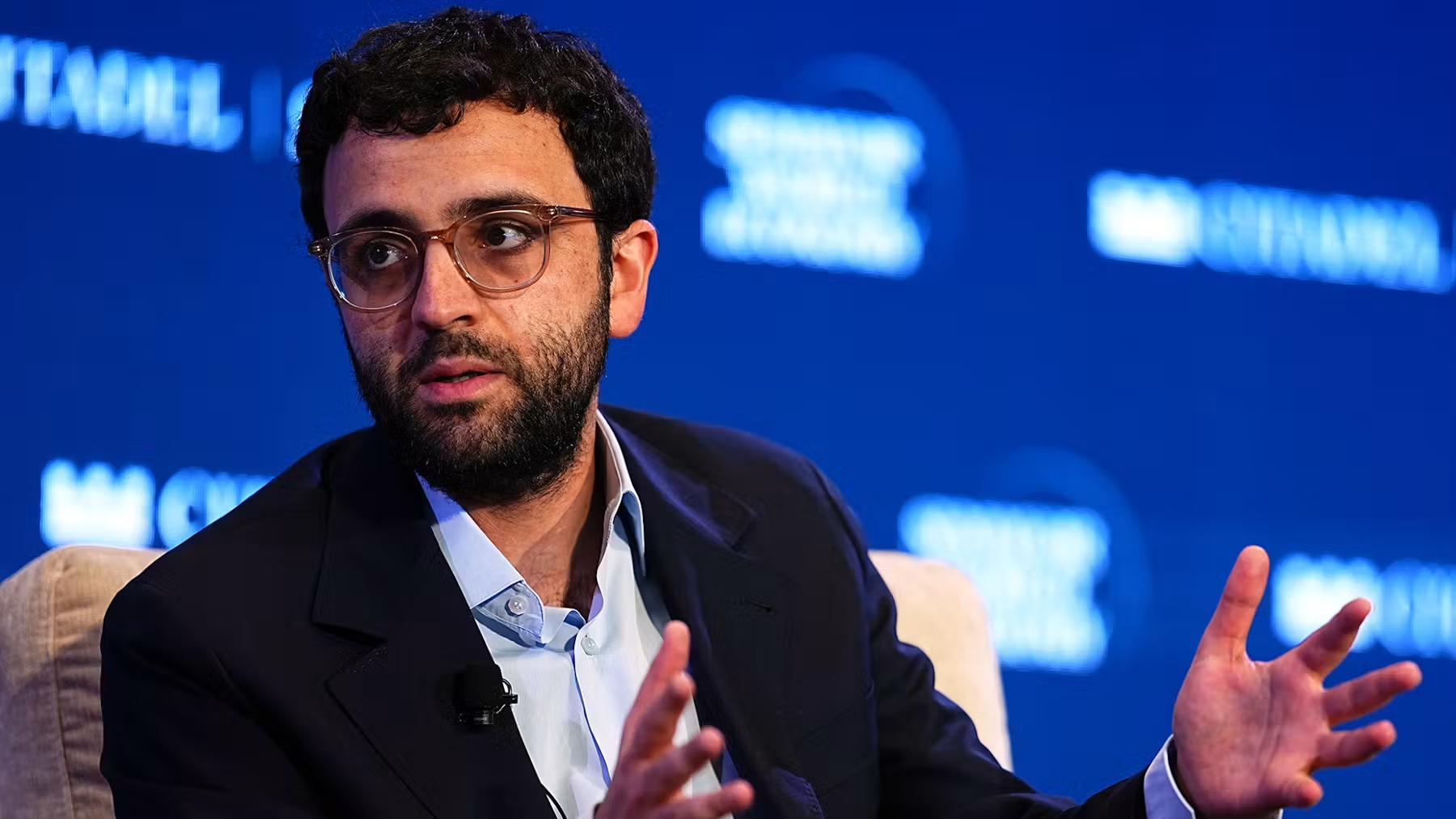
BAGS' popularity isn't just due to the influx of on-chain players; it was also ignited by an article—programmer Steve Yegge's lengthy post titled "BAGS and the Creator Economy," published on January 15, which detailed his journey from "suspecting a scam" to "falling in love" with BAGS.
When a Tech Geek Encounters "Unexpected Wealth"
The author, Steve Yegge, is no small figure. With 40 years of coding experience and having worked at giants like Amazon, Google, and Grab, this tech veteran is known for his sharp critiques of platform architecture and extreme engineering mindset.
The story is quite dramatic:
1. Suspected Scam: Steve Yegge received a message on LinkedIn saying someone had sent him money (initially $49,000) and mentioned that developer Geoffrey Huntley had claimed $56,000 the week before. His wife called it a scam, and his intuition told him it was a trick, but he decided to give it a try.
2. Real Money: The money actually arrived! This made him realize that BAGS might not be just another meme coin but a paradigm shift in the creator economy.
Steve Yegge pointed out, "BAGS is a market that fuels creativity, where people try to predict and support future winners. These creators can be individuals or small teams creating amazing things. As we move into 2026, with tools like Gas Town, individual creators will be able to produce products that rival those of large companies."
When such a "tech geek" began seriously analyzing a Web3 product, the market briefly realized that BagsApp might not just be a meme frenzy but a fundamental restructuring of the creator economy. Many believe he represents Silicon Valley's most hardcore and pragmatic engineering mindset.
How Does BAGS Work?
BAGS is a token launch and trading platform on Solana utilizing Meteora. What sets it apart from most launch platforms is that creators can specify who receives the transaction royalties when a token is launched. Currently, the default token transaction royalty on BAGS is 1%.
This presents a new opportunity for Web2 developers. Even if they don't launch tokens or hold any, as long as the token has trading volume, they can earn continuous passive income.
Whether individuals create tokens and set their own royalties or communities launch tokens for developers they believe in and designate their wallets or Twitter accounts to receive proceeds, it lowers the barrier for creators to monetize.
Additionally, BAGS has a dividend feature. Token creators can enable a fee-sharing mechanism to reward top holders with a portion of the transaction income. The system checks every 24 hours, and if unclaimed earnings exceed 10 SOL, they are automatically distributed proportionally to the top 100 holders.
Moreover, holding tokens grants chat access to the token's community, achieving a native integration of finance and social interaction.
In another sense, BAGS creates a deceptively "gentle" system: even if you don't launch a token, as long as you're famous, the community can essentially force money upon you.
But this also creates a paradox: when a developer can earn "passive royalties," do they still have the motivation to complete the tedious, lengthy, and potentially failed technical deliveries?
Top Memes in the BAGS Ecosystem
The top two memes in the BAGS ecosystem by market cap are:
RALPH (Current Market Cap: $29 Million)
A tribute to the AI programming circle's "Ralph Wiggum Technique" (i.e., using AI to repeatedly trial and error until the code works). This token was created by the community as a meme of a development culture. Geoffrey Huntley did not deploy this smart contract.
Gas (Current Market Cap: $9.24 Million)
Gas originates from Steve Yegge's AI coding agent coordinator, Gas Town. On January 2, 2026, Steve Yegge released Gas Town, a tool for coordinating multiple AI coding agents simultaneously. Gas Town plans to expand in three areas this year: 1. Model cognitive capabilities; 2. Enhanced agent compatibility with Gas Town; 3. Inclusion of Gas Town and Beads datasets in the training corpus of cutting-edge models. The Gas token was launched independently by the community.
More importantly, of the $270,000 in transaction fees generated by the Gas token, 99% flowed back to Steve Yegge himself, forming a seemingly perfect closed loop of "developers focusing on building, community continuously empowering."
When "Focusing on Development" Becomes a Negative
But the reality is, when Steve Yegge stated on January 17 that he would "return to development, fully immerse himself in Gas Town, and won't be able to spend much time on CT (Crypto Twitter)," the community's enthusiasm instantly cooled. Gas's market cap peaked at $60 million on January 16 but has since fallen over 83% from its high at the time of writing.
This contradiction highlights a harsh truth: the market never treated Gas as a real AI product but rather as the next AI meme炒作 target.
When "focusing on development" becomes a bearish factor for the token price, we must admit: the current Web3 AI sector is still a PVP battlefield dominated by the attention economy.
Gas's awkward situation reveals Web3's deepest structural矛盾: the speed of capital flow is seconds (trading), while the pace of building quality products is snail-like (months or even years).
In Steve Yegge's case, the market sending him money was essentially buying into his future "expectations." But the crypto market is too impatient; it demands that money invested this second must yield "positive news" the next. When developers choose to go into seclusion to fulfill their promises, they cut off the "emotional liquidity" that speculators crave the most. However, real coding requires long periods of silence and deep focus.
Everyone wants Builder stories to support valuations but is unwilling to wait for the lengthy process of technological沉淀. When the novelty of the story fades, when founders no longer engage in流量 operations, the token reverts to its speculative nature.
Summary
Is BAGS the future of the creator economy? Perhaps. But for now, it seems more like an entry ticket for Web2 developers to passively participate in "attention harvesting."
Web2 developers are accustomed to being responsible for codebases, while Web3 forces them to be responsible for market caps. When Steve Yegge wanted to return to his engineering roots, the market punished his "inaction." This might be the biggest warning BAGS leaves for the industry: if we only learn how to "financialize" people but fail to protect their "creativity," what we'll get are shells drained by流量, not a genuine technological revolution.
Only when the market begins to appreciate Builders' long, deep dives into code rather than just盯着 the瞬间 spikes on the K-line chart will the "long-termism" spring for tech geeks truly arrive.
DYOR is particularly crucial in this博弈 between technology and memes.