Assisting Turkey in Freezing $1 Billion in Assets, Tether's Compliance Approach Has Changed

marsbitPublished on 2026-02-09Last updated on 2026-02-09

Abstract

On January 30, Turkish authorities froze assets worth over $500 million belonging to Veysel Sahin, who is accused of operating an illegal gambling platform and money laundering. Tether Holdings SA, the issuer of the $185 billion stablecoin USDT, assisted in the freeze at the request of the Turkish government. This action is part of a broader Turkish operation that has frozen over $1 billion in assets. Tether has increasingly collaborated with global law enforcement agencies to combat cryptocurrency-related crimes, including money laundering, drug trafficking, and sanctions evasion. According to Tether CEO Paolo Ardoino, the company follows legal procedures when working with authorities such as the U.S. Department of Justice and the FBI. Analysis by Elliptic shows that Tether and its competitor Circle have blacklisted around 5,700 wallets holding approximately $2.5 billion in assets, with three-quarters of these containing USDT. Tether claims to have assisted in over 1,800 cases across 62 countries, freezing $3.4 billion in USDT tied to illicit activities. This marks a shift from Tether’s earlier tensions with U.S. regulators, including a 2021 settlement over misrepresenting reserves. The company has recently re-entered the U.S. market with a compliant stablecoin, USAT, and has gained regulatory acceptance under the Trump administration. Despite these efforts, USDT remains under scrutiny for its use in criminal activities, including a recent case involving $1 billion in ...

Written by: Ryan Weeks, Todd Gillespie, Taylan Bilgic

Compiled by: Luffy, Foresight News

On January 30, Turkish authorities announced the freezing of assets worth over $500 million under the name of Veysel Sahin, who is accused of operating an illegal gambling platform and suspected of money laundering. The Istanbul Chief Prosecutor revealed that an unnamed cryptocurrency company carried out the freeze at the request of the Turkish government.

This company is Tether Holdings SA, the issuer of the stablecoin USDT with a market capitalization of $185 billion. Recently, the company has actively assisted governments worldwide in combating various cryptocurrency-related criminal activities, including money laundering, drug trafficking, and sanctions evasion.

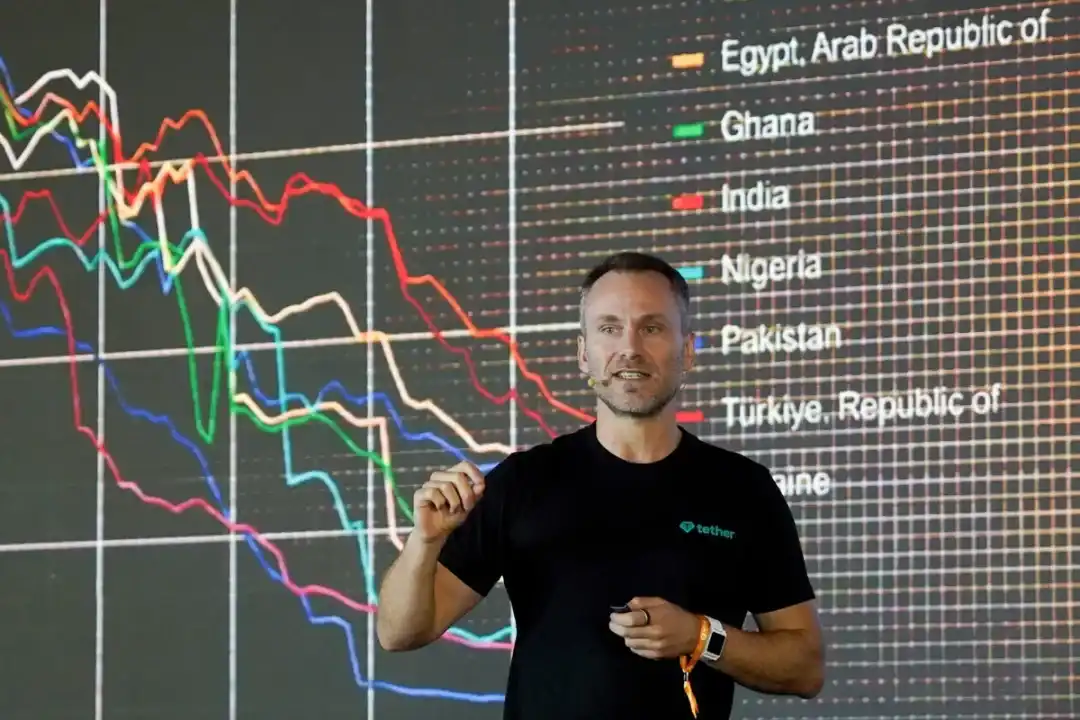
Tether CEO Paolo Ardoino stated in a recent interview with Bloomberg News: "Law enforcement approaches us, provides relevant information, we verify the information, and then take action in accordance with the laws of the country. We follow this process when cooperating with the U.S. Department of Justice, the FBI, and other agencies."
Tether declined to comment further on the case. Bloomberg was unable to reach Sahin. A Turkish official also refused to disclose the name of the company mentioned in the prosecutor's statement.

The frozen assets of 460 million euros (approximately $544 million) are part of a large-scale law enforcement operation in Turkey, where the total frozen assets involved now exceed $1 billion. According to Turkish television NTV, a few days after the announcement of the freezing of Sahin's assets, another individual was investigated for suspected money laundering and illegal gambling, and crypto assets worth $500 million under their name were also frozen. However, it is currently unclear whether this asset freeze involved tokens issued by Tether.

A Turkish official, who spoke anonymously on sensitive legal matters to Bloomberg, revealed that authorities discovered the "financial traces" of these suspected illegal proceeds by tracking fund flows and analyzing crypto assets. The official added that similar asset freezes targeting individuals involved in illegal gambling and payment systems will be implemented in the future.

For Tether, this freezing operation is just one of its increasingly frequent fund freezes, highlighting the growing efforts of this cryptocurrency giant to cooperate with global law enforcement agencies.

A report released in January by analytics firm Elliptic showed that by the end of 2025, Tether and its competitor Circle Internet Group Inc. had blacklisted approximately 5,700 wallets, involving assets of about $2.5 billion, a figure that was negligible two years ago. At the time of freezing, three-quarters of these wallets held USDT.

Arda Akartuna, Head of Crypto Threat Intelligence for Asia-Pacific at Elliptic, said: "As legitimate applications of cryptocurrency and the integration of global payments accelerate, illegal usage has also increased, prompting stablecoin issuers to intervene more actively."

Tether often publicizes its efforts to combat criminal activities, including in communications aimed at potential investors, as the company seeks funding at a valuation of up to $500 billion. According to its website, Tether has assisted law enforcement agencies in 62 countries with over 1,800 cases, freezing $3.4 billion worth of USDT related to suspected illegal activities.

Nathan McCauley, Co-founder and CEO of Tether partner Anchorage Digital Bank, said in an interview: "They (Tether) are extremely proactive in their cooperation. Among stablecoin issuers, the company has the 'recognized best reputation' with law enforcement agencies."

Anchorage is the issuer of Tether's compliant dollar stablecoin USAT, which was launched in late January, marking Tether's return to the U.S. market.

This represents a significant shift from the tense relationship between Tether and U.S. regulators a few years ago. After clashing with regulators in 2018, Tether largely exited the U.S. market and paid $41 million in 2021 to settle charges of misrepresenting its reserves.

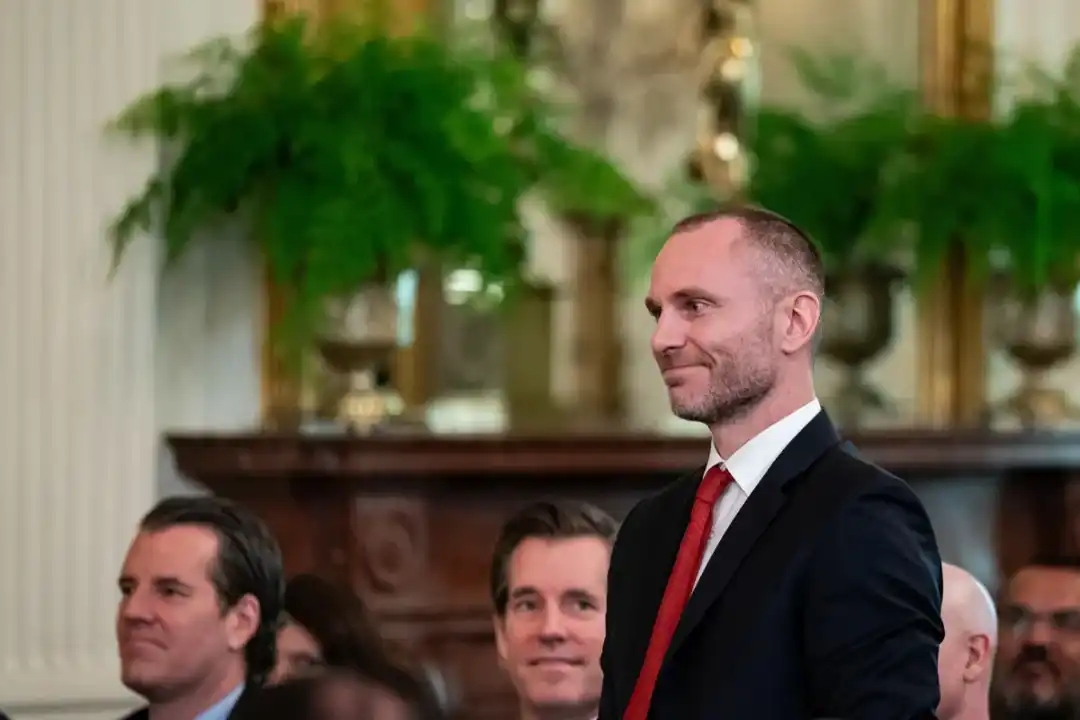
However, the second Trump administration has welcomed the cryptocurrency industry. Last year, Ardoino attended, along with several other executives, the ceremony where President Trump signed the stablecoin regulatory bill.
Even so, Tether's USDT continues to face scrutiny from regulators due to its widespread use by criminals.

On January 9, the U.S. Attorney's Office for the Eastern District of Virginia announced charges against a Venezuelan citizen for laundering $1 billion using USDT. A recent report by Elliptic showed that the Central Bank of Iran purchased over $500 million worth of USDT to alleviate its currency crisis and evade U.S. sanctions.

Turkish fugitive Sahin is accused of leading an organization that laundered money for illegal online gambling platforms. According to local media, Sahin was sentenced to 10 years in prison in 2017, released in 2023, and sentenced to another 21 years in prison month later. His current whereabouts are unknown, but the Turkish official news agency Anadolu Agency reported on January 30 that "the relevant authorities are advancing the legal process for his extradition back to Turkey."


Related Questions

QWhat was the Turkish government's action against Veysel Sahin, and which company assisted in this operation?

AThe Turkish government froze assets worth over $500 million belonging to Veysel Sahin, who was accused of operating an illegal gambling platform and money laundering. The company that assisted in this operation was Tether Holdings SA, the issuer of the USDT stablecoin.

QHow has Tether's approach to compliance and law enforcement cooperation changed recently?

ATether has significantly increased its cooperation with global law enforcement agencies, actively assisting in combating cryptocurrency-related crimes such as money laundering, drug trafficking, and sanctions evasion. It has frozen assets in numerous cases and has a recognized reputation for its proactive stance.

QWhat is the total value of assets that Tether has frozen in connection with alleged illegal activities, according to its website?

AAccording to Tether's website, the company has assisted law enforcement in over 1,800 cases across 62 countries and frozen $3.4 billion worth of USDT related to suspected illegal activities.

QWhat significant legal and regulatory challenges has Tether faced in the past, particularly in the United States?

AIn 2018, Tether had conflicts with U.S. regulators, which led to its near-exit from the U.S. market. In 2021, it paid $41 million to settle charges that it misrepresented its reserves.

QWhat recent development marks Tether's return to the U.S. market, and who is its partner in this initiative?

ATether's return to the U.S. market is marked by the launch of its compliant dollar stablecoin, USAT, in late January. Its partner in issuing this stablecoin is Anchorage Digital Bank.

Related Reads

In Jinjiang, Fujian, a Storage Super Unicorn Lies Quiet

In Fujian's Jinjiang, a city known for sportswear, lies a quiet semiconductor giant: Fujian Jinhua Integrated Circuit Co. (JHICC). Once a promising domestic DRAM manufacturer alongside Yangtze Memory and ChangXin Memory Technologies (CXMT), its journey was derailed in 2018 when the U.S. placed it on an Entity List and filed criminal charges for alleged trade secret theft. This halted production for years. A turning point came in February 2024 when a U.S. federal court found JHICC not guilty. However, it had lost crucial time. While CXMT soared to become a top-valued A-share company in 2024, JHICC, with an estimated valuation of 80 billion RMB, was just restarting. Its current output is primarily customized DDR4 chips, not the advanced DDR5/HBM demanded for AI, but it still benefits from the broader memory chip upcycle. JHICC's story is tied to Chen Zhengkun, a veteran engineer who left Micron to lead the venture. Founded in 2016 with state-backed funding, JHICC partnered with Taiwan's UMC to develop DRAM technology. Rapid progress was cut short by the U.S. actions, which Micron initiated, partly due to its heavy reliance on the Chinese market. Post-sanctions, Chen's team worked to rebuild the production line with reduced reliance on U.S. technology. According to its records, JHICC achieved small-scale production and revenue growth under immense pressure. It now focuses on the stable "niche" DRAM market (e.g., TVs, routers) with a monthly capacity of ~40,000 wafers, aiming for 60,000 by 2026. It holds over 1,000 patents but remains on the Entity List. For Jinjiang, investing in JHICC was a bold industrial leap. The local government provided unwavering financial and logistical support during the crisis, helping the company survive. JHICC has become the anchor for a growing local semiconductor cluster. Though its scale lags behind domestic peers, JHICC's persistence symbolizes a hard-won foothold in a global market long dominated by Samsung, SK Hynix, and Micron. Having missed one boom, it seeks a place in the new AI-driven memory supercycle.

marsbit40m ago

In Jinjiang, Fujian, a Storage Super Unicorn Lies Quiet

marsbit40m ago

Must-Watch Events Next Week|CLARITY Act Could Face Senate Vote; SpaceX, Circle to Report Earnings (8.3-8.9)

**Summary: Key Events and Developments to Watch (August 3-9)** The upcoming week is marked by significant financial disclosures, key legislative deadlines, and notable product updates. **Major Financial Events:** Several companies are scheduled to release their Q2 2026 earnings. American Bitcoin (ABTC) will report on August 3, followed by SpaceX and Hut 8 Mining Corp. on August 4, and Circle on August 5. Notably, a significant portion of SpaceX shares (up to 12% of total shares) will be unlocked on August 6 following their earnings release. **Key Legislative Deadline:** The U.S. Senate faces an August 7 deadline to secure 60 votes for the CLARITY Act, a bipartisan bill aiming to establish a federal regulatory framework for cryptocurrencies. The Senate may hold a full vote on the bill during the week. **Economic Data:** The U.S. July Non-Farm Payrolls report will be released on August 7, providing crucial labor market data. **Technology & Product Updates:** * **Shutdowns:** DeFi portfolio tracker Zapper and wallet app Ctrl Wallet will cease operations on August 3. * **Upgrades:** LayerZero will deprecate its v1 relayers on August 3. XRP Ledger's new version 3.3.0, featuring five new functions, is expected next week. * **AI:** Elon Musk announced that the advanced Grok 4.6 AI model is set for release around August 7. * **Bitcoin:** The BIP-110 forced signaling for a potential Bitcoin network change is scheduled to begin around August 8. **Other Notable Events:** Chinese robotics firm Unitree Tech has set its preliminary price inquiry for its IPO for August 5. South Korean exchange Upbit will delist AQT and AERGO tokens on August 3.

marsbit2h ago

Must-Watch Events Next Week|CLARITY Act Could Face Senate Vote; SpaceX, Circle to Report Earnings (8.3-8.9)

marsbit2h ago

Trading

Spot
活动图片




