Ansem Steps in to Sell 'New Meme Endorsement', Maximum Promotion Fee Reaching $98,000

marsbitPublished on 2026-08-18Last updated on 2026-08-18

Abstract

On August 17, Meme KOL Ansem launched "Ansem.io," a token launchpad similar to Pump.fun. The platform monetizes his influence by offering tiered token creation with paid "endorsements." Creating a free-tier token requires airdropping at least 3% of the supply to ANSEM holders, costing ~$65. Higher tiers require purchasing and burning ANSEM tokens: the "Gold" tier costs ~$23,000 and the "Diamond" tier ~$94,000 for a personal endorsement from Ansem. Additional paid features include profile customization and a paid "BOOST" system for ranking on the platform's Z500 meme leaderboard. Total launch costs can reach up to $98,000. The platform has generated 690 meme tokens, "graduated" 128, and has burned over $300,000 worth of ANSEM. Ansem positions the platform as a transparent way to leverage his influence, channeling marketing spending directly into his token's ecosystem.

Author|Golem(@web 3_golem)
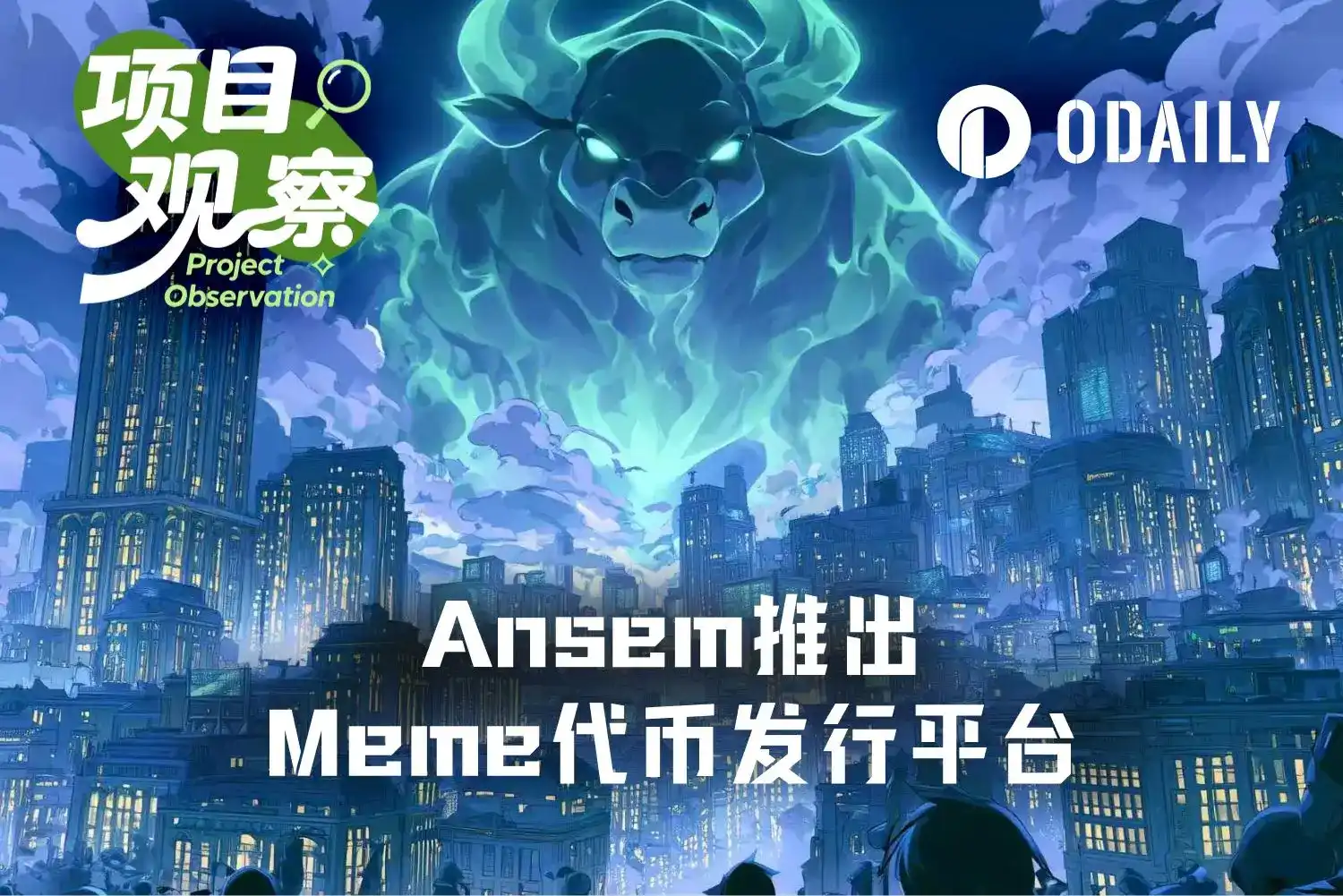
On the evening of August 17th, overseas Meme KOL Ansem launched the Ansem.io token issuance platform. Its core token issuance mechanism is similar to Pump.fun, with more differences lying in operational aspects.

In short, Ansem.io has put a clear price tag on Ansem's personal influence. Tokens created on the Ansem.io platform can receive endorsement from Ansem's team as long as they purchase sufficient "resources." The platform has also empowered the Meme token ANSEM significantly, not only incentivizing Meme project parties to buy and burn ANSEM but also allowing ANSEM holders to receive Meme airdrops for free. Benefiting from this positive news, ANSEM's market capitalization once surged to $150 million and has now stabilized around $100 million.

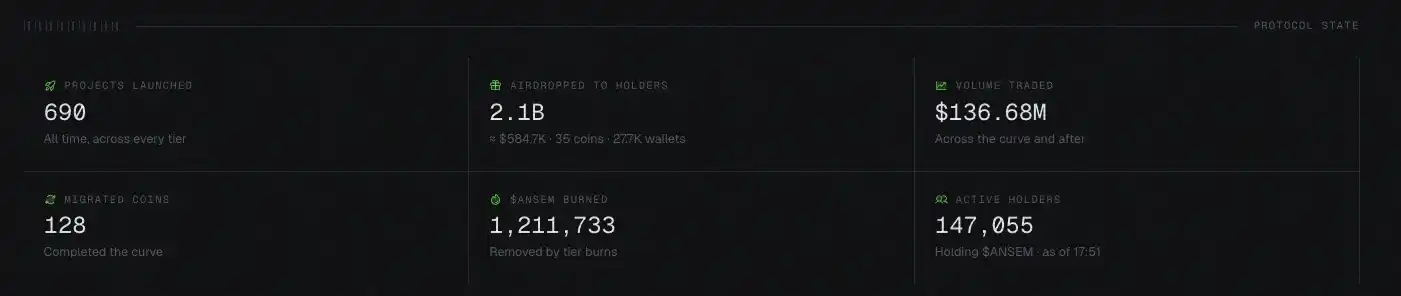
As of press time, 690 Meme tokens have been created on the Ansem.io platform, with 128 successfully "graduating," a graduation rate of 18%; over $580,000 worth of Meme tokens have been airdropped to more than 27,000 ANSEM holding addresses; and over 1.21 million ANSEM tokens have been burned, valued at approximately $300,000.
However, for Meme issuers, the cost of issuing tokens on Ansem.io is not cheap. In essence, Ansem.io is fundamentally Ansem's personal paid promotion platform for Memes.

Token Issuance Costs on Ansem.io Are Not Low

Ansem.io categorizes created tokens into three levels: Free, Gold, and Diamond. For token creators, the "Free" level is not truly free. Ansem.io platform regulations stipulate that creators issuing tokens must airdrop to the ANSEM community, with a minimum airdrop ratio of 3% of the token supply. Furthermore, the airdropped tokens must be purchased by the creators themselves and cannot be pre-reserved.

This means the cost for a creator to issue a token "for free" is 0.874 SOL, worth about $65. The platform stipulates that any wallet holding at least 100 ANSEM is eligible for the airdrop.

Gold and Diamond level tokens not only require airdrops to ANSEM holders but also need to purchase and burn ANSEM from the market. Gold level tokens require purchasing 92,627 ANSEM, worth about $23,000; Diamond level tokens require purchasing 370,508 ANSEM, worth about $94,000. A higher token level signifies a higher level of endorsement. A Gold label token symbolizes recognition by the website, while a Diamond label token means the token has been personally reviewed by Ansem himself, equivalent to explicit endorsement.

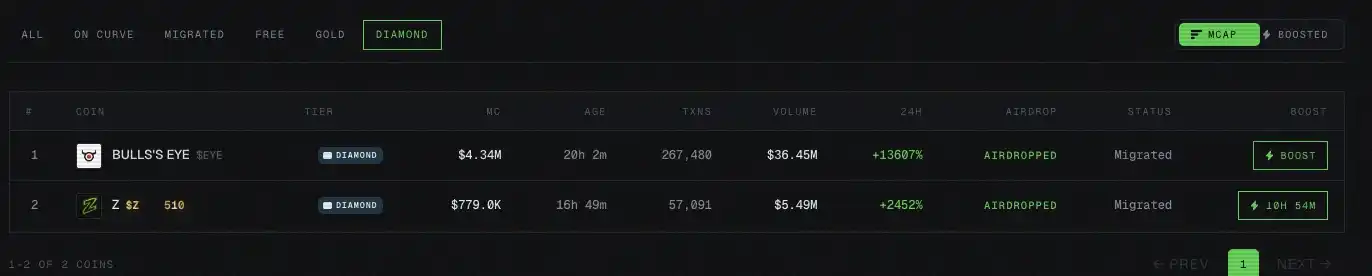
As of press time, no creator has issued a Gold level token yet, but two Diamond level tokens have been created: BULLS'S EYE (EYE) and Z, with market capitalizations of $4.3 million and $800,000 respectively.
The above costs are only for creating a token. If more exposure is desired, additional spending is required.

Similar to Dexscreener's fee model, if a Meme community or project wants to display official links (website, X, Telegram, Discord), banners, and more token information on the Ansem.io platform, regardless of the token level, they need to pay an additional 0.5 SOL, worth about $37.

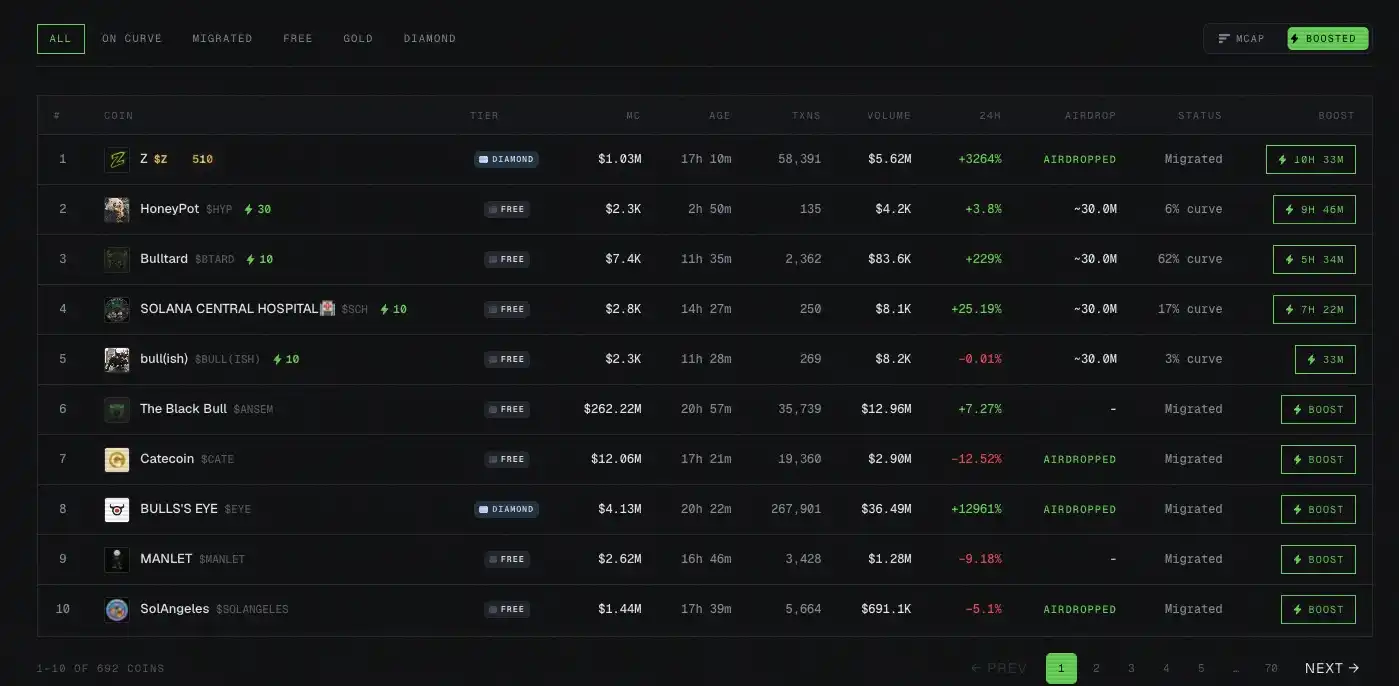
In addition, Ansem.io has also launched a Z500 Community Index, which is essentially just a real-time Meme ranking chart.
Z500 Index

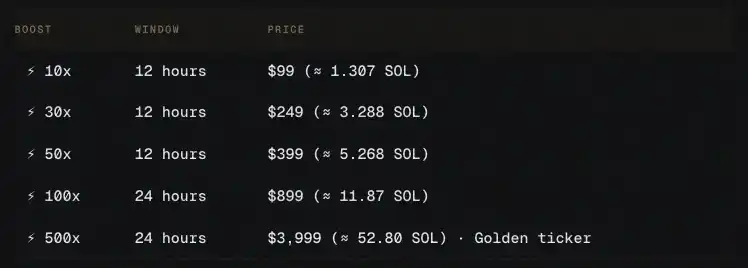
However, this ranking chart is also a Meme exposure board. Users cannot actively sort it; for a Meme to quickly climb the ranking, it needs to purchase a boost (BOOST). Anyone can purchase a boost for a Meme, not limited to the token issuer. Boost fees are as follows: the lowest level, 10x BOOST, costs $99 and is valid for 12 hours; the highest level, 500x BOOST, costs $3,999 and is valid for 24 hours. However, as of press time, only 5 Memes have purchased BOOSTs.
BOOST Pricing

In summary, the minimum cost for an ordinary user to issue a Meme on Ansem.io is about $65, while pursuing maximum exposure by creating a Diamond level token and purchasing promotional packages could cost up to $98,000.

Compared to Pump.fun, such token issuance costs are simply too expensive. The benefit is effectively isolating malicious actors like meme-issuing syndicates engaging in bottom-feeding practices. As for whether to choose the Ansem.io platform and spend tens of thousands on promotion, it depends on how much the project parties believe in Ansem's personal ability to drive sales.

Ansem's Paid Promotion Meme Platform

In essence, Ansem.io is Ansem's personal paid promotion platform. Its business model does not involve taking a commission from token trades but rather earns revenue from Meme promotion fees and empowers the ANSEM token.

For project parties, what attracts them is not the platform's inherent traffic and user exposure—as a newly launched platform, Ansem.io has hardly accumulated any users. The real draw is Ansem's personal traffic. They primarily hope that after purchasing promotion packages on Ansem.io, Ansem will post or endorse them on social media. As the top Meme KOL overseas, Ansem's every move is already monitored by countless 'p-shot generals,' and his influence can translate into actual on-chain purchasing power.

Ansem is, of course, aware of this underlying logic; in fact, it might be one of the reasons he launched Ansem.io. Ansem posted on X platform saying that his replies are filled with various individuals and teams trying to catch his attention and pitch him tokens or projects. Once his X account even slightly notices a token, that token can immediately "graduate," even reaching a market cap of millions of dollars. He also mentioned he has profited considerably from this before.

Therefore, Ansem.io is merely making all this transparent, requiring Meme project parties to spend marketing funds (often aimed at Ansem personally) on empowering the ANSEM token. Ansem believes "Z500 allows me to better utilize this attention flywheel effect to continuously create value."

Regardless of whether this model can sustainably succeed in the future or if Ansem's credibility will be compromised, at least Ansem is the first to productize a KOL's personal influence into a Launchpad.


Related Questions

QWhat is the core business model of the Ansem.io platform launched by Ansem?

AAnsem.io's core business model is not taking commissions from token trades. Instead, it generates revenue by charging Meme creators for promotion packages and by boosting the value of its native token, ANSEM. Creators pay fees for different listing tiers (Free, Gold, Diamond) which involve purchasing and burning ANSEM tokens, and can pay extra for enhanced platform exposure and listings in the Z500 ranking.

QWhat are the three tiers for token creation on Ansem.io and their approximate costs?

AAnsem.io offers three token creation tiers: 1. **Free Tier**: Requires the creator to airdrop at least 3% of the token supply to ANSEM holders, costing approximately $65 (0.874 SOL) to purchase the airdrop tokens. 2. **Gold Tier**: Requires purchasing and burning 92,627 ANSEM tokens (worth ~$23,000) in addition to the mandatory airdrop. 3. **Diamond Tier**: Requires purchasing and burning 370,508 ANSEM tokens (worth ~$94,000) in addition to the airdrop. This tier signifies Ansem's personal review and endorsement.

QWhat additional service does the Z500 index on Ansem.io provide, and how can projects improve their ranking on it?

AThe Z500 index on Ansem.io is a real-time Meme token ranking or leaderboard. Projects cannot be sorted manually by users. To quickly improve their ranking and gain exposure, anyone (not just the issuer) can purchase a promotional 'BOOST' for a token. BOOST packages range from a 10x BOOST costing $99 for 12 hours to a 500x BOOST costing $3,999 for 24 hours.

QAccording to the article, what is the main incentive for projects to use Ansem.io despite its high costs compared to platforms like Pump.fun?

AThe main incentive for projects to use Ansem.io is access to Ansem's immense personal influence and social media following. Projects hope that by paying for promotion packages, especially the Diamond tier, they will receive public endorsement or mentions from Ansem on his social media. As a top-tier Meme KOL, his attention can translate directly into significant on-chain buying pressure and project visibility.

QWhat are some key statistics mentioned about the initial performance of the Ansem.io platform?

AAs of the article's writing, key statistics for Ansem.io include: - **690 Meme tokens** have been created on the platform. - **128 tokens** have successfully 'graduated', a graduation rate of 18%. - Over **27,000 ANSEM-holding addresses** have received airdrops worth **$580,000** in Meme tokens. - Over **1.21 million ANSEM tokens** (worth ~$300,000) have been purchased and burned. - The ANSEM token's market cap reached **$150 million** and settled around **$100 million**.

Related Reads

Hefei 30 Billion for 1 Trillion: The First Year of Equity Finance, Who Can Copy This Assignment

In July 2026, Hefei’s state-owned assets system reaped over 1 trillion RMB in floating gains from the IPO of ChangXin Memory—a return stemming from a cumulative investment of less than 30 billion RMB over the preceding decade. This marks a prominent case of China’s emerging “equity-based fiscal model,” where local governments act as long-term industrial investors rather than relying solely on land sales. The story traces back to 2016, when Zhu Yiming, founder of Gigadevice and later ChangXin, sought funding for a domestic DRAM chip project amid high risks and intense international competition. Hefei, despite its limited fiscal resources, committed to the venture. Over the next ten years, ChangXin accumulated over 36 billion RMB in losses, yet Hefei’s state capital persisted, providing continuous funding and “nanny-style” support while building a surrounding industrial cluster. This approach—now termed the “Hefei Model”—originated earlier with the city’s 2008 decision to pause subway construction to invest in BOE’s struggling LCD panel production line. That bet later spurred a display industry ecosystem in Anhui. Similarly, ChangXin’s eventual profitability in 2026, driven by AI-driven demand for memory chips, validated Hefei’s patience. The model reflects a strategic shift in Chinese local public finance: from land-revenue dependence to nurturing strategic industries through equity participation, leveraging state capital to attract private investment, and ultimately securing long-term fiscal and industrial benefits. However, replicating Hefei’s success is challenging. It requires exceptional political continuity across administrations, professionalized state-capital management teams, precise timing in catching industry cycles, and the resilience to endure prolonged losses without withdrawing—factors not easily copied through policy documents or study tours. Beyond the headline financial gains, Hefei’s deeper achievement lies in cultivating a robust semiconductor cluster, with over 450 upstream and downstream firms and a sevenfold increase in integrated circuit industry output from 2016 to 2025. While the equity-fiscal concept is spreading, the patience, expertise, and historical contingencies behind Hefei’s execution remain its distinctive, hard-to-replicate core.

marsbit14m ago

Hefei 30 Billion for 1 Trillion: The First Year of Equity Finance, Who Can Copy This Assignment

marsbit14m ago

Sui's Hashi Bridge Bitcoin Deposits Surpass 1.1 Million in 3 Weeks

Sui's Hashi bridge, launched on July 22, has seen over 1.1 million BTC deposited in its first three weeks of testnet activity, with 165,000 BTC withdrawn. This rapid growth suggests early interest from retail and institutional investors in moving native Bitcoin to the Sui network without wrapping it into a synthetic token—a direct response to security concerns following major bridge hacks in recent years. Announced in March 2026, Hashi is a decentralized primitive designed to let native Bitcoin ($BTC) serve as collateral for on-chain lending and borrowing. Unlike traditional wrapped-asset bridges, Hashi does not move Bitcoin off its native chain. Instead, users deposit BTC, Sui validators confirm the transaction, and the protocol mints a representative hBTC token for use in DeFi, while the original Bitcoin remains secured on the Bitcoin blockchain. Security is multi-layered, featuring a 2-of-2 multisig safeguarded by validators using Multi-Party Computation (MPC) and a customizable "Guardian Layer" that acts as a circuit breaker for large withdrawal requests. Over 25 institutions, including BitGo, Cumberland, and Ledger, are currently stress-testing the system, indicating demand for compliant, non-custodial ways to use idle Bitcoin in DeFi. The protocol's revenue model relies on interest rate spreads between lenders and borrowers, rather than inflationary token emissions. If successful, Hashi could become a major link between Bitcoin's $1.4 trillion market and non-Bitcoin DeFi ecosystems.

cryptonews.ru32m ago

Sui's Hashi Bridge Bitcoin Deposits Surpass 1.1 Million in 3 Weeks

cryptonews.ru32m ago

Trading

Spot
活动图片