AI Lobster Ranking, XXX Takes an Overwhelming First Place; Governments Compete to Issue Token Subsidies; Airdrop Hunters Have Started Delivering for Meituan

比推Published on 2026-03-10Last updated on 2026-03-10

Abstract

This article summarizes recent discussions in the cryptocurrency space based on content from the X platform. Key topics include: - An "AI Lobster Ranking" where the top performer significantly outpaces the others, with the combined scores of the second to sixth places being less than one-tenth of the first. - Major Chinese municipalities are introducing token subsidies to encourage development, drawing comparisons to past electricity subsidies and sparking mixed reactions about the government's strategy. - Elon Musk's X platform is reportedly preparing to launch "Xmoney," featuring an 8% annual yield, which could disrupt the crypto exchange landscape if fully implemented. - "Airdrop hunters" (people seeking crypto rewards) are expressing anxiety about the increasing difficulty of profiting in the Web3 space, with some humorously mentioning turning to alternative jobs like working for Meituan (a delivery platform). - A list of controversial Key Opinion Leaders (KOLs) is being circulated, questioning their credibility. The content is presented as community discussion and explicitly states it does not constitute investment advice.

Dear readers, hello~

What have the KOLs in the crypto circle been talking about in the past 24 hours?

Note: The following content is compiled from the X platform and represents personal opinions. It does not represent the stance of this platform and is not investment advice.

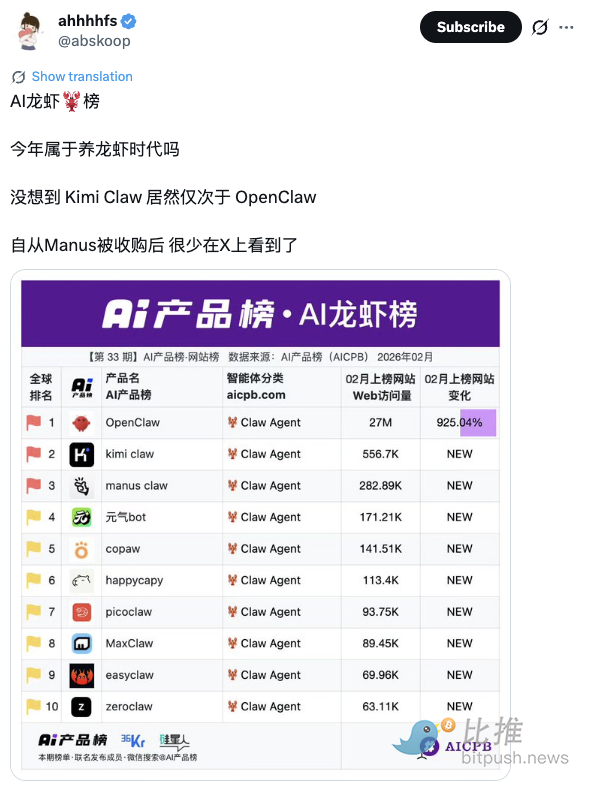
AI Lobster Ranking, the Combined Total of Second to Sixth Place is Less Than One-Tenth of First Place
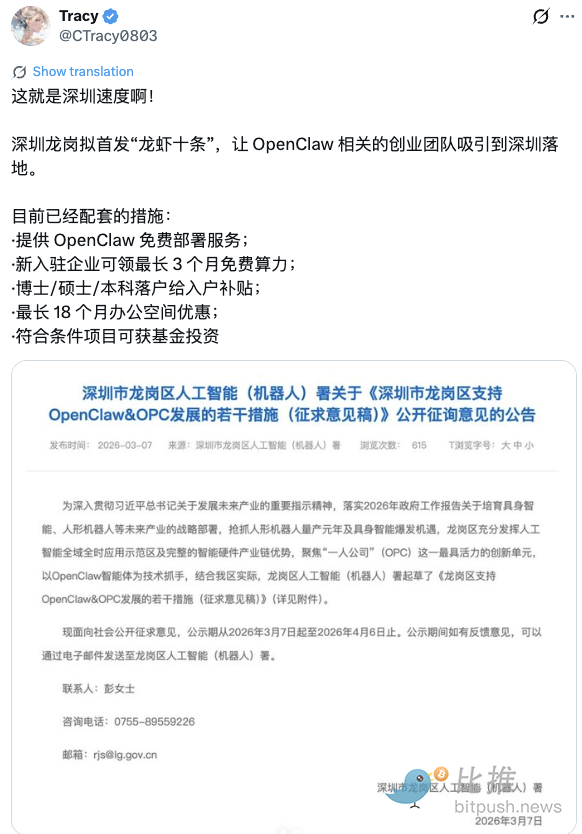
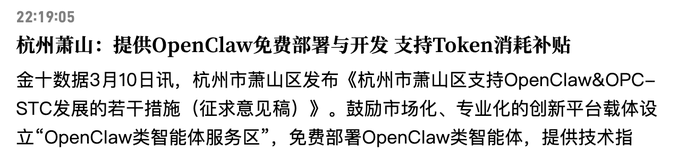
Major Chinese Cities are Rolling Out Token Subsidies!
Popular Replies:

Tried using qclaw, even for very minor tasks it asks for almost all file permissions on the computer, that's terrifying.

Back then they subsidized electricity, now they subsidize tokens.

The government is a bit FOMO too, they have to act first and see the results later.

Musk's Xmoney is About to Launch

Popular Replies:

An 8% annual yield is very tempting. If all the features are realized, the crypto space will really be turned upside down.

The KOLs from exchanges are terrified. Don't be afraid, competition makes you more valuable.

If foreigners can't use it, then it's not even better than U卡 (likely a reference to a crypto card).

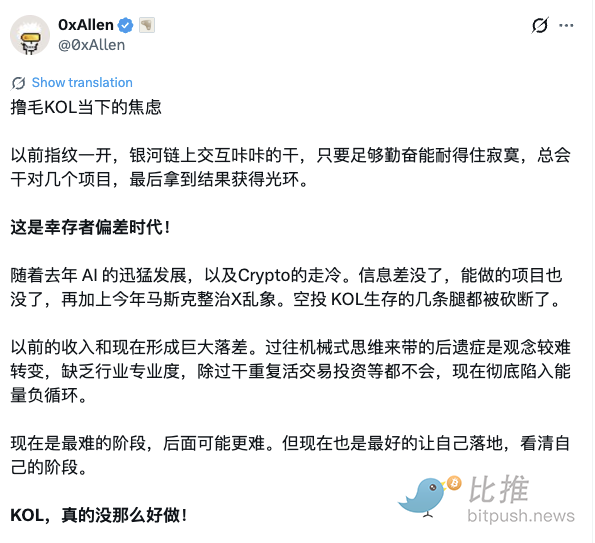
The Current Anxiety of Airdrop-Hunting KOLs

Popular Replies:

My crypto journey just started, why is everyone saying it's over? WEB2 was hard,没想到 getting into WEB3 is also this hard. Who exactly is making money?

Hard, doesn't mean it's over.
It will just become more正规 (regulated/formal) in the future.

I'm already preparing to go run美团 (Meituan deliveries).

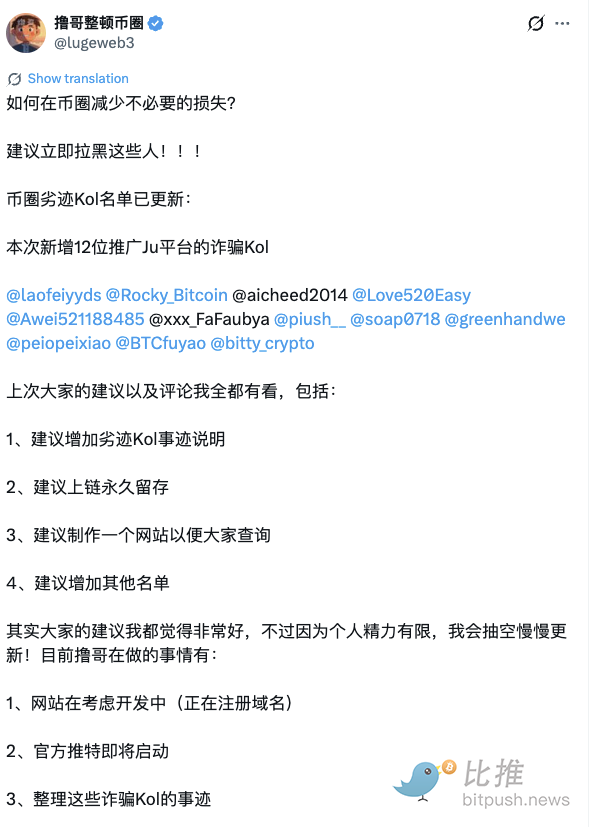
List of KOLs with Bad Records... Do You Agree?


Twitter:https://twitter.com/BitpushNewsCN

Bitpush TG Discussion Group:https://t.me/BitPushCommunity

Bitpush TG Subscription: https://t.me/bitpush

Original article link:https://www.bitpush.news/articles/7618594

Related Questions

QWhat is the AI Lobster List mentioned in the article, and which project ranked first?

AThe AI Lobster List is a ranking of AI-related projects or tokens discussed in the crypto community. The article states that the first-ranked project had such a dominant lead that the combined scores of the second to sixth places were less than one-tenth of its total.

QWhat are some Chinese cities doing regarding token subsidies according to the article?

ASome major Chinese cities are introducing token subsidies as incentives, similar to how electricity was subsidized in the past, to promote adoption or development in the crypto or tech sectors.

QWhat is Xmoney, and who is launching it?

AXmoney is an upcoming financial product or token reportedly being launched by Elon Musk, offering features like an 8% annual yield, which could significantly impact the crypto landscape.

QWhat concerns are 'Airdrop Hunters' or crypto KOLs expressing in the current market?

AAirdrop hunters and crypto KOLs are expressing anxiety about the increasing difficulty of profiting from airdrops, with some even considering alternative jobs like working for Meituan (a delivery service) due to market challenges.

QWhat is the 'List of Misbehaving KOLs' referenced in the article?

AThe article mentions a 'List of Misbehaving KOLs,' which appears to be a community-generated list identifying key opinion leaders in crypto who have engaged in unethical or problematic behavior, though it does not specify exact names or criteria.
Related Reads

The Value Distribution of Stablecoins

**Summary: The Value Distribution of Stablecoins** The article argues that stablecoins are evolving from mere trading tools into broader channels for dollar access. It divides the stablecoin ecosystem into four layers to analyze how value is distributed: 1. **Issuance Layer:** Mints stablecoins, holds reserve assets, and captures the spread between reserve yield and user costs (e.g., Tether, Circle). This layer currently earns the largest profit margin. 2. **Infrastructure Layer:** Connects stablecoins to the traditional financial system, handling fiat on/off-ramps, banking integration, compliance (KYC/AML), and asset management (e.g., Bridge, BVNK). This is the "unglamorous" but critical work, building the essential bridges between crypto and real-world finance. 3. **Acquiring/Distribution Layer:** Integrates stablecoins into merchant systems, manages payment flows, and provides enterprise financial software (e.g., Stripe, Coinbase). They act as the access point for businesses. 4. **Application Layer:** The end-users and businesses that ultimately use stablecoins for payments, settlements, or as a store of value. They benefit from convenience but have little pricing power. The core thesis is that while the issuance layer currently dominates profits, the often-overlooked **infrastructure layer holds significant long-term potential**. The real challenge and barrier to mass adoption is not the on-chain transfer of stablecoins (which is simple), but the complex "last mile" integration into existing business workflows, banking systems, and regulatory frameworks across different countries. Companies in this layer are currently in a "land grab" phase, investing heavily to build networks, secure bank partnerships, and establish compliance pathways. While their position is currently pressured by the profitable issuers above and distribution platforms below, the article suggests that if stablecoins become a default financial rail for businesses, the infrastructure providers who have done the hard work of integration will ultimately gain strong pricing power and become entrenched, essential players.

marsbit6h ago

The Value Distribution of Stablecoins

marsbit6h ago

The Value Distribution of Stablecoins

The Value Distribution of Stablecoins The article argues that stablecoins are evolving from a mere trading tool into a broad "dollar channel." It analyzes the industry's value chain through four layers: 1. **Issuance Layer (e.g., Tether, Circle):** The top layer that mints stablecoins, holds reserve assets, and captures the thickest interest rate spread. 2. **Infrastructure Layer (e.g., Bridge, BVNK):** Connects stablecoins to the traditional financial system, handling critical but complex "dirty work" like fiat on/off-ramps, banking integration, compliance (KYC/AML), and cross-border settlement. 3. **Acquiring/Distribution Layer (e.g., Stripe, Coinbase):** Embeds stablecoins into merchant systems, manages payment flows, and integrates with enterprise software. 4. **Application Layer:** End-users and businesses that ultimately use stablecoins for payments, settlement, or storing value. The author posits that while the issuance layer currently captures the most profit, the most overlooked and potentially critical layer is infrastructure. The core challenge for stablecoin adoption isn't the on-chain transfer (which is simple), but bridging the gap between blockchain and the real-world financial system. This involves solving practical problems for businesses: fiat conversion, reconciliation, tax handling, and user onboarding. Infrastructure companies are currently in a difficult "land-grab" phase—building networks, securing banking relationships, and achieving compliance country-by-country. They face pressure from both the profitable issuance layer above and distribution platforms below. However, the author suggests this layer is building a crucial moat. Once stablecoins become a default business rail, the infrastructure players who have done the hard work of integration may gain significant, durable value and pricing power.

链捕手6h ago

The Value Distribution of Stablecoins

链捕手6h ago

Trading

Spot
Futures
活动图片