After OpenClaw's China Tour, We Interviewed a Group of 'Lobster Chasers'

marsbitPublished on 2026-03-07Last updated on 2026-03-07

Abstract

"OpenClaw China Tour: Chasing the Lobster in the AI-Driven Era" Following OpenClaw's surpassing of React as GitHub's most-starred project, a wave of "AI anxiety" has swept through China's tech community. This led to the "Web4.0 China Tour," a series of nationwide offline events co-initiated by crypto figures, aiming to demystify the AI agent tool often nicknamed "Lobster." Event observations revealed a diverse, intergenerational audience—from 05ers to 70-year-olds—flocking to these gatherings. Participants were polarized: some were already monetizing OpenClaw, while others struggled with basic setup. A key insight was that AI's primary impact is not necessarily job replacement but a massive restructuring of work, automating standardized tasks and creating new roles, particularly for those who can effectively manage AI agents. Interestingly, fields like programming and creative work are now seen as more vulnerable to AI disruption than manual labor. Despite OpenClaw's founder cautioning against crypto, a strong convergence between AI agents and cryptocurrency was debated on-site. Many believe crypto assets, especially Bitcoin, could become the native currency for AI economies, facilitating machine-to-machine transactions and value exchange. The trend also spawned a paid installation service industry. However, a significant hurdle remains: many users successfully install OpenClaw but lack the knowledge to use it effectively, sometimes leading to unexpected costs and securit...

Original|Odaily Planet Daily(@OdailyChina)

Author|Wenser(@wenser 2010)
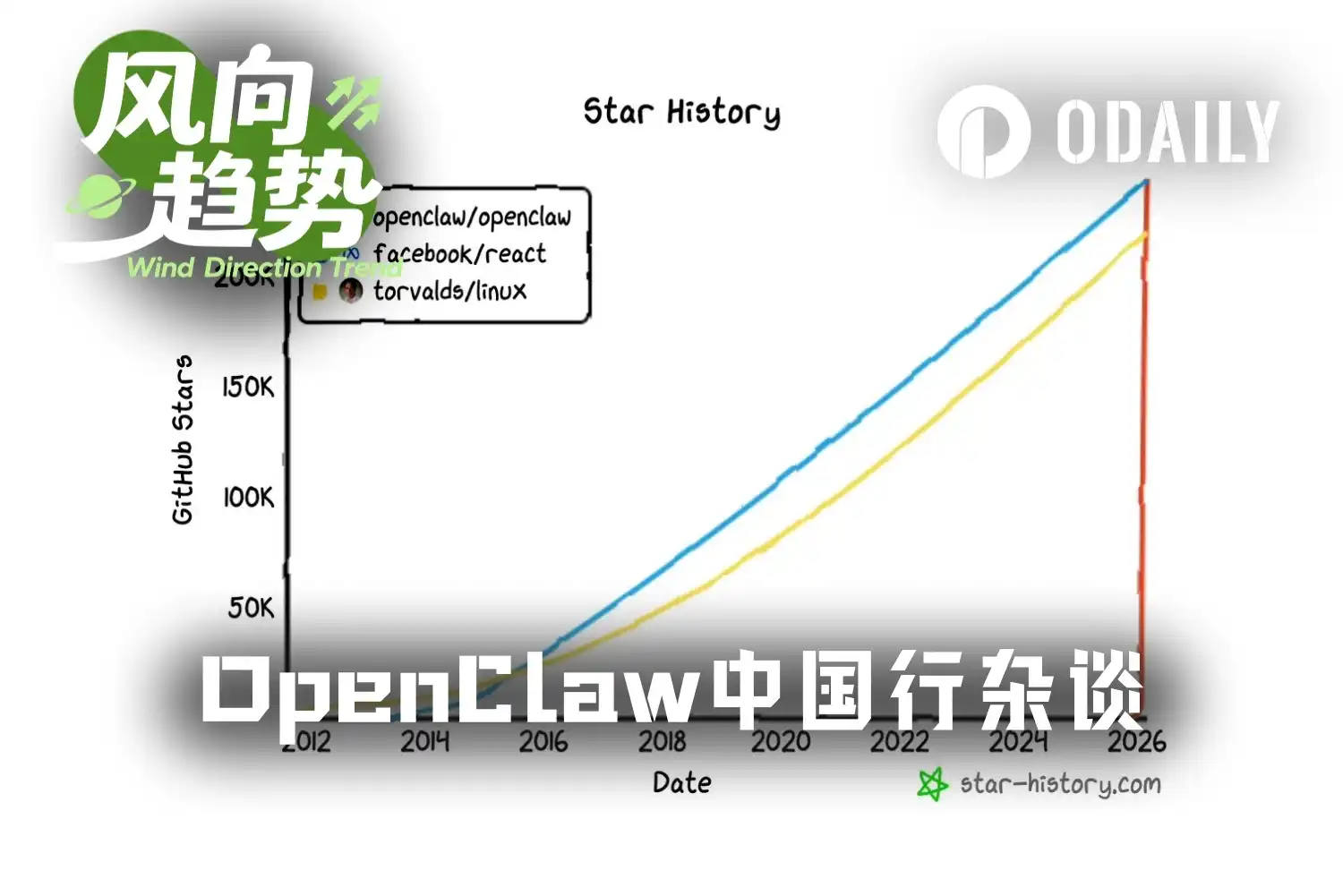
On March 2, OpenClaw finally surpassed React to become the project with the most stars on GitHub, thus rising to become the "most recognized tool" among programmers at the moment.

In just over two months, this AI project focused on automated execution has rapidly swept through global discussion forums. Almost everyone is racking their brains to "adopt a lobster," trying to use it to complete various goals, projecting expectations like believers making wishes.

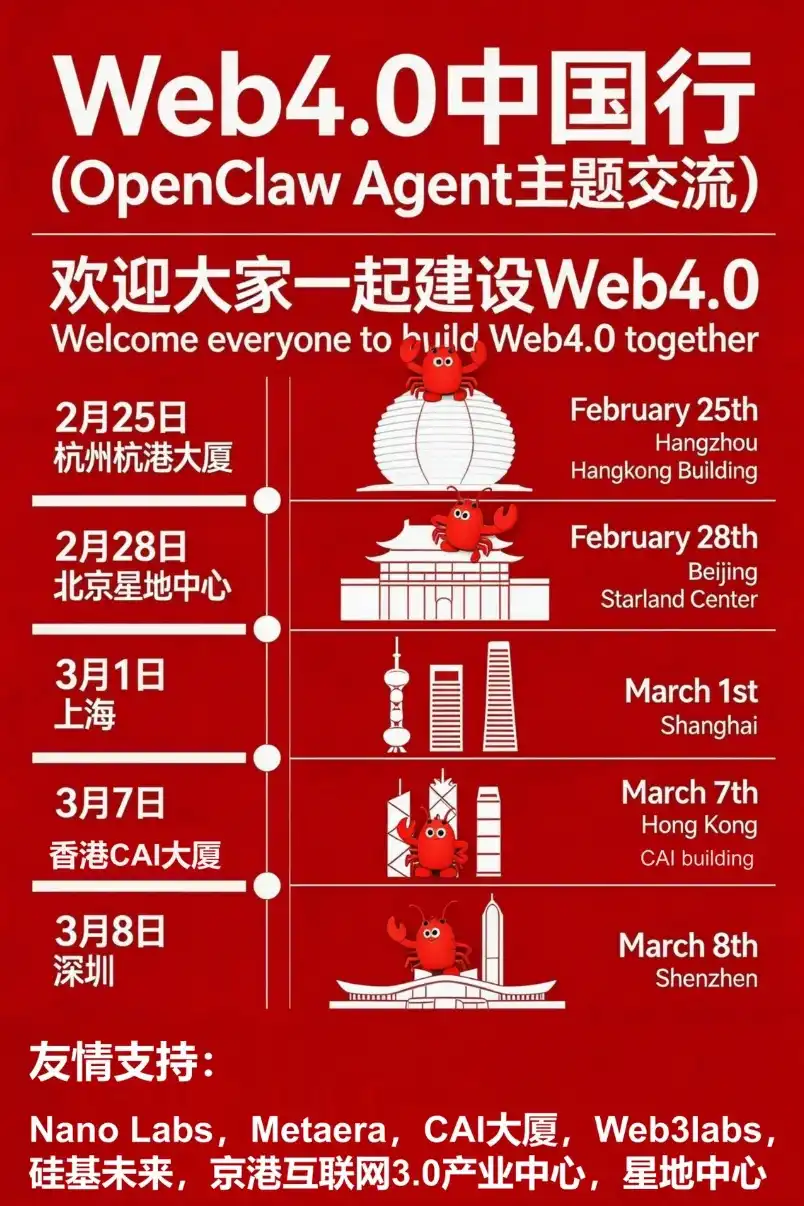
Spring river water warms, ducks know first; changes often happen first among the most敏锐嗅ally敏锐的人群. At the end of February, some active figures in the币圈, represented by Nano Labs founder Kong Jianping and TRON founder孙宇晨,联合 allies like CAI under Meituan's Cai Wensheng to launch the "Web4.0 China Tour" nationwide offline event. Crowds flocked to it instantly, reminiscent of the days when "every conversation had to mention Web3,加密,元宇宙, NFT".

As industry observers active in the intersection of AI and加密, Odaily Planet Daily辗转 interviewed multiple现场 participants and compiled some "post-event impressions" to还原 this "AI counter-siege campaign" initiated by humans.
Web3 is Dead, Web4 Rises: The AI Anxiety Ignited by OpenClaw

In the first week after the New Year, a chart circulating in various WeChat groups率先 ignited discussion: Clawdbot ranked first—this was one of OpenClaw's early names (another was Moltbot).
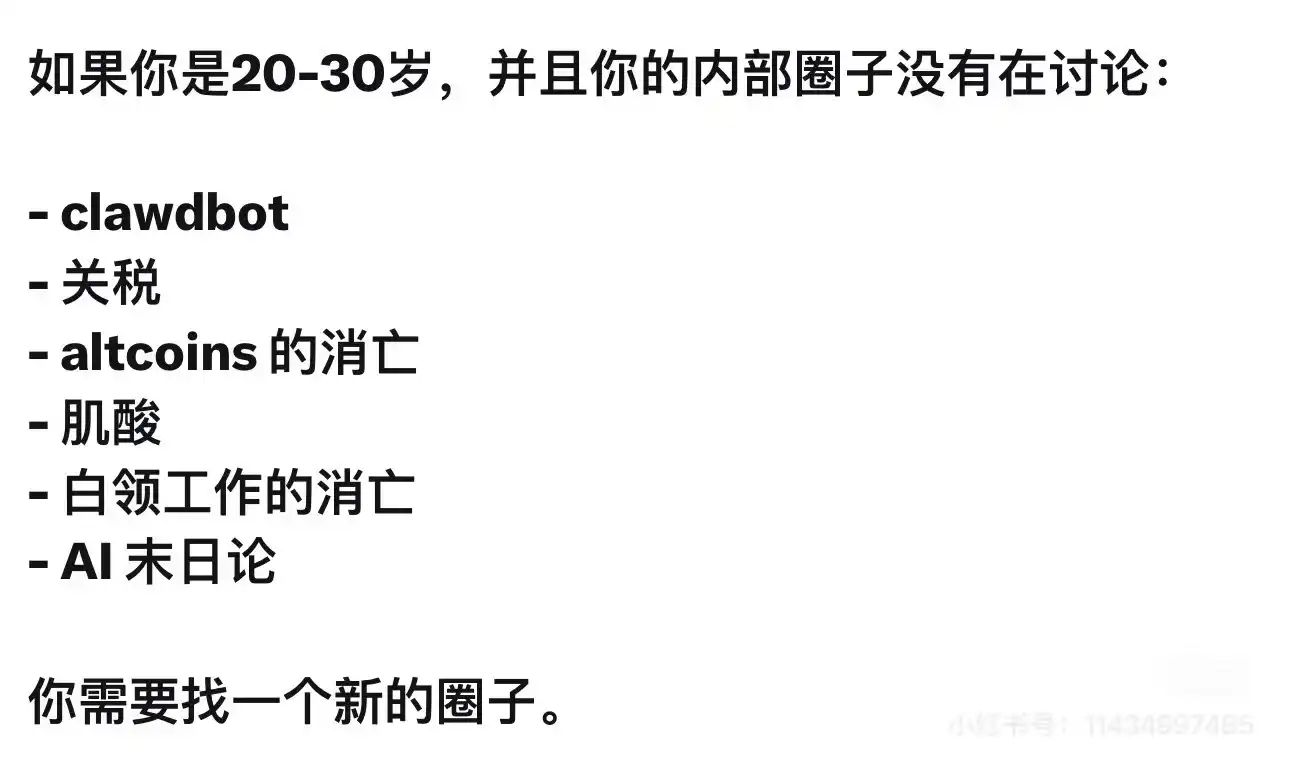
After密集刷屏 of messages like "2028 AI Doomsday Prophecy" and Block laying off 4,000 people, the internet群体 quickly fell into a collective "AI anxiety": if you don't know about the "lobster" yet, it's like not knowing about Douyin, Clubhouse, or ChatGPT back in the day, meaning you're already behind.

Thus, offline events framed with the "Web4.0 China Tour" narrative and centered on OpenClaw rapidly heated up. The远超预期的报名 and attendance numbers also pushed technical concepts like AI Agent and "lobster robots" to a broader audience.

On-Site Sketch: AI Has Moved from Narrative to Reality

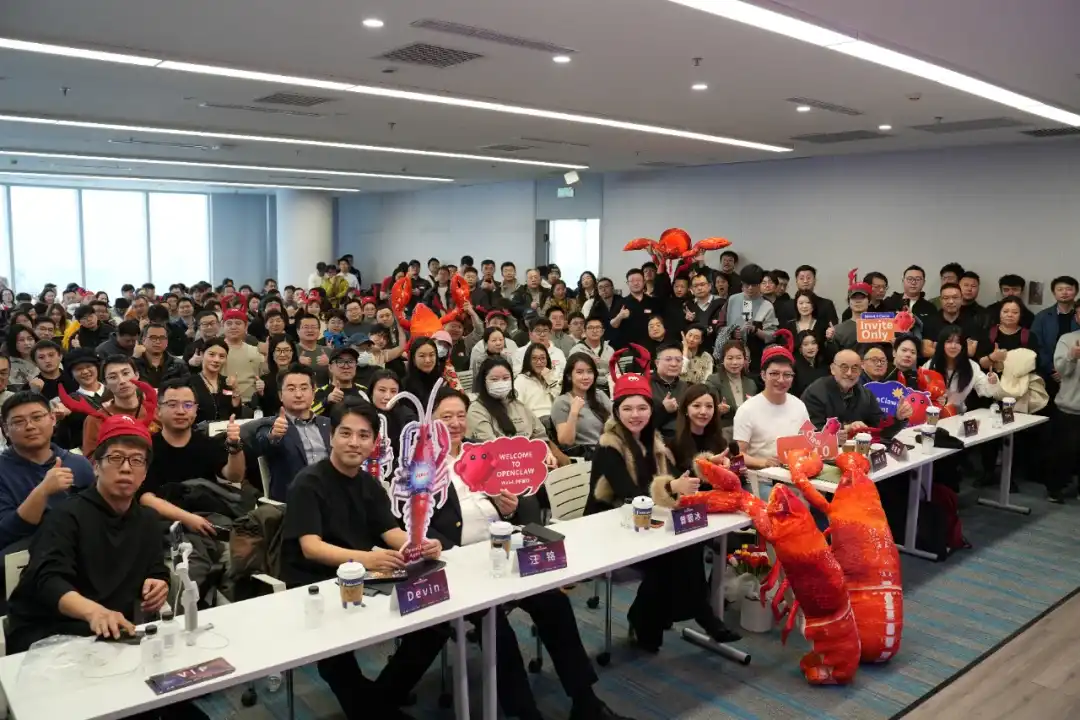
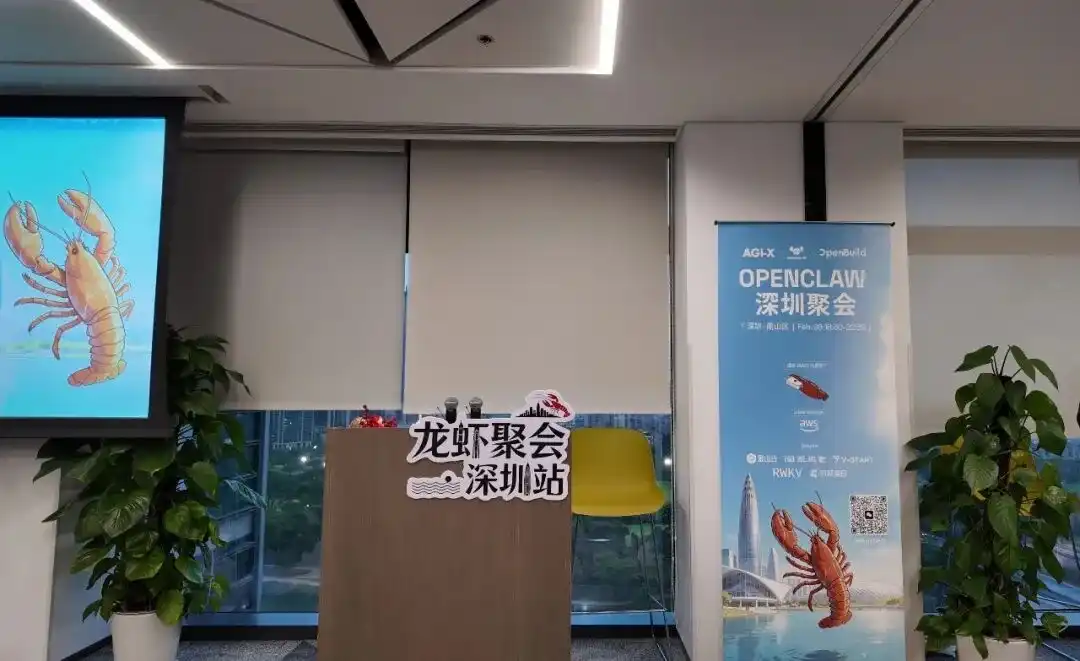
Photos released by 1783 DAO from the Beijing stop showed a packed house; @Wayne, who participated in the Beijing event, told us he initially saw KOLs转发 the information on X, then searched via Xiaohongshu and Luma, and within a few days had attended three offline events in a row.

In his view, the现场 showed obvious "polarization": some had already run businesses and earned dollars, while others didn't even know how to buy cloud servers;同时, "generational differences" were also apparent—05后 are starting to enter, 00后 entrepreneurs are common, 90后 are still the fastest-acting group, while the older generation came more with anxiety about being left behind by the times.
Another小伙伴 who helped organize the OpenClaw Lobster Gathering in Shenzhen, @0xqiuqiuu, offered a different perspective.

As a community运营 for OpenBuild, Qiuqiu sees that the biggest beneficiaries of this wave of AI-driven efficiency gains are companies and bosses, and it also provides more convenient efficiency tools for "one-person companies," independent developers, and creators to boost output.

Furthermore, the Shenzhen event had many white-haired elderly participants, and parents brought their young daughters and sons to participate. The age range went up to over 70 years old and down to 11 years old. This is also a point that distinguishes it from the previous knowledge付费 courses that打着 the banner of "9.9 yuan to teach you how to use AI." AI has gradually渗透 into all人群 and most industries. And the best way to alleviate "AI anxiety disorder" is not to sit back and wait, but to embrace AI, use AI, and use concrete actions to combat虚无的情绪.
As for "whether AI will replace jobs or humans," some interviewees gave a negative answer.

@币圈离镜, who works in Web3 industry interviews, pointed out that AI will not replace humans; instead, more positions will be born because of AI. (This is similar to the "Jevons Paradox" we mentioned earlier,详见 "The War Between Stablecoins and Banking Likely Doesn't Exist")

@Wayne, a Web3 industry analyst, also mentioned that AI will not replace most people but may重构 over 50% of work structures. Specifically, he believes replacing "position" ≠ replacing "person," so what is actually being replaced are "task modules." AI will优先 replace the highly structured, standardized parts. For example, managers who used to manage humans and organize coordination might be replaced by managers who can manage AI employees.

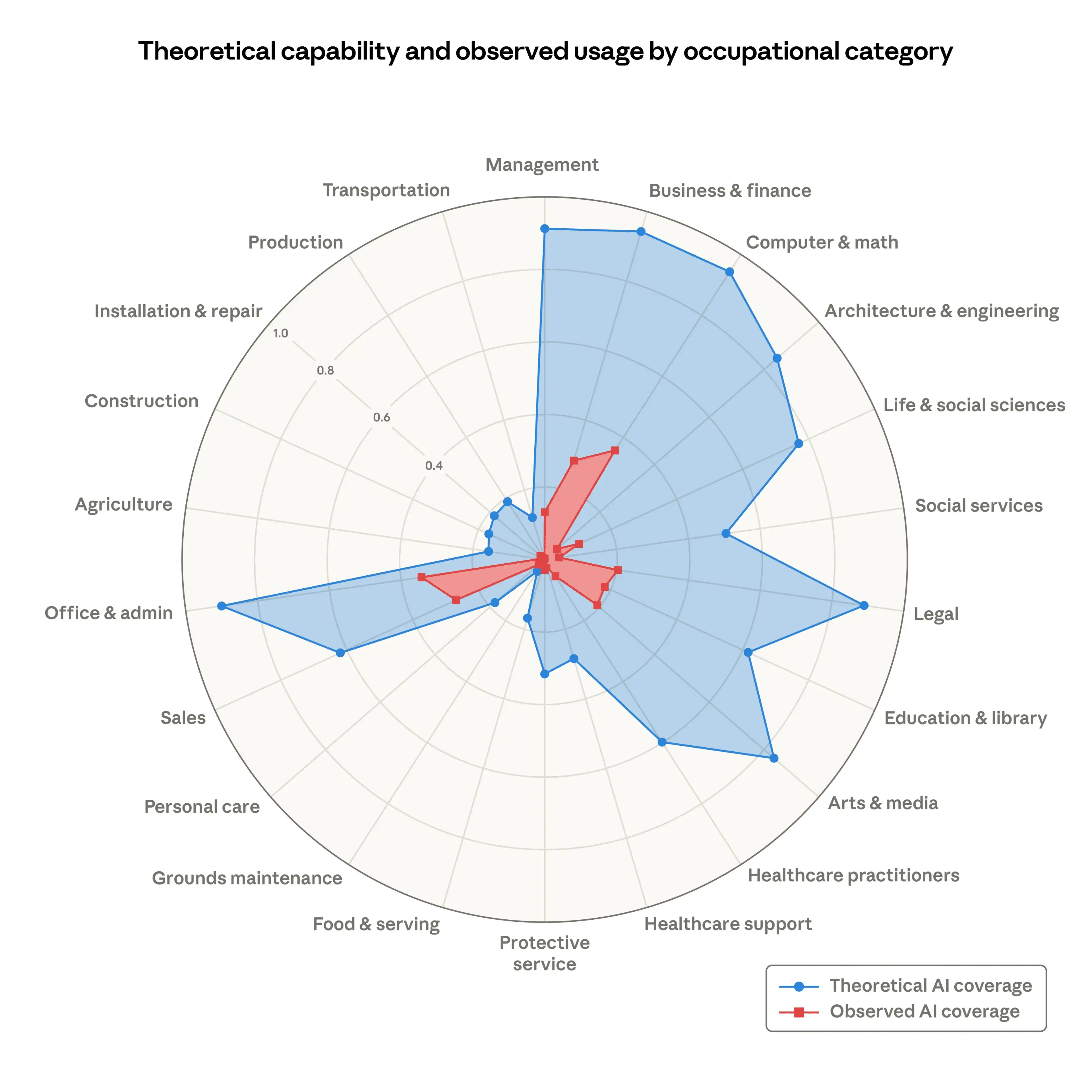
Incidentally, a research study released yesterday by Anthropic, "AI Labor Market Impact," found that occupations previously thought to be least impacted by AI, such as programmers, lawyers, educators, artists, as well as white-collar workers and salespeople, are actually the most impacted by AI; conversely, occupations like construction workers, farmers, repairmen, caregivers, security guards, and restaurant waiters that AI cannot do in the short term are less impacted.

In other words, AI can already cover the vast majority of the work content of programmers, educators, artists, and written work professionals, including the visible impact on live-action movies, short dramas, and TV series after the emergence of Seedance 2.0; offline manual laborers are, of course, not easily replaced by AI.
When OpenClaw Meets the币圈: The Prelude to the AI Economy

Although OpenClaw founder Peter Steinberger has publicly advised young people to stay away from cryptocurrency (Recommended reading: When Openclaw Founder Advises Young People to Stay Away from Crypto), many practitioners still believe that AI Agent and the加密 system have a natural coupling.

@币圈离镜直言: "Human wealth relies on fiat currency settlement, while AI's wealth is more likely to rely on加密 assets." (We discussed this logic earlier in "When AI Agent Becomes Sentient, Stablecoin = Dollar API.")

Many participants said they preferred to pay event fees with BTC, hoping for earlier integration of Bitcoin payments with AI, rather than stablecoins.

In @Wayne's view, when AI Agents can autonomously call wallets, purchase computing power and data, and complete payment settlements, cryptocurrency will become a medium for machine collaboration and value exchange, shifting from speculative assets to production infrastructure—permissionless settlement networks, on-chain transparency, and incentive mechanisms make it an important bridge for AI to access the real economy.

It is worth mentioning that, despite the founder's克制 attitude, OpenClaw has still recommended the加密 privacy AI platform Venice.ai. Reality once again proves: industry boundaries are always determined by products and efficiency, not立场. (Recommended reading: "OpenClaw Endorses Venice.ai, Token VVV Surges Over 500% in a Month")

Conclusion: What Matters is Not 'Having a Lobster,' but 'Using the Lobster'

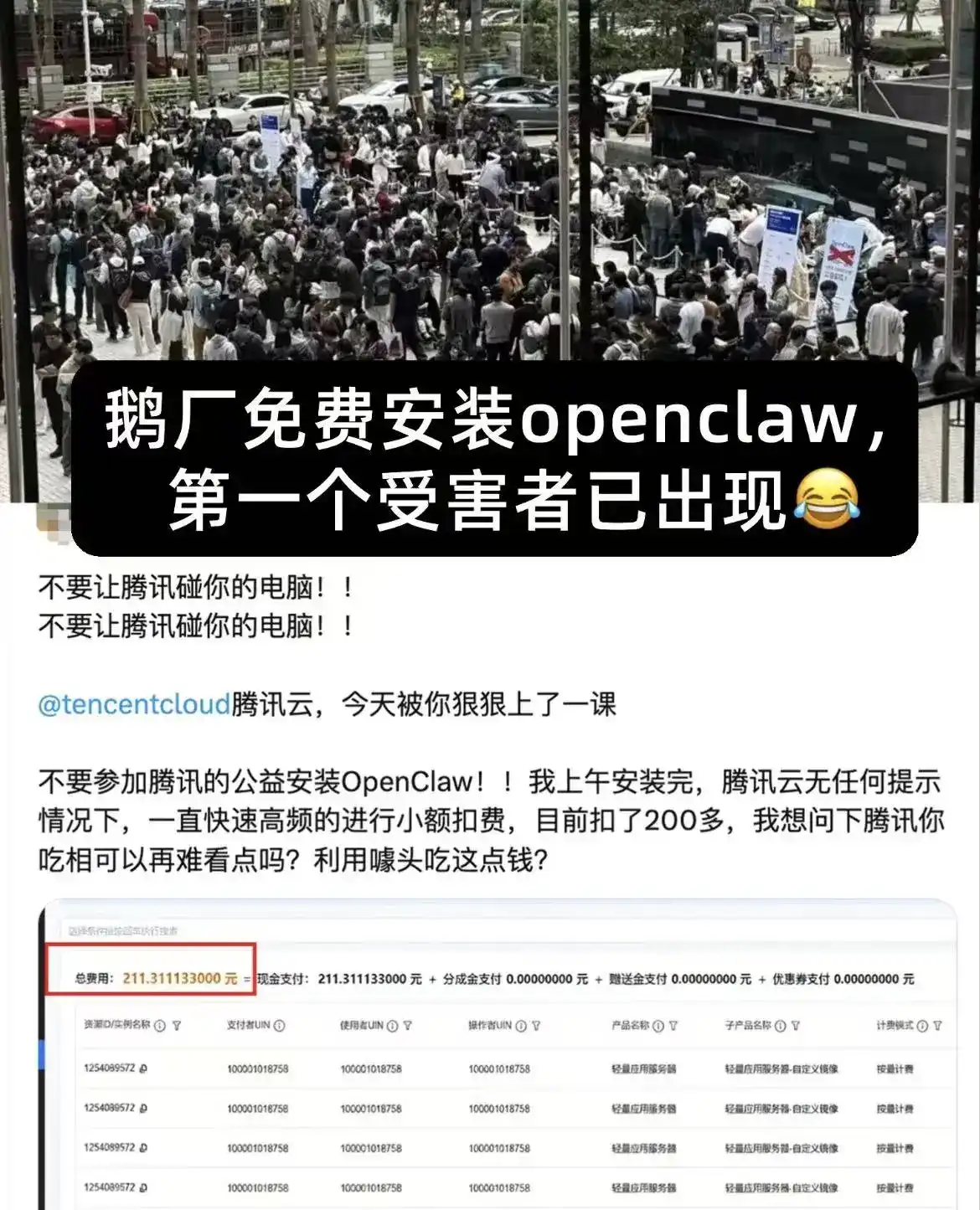
Lately, "door-to-door OpenClaw installation" has formed a complete paid industry chain on某鱼,某宝,某书; Tencent Cloud's offline installation assistance has also attracted attention. The story shared on the卡兹克 public account about "spending 499 to experience door-to-door OpenClaw installation" is津津乐道 by everyone.

However, among the majority of participants we contacted, there are still大量 users stuck at the installation stage, not knowing how to truly use it. Moreover, most people using OpenClaw are still using the easy installation versions provided by various AI model companies or platforms. What's more, some, after finally排队 and getting OpenClaw installed by the Tencent Cloud team, let it run automatically due to unfamiliarity with operation, ultimately incurring a not-small token consumption fee, and then angrily criticized Tencent Cloud for having难看吃相.

It must be said that in the face of new technology, the opposite of FOMO may be potential security risks and unknown operational risks caused by excessive permissions.
Therefore, for most people, there's no need to be overly anxious. What truly matters is never "I also have a lobster," but "whether my AI is truly solving problems and producing results."

In the era of coexisting with AI, many people may start early, but大概率 will only catch the late show.


Related Questions

QWhat is OpenClaw and why did it become the most recognized tool among programmers?

AOpenClaw is an AI project focused on automated execution. It surpassed React to become the most starred project, making it the most recognized tool among programmers due to its rapid global adoption and ability to help users achieve various goals.

QWhat was the purpose of the 'Web4.0 China Tour' event mentioned in the article?

AThe 'Web4.0 China Tour' was a nationwide offline event initiated by figures like Jack Kong of Nano Labs and Justin Sun of TRON, aimed at promoting discussions around AI, particularly OpenClaw, and addressing the collective 'AI anxiety' by bringing together enthusiasts and professionals.

QHow did the article describe the demographic participation in the OpenClaw events in China?

AThe events attracted a diverse age range, from 05 and 00 generation newcomers to 90 generation fast movers, and even included elderly participants and parents with young children, showing AI's penetration across all age groups and industries.

QAccording to the article, what is the relationship between AI Agent and the cryptocurrency system?

ADespite OpenClaw's founder advising against cryptocurrencies, many believe AI Agents and crypto systems are naturally complementary, with crypto potentially serving as a medium for machine collaboration and value exchange, such as through Bitcoin payments and transparent settlement networks.

QWhat caution did the article highlight about using OpenClaw and AI technology?

AThe article warned against FOMO (fear of missing out) leading to potential security risks and operational hazards, emphasizing that merely having OpenClaw isn't enough—it's crucial to use it effectively to solve problems and produce results.

Related Reads

From South Korea to the United States: Blue-Collar Jobs Are Becoming Increasingly Popular, Thanks to AI

AI is reshaping the labor market's value proposition. The traditional four-year college degree is losing its appeal as a guaranteed career path, while skilled blue-collar trades like electricians, welders, and plumbers are experiencing historic demand and wage premiums. This shift is driven by dual pressures: AI's displacement of certain white-collar roles and a booming need for physical infrastructure and data center construction. Data confirms the trend. In the U.S., vocational school revenue surged, and a significant portion of recent layoffs are AI-related. Surveys show a majority of Gen Z adults plan to pursue blue-collar work, citing better job security against AI automation. Vocational education interest has exploded recently. Experts cite a psychological shift as younger generations seek tangible, AI-resistant careers and avoid high student debt. In many cases, salaries for skilled trades now match or exceed those requiring a bachelor's degree. In South Korea, semiconductor vocational high schools boast near-total employment, with graduates securing high-paying roles at companies like Samsung. The shortage is structural, exacerbated by a retiring baby boomer workforce and massive infrastructure projects. Companies like JPMorgan Chase, Meta, and Lowe's are investing heavily in training programs. However, overcoming historical stigma and a "perception gap" around trade careers remains a key challenge to closing the talent gap.

marsbit48m ago

From South Korea to the United States: Blue-Collar Jobs Are Becoming Increasingly Popular, Thanks to AI

marsbit48m ago

Qualcomm: AI Hype Subsides, When Will Smartphones Emerge from the Gloom?

Qualcomm reported its Q3 FY2026 results (ending June 2026), with revenue of $9.95B, down 4% YoY but above expectations. Gross margin declined to 53.1%, pressured by rising costs across manufacturing and memory. Key business segments showed mixed performance: Handset revenue fell 19.6% YoY to $5.09B, dragged by an 11% decline in non-Apple Android shipments and weaker high-end mix. Conversely, Automotive revenue surged 61% to $1.59B, and IoT grew 9% to $1.83B. Core operating profit dropped 41% YoY due to margin compression and higher expenses. Management's Q4 FY2026 guidance projects revenue of $9.7B-$10.5B, in line with consensus, but Non-GAAP EPS guidance of $2.05-$2.25 fell short of expectations. Amidst persistent weakness in its core handset market, Qualcomm is pursuing growth in AI, focusing on Edge AI (smartphones, PCs, automotive) and Data Center AI. Its data center strategy includes four pillars: AI accelerators (e.g., AI200), commercial CPUs (Dragonfly C1000), custom silicon, and connectivity solutions. While these initiatives initially boosted its stock, concerns over AI capital expenditure sustainability have since erased those gains. The company targets $5B in data center revenue for FY2027 and $15B for FY2029. The report concludes that with the traditional handset business still under pressure, the data center opportunity is currently viewed as a longer-term option, and a more conservative valuation based on core operations may be warranted until AI contributions materialize.

marsbit53m ago

Qualcomm: AI Hype Subsides, When Will Smartphones Emerge from the Gloom?

marsbit53m ago

From TPU to Self-Evolving Agents: How Jeff Dean Predicts the Next Step in AI

At the 2026 YC Startup School, Jeff Dean outlined his vision for AI's next phase, shifting focus from simply scaling models to building intelligent, autonomous systems. He believes AI's progress is no longer just about creating smarter models, but about integrating them into systems capable of long-term, iterative work, automated experimentation, and continuous learning. This evolution moves the competition from "who has the bigger model" to "who can best organize intelligence." Dean suggests AI capabilities are now comparable to a junior engineer, enabling the automation of complex workflows. However, the true challenge and opportunity lie in managing these AI "workers" at scale. He emphasizes the importance of **context engineering**—structuring tools, memory, and feedback loops—over raw model power. For startups, this means building deep expertise in niche domains where general models currently fail (near 0-1% success rates), leveraging proprietary data, specialized tools, and domain-specific evaluators. A recurring theme is re-examining fundamental constraints. Dean's past work, like moving Google's search index to memory or creating the TPU, stemmed from questioning outdated assumptions about hardware and cost. He sees similar inflection points today, particularly in **specialized inference hardware** to drastically reduce latency and energy consumption for real-time Agent operation. Notably, he points out that in modern AI systems, the dominant cost is often not computation but **data movement**. Reliable, long-running Agents require robust system design, borrowing concepts from distributed computing like checkpointing, state management, and parallel exploration to handle failures and maintain progress over days or weeks. As AI automates execution, the scarcest human skills will shift to **defining clear specifications**, **judging what problems are worth solving** (taste), and designing effective feedback loops. Ultimately, Dean's framework prioritizes understanding the problem deeply, identifying the true bottlenecks, and systematically building closed-loop systems where AI can not only perform tasks but also improve AI itself.

marsbit53m ago

From TPU to Self-Evolving Agents: How Jeff Dean Predicts the Next Step in AI

marsbit53m ago

Trading

Spot
活动图片




